- Product Description Description
- Table of Contents TOC
- List of Table & Figure LOT
- Get Free Sample PDF Sample PDF
Market Size, 2025
$237 MnMarket Estimate, 2026
$282 MnMarket Forecast, 2034
$1,116 MnCAGR, 2026–2034
18.75%Middle East and Africa Kombucha Market Report Summary
The Middle East and Africa kombucha market was valued at USD 237.84 million in 2025, is estimated to reach USD 282.44 million in 2026, and is projected to reach USD 1,116.85 million by 2034, growing at a CAGR of 18.75% during the forecast period. Market growth is driven by increasing consumer awareness of gut health, rising demand for functional beverages, and growing preference for natural and fermented drinks. Kombucha is gaining popularity due to its probiotic benefits, detox properties, and appeal among health conscious consumers. The expansion of wellness trends, along with increasing availability of flavored and premium kombucha products, is further supporting rapid market growth across the region.
Key Market Trends
- Rising demand for functional and probiotic beverages is driving market growth.
- Increasing awareness of gut health and wellness is boosting kombucha consumption.
- Growing popularity of natural and fermented drinks is supporting market expansion.
- Expansion of premium and flavored kombucha products is enhancing consumer appeal.
- Increasing retail presence and product availability is improving market penetration.
Segmental Insights
- Based on type, the bacteria segment was the largest and held 61.2% of the Middle East and Africa kombucha market share in 2025. This dominance is attributed to its essential role in fermentation and probiotic content of kombucha beverages.
- Based on flavours, the herbs and spices segment accounted for 36.1% of the Middle East and Africa kombucha market share in 2025. The segment’s growth is driven by increasing consumer preference for unique and functional flavor profiles.
Regional Insights
- The Middle East and Africa kombucha market is experiencing rapid growth across key countries, supported by rising health awareness and evolving beverage preferences.
- Saudi Arabia was the largest contributor in the Middle East and Africa kombucha market, driven by strong government health initiatives, increasing disposable income, and a young population adopting wellness trends.
Competitive Landscape
The Middle East and Africa kombucha market is moderately competitive, with key players focusing on product innovation, flavor diversification, and expansion of distribution networks to strengthen their market position. Companies are investing in premium offerings, organic ingredients, and branding strategies to attract health conscious consumers. Prominent players in the Middle East and Africa kombucha market include Millennium Products Inc, Reed’s Inc, The Hain Celestial Group, Revive Kombucha, Kosmic Kombucha, Cell Nique Corporation, Buchi Kombucha, GT's Kombucha, Townshend’s Tea Company, The Humm Kombucha LLC, Red Bull GmbH, Makana Beverages Inc, Nesalla Kombucha, Live Soda Kombucha, and Kombucha Wonder Drink.
Middle East and Africa Kombucha Market Size
The Middle East and Africa kombucha market size was valued at USD 237.84 million in 2025, and the market size is expected to reach USD 1,116.85 million by 2034 from USD 282.44 million in 2026. The market's promising CAGR for the predicted period is 18.75%
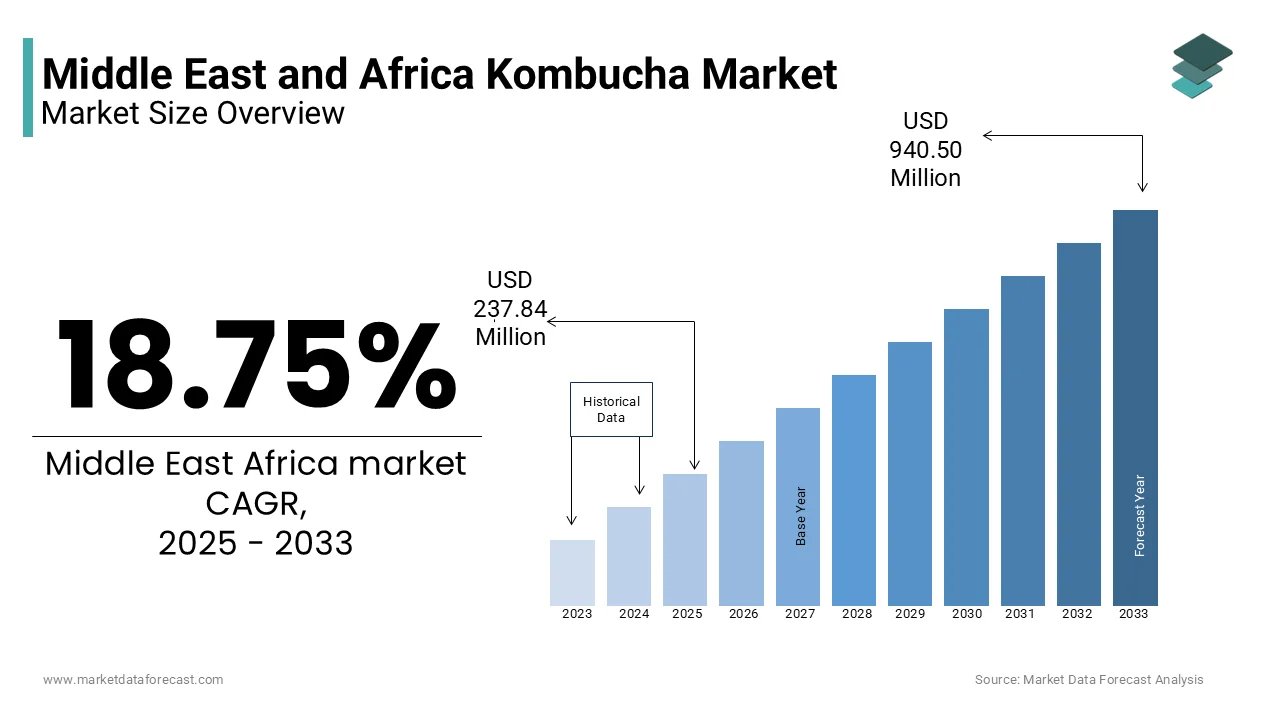
The Kombucha market is gaining traction in Middle East and Africa among health conscious consumers in urban centers across countries such as the United Arab Emirates, South Africa, and Saudi Arabia, who are seeking alternatives to sugary soft drinks. The cultural context of the region plays a significant role as traditional beverages often contain high sugar levels, prompting a shift towards healthier options. According to the World Health Organization, the prevalence of diabetes in the Eastern Mediterranean Region is among the highest globally, affecting approximately 16% of the adult population, which drives demand for low sugar functional drinks. Furthermore, the growing awareness of gut health and digestive wellness has positioned kombucha as a premium lifestyle product. As per the Food and Agriculture Organization of the United Nations, the consumption of non-alcoholic beverages in Africa has increased by 5% annually, reflecting changing dietary habits. The market is also influenced by the rising middle class with disposable income willing to pay a premium for imported or locally crafted artisanal beverages. Regulatory frameworks regarding food safety and labeling are evolving to accommodate these novel products ensuring consumer protection. The integration of local ingredients such as dates, hibiscus, and ginger into kombucha recipes further enhances its appeal by aligning with regional taste preferences. This dynamic interplay of health consciousness, cultural adaptation, and economic growth defines the current landscape of the kombucha sector in the Middle East and Africa.
MARKET DRIVERS
Rising Prevalence of Lifestyle Related Diseases Drives Demand for Low Sugar Functional Beverages
The growing rates of lifestyle related diseases such as obesity and type-2 diabetes in the Middle East and Africa is majorly driving the growth of the Middle East and African Kombucha market as consumers actively seek healthier beverage alternatives. Traditional soft drinks and juices in the region are often high in added sugars contributing to poor metabolic health outcomes. According to the International Diabetes Federation, the Middle East and North Africa region has the highest comparative prevalence of diabetes globally, with approximately 1 in 6 adults affected by the condition. This health crisis has prompted governments and health organizations to advocate for reduced sugar consumption through public awareness campaigns and regulatory measures such as sugar taxes. In countries like Saudi Arabia and the United Arab Emirates, the implementation of excise taxes on sugary drinks has significantly altered consumer purchasing behavior, leading to a decline in carbonated soft drink sales. As per the Gulf Cooperation Council Standardization Organization, the push for healthier food options has created a fertile ground for functional beverages like kombucha, which naturally contain lower sugar levels and offer probiotic benefits. Consumers are increasingly reading nutritional labels and opting for drinks that support weight management and blood sugar control. The perception of kombucha as a natural detoxifying agent further enhances its appeal among health conscious individuals. This shift towards preventive healthcare and wellness oriented consumption patterns fuels the steady growth of the kombucha market as a viable substitute for conventional sugary beverages.
Growing Health Consciousness and Wellness Trends among Urban Populations Fuel Market Expansion
The surge in health consciousness and the adoption of holistic wellness lifestyles among urban populations in the Middle East and Africa significantly propel the growth of the kombucha market in this region. Modern consumers, particularly Millennials and Generation Z, are increasingly informed about the importance of gut health and the role of probiotics in overall well being. According to a global consumer survey by Nielsen, approximately 80% of consumers in emerging markets are actively trying to improve their health through diet and exercise. This trend is particularly pronounced in major metropolitan areas such as Dubai, Johannesburg, and Cairo, where exposure to global wellness trends is high. Social media platforms and influencer marketing play a crucial role in educating consumers about the benefits of fermented foods and beverages. As per the World Bank, the penetration of internet users in the Middle East and North Africa has reached over 75% in many urban centers, facilitating the rapid spread of health and wellness information. Kombucha is marketed as a premium lifestyle product that aligns with values of natural living and sustainability. The availability of kombucha in high end cafes, gyms, and organic stores reinforces its status as a symbol of health sophistication. Furthermore, the rise of fitness culture and yoga studios in urban centers creates dedicated channels for kombucha distribution. This convergence of digital awareness, lifestyle aspiration, and accessibility drives the increasing adoption of kombucha as a daily health ritual among affluent urbanites.
MARKET RESTRAINTS
Limited Consumer Awareness and Unfamiliarity with Fermented Beverage Taste Profiles Restrict Market Penetration
A significant restraint facing the Middle East and Africa Kombucha Market is the limited consumer awareness and unfamiliarity with the unique taste profile of fermented beverages. Unlike established markets in North America or Europe where kombucha has gained mainstream acceptance, many consumers in the Middle East and Africa are encountering this product for the first time. The distinct tangy and slightly effervescent flavor of kombucha can be off putting to individuals accustomed to sweet teas or carbonated soft drinks. According to the European Federation of Bottled Waters, while bottled water and soft drinks dominate the beverage landscape, alternative fermented drinks remain niche due to taste barriers. Educational efforts are required to explain the fermentation process and health benefits, which can be costly and time consuming for market entrants. As per the Consumer Goods Forum, many consumers in emerging markets associate fermented flavors with spoilage rather than health benefits, leading to initial rejection. The lack of widespread trial opportunities limits the ability of brands to convert skeptics into loyal customers. Additionally, the concept of probiotics and gut health is still gaining traction in some rural and semi urban areas where traditional remedies prevail. Without effective marketing strategies that address taste expectations and educate consumers on the value proposition, kombucha struggles to move beyond early adopters. This knowledge gap hinders mass market adoption and slows down the overall growth trajectory of the sector.
High Production Costs and Limited Local Supply Chain Infrastructure Impact Affordability and Availability
The high production costs and underdeveloped local supply chain infrastructure pose substantial restraints to the scalability and affordability of kombucha in the Middle East and Africa. Producing high quality kombucha requires specific ingredients such as organic tea, sugar, and SCOBY cultures, which are often imported due to limited local availability. According to the African Development Bank, logistical challenges and reliance on imports increase the cost of raw materials by up to 30% compared to regions with established agricultural supply chains. This cost burden is passed on to consumers, making kombucha a premium priced product that is inaccessible to the majority of the population. As per the World Bank logistics performance indices, several African countries indicate inefficiencies in customs clearance and transport infrastructure, leading to delays and increased operational expenses. Furthermore, the need for strict temperature control during fermentation and distribution adds to the complexity and cost of maintaining product quality. In hot climates prevalent in the Middle East and parts of Africa, maintaining cold chain integrity is particularly challenging and expensive. Small scale local producers often lack the capital to invest in advanced brewing equipment and quality control systems, limiting their ability to compete with imported brands. These economic and logistical barriers restrict market expansion to affluent urban niches and prevent kombucha from achieving broader market penetration across diverse socioeconomic groups.
MARKET OPPORTUNITIES
Expansion into Retail and Hospitality Channels Offers Significant Growth Potential for Market Players
The expansion of kombucha into mainstream retail and hospitality channels presents a major opportunity for market growth in the Middle East and Africa. As consumer interest in healthy beverages rises, supermarkets, hypermarkets, and specialty stores are increasingly dedicating shelf space to functional drinks. According to the World Bank, modern retail formats are expanding rapidly in urban centers, providing accessible platforms for new product launches. Partnering with major retail chains allows kombucha brands to reach a wider audience and benefit from established distribution networks. As per the Hotel News Resource, the hospitality sector in the Middle East is experiencing a boom, with luxury hotels and resorts seeking unique beverage offerings to enhance guest experiences. Incorporating kombucha into hotel minibars, restaurant menus, and spa treatments introduces the product to high net worth individuals and tourists. Collaborations with popular cafe chains and juice bars also serve as effective trial grounds for consumers unfamiliar with the taste. The rise of e commerce platforms further enables direct to consumer sales, allowing brands to educate customers and offer subscription models. By leveraging these diverse channels, manufacturers can increase brand visibility and drive repeat purchases. Strategic placements in health focused sections of stores and promotional activities during wellness events can further accelerate adoption. This multi-channel approach ensures that kombucha becomes a convenient and visible choice for health conscious consumers across the region.
Innovation in Local Flavor Profiles and Ingredient Sourcing Creates Differentiated Product Offerings
Innovation in local flavor profiles and the use of indigenous ingredients offer a compelling opportunity for the Middle East and African Kombucha market. Consumers in the Middle East and Africa have strong preferences for familiar flavors such as dates, pomegranate, hibiscus, ginger, and mint. According to the International Flavors and Fragrances Association, localized flavor innovations increase consumer acceptance and loyalty in emerging markets by aligning with cultural palates. By incorporating these native ingredients, kombucha brands can create unique variants that stand out in a crowded beverage market. As per the Food and Agriculture Organization of the United Nations, the abundant availability of tropical fruits and herbs in Africa provides a cost effective source of raw materials for flavoring. This localization strategy not only enhances taste appeal but also supports local farmers and reduces dependency on imported ingredients. Marketing campaigns that highlight the use of traditional medicinal plants can further strengthen the health narrative of the product. For instance, hibiscus, known for its antioxidant properties, is a popular ingredient in West Africa and can be effectively integrated into kombucha formulations. Such innovations allow brands to tell a story of cultural heritage and natural wellness, which resonates deeply with consumers. By offering familiar yet healthy options, manufacturers can bridge the gap between tradition and modernity, thereby expanding their customer base and driving market growth.
MARKET CHALLENGES
Regulatory Ambiguity Regarding Alcohol Content and Labeling Standards Creates Compliance Challenges
A major challenge facing the Middle East and Africa kombucha market is the regulatory ambiguity surrounding alcohol content and labeling standards for fermented beverages. Kombucha naturally contains trace amounts of alcohol due to the fermentation process, which can vary depending on brewing conditions and storage. In many Middle Eastern countries, strict laws prohibit the sale and consumption of alcoholic beverages, leading to stringent scrutiny of any product with potential alcohol content. According to the Gulf Standardization Organization, regulations regarding non-alcoholic beverages require alcohol levels to be below 0.5%, but testing methods and enforcement can vary across jurisdictions. This inconsistency creates uncertainty for manufacturers, who must ensure their products consistently meet these low thresholds to avoid legal issues. As per the World Health Organization, varying national regulations on food additives and labeling complicate cross border trade within the region. Companies must invest in rigorous quality control and regular testing to maintain compliance, which increases operational costs. Mislabeling or accidental exceedance of alcohol limits can result in product recalls, fines, and damage to brand reputation. The lack of harmonized regional standards forces companies to navigate complex bureaucratic processes in each country. This regulatory fragmentation hinders market entry and expansion, particularly for small and medium sized enterprises lacking resources for extensive legal and compliance teams. Until clear and uniform guidelines are established, the industry faces ongoing risks and barriers to seamless operation.
Intense Competition from Established Soft Drink Giants and Local Traditional Beverages Limits Market Share
The Middle East and Africa Kombucha Market faces intense competition from established soft drink giants and deeply entrenched local traditional beverages, which limit its ability to capture significant market share. Multinational beverage corporations dominate the region with extensive distribution networks, aggressive marketing budgets, and strong brand loyalty. According to the Beverage Marketing Corporation, carbonated soft drinks and bottled water continue to hold the largest volume shares in the Middle East and Africa beverage sector. These giants are increasingly launching their own healthy beverage lines, including flavored waters and teas, which directly compete with kombucha. As per global retail monitoring data, local traditional drinks such as karkade in Egypt and tamarind juice in the Levant are inexpensive, widely available, and culturally preferred. These alternatives offer similar refreshing qualities at a fraction of the price of kombucha, making them more accessible to the mass market. The price sensitivity of a large portion of the population in Africa further exacerbates this challenge as kombucha is perceived as a luxury item. Established players can leverage economies of scale to undercut prices or bundle products, making it difficult for niche kombucha brands to compete on value. Overcoming this entrenched competition requires significant investment in brand building and consumer education, which poses a financial strain on emerging players. Without distinct differentiation and strategic positioning, kombucha risks remaining a marginal player in the broader beverage landscape.
REPORT COVERAGE
| REPORT METRIC | DETAILS |
| Market Size Available | 2025 to 2034 |
| Base Year | 2025 |
| Forecast Period | 2026 to 2034 |
| CAGR | 18.75% |
| Segments Covered | By Type, Flavours, and Region |
| Various Analyses Covered | Global, Regional, & Country Level Analysis; Segment-Level Analysis; DROC, PESTLE Analysis; Porter’s Five Forces Analysis; Competitive Landscape; Analyst Overview of Investment Opportunities |
| Regions Covered | KSA, UAE, Israel, rest of GCC countries, South Africa, Ethiopia, Kenya, Egypt, Sudan and Rest of MEA |
| Market Leaders Profiled | Millennium Products, Inc, Reed’s, Inc, The Hain Celestial Group, Revive Kombucha, Kosmic Kombucha, Cell - Nique Corporation, Buchi Kombucha, GT's Kombucha, Townshend’s Tea Company, The Humm Kombucha Llc, Red Bull Gmbh, Makana Beverages Inc, Nesalla Kombucha, Live Soda Kombucha, Kombucha Wonder Drink |
SEGMENTAL ANALYSIS
By Type Insights
The bacteria segment dominated the market with 61.2% of the regional market share in 2025. The dominance of bacteria segment in the regional market is driven by their critical role in probiotic efficacy and consumer health perception, the central role that lactic acid bacteria and acetic acid bacteria play in the fermentation process and the resulting health benefits associated with kombucha. Consumers in the Middle East and Africa are increasingly seeking beverages that offer tangible gut health improvements, and the presence of beneficial bacteria such as Lactobacillus and Gluconacetobacter is the primary driver of this demand. According to the World Gastroenterology Organisation, probiotics, including specific bacterial strains found in fermented teas, are recognized for their ability to improve digestive health and boost immunity, which resonates strongly with health conscious populations in the region. The marketing of kombucha often highlights the colony forming units of these bacteria as a key quality indicator, thereby reinforcing consumer preference for products with high bacterial content. As per the International Scientific Association for Probiotics and Prebiotics, the global awareness of the link between gut microbiota and overall health has surged, leading to a 20% increase in probiotic supplement and food consumption in emerging markets. In the Middle East, where dietary habits are shifting towards functional foods, the explicit mention of live bacterial cultures on product labels serves as a significant purchase trigger. Furthermore, scientific studies published in regional health journals have validated the antimicrobial and anti-inflammatory properties of these bacterial strains, enhancing their credibility. This scientific backing, combined with aggressive educational campaigns by manufacturers, ensures that bacteria remain the focal point of kombucha value propositions, driving sustained market leadership.
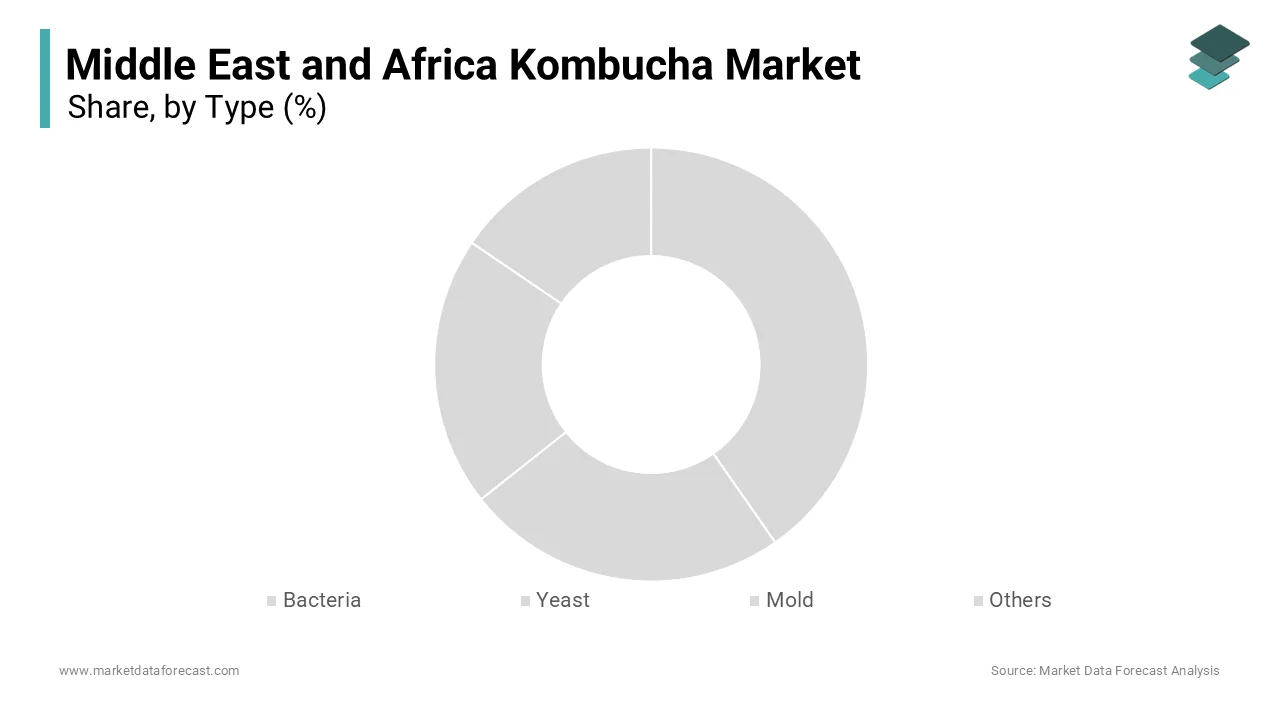
On the other side, the yeast segment is the fastest growing segment in the Middle East and Africa kombucha market and is expected to witness a CAGR of 10.4% over the forecast period owing to its role in flavor development and natural carbonation. The rapid expansion of the yeast segment is fueled by the increasing consumer appreciation for the complex flavor profiles and natural effervescence that yeast contributes to kombucha during fermentation. Unlike artificial carbonation methods, which are often viewed negatively by health conscious consumers, the natural CO2 produced by yeast activity offers a refreshing texture that enhances the drinking experience. According to the Institute of Food Technologists, yeast strains such as Saccharomyces cerevisiae are essential for creating the unique tangy and fruity notes that differentiate premium kombucha from other beverages. In the Middle East and Africa, where traditional fermented drinks are culturally significant, the authentic taste provided by yeast aligns well with local palates. As per the European Federation of Biotechnology, the use of diverse yeast strains in fermentation allows for greater customization of flavors, enabling brands to introduce innovative varieties such as spiced or fruit infused kombucha. This versatility appeals to younger demographics who are eager to experiment with new tastes. Additionally, the role of yeast in producing B vitamins and antioxidants adds another layer of nutritional value that marketers leverage to attract wellness oriented buyers. The growing trend of home brewing in urban centers has also increased awareness of the importance of yeast in the fermentation process, further driving demand for commercial products that highlight robust yeast activity. This combination of sensory appeal and nutritional benefit positions yeast as the most dynamic growth driver of the yeast segment in this regional market.
By Flavours Insights
The herbs and spices segment accounted for the leading share of 36.1% of the regional market in 2025. The dominance of the herbs and spices flavor segment in the regional market is deeply rooted in the rich culinary and medicinal traditions of the Middle East and Africa, where ingredients like ginger, mint, cardamom, and turmeric are staples. These flavors are not only familiar to consumers but are also widely recognized for their therapeutic properties, making them an ideal match for the health focused positioning of kombucha. According to the Food and Agriculture Organization of the United Nations, the Middle East and North Africa region is a major producer and consumer of spices, with annual consumption rates significantly higher than the global average. This cultural affinity ensures that herb and spice flavored kombucha faces lower barriers to acceptance compared to exotic or unfamiliar flavors. As per the Journal of Ethnopharmacology, traditional remedies using ginger and mint for digestion and nausea are prevalent in the region, reinforcing the perceived health benefits of these flavors in a beverage format. Manufacturers leverage this existing knowledge by marketing these variants as natural aids for digestive wellness and immune support. Furthermore, the strong aroma and potent taste of herbs and spices effectively mask the inherent acidity of kombucha, making it more palatable to first time users. The availability of these ingredients locally also reduces production costs and supports sustainable sourcing initiatives. This alignment with cultural preferences and health beliefs solidifies the leadership of the herbs and spices segment in the regional market.
However, the coconut and mangoes segment is estimated to promising CAGR of 11.4% in the regional market over the forecast period in the regional market owing to the strong consumer preference for tropical fruits that offer natural sweetness and a refreshing taste profile. In many African countries and coastal regions of the Middle East, coconut and mango are abundant and cherished ingredients, making their integration into kombucha highly appealing. According to the Food and Agriculture Organization of the United Nations, mango production in Africa has increased steadily, reflecting its growing popularity and availability. The natural sugars in these fruits help balance the tartness of kombucha, reducing the need for added sweeteners, which aligns with the clean label trend. As per the Nielsen Consumer Health Survey, over 60% of consumers in emerging markets are increasingly seeking beverages with recognizable and natural fruit ingredients rather than artificial flavors. Coconut water, in particular, is perceived as a hydrating and electrolyte rich base that complements the probiotic benefits of kombucha, creating a dual functional beverage. Marketing campaigns highlighting the exotic and luxurious nature of these flavors attract younger urban consumers looking for premium experiences. Additionally, the vibrant colors and aromatic profiles of mango and coconut enhance the visual and sensory appeal of the product on retail shelves. This combination of taste familiarity, health benefits, and premium positioning drives the rapid adoption of coconut and mango flavored kombucha across the region.
REGIONAL ANALYSIS
Saudi Arabia Kombucha Market Analysis
Saudi Arabia stood as the largest national market for kombucha in the Middle-east and Africa. The strong government health initiatives and a young demographic eager for wellness trends are propelling the market expansion in Saudi Arabia. Saudi Arabia maintains its leadership position due to the Vision 2030 initiative, which prioritizes health and wellness as key components of quality of life. This strategic focus has led to increased public awareness of healthy lifestyle choices, including the consumption of functional beverages. According to the General Authority for Statistics, the population of Saudi Arabia is predominantly young, with over 60% under the age of 35, creating a large target audience for innovative health products. The implementation of sugar taxes on soft drinks has further accelerated the shift towards healthier alternatives like kombucha. As per the Saudi Food and Drug Authority, strict regulations on food labeling and safety have enhanced consumer trust in packaged beverages, encouraging trial of new categories. The rise of specialty coffee shops and health cafes in major cities such as Riyadh and Jeddah provides ideal distribution channels for premium kombucha brands. Local entrepreneurs are also launching artisanal kombucha lines using regional ingredients such as dates and saffron, which resonate with national pride and taste preferences. The growing fitness culture, supported by government sponsored sports events, further drives demand for post workout hydration options. These factors collectively establish Saudi Arabia as the primary growth engine for the kombucha market in the region.
United Arab Emirates Kombucha Market Analysis
The United Arab Emirates represents a sophisticated and mature market for kombucha and is driven by high disposable incomes and a diverse expatriate population familiar with global wellness trends. The UAE holds a prominent position in the market due to its status as a global hub for luxury and health consciousness, attracting residents and tourists who are well versed in international food trends. The high concentration of health conscious expatriates from Europe and North America creates a ready made customer base for kombucha. According to the Dubai Department of Economy and Tourism, the emirate hosts millions of visitors annually, many of whom seek familiar healthy beverage options in hotels and restaurants. The retail landscape in the UAE is highly advanced, with premium supermarkets and organic stores extensively stocking imported and local kombucha brands. As per the UAE Ministry of Climate Change and Environment, the government supports sustainable and healthy food initiatives, which encourages local production of organic beverages. The presence of numerous wellness festivals and yoga studios in Dubai and Abu Dhabi further promotes kombucha as a lifestyle product. High disposable incomes allow consumers to afford premium priced functional drinks without significant financial constraint. Additionally, the hot climate increases demand for refreshing non-alcoholic beverages, making kombucha an attractive option. The competitive retail environment drives innovation in packaging and flavor offerings, ensuring continuous consumer engagement. This combination of affluence, awareness, and accessibility sustains the UAE's strong market presence.
South Africa Kombucha Market Analysis
South Africa is a key contributor to the Africa kombucha market, driven by a well-developed retail sector and a growing middle class interested in health and wellness. South Africa leads the African segment of the market due to its established infrastructure for health food distribution and a culturally diverse population open to new dietary experiences. The country boasts a robust network of supermarkets and health stores that facilitate the widespread availability of kombucha products. According to Stats SA, the middle class in South Africa continues to expand, with increasing spending power allocated to health and personal care products. The legacy of traditional fermented foods such as amasi creates a cultural familiarity with probiotic benefits, easing the introduction of kombucha. As per the South African Health Products Regulatory Authority, clear guidelines on functional food claims help build consumer confidence in the efficacy of kombucha. Local breweries and craft beverage companies are increasingly producing kombucha using indigenous ingredients like rooibos and honeybush, which differentiates their products in the global market. The tourism industry also plays a role, as international visitors introduce and reinforce demand for kombucha in hospitality venues. Urban centers like Cape Town and Johannesburg are hubs for wellness trends, with numerous cafes and gyms promoting healthy living. The strong export potential of South African kombucha to neighboring countries further strengthens its market position. These dynamics make South Africa the cornerstone of kombucha growth in Africa.
COMPETITIVE LANDSCAPE
The competition in the Middle East And Africa Kombucha Market is characterized by a mix of emerging local artisans and established international brands vying for consumer attention. Local producers leverage cultural familiarity and fresh ingredients to create authentic products that resonate with regional preferences. International brands bring global expertise and strong marketing resources but face challenges related to pricing and distribution logistics. The market is fragmented with numerous small scale breweries operating in urban centers creating a dynamic competitive environment. Differentiation is achieved through unique flavor profiles premium packaging and health claims supported by scientific evidence. Retailers play a pivotal role by deciding shelf space and promotional support for various brands. Price sensitivity remains a factor limiting mass adoption so companies compete on value perception and quality. Regulatory variations across countries add complexity requiring agile compliance strategies. As consumer awareness grows competition intensifies forcing players to innovate continuously. Collaborations with wellness influencers and fitness centers are common tactics to build credibility. Overall the market rewards brands that can balance authenticity with scalability while navigating diverse cultural and regulatory landscapes effectively.
Key Market Players
Key players in the Middle East and Africa kombucha market are
- Millennium Products, Inc
- Reed’s, Inc
- The Hain Celestial Group
- Revive Kombucha
- Kosmic Kombucha
- Cell - Nique Corporation
- Buchi Kombucha
- GT's Kombucha
- Townshend’s Tea Company
- The Humm Kombucha LLC
- Red Bull GmbH
- Makana Beverages Inc
- Nesalla Kombucha
- Live Soda Kombucha
- Kombucha Wonder Drink
Top Players in the Middle East And Africa Kombucha Market
- The Kombucha Brewery is a pioneering force in the Middle East And Africa Kombucha Market with its headquarters in Dubai. The company specializes in crafting organic and raw kombucha using traditional brewing methods that appeal to health conscious consumers. It contributes to the global market by setting high standards for quality and transparency in fermented beverages. Recently the company expanded its distribution network across the Gulf Cooperation Council countries to increase accessibility. They launched new flavor variants incorporating local ingredients such as dates and saffron to cater to regional tastes. This strategic localization helps strengthen brand loyalty and differentiates their offerings from international competitors. By focusing on sustainable packaging and ethical sourcing The Kombucha Brewery reinforces its commitment to environmental responsibility. These actions enhance their reputation as a premium lifestyle brand and solidify their position as a key influencer in the regional functional beverage sector.
- Remedy Kombucha has established a strong presence in South Africa and is expanding its footprint across the African continent. Known for its sugar free and live cultured products Remedy appeals to consumers seeking authentic probiotic benefits without added sweeteners. The company contributes globally by demonstrating the viability of large scale kombucha production with long shelf life stability. Recent actions include partnerships with major retail chains in Kenya and Nigeria to broaden market reach. Remedy also invested in educational campaigns to inform consumers about the health benefits of fermented tea. Their focus on accessibility and affordability helps democratize kombucha consumption in emerging markets. By maintaining strict quality control and leveraging local distribution channels Remedy strengthens its competitive edge. This approach ensures consistent product availability and builds trust among new customers driving growth in the diverse African market landscape.
- Health-Ade Kombucha is a prominent international player that has entered the Middle East And Africa market through strategic exports and partnerships. The brand is renowned for its small batch brewing process and wide variety of innovative flavors. Globally Health-Ade sets trends in flavor innovation and premium packaging design which influences local competitors. In the region they have focused on placing products in high end hotels and specialty grocery stores in the United Arab Emirates and Saudi Arabia. Recent initiatives include collaborations with luxury hospitality groups to feature kombucha in wellness menus. This positioning aligns the brand with premium lifestyle experiences and attracts affluent consumers. Health-Ade also utilizes digital marketing to engage with health enthusiasts and educate them on probiotic benefits. By leveraging its global brand equity and adapting to local preferences Health-Ade strengthens its presence and drives awareness in the evolving Middle East and Africa beverage sector.
Top Strategies Used by the Key Market Participants
Key players in the Middle East And Africa Kombucha Market primarily employ strategies such as product localization and flavor innovation to resonate with regional tastes. Companies incorporate indigenous ingredients like dates hibiscus and ginger to create unique variants that appeal to local palates. Strategic partnerships with luxury hospitality venues and high end retail chains ensure premium positioning and visibility. Educational marketing campaigns are crucial for raising awareness about probiotic benefits and overcoming consumer skepticism regarding fermented tastes. Brands also focus on sustainable packaging and ethical sourcing to align with growing environmental consciousness among urban consumers. Expansion into e commerce platforms facilitates direct to consumer sales and broader geographic reach. Additionally companies invest in rigorous quality control to maintain compliance with varying regulatory standards across different countries. These approaches help manufacturers build brand loyalty and differentiate their offerings in a competitive and emerging market landscape.
MARKET SEGMENTATION
This Research Report on the Middle East and Africa kombucha market kombucha market is segmented and sub-segmented into the following categories
By Type
- Bacteria
- Yeast
- Mold
- Others
By Flavours
- Herbs & Spices
- Citrus
- Berries
- Apple
- Coconut & Mangoes
- Flowers
- Others
By Country
- KSA
- UAE
- Israel
- rest of the GCC countries
- South Africa
- Ethiopia
- Kenya
- Egypt
- Sudan
- rest of MEA