- Product Description Description
- Table of Contents TOC
- List of Table & Figure LOT
- Get Free Sample PDF Sample PDF
Market Size, 2025
$341 MnMarket Estimate, 2026
$408 MnMarket Forecast, 2034
$1716 MnCAGR, 2026–2034
19.67%Global Medical Animation Market Size, Growth, Trends & Forecast (2026–2034)
The global medical animation market size was valued at USD 341 million in 2025, is estimated at USD 408.07 million in 2026, and is anticipated to reach USD 1,716 million by 2034, expanding at a compound annual growth rate (CAGR) of 19.67% during the forecast period from 2026 to 2034. Market growth is primarily driven by the escalating complexity in biomedical research requiring precision visualization, the accelerated adoption of visual pedagogy in clinical training programs, the integration of immersive technologies into clinical decision support systems, and the expansion of multilingual patient education initiatives.
Key Executive Metrics (At-a-Glance)
- 2025 Base Valuation: USD 341 Million
- 2026 Current Valuation: USD 408.07 Million
- 2034 Forecast Valuation: USD 1,716 Million
- Compound Annual Growth Rate (CAGR): 19.67% (2026–2034)
- Key Geographic Footprint: North America, Europe, Asia Pacific, Latin America, and Middle East & Africa
Global Medical Animation Market Segmentation Breakdown
| Segment Category | Leading / Dominant Segment | Fastest-Growing Segment |
|---|---|---|
| By Type | 3D Animation (45.1% share in 2025) | 4D Animation (CAGR of 20.9%) |
| By Application | Drug Mechanism of Action & Approval (44.2% share in 2025) | Patient Education (CAGR of 20.9%) |
| By Therapeutic Area | Oncology (36.4% share in 2025) | Cardiology (CAGR of 20.4%) |
| By End-User | Life Science Companies (25.9% share in 2025) | Academic Institutes (CAGR of 20.7%) |
Major Industry Players Profiled
Key market participants shaping the global medical animation landscape include Infuse Medical (U.S.), Hybrid Medical Animation, Inc. (U.S.), Ghost Productions, Inc. (U.S.), Radius Digital Science (U.S.), Nucleus Medical Media, Inc. (U.S.), AXS Studio, Inc. (Canada), Visible Body (U.S.), Elara Systems, Inc. (U.S.), Animated Biomedical Productions (Australia), XVIVO Scientific Animation (U.S.), and Scientific Animations, Inc..
Global Medical Animation Market Size
The size of the global medical animation market was valued at USD 341 million in 2025. The global market is estimated to witness a staggering CAGR of 19.67% from 2026 to 2034 and be worth USD 1,716 million by 2034 from USD 408.07 million in 2026.
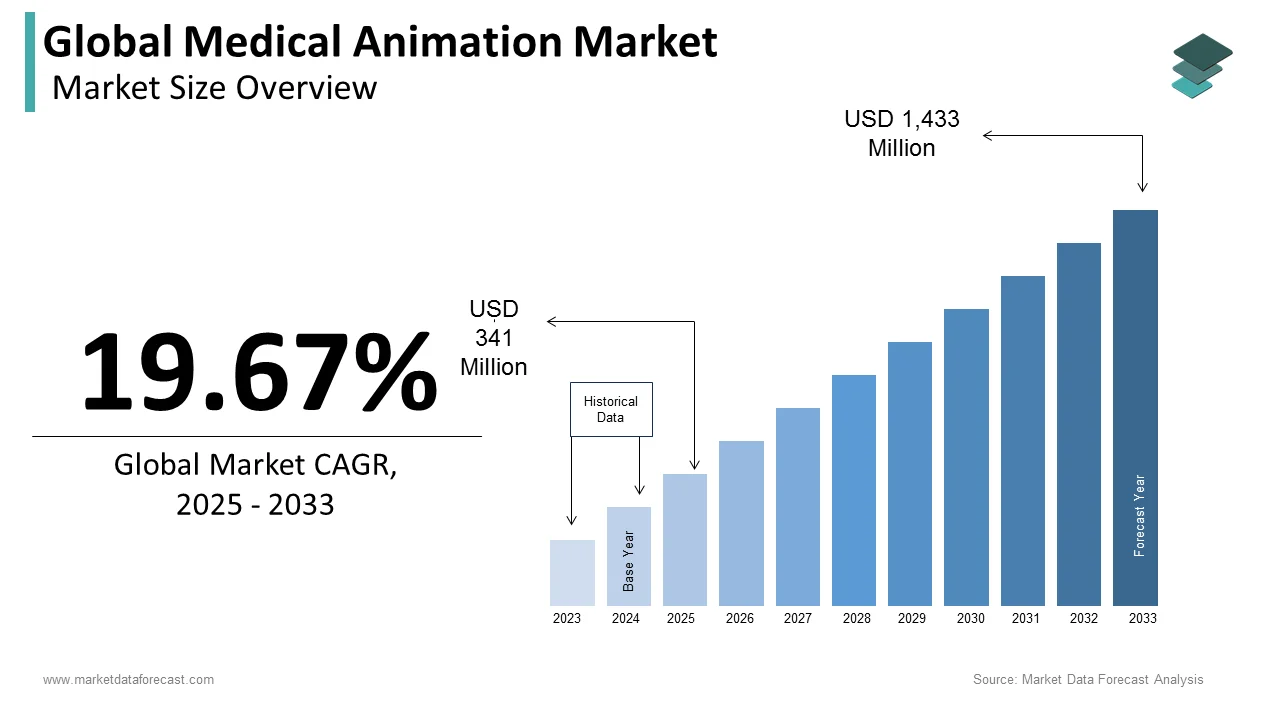
Medical animation is a specialized discipline that converts complex biomedical concepts into dynamic visual narratives through computer-generated imagery. These visualizations articulate anatomical architecture, physiological pathways, surgical interventions, and pharmacological mechanisms with clinical precision. The discipline serves as a critical communication bridge between research institutions, healthcare providers, pharmaceutical developers, and patient communities. The expansion of digital learning frameworks has fundamentally altered how medical professionals acquire and retain procedural knowledge. According to data from the Association of American Medical Colleges (AAMC), nearly 98% of accredited medical schools continue to utilize physical human anatomical donors within their core curricula, though an increasing number of institutions deploy virtual dissection tables and digital models to supplement traditional laboratories. Patient comprehension has similarly shifted toward visual modalities. According to systematic reviews indexed by the National Institutes of Health (NIH), the incorporation of graphics and animated video sequences significantly increases patient comprehension, fact recall, and positive behavioral intentions regarding complex medication regimens compared to traditional text-based information. Regulatory frameworks remain focused on empirical data, as the European Medicines Agency (EMA) requires highly standardized pharmaceutical, chemical, and biological quality dossiers to prove safety and bioequivalence for novel delivery mechanisms. Clinical trial recruitment efforts routinely deploy visual prototypes to explain experimental protocols to prospective participants, thereby streamlining enrollment procedures. This convergence ensures that intricate scientific discoveries remain accessible across varying literacy levels and professional specializations.
MARKET DRIVERS
Escalating Complexity in Biomedical Research Demands Precision Visualization
The rapid advancement of molecular therapeutics and minimally invasive surgical techniques has created an urgent requirement for exact visual representation, which fuels the growth of the medical animation market. Researchers frequently encounter intricate biological pathways that defy conventional textual explanation. According to the National Institutes of Health (NIH), funding for advanced imaging technologies and structural biology remains a core priority through initiatives like the Common Fund, though grant review panels prioritize empirical data, experimental design, and preliminary findings over the presence of high-fidelity animations. Pharmaceutical developers utilize these visual constructs to illustrate drug receptor interactions and metabolic degradation processes during peer review committees. The Food and Drug Administration (FDA) processes scores of novel drug and biologics applications annually, each requiring comprehensive mechanistic and pharmacological documentation detailing the drug's exact mode of action. Clinical investigators rely on these animations to align multidisciplinary teams across global research centers, ensuring uniform interpretation of experimental protocols. While the integration of computational modeling improves a clinical trial team's conceptual understanding of a drug's mechanism of action, reducing protocol deviations during multi-center oncology studies depends on automated data capturing systems, staff training, and rigorous study monitoring. This demand continues to accelerate as researchers pursue increasingly sophisticated targets such as epigenetic modifiers and gene editing vectors.
Accelerated Adoption of Visual Pedagogy in Clinical Training Programs
Medical education has transitioned from static illustrations toward interactive sequential demonstrations that mirror real-time clinical environments, and thereby drive the expansion of the medical animation market. Teaching institutions now prioritize immersive visual content to enhance spatial reasoning and procedural retention among trainees. According to medical education and surgical training literature, incorporating 3D animations and high-fidelity video modules into residency programs significantly improves trainees' spatial understanding, procedural steps, and confidence during simulated surgical workflows. The Association of American Medical Colleges (AAMC) documents a steady rise in the adoption of simulation technologies across medical campuses, where digital tracking tools and high-fidelity task trainers are routinely used alongside standardized patients to track clinical competencies. These platforms enable repetitive practice of complex maneuvers without exposing patients to unnecessary risk. Furthermore, continuing medical education frameworks mandate periodic visual updates to reflect evolving clinical guidelines, which sustains consistent demand for refreshed content. Surgical fellowships routinely deploy animated sequences to demonstrate emerging techniques such as robot-driven microsurgery and transcatheter interventions. The pedagogical shift toward visual learning has fundamentally restructured how healthcare professionals acquire technical proficiency. This transformation ensures that trainees develop comprehensive mental models before encountering live clinical scenarios, thereby elevating overall procedural safety and reducing intraoperative errors.
MARKET RESTRAINTS
Substantial Production Expenditures and Extended Development Timelines
Creating scientifically accurate medical animations requires extensive collaboration between clinical experts, regulatory specialists, and digital artists, which impedes the growth of the medical animation market. Each production cycle demands meticulous verification of anatomical proportions, physiological sequences, and biochemical interactions. According to health and medical media production analyses, the custom development of high-fidelity, scientifically validated 3D medical animation requires significant investment due to the necessity of medical illustrator expertise, scientific advisory reviews, and extensive rendering infrastructures. Production timelines for sophisticated medical animations frequently span several months due to rigorous multi-stage validation rounds and revisions requested by independent scientific advisory boards. Pharmaceutical organizations often allocate substantial portions of their promotional budgets toward content creation, which limits the frequency of visual asset generation. Academic institutions face similar constraints when attempting to modernize digital curricula with limited grant funding. The computational requirements for photorealistic tissue simulation and fluid dynamics modeling further escalate operational costs. Consequently, smaller research teams and independent educational providers struggle to maintain consistent content pipelines. This financial barrier restricts widespread accessibility and slows the integration of advanced visual resources into routine clinical communication frameworks.
Stringent Regulatory Scrutiny and Compliance Verification Processes
Adherence to rigorous accuracy standards established by global health authorities is restricting the expansion of the medical animation market. These standards must be met before distribution to a clinical or commercial audience. Regulatory bodies evaluate every visual element for scientific validity, appropriate risk disclosure, and alignment with approved labeling. As documented by the FDA's Office of Prescription Drug Promotion (OPDP), post-market prescription drug promotional materials are actively monitored, with formal enforcement actions issued to firms violating regulations by omitting key safety details or exaggerating product efficacy. The compliance review process frequently extends publication schedules by several months, particularly when animations depict off-label applications or unapproved device functionalities. Organizations must maintain comprehensive documentation trails that trace each artistic decision back to peer-reviewed literature or clinical trial data. This verification burden increases administrative overhead and requires dedicated regulatory liaison teams. International markets impose additional localization requirements, demanding separate compliance assessments for regional health authorities. The cumulative effect of these regulatory demands creates a cautious production environment where creative flexibility remains subordinate to legal verification. Consequently, content developers prioritize conservative visual interpretations to avoid enforcement actions.
MARKET OPPORTUNITIES
Integration of Immersive Technologies into Clinical Decision Support Systems
Healthcare facilities are progressively embedding animated visualization modules within virtual and augmented reality platforms to enhance surgical planning and patient counselling, which offers significant opportunities for the medical animation market. These immersive environments enable clinicians to navigate three-dimensional anatomical reconstructions before initiating complex interventions. According to healthcare technology adoption trends tracked by medical informatics networks, academic healthcare centers are steadily integrating interactive visualization systems in preoperative units to optimize surgical planning. Surgical outcome reviews demonstrate that utilizing patient-specific 3D anatomical simulations and pre-procedural digital mappings significantly mitigates intraoperative risks and improves the spatial precision of surgical teams. Patient communication has similarly benefited from these platforms, as interactive demonstrations improve comprehension of treatment pathways and expected recovery trajectories. Telemedicine networks now incorporate lightweight animation libraries to support remote consultations across distributed care networks. The convergence of real-time physiological monitoring with visual modeling creates dynamic educational ecosystems that adapt to individual patient metrics. As computational processing power expands and hardware costs decline, hospital systems will increasingly standardize immersive visualization across specialty departments. This transition establishes sustainable demand for clinically validated animated content tailored to emerging digital infrastructure.
Expansion of Multilingual Patient Education Across Diverse Healthcare Ecosystems
Global health initiatives increasingly recognize visual communication as a critical mechanism for overcoming language barriers and improving health literacy among underserved populations, which is anticipated to boost the expansion of the medical animation market. Medical animations transcend textual limitations by conveying physiological concepts through universally recognizable visual sequences. According to the World Health Organization, extensive populations in low- and middle-income regions experience low health literacy that hinders their ability to comprehend written medical guidelines, driving a clear need for accessible visual alternatives. National health agencies now commission localized animation libraries to support community outreach programs targeting chronic disease management and vaccination awareness. Studies indexed in digital health literature indicate that patient comprehension and treatment adherence are significantly enhanced when therapeutic education includes culturally and linguistically adapted visual narratives rather than conventional printed text pamphlets. Emerging markets demonstrate rapid adoption of mobile-optimized animation platforms that deliver procedural guidance directly to smartphones. Pharmaceutical distributors leverage these resources to maintain consistent messaging across multilingual regions without compromising scientific accuracy. The scalability of digital visual content enables rapid deployment during public health campaigns, establishing a sustainable framework for continuous global health education.
MARKET CHALLENGES
Balancing Scientific Accuracy with Layperson Comprehension Levels
Medical animators face continuous pressure to translate highly specialized biological mechanisms into accessible visual narratives without compromising clinical precision, which remains a serious barrier to the growth of the medical animation market. Scientific reviewers prioritize exact molecular representations and anatomical fidelity, while general audiences require simplified sequences that emphasize functional outcomes over microscopic detail. According to health literacy reports compiled by the National Academies, there is a critical systemic need to iteratively design patient-facing educational materials, as traditional medical text frequently exceeds the average reading level of the general adult public. Misalignment between expert validation and audience comprehension frequently results in content that either overwhelms lay viewers or oversimplifies critical safety information. Clinical communication analyses indicate that patients frequently misinterpret objective health risks and surgical probabilities when medical animation displays a preference for high visual stylization or aesthetic clarity over transparent, statistical contexts. Content developers must therefore implement dual-tier production workflows that generate separate versions for professional training and public distribution. This bifurcation increases resource allocation and extends project timelines. The persistent tension between scientific rigor and visual accessibility demands ongoing collaboration between medical professionals, communication specialists, and cognitive researchers to establish standardized simplification protocols.
Rapid Technological Obsolescence and Continuous Software Infrastructure Requirements
Continuous software evolution and frequent rendering standard updates are also slowing down the expansion of the medical animation market. Creative teams must regularly upgrade their computational infrastructure to maintain compatibility with emerging visualization algorithms and artificial intelligence-assisted modeling tools. According to graphics hardware and software tracking data from IEEE computer science publications, digital animation and media studios continuously adapt their rendering architectures and shader frameworks to accommodate advancements in real-time ray-tracing and compute performance. Cloud processing expenses and proprietary software licensing fees impose substantial recurring financial burdens on production teams. The integration of machine learning frameworks for automated tissue simulation requires specialized technical expertise that remains scarce within traditional animation workforces. Academic and clinical institutions struggle to synchronize their educational platforms with rapidly shifting software ecosystems, leading to fragmented content libraries and compatibility failures. Continuous hardware depreciation further complicates long-term budgeting strategies for visual communication departments. Organizations must allocate dedicated technical training resources to ensure creative staff maintain proficiency with evolving digital toolchains. This relentless cycle of technological renewal creates persistent operational friction that challenges sustainable content production workflows.
REPORT COVERAGE
| REPORT METRIC | DETAILS |
| Market Size Available | 2025 to 2034 |
| Base Year | 2025 |
| Forecast Period | 2026 to 2034 |
| Segments Covered | By Type, Therapeutic Area, End-User, Application, and Region |
| Various Analyses Covered | Global, Regional and Country-Level Analysis, Segment-Level Analysis, Drivers, Restraints, Opportunities, Challenges; PESTLE Analysis; Porter’s Five Forces Analysis, Competitive Landscape, Analyst Overview of Investment Opportunities |
| Regions Covered | North America, Europe, Asia Pacific, Latin America, Middle East & Africa |
| Market Leaders Profiled | Infuse Medical (U.S.), Hybrid Medical Animation, Inc. (U.S.), Ghost Productions, Inc. (U.S.), Radius Digital Science (U.S.), Nucleus Medical Media, Inc. (U.S.), AXS Studio, Inc. (Canada), Visible Body (U.S.), Elara Systems, Inc. (U.S.), Animated Biomedical Productions (Australia), XVIVO Scientific Animation (U.S.), Scientific Animations, Inc. |
SEGMENTAL ANALYSIS
By Type Insights
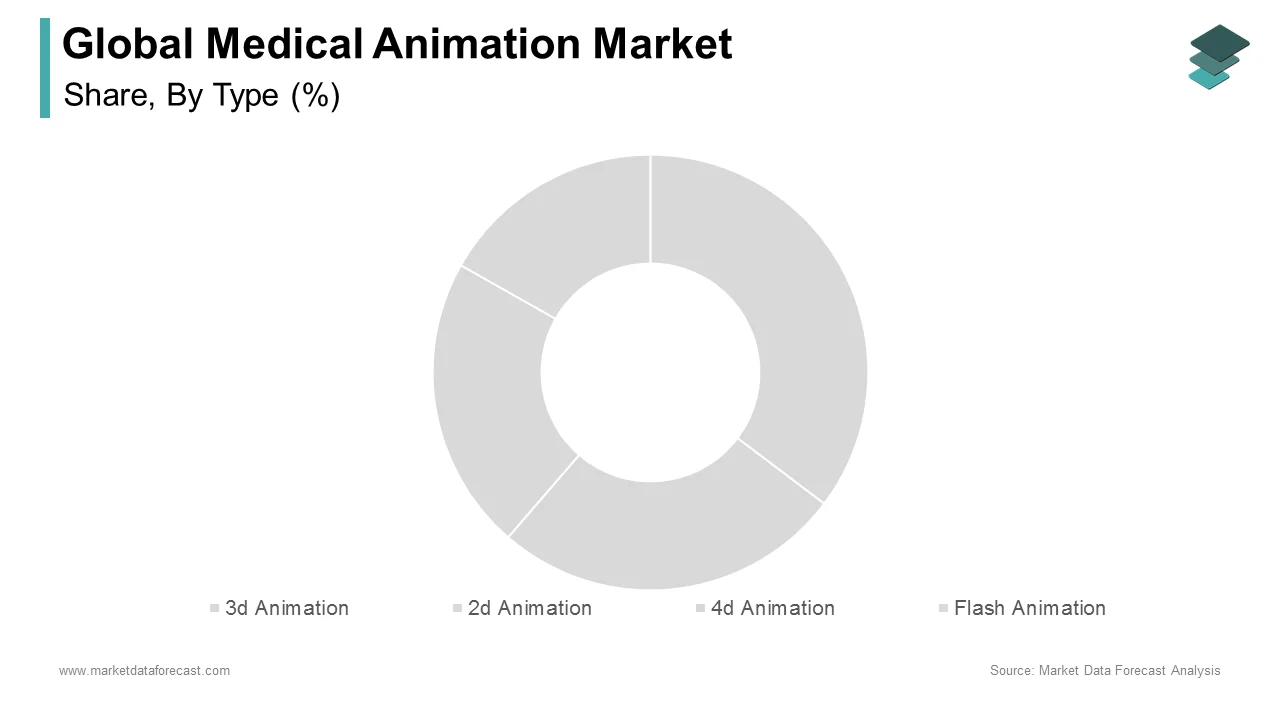
The 3D animation segment remained in the lead by capturing a 45.1% share of the global medical animation market in 2025. This leading position of the segment was attributed to the technology's capacity to render photorealistic anatomical structures and dynamic physiological processes that static imagery cannot replicate. Three-dimensional animation provides clinicians and researchers with volumetric representations that mirror actual human anatomy with exceptional fidelity. This preference arises because spatial relationships within biological systems demand rotational viewing angles and layered tissue differentiation that only volumetric rendering can deliver. Pharmaceutical developers rely on these 3D models to demonstrate drug binding sites and metabolic pathways during regulatory submissions, as the Food and Drug Administration requires detailed mechanistic and pharmacological documentation for novel therapeutic approvals. Medical device manufacturers similarly leverage 3D sequences to showcase implant positioning and instrument navigation during pre-market approvals. The technology also supports interactive learning modules where trainees manipulate virtual organs to understand procedural sequences. As computational rendering capabilities and real-time engine workflows advance, the production timeline for high-fidelity 3D content continues to decline, enabling more frequent content updates and broader distribution across educational platforms.
Furthermore, the compatibility of 3D animation with virtual reality and augmented reality ecosystems amplifies its utility across clinical and educational settings. According to clinical technology frameworks tracked by healthcare informatics societies, academic medical centers are steadily integrating 3D visualization systems into preoperative planning workflows to enhance complex surgical simulation. These platforms enable surgeons to rehearse complex procedures using patient-specific anatomical models derived from 3D animated reconstructions. Surgical outcome tracking documents a significant reduction in navigation and boundary errors when procedural teams utilize pre-operative animated simulations and 3D reconstructions for complex anatomical mapping. Furthermore, 3D content scales efficiently across digital distribution channels, allowing global pharmaceutical campaigns to maintain visual consistency while adapting to regional regulatory requirements. The technology also supports haptic feedback integration, where trainees experience tactile resistance during virtual dissections, thereby enhancing procedural muscle memory. Smaller institutions are gaining access to enterprise-grade visualization tools as cloud-based rendering services reduce infrastructure costs. Consequently, this is expanding the addressable market for 3D medical animation solutions.
On the other hand, the 4D animation segment is projected to expand at a CAGR of 20.9% from 2026 to 2034. This accelerated growth of the segment is propelled by increasing adoption of time-based physiological modeling and real-time surgical simulation. Four-dimensional animation incorporates the temporal dimension to illustrate how biological systems evolve during interventions or disease progression. This capability proves invaluable for demonstrating cardiac cycle dynamics, respiratory mechanics, and neural signal propagation, where timing and sequence critically influence clinical outcomes. Anesthesiologists utilize 4D models to visualize drug distribution kinetics during induction protocols, while cardiologists employ them to simulate blood flow patterns across stenotic valves. The technology also supports intraoperative guidance systems where animated overlays update in response to live imaging inputs. According to graphics hardware and software tracking data from computer science publications, digital media studios are continuously modifying their rendering pipelines to accommodate time-dependent, dynamic datasets for real-time biological modeling. This shift enables more accurate prediction of treatment responses and enhances patient counseling through personalized progression scenarios.
In addition, the capacity of 4D animation to replicate procedural sequences in real time transforms surgical education and preoperative planning. According to medical education and surgical training literature, residency programs incorporating dynamic 4D simulation modules report a significant improvement in trainees' spatial comprehension and procedural fluency during live operations. These platforms allow trainees to practice complex maneuvers while receiving immediate feedback on instrument trajectory and tissue interaction timing. The technology also supports remote proctoring, where experienced surgeons guide less experienced colleagues through animated overlays during live procedures. As computational processing power expands and latency decreases, hospital systems increasingly standardize 4D visualization across specialty departments. This transition establishes sustainable demand for clinically validated animated content tailored to emerging digital infrastructure and real-time decision support requirements.
By Application Insights
In 2025, the drug mechanism of action and approval segment dominated the global medical animation market and accounted for a 44.2% share. This dominance of the segment was driven by the pharmaceutical industry's reliance on visual storytelling to communicate complex molecular interactions during regulatory review and commercial promotion. Pharmaceutical developers utilize mechanism of action animations to illustrate how novel therapeutics engage biological targets and modulate disease pathways. These animations clarify receptor binding kinetics, intracellular signaling cascades, and metabolic degradation processes that textual descriptions often obscure. Regulatory reviewers increasingly expect visual evidence supporting efficacy claims, particularly for biologics and gene therapies, where molecular complexity defies conventional illustration. The European Medicines Agency similarly mandates standardized visual documentation for novel biological delivery mechanisms. This regulatory expectation drives consistent demand for scientifically validated animated content that aligns with submission guidelines. Furthermore, mechanism of action animations facilitate peer review discussions by enabling researchers to visualize experimental hypotheses and interpret complex datasets through shared visual frameworks.
Beyond regulatory contexts, mechanism of action animations serve as powerful commercial assets for pharmaceutical marketing and medical education. These visuals help sales representatives explain complex pharmacology during limited detail calls, while medical science liaisons use them to support scientific exchange with key opinion leaders. Patient-facing adaptations of these animations also improve treatment understanding and adherence. The scalability of digital visual content enables rapid deployment across multilingual regions without compromising scientific accuracy, establishing a sustainable framework for continuous global health communication.
The patient education segment is expected to exhibit a noteworthy CAGR of 20.9% during the forecast period, owing to increasing recognition of visual communication as a critical mechanism for improving health literacy and treatment adherence. Medical animations transcend textual limitations by conveying physiological concepts through universally recognizable visual sequences. National health agencies now commission localized animation libraries to support community outreach programs targeting chronic disease management and vaccination awareness. Emerging markets demonstrate rapid adoption of mobile-optimized animation platforms that deliver procedural guidance directly to smartphones. Pharmaceutical distributors leverage these resources to maintain consistent messaging across multilingual regions without compromising scientific accuracy. The scalability of digital visual content enables rapid deployment during public health campaigns, establishing a sustainable framework for continuous global health education.
Moreover, the convergence of patient education animations with telemedicine networks and remote monitoring systems amplifies their impact across distributed care models. These platforms enable clinicians to share animated explanations of diagnosis and treatment options during virtual visits, thereby improving patient understanding and shared decision-making. The technology also supports asynchronous education, where patients review animated content at their own pace before clinical appointments. As broadband access expands and smartphone penetration increases globally, hospital systems increasingly standardize visual patient education across specialty departments. This transition establishes sustainable demand for clinically validated animated content tailored to diverse literacy levels and cultural contexts.
By Therapeutic Area Insights
The oncology segment held the majority share of 36.4% of the medical animation market in 2025. This supremacy shows the field complexity and the critical need for visual communication in cancer research, treatment planning, and patient counseling. Oncological research demands precise illustration of tumor biology, immune interactions, and therapeutic mechanisms that textual descriptions cannot adequately convey. Pharmaceutical developers utilize these visual constructs to illustrate drug receptor interactions and metabolic degradation processes during peer review committees. Clinical investigators rely on animations to align multidisciplinary teams across global research centers, ensuring uniform interpretation of experimental protocols. This demand continues to accelerate as researchers pursue increasingly sophisticated targets such as epigenetic modifiers and gene editing vectors.
Furthermore, oncology animations also serve vital roles in patient education and shared decision-making during complex treatment discussions. These animations help patients understand tumor staging, surgical approaches, and systemic therapy mechanisms, thereby reducing anxiety and enhancing treatment adherence. The technology also supports survivorship education by illustrating long-term monitoring protocols and lifestyle modifications. As personalized medicine advances, oncology animations increasingly incorporate patient-specific genomic data to visualize individualized treatment pathways. This capability strengthens the therapeutic alliance and empowers patients to participate actively in care planning.
The cardiology segment is predicted to witness the highest CAGR of 20.4% between 2026 and 2034. This swift growth of the segment is fuelled by rising cardiovascular disease prevalence and increasing adoption of minimally invasive interventions requiring precise visual guidance. Cardiovascular diseases remain the leading cause of global mortality, driving sustained investment in diagnostic and therapeutic innovation. Medical animations help clinicians visualize complex hemodynamic principles, device deployment techniques, and post-procedural care protocols. The technology also supports patient education by illustrating lifestyle modifications and medication adherence strategies. As transcatheter interventions expand beyond traditional surgical candidates, the need for precise visual communication intensifies. Cardiology animations enable heart teams to plan complex procedures using patient-specific anatomical models derived from imaging data. This capability improves procedural success rates and reduces complications, thereby strengthening the clinical value proposition for animated content.
In addition, the convergence of cardiology animations with intravascular imaging and electrophysiological mapping systems amplifies their utility across interventional settings. These platforms enable operators to visualize catheter trajectory relative to anatomical landmarks, thereby improving procedural precision and reducing radiation exposure. The technology also supports training programs where fellows practice complex maneuvers using virtual simulations before performing live procedures. As artificial intelligence enhances image segmentation and motion tracking, cardiology animations increasingly incorporate real-time physiological data to create dynamic decision support tools. This evolution establishes sustainable demand for clinically validated animated content tailored to emerging interventional technologies.
By End User Insights
The life science companies segment was the largest by occupying a 25.9% share of the medical animation market in 2025. This prominence of the segment was supported by the pharmaceutical and biotechnology industry's reliance on visual communication for research, development, and commercial activities. Pharmaceutical and biotechnology firms utilize medical animations throughout the product lifecycle, from target validation to post-market surveillance. These animations clarify receptor binding kinetics, intracellular signaling cascades, and metabolic degradation processes that textual descriptions often obscure. Regulatory reviewers increasingly expect visual evidence supporting efficacy claims, particularly for biologics and gene therapies, where molecular complexity defies conventional illustration. The European Medicines Agency similarly mandates standardized visual documentation for novel biological delivery mechanisms. This regulatory expectation drives consistent demand for scientifically validated animated content that aligns with submission guidelines. Furthermore, mechanism of action animations facilitate peer review discussions by enabling researchers to visualize experimental hypotheses and interpret complex datasets through shared visual frameworks.
Beyond regulatory contexts, life science companies leverage medical animations as strategic commercial assets for healthcare professional engagement and patient support programs. These visuals help sales representatives explain complex pharmacology during limited detail calls, while medical science liaisons use them to support scientific exchange with key opinion leaders. The scalability of digital visual content enables rapid deployment across multilingual regions without compromising scientific accuracy, establishing a sustainable framework for continuous global health communication.
The academic institutes segment is anticipated to witness the fastest CAGR of 20.7% over the forecast period due to increasing integration of visual learning tools into medical curricula and research training programs. Academic institutions increasingly prioritize interactive visual content to enhance spatial reasoning and procedural retention among trainees. These platforms enable repetitive practice of complex maneuvers without exposing patients to unnecessary risk. Furthermore, continuing medical education frameworks mandate periodic visual updates to reflect evolving clinical guidelines, which sustains consistent demand for refreshed content. Surgical fellowships routinely deploy animated sequences to demonstrate emerging techniques such as robot-driven microsurgery and transcatheter interventions. The pedagogical shift toward visual learning has fundamentally restructured how healthcare professionals acquire technical proficiency.
Moreover, academic researchers also leverage medical animations to communicate complex findings during grant applications, conference presentations, and peer-reviewed publications. These visual constructs help reviewers understand experimental designs and interpret multidimensional datasets more effectively. The technology also supports interdisciplinary collaboration by providing shared visual frameworks that bridge disciplinary jargon. As open science initiatives expand, academic institutions increasingly publish animated supplements alongside traditional manuscripts to enhance reproducibility and knowledge transfer. This trend establishes sustainable demand for scientifically validated animated content tailored to research communication standards and educational best practices.
REGIONAL ANALYSIS
North America Medical Animation Market Analysis
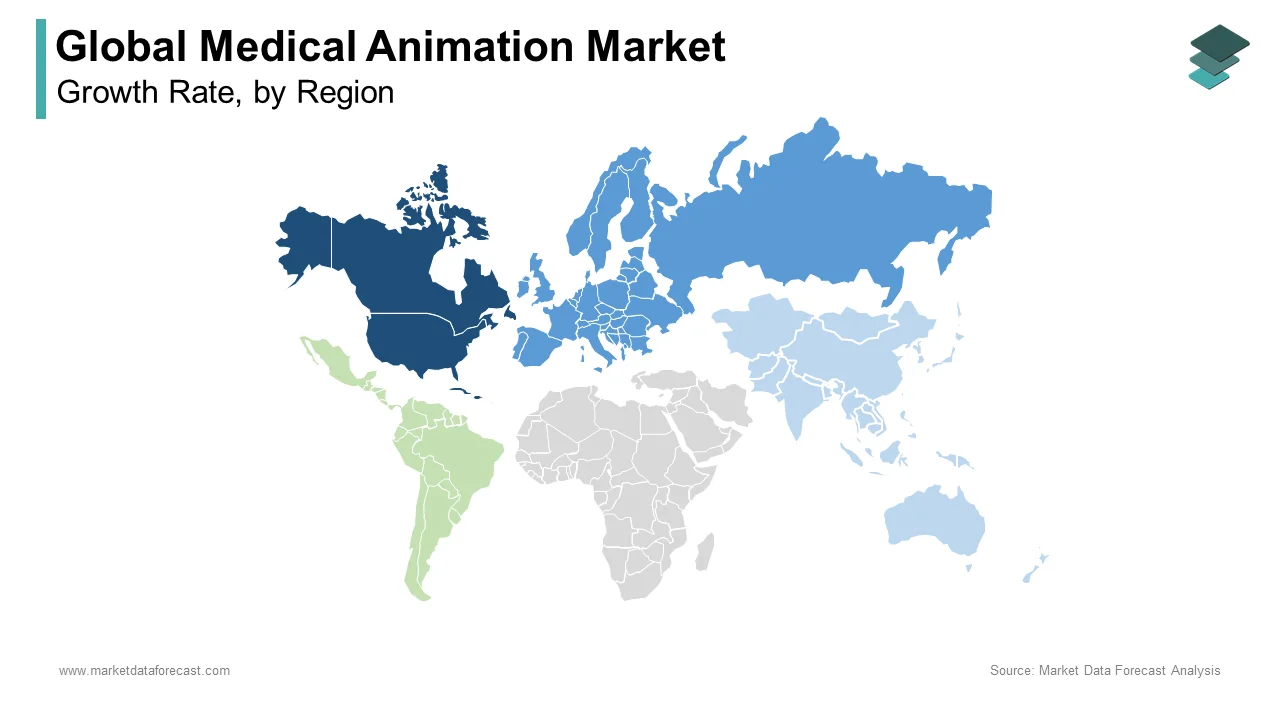
North America outperformed other regions in the global medical animation market and accounted for a 46.3% share in 2025. This dominance of the North American market was driven by the region’s advanced healthcare infrastructure, substantial research investment, and early adoption of digital communication technologies. The United States drives regional dominance through robust pharmaceutical research activity and stringent regulatory requirements that favor visual documentation. The Food and Drug Administration (FDA) evaluates scores of novel drug and biologics applications annually, each requiring comprehensive biochemical and mechanistic documentation to verify safety and therapeutic efficacy. Moreover, the Association of American Medical Colleges (AAMC) documents a steady rise in the adoption of simulation technologies across medical campuses, where digital tracking tools and high-fidelity task trainers are routinely used alongside standardized patients to track clinical competencies. The region also benefits from the concentrated presence of leading animation studios and technology providers who collaborate closely with healthcare institutions to develop clinically validated content. Reimbursement policies increasingly recognize the value of patient education tools, further supporting market expansion. As artificial intelligence and immersive technologies mature, North American institutions continue to pioneer innovative applications that set global standards for medical animation quality and utility.
Europe Medical Animation Market Analysis
Europe was the next prominent region in the medical animation market because of strong public healthcare systems and rigorous regulatory frameworks that emphasize patient safety and informed consent. The European Medicines Agency mandates standardized visual documentation for novel biological delivery mechanisms, creating consistent demand for scientifically validated animated content across member states. According to the Association of Medical Schools in Europe (AMSE) directives, European institutions are increasingly adopting digital visualization and simulation platforms to complement traditional lecture-based and clinical training methods. The region also benefits from collaborative research initiatives that pool resources across borders to develop multilingual animation libraries supporting diverse patient populations. Reimbursement policies in countries such as Germany and France increasingly recognize the value of patient education tools, further supporting market expansion. As data privacy regulations evolve, European providers prioritize secure distribution platforms that comply with GDPR requirements while maintaining global accessibility. This balanced approach to innovation and regulation establishes Europe as a critical market for high-quality medical animation solutions.
Asia Pacific Medical Animation Market Analysis
Asia Pacific represents the fastest-growing regional market for medical animation. This acceleration shows rising healthcare expenditure, expanding medical education infrastructure, and increasing adoption of digital technologies across emerging economies. China and India drive regional growth through substantial investments in healthcare modernization and medical training programs. National health agencies now commission localized animation libraries to support community outreach programs targeting chronic disease management and vaccination awareness. The region also benefits from growing pharmaceutical research activity, with multinational companies establishing development centers that require visual communication tools for regulatory submissions and commercial promotion. As smartphone penetration increases and broadband access expands, mobile-optimized animation platforms gain traction across distributed care networks. This digital transformation establishes sustainable demand for clinically validated animated content tailored to diverse literacy levels and cultural contexts.
Middle East and Africa Medical Animation Market Analysis
The Middle East and Africa region witnessed a steady growth in the medical animation market due to healthcare modernization initiatives and increasing investment in medical education infrastructure. Gulf Cooperation Council countries lead regional expansion through strategic investments in tertiary care centers and academic medical institutions that prioritize advanced training technologies. National health agencies increasingly commission localized animation libraries to support community outreach programs targeting non-communicable disease prevention and maternal health education. The region also benefits from growing pharmaceutical research activity, with multinational companies establishing development centers that require visual communication tools for regulatory submissions and commercial promotion. As broadband access expands and smartphone penetration increases, mobile-optimized animation platforms gain traction across distributed care networks. This digital transformation establishes sustainable demand for clinically validated animated content tailored to diverse literacy levels and cultural contexts.
Latin America Medical Animation Market Analysis
Latin America is likely to expand notably in the medical animation market from 2026 to 2034, owing to growing healthcare expenditure and increasing adoption of digital education tools across public and private institutions. Brazil and Mexico drive regional growth through investments in medical training programs and pharmaceutical research infrastructure. National health agencies increasingly commission localized animation libraries to support community outreach programs targeting infectious disease prevention and chronic condition management. The region also benefits from growing pharmaceutical research activity, with multinational companies establishing development centers that require visual communication tools for regulatory submissions and commercial promotion. As smartphone penetration increases and broadband access expands, mobile-optimized animation platforms gain traction across distributed care networks. This digital transformation establishes sustainable demand for clinically validated animated content tailored to diverse literacy levels and cultural contexts.
COMPETITIVE LANDSCAPE
The medical animation market exhibits moderate concentration with established studios leveraging scientific expertise, proprietary technology, and long-standing client relationships to maintain a competitive advantage. Leading firms differentiate themselves through in-house medical review processes that ensure anatomical precision and regulatory compliance across global jurisdictions. Mid-tier companies often specialize in specific therapeutic areas such as oncology or cardiology, allowing them to develop deep domain knowledge that appeals to niche client segments. Emerging players increasingly adopt artificial intelligence and cloud-based collaboration tools to reduce entry barriers and accelerate content delivery. Competitive intensity continues to rise as hospitals and academic institutions internalize basic animation capabilities while outsourcing complex projects to specialized vendors. Studios that combine scientific rigor with cinematic storytelling and immersive technology integration are best positioned to capture incremental value in this expanding market landscape.
KEY MARKET PARTICIPANTS
Some of the promising companies leading the global medical animation market profiled in the report are
- Infuse Medical
- Hybrid Medical Animation, Inc.
- Ghost Productions, Inc.
- Radius Digital Science
- Nucleus Medical Media, Inc.
- Random42 Scientific Communication
- AXS Studio, Inc.
- Visible Body
- Elara Systems, Inc.
- Animated Biomedical Productions
- XVIVO Scientific Animation
- Scientific Animations, Inc.
TOP PLAYERS IN THE MARKET
- Random42 Scientific Communication stands as a premier global provider of high-end medical animation and scientific storytelling solutions. The company serves pharmaceutical leaders, biotechnology innovators, and healthcare organizations by transforming complex molecular mechanisms into cinematic visual narratives. The company recently expanded its mixed reality portfolio by launching augmented reality applications compatible with mobile devices, enabling interactive patient education at scale. Random42 also strengthened its market position through strategic partnerships with global advertising agencies, facilitating broader distribution of its scientifically validated content across multiple therapeutic categories and geographic regions.
- Ghost Productions Inc operates as a veteran medical visualization studio with more than 25 years of experience serving the healthcare and life sciences sectors. The company specializes in three-dimensional animation, virtual reality surgical simulations, and comprehensive medical marketing services. This innovation allows surgeons to rehearse complex procedures in immersive environments while receiving real-time feedback on technique and decision-making. The company also expanded its service offerings to include search engine optimization and social media management, providing clients with integrated digital solutions that amplify the reach and impact of their visual content across professional and patient-facing channels.
- XVIVO Scientific Animation delivers scientifically accurate visual storytelling for biotechnology, pharmaceutical, and educational institutions worldwide. The company excels in creating mechanisms of action, animations, molecular visualizations, and interactive media that clarify intricate biological processes for diverse audiences. The company also launched a dedicated educational initiative partnering with academic medical centers to incorporate its animation library into residency curricula and continuing medical education programs. These strategic moves reinforce XVIVO's commitment to advancing scientific communication while expanding its footprint across clinical training and patient engagement ecosystems.
TOP STRATEGIES USED BY KEY MARKET PARTICIPANTS
Key players in the medical animation market prioritize scientific accuracy by embedding PhD-qualified researchers within creative teams to validate every visual element against peer-reviewed literature. Companies invest heavily in proprietary rendering pipelines and artificial intelligence tools that reduce production timelines while maintaining cinematic quality. Strategic partnerships with pharmaceutical firms and academic institutions enable co-development of content that aligns with regulatory submission requirements and educational standards. Market leaders also pursue geographic expansion by establishing regional studios in cost-competitive locations to serve emerging markets with localized multilingual content. Another prevalent strategy involves diversifying service portfolios to include virtual reality, augmented reality, and interactive platforms that address evolving client needs across surgical training, patient education, and commercial promotion.
MARKET SEGMENTATION
This research report on the global medical animation market has been segmented and sub-segmented into the following categories, and the market size and forecast for each segment have been calculated until 2033.
By Type
- 3d Animation
- 2d Animation
- 4d Animation
- Flash Animation
By Application
- Surgical Education and Programming
- Drug Delivery
- Patient Education
- Cellular And Molecular Studies
- Other Applications
By Therapeutic Area
- Cosmetic And Plastic Surgery
- Dental
- Oncology
- Cardiology
- Therapeutic Areas
By End User
- Academic Institutions
- Hospitals
- Surgical Centers and Clinics
- Medical Device Manufacturers
- Forensic Scientists
- Insurance Companies
- Others
By Region
- North America
- Europe
- Asia-Pacific
- Latin America
- The Middle East and Africa