- Product Description Description
- Table of Contents TOC
- List of Table & Figure LOT
- Get Free Sample PDF Sample PDF
Market Size, 2025
$0.75 BnMarket Estimate, 2026
$0.77 BnMarket Forecast, 2034
$1 BnCAGR, 2026–2034
3.33%Executive Summary: Middle East & Africa Bakery Ingredients Market
- Market Scope: Comprehensive analysis of the MEA bakery ingredients industry, tracking end products, ingredient classifications, and country-specific market drivers.
- Market Valuation: Valued at USD 0.75 billion in 2025, reaching USD 0.77 billion in 2026, and projected to scale up to USD 1.00 billion by 2034, expanding at a steady CAGR of 3.33% from 2026 to 2034.
- Primary Growth Drivers: Rapid urbanization, changing lifestyles, and high per capita staple consumption of bread across diverse socioeconomic groups.
Key Market Segment Metrics
| Category | Leading Segment (Base Year Position) | Fastest-Growing / High-Impact Segment |
|---|---|---|
| By End Products | Bread (commanded a 52.5% market share in 2025 anchored by deep cultural integration and subsidized staples) | Cakes & Pastries (fastest-growing at a 6.2% CAGR propelled by rising disposable incomes and Western lifestyle shifts) |
| By Ingredient Type | Leavening Agents (held majority share in 2025 due to essential yeast and chemical leavener demand in flatbreads) | Enzymes (fastest-growing at a 7.5% CAGR driven by clean-label solutions, shelf-life extension, and climate tolerance) |
| By Region / Country | Saudi Arabia (market leader capturing a 40.6% share in 2025 backed by population size, food security, and Vision 2030) | UAE & South Africa (strategic hubs driven by premium tourism, specialized retail expansions, and robust food processing standards) |
Major Market Players & Market Structure
Market Structure: Highly competitive landscape balancing multinational corporations with agile regional players competing through localization, technical support, and supply chain adaptation.
Key Companies: Puratos Group, Cargill Inc, Kerry Group, Associated British Foods (AB Mauri), DSM, DuPont Dawn Foods Ltd, Taura Natural Ingredients Limited, Muntons PLC, Corbion N.V., and British Bakels Limited.
Middle East & Africa Bakery Ingredients Market Size
The bakery ingredients market size in the Middle East and Africa was valued at USD 0.75 billion in 2025. This regional market is further estimated to be worth USD 0.77 billion in 2026 and USD 1.00 billion by 2034, exhibiting a CAGR of 3.33% from 2026 to 2034.
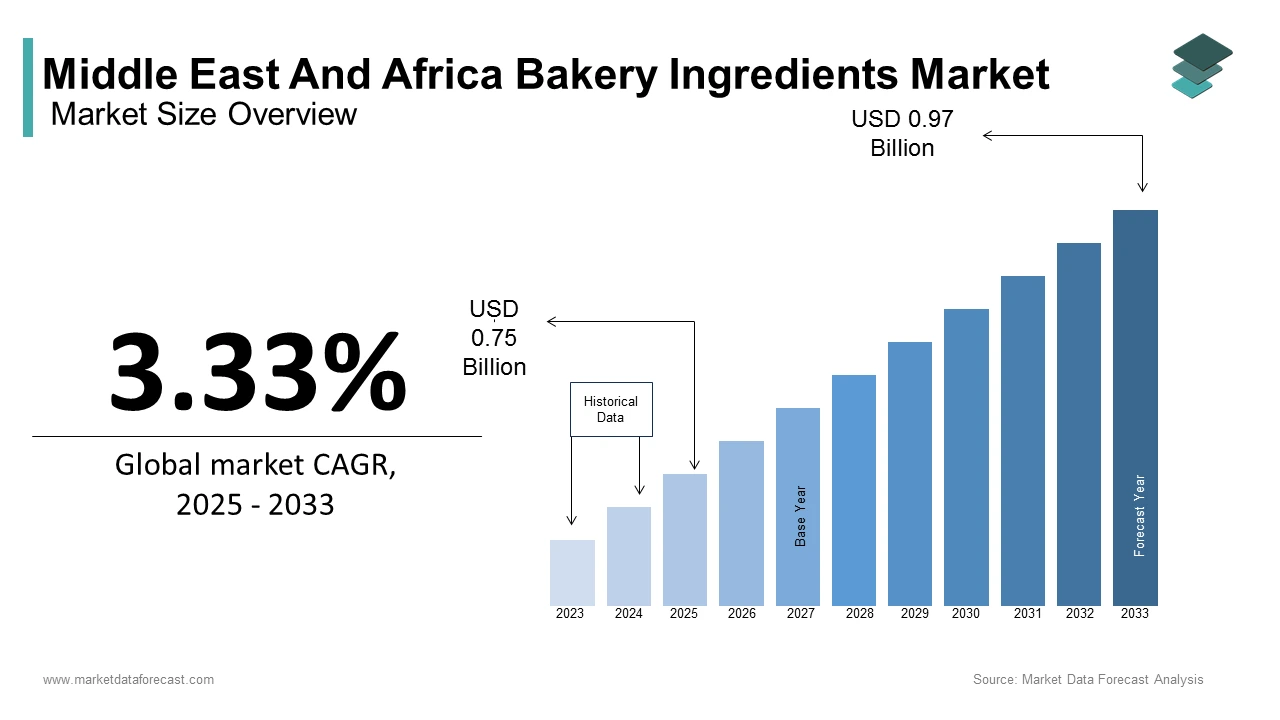
Bakery ingredients, including flour, sugar, emulsifiers, enzymes, and flavor enhancers, are essential components in producing bread, cakes, pastries, and other confectionery products. The rising urban population and changing dietary preferences are key factors fuelling the demand for bakery ingredients. According to the Food and Agriculture Organization, bread remains a staple food in many Middle Eastern and African countries, accounting for a large share of daily calorie intake. Additionally, the United Nations projects that the urban population in Africa is expected to reach 60% by 2050, contributing to the increased demand for convenience foods, including baked goods. The growing influence of Western dietary trends and the expansion of retail bakeries in countries such as Saudi Arabia, the UAE, and South Africa further drive the adoption of bakery ingredients.
MARKET DRIVERS
Rising Urbanization and Changing Lifestyles
Urbanization in the Middle East and Africa is driving significant growth in the bakery ingredients market as busy lifestyles lead to increased demand for convenience foods. The United Nations estimates that by 2050, over 60% of the African population will reside in urban areas, creating a shift towards readily available, affordable baked goods. In countries like South Africa and Nigeria, the rise of dual-income households has fueled the consumption of packaged bread and pastries. This demand directly impacts the use of bakery ingredients like emulsifiers and preservatives, which extend shelf life and improve product quality. Urbanization's influence on consumer behavior is a key driver of growth in this market.
Growing Demand for Functional and Specialty Ingredients
The increasing focus on health and wellness in the Middle East and Africa is driving demand for functional and specialty bakery ingredients. According to the World Health Organization, the prevalence of non-communicable diseases, such as diabetes and obesity, is rising in the region, prompting consumers to seek healthier alternatives. This has led to the adoption of gluten-free, low-sugar, and high-fiber baked goods, boosting the demand for innovative ingredients like natural sweeteners, whole-grain flour, and dietary fibers. As consumer awareness of nutrition grows, manufacturers are leveraging functional ingredients to meet evolving preferences, contributing significantly to market expansion.
MARKET RESTRAINTS
High Cost of Specialty Ingredients
The elevated cost of specialty bakery ingredients, such as gluten-free flours, natural sweeteners, and clean-label emulsifiers, is a major restraint in the Middle East and Africa bakery ingredients market. The World Bank reports that many African nations face high food import costs due to limited local production of specialized ingredients, leading to inflated prices for end consumers. This cost barrier disproportionately impacts lower-income households, limiting the adoption of premium and health-oriented baked goods. Additionally, high production and transportation costs further hinder market accessibility, posing challenges for manufacturers aiming to cater to diverse consumer segments across the region.
Inadequate Infrastructure and Supply Chain Challenges
Weak infrastructure and supply chain inefficiencies significantly constrain the bakery ingredients market in the Middle East and Africa. According to the United Nations Economic Commission for Africa, inadequate transportation networks and poor storage facilities contribute to high spoilage rates and inconsistent ingredient supply. These issues are particularly pronounced in rural and remote areas, where logistical hurdles limit the availability of quality ingredients. Seasonal disruptions and reliance on imported goods exacerbate the problem, making it challenging for manufacturers to maintain steady production. Resolving these infrastructure gaps is critical for ensuring a reliable supply chain and supporting market growth in the region.
MARKET OPPORTUNITIES
Expansion of Retail and Artisan Bakeries
The rapid growth of retail and artisan bakeries in the Middle East and Africa presents a significant opportunity for the bakery ingredients market. According to the Food and Agriculture Organization, bread and bakery products remain staples in the diet of many countries in the region, driving demand for diverse ingredients. The rise of specialty bakeries, particularly in urban areas of countries like Saudi Arabia, South Africa, and Egypt, has created a need for innovative ingredients such as flavor enhancers, preservatives, and natural coloring agents. As disposable incomes increase and consumer preferences evolve, the expansion of retail bakeries is expected to bolster the adoption of advanced bakery ingredients.
Growing Demand for Plant-Based and Clean-Label Products
The rising demand for plant-based and clean-label baked goods in the Middle East and Africa offers a lucrative opportunity for bakery ingredient manufacturers. The World Health Organization highlights increasing health concerns related to non-communicable diseases, such as diabetes and heart conditions, which have prompted consumers to seek healthier food options. Ingredients like plant-based proteins, organic flours, and natural emulsifiers are gaining traction, catering to health-conscious and vegan consumers. Countries like the UAE and South Africa are leading this shift as awareness campaigns emphasize sustainable and health-focused eating habits. This trend enables manufacturers to innovate and capture market share through clean-label and plant-based ingredient offerings.
MARKET CHALLENGES
Food Security and Dependency on Imports
A major challenge facing the Middle East and Africa bakery ingredients market is food insecurity and a heavy reliance on imported raw materials. The Food and Agriculture Organization states that over 80% of wheat, a key ingredient in baked goods, is imported in countries like Egypt and Saudi Arabia. This dependency makes the market vulnerable to global supply chain disruptions, price volatility, and geopolitical tensions. Additionally, many African nations struggle with low domestic agricultural productivity, which exacerbates ingredient shortages. These challenges limit the availability of affordable bakery ingredients, constraining market growth and impacting the overall food sector's resilience.
Regulatory and Quality Compliance Issues
Navigating diverse and often inconsistent regulatory frameworks across the Middle East and Africa poses a significant challenge for bakery ingredient manufacturers. According to the World Health Organization, inadequate food safety standards and enforcement mechanisms in some countries lead to the circulation of substandard or adulterated products. This lack of uniformity in quality assurance creates barriers for international ingredient suppliers attempting to enter these markets. Furthermore, varying labeling requirements and import regulations increase compliance costs, particularly for manufacturers of specialty or clean-label ingredients. Addressing regulatory inconsistencies is essential for fostering a reliable and competitive bakery ingredients market in the region.
REPORT COVERAGE
| REPORT METRIC | DETAILS |
| Market Size Available | 2025 to 2034 |
| Base Year | 2025 |
| Forecast Period | 2026 to 2034 |
| CAGR | 3.33% |
| Segments Covered | By End Products, Ingredient Type, And Region |
| Various Analyses Covered | Global, Regional & Country Level Analysis; Segment-Level Analysis; DROC, PESTLE Analysis; Porter’s Five Forces Analysis; Competitive Landscape; Analyst Overview of Investment Opportunities |
| Regions Covered | KSA, UAE, Israel, Rest of GCC countries, South Africa, Ethiopia, Kenya, Egypt, Sudan, and the rest of MEA |
| Market Leaders Profiled | Cargill Inc, Kerry Group, Associated British Foods, DSM, DuPont Dawn Foods Ltd, Taura Natural Ingredients Limited, Muntons PLC, Corbion N.V, And British Bakels Limited |
SEGMENTAL ANALYSIS
By End-Products Insights
The bread segment dominated the Middle East and Africa bakery ingredients market and accounted for a 52.5% share in 2025. Factors such as its status as a fundamental staple food across diverse cultures and socioeconomic groups drive the dominance of this segment. Apart from these, one of the major factors sustaining this dominance is the deep cultural integration of bread into daily meals, where it serves as the primary source of carbohydrates for millions of households. According to the Food and Agriculture Organization of the United Nations, the Middle East and North Africa region has the highest per capita wheat consumption globally, with countries like Egypt consuming over 180 kilograms of wheat per person annually, the majority of which is converted into various forms of bread. This immense volume creates a consistent and high demand for basic bakery ingredients such as flour, yeast, and improvers. As per the Egyptian Ministry of Supply and Internal Trade, the government subsidizes billions of loaves of baladi bread each year to ensure food security for its population, highlighting the critical role of bread in national stability and dietary habits. The ubiquity of bakeries, ranging from small artisanal shops to large industrial facilities, ensures that bread production remains robust despite economic fluctuations. Furthermore, the versatility of bread allows it to be consumed at every meal, reinforcing its position as an indispensable commodity. The steady population growth in the region further amplifies this demand, requiring a continuous supply of high-quality ingredients to maintain production levels. Consequently, the bread segment drives the largest share of ingredient consumption, underpinning the overall market structure.
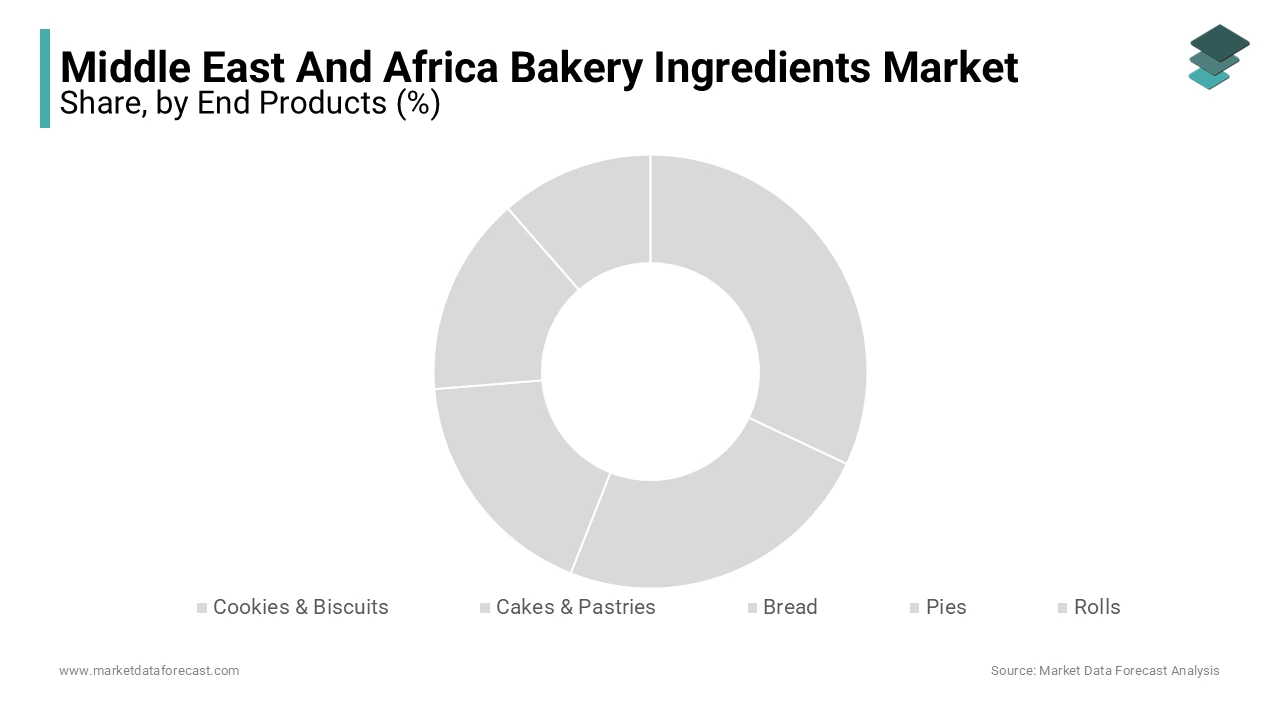
On the other hand, the cakes and pastries segment is predicted to witness the highest CAGR of 6.2% from 2026 to 2034 due to rising disposable incomes and the influence of Western lifestyle trends. The main driver for this acceleration is the expanding middle class in urban centers, who increasingly view baked goods as treats for celebrations and social gatherings. According to the World Bank, Sub-Saharan Africa has the fastest urbanization growth rate globally. This rapid urban growth is driving a dietary transition characterized by increased consumption of processed and convenience foods, as urban dwellers often pay more for food and rely on market-based diets rather than traditional agriculture. The proliferation of coffee shop chains and international bakery franchises in cities like Dubai, Riyadh, and Nairobi has normalized the consumption of pastries as part of daily leisure activities. Additionally, the growing tourism sector demands a wide variety of high-quality desserts, prompting hotels and restaurants to invest in specialized ingredients for intricate pastry designs. Social media platforms further amplify this trend by showcasing visually appealing desserts, driving consumer desire for similar products. Manufacturers are responding by introducing innovative flavors and textures, utilizing advanced emulsifiers and stabilizers to enhance product appeal. This combination of cultural shifts, economic growth, and marketing influence propels the rapid expansion of the cakes and pastries segment.
By Ingredient Type Insights
In 2025, the leavening agents segment held the majority share of the Middle East and Africa bakery ingredients market because of its essential role in the production of all fermented bakery products, particularly bread. The widespread reliance on yeast and chemical leaveners to produce the optimal texture, volume, and softness in both traditional and modern baked goods is the primary driver of this dominance. According to research, yeast consumption in the Middle East is exceptionally high due to the daily production of flatbreads and leavened loaves that are central to the regional diet. As per major ingredient suppliers, the demand for instant dry yeast has grown steadily in Africa, supported by the expansion of industrial bakeries that require consistent and reliable fermentation processes. The affordability and availability of leavening agents make them accessible to both large-scale manufacturers and small household bakers. Furthermore, the technical necessity of leavening agents in ensuring product quality cannot be substituted, making them a non-negotiable component of bakery formulations. The growth of the organized retail sector has also standardized the use of commercial yeast over traditional sourdough starters, increasing the volume of packaged leavening agents sold. The continuous innovation in yeast strains that offer faster fermentation times and better tolerance to harsh climatic conditions further solidifies their market leadership. Consequently, leavening agents remain the most consumed and critical ingredient category in the region.
However, the enzymes segment is estimated to register the fastest CAGR of 7.5% during the forecast period, owing to the need for improved product quality and extended shelf life in industrial baking. The quick growth is fueled by the increasing adoption of clean label solutions, where enzymes replace chemical additives to enhance dough strength, crumb softness, and freshness without altering the ingredient list significantly. According to industrial biotechnology reports, the use of enzymes such as amylases, xylanases, and lipases in baking has expanded globally, including in emerging markets, due to their ability to optimize production efficiency and crumb texture. As per major food technology firms, bakeries in the Middle East and Africa are increasingly investing in enzyme technologies to reduce waste and maintain consistency in varying environmental conditions. The hot and humid climate in many parts of the region poses challenges to dough stability, which enzymes effectively mitigate by improving water absorption and handling properties. Additionally, the demand for whole-grain and high-fiber breads, which often suffer from poor texture, is boosted by enzyme applications that improve mouthfeel and volume. Regulatory support for natural processing aids further encourages the shift from chemical improvers to enzymatic solutions. This technological advancement and the push for higher quality standards drive the rapid adoption of enzymes in the regional bakery industry.
REGIONAL ANALYSIS
Saudi Arabia Bakery Ingredients Market Analysis
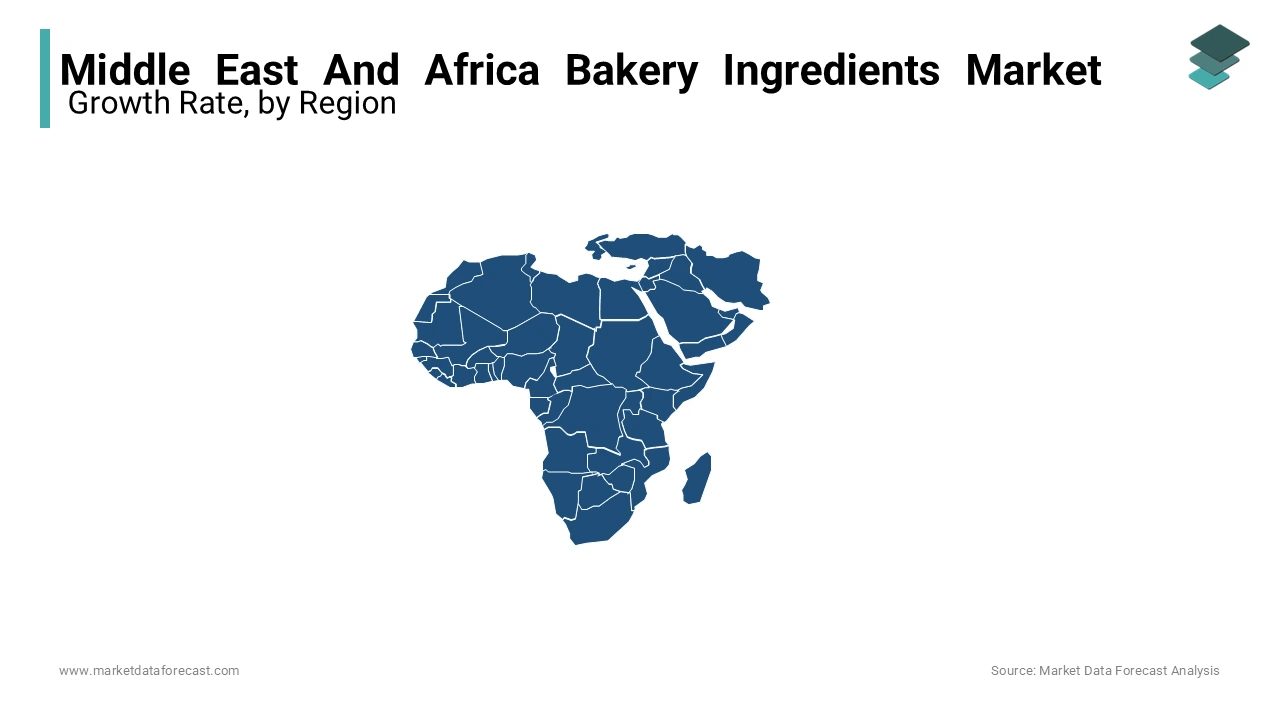
Saudi Arabia led the Middle East and Africa bakery ingredients market and occupied a 40.6% share in 2025. The demand for these ingredients in the country was propelled by its large population and strong government support for food security initiatives. The country is a major consumer of wheat-based products, with bread being a staple in every household. According to the General Authority for Statistics, the population of Saudi Arabia has grown significantly, reaching over 36 million, which directly increases the demand for bakery products. As per the Ministry of Environment, Water, and Agriculture, the kingdom is investing heavily in local food production and storage capabilities to reduce reliance on imports, influencing the sourcing and quality of bakery ingredients. The Vision 2030 initiative promotes the development of the hospitality and tourism sectors, leading to a surge in demand for diverse bakery items in hotels and restaurants. The rise of modern retail chains and international bakery brands further drives the consumption of specialized ingredients such as premixes and enzymes. Government subsidies on flour ensure affordable bread production, maintaining high volume usage of basic ingredients. The increasing health consciousness among consumers is also prompting manufacturers to introduce fortified and whole-grain options, creating opportunities for premium ingredient suppliers. These factors collectively sustain Saudi Arabia’s dominant position in the regional market.
United Arab Emirates Bakery Ingredients Market Analysis
The United Arab Emirates was positioned second in the Middle East and Africa bakery ingredients market and captured a 21.7% share in 2025. It is known for its high demand for premium and specialized products due to its diverse expatriate population and thriving tourism industry. The country serves as a hub for international food brands and culinary innovation in the region. According to the Dubai Department of Economy and Tourism, the UAE welcomed millions of international visitors annually, driving significant demand for high-quality bakery items in the hospitality sector. As per the UAE Ministry of Climate Change and Environment, strict food safety regulations and labeling requirements ensure that only high-standard ingredients are used in local production, fostering consumer trust. The presence of numerous luxury hotels and fine dining establishments necessitates the use of premium fats, chocolates, and flavorings for intricate pastries and desserts. The growing trend of health and wellness among residents has led to increased demand for gluten-free, sugar-free, and organic bakery ingredients. Modern retail outlets and online grocery platforms provide easy access to a wide variety of imported and local ingredients. The UAE’s strategic location also makes it a regional export center for bakery ingredients to neighboring countries. These dynamics position the UAE as a key driver of innovation and quality in the Middle East bakery ingredients market.
Egypt Bakery Ingredients Market Analysis
Egypt holds a significant position in the Middle East and Africa bakery ingredients market due to its large population and heavy reliance on subsidized bread as a primary food source. The country is one of the largest consumers of wheat globally, with bread forming the cornerstone of the national diet. According to the Central Agency for Public Mobilization and Statistics, Egypt’s population exceeds 100 million, creating a massive base demand for basic bakery ingredients such as flour and yeast. As per the Ministry of Supply and Internal Trade, the government provides billions of loaves of subsidized baladi bread annually, ensuring consistent high-volume production by state-owned and private bakeries. This subsidy system stabilizes the demand for raw materials despite global price fluctuations. The growing urban middle class is also driving demand for packaged cakes, biscuits, and pastries, leading to increased use of emulsifiers, flavors, and preservatives. Local manufacturing capabilities for some ingredients are expanding, reducing dependence on imports for certain categories. However, currency devaluation and inflation pose challenges for importing specialized ingredients. Despite economic pressures, the essential nature of bread ensures a stable market foundation, while the emerging segment of premium bakery products offers growth opportunities for diversified ingredient suppliers.
South Africa Bakery Ingredients Market Analysis
South Africa grew steadily in the Middle East and Africa bakery ingredients market, owing to a well-established retail sector and diverse consumer preferences. The country has a strong tradition of baking, with bread and confectionery being widely consumed across different demographic groups. According to Statistics South Africa, the food and beverage manufacturing sector contributes significantly to the national economy, with bakery products being a key component. As per the South African Bureau of Standards, rigorous quality controls and labeling regulations govern the use of food additives and ingredients, ensuring high safety standards. The presence of major international and local bakery chains drives demand for consistent and high-quality ingredients, including specialized fats and enzymes. The growing health consciousness among consumers is leading to increased demand for whole-grain, low-sugar, and fortified bakery products. Modern supermarkets dominate the retail landscape, providing extensive distribution networks for both basic and premium ingredients. Economic challenges such as load shedding and inflation impact production costs, but the resilient demand for staple foods maintains market stability. Innovation in product offerings and the expansion of informal bakery businesses also contribute to market dynamics. South Africa’s advanced infrastructure and regulatory framework make it a key market for ingredient suppliers looking to enter the African continent.
COMPETITION OVERVIEW
The competition in the Middle East and Africa bakery ingredients market is characterized by a mix of multinational corporations and regional players vying for market share through innovation and localization. Large international companies leverage their global expertise and financial resources to introduce advanced technologies and premium products. They compete on quality, consistency, and technical support services that help bakeries improve efficiency. Regional players often dominate specific niches by offering cost-effective solutions and leveraging local distribution networks. Price sensitivity remains a key factor influencing purchasing decisions, particularly in price-conscious segments. Innovation in health-focused and clean-label ingredients differentiates brands in an increasingly aware consumer landscape. Supply chain reliability is a critical competitive advantage given the logistical challenges in the region. Companies that invest in local production facilities gain an edge by reducing lead times and costs. Strategic collaborations with local businesses enhance market access and cultural relevance. Regulatory compliance and food safety standards also play a crucial role in shaping competitive dynamics. Overall, the market requires agility and adaptability to succeed amidst diverse economic and cultural contexts.
KEY MARKET PLAYERS
A few major players of the Middle East and Africa bakery ingredients market include
- Cargill Inc
- Kerry Group
- Associated British Foods
- DSM
- DuPont Dawn Foods Ltd
- Taura Natural Ingredients Limited
- Muntons PLC
- Corbion N.V
- British Bakels Limited
Top Strategies Used by Key Market Participants
Key players in the Middle East and Africa bakery ingredients market focus on localizing production to reduce dependency on imports and mitigate supply chain risks. Companies invest in research and development to create products tailored to regional tastes and climatic conditions. Strategic partnerships with local distributors and bakeries enhance market penetration and brand loyalty. Sustainability initiatives such as sourcing raw materials locally and reducing waste appeal to environmentally conscious consumers. Digital transformation improves supply chain visibility and customer engagement through online platforms. Educational programs and technical support services help bakers improve product quality and efficiency. Diversification of product portfolios to include health-focused and clean label options addresses changing consumer preferences. These strategies enable participants to navigate market challenges and capitalize on growth opportunities in the region.
Leading Players in the MEA Bakery Ingredients Market
- Puratos Group is a leading international supplier of bakery ingredients with a strong presence in the Middle East and Africa region. The company provides a wide range of products, including bread improvers, cake mixes, and chocolate solutions tailored to local tastes. Recent actions include expanding its production facilities in South Africa and Egypt to enhance supply chain efficiency and reduce lead times. Puratos actively engages in training programs for local bakers to promote innovation and quality standards. By investing in research and development centers in the region, the company develops customized solutions that address specific climatic and cultural preferences. These initiatives strengthen its reputation as a trusted partner for industrial and artisanal bakeries. The organization focuses on sustainability and clean label trends to align with evolving consumer demands. Its robust distribution network ensures consistent product availability across key markets in the region.
- Cargill Incorporated plays a significant role in the Middle East and Africa bakery ingredients market by supplying essential commodities such as flour, fats, and starches. The company leverages its global sourcing capabilities to provide high-quality raw materials to regional manufacturers. Recent strategies involve partnering with local mills and distributors to improve access to specialized ingredients in remote areas. Cargill has introduced innovative fat blends designed to enhance texture and shelf life in hot climates. The organization emphasizes sustainable sourcing practices and supports local farmers through agricultural development programs. By offering technical expertise and application support, Cargill helps customers optimize their formulations for better performance. Its commitment to food safety and regulatory compliance builds trust among clients. These efforts reinforce its position as a key enabler of growth in the regional bakery sector.
- Associated British Foods plc contributes to the Middle East and Africa bakery ingredients market through its diverse portfolio of brands, including AB Mauri, which specializes in yeast and bakery enzymes. The company provides critical leavening agents and functional ingredients that support large-scale bread production. Recent actions include expanding its manufacturing footprint in Kenya and Nigeria to meet rising demand for fresh yeast. Associated British Foods invests in digital tools to help bakers monitor fermentation processes and improve consistency. The organization collaborates with government agencies to support food security initiatives through efficient bread production technologies. By focusing on affordability and reliability, it serves both industrial bakeries and small-scale enterprises. Its strong logistical capabilities ensure the timely delivery of perishable ingredients. These strategic moves enhance its influence and operational reach across the diverse markets of the Middle East and Africa.
MARKET SEGMENTATION
This research report on the Middle East and African bakery ingredients market is segmented and sub-segmented into the following categories.
By End Products
- Cookies & Biscuits
- Cakes & Pastries
- Bread
- Pies
- Rolls
- Other items
By Ingredient Type
- Enzymes
- Sweeteners
- Leavening Agent
- Emulsifiers
- Preservatives
- Food Colors
- Flavors
- Other Segments
By Country
- KSA
- UAE
- Israel
- Rest of GCC countries
- South Africa
- Ethiopia
- Kenya
- Egypt
- Sudan
- Rest of MEA