- Product Description Description
- Table of Contents TOC
- List of Table & Figure LOT
- Get Free Sample PDF Sample PDF
Market Size, 2025
$22.31 BnMarket Estimate, 2026
$22.85 BnMarket Forecast, 2034
$27.62 BnCAGR, 2026–2034
2.40%Middle East and Africa Carbonated Beverages Market Size
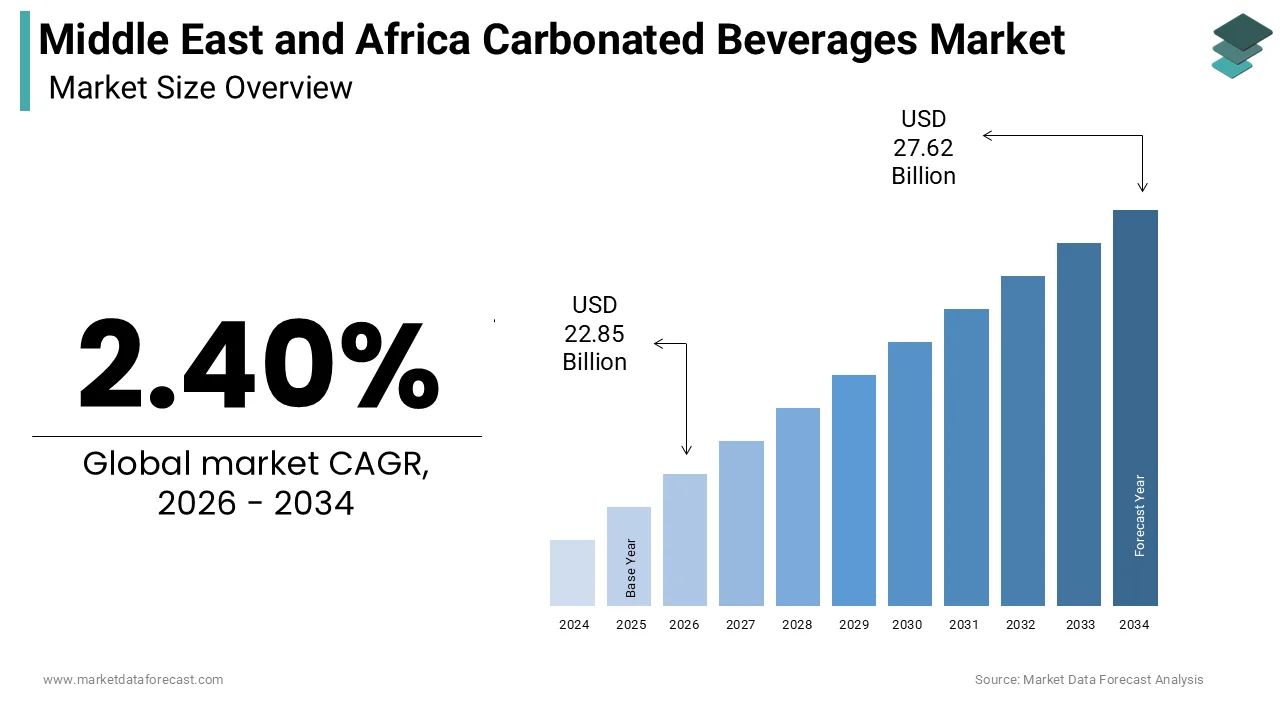
The Middle East and Africa Carbonated Beverages Market was calculated to be USD 22.31 billion in 2025 and is anticipated to be worth USD 27.62 billion by 2034 from USD 22.85 billion In 2026, growing at a CAGR of 2.40% during the forecast period.
The carbonated beverages sector is one of the seasoned industries in the worldwide beverages market. In the recent past, the industry has experienced major variations regarding product advances and offerings. To face the increasing market challenges, companies are introducing new flavors keeping in mind the health and wellness apprehensions of consumers. While the industry contains low margins as compared to other processed foods, market leader Coca-Cola upholds product sustainability approach for continued brand dependability.
Market Drivers
The Middle East and Africa Carbonated Beverages Market are driven by factors including the changing food habits coupled with increasing population of the younger populace in developing countries, coupled with the rising demand for processed food products.
Market Restraints
Consumer health awareness and increased government scrutiny are the major constraints faced by the market.
Segmental Analysis
Middle East and Africa Carbonated Beverages Market By Type
- Standard drinks
- Diet drinks
- Fruit-flavored carbonates
- Other drinks
Middle East and Africa Carbonated Beverages Market By Flavour
- Cola
- Lime
- Orange
- Others
Middle East and Africa Carbonated Beverages Market By Distribution Channels
- Hypermarkets and supermarkets
- Independent retailers
- Convenience stores
- Others
Middle East and Africa Carbonated Beverages Market By Region
The Middle East and Africa Carbonated Beverages Market have been geographically segmented into the Middle East and Africa. The market is growing slowly because of many problems the region faces, in terms of battles and also, the unstable economy. However, rising demand among the populace with dispensable incomes and the anticipated growth of distribution channels is set to help the growth of the market.
Key Players in the Market
The major players operating in the Middle East and Africa carbonated drinks industry include Britvic PLC, Cott Corporation, PepsiCo, Parle Agro and the Coca-Cola Company.