- Product Description Description
- Table of Contents TOC
- List of Table & Figure LOT
- Get Free Sample PDF Sample PDF
Market Size, 2025
$233.27 BnMarket Estimate, 2026
$249.79 BnMarket Forecast, 2034
$431.75 BnCAGR, 2026–2034
7.08%Executive Summary: Middle East and Africa Oncology Information System Market
- Market Scope: Comprehensive regional assessment of oncology information software, treatment planning systems, and healthcare IT platforms designed to manage cancer patient records, track therapies, and coordinate clinical workflows.
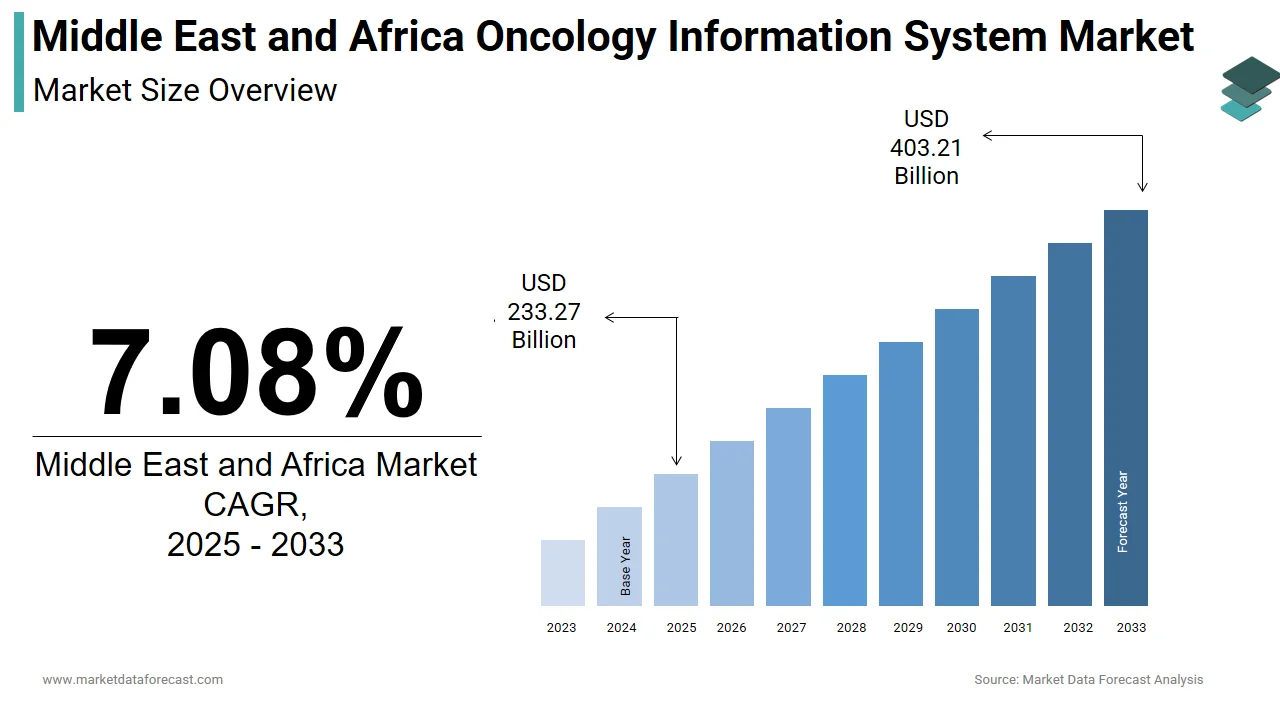
- Market Valuation: Valued at USD 233.27 billion in 2025, reaching USD 249.79 billion in 2026, and projected to expand to USD 431.75 billion by 2034, registering a compound annual growth rate (CAGR) of 7.08% from 2026 to 2034.
- Primary Growth Drivers: Escalating cancer incidence rates, rising digital healthcare adoption, government legislation supporting health IT infrastructure, and the integration of artificial intelligence (AI) and blockchain technologies.
Key Market Segment Metrics (2026–2034)
| Category | Leading Segment / Core Focus | Fastest-Growing / Key Segments |
|---|---|---|
| By Application | Radiation Oncology & Medical Oncology (core software utilities for managing complex treatment sessions and dosage planning) | Surgical Oncology (expanding component linked with multi-disciplinary clinical databases) |
| By Products, Services & End Users | Patient Information Systems & Treatment Planning Systems (essential software tools) & Hospitals & Physician’s Offices (primary care interface) | Implementation & Maintenance Services (critical for ongoing healthcare IT integration) & Research Centres / Government Institutions |
| By Country / Region | South Africa (recorded the largest regional share owing to advanced treatment facilities, radiosurgery capabilities, and supportive policies) | GCC Countries (such as UAE and Saudi Arabia are witnessing accelerated adoption driven by rising healthcare spending and institutional investments) |
Major Market Players & Industry Landscape
Competitive Structure: Dominated by major global healthcare IT and medical technology corporations focusing on software interoperability, cloud-based data management, and advanced AI diagnostics.
Key Companies Profiled: Accuray Incorporated, Altos Solutions, Inc., Cerner Corporation, Elekta AB, Epic Systems Corporation, Koninklijke Philips N.V., McKesson Corporation, and Varian Medical Systems, Inc.
 Download Free Sample Report
Middle East and Africa Oncology Information System Market Size
The size of the Middle East and Africa oncology information system market was worth USD 233.27 billion in 2025. The regional market is anticipated to grow at a CAGR of 7.08% from 2026 to 2034, reaching USD 431.75 billion by 2034, up from USD 249.79 billion in 2026.
The oncology information system is a specialized software solution designed to manage the complex workflow of cancer care, including patient registration, treatment planning, chemotherapy administration, and clinical data management. These systems integrate with electronic health records to provide oncologists with comprehensive patient histories, enabling precise decision-making and personalized treatment protocols. As per the World Health Organization, cancer is a leading cause of death globally, with the Eastern Mediterranean Region reporting approximately 700000 new cases annually, promoting the urgent need for efficient healthcare infrastructure. The region faces a dual burden of communicable and non-communicable diseases, with cancer incidence rising due to aging populations and lifestyle changes. As per the International Agency for Research on Cancer, cancer mortality rates in Africa are disproportionately high compared to global averages, largely due to late-stage diagnosis and fragmented care pathways. Governments in countries such as Saudi Arabia and South Africa are investing heavily in digital health transformation to address these disparities. The adoption of oncology information systems is critical for standardizing care protocols across diverse healthcare settings ranging from tertiary hospitals in urban centers to remote clinics. Regulatory bodies are increasingly emphasizing data interoperability and patient safety, which drives the integration of advanced analytics and artificial intelligence into these platforms.
MARKET DRIVERS
Rising Cancer Incidence and Aging Population Drive Demand for Digital Solutions
The escalating prevalence of cancer coupled with a rapidly aging population is driving the adoption of oncology information systems, propelling the growth of the Middle East and Africa oncology information system market. Demographic shifts are leading to an increased burden of non-communicable diseases requiring sophisticated management tools to handle complex treatment regimens. According to the World Health Organization, the number of people aged 60 years and older in Africa is projected to double by 2050, reaching over 200 million individuals, who are at higher risk for various cancers. This demographic transition necessitates robust digital infrastructure to manage long-term patient care and monitoring. In the Middle East, lifestyle factors, such as smoking, obesity, and physical inactivity, contribute to rising cancer rates, with lung, breast, and colorectal cancers being among the most common diagnoses. Oncology information systems enable healthcare providers to track patient progress, manage medication schedules, and reduce medical errors, which is crucial given the complexity of cancer treatments. The ability to store and analyze large volumes of patient data helps clinicians identify trends and optimize treatment protocols. Furthermore, these systems support clinical trials and research initiatives by providing structured data that can be used to improve therapeutic outcomes. As healthcare facilities expand their oncology departments to meet growing demand, the implementation of specialized information systems becomes essential for maintaining quality of care and operational efficiency in handling the increasing patient load.
Government Initiatives and Digital Health Transformation Policies Accelerate Adoption
The strategic government initiatives aimed at modernizing healthcare infrastructure through digital transformation are significantly driving the growth of the Middle East and Africa oncology information system market. National health visions in countries such as Saudi Arabia, the United Arab Emirates, and South Africa prioritize the integration of technology to enhance service delivery and patient outcomes. According to the Saudi Vision 2030 healthcare sector transformation program aims to increase the efficiency of healthcare services through the adoption of electronic health records and specialized clinical systems, including oncology modules. The Ministry of Health in Saudi Arabia has mandated the implementation of unified electronic health records across all public healthcare facilities, which creates a favorable environment for oncology information system vendors. Similarly, the United Arab Emirates has launched the Dubai Health Strategy 2021, which focuses on leveraging artificial intelligence and big data to improve preventive care and chronic disease management. Several member states are adopting the Continental Strategy for Digital Health, which encourages the use of digital tools to strengthen health systems. These policy frameworks provide financial incentives and regulatory support for healthcare providers to invest in advanced IT infrastructure. Additionally, international partnerships and funding from organizations such as the World Bank support digital health projects in low-income African nations.
MARKET RESTRAINTS
High Implementation Costs and Limited Healthcare Budgets Restrain Market Growth
The substantial financial investment required for implementing and maintaining oncology information systems, particularly in low- and middle-income countries, is hindering the growth of the Middle East and Africa oncology information system market. Healthcare budgets in many African nations are constrained by competing priorities, such as infectious disease control, maternal health, and basic infrastructure development. The initial costs associated with software licensing, hardware infrastructure, and network upgrades are prohibitive for smaller healthcare facilities and rural clinics. Additionally, ongoing expenses for maintenance, technical support, and staff training further strain limited financial resources. The fiscal deficits in several African countries have widened due to economic shocks, reducing the capacity for public sector investment in health technology. In the Middle East, while wealthier nations can afford these systems, smaller private practices and public hospitals in less affluent regions struggle to justify the high return on investment. The lack of standardized pricing models and transparent cost structures from vendors adds to the uncertainty, making it difficult for healthcare administrators to plan budgets effectively. Furthermore, the need for customized solutions to accommodate local languages and workflows increases development and deployment costs.
Shortage of Skilled IT Professionals and Clinical Staff Impedes Effective Utilization
The shortage of skilled personnel capable of implementing, managing, and utilizing oncology information systems is additionally impeding the growth of the Middle East and Africa oncology information system market. The successful deployment of these complex systems requires a multidisciplinary team, including IT specialists, data analysts, and clinically trained staff who understand both oncology workflows and digital technologies. According to the World Health Organization, the African region faces a severe shortage of health workers with a deficit of approximately 4.3 million professionals, including doctors, nurses, and midwives. This scarcity extends to health informatics experts who are essential for configuring, integrating, and troubleshooting oncology software. In many institutions, existing staff lack adequate training in digital literacy, leading to underutilization of system features and resistance to change. There is a significant gap in specialized training programs for health informatics in universities across the continent. Without proper training, healthcare providers may view the system as an administrative burden rather than a clinical aid, resulting in poor data entry quality and inconsistent usage. High staff turnover rates exacerbate the problem, as institutional knowledge is lost and new hires require extensive onboarding. In the Middle East, while educational infrastructure is more developed, there is still a mismatch between the skills produced by academic institutions and the specific needs of healthcare IT departments.
MARKET OPPORTUNITIES
Integration of Artificial Intelligence and Predictive Analytics Presents Significant Opportunities
The integration of artificial intelligence and predictive analytics into oncology information systems for enhancing diagnostic accuracy and treatment personalization is expected to foster new opportunities for the growth of the Middle East and Africa oncology information system market. AI algorithms can analyze vast amounts of clinical data, including genomic profiles, imaging results, and patient history, to identify patterns and predict treatment responses. The use of AI in radiotherapy planning can significantly reduce treatment times and improve precision, which is crucial in regions with limited equipment availability. Predictive analytics can help clinicians identify patients at high risk of complications or recurrence, enabling early intervention and proactive care management. In countries like Egypt and Nigeria, where cancer screening rates are low, AI-driven tools can assist in triaging patients and prioritizing those who need immediate attention. Furthermore, these technologies can support clinical decision-making by providing evidence-based recommendations tailored to individual patient characteristics. The ability to process and interpret complex data sets empowers oncologists to make more informed decisions, reducing variability in care and improving overall survival rates. As computational power becomes more accessible and cloud-based AI services emerge, healthcare providers in the region can leverage these advanced capabilities without needing extensive local infrastructure.
Expansion of Teleoncology and Remote Patient Monitoring Enhances Access to Care
The expansion of teleoncology and remote patient monitoring capabilities in remote areas is expected to bolster the growth of the Middle East and Africa oncology information system market. Many patients in the Middle East and Africa live far from major cancer centers, facing significant travel burdens and costs for regular consultations and treatment. Teleoncology platforms integrated with oncology information systems allow specialists to review patient data, conduct virtual consultations, and monitor treatment progress remotely. According to the World Health Organization, telemedicine can significantly reduce out-of-pocket expenses for patients and alleviate the workload on urban hospitals. In countries with vast rural populations, such as Kenya and Sudan, remote monitoring tools enable community health workers to collect vital signs and symptom data, which is then transmitted to oncologists for review. These systems can send automated reminders for medication adherence and appointment scheduling, improving patient compliance and continuity of care. Additionally, teleoncology facilitates second opinions and collaborative care among multidisciplinary teams across different locations, enhancing the quality of decision-making.
MARKET CHALLENGES
Data Privacy Concerns and Cybersecurity Threats Pose Significant Challenges
Ensuring data privacy and protecting against cybersecurity threats for the adoption and operation of advanced systems are likely to pose a major barrier for the growth of the Middle East and Africa oncology information system market. Oncology data is highly sensitive, containing detailed personal health information, genetic data, and treatment histories that require stringent protection measures. Many countries in the region lack comprehensive data protection laws or have weak enforcement mechanisms, making healthcare databases vulnerable to breaches. Cyberattacks on healthcare institutions have increased globally, with ransomware and phishing attempts targeting hospitals to steal patient data or disrupt services. Only a few African nations have enacted specific legislation governing digital data privacy, leaving gaps in legal recourse for victims of data misuse. The lack of robust cybersecurity infrastructure in many healthcare facilities promotes the risk, as outdated software and insufficient firewalls provide easy entry points for malicious actors. Furthermore, cultural concerns regarding the confidentiality of medical information may deter patients from sharing accurate data if they fear unauthorized access or stigma. Building trust requires significant investment in encryption technologies, access controls, and regular security audits, which many institutions cannot afford. The absence of standardized regional protocols for data sharing and protection complicates cross-border collaborations and research initiatives.
Interoperability Issues and Fragmented Healthcare Infrastructure Hinder Seamless Integration
The interoperability issues arising from fragmented healthcare infrastructure and diverse vendor ecosystems are also hindering the growth of the Middle East and Africa oncology information system market. Healthcare facilities in the Middle East and Africa often operate with disparate legacy systems, electronic health records, and laboratory information systems that do not communicate effectively with each other. The lack of standardized data formats and communication protocols prevents the smooth exchange of patient information across different levels of care. In many African countries, the coexistence of public, private, and non-governmental organization-run facilities further complicates integration efforts, as each entity may use different software platforms with incompatible architectures. Additionally, the absence of universal patient identifiers makes it difficult to link records accurately across multiple visits and facilities. Vendors of oncology information systems face the challenge of developing flexible solutions that can integrate with a wide variety of existing systems, while maintaining data integrity.
REPORT COVERAGE
| REPORT METRIC | DETAILS |
| Market Size Available | 2025 to 2034 |
| Base Year | 2025 |
| Forecast Period | 2026 to 2034 |
| Segments Covered | By Application, Products and Services, End Users, and Region. |
| Various Analyses Covered | Global, Regional and Country-Level Analysis, Segment-Level Analysis, Drivers, Restraints, Opportunities, Challenges; PESTLE Analysis; Porter’s Five Forces Analysis, Competitive Landscape, Analyst Overview of Investment Opportunities |
| Countries Covered | Brazil, Mexico, Argentina, Chile, Rest of Latin America |
| Market Leaders Profiled | Accuray Incorporated (U.S.), Altos Solutions, Inc. (U.S.), Cerner Corporation (U.S.), Elekta AB (Sweden), Epic Systems Corporation (U.S.), Koninklijke Philips N.V. (The Netherlands), McKesson Corporation (U.S.), and Varian Medical Systems, Inc. (U.S.). |
SEGMENTAL ANALYSIS
By Application Insights
The medical oncology segment was the largest by capturing a significant share of the Middle East and Africa oncology information system market in 2025 due to the high volume of systemic therapy administrations requiring precise digital management. Chemotherapy remains the most widely utilized cancer treatment modality across the region, necessitating robust software for dosing calculations, toxicity monitoring, and regimen scheduling. According to the World Health Organization, over 60% of cancer patients in low- and middle-income countries require chemotherapy at some point during their treatment journey, creating immense demand for specialized tracking systems. The complexity of modern immunotherapy and targeted therapy protocols further amplifies the need for integrated platforms that manage drug interactions and patient responses in real time. Regulatory requirements for safe prescribing and adverse event reporting also mandate the use of certified electronic systems to minimize medication errors. Furthermore, the chronic nature of systemic therapy requires longitudinal data management, which only dedicated medical oncology modules can provide effectively.
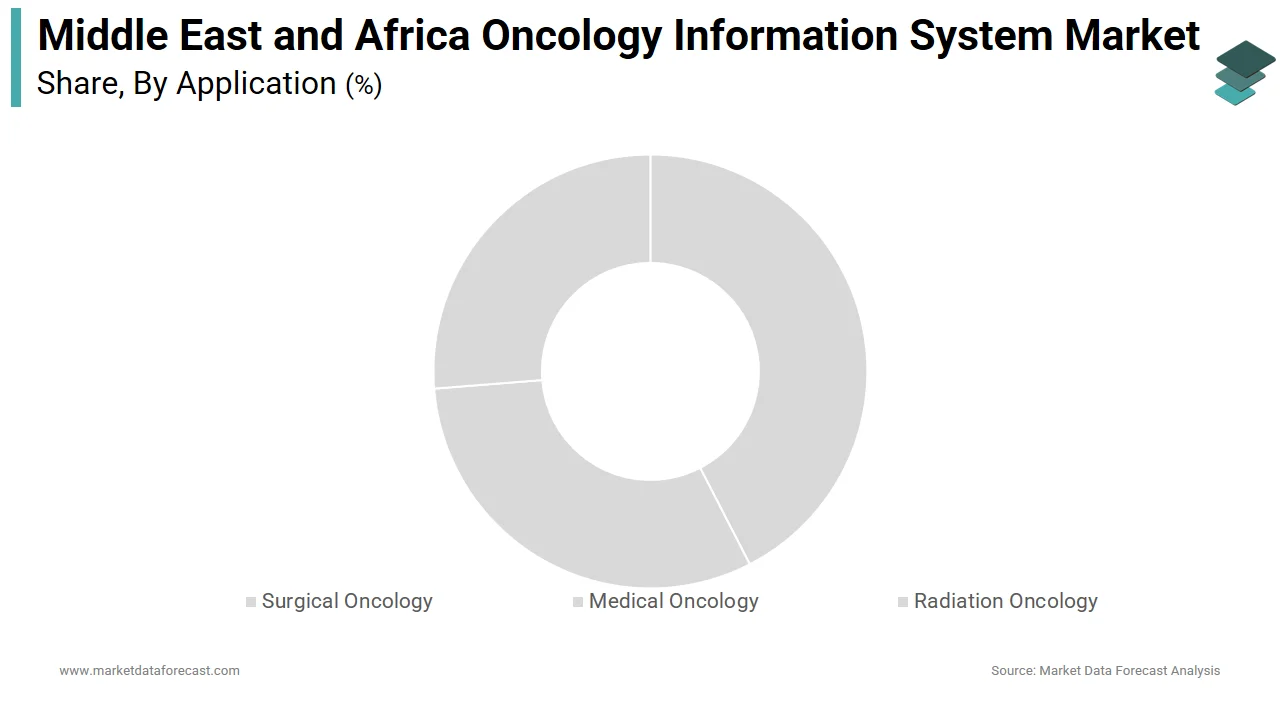
The radiation oncology segment is expected to grow at the fastest CAGR of 14.2% during the forecast period with the rapid infrastructure modernization and technology upgrades. Governments are heavily investing in advanced radiotherapy equipment, such as linear accelerators and brachytherapy units, which require sophisticated treatment planning and verification software to function safely. There is a shortage of radiotherapy machines in Africa, with many countries having less than one machine per million population, prompting urgent procurement programs supported by international aid. As new equipment is installed, compatible oncology information systems must be deployed simultaneously to manage complex treatment plans and ensure dose accuracy. Additionally, the shift toward precision techniques like intensity-modulated radiation therapy demands advanced software capabilities that legacy systems cannot support. The integration of artificial intelligence for contouring and plan optimization further accelerates adoption as clinics seek to reduce treatment planning time and improve throughput.
By Products and Services Insights
The patient information systems segment held a prominent share of the Middle East and Africa oncology information system market in 2025. These systems manage core demographic data, medical history, diagnostic results, and longitudinal care records, making them mandatory for any facility transitioning from paper-based documentation. According to the World Health Organization, fewer than 20% of healthcare facilities in Sub-Saharan Africa have fully functional electronic health records, indicating massive untapped demand for basic digitization. Government mandates in countries like Saudi Arabia and South Africa requiring unified patient identifiers and standardized data capture further drive procurement of these foundational systems. Data from the Health Information Management Association of South Africa shows that over 85% of oncology IT budgets are initially allocated to patient registry and record management before specialized modules are considered. The interoperability requirements set by national health authorities necessitate compliant patient information systems that can exchange data with laboratories, pharmacies, and referral centers. Furthermore, accreditation standards from bodies like Joint Commission International require comprehensive electronic documentation for patient safety and quality assurance.
The consulting and optimization services segment is significantly growing at an anticipated CAGR of 16.5% during the forecast period, as healthcare providers struggle to maximize value from complex oncology information systems. Many institutions face significant challenges in workflow redesign, change management, and system configuration, leading to underutilization of purchased software and necessitating expert intervention. According to the Healthcare Information and Management Systems Society, nearly 40% of health IT projects in emerging markets fail to achieve intended outcomes due to inadequate planning and user training, creating sustained demand for professional services. The shortage of local health informatics expertise compels hospitals to engage external consultants for gap analysis, customization, and performance tuning. Additionally, regulatory changes and evolving clinical guidelines require continuous system updates and workflow adjustments that internal teams often cannot manage independently. Vendors are increasingly bundling consulting services with software licenses to ensure successful adoption and customer retention.
By End Users Insights
The hospitals and physician offices segment was the largest by accounting for 37.2% of the Middle East and Africa oncology information system market share in 2025, as they are the primary places of cancer diagnosis, treatment, and follow-up care. These facilities bear direct responsibility for patient outcomes and regulatory compliance, making them the principal purchasers of clinical software. Physician offices, particularly in private practice settings, are increasingly adopting specialized systems to manage growing patient volumes and meet insurance documentation requirements. Accreditation pressures from international bodies compel hospitals to implement comprehensive electronic records to maintain certification and attract medical tourism. Furthermore, government funding programs and insurance reimbursements are typically tied to hospital-based care, reinforcing their purchasing power. The integration of multidisciplinary tumor boards within hospital settings also drives demand for collaborative platforms that connect surgeons, oncologists, and radiologists.
The research centres segment is swiftly growing at the fastest CAGR of 13.8% during the forecast period, with the expansion of clinical trials and genomic research initiatives across the region. International pharmaceutical companies and academic institutions are increasingly conducting oncology studies in the Middle East and Africa to access diverse patient populations and accelerate drug development. Data from the Dubai Science Park indicates that investment in life sciences research infrastructure has tripled in recent years, supporting the establishment of dedicated oncology research units. Regulatory harmonization efforts by the African Medicines Agency facilitate multi-country trials requiring standardized information systems for data integrity and compliance. Furthermore, national cancer control plans in countries like Egypt and Kenya now explicitly include research capacity building as strategic priorities, allocating funding for digital research platforms. The rise of precision medicine initiatives necessitates bioinformatics tools and biobank management systems that traditional clinical software cannot provide.
COUNTRY LEVEL ANALYSIS
South Africa Oncology Information System Market Analysis
South Africa was the top performer in the Middle East and Africa oncology information system market by accounting for 35.3% of the share in 2025 due to its sophisticated private healthcare sector and established digital infrastructure. The country hosts numerous Joint Commission International-accredited hospitals that mandate comprehensive electronic health records, creating consistent demand for premium oncology systems. South Africa maintains the most comprehensive cancer surveillance system on the continent, providing structured data that feeds into national oncology information platforms. The presence of local health tech companies and skilled informatics professionals reduces implementation barriers compared to other African nations. Government initiatives like the National Health Insurance scheme are accelerating public sector digitization to prepare for universal coverage, expanding the addressable market beyond private facilities. Medical tourism from neighboring countries further incentivizes hospitals to adopt world-class systems to attract international patients.
Saudi Arabia Oncology Information System Market Analysis
Saudi Arabia oncology information system market was ranked second, holding 18.2% of the share in 2025, with aggressive digital health mandates under Vision 2030. The Kingdom’s Seha Virtual Hospital and unified electronic health record program require all oncology facilities to adopt standardized information systems, creating guaranteed demand. The establishment of specialized cancer centers like King Faisal Specialist Hospital and Research Centre sets national standards for technology adoption that smaller facilities must emulate. Localization requirements mandating Arabic language interfaces and data residency drive preference for vendors offering customized solutions. Furthermore, the Hajj and Umrah pilgrimage seasons necessitate robust emergency oncology capabilities supported by integrated information systems. As the government transitions healthcare delivery to accountable care organizations, financial incentives are tied to digital maturity metrics, ensuring sustained investment.
United Arab Emirates Oncology Information System Market Analysis
The United Arab Emirates oncology information system market is likely to grow, with the medical tourism destination driving adoption of cutting-edge oncology information systems. Dubai and Abu Dhabi host numerous internationally accredited hospitals that compete on technology-enabled patient experience and clinical excellence. Data from the Department of Health Abu Dhabi shows that 100% of licensed healthcare facilities have implemented mandatory electronic health records, creating universal baseline adoption. The UAE’s Genomics Strategy and artificial intelligence initiatives fund pilot projects integrating advanced analytics into oncology workflows, positioning the country as a regional innovation hub. Free zones like Dubai Healthcare City offer regulatory sandboxes enabling testing of novel digital health solutions before wider deployment. Strategic partnerships with global technology leaders facilitate early access to next-generation systems not yet available elsewhere in the region. The concentration of wealth and expatriate population willing to pay for premium care sustains high average selling prices for oncology software.
Israel Oncology Information System Market Analysis
Israel oncology information system market growth is likely to grow with the exceptional technological sophistication and research-driven healthcare ecosystem. Despite its small population, the country punches above its weight through homegrown health tech innovation and universal digital health coverage. Health tech startups raised over 2 billion dollars recently, with oncology digital solutions comprising a significant portion. The integration of genomic data into routine clinical care through national precision medicine initiatives drives demand for advanced bioinformatics platforms. Military-derived technologies in imaging and signal processing have been adapted for oncology applications, creating unique local solutions. Academic medical centers serve as living labs for validating new systems before commercial export.
Egypt Oncology Information System Market Analysis
Egypt oncology information system market growth is likely to grow due to the large population and ongoing healthcare reform initiatives. The Universal Health Insurance System rollout is creating unprecedented demand for standardized oncology information systems across thousands of facilities. The establishment of the Egyptian Cancer Registry Network aims to unify fragmented data sources requiring interoperable information systems at participating centers. Growing private hospital chains are adopting international standards to attract medical tourists from North Africa and the Middle East, driving premium system purchases. Local software developers are emerging to address affordability gaps, offering localized solutions at lower price points than multinational vendors.
KEY MARKET PLAYERS
Companies playing a key role in the Middle East and Africa oncology information system market profiled in the report are
- Accuray Incorporated
- Altos Solutions, Inc.
- Cerner Corporation
- Elekta AB
- Epic Systems Corporation
- Koninklijke Philips N.V.
- McKesson Corporation
- Varian Medical Systems, Inc.
MARKET SEGMENTATION
This research report on the Middle East and Africa oncology information system market has been segmented and sub-segmented into the following categories.
By Application
- Surgical Oncology
- Medical Oncology
- Radiation Oncology
By Products And Services
- Patient Information Systems
- Treatment Planning Systems
- Consulting/Optimization Services
- Implementation Services
- Post-Sale and Maintenance Services
By End Users
- Hospitals & Physician’s Offices
- Research Centres
- Government Institutions
By Country
- KSA
- UAE
- Israel
- rest of GCC countries
- South Africa
- Ethiopia
- Kenya
- Egypt
- Sudan
- rest of Middle East and Africa