- Product Description Description
- Table of Contents TOC
- List of Table & Figure LOT
- Get Free Sample PDF Sample PDF
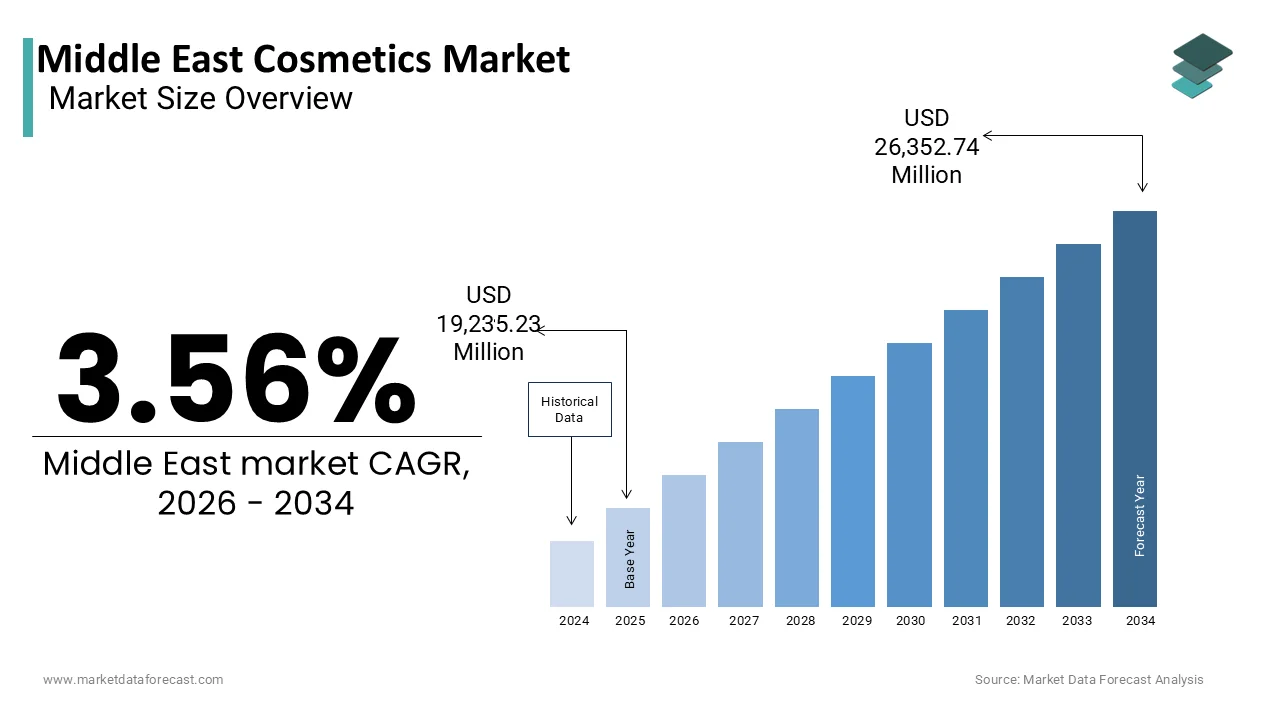
Market Size, 2025
$19,235.23 MnMarket Estimate, 2026
$19,920.01 MnMarket Forecast, 2034
$26,352.74 MnCAGR, 2026–2034
3.56%Executive Summary: Middle East Cosmetics Market
- Market Scope: Comprehensive market tracking of the Middle East cosmetics industry, evaluating product types (skin/sun care, makeup, hair care, fragrances), categories (conventional vs. organic), gender segments, distribution networks, and country-level consumption dynamics.
- Market Valuation: Valued at USD 19,235.23 million (2025), estimated at USD 19,920.01 million (2026), and projected to reach USD 26,352.74 million by 2034, registering a compound annual growth rate (CAGR) of 3.56% during the forecast period from 2026 to 2034.
- Primary Growth Drivers: High disposable incomes, rapid urbanization, strong cultural focus on personal grooming, a young tech-savvy demographic, rising female workforce participation, and surging trends toward clean beauty and halal-certified products.
Key Market Segment Metrics (2026–2034)
| Category | Leading Segment | Fastest-Growing Segment / Key Trend |
|---|---|---|
| By Product Type | Skin and Sun Care Products (held 34.5% market share in 2025 due to harsh regional climates, sun exposure, and SPF prioritization) | Makeup and Color Cosmetics (projected at a CAGR of 9.8%, driven by social media influence, modest beauty trends, and inclusive shade ranges) |
| By Category | Conventional Cosmetics (largest share in 2025, anchored by mass-market brand recognition, affordability, and extensive distribution) | Organic Cosmetics (projected at a rapid CAGR of 12.4%, propelled by shifting preferences toward sustainable, ethical, and halal-certified options) |
| By Gender | Women’s Cosmetics (dominant share in 2025, supported by ingrained cultural beauty rituals, self-expression, and higher workforce participation) | Men’s Grooming Products (estimated at a CAGR of 10.6%, fueled by evolving perceptions of masculinity, beard oils, and urban male skincare) |
| By Distribution Channel | Supermarkets, Hypermarkets, & Specialty Stores (widespread retail availability across duty-free shops, luxury malls, and pharmacies) | Online Stores (projected at a robust CAGR of 15.2%, driven by mobile commerce, virtual try-ons, and Gen Z/millennial shopping habits) |
| By Country / Region | United Arab Emirates (top regional performer with 29.3% market share in 2025, supported by tourism, tax-free status, and high per capita consumption) | Saudi Arabia (ranked second with a 25.9% share, driven by modest beauty trends, economic diversification, and domestic innovation) |
Major Market Participants & Market Structure
Market Structure: Highly competitive and dynamic landscape featuring multinational beauty conglomerates, regional heritage brands, and emerging clean-beauty indie startups contending with market saturation and counterfeit challenges.
Key Companies: L’Oréal S.A., Estée Lauder Companies, Natura &Co (including The Body Shop and Avon), Beiersdorf, Kao Corporation, and Türk Henkel Kimya Sanayi ve Ticaret A.Ş.
 Download Free Sample Report
Middle East Cosmetics Market Size
The Middle East cosmetics market was valued at USD 19,235.23 million in 2025, is estimated to reach USD 19,920.01 million in 2026, and is projected to reach USD 26,352.74 million by 2034, growing at a CAGR of 3.56% from 2026 to 2034.
The Middle East cosmetics market has emerged due to increasing disposable incomes, shifting consumer behaviors, and a strong cultural focus on personal grooming. The Middle East cosmetics market in the region is further influenced by the region's young population, growing urbanization, and rising female employment participation. Furthermore, the market situation has become even more varied with the advent of clean beauty trends and halal-certified beauty products.
MARKET DRIVERS
Rising Disposable Incomes and Urbanization
Rapid urbanization and a significant rise in disposable incomes are major factors driving the Middle East cosmetics market. These countries have some of the highest per capita incomes in the world, which enables their citizens to purchase more high-end cosmetics and personal hygiene products. The economic prosperity has led to an expansion of modern retail channels such as luxury malls, duty-free shops, and high-end department stores, which serve as key distribution points for international cosmetic brands. As per Euromonitor International, the number of premium beauty brand launches in the GCC region increased by 18% in 2023 compared to the previous year. Moreover, the influx of expatriates and tourists has created a diverse consumer base with varied preferences, which has encouraged global brands to tailor their offerings to regional tastes. Innovative and aspirational beauty products are in great demand due to the rising number of affluent millennials and Gen Z customers, who are highly influenced by social media and celebrity endorsements.
Cultural Significance and Beauty Rituals
The Middle East cosmetics market is also driven by the deep-rooted cultural significance of beauty and personal care, and appearance among women. Traditional beauty rituals involving kohl, henna, and natural oils have been passed down through generations and continue to influence contemporary cosmetic preferences. According to a study published by Al-Fanar Media, over 65% of women in Saudi Arabia and the UAE use skincare and makeup products daily. The prominence of religious and cultural celebrations such as Eid, Ramadan, and weddings also drives seasonal spikes in cosmetic purchases,s especially for gift sets and limited-edition collections. Furthermore, the popularity of modest fashion and hijab-friendly makeup has given rise to specialized product lines tailored to local needs, which further illustrates the relevance of cosmetics in everyday life.
MARKET RESTRAINTS
Regulatory Challenges and Ingredient Restrictions
The strict regulatory environment governing product formulation and labeling requirements is the main factor slowing down the Middle East cosmetics market. Several Gulf Cooperation Council (GCC) countries have implemented rigorous regulations concerning the use of certain chemicals, preservatives, and synthetic ingredients due to health and safety concerns. For instance, the Saudi Food and Drug Authority (SFDA) mandates compliance with specific cosmetic ingredient thresholds, requiring manufacturers to undergo extensive testing and certification before products can be sold domestically. According to a report by SGS, a leading inspection and certification body, approximately 12% of imported cosmetic products were rejected in 2023 due to non-compliance with local chemical restrictions. This discourages smaller or niche beauty companies from operating in the area by adding expenses and delays for foreign brands looking to enter the market. Furthermore, the push for transparency in ingredient sourcing and environmental impact is reshaping product development strategies and limiting the use of certain traditional elements like musk and ambergris due to sustainability concerns.
Economic Volatility and Currency Fluctuations
Economic volatility and currency fluctuations are the other two major restraints to the growth of the Middle East cosmetics market. Many regional economies, including Saudi Arabia, Kuwait, and Bahrain, experience fluctuating shares based on global oil prices, which directly impact consumer spending power and import dynamics. According to the International Monetary Fund (IMF), the real GDP growth rate of the GCC region declined from 6.4% in 2022 to 2.3% in 2023 due to lower hydrocarbon output and global economic slowdowns. This downturn has led to cautious consumer behavior, especially regarding discretionary purchases such as premium skincare and makeup products. Additionally, currency devaluations in some Middle Eastern countries have increased the cost of imported cosmetics, which has limited their accessibility to a wider range of consumers. For example, according to Bloomberg, in early 2025, the supply of premium cosmetic products was significantly hampered by Lebanon's ongoing financial crisis.
MARKET OPPORTUNITIES
Expansion of E-commerce and Digital Beauty Retail
The rapid expansion of e-commerce platforms and online beauty stores is one of the most promising opportunities for the Middle East cosmetics market. Online shopping has increased dramatically in the area due to factors including smartphone use, high internet penetration, and a young, tech-savvy population. Digital platforms have emerged as the primary choice for cosmetic purchasing among Gen Z and millennial consumers because of the convenience of online shopping, tailored suggestions, and virtual try-ons. According to Euromonitor International, traditional retail channels were surpassed by online cosmetics sales, which increased by 24% in the United Arab Emirates alone in 2023. Moreover, local e-commerce giants such as Namshi, Ounass, and Shein have expanded their beauty offerings while global players like Sephora and Amazon have strengthened their digital presence in the region.
Rise of Niche and Clean Beauty Brands
The growing popularity of niche and clean beauty brands presents a substantial opportunity for the Middle East cosmetics market. Niche companies prioritize exclusivity, ethical sourcing, and transparency above mass-market beauty products, which is attracting the region's younger, health-conscious consumers. Consumers in the Gulf region, particularly in the UAE and Saudi Arabia, have shown a strong inclination toward cruelty-free, vegan, and halal-certified beauty products. As per Euromonitor International, niche beauty brand launches in the Middle East increased by 22% in 2023, significantly outpacing mainstream segments. The increasing number of luxury concept stores, pop-up boutiques, and curated online platforms offering clean beauty options has further fueled this trend.
MARKET CHALLENGES
Intense Competition and Market Saturation
Increasing competition among a growing number of local and international brands for consumer attention is one of the primary challenges for the growth of the Middle East cosmetics market. The region has become a battleground for global beauty giants such as L’Oréal, Estée Lauder, and Unilever, alongside established Middle Eastern brands like Natura, Al-Rehab, and Areej. According to Euromonitor International, the number of active cosmetic brands in the UAE alone increased by over 28% between 2020 and 2023. This resulted in market saturation and a decline in product distinctiveness. This overcrowding forces companies to engage in aggressive pricing strategies and extensive promotional campaigns to maintain visibility and market share. Furthermore, brand equity and customer confidence are seriously threatened by the increasing number of grey-market and counterfeit beauty items. According to a Gulf Research Center analysis from 2023, counterfeit cosmetics make up around 15% of the region's entire beauty revenues.
Shifting Consumer Preferences Toward Sustainable and Personalized Products
An increasing focus on sustainability and personalized beauty experiences is also set to pose a challenge for the Middle East cosmetics market. Consumers, especially younger demographics, are becoming more conscious about the ethical and environmental implications of their purchases. According to a survey, respondents in the UAE and Saudi Arabia expressed a preference for eco-friendly, cruelty-free, and customizable beauty products. This shift is prompting brands to reformulate their offerings, adopt sustainable packaging, and enhance transparency in ingredient sourcing. These changes come with higher manufacturing costs and more complicated supply chains. Balancing heritage with evolving expectations remains a critical challenge for both global and regional players in the Middle East cosmetics market.
REPORT COVERAGE
| REPORT METRIC | DETAILS |
| Market Size Available | 2025 to 2034 |
| Base Year | 2025 |
| Forecast Period | 2026 to 2034 |
| Segments Covered | By Product Type, Category, Gender, Distribution Channel, and Region. |
| Various Analyses Covered | Global, Regional, and Country-Level Analysis, Segment-Level Analysis, Drivers, Restraints, Opportunities, Challenges; PESTLE Analysis; Porter’s Five Forces Analysis, Competitive Landscape, Analyst Overview of Investment Opportunities |
| Countries Covered | |
| Market Leaders Profiled | Avon Products Inc., Beiersdorf, Kao Corporation, L'Oréal S.A., Türk Henkel Kimya Sanayi ve Ticaret A.Ş., and others. |
SEGMENTAL ANALYSIS
By Product Type Insights
The skin and sun care products segment accounted in holding 34.5% of the Middle East Cosmetics Market share in 2025. The region’s harsh climatic conditions, which are marked by high temperatures and prolonged sun exposure, make skincare an essential part of daily beauty routines. According to Euromonitor International, over 60% of consumers in the Gulf Cooperation Council (GCC) countries prioritize sunscreen and moisturizers with SPF protection due to concerns about premature aging and skin damage. Additionally, rising awareness about dermatological health and increasing investments in wellness tourism have boosted demand for premium skincare brands such as La Roche-Posay, Vichy, and Neutrogena. The popularity of halal-certified and natural ingredient-based skincare products has also contributed to market expansion.
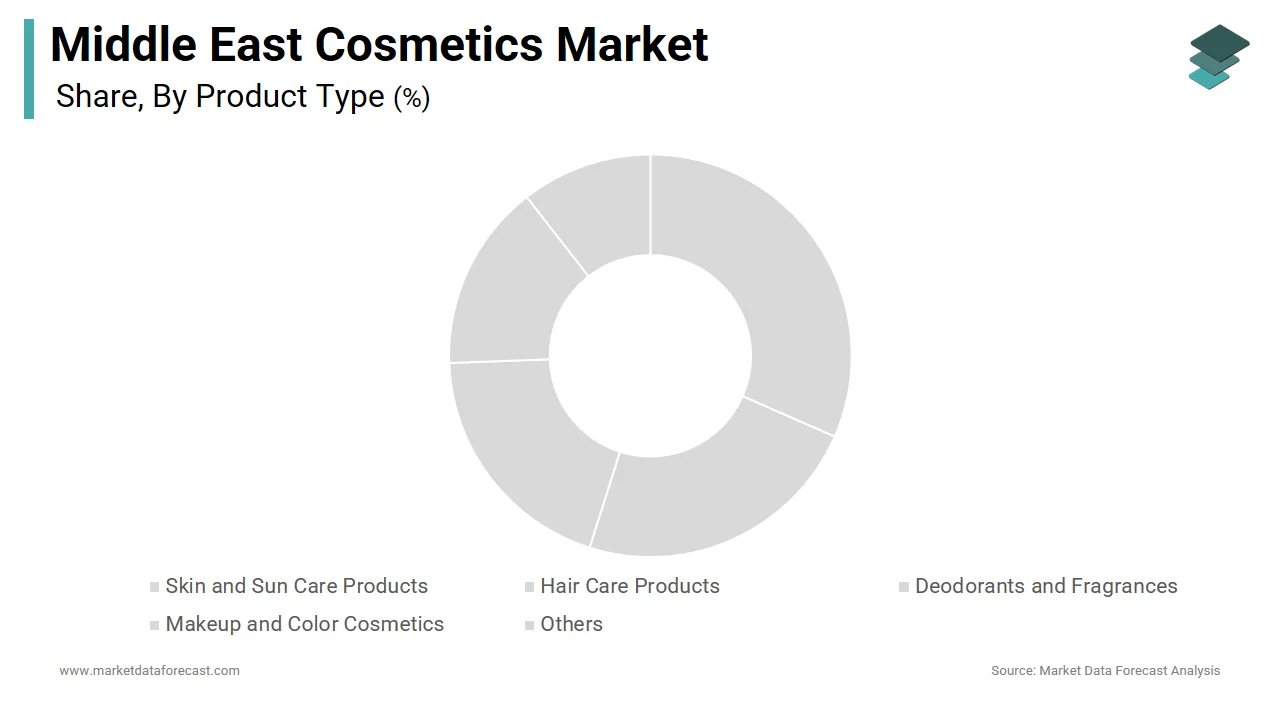
The makeup and color cosmetics segment is anticipated to witness the fastest CAGR of 9.8% from 2025 to 2033. This growth is primarily attributed to the rising influence of social media, fashion influencers, and modest beauty trends that encourage experimentation with eye makeup, lip colors, and hijab-friendly cosmetic products. As per Euromonitor International, Gen Z and millennial women in the UAE and Egypt are leading this trend, with nearly 70% purchasing makeup online in the past year. Demand has been further encouraged by the launch of inclusive shade ranges designed for Middle Eastern complexions and the growth of domestic cosmetics companies like Nura Beauty and Alcina. Moreover, bridal makeup remains a cultural staple, which contributes to seasonal spikes in sales during wedding seasons.
By Category Insights
The conventional cosmetics segment was the largest and held a dominant share of the Middle East Cosmetics market in 2025 due to the affordability, widespread availability, and brand recognition associated with mass-market beauty products. According to Euromonitor International, conventional skincare and makeup brands such as L’Oréal, Maybelline, and Garnier collectively accounted for over 40% of total cosmetics sales in the GCC region last year. These products benefit from well-established distribution networks, including supermarket chains, pharmacies, and duty-free retail channels, making them easily accessible to a broad consumer base. Additionally, the lack of standardized certification processes for organic beauty products in some Middle Eastern countries has slowed adoption among mainstream consumers. However, despite growing interest in clean beauty, conventional cosmetics continue to lead due to their strong presence in both offline and online retail platforms across the region.
The organic cosmetics segment is likely to experience the fastest CAGR of 12.4% from 2025 to 2033. This surge is largely driven by shifting consumer preferences toward sustainable, ethical, and health-conscious beauty choices. According to a survey conducted by YouGov in early 2025, nearly 63% of respondents in the UAE and Saudi Arabia expressed interest in purchasing organic or halal-certified beauty products. This shift is mainly pronounced among environmentally conscious millennials and affluent consumers seeking transparency in ingredient sourcing. Local brands such as Natura Bissé and Al Rehab have capitalized on this trend by introducing certified organic skincare and fragrance lines. Additionally, government-backed initiatives promoting halal and eco-friendly beauty standards have reinforced consumer trust in organic offerings. The increasing number of eco-conscious retail platforms and wellness-focused beauty boutiques further supports the rapid ascent of this segment in the Middle East.
By Gender Insights
The women’s cosmetics were the largest segment with a dominant share of the Middle East Cosmetics market in 2025. The growth of the segment can be attributed to deeply ingrained cultural norms surrounding beauty, personal grooming, and self-expression among female consumers. According to Euromonitor International, beauty spending among women in the UAE and Saudi Arabia increased by 11% in 2023, driven by rising disposable incomes and greater workforce participation. Traditional beauty rituals involving kohl, henna, and facial oils remain popular, while modern trends like contouring, false lashes, and bold lip colors have gained traction among younger generations. Additionally, the rise of modest fashion influencers on platforms like Instagram and YouTube has reshaped beauty expectations, which encourages brands to develop hijab-friendly makeup lines.
The men’s grooming products segment is estimated to register a CAGR of 10.6% from 2025 to 2033. The segment can be driven by evolving perceptions of masculinity and a rising focus on personal appearance among male consumers. Younger generations, particularly in urban centers like Dubai, Riyadh, and Cairo, are increasingly investing in premium beard oils, face washes, deodorants, and colognes. As per Euromonitor International, social media has played a crucial role in normalizing male grooming, with male influencers and celebrities endorsing beauty and skincare products to millions of followers. Additionally, luxury brands such as Dior, Gucci, and Tom Ford have introduced dedicated men’s skincare lines tailored to Middle Eastern preferences.
By Distribution Channel Insights
The online stores segment is expected to exhibit a noteworthy CAGR of 15.2% from 2025 to 2033. The digital transformation of beauty commerce has been driven by rising internet penetration, smartphone usage, and the convenience of doorstep delivery. To meet a wide range of consumer preferences, platforms such as Namshi, Ounass, and Amazon.ae have broadened their beauty portfolios to include both local artisanal products and international designer labels. According to Euromonitor International, Gen Z and millennial consumers are the main drivers of mobile commerce, accounting for over 65% of all online beauty sales in the Middle East.
COUNTRY-LEVEL ANALYSIS
United Arab Emirates (UAE) Cosmetics Market Insights
The UAE was the top performer in the Middle East and Africa (MEA) cosmetics market and accounted for 29.3% in 2025. Due to a cosmopolitan populace and an expanding tourism sector, the country has one of the highest per capita beauty consumption rates in the world. The nation's tax-free status promotes luxury spending, and seasonal increases in beauty sales are driven by significant events like the Dubai Shopping Festival and Ramadan promotions. The Middle East and Africa (MEA) cosmetics market is becoming more innovative and diversified due to the rising impact of Emirati youth, who are looking for personalized and unique skincare and beauty products.
Saudi Arabia (KSA) Cosmetics Market Insights
Saudi Arabia ranked second in the MEA cosmetics market with a share of 25.9% in 202,4 with the kingdom’s deep-rooted tradition of beauty and personal grooming among women. The prominence of modest beauty trends and hijab-friendly makeup has led to a surge in demand for specialized skincare and color cosmetics. Government support for halal and sustainable beauty products has also encouraged domestic brands to innovate while preserving heritage. Saudi Arabia is a major growth engine for the regional cosmetics sector with its ongoing efforts to diversify its economy.
Egypt Cosmetics Market Insights
Egypt cosmetics market is expected to grow with an anticipated CAGR in the coming years. Egypt offers a vast consumer base with a growing middle class increasingly exposed to international beauty trends. Cairo and Alexandria serve as key retail hubs, where both global and local brands compete for market share.
Israel Cosmetics Market Insights
Israel cosmetics market is likely to grow prominently during the forecast period. The country’s well-educated, fashion-conscious population drives demand for innovative and unconventional skincare and makeup formulations, which are often sourced from independent European and local brands. Israel’s thriving startup ecosystem has also given rise to homegrown beauty brands that leverage sustainability, biotech ingredients, and AI-driven personalization as core selling propositions. According to a report by Start-Up Nation Central, over 20 new beauty tech startups emerged in the past two years, which focus on smart skincare devices and lab-grown cosmetic compounds. Israel is becoming a distinctive and significant beauty market in the MEA area, with an increasing focus on health and self-expression.
KEY MARKET PLAYERS
Some of the noteworthy companies in the Middle East Cosmetics market profiled in this report are Avon Products Inc, Beiersdorf, Kao Corporation, L'Oréal S.A, and Türk Henkel Kimya Sanayi ve Ticaret A.Ş., and others.
TOP LEADING PLAYERS IN THE MARKET
L’Oréal Group
L’Oréal is a global leader in beauty and cosmetics and holds a dominant position in the Middle East market through its diverse portfolio of brands such as Lancôme, Maybelline, and The Ordinary. The company has successfully adapted to regional preferences by offering halal-certified products, modest makeup collections, and sun care solutions tailored to the local climate. L’Oréal’s presence in the Middle East is further strengthened by strategic retail partnerships and digital-first marketing campaigns that resonate with younger consumers. Additionally, L’Oréal’s innovation in skincare technology and commitment to sustainability have reinforced its reputation as a trendsetter in both mass and premium beauty segments across the region.
Estée Lauder Companies
Estée Lauder has established a strong foundation in the Middle East through its prestigious brand portfolio, including Clinique, MAC, and Tom Ford Beauty. The company excels at blending luxury branding with localized product development, particularly in fragrance and makeup categories. With flagship stores in key urban centers like Dubai and Riyadh, Estée Lauder continues to influence purchasing trends among affluent consumers. Its investment in e-commerce expansion and influencer-led marketing strategies has enabled deeper consumer engagement. The Estée Lauder company also focuses on personalized skincare regimens and high-performance formulations, which makes it a preferred choice for discerning beauty shoppers across the Gulf.
Natura &Co (Including the Body Shop and Avon)
Natura &Co, through its regional subsidiaries and acquisitions, plays a significant role in the Middle East cosmetics market in the natural and ethical beauty segment. Brands like The Body Shop and Avon are well-positioned to cater to environmentally conscious consumers who prioritize cruelty-free, vegan, and sustainably sourced beauty products. Natura’s focus on community-based selling models through Avon’s direct sales network has helped it maintain relevance in both urban and rural markets. The Natura &Co company’s focus on transparency, eco-friendly packaging, and clean ingredients aligns well with evolving consumer expectations in the Middle East.
TOP STRATEGIES USED BY KEY MARKET PARTICIPANTS
The product localization, where international brands tailor their formulations, packaging, and marketing messages to align with regional beauty standards and cultural preferences, is one major strategy employed by key players in the Middle East cosmetics market. This includes launching modest makeup collections, halal-certified skincare, and fragrance-infused beauty products that resonate with local consumers. Another crucial approach is expanding through omnichannel retail, wherein companies integrate physical and digital touchpoints to enhance customer experience. This includes investing in flagship stores, pop-up boutiques, and duty-free counters while simultaneously strengthening online platforms with virtual try-ons, AI-powered recommendations, and fast delivery options. Brands collaborate with regional influencers and celebrities to create authentic content, which helps to drive brand awareness and foster emotional connections with Gen Z and millennial consumers who heavily rely on peer reviews and digital storytelling before making purchase decisions.
COMPETITION OVERVIEW
The competition in the Middle East cosmetics market is intense and highly dynamic, shaped by the coexistence of global beauty giants, regional powerhouses,s and emerging indie brands. International players such as L’Oréal, Estée Lauder, and Unilever leverage their brand equity, advanced formulations, and global supply chains to capture premium and mass-market segments, while local champions like Al-Rehab, Ajmal, and Natura maintain strong consumer loyalty through cultural relevance and heritage-driven offerings. The Middle East cosmetics market is further fragmented by the rapid rise of niche and clean beauty brands that cater to evolving consumer preferences for sustainability, inclusivity, and personalization. Retailers and distributors play a critical role in shaping brand visibility, often curating multi-brand portfolios that create additional layers of competition. E-commerce and digital interaction have increased rivalry, which forces firms to constantly innovate in product development, packaging, and customer experience in order to differentiate themselves in a highly competitive sector.
RECENT MARKET DEVELOPMENTS
- In March 2025, L’Oréal launched a dedicated halal skincare line under its Garnier brand that is specifically formulated for Middle Eastern skin types and certified by recognized Islamic authorities, showing its commitment to regional consumer values.
- In June 2025, Estée Lauder opened a state-of-the-art beauty experience center in Riyadh Front, which offers interactive skincare diagnostics, personalized consultations, and exclusive product launches to deepen consumer engagement in the Saudi market.
- In August 2025, The Body Shop expanded its franchise network across Oman and Kuwait by partnering with local beauty retailers to increase accessibility and strengthen its presence in the natural and ethical beauty segment.
- In October 2025, MAC Cosmetics collaborated with a leading Emirati fashion influencer to launch a limited-edition makeup collection inspired by traditional Arab aesthetics. The collection blended heritage with modern makeup trends.
- In December 2025, Lancôme introduced an AI-powered virtual makeup assistant on its mobile app in the GCC region, which allows users to experiment with different looks and receive real-time recommendations based on facial structure and skin tone.
MARKET SEGMENTATION
This Middle East Cosmetics market research report is segmented and sub-segmented into the following categories.
By Product Type
- Skin and Sun Care Products
- Hair Care Products
- Deodorants and Fragrances
- Makeup and Color Cosmetics
- Others
By Category
- Conventional
- Organic
By Gender
- Men
- Women
- Unisex
By Distribution Channel
- Supermarkets and Hypermarkets
- Specialty Stores
- Pharmacies
- Online Stores
- Others
By Country
- KSA
- UAE
- Israel
- The rest of the GCC countries
- Rest of the Middle East