- Product Description Description
- Table of Contents TOC
- List of Table & Figure LOT
- Get Free Sample PDF Sample PDF
Market Size, 2025
$5.11 BnMarket Estimate, 2026
$5.36 BnMarket Forecast, 2034
$7.84 BnCAGR, 2026–2034
4.87%Executive Summary: Global Migraine Drugs Market Report (2026–2034)
- Market Scope: Comprehensive analysis of the global migraine drugs market covering treatment types, therapeutic classes, regional performances, high-growth clinical segments, and macroeconomic factors such as patent expirations and biologic reimbursement hurdles.
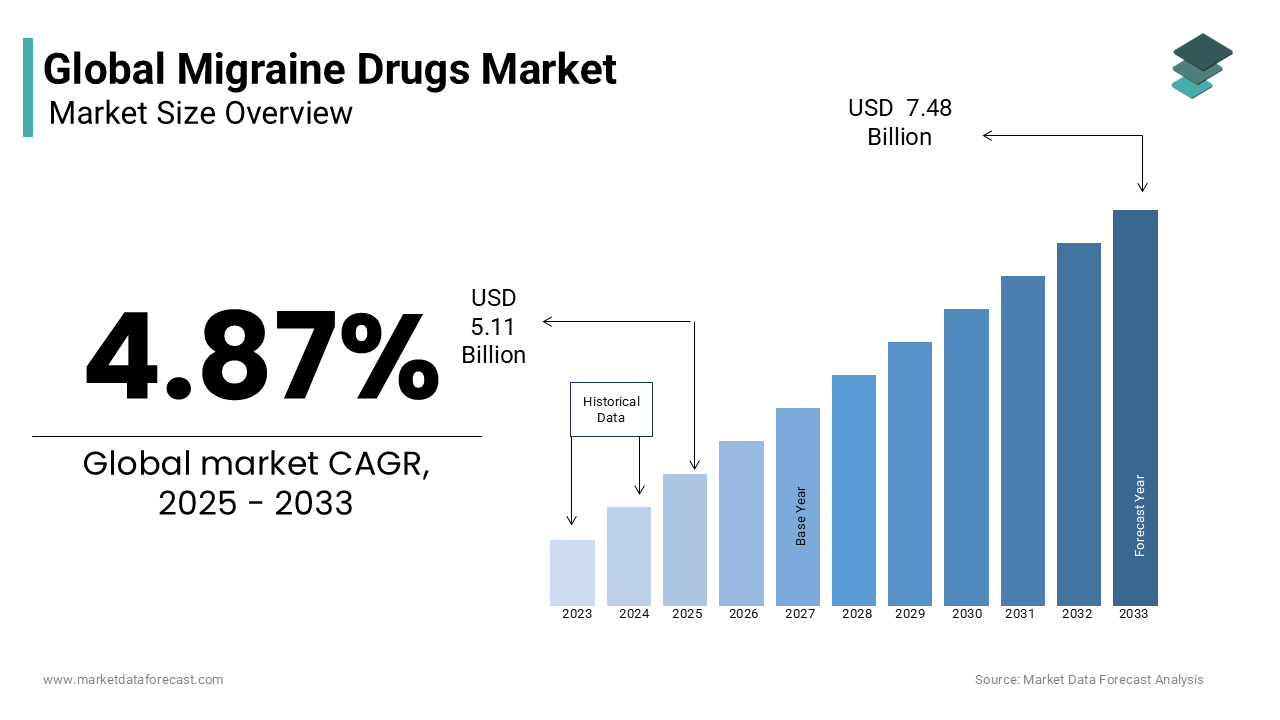
- Market Valuation: Valued at USD 5.11 billion (2025), estimated at USD 5.36 billion (2026), and projected to reach USD 7.84 billion by 2034, registering a robust CAGR of 4.87% (2026–2034).
- Primary Growth Drivers: High global prevalence and disease burden of migraines, alongside paradigm-shifting advancements in targeted biologic therapies like CGRP-targeting monoclonal antibodies.
Key Global Migraine Drugs Market Segment Metrics (2026–2034)
| Category | Leading Segment (2025 Position) | Fastest-Growing Segment |
|---|---|---|
| By Treatment | Acute treatment (dominant share in 2025 due to widespread reliance on abortive medications) | Preventive treatment (projected at an 11.2% CAGR) |
| By Therapeutic Class | Triptans (gold standard for acute relief, capturing significant volume in 2025) | Others / CGRP antagonists & biologics (projected at a 14.5% CAGR) |
| By Region | North America (leading global market share in 2025) | Asia-Pacific (high CAGR driven by R&D and government awareness initiatives) |
Major Industry Players & Market Structure
Market Structure: Intense and innovative landscape defined by rivalry between legacy pharmaceutical giants and agile biotechnology innovators commercializing advanced biologics while defending portfolios against generic erosion.
Key Market Leaders: Allergan, GlaxoSmithKline, Pfizer, Endo, Impax Laboratories, Abbott, Aeriel BioPharma, Alder Biopharmaceuticals, Bayer, CoLucid, Eli Lilly, Johnson & Johnson, Kowa Pharmaceuticals America, Klaria, Luitpold Pharmaceuticals, AstraZeneca, Meda, Aegis Therapeutics, Merck, TG Therapeutics, Valeant, and Winston Pharmaceuticals.
Global Migraine Drugs Market Size
The global migraine drugs market size was valued at USD 5.11 billion in 2025. The global migraine drugs market size is projected to value USD 7.84 billion by 2034 and USD 5.36 billion in 2026, growing at a CAGR of 4.87% during the forecast period.
Migraine drugs are a diverse array of pharmacological interventions designed to alleviate the debilitating symptoms of migraine attacks and prevent their recurrence in susceptible individuals. This sector includes acute treatments such as triptans, non-steroidal anti-inflammatory drugs and gepants, as well as preventive therapies including beta-blockers, anticonvulsants and monoclonal antibodies targeting calcitonin gene-related peptide. Migraine is recognised globally as a leading cause of disability, particularly among women of reproductive age, significantly impacting quality of life and economic productivity. According to the Global Burden of Disease study, migraine ranks as the second leading cause of years lived with disability worldwide, driving an active growth trend in global healthcare utilisation as it affects over 1 billion people. As per Eurolight and the European Headache Federation, the current prevalence of migraine among adults in Europe is estimated at 11% to 14% as shifting socioeconomic pressures intensify the regional disease burden. The clinical landscape has evolved dramatically with the introduction of novel biologics that offer targeted mechanisms of action distinct from traditional vasoconstrictive agents. Regulatory bodies such as the European Medicines Agency have approved several new classes of medications, reflecting a shift toward personalised medicine approaches. The burden of this neurological disorder extends beyond physical pain, encompassing cognitive impairment and social withdrawal, which drives continuous innovation in therapeutic options. As understanding of migraine pathophysiology deepens, the market is transitioning from symptomatic relief to disease modification, aiming to reduce attack frequency and severity for chronic sufferers.
MARKET DRIVERS
High Global Prevalence and Significant Disease Burden
The high global prevalence of migraine and its associated disease burden are propelling the expansion of the migraine drugs market. This is due to the urgent need for effective therapeutic solutions. Migraine is not merely a headache but a complex neurological disorder that affects a substantial portion of the global population, leading to significant personal and societal costs. As per the Global Burden of Disease Study, migraine is consistently ranked among the top causes of disability-adjusted life years, particularly in individuals under the age of 50. According to the Institute for Health Metrics and Evaluation, headache disorders affect nearly 3 billion people worldwide, with migraine accounting for the vast majority of this burden and showing an active trend where women experience twice the healthy life loss of men. This demographic skew creates a large and consistent patient pool requiring long-term management strategies. As per the European Brain Council, migraine is estimated to affect approximately 144 million people across Europe, creating a major shift in public health focus due to millions of lost workdays annually. The economic impact is profound, with indirect costs related to absenteeism and presenteeism far exceeding direct medical expenses. Healthcare systems are increasingly recognising the need to invest in effective pharmacological treatments to mitigate these economic losses. The chronic nature of the condition means that patients often require lifelong medication adherence, driving sustained demand for both acute and preventive drugs. Consequently, the sheer volume of affected individuals ensures a robust baseline demand for innovative and effective migraine therapies across all healthcare settings.
Advancements in Targeted Biologic Therapies and Mechanism Understanding
Advancements in targeted biologic therapies and a deeper understanding of migraine pathophysiology are fuelling the growth of the migraine drugs market. These advancements offer superior efficacy and safety profiles compared to traditional treatments. The discovery of the role of calcitonin-related peptide in migraine pathogenesis has revolutionised treatment paradigms, leading to the development of monoclonal antibodies and small-molecule antagonists. As per the American Headache Society consensus guidelines, these new classes of CGRP-targeting drugs are recognised as first-line preventative options that accelerate therapeutic updates for patients regardless of their history with conventional therapies. According to clinical trial data published in the Journal of Headache and Pain, anti-CGRP monoclonal antibodies actively reduce monthly migraine days by 50% or more in a substantial proportion of chronic migraine sufferers, prompting rapid integration into clinical practice. The European Medicines Agency has approved multiple agents in this class, reflecting their clinical value and safety advantage, as they do not cause vasoconstriction. This mechanistic precision allows for tailored treatment plans that address the specific biological underpinnings of individual patient conditions. Furthermore, the availability of these biologics has expanded the treatment landscape for patients with cardiovascular contraindications to triptans. The success of these targeted therapies has stimulated further research into other neuropeptides and ion channels, fostering a pipeline of next-generation medications. Pharmaceutical companies are investing heavily in this area, driven by the potential for high-value prescriptions and improved patient outcomes. This scientific progress transforms migraine management from empirical trial and error to evidence-based precision medicine.
MARKET RESTRAINTS
High Cost of Novel Biologic Therapies and Reimbursement Hurdles
The high cost of novel biologic therapies and stringent reimbursement hurdles are restricting the growth of the migraine drugs market. This limits access for many patients. Monoclonal antibodies and newer gepants are priced substantially higher than generic triptans and older preventive medications, creating financial barriers for both healthcare systems and individuals. As per studies, the annual cost of anti-CGRP therapies can exceed several thousand dollars per patient, posing a challenge for public and private payers. In many European countries reimbursement decisions are governed by strict health technology assessment bodies that require robust evidence of cost effectiveness before approving coverage. For instance, according to the National Institute for Health and Care Excellence, specific CGRP monoclonal antibodies are recommended for preventing chronic migraine only if the disease has actively failed to respond to at least three prior oral preventive treatments. These restrictions delay patient access and create administrative burdens for prescribers. Additionally, high out-of-pocket costs in systems with partial coverage can lead to poor adherence and discontinuation of therapy. The budget impact of widespread adoption of these high-priced drugs forces payers to implement step-therapy protocols which may not be clinically optimal for all patients. Consequently, despite their clinical benefits, the economic burden of these advanced therapies restricts their market penetration and limits the overall growth potential of the premium segment of the migraine drug market.
Side Effects and Safety Concerns Associated with Traditional Medications
Side effects and safety concerns associated with traditional migraine medications constrain the expansion of the migraine drugs market. This causes patient discontinuation and limits long term usage. Common acute treatments such as triptans and non-steroidal anti-inflammatory drugs are associated with adverse events, including cardiovascular risks, gastrointestinal issues and medication-overuse headache. According to the International Headache Society, medication overuse headache actively impacts approximately 1% to 2% of the general population, presenting a major barrier to real-world clinical management due to high prevalence among chronic migraine sufferers. This paradoxical effect worsens the condition and necessitates complex withdrawal protocols that discourage consistent drug use. Preventive medications like beta blockers and anticonvulsants often cause systemic side effects such as weight gain, fatigue, cognitive dulling and mood changes, which significantly impact quality of life. As per research, oral preventive migraine therapies exhibit a rapid drop-off in clinical adherence, with more than 75% of patients discontinuing or switching their initial treatment within the first 12 months. The fear of long-term safety risks, particularly in younger populations and women of childbearing age, further limits prescription rates. Physicians are often hesitant to prescribe these agents for extended periods due to potential organ toxicity or interactions with other medications. This reluctance to commit to long-term pharmacological management reduces the overall volume of prescriptions and hinders market expansion. Patients frequently seek non-pharmacological alternatives or endure symptoms rather than risk adverse effects, thereby constraining the demand for traditional migraine drugs.
MARKET OPPORTUNITIES
Expansion into Pediatric and Adolescent Patient Populations
The expansion into pediatric and adolescent patient populations offers a significant opportunity for the migraine drugs market. This is because awareness of childhood migraines is increasing alongside an expansion in regulatory approvals. Migraine often begins in childhood or adolescence, with studies indicating that prevalence rises sharply during puberty, particularly in girls. According to the National Headache Foundation, approximately 10% of school-aged children suffer from migraines, driving an active demand for paediatric-specific clinical trials to address the scarcity of approved treatments specifically labelled for this age group. Most current prescriptions are off-label uses of adult medications which lack robust safety and efficacy data for developing bodies. Recent approvals of certain triptans and ongoing trials for CGRP inhibitors in adolescents open new avenues for pharmaceutical companies to address this underserved segment. Early intervention is crucial to prevent the progression to chronic migraine in adulthood, making effective paediatric treatments highly valuable. Schools and parents are increasingly seeking reliable pharmacological options to manage school absenteeism and improve academic performance. The development of child-friendly formulations such as dissolvable tablets or nasal sprays enhances compliance and ease of administration. Regulatory incentives for paediatric research encourage manufacturers to invest in clinical trials for younger demographics. By capturing this early-onset market, companies can establish long-term patient loyalty and secure a growing revenue stream as these patients transition into adulthood. This strategic focus addresses a critical gap in care and offers substantial growth potential.
Integration of Digital Therapeutics and Personalized Medicine
The integration of digital therapeutics and personalized medicine provides a lucrative prospect for the migraine drugs market. This enhances treatment adherence and optimises therapeutic outcomes. Digital health platforms that track migraine trigger frequency and medication response provide valuable data for clinicians to tailor pharmacological interventions. As per the Digital Health Coalition, the use of mobile health apps for chronic condition management has grown significantly, allowing for real-time monitoring and feedback. Pharmaceutical companies are partnering with tech firms to develop companion apps that support drug therapy through reminders, education and symptom logging. This holistic approach improves patient engagement and adherence, which is often low in chronic migraine management. Personalised medicine approaches utilising genetic biomarkers may soon predict individual responses to specific drug classes, reducing trial-and-error prescribing. For instance, pharmacogenomic testing could identify patients likely to respond to CGRP inhibitors versus traditional preventives, optimising resource allocation. Insurance providers are increasingly interested in these integrated models as they demonstrate better health outcomes and reduced overall costs. The combination of precise pharmacological agents with digital support tools creates a comprehensive care ecosystem that differentiates products in a competitive market. This synergy between drugs and data empowers patients and providers, leading to more effective disease management and opening new revenue streams through value-based care contracts.
MARKET CHALLENGES
Complexity of Diagnosis and Underreporting of Cases
The complexity of migraine diagnosis and the widespread underreporting of cases remain major hurdles for the migraine drugs market. This obscures the true size of the treatable population. Migraine is often misdiagnosed as a tension-type headache or sinusitis due to overlapping symptoms and lack of specific diagnostic biomarkers. According to the World Health Organization, only a small minority of people with headache disorders are appropriately diagnosed and treated by a healthcare provider, compounding the global neurological disease burden. This diagnostic gap prevents patients from accessing appropriate prescription medications, leading them to rely on over-the-counter analgesics that may be ineffective or harmful. Primary care physicians who manage the majority of migraine cases often lack specialized training in headache medicine, resulting in suboptimal treatment plans. The stigma associated with migraine as a psychological rather than neurological issue further discourages patients from seeking professional help. Many individuals self-medicate without consulting a doctor, meaning they never enter the formal healthcare system where prescription drugs are dispensed. This invisibility of the patient population makes it difficult for pharmaceutical companies to accurately forecast demand and target marketing efforts. Efforts to educate primary care providers and raise public awareness are ongoing, but progress is slow. A significant portion of potential market demand will remain untapped until diagnostic accuracy improves and reporting rates increase. Ultimately, this limits the overall reach of prescription migraine therapies.
Patent Expirations and Entry of Generic Alternatives
Patent expirations and the subsequent entry of generic alternatives pose a formidable challenge to the migraine drugs market. Consequently, innovator companies face heavily eroded revenue streams. Many blockbuster migraine medications, including several triptans and older preventive agents, have lost or are approaching patent protection, allowing cheaper generic versions to flood the market. According to the U.S. Food and Drug Administration, generic drugs capture a dominant share of market volume following a brand's loss of exclusivity, accelerating price reductions by an average of 30% to over 80% as the number of generic competitors increases. This shift forces original manufacturers to lower prices or lose market share, drastically impacting profitability and return on investment for research and development. The pressure to innovate continuously to replace lost revenue drives up the cost of developing new molecules which must demonstrate superior efficacy to justify premium pricing. Payers are increasingly favouring generics and biosimilars in formulary placements, further marginalising branded products. While new biologics currently enjoy patent protection, their eventual expiration looms, creating long-term uncertainty. The rapid commoditisation of mature drug classes limits the ability of companies to sustain high margins over the product lifecycle. Consequently, firms must constantly balance the high costs of innovation against the inevitable decline of established products. This dynamic creates a volatile market environment where maintaining a competitive advantage requires relentless investment in next-generation therapies and strategic portfolio management to mitigate the financial impact of generic competition.
REPORT COVERAGE
| REPORT METRIC | DETAILS |
| Market Size Available | 2025 to 2034 |
| Base Year | 2025 |
| Forecast Period | 2026 to 2034 |
| Segments Analysed | By Treatment, Therapeutic Class, and Region |
| Various Analyses Covered | Global, Regional & Country Level Analysis, Segment-Level Analysis, Drivers, Restraints, Opportunities, Challenges; PESTLE Analysis; Porter’s Five Forces Analysis, Competitive Landscape, Analyst Overview of Investment Opportunities |
| Regions Analysed | North America, Europe, Asia Pacific, Latin America, the Middle East, and Africa |
| Market Leaders Profiled | Allergan, GlaxoSmithKline, Pfizer, Endo, Impax Laboratories, Abbott, Aeriel BioPharma, Alder Biopharmaceuticals, Bayer, CoLucid, Eli Lilly, Johnson & Johnson, Kowa Pharmaceuticals America, Klaria, Luitpold Pharmaceuticals |
SEGMENTAL ANALYSIS
By Treatment Insights
The acute treatment segment dominated the migraine drugs market and accounted for a substantial share in 2025. This segment dominates because most individuals suffering from episodic migraine rely on fast-acting medications such as triptans and non-steroidal anti-inflammatory drugs to manage pain and associated symptoms like nausea and photophobia. Migraine attacks affect the vast majority of patients and require immediate symptom relief. As per the American Migraine Foundation, approximately 90% of migraine sufferers use acute medications as their primary line of defence, given that not all patients require or qualify for preventive therapy. The high frequency of attacks in many patients necessitates a constant supply of abortive treatments, ensuring consistent revenue generation for pharmaceutical companies. Furthermore, acute treatments are often prescribed by primary care physicians who may not specialize in headache medicine, making them more accessible than specialized preventive regimens. The widespread availability of generic triptans has also increased affordability and adoption rates across diverse socioeconomic groups. Patients prefer acute treatments for their convenience and ability to restore functionality quickly, allowing them to return to work or daily activities. The lack of strict monitoring requirements for acute prescriptions compared to preventive therapies further facilitates their dominance. Consequently, the sheer volume of prescriptions for immediate relief solidifies the market leadership of the acute treatment segment despite the growing interest in long-term management strategies.
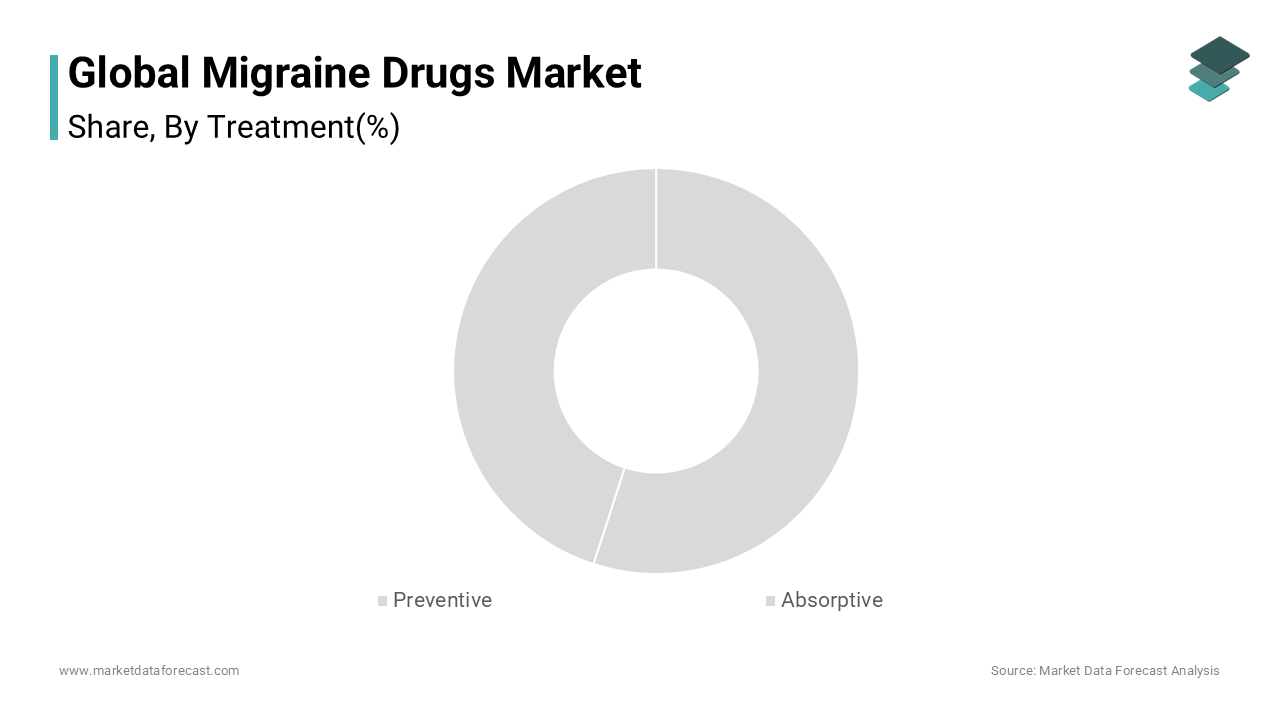
On the other hand, the preventive treatment segment is projected to register the highest CAGR of 11.2% in the migraine drugs market from 2026 to 2034. These impressive projections are driven by the introduction of novel biologics and the increasing recognition of chronic migraine as a distinct clinical entity. This accelerated growth is fuelled by the approval of calcitonin gene-related peptide monoclonal antibodies, which offer superior efficacy and tolerability for patients with frequent attacks. According to the European Headache Federation, the prevalence of chronic migraine affects approximately 1% to 2% of the general population but accounts for a disproportionate share of healthcare costs and disability. These high-burdened patients are the primary candidates for preventive therapy, creating a targeted and high-value market segment. The shift toward early intervention to prevent disease progression is gaining traction among neurologists who now recommend preventive measures for patients with four or more migraine days per month. Additionally, the expansion of indications for existing preventive drugs to include other comorbid conditions such as depression or hypertension enhances their utility and prescription rates. Insurance coverage for newer preventive agents is improving as payers recognise the long-term cost savings from reduced emergency room visits and hospitalisations. The development of oral gepants for prevention further broadens the patient pool by offering an alternative to injectables. These factors combined drive rapid adoption and make preventive treatment the fastest-expanding segment in the market.
By Therapeutic Class Insights
The triptans segment led the migraine drugs market and captured a significant share in 2025. Factors such as its established efficacy, safety profile, and status as the first-line specific treatment for moderate- to severe-migraine-attacks have contributed to the leading position of this segment. Millions of patients worldwide rely on triptans, cementing this class as the gold standard for acute migraine relief for more than twenty years and driving its segment dominance. According to sources, triptans remain the most prescribed class of acute, migraine-specific medication globally due to their targeted mechanism of action, actively driving pharmacy dispensing volume while alternative treatments continue to emerge. The availability of multiple formulations, including tablets nasal sprays and injections, allows for personalised administration based on patient preference and speed of onset requirements. Generic versions of sumatriptan and rizatriptan have significantly reduced costs, making them accessible to a broader population and sustaining high prescription volumes. Clinical guidelines from major neurological associations continue to recommend triptans as the initial pharmacological intervention for eligible patients, reinforcing their market position. The extensive real-world evidence supporting their use builds confidence among prescribers and patients alike. Although newer classes are emerging, triptans maintain their leadership due to familiarity and lower reimbursement barriers. Their widespread integration into healthcare systems and formulary tiers ensures they remain the backbone of acute migraine therapy, driving continued market dominance.
However, the others segment is predicted to witness the highest CAGR of 14.5% during the forecast period owing to innovation and unmet medical needs. This rapid expansion of the segment is also propelled by the launch of highly effective biologics that target the underlying pathophysiology of migraine rather than just masking symptoms. The segment primarily includes calcitonin gene-related peptide antagonists and monoclonal antibodies. According to the American Headache Society, CGRP-targeting therapies are recognised as a first-line option for migraine prevention, eliminating the requirement that patients must first try and fail conventional, non-specific preventive medications. The ability of CGRP inhibitors to reduce migraine frequency without the cardiovascular risks associated with triptans makes them suitable for a wider demographic, including older adults and those with comorbidities. Regulatory approvals in major markets such as the United States and Europe have accelerated market entry and adoption. Pharmaceutical companies are investing heavily in marketing and education to raise awareness among both physicians and patients about these advanced options. The premium pricing of these biologics contributes to high revenue growth despite lower unit volumes compared to generics. Furthermore, ongoing research into next-generation small-molecule CGRP antagonists promises oral alternatives that could further boost adoption. The transformative impact of these drugs on quality of life drives strong demand and positions this segment as the primary engine of market growth.
REGIONAL ANALYSIS
The North American migraine drugs market is likely to play the leading role among all the regions in the worldwide market during the forecast period owing to the growing population suffering from headaches. The U.S. holds a significant share of the North American region. In the U.S., increasing manufacturing of various drugs for migraine drives the market forward. In 2021, AbbVie Inc. approved oral medicine for preventive treatment for migraine in adults approved by the U.S. health regulators. Migraine is a type of neurobiological disorder affecting nearly 16% of the people in the United States. 1 in 4 American households suffers from migraine, which demands market growth in this Region. Migraine is the third most common disease in the world. Nearly 2.7 million Canadian people are suffering from migraine, according to recent studies. Migraine affects people for nearly 4-72 hours. As per a recent survey, it is found that half of Canadians suffered from Migraines during the Covid-19 pandemic.
The Asia-Pacific region is predicted to have a high CAGR during the forecast period owing to the successful initiatives taken by the governments of Asia-Pacific countries to bring awareness towards migraines. In this Region, India and China are the countries that contribute to the migraine drugs market. People in China use traditional Chinese medicine for migraines. As a result, researchers in this region manufacture drugs with herbal ingredients, reducing the side effects of conventional migraine drugs. Increasing clinical trials for developing migraine drugs in Japan drive the market in this Region. The government has taken several measures for the approval of the migraine drug to increase the safety of the people in their Region.
Europe is anticipated to grow at a promising CAGR during the forecast period owing to the consistent growth in the number of people diagnosed with migraine. According to the information published by the European Migraine and Headache Alliance, approximately 41 million people in Europe have migraines. The growing R&D activities around migraine drugs are a major factor in regional market growth. Asia-Pacific to have substantial growth in the upcoming years. In Germany, headache disorders are seen in women and men due to restrictions on the quality of life. In Germany, most people suffer from tension-type headaches. It is estimated that nearly 10 million adults suffer from migraines in the United Kingdom.
COMPETITIVE LANDSCAPE
The competition in the Migraine Drugs Market is characterized by intense rivalry between established pharmaceutical giants and emerging biotechnology firms competing on innovation and efficacy. Major players leverage their extensive research capabilities and global distribution networks to launch breakthrough therapies such as monoclonal antibodies and small molecule antagonists. They compete primarily on the basis of clinical performance speed of onset and side effect profiles offering distinct advantages over older treatments. Generic manufacturers exert significant pressure on prices for mature drug classes like triptans forcing innovators to continuously develop next generation solutions. The market exhibits high barriers to entry due to rigorous regulatory requirements and the need for substantial clinical trial investments. Patent expirations create opportunities for generic entry but also drive incumbents to innovate rapidly to protect revenue. Regulatory bodies in Europe and North America play a crucial role in shaping competitive dynamics through approval processes and pricing controls. Patient advocacy groups influence market trends by demanding better access and quality of life improvements. Collaboration between industry stakeholders and healthcare providers is essential to navigate these complexities. This dynamic environment requires continuous adaptation and strategic agility to maintain leadership in the evolving therapeutic landscape.
KEY MARKET PLAYERS
Some of the companies that are playing a dominating role in the Global Migraine Drugs Market include
- Allergan
- GlaxoSmithKline
- Pfizer
- Endo
- Impax Laboratories
- Abbott
- Aeriel BioPharma
- Alder Biopharmaceuticals
- Bayer
- CoLucid
- Eli Lilly
- Johnson & Johnson
- Kowa Pharmaceuticals America
- Klaria
- Luitpold Pharmaceuticals
- AstraZeneca
- Meda
- Aegis Therapeutics
- Merck
- TG Therapeutics
- Valeant
- Winston Pharmaceuticals
Top Strategies Used by Key Market Participants
Key players in the Migraine Drugs Market primarily employ strategies focused on product innovation and strategic partnerships to maintain competitive advantage. Companies are heavily investing in the development of novel mechanisms such as CGRP inhibitors and gepants to offer superior efficacy and safety profiles. This shift toward targeted therapies allows manufacturers to differentiate their offerings from traditional generics and capture premium pricing. Another major strategy involves expanding into preventive care segments where long term treatment adherence provides stable revenue streams. Firms are also forming collaborations with digital health companies to integrate monitoring tools and improve patient engagement. Additionally key participants focus on navigating complex reimbursement landscapes by generating robust health economic data to demonstrate value to payers. By emphasizing patient support programs and educational initiatives companies build brand loyalty and enhance clinical outcomes. These approaches allow manufacturers to address unmet needs while securing market access in highly regulated environments.
RECENT MARKET HAPPENINGS
- In 2022, Biohaven Pharmaceutical Holding Company Ltd. partnered with Pfizer Inc. and announced that the Phase 3 clinical trial of rimegepant has started in 1,431 adults for the acute treatment of migraine.
- In 2022, BioDelivery Sciences developed a liquid migraine medicine named Elyxyb (celecoxib oral solution), which the FDA approved for adult people.
- In 2020, Eli Lilly launched a new medicine called to treat migraines named Reyvow, which the FDA approved. It is the first drug to treat pain and the sensitivity of light, sound, and nausea.
- In 2020, New drugs were approved by the U.S. Food and Drug Administration to treat migraine in adults. This approval allows the ubrelvy to market, which Allergan USA, Inc. manufactured.
MARKET SEGMENTATION
This research report on the global migraine drugs market has been segmented and sub-segmented based on treatment, therapeutic class, and region.
By Treatment
- Acute Treatment
- Preventive Treatment
By Therapeutic Class
- Triptans
- Others
By Region
- North America
- Europe
- Asia Pacific
- Latin America
- Middle East & Africa