North America Anti-Aging Market Size, Share, Trends & Growth Forecast Report By Demographics (Baby Boomers, Generation X, Generation Y), Products Type, Services, Devices Type and Country (United States, Canada & Rest of the North America), Industry Analysis From 2024 to 2033
North America Anti-Aging Market Size
The North American anti-aging market is estimated to grow from USD 19.29 billion in 2024 to USD 30.39 billion in 2033, representing a CAGR of 5.21 %.

MARKET DRIVERS
Rising Life Expectancy and Prolonged Aesthetic Engagement
The increasing life expectancy, which has extended the duration over which individuals remain socially, professionally, and romantically active is substantially fuelling the growth of the North America anti-aging market. As per the Centers for Disease Control and Prevention, the average life expectancy in the United States was 77.5 years in 2023, up from 76.1 years in 2019, which is indicating a growing population of middle-aged and older adults who remain engaged in public life. The U.S. Bureau of Labor Statistics confirms that 32% of Americans aged 65–74 were still in the workforce in 2023, creating professional incentives to maintain a youthful appearance. Additionally, the Baby Boomer generation, which numbers approximately 69 million, is now entering an age range where visible aging accelerates, making them a core consumer segment. According to the Pew Research Center, 61% of adults aged 50 and above have used at least one anti-aging product or treatment, ranging from retinoid creams to Botox injections.
Growing Influence of Digital Media and Aesthetic Awareness
The pervasive influence of digital media and social platforms with high beauty standards and normalized aesthetic interventions are accelerating the growth of the North America anti-aging market. Platforms such as Instagram, TikTok, and YouTube have created a hyper-visual culture where facial appearance is continuously scrutinized, prompting individuals to adopt preventive skincare and corrective treatments earlier in life. According to the Pew Research Center, 72% of American adults use Instagram, and 67% use YouTube, both of which host extensive content on skincare routines, dermatologist consultations, and “get ready with me” videos that feature anti-aging products. The American Academy of Dermatology reports that 44% of patients seeking anti-aging treatments in 2023 cited social media as their primary source of information. Furthermore, the rise of tele-dermatology platforms such as Curology and Apostrophe has enabled real-time access to personalized regimens, increasing treatment adherence.
MARKET RESTRAINTS
Regulatory Hurdles in Claims Substantiation and Product Classification
The stringent regulatory environment governing product claims and classification, particularly the distinction between cosmetics and drugs is limiting the growth of the North America anti-aging market. Cosmetics are prohibited from making therapeutic claims, such as “reduces wrinkles” or “stimulates collagen,” unless they are approved as over-the-counter (OTC) drugs or prescription treatments. According to the FDA’s 2023 enforcement report, 41 warning letters were issued to skincare companies for unsubstantiated anti-aging claims, including misleading references to “scientific breakthroughs” or “dermatologist-proven results” without adequate evidence.
Skin Sensitivity and Adverse Reactions to Active Ingredients
The high incidence of skin sensitivity and adverse reactions associated with potent active ingredients commonly used in anti-aging formulations is hampering the growth of the North America anti-aging market. Compounds such as retinoids, alpha-hydroxy acids (AHAs), and vitamin C derivatives, while effective in stimulating collagen and accelerating cell turnover, often cause irritation, redness, and barrier disruption, particularly in individuals with sensitive or compromised skin. According to the American Academy of Dermatology, up to 35% of patients using prescription tretinoin discontinue treatment within three months due to discomfort. Over-the-counter retinol products, though milder, still trigger adverse effects in approximately 22% of users, as reported by the Journal of Clinical and Aesthetic Dermatology in 2023. The National Eczema Association states that facial eczema cases linked to anti-aging regimens rose by 18% between 2020 and 2023. Furthermore, the proliferation of unregulated online brands selling high-concentration formulations without dermatological oversight has led to misuse and adverse outcomes. A 2022 study by the University of California, San Francisco found that 40% of consumers self-prescribe retinoids based on social media advice, often without understanding proper usage protocols.
MARLKET OPORTUNITUIES
Integration of Biotechnology and Personalized Skincare
The integration of biotechnology and personalized skincare with the advances in genomics, artificial intelligence (AI), and biomarker analysis is to showcase new opportunities for the growth of the North America anti-aging market. Companies are increasingly leveraging DNA testing, skin microbiome profiling, and AI-driven diagnostics to create customized regimens that target individual aging pathways. For instance, brands like Atolla and Skinsei use algorithmic analysis of skin data to formulate bespoke serums based on environmental exposure, hormonal fluctuations, and genetic predispositions. Additionally, biotech innovations such as lab-grown growth factors, recombinant collagen, and stem cell-derived exosomes are enhancing product efficacy while minimizing ethical concerns. The Mayo Clinic confirms that topical formulations containing human fibroblast-derived exosomes show measurable improvement in skin texture and elasticity within eight weeks. Telehealth platforms are further accelerating this trend by enabling remote skin assessments and real-time regimen adjustments.
Expansion of Medical-Grade At-Home Devices
The rapid expansion of medical-grade at-home anti-aging devices, which bridge the gap between professional treatments and daily skincare is also to promote the growth of the North America anti-aging market. Enabled by miniaturization of technology and regulatory clearances, devices such as LED light therapy masks, microcurrent toning tools, and radiofrequency (RF) emitters are gaining mainstream acceptance. According to the American Society for Dermatologic Surgery, at-home device usage increased by 62% between 2020 and 2023, with 28% of users replacing or reducing in-office visits. These devices offer non-invasive alternatives to procedures like facelifts and laser resurfacing, appealing to consumers seeking cost-effective, convenient solutions. The average price of a high-end at-home device ranges from $200 to $600, significantly lower than professional treatments, which can exceed $1,000 per session. Additionally, integration with smartphone apps allows users to track progress, customize settings, and receive usage reminders, enhancing compliance. As per a 2023 survey by the Consumer Technology Association, 47% of device owners use their tools at least five times per week.
MARKET CHALLENGES
Navigating Ingredient Efficacy and Clinical Validation
The growing demand for demonstrable ingredient efficacy and rigorous clinical validation is likely to degrade the growth of the North America anti-aging market. According to a 2023 survey by the Consumer Healthcare Products Association, 58% of consumers check for clinical trial references before buying anti-aging products, and 43% consult dermatologists or scientific databases like PubMed. This expectation places immense pressure on brands to invest in third-party testing, long-term studies, and standardized measurement protocols. The Journal of Drugs in Dermatology notes that only 12% of OTC anti-aging products on the market have published randomized controlled trials supporting their claims. The lack of FDA oversight for cosmetic claims exacerbates the issue, allowing unsubstantiated marketing to persist. Brands that fail to meet scientific scrutiny risk reputational damage, as seen in class-action lawsuits against companies for exaggerated anti-aging promises.
Ethical and Environmental Concerns in Sourcing and Testing
The rising scrutiny over ethical sourcing and animal testing practices as consumers align their purchasing decisions with environmental and moral values is limiting the growth of the North America anti-aging market. While the U.S. does not ban animal testing for cosmetics, states like California and Nevada have enacted legislation prohibiting the sale of products tested on animals, effective since 2020 and 2023 respectively. According to the Humane Society International, over 1,200 brands have registered as cruelty-free under the Leaping Bunny program, reflecting a shift in consumer expectations. The Monterey Bay Aquarium’s Seafood Watch program warns that overharvesting of marine organisms for cosmetic use threatens coastal ecosystems. Additionally, the use of human stem cells and placental extracts, though scientifically promising, triggers ethical debates about consent and commercialization. Environmentally, the proliferation of single-use packaging and energy-intensive production processes undermines sustainability goals. The U.S. Environmental Protection Agency estimates that the cosmetics industry generates over 120,000 tons of plastic waste annually, much of it from premium anti-aging lines.
SEGMENTAL ANALYSIS
By Demographics Insights
The baby boomer segment was accounted in holding 56.4% of the North America anti-aging market share in 2024 owing to the biological necessity, as this cohort enters an age range where intrinsic aging processes such as collagen depletion, elastin degradation, and reduced cellular regeneration become visibly pronounced. This physiological reality has led to high adoption rates of both topical and clinical interventions. The Centers for Disease Control and Prevention states that 41% of adults aged 55–64 have undergone at least one minimally invasive cosmetic procedure, including Botox, dermal fillers, or chemical peels.
The generation Y, or Millennials segment is attributed to grow with an expected CAGR of 7.8% in the next coming years. According to the American Academy of Dermatology, 39% of adults aged 25–34 now use prescription-strength tretinoin, citing dermatologist recommendations and peer influence. The growing incidences of environmental concerns such as pollution is also to enhance the growth of the segment. The Skin Cancer Foundation notes that daily UV exposure contributes to up to 90% of visible skin aging, prompting widespread adoption of daily sunscreen and antioxidant serums. Moreover, the rise of tele-dermatology services like Curology and Apostrophe has lowered access barriers by offering personalized regimens at affordable price points.
By Product Type Insights
The anti-wrinkle products segment was the largest by occupying 38.2% of the North America anti-aging market share in 2024 with the centrality of wrinkles as the most visible and psychologically impactful sign of aging, making their reduction a primary consumer objective. The efficacy of active ingredients such as retinoids, peptides, and growth factors has been widely validated, reinforcing consumer confidence. According to the Journal of Clinical and Aesthetic Dermatology, topical tretinoin has demonstrated a 30–50% improvement in fine lines and skin texture after 24 weeks of use, making it the gold standard in dermatology. The U.S. Food and Drug Administration’s recognition of certain hydroxy acids and peptides as safe and effective further legitimizes claims. Moreover, marketing strategies emphasizing “instant tightening” or “24-hour plumping” effects have enhanced consumer appeal. This combination of scientific credibility, broad accessibility, and emotional resonance ensures that anti-wrinkle products remain the cornerstone of the anti-aging product landscape.
The natural anti-aging products segment is likely to grow with a CAGR of 11.2% during the forecast period owing to the increasing consumer skepticism toward synthetic chemicals and a preference for plant-based, non-toxic formulations perceived as safer and more sustainable. This has led to a migration toward botanical alternatives such as bakuchiol (a natural retinol analog), rosehip oil, and green tea extract, which offer comparable anti-aging benefits with lower irritation potential. The Environmental Working Group confirms that sales of EWG-Verified anti-aging products grew by 67% during the same period. Additionally, younger consumers, particularly Millennials and Gen Z, prioritize ethical sourcing and environmental impact. According to the Organic Trade Association, 78% of natural skincare buyers consider ingredient origin and fair-trade certification when making purchases. Retailers like Whole Foods and Sephora have responded by expanding clean beauty sections by featuring brands such as Herbivore Botanicals and Biossance.
By Services Type
The chemical peel treatments segment was the largest by occupying 24.3% of the North America anti-aging services market share in 2024 with the treatment’s versatility, affordability, and minimal downtime, making it accessible to a broad demographic. Chemical peels address multiple aging concerns including fine lines, sun damage, uneven texture, and hyperpigmentation through controlled exfoliation using alpha-hydroxy acids (AHAs), beta-hydroxy acids (BHAs), or trichloroacetic acid (TCA). According to the Journal of the American Academy of Dermatology, medium-depth peels using TCA have demonstrated a 40–60% improvement in photoaging after a single session. The procedure is widely offered in dermatology clinics, medspas, and even at-home formats, with professional treatments averaging $150–$300 per session—significantly lower than laser or injectable alternatives. The U.S. Food and Drug Administration has cleared multiple peel formulations for safety and efficacy, enhancing consumer trust.
The adult acne therapy segment is expected to register a CAGR of 10.4% from 2025 to 2033 with the rising prevalence of persistent and late-onset acne among adults, particularly women aged 25–45, which contributes to premature aging and post-inflammatory hyperpigmentation. According to the American Academy of Dermatology, over 40% of women in this age group experience clinical acne, often triggered by hormonal fluctuations, stress, and environmental pollutants. The National Institutes of Health notes that chronic inflammation from acne can lead to accelerated skin aging, creating a dual demand for both acne treatment and anti-aging repair.
By Devices
The radiofrequency (RF) devices segment was the dominant by holding 34.2% of the North America anti-aging devices market share in 2024 owing to the technology’s proven ability to stimulate collagen and elastin production through controlled thermal energy, resulting in non-invasive skin tightening and wrinkle reduction. RF devices are widely used in both clinical and at-home settings, with professional systems like Thermage and InMode delivering measurable improvements in skin laxity after a single session. According to the Journal of Cosmetic and Laser Therapy, RF treatments have demonstrated a 20–35% increase in dermal thickness after three months, with effects lasting up to 18 months. The Consumer Technology Association notes that sales of at-home RF devices grew by 44% between 2020 and 2023. These devices are often integrated with smartphone apps for usage tracking and personalized settings by enhancing compliance.
The laser aesthetic devices segment is deemed to grow at a CAGR of 12.6% from 2025 to 2033 with the technological advancements that have enhanced precision, safety, and versatility across skin types and conditions. Modern fractional and picosecond lasers effectively treat wrinkles, pigmentation, acne scars, and skin texture with minimal downtime, making them ideal for busy professionals. The FDA’s approval of devices like the PicoSure and Fraxel Dual has expanded their clinical adoption, with over 1.1 million laser skin resurfacing procedures performed in 2023 alone. The Mayo Clinic confirms that fractional CO2 laser therapy can improve skin texture by up to 70% after two sessions. Additionally, portable and semi-professional laser devices are entering the consumer market, supported by telehealth consultations and AI-guided safety protocols
REGIONAL ANALYSIS
United States Anti-Aging Market Insights
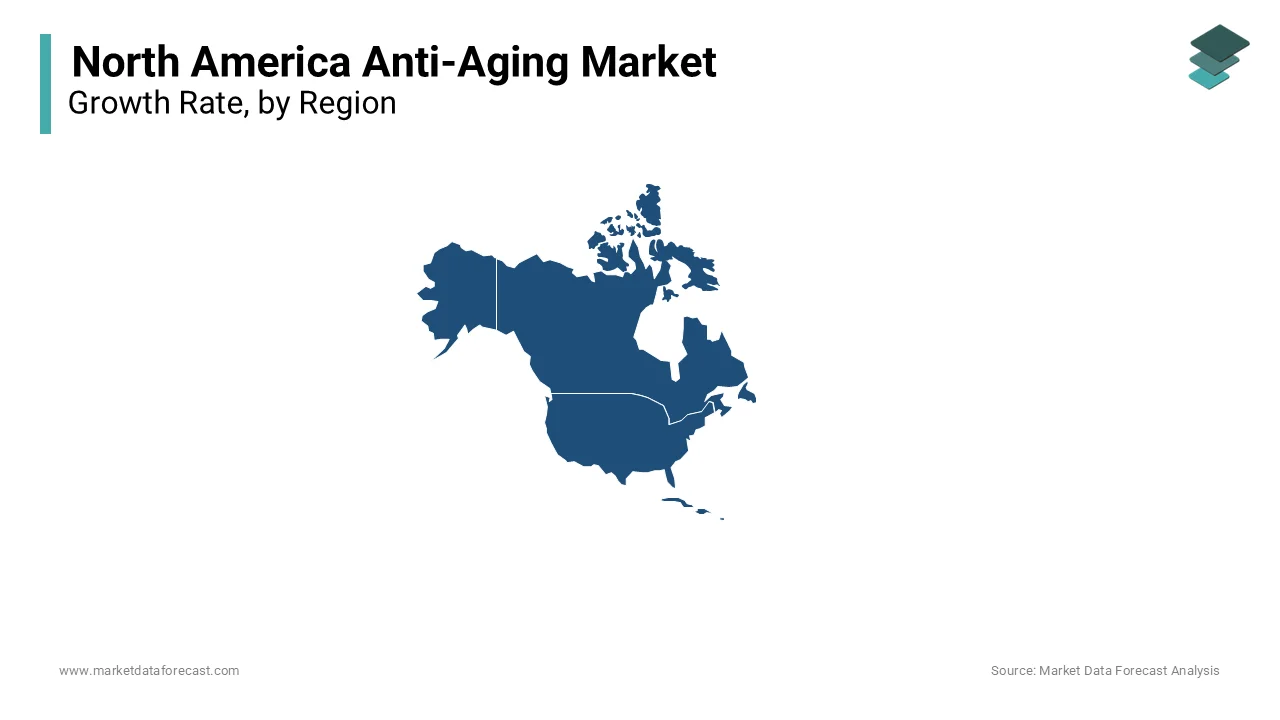
The United States was the largest contributor in the North America anti-aging market with 93.2% of the share in 2024 due to the increasing per capita expenditure on personal care. As per Bureau of Labor Statistics, households spend an average of $480 annually on skincare. The presence of leading dermatology clinics, FDA-approved technologies, and a robust medspa industry further strengthens market depth. The American Society of Plastic Surgeons confirms that over 15.7 million minimally invasive procedures were performed in 2023, including Botox, fillers, and laser treatments. Moreover, the U.S. is the epicenter of digital health innovation, with tele-dermatology platforms and AI-driven skincare apps gaining rapid adoption. Urban centers like Los Angeles, New York, and Miami serve as trend incubators is influencing global aesthetic standards.
Canada Anti-Aging Market Insights
Canada anti-aging market was witnessed in holding 8.3% of share in 2024. The market growth is potentially driven by the premium and science-backed skincare segments. The country’s anti-aging landscape is shaped by high healthcare standards, widespread dermatological awareness, and a growing emphasis on preventive care. Health Canada’s stringent ingredient regulations have fostered consumer trust, particularly in natural and hypoallergenic formulations. Environment and Climate Change Canada reports that UV radiation levels in major cities like Toronto and Vancouver have increased by 12% since 2010, accelerating photoaging and boosting sunscreen and antioxidant use. According to the Canadian Dermatology Association, 38% of adults aged 40–55 use prescription-grade anti-aging topicals, reflecting a medically informed consumer base. Major retailers such as Shoppers Drug Mart and Sephora Canada have expanded their clinical skincare offerings, featuring brands like SkinCeuticals and Obagi.
KEY MARKET PLAYERS AND COMPETITIVE LANDSCAPE
Some of the major players in the North American anti-aging market profiled in this report include Coty Inc., Personal Microderm, Beiersdorf AG, Photomedex Inc., Lumenis Ltd, Alma Lasers Ltd., Solta Medical Inc., Cynosure Inc., L’Oreal, SA, and Allergan Inc.
The competitive landscape of the North America anti-aging market is defined by a complex interplay between legacy corporations, specialty dermatological brands, and agile digital-native startups, each vying for consumer allegiance through innovation, trust, and differentiation. Established multinational companies leverage their scientific expertise, extensive distribution networks, and brand equity to maintain dominance, particularly in retail and clinical channels. However, they face growing pressure from niche players that emphasize transparency, clean formulations, and direct-to-consumer engagement. These challenger brands often originate from dermatologist-founded lines or biotech startups, gaining credibility through clinical partnerships and social media influence. The market is further fragmented by the convergence of skincare and medical aesthetics, where consumers seamlessly transition between topical products and in-office procedures. Competition extends beyond product efficacy to encompass ethical sourcing, sustainability, and inclusivity, with brands increasingly expected to align with broader wellness and environmental values. Mergers, acquisitions, and cross-sector collaborations are common as companies seek to integrate technology, expand service offerings, or enter emerging segments like at-home devices
Top Players in the North America Anti-Aging Market
Johnson & Johnson
Johnson & Johnson holds a commanding presence in the North America anti-aging market through its science-led personal care and dermatology divisions under the Neutrogena and Aveeno brands. The company integrates clinical research with consumer accessibility, offering anti-aging solutions that bridge over-the-counter skincare and dermatologist-recommended regimens. Johnson & Johnson emphasizes evidence-based formulations, including retinol, hyaluronic acid, and broad-spectrum sun protection. Its products are widely distributed across pharmacies, mass retailers, and medical channels by ensuring broad consumer reach.
L’Oréal Group
L’Oréal Group stands as a dominant force in the North America anti-aging market by leveraging a diversified portfolio that spans mass, professional, and luxury segments. Through brands like L’Oréal Paris, SkinCeuticals, La Roche-Posay, and Kiehl’s, the company delivers scientifically advanced anti-aging solutions tailored to varied consumer needs. L’Oréal’s strength lies in its unparalleled R&D infrastructure, which drives innovation in biotechnology, dermatological testing, and personalized skincare. The company has pioneered the integration of artificial intelligence and skin diagnostics, exemplified by its Perso device and partnerships with dermatologists. Its North American operations serve as a hub for global product development, with formulations tested in diverse climates and skin types influencing international launches.
Estée Lauder Companies
Estée Lauder Companies commands a premium position in the North America anti-aging market through its high-performance skincare brands, including Estée Lauder, Clinique, and Origins. The company excels in developing advanced anti-aging technologies, such as chronolux and stabilized vitamin C complexes, that target cellular renewal and environmental damage. Its products are synonymous with luxury, clinical efficacy, and long-term skin health, appealing to affluent, aging consumers seeking visible results. Estée Lauder’s success is rooted in its deep collaboration with dermatologists, investment in clinical trials, and strategic retail presence in department stores and specialty beauty retailers. The company’s North American innovations frequently set global trends, with formulations and marketing campaigns replicated in international markets.
Top Strategies Used by Key Market Participants
Investment in Clinical Research and Dermatological Validation
Leading players are prioritizing scientific credibility by investing heavily in clinical research, third-party dermatological testing, and peer-reviewed studies to substantiate anti-aging claims. This strategy enhances consumer trust and differentiates products in a saturated market where efficacy is increasingly scrutinized.
Expansion into Personalized and Technology-Driven Skincare
Companies are integrating artificial intelligence, skin diagnostics, and at-home devices to offer customized anti-aging regimens. By leveraging data from skin scans, genetic profiles, and environmental exposure, brands are delivering tailored solutions that enhance engagement and long-term loyalty.
Strategic Brand Positioning Across Market Tiers
Key players are maintaining dominance by operating across multiple market segments mass, professional, and luxury by allowing them to capture diverse consumer bases. This multi-tiered approach enables broad market penetration while preserving premium brand integrity through specialized sub-brands and exclusive distribution channels.
MARKET SEGMENTATION
This research report on the North American anti-aging market has been segmented and sub-segmented based on the following categories.
By Demographics
- Baby Boomers
- Generation X
- Generation Y
By Product Type
- UV Absorbers
- Anti-Wrinkle Products
- Anti-Stretch Marks Products
- Natural Products
- Hair Colour
By Services
- Anti-Pigmentation Therapy
- Adult Acne Therapy
- Breast Augmentation
- Liposuction Services
- Abdominoplasty
- Chemical Peel
- Eye-Lid Surgery
- Hair Restoration
- Sclerotherapy
By Devices
- Anti-Cellulite Treatment Devices
- Microderm Abrasion Devices
- Laser Aesthetic Devices
- Radiofrequency Devices
By Country
- The U.S.
- Canada
- Rest of North America
Related Reports
Access the study in MULTIPLE FORMATS
Purchase options starting from
$ 2000
Didn’t find what you’re looking for?
TALK TO OUR ANALYST TEAM
Need something within your budget?
NO WORRIES! WE GOT YOU COVERED!
Call us on: +1 888 702 9696 (U.S Toll Free)
Write to us: sales@marketdataforecast.com