- Product Description Description
- Table of Contents TOC
- List of Table & Figure LOT
- Get Free Sample PDF Sample PDF
Market Size, 2025
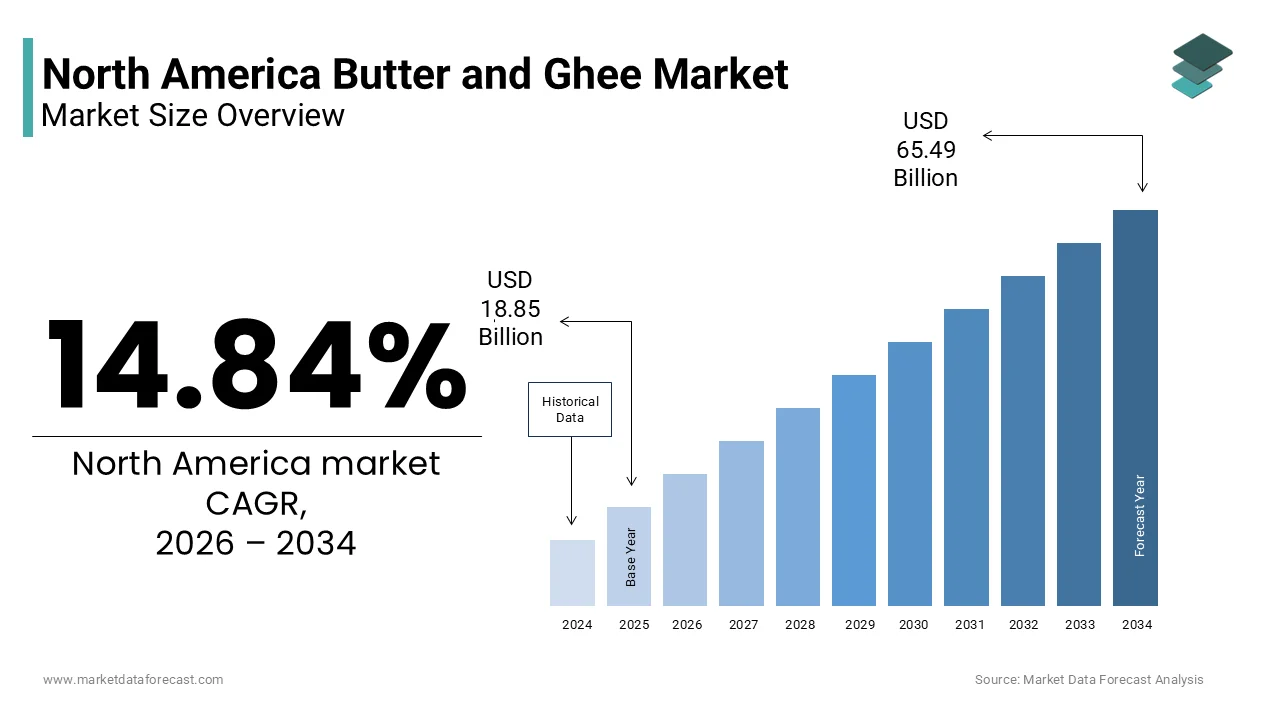
$18.85 BnMarket Estimate, 2026
$21.65 BnMarket Forecast, 2034
$65.49 BnCAGR, 2026–2034
14.84%North America Butter and Ghee Market Report Summary
The North America butter and ghee market was valued at USD 18.85 billion in 2025, is estimated to reach USD 21.65 billion in 2026, and is projected to reach USD 65.49 billion by 2034, growing at a CAGR of 14.84% during the forecast period. Market growth is driven by increasing consumer preference for traditional dairy fats, rising demand for high fat and keto friendly diets, and expanding use of ghee in cooking and functional foods. Butter and ghee are widely valued for their rich flavor, nutritional benefits, and versatility in culinary applications. The growing popularity of ethnic cuisines and premium dairy products is further supporting strong market expansion across North America.
Key Market Trends
- Rising demand for traditional and natural dairy fats is driving market growth.
- Increasing popularity of keto and high fat diets is boosting consumption.
- Growing adoption of ghee in cooking and functional food applications is supporting market expansion.
- Expansion of supermarkets and organized retail channels is improving product availability.
- Rising interest in premium and organic dairy products is influencing market demand.
Segmental Insights
- Based on volume, the imports segment held a significant share of the North America butter and ghee market in 2025. This dominance is attributed to strong demand exceeding domestic production in certain regions.
- Based on distribution channel, the supermarkets segment accounted for 45.6% of the North America butter and ghee market share in 2025. The segment’s growth is driven by wide product availability, strong retail presence, and consumer convenience.
Regional Insights
- The North America butter and ghee market is experiencing rapid growth across key countries, supported by rising consumption and evolving dietary trends.
- The United States was the largest contributor, accounting for 85.3% of the North America butter and ghee market share in 2025, driven by high consumption of dairy products, increasing demand for ghee, and well established retail infrastructure.
Competitive Landscape
The North America butter and ghee market is moderately competitive, with key players focusing on product quality, premium offerings, and expansion of distribution networks to strengthen their market position. Companies are investing in organic and specialty products, branding, and supply chain improvements. Prominent players in the North America butter and ghee market include Terra Food LLC, Avn Products, Gujarat Cooperative Milk Marketing Federation Ltd Amul, Britannia Industries, Milkfood Limited, and Nestlé S A.
North America Butter and Ghee Market Size
The North America butter and ghee market size was valued at USD 18.85 billion in 2025, and the market size is expected to reach USD 65.49 billion by 2034 from USD 21.65 billion in 2026. The market is growing at a CAGR of 14.84% during the forecast period.
The butter and ghee market is deeply embedded in the culinary traditions of both Western and South Asian, across the United States and Canada. Butter remains a staple ingredient in baking cooking and food preparation, while ghee has gained significant traction due to its high smoke point and rich flavor profile. The region benefits from robust dairy infrastructure with extensive cattle farming operations supporting raw material availability. According to the United States Department of Agriculture, the total milk production in the United States reached approximately 226 billion pounds in 2023 providing a substantial base for dairy product manufacturing. Health trends emphasizing whole foods and natural fats have further propelled the demand for these products. As per data from Statistics Canada, the dairy sector contributes significantly to the national agricultural economy with consistent growth in value added products. Consumer preferences are shifting towards premium and organic variants reflecting a desire for higher quality ingredients. Regulatory frameworks ensure strict hygiene and safety standards maintaining consumer trust.
MARKET DRIVERS
Rising Popularity of Ketogenic and Paleo Diets Boosts Demand for High Fat Dairy Products
The widespread adoption of low carbohydrate high fat dietary regimes, such as the ketogenic and Paleo diets is propelling the growth of North America Butter And Ghee Market. These diets emphasize the consumption of healthy fats, while restricting carbohydrates leading to increased demand for butter and ghee as essential energy sources. Butter and ghee are favored in these diets due to their high saturated fat content and absence of lactose in the case of ghee, which aids in digestion for some individuals. The American Heart Association notes that while saturated fat intake should be monitored many consumers perceive dairy fats, as natural and less processed compared to vegetable oils. Retailers have responded by expanding their offerings of grass fed and organic butter varieties, which are marketed as superior options for these diets. Social media influencers and nutritionists frequently recommend ghee for cooking due to its stability at high temperatures making it ideal for frying and sautéing. The convenience of incorporating these fats into daily meals without compromising dietary goals sustains their popularity.
Growing Influence of South Asian Culinary Traditions Expands Consumer Base for Ghee
The increasing influence of South Asian culinary traditions in North America, significantly drives the demand for ghee beyond its traditional ethnic consumer base, which is additionally escalating the growth of North America butter and ghee market. The proliferation of Indian restaurants and the popularity of South Asian cuisine have introduced ghee to a broader audience, who appreciate its distinct nutty flavor and aromatic qualities. According to the National Restaurant Association, ethnic cuisines, including Indian and Pakistani foods remain among the top choices for dining out in the United States. This exposure encourages home cooks to experiment with ghee in various recipes ranging from traditional curries to modern fusion dishes. Additionally, mainstream grocery stores now stock ghee alongside conventional butter, reflecting its integration into everyday shopping habits. Chefs and food bloggers often ghee as a versatile ingredient that enhances the taste of vegetables meats and baked goods. This culinary democratization is supported by educational content on social media platforms, where users share recipes and cooking tips involving ghee.
MARKET RESTRAINTS
Health Concerns Regarding Saturated Fat Intake Limit Mass Market Adoption
The persistent health concerns with the high saturated fat content is restricting the growth of North America Butter And Ghee Market. Despite the popularity of high fat diets, medical authorities continue to advise moderation in saturated fat consumption to reduce the risk of cardiovascular diseases. According to the Centers for Disease Control and Prevention, heart disease remains the leading cause of death in the United States prompting ongoing public health campaigns to promote heart healthy eating habits. Many consumers remain cautious about incorporating large amounts of these fats into their diets due to fears of elevated cholesterol levels and associated health risks. Nutrition labels often highlight saturated fat content influencing purchasing decisions among health-conscious shoppers. This perception limits the potential for mass market expansion of traditional butter and ghee products. Manufacturers face the challenge of balancing consumer demand for rich flavors with the need to address health concerns. Educational efforts to clarify the role of dairy fats in a balanced diet are ongoing but skepticism persists. Consequently the market growth is tempered by these enduring health narratives.
Volatility in Raw Milk Prices Impacts Production Costs and Profit Margins
The volatility in raw milk, which is affecting production costs and profit margins is additionally hindering the growth of North America butter and ghee market. Milk is the primary raw material for butter and ghee production and its price fluctuates due to factors, such as feed costs weather conditions and supply chain disruptions. These fluctuations create uncertainty for manufacturers who struggle to maintain stable pricing for their finished products. When milk prices rise producers face increased input costs, which may not be fully passed on to consumers due to price sensitivity in the dairy sector. Conversely, when milk prices fall farmers may reduce production leading to supply shortages that drive up costs later. The dairy industry is also influenced by global trade dynamics and export demands which can further exacerbate price instability. Small and medium sized producers are particularly vulnerable to these fluctuations as they lack the financial reserves to absorb sudden cost increases.
MARKET OPPORTUNITIES
Expansion of Organic and Grass Fed Product Lines Appeals to Premium Consumers
The expansion of organic and grass-fed butter and ghee product lines is ascribed to create new opportunities for the growth of North America Butter And Ghee Market. Consumers are increasingly willing to pay a premium for dairy products that are perceived as healthier more ethical and environmentally sustainable. Grass fed butter and ghee are marketed as containing higher levels of omega 3 fatty acids and conjugated linoleic acid, which appeal to health conscious buyers. Retailers are responding by dedicating shelf space to these premium variants and their sourcing credentials. Brands that emphasize transparency in their supply chains and commitment to animal welfare gain a competitive edge in this segment. The rise of specialty food stores and online marketplaces facilitates the distribution of these niche products to a wider audience. Additionally, certifications such as USDA Organic and Non GMO Project Verified enhance consumer trust and brand loyalty. Manufacturers can leverage this trend by investing in sustainable farming practices and partnering with local dairy farmers to secure high quality raw materials.
Innovation in Plant Based Alternatives Captures Vegan and Lactose Intolerant Segments
The innovation in plant based alternatives by catering to vegan and lactose intolerant consumers is additionally to enhance the growth of North America butter and ghee market. The growing prevalence of lactose intolerance and the rise of veganism have created a demand for dairy free substitutes that mimic the taste and texture of traditional butter and ghee. Companies are developing products using ingredients, such as coconut oil, avocado oil, and cashew cream to create realistic alternatives. These innovations appeal to consumers, who seek to reduce their dairy consumption for health ethical or environmental reasons. Major food manufacturers are investing in research and development to improve the flavor profile and melting characteristics of plant-based options. Retailers are increasingly stocking these alternatives alongside conventional dairy products making them more accessible to mainstream shoppers. The ability to offer inclusive product ranges allows companies to capture a broader customer base and mitigate the risks associated with declining dairy consumption in certain demographics. f the North America Butter And Ghee Market.
MARKET CHALLENGES
Supply Chain Disruptions Affect Availability and Distribution Efficiency
The supply chain disruptions by affecting the availability and distribution efficiency of products, which is one of the major challenges for the growth of North America butter and ghee market. The complexity of the dairy supply chain involving multiple stages from farm to processing to retail makes it vulnerable to various interruptions. Labor shortages in transportation and logistics sectors delay the movement of raw materials and finished goods leading to stockouts and increased lead times. Weather related events, such as floods and storms can disrupt transportation routes and damage infrastructure, further complicating distribution. The reliance on just in time inventory systems exacerbates the impact of these disruptions as companies have limited buffer stock to manage unexpected delays. Additionally, geopolitical tensions and trade policies can affect the import of packaging materials and equipment necessary for production. These challenges increase operational costs and reduce profitability for manufacturers and retailers. Consumers may face higher prices and limited product choices as a result of these inefficiencies. Building resilient supply chains through diversification of suppliers and investment in technology is crucial but requires significant capital expenditure.
Stringent Regulatory Compliance Increases Operational Burdens for Producers
The stringent regulatory compliance requirements impose a considerable challenge on producers in increasing operational burdens and costs is to impede the growth of North America butter and ghee market. The dairy industry is subject to rigorous standards regarding food safety labeling and environmental protection enforced by agencies, such as the Food and Drug Administration and the United States Department of Agriculture. According to the Food and Drug Administration, new labeling regulations require detailed disclosure of nutritional information and allergen warnings which necessitates updates to packaging and production processes. Compliance with these regulations involves regular inspections testing and documentation which can be resource intensive for small and medium sized enterprises. Environmental regulations regarding waste management and water usage also add to the operational complexity requiring investments in sustainable technologies. Failure to comply can result in fines product recalls and damage to brand reputation. The varying regulatory landscapes across different states and provinces in North America further complicate matters for companies operating in multiple jurisdictions.
REPORT COVERAGE
| REPORT METRIC | DETAILS |
| Market Size Available | 2025 to 2034 |
| Base Year | 2025 |
| Forecast Period | 2026 to 2034 |
| CAGR | 14.84% |
| Segments Covered | By Volume, Distribution Channel, and Region. |
| Various Analyses Covered | Global, Regional & Country Level Analysis, Segment-Level Analysis, DROC, PESTLE Analysis, Porter’s Five Forces Analysis, Competitive Landscape, Analyst Overview of Investment Opportunities |
| Regions Covered | United States, Canada And Rest Of North America |
| Market Leaders Profiled | Terra Food LLC, Avn Products, Gujarat Cooperative Milk Marketing Federation Ltd. (Amul), Britannia Industries, Milkfood Limited, Nestlé S.A. |
SEGMENTAL ANALYSIS
By Volume Insights
The imports segment was the largest by holding a significant share of the North America Butter and Ghee Market in 2025 with the substantial demand for authentic grass fed and organic ghee, which often exceeds local production capacities. The United States and Canada rely heavily on imports from countries such as New Zealand, India, and Ireland, to meet the diverse preferences of their multicultural populations. According to the United States Department of Agriculture, the United States imported approximately 150 million kilograms of dairy products including butter and ghee in 2023 to supplement domestic shortages during peak consumption periods. Additionally, the seasonal nature of milk production in North America leads to fluctuations in domestic butter availability prompting retailers to source from international markets to ensure consistent supply. International suppliers benefit from established trade agreements that facilitate smoother entry into the North American market. The ability of foreign producers to offer competitive pricing due to lower labor and production costs further strengthens the import segment. This reliance on global supply chains ensures that consumers have access to a wide range of high quality butter and ghee products throughout the year.
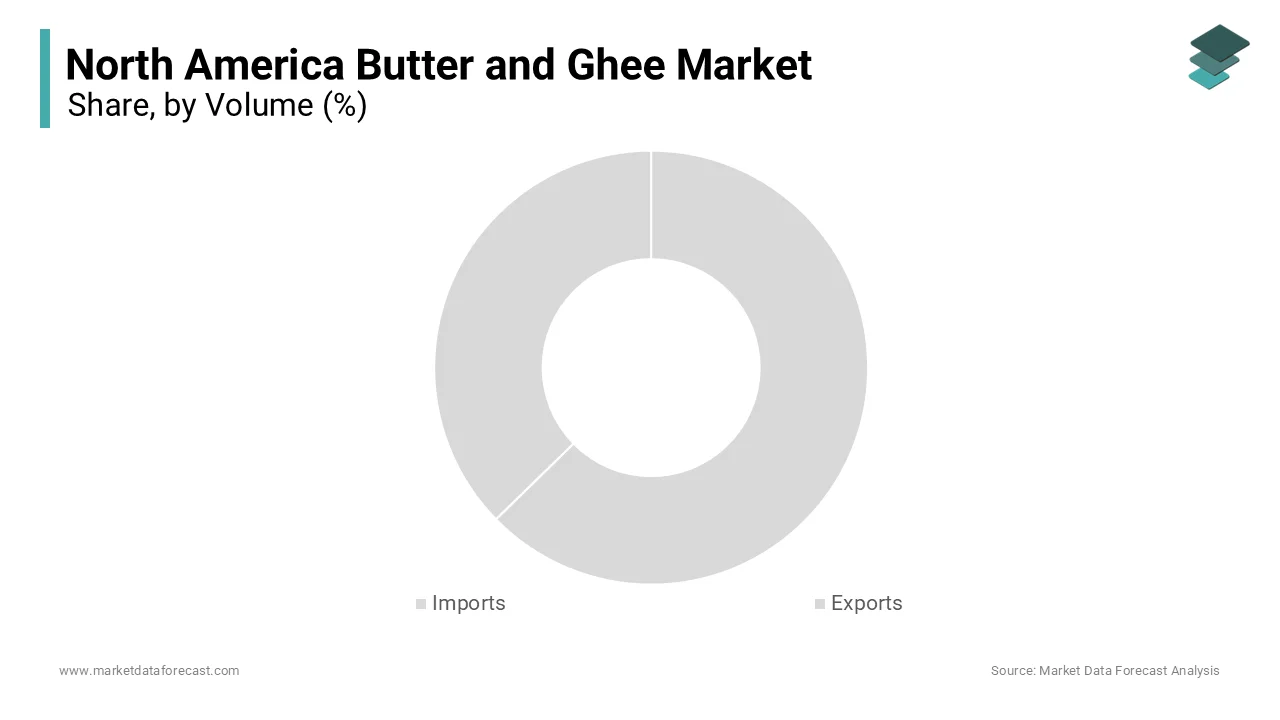
The exports segment is projected to register a CAGR of 6.8% during the forecast period with the strong global reputation of North American dairy products for their high safety standards and consistent quality. Countries in Asia and the Middle East are increasingly importing butter and ghee from the United States and Canada due to trust in regulatory oversight and certification processes. The growing middle class in emerging countries is seeking premium dairy ingredients for baking and cooking, which boosts demand for North American brands. Furthermore, the depreciation of the Canadian dollar against major currencies has made Canadian dairy products more competitive in international markets.
By Distribution Channel Insights
The supermarkets segment was the largest by occupying 45.6% of the North America Butter And Ghee Market share in 2025 with the ability of supermarkets to offer a wide variety of butter and ghee brands under one roof catering to diverse consumer preferences. Shoppers appreciate the convenience of purchasing both staple and premium dairy products alongside their regular grocery items. The presence of dedicated dairy sections with controlled refrigeration ensures that butter and ghee maintain their quality and freshness. Supermarkets also frequently run promotions and discounts on dairy products which attract price sensitive consumers and drive volume sales. The integration of private label brands alongside national names provides options for different budget segments enhancing accessibility. Additionally, the widespread presence of supermarket chains in urban and suburban areas ensures broad geographic coverage and easy access for consumers. Data from NielsenIQ indicates that dairy categories remain among the top performers in supermarket sales due to their essential nature in daily diets.
The hypermarkets segment is likely to witness a fastest CAGR of 5.5% from 2026 to 2034 with the trend towards bulk purchasing among families and food service providers, who seek cost effective solutions. Hypermarkets offer larger package sizes of butter and ghee at discounted prices, which appeals to consumers looking to maximize value. According to the study, hypermarkets have seen a steady increase in foot traffic for bulk goods as inflation prompts shoppers to seek economies of scale. The spacious layout of hypermarkets allows for prominent displays and sampling stations which enhance product visibility and encourage trial of new brands. Additionally, the inclusion of international aisles in hypermarkets facilitates the discovery of exotic ghee varieties among mainstream shoppers. Hypermarkets leverage their supply chain efficiencies to offer lower prices compared to smaller retail formats attracting a loyal customer base. The ability to stock a comprehensive range of dairy products from budget to premium tiers ensures that hypermarkets cater to a broad demographic.
REGIONAL ANALYSIS
United States Butter and Ghee Market Analysis
The United States was the largest contributor of the North America Butter And Ghee Market by accounting for 85.3% of the share in 2025. The country's dominant position is underpinned by its vast dairy industry and high per capita consumption of dairy products. According to the United States Department of Agriculture, the United States produced over 9 billion kilograms of butter in 2023 reflecting robust domestic capacity. The diverse population in the United States drives demand for both traditional butter and ethnic varieties of ghee particularly in metropolitan areas with significant South Asian communities. The rise of health-conscious diets, such as keto and paleo has further boosted the consumption of high fat dairy products. Retail infrastructure in the United States is highly developed with extensive supermarket and hypermarket networks ensuring wide distribution. The presence of major dairy cooperatives and private label brands fosters intense competition leading to innovation and competitive pricing. Additionally, the growing trend of home baking and cooking post pandemic has sustained demand for butter as a key ingredient.
Canada Butter and Ghee Market Analysis
Canada butter and ghee market was positioned next by holding 13.4% of share in 2025 with a strong regulatory framework known as supply management, which ensures stable prices and consistent quality for dairy products. Canadian consumers are increasingly interested in organic and grass fed dairy options driving growth in premium segments. The multicultural demographic in cities like Toronto and Vancouver fuels the demand for ghee as a staple in South Asian cuisine. Retailers in Canada are expanding their offerings of international brands to cater to diverse tastes. The government supports sustainable farming practices, which aligns with the values of environmentally conscious consumers. Additionally, the cold climate in many regions encourages the consumption of energy dense foods including butter and ghee.
COMPETITIVE LANDSCAPE
The competition in the North America Butter And Ghee Market is characterized by a mix of established domestic cooperatives international brands and emerging niche players vying for consumer attention. Domestic producers leverage their strong distribution networks and brand recognition to maintain leadership in the conventional butter segment. International brands particularly from India and Europe compete by offering authentic ghee and premium European style butter that appeal to specific cultural and culinary preferences. Private label brands from major retail chains also pose a significant threat by offering lower priced alternatives that attract budget conscious shoppers. Innovation in product formats such as whipped butter and flavored ghee adds another layer of competition as firms seek to capture niche segments. Digital marketing and social media engagement have become crucial tools for building brand loyalty and reaching younger demographics. Regulatory compliance and food safety standards remain critical factors influencing competitive dynamics as consumers increasingly prioritize trust and transparency.
Key Market Players
Key market players of North America butter and ghee market are
- Terra Food LLC
- Avn Products
- Gujarat Cooperative Milk Marketing Federation Ltd. (Amul)
- Britannia Industries
- Milkfood Limited
- Nestlé S.A.
Top Players in the Market
- Land O Lakes Inc is a prominent agricultural cooperative in the United States with a significant presence in the butter segment. The company produces high quality butter products that are widely distributed across retail and food service channels in North America. Its contribution to the global market involves exporting premium dairy ingredients and setting standards for consistency and flavor. Recent actions to strengthen its market position include the launch of new packaging innovations that enhance product freshness and sustainability. The company has also invested in digital marketing campaigns to connect with younger consumers who value transparency in sourcing. By partnering with local farmers Land O Lakes ensures a steady supply of raw milk while promoting sustainable agricultural practices. These initiatives help maintain brand loyalty and competitive advantage in the evolving dairy landscape.
- Amul Dairy is a leading cooperative brand from India that has made substantial inroads into the North America Butter And Ghee Market through its extensive export network. The company is renowned for its high quality ghee and butter products which appeal to the South Asian diaspora and mainstream consumers alike. Amul contributes to the global market by demonstrating the viability of large scale cooperative models in dairy production. Recent actions to strengthen its market position include expanding distribution partnerships with major ethnic grocery chains and online retailers in the United States and Canada. The company has also introduced smaller packaging sizes to cater to individual households and trial users. Amul emphasizes its commitment to purity and traditional manufacturing methods which resonates with consumers seeking authentic flavors.
- Plugrá Butter is a specialized producer of European style butter that has carved a niche in the premium segment of the North America Butter And Ghee Market. The company focuses on producing butter with higher butterfat content which is preferred by professional chefs and baking enthusiasts. Its contribution to the global market lies in popularizing the use of high fat butter for superior culinary results. Recent actions to strengthen its market position include collaborations with renowned pastry chefs and culinary institutions to promote its products. Plugrá has also expanded its retail presence in upscale supermarkets and specialty food stores across the United States. The company emphasizes its artisanal production process and commitment to quality, which differentiates it from standard commercial brands.
Top Strategies Used by the Key Market Participants
Key players in the North America Butter And Ghee Market primarily employ strategies focused on product differentiation and supply chain resilience to maintain competitive advantage. Companies are increasingly investing in sustainable sourcing practices to appeal to environmentally conscious consumers who prioritize ethical production. Expansion into e commerce platforms allows firms to reach broader audiences and offer direct to consumer sales options. Innovation in packaging solutions such as recyclable materials and portion-controlled units enhances convenience and reduces waste. Strategic partnerships with culinary influencers and chefs help build brand credibility and drive adoption among food enthusiasts. Additionally, firms are diversifying their product portfolios to include organic grass fed and plant based alternatives to cater to diverse dietary preferences.
MARKET SEGMENTATION
This Research Report on the North America butter and ghee market is segmented and sub segmented into following categories
By Volume
- Imports
- Exports
By Distribution Channel
- Retail Stores
- Supermarkets
- Hypermarkets
By Country
- U.S
- Canada
- Mexico
- Rest of North America