- Product Description Description
- Table of Contents TOC
- List of Table & Figure LOT
- Get Free Sample PDF Sample PDF
Market Size, 2025
$3.31 BnMarket Estimate, 2026
$3.56 BnMarket Forecast, 2034
$6.37 BnCAGR, 2026–2034
7.54%Executive Summary: North America Lateral Flow Assay Market
- Market Scope: Comprehensive regional analysis of the North American lateral flow assay (LFA) industry, covering product formats, clinical/veterinary applications, testing techniques, end-user settings, and country-level dynamics across the U.S., Canada, and Mexico.
- Market Valuation: Valued at USD 3.31 billion in 2025, reaching USD 3.56 billion in 2026, and projected to expand to USD 6.37 billion by 2034, registering a solid CAGR of 7.54% from 2026 to 2034.
- Primary Growth Drivers: High persistent burden of infectious diseases and seasonal respiratory viruses; healthcare decentralization and shift toward point-of-care (POC) and home-care settings; and technological integration of digital readers and smartphone connectivity. Market restraints include rigorous and lengthy regulatory approval hurdles, and technical sensitivity limitations compared to molecular PCR methods.
Key Market Segment Metrics (2026–2034)
| Category | Leading Segment (Base Position) | Fastest-Growing Segment |
|---|---|---|
| By Product | Kits (held 34.3% market share in 2025 due to single-use consumable demands and home-testing volume) | Readers (projected at an 8.5% CAGR driven by digital health integration and quantitative data needs) |
| By Application | Clinical Application (accounted for 29.3% market share in 2025 anchored by infectious and chronic condition triage) | Veterinary Diagnostics (expected to register the fastest CAGR of 10.4% from rising pet humanization trends) |
| By Technique | Sandwich Assays (held significant share in 2025 offering high sensitivity and specificity for large molecular antigens) | Multiplex Assays (expanding at a 12.3% CAGR via simultaneous multi-target panel testing capabilities) |
| By End User | Hospitals and Clinics (captured 44.3% market share in 2025 due to high emergency department patient volumes) | Home Care Settings (growing at a 10.8% CAGR driven by patient self-management and empowerment trends) |
| By Country | United States (leads the regional market through advanced healthcare infrastructure and major diagnostic hubs) | Canada (ranked second, driven by publicly funded healthcare and decentralized remote community care needs) |
Major Market Players & Market Structure
Market Structure: Intense and competitive landscape featuring multinational corporations and agile niche innovators focusing on digital health integration, multiplex diagnostic capabilities, and direct-to-consumer retail distribution.
Key Companies: Abbott Laboratories, QuidelOrtho Corporation, Becton Dickinson and Company, F. Hoffmann-La Roche AG, Danaher Corporation, Siemens AG, bioMérieux SA, Johnson & Johnson, Bio-Rad Laboratories Inc., Thermo Fisher Scientific Inc., QIAGEN N.V., and PerkinElmer Inc.
 Download Free Sample Report
North America Lateral Flow Assay Market Size
The size of the North America lateral flow assay market was worth USD 3.31 billion in 2025. The North America market is anticipated to grow at a CAGR of 7.54% from 2026 to 2034 and be worth USD 6.37 billion by 2034 from USD 3.56 billion in 2026.

The lateral flow assay is a testing solution for infectious diseases, chronic conditions, and food safety monitoring. These immunochromatographic devices utilize capillary action to detect specific analytes in biological samples without requiring complex laboratory infrastructure or trained personnel. The technology has become indispensable in primary care settings, emergency departments, and home environments due to its ability to deliver results within 15 to 30 minutes. Furthermore, many Canadians live with diabetes, necessitating frequent glucose and biomarker testing outside traditional lab settings. The regulatory environment in this region is mature, with the United States Food and Drug Administration and Health Canada establishing rigorous clearance pathways that ensure product efficacy, while encouraging innovation. Recent advancements have integrated digital readers and smartphone connectivity to reduce subjective interpretation errors, transforming qualitative strips into semi-quantitative diagnostic instruments.
MARKET DRIVERS
Rising Prevalence of Infectious Diseases Drives Diagnostic Demand
The persistent burden of infectious diseases drives lateral flow assay adoption, particularly in urgent care and public health screening contexts, which is fuelling the growth of the North America lateral flow assay market. Seasonal influenza and respiratory syncytial virus place immense pressure on healthcare systems annually, necessitating rapid triage tools to prevent overcrowding and guide antiviral prescriptions. As per the study, there were an estimated 31 million influenza illnesses in the United States during the 2022 to 2023 season, escalating the need for accessible diagnostics that can distinguish viral etiologies quickly. Additionally, sexually transmitted infections remain a significant public health concern, with reported cases of chlamydia and gonorrhea reaching record highs in recent years. Rapid testing enables immediate initiation of treatment and partner notification, which are vital for breaking transmission chains in community settings. Public health agencies increasingly deploy these assays in nontraditional venues such as schools, pharmacies, and mobile clinics to reach underserved populations who may avoid clinical environments. The operational simplicity of lateral flow devices allows nonlaboratory staff to perform tests reliably, expanding diagnostic capacity during outbreak surges.
Decentralization of Healthcare Accelerates Point of Care Adoption
The structural transformation of North American healthcare toward decentralized delivery models, significantly boosting the growth of the North American lateral assay market. Value-based care initiatives and reimbursement reforms incentivize providers to reduce costly hospital admissions and emergency department visits through early detection and management. According to the study, outpatient visits now account for more than 50% of total hospital revenue, reflecting a systemic migration away from inpatient care. Lateral flow assays enable this shift by providing actionable results in physician offices, retail clinics, and patient homes without delaying treatment decisions. Retail health chains have expanded rapidly across the United States, integrating rapid testing into their service menus for common ailments like strep throat and urinary tract infections. Telehealth platforms also leverage these devices by mailing test kits to patients and reviewing results via video consultation, bridging geographic gaps in rural areas where laboratory access is limited. Payers increasingly cover point-of-care tests when they demonstrate cost savings compared to centralized lab workflows.
MARKET RESTRAINTS
Regulatory Hurdles Delay Commercialization of Novel Assays
The regulations for clearance continue to evolve and intensify is inhibiting the growth of the North America lateral flow assay market. The United States Food and Drug Administration requires extensive clinical validation studies to demonstrate substantial equivalence or de novo safety and effectiveness, often demanding hundreds of patient samples across multiple sites. As per analysis, the average time from prototype to market clearance for novel diagnostic devices exceeds 18 months, during which companies must sustain significant capital expenditure without generating revenue. Postmarket surveillance requirements add further financial burden, mandating ongoing performance monitoring and adverse event reporting. Small and medium-sized enterprises frequently lack the resources to conduct pivotal trials independently, forcing them to seek partnerships or delay launches indefinitely. Regulatory divergence between the United States and Canada complicates regional strategies, as separate submissions and validations are typically required despite similar technical standards. Changes in classification criteria can unexpectedly reclassify previously cleared products, triggering new submission requirements. These barriers disproportionately affect innovative startups developing next-generation multiplex or quantitative assays, potentially stifling technological progress.
Technical Limitations Constrain Clinical Utility in Complex Cases
The inherent technical constraints that restrict their applicability in scenarios requiring high sensitivity or precise quantification, which is also declining the growth of the North America lateral flow assay market. The limit of detection for many rapid tests remains orders of magnitude higher than molecular methods like polymerase chain reaction, leading to false negative results during early infection stages or low viral load periods. According to peer-reviewed evaluations published in clinical microbiology journals, some rapid antigen tests exhibit sensitivity below 70% compared to reference standards, raising concerns about missed diagnoses in symptomatic patients. Visual interpretation introduces additional variability, as color intensity perception differs among operators and lighting conditions affect readability. Faint test lines generate ambiguity, prompting unnecessary confirmatory testing or erroneous clinical actions. While digital readers mitigate some subjectivity, they add cost and complexity that undermine the core value proposition of simplicity. Cross-reactivity with related pathogens or interfering substances can produce false positives, eroding clinician confidence in positive predictive values.
MARKET OPPORTUNITIES
Integration of Digital Readers Expands Quantitative Applications
The emergence of lateral flow assays with digital imaging and cloud connectivity unlocks significant opportunities by converting subjective visual readouts into objective, quantifiable data streams. The integration of digital readers to expand quantitative applications is likely to amplify the growth of the North America lateral flow assay market. Smartphone cameras and dedicated optical readers can detect signal intensities far below human visual thresholds, improving sensitivity and enabling semi-quantitative measurements of biomarkers. This capability opens applications in therapeutic drug monitoring, hormone tracking, and chronic disease management where trend analysis matters more than binary outcomes. Cloud integration allows automatic result transmission to electronic health records, eliminating transcription errors and facilitating population health analytics. Payers and providers value this interoperability for demonstrating compliance with quality metrics and supporting risk-adjusted reimbursement models. Consumer health brands leverage app ecosystems to offer personalized insights and telehealth referrals based on test results, creating new revenue streams beyond device sales. Regulatory bodies are developing frameworks for software as a medical device, providing clearer pathways for digital companion approvals.
Expansion into Veterinary and Food Safety Diversifies Revenue Streams
The diversification into veterinary diagnostics and food safety testing, which is seeking to reduce reliance on the volatile human healthcare sector, is also expected to enhance the growth of the North America lateral flow assay market. Veterinarians value immediate results for treatment decisions and client communication, mirroring human point-of-care dynamics but with less regulatory friction and faster adoption cycles. Similarly, food safety regulations mandate pathogen testing at processing facilities, creating steady demand for environmental and product screening assays. The United States Department of Agriculture conducts millions of inspections annually, and private producers supplement this with in-house testing to prevent recalls and ensure compliance. These sectors operate on different procurement cycles and reimbursement structures than human medicine, providing portfolio diversification against policy changes or pandemic-driven demand cliffs. Manufacturing processes and core technologies transfer readily between domains by allowing companies to leverage existing R&D investments.
MARKET CHALLENGES
Supply Chain Fragility Threatens Consistent Product Availability
The persistent supply chain challenges stemming from geographic concentration of raw materials and components is a key challenge for the growth of the North America lateral flow assay market. Nitrocellulose membranes, conjugate pads, and specialized antibodies are sourced from a limited number of global suppliers by creating single points of failure during disruptions. The domestic production capacity for key diagnostic materials remains insufficient to meet surge demand, leaving manufacturers dependent on international logistics vulnerable to geopolitical tensions and trade restrictions. During recent global crises, lead times for nitrocellulose extended beyond 6 months, forcing production slowdowns and allocation decisions that damaged customer relationships. Antibody sourcing presents additional risks, as monoclonal antibody production requires living cell lines susceptible to contamination and batch variability. Quality failures at supplier facilities can halt entire product lines for weeks while alternative sources are validated. Inventory buffering increases working capital requirements and obsolescence risk for perishable biologics. Nearshoring initiatives aim to build regional resilience but require years and substantial capital to achieve scale.
Workforce Shortages Limit Testing Capacity in Key Settings
Chronic workforce shortages are also contributing to the decline in the growth of the North America lateral flow assay market. Nursing shortages have reached critical levels, with the Bureau of Labor Statistics projecting over 193,000 annual openings for registered nurses through 2032 due to retirements and burnout. Overburdened staff prioritize essential tasks, sometimes deprioritizing point-of-care testing documentation or quality control procedures that lateral flow protocols require. Laboratory technician shortages similarly hinder confirmatory testing workflows, causing delays that negate the speed advantage of rapid screening tests. Training new personnel on proper assay technique and interpretation consumes valuable time amid high turnover rates. Rural and underserved facilities face acute staffing gaps that limit operating hours and testing availability regardless of device inventory. Automation and digital readers alleviate some burden but introduce new training requirements and maintenance responsibilities. Workforce development pipelines cannot keep pace with demographic trends and job dissatisfaction drivers. This human capital deficit means that technological capacity does not automatically translate to clinical utilization.
REPORT COVERAGE
| REPORT METRIC | DETAILS |
| Market Size Available | 2025 to 2034 |
| Base Year | 2025 |
| Forecast Period | 2026 to 2034 |
| Segments Covered | By Product, Application, Technique, End User, and Country. |
| Various Analyses Covered | Global, Regional, and Country-Level Analysis, Segment-Level Analysis, Drivers, Restraints, Opportunities, Challenges; PESTLE Analysis; Porter’s Five Forces Analysis, Competitive Landscape, Analyst Overview of Investment Opportunities |
| Countries Covered |
|
| Market Leaders Profiled | Alere Inc., F. Hoffmann-La Roche AG, Abbott Laboratories, Danaher Corporation, Siemens AG, Becton Dickinson and Company, QuidelOrtho Corporation, Dickinson and Company, bioMérieux SA, Johnson & Johnson, Bio-Rad Laboratories Inc., Thermo Fisher Scientific Inc., QIAGEN N.V., and PerkinElmer Inc. |
SEGMENTAL ANALYSIS
By Product Insights
The kit segment was the largest by accounting for 34.3% of the North America lateral flow assay market share in 2025 due to the inherent disposable nature of these diagnostic tools and the high frequency of testing required across various healthcare settings. Unlike readers, which are durable capital equipment, kits are single-use consumables that must be replenished for every test performed, creating a recurring revenue stream and sustained demand volume. According to the Centers for Disease Control and Prevention, millions of rapid antigen tests are distributed annually in the United States alone for infectious disease screening, illustrating the massive scale of kit consumption. The widespread adoption of home-based testing further amplifies this trend, as individuals purchase multi-pack kits for regular monitoring of conditions such as pregnancy, ovulation, or glucose levels. Retail pharmacies and online platforms facilitate easy access to these over-the-counter products by ensuring consistent household stockpiles. The low unit cost compared to laboratory-based alternatives makes kits economically viable for large-scale public health initiatives and routine clinical screenings. Manufacturers benefit from economies of scale in production, allowing them to meet surges in demand during outbreak seasons without significant capacity constraints.
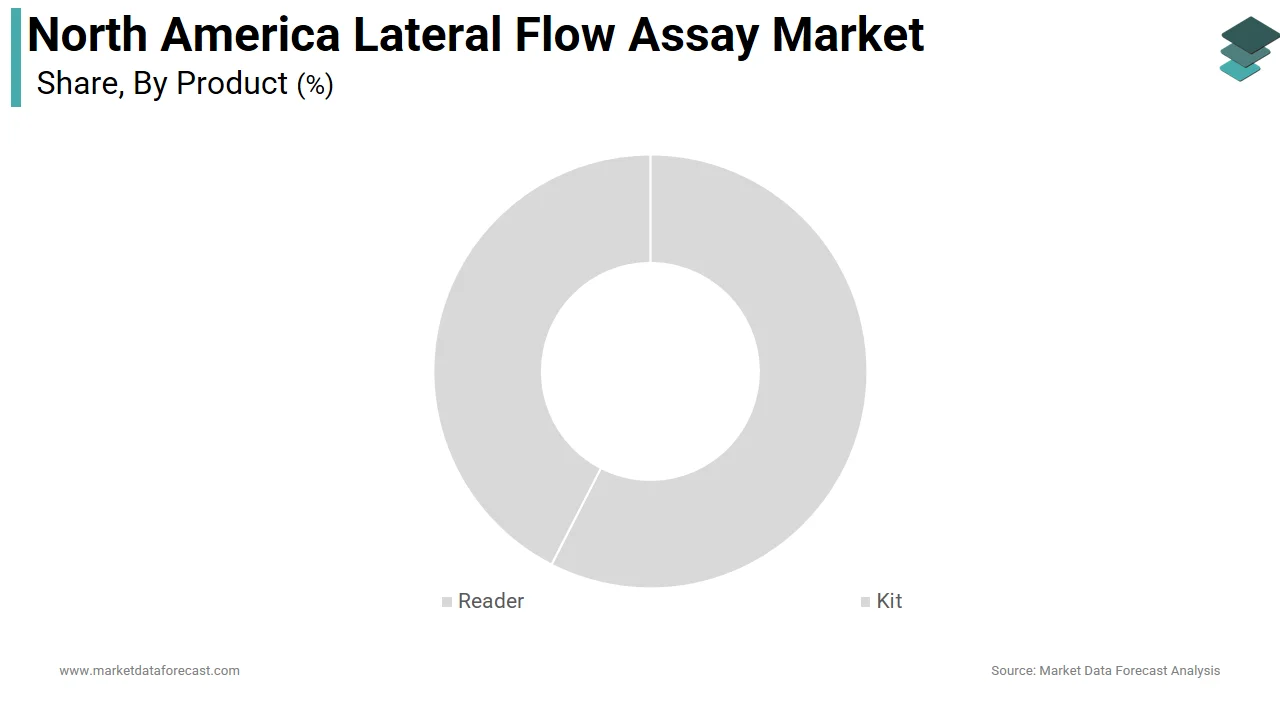
The reader segment is expected to grow at the fastest CAGR of 8.5% during the forecast period owing to the increasing integration of digital health technologies and the need for quantitative data interpretation. Traditional visual interpretation of lateral flow assays is subjective and prone to human error, limiting their utility in scenarios requiring precise measurement of biomarker concentration. Digital readers equipped with optical sensors and software algorithms provide objective, semi-quantitative results that can be tracked over time, enhancing clinical decision-making. The interoperability standards are increasingly mandating digital data capture from point-of-care devices to integrate with electronic health records. Readers facilitate this connectivity by transmitting results directly to cloud platforms by enabling remote patient monitoring and telehealth consultations. Healthcare providers are adopting these devices to improve diagnostic accuracy and comply with quality reporting requirements. The rise of value-based care models incentivizes the use of data-rich diagnostics that support longitudinal patient management rather than isolated binary outcomes.
By Application Insights
The clinical application segment accounted for 29.3% of the North America lateral flow assay market share in 2025 with the high burden of infectious diseases and chronic conditions that require frequent and rapid diagnosis. Respiratory infections, sexually transmitted diseases, and cardiovascular events necessitate immediate triage and treatment decisions in emergency departments, urgent care centers, and primary care offices. Lateral flow assays provide the speed required to isolate infectious patients and initiate appropriate therapy without waiting for central laboratory results. In chronic care, rapid tests for markers such as troponin and D-dimer help rule out life-threatening conditions quickly, reducing hospital stay durations and costs. The decentralized nature of these tests aligns with the shift toward ambulatory care, allowing clinicians to manage patients effectively in nonhospital settings. Reimbursement policies often cover point-of-care testing when it demonstrates clinical utility and cost savings, further encouraging adoption.
The veterinary application segment is expected to register the fastest CAGR of 10.4% during the forecast period, with the rising pet ownership and the increasing humanization of animals. Consumers are viewing pets as family members and are willing to spend significantly on their health and well-being, driving demand for advanced diagnostic services. According to the American Pet Products Association, pet owners in the United States spent over 147 billion dollars on pet care in 2023, with veterinary services representing a major component of this expenditure. Rapid tests for common conditions such as heartworm, Lyme disease, and feline leukemia allow veterinarians to provide immediate answers during office visits, enhancing client satisfaction and compliance with treatment plans. The emotional bond between owners and pets reduces price sensitivity for diagnostic tests that promise quick relief or early detection of serious illnesses. Mobile veterinary clinics and emergency animal hospitals also rely on lateral flow assays for triage, expanding the reach of these diagnostics beyond traditional practices.
By Technique Insights
The sandwich technique segment held a significant share of the North America lateral flow assay market in 2025 due to its superior sensitivity and specificity for detecting large molecular targets such as proteins and antigens. This format utilizes two antibodies, one immobilized on the membrane and another labeled with a detector, to capture the analyte in a sandwich configuration, resulting in a strong and clear signal. The sandwich assays can detect analytes at concentrations as low as nanograms per milliliter, making them ideal for diagnosing conditions with low biomarker levels, such as cardiac troponins and infectious disease antigens. The robustness of this technique minimizes false negatives, which is critical in clinical settings where missing a diagnosis can have severe consequences. Its reliability has led to widespread adoption in tests for influenza, streptococcus, and pregnancy hormones, which constitute a large portion of the lateral flow market. The well-understood mechanics of the sandwich format allow for straightforward manufacturing and quality control, ensuring consistent performance across batches.
The multiplex technique segment is expected to exhibit the fastest CAGR of 12.3% from 2026 to 2034 with the increasing demand for comprehensive panel testing that detects multiple analytes simultaneously. Clinicians and consumers prefer tests that provide a broader diagnostic picture from a single sample, reducing the need for multiple separate assays and saving time and resources. The multiplex lateral flow assays can detect up to five or more targets on a single strip by offering significant efficiency gains in settings such as emergency departments and point-of-care clinics. This capability is particularly valuable for respiratory panels that distinguish between influenza A, influenza B, and respiratory syncytial virus, allowing for targeted treatment and infection control measures. The ability to rule in or out multiple conditions quickly enhances clinical workflow and patient throughput. As healthcare systems face pressure to reduce costs and improve efficiency, multiplex tests offer a compelling value proposition by consolidating diagnostic steps. This functional advantage is driving rapid adoption and investment in multiplex platform development.
By End User Insights
The hospitals and clinics segment accounted for 44.3% of the North America lateral flow assay market share in 2025 due to their high patient volume and the critical need for immediate diagnostic results. Emergency departments and urgent care centers rely on rapid tests to triage patients efficiently, reducing wait times and preventing the spread of infectious diseases within healthcare facilities. According to the American Hospital Association, emergency departments in the United States handle over 130 million visits annually, creating a massive demand for quick and reliable diagnostic tools. Lateral flow assays enable clinicians to make informed decisions about isolation, treatment, and discharge without waiting for central laboratory turnaround times. This immediacy is crucial for managing outbreaks and ensuring patient safety. The concentration of skilled personnel and resources in these settings facilitates the proper administration and interpretation of tests, maximizing their clinical utility. The institutional purchasing power of hospitals also allows for bulk procurement contracts, sustaining high-volume sales for manufacturers.
The home care segment is expected to witness the fastest CAGR of 10.8% from 2026 to 2034, with a significant shift toward patient empowerment and self-management of health conditions. Consumers are increasingly taking an active role in monitoring their health, fueled by access to information and technology that makes home testing feasible and reliable. A majority of adults in the United States have used at least one over-the-counter diagnostic test, with usage rates rising among younger demographics. The convenience of testing at home eliminates the need for travel and waiting rooms, appealing to busy individuals and those with mobility challenges. Chronic disease patients use home tests for regular monitoring of parameters, such as glucose or INR, allowing for timely adjustments to medication and lifestyle. This autonomy reduces the burden on healthcare systems and improves patient engagement. The normalization of home testing during recent public health emergencies has further accelerated acceptance by making it a permanent fixture in personal healthcare routines.
COUNTRY LEVEL ANALYSIS
U.S. Lateral Flow Assay Market Analysis
The United States was the top performer of the North America lateral flow assay market by holding, driven by its advanced healthcare infrastructure, high healthcare expenditure, and robust regulatory framework. The country is a hub for diagnostic innovation, with numerous manufacturers and research institutions developing next-generation lateral flow technologies. The presence of major pharmaceutical and biotechnology companies fuels demand for lateral flow assays in drug development and clinical trials. The widespread adoption of electronic health records facilitates the integration of point-of-care testing data, enhancing clinical utility. High prevalence of chronic diseases such as diabetes and cardiovascular conditions creates sustained demand for monitoring tools. The FDA’s rigorous but clear regulatory pathway ensures product quality while encouraging innovation. Private insurance coverage for diagnostic tests further supports market growth by reducing out-of-pocket costs for patients.

Canada Lateral Flow Assay Market Analysis
Canada lateral flow assay market was ranked second by capturing 12.1% of the share in 2025 with its publicly funded healthcare system and emphasis on equitable access to diagnostics. The provincial health authorities procure lateral flow assays in large volumes for public health initiatives, particularly for infectious disease surveillance and control. The aging population is increasing the demand for chronic disease management tools, driving adoption of point-of-care tests in community care settings. Health Canada’s regulatory framework aligns closely with international standards, facilitating the entry of innovative products from global manufacturers. The vast geographic size of the country makes decentralized testing essential for reaching rural and remote communities, where laboratory access is limited. Telehealth initiatives often incorporate home-based lateral flow testing to bridge geographic gaps. Government investments in digital health infrastructure support the integration of point-of-care results into provincial health records.
COMPETITIVE LANDSCAPE
The competition in the North America lateral flow assay market is intense and characterized by a mix of established multinational corporations and agile niche innovators. Large diagnostic companies leverage their extensive distribution networks and brand recognition to dominate hospital and retail sectors. These entities invest heavily in research and development to create higher sensitivity and multiplex capabilities that differentiate their offerings. Smaller specialized firms compete by focusing on unique biomarkers or proprietary detection technologies that address unmet clinical needs. Private label brands from major retailers pose significant competition in the consumer segment by offering affordable alternatives. Price pressure is evident in commoditized categories such as pregnancy and ovulation tests, forcing manufacturers to compete on convenience and packaging. Regulatory compliance serves as a critical barrier to entry, favoring companies with robust quality systems. Intellectual property disputes occasionally arise over specific antibody pairs or assay formats. Companies increasingly compete on digital integration capabilities, linking physical tests to software platforms for data tracking.
KEY MARKET PLAYERS
The leading companies operating in the North America lateral flow assay market include:
- Alere Inc.
- Hoffmann-La Roche AG
- Abbott Laboratories
- Danaher Corporation
- Siemens AG
- Becton Dickinson and Company
- QuidelOrtho Corporation
- bioMérieux SA
- Johnson & Johnson
- Bio-Rad Laboratories Inc.
- Thermo Fisher Scientific Inc.
- QIAGEN N.V.
- PerkinElmer Inc.
TOP PLAYERS IN THE MARKET
- Abbott Laboratories maintains a robust presence in the North America lateral flow assay market through its extensive portfolio of rapid diagnostic tests for infectious diseases and chronic conditions. The company leverages its global manufacturing capabilities to ensure consistent supply of high-quality assays to hospitals and retail channels. Recent strategic initiatives include the expansion of its digital health ecosystem by integrating lateral flow results with mobile applications for remote patient monitoring. Abbott has invested heavily in research and development to enhance the sensitivity of its antigen tests while maintaining ease of use. The corporation actively collaborates with public health agencies to support large-scale screening programs. By focusing on user-friendly design and reliable performance, Abbott strengthens brand loyalty among healthcare providers and consumers. These efforts position the company as a leader in point-of-care diagnostics while addressing evolving regulatory standards and consumer expectations for accuracy.
- QuidelOrtho Corporation contributes significantly to the market by offering a diverse range of lateral flow assays specializing in women’s health, infectious diseases, and cardiac markers. The merged entity combines complementary technologies to create a comprehensive diagnostic suite that serves both clinical and home care settings. Recent actions involve launching next-generation multiplex assays that detect multiple respiratory pathogens simultaneously, addressing the need for efficient triage during flu seasons. The company has expanded its distribution network to include more pharmacy chains and online retailers, enhancing accessibility for consumers. QuidelOrtho prioritizes regulatory compliance and quality assurance to maintain trust with healthcare professionals. Strategic partnerships with telehealth providers enable seamless integration of test results into virtual consultations.
- Becton Dickinson and Company plays a pivotal role in the North America lateral flow assay market by providing advanced diagnostic solutions for hospitals and clinical laboratories. The company integrates lateral flow technology into its broader portfolio of medical devices and laboratory systems, offering holistic workflow solutions. Recent developments include the introduction of automated readers that enhance the accuracy and quantification of lateral flow results, catering to the demand for data-driven diagnostics. Becton Dickinson has strengthened its supply chain resilience by diversifying sourcing strategies for critical raw materials. The firm actively engages in educational programs to train healthcare workers on proper assay usage and interpretation. Collaborations with academic institutions support ongoing research into novel biomarkers and assay formats. These initiatives ensure that Becton Dickinson remains at the forefront of diagnostic innovation, while meeting the rigorous quality and performance standards required by North American healthcare institutions.
TOP STRATEGIES USED BY KEY MARKET PARTICIPANTS
Key players in the North America lateral flow assay market employ several strategic approaches to maintain competitiveness and drive growth. Product innovation remains central as companies develop multiplex and quantitative assays to meet evolving clinical needs. Expansion into direct-to-consumer channels through retail partnerships and e-commerce platforms enhances accessibility and brand visibility. Strategic acquisitions allow firms to broaden their product portfolios and acquire specialized technologies efficiently. Regulatory engagement ensures timely approvals and compliance with changing safety standards. Sustainability initiatives focus on eco-friendly packaging and waste reduction to align with corporate social responsibility goals. Digital integration connects assay results with health records and mobile apps for better patient management. Collaborations with public health agencies support large-scale screening efforts and pandemic preparedness.
MARKET SEGMENTATION
This research report on the North America lateral flow assay market is segmented and sub-segmented into the following categories.
By Product
- Reader
- Kit
By Application
- Clinical
- Veterinary
- Drug Development
- Food Safety
By Technique
- Competitive
- Multiplex
- Sandwich
By End User
- Hospitals and Clinics
- Home Care
- Diagnostic Laboratories
- Pharmaceutical and Biotechnology Companies
By Country
- United States
- Canada
- Mexico
- Rest of North America