- Product Description Description
- Table of Contents TOC
- List of Table & Figure LOT
- Get Free Sample PDF Sample PDF
Market Size, 2025
$70.80 BnMarket Estimate, 2026
$73.28 BnMarket Forecast, 2034
$96.49 BnCAGR, 2026–2034
3.5%Global Phosphatic Fertilizers Market Size, Growth, Trends & Forecast (2026–2034)
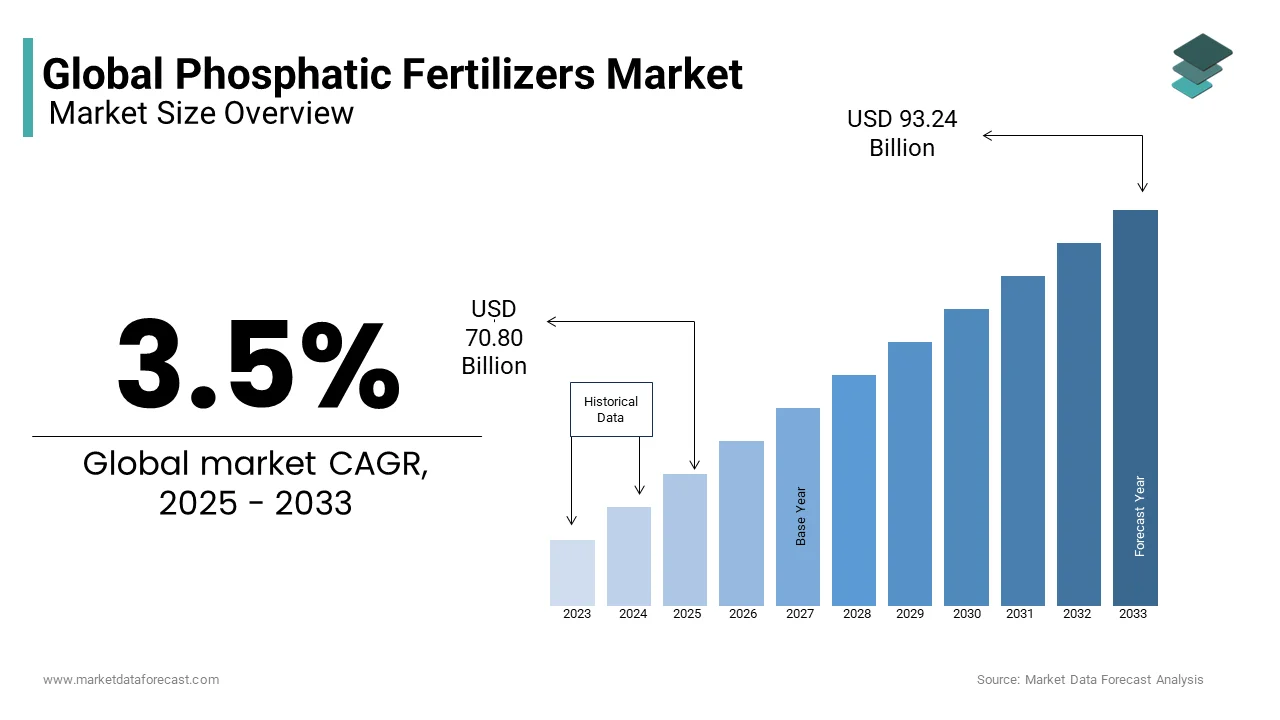
The size of the global phosphatic fertilizers market was valued at USD 70.80 billion in 2025, is anticipated to reach USD 73.28 billion in 2026, and is projected to scale up to USD 96.49 billion by 2034, registering a compound annual growth rate (CAGR) of 3.5% during the forecast period from 2026 to 2034. Driven by escalations in global food demand, rapid population growth, and supportive government subsidy policies, the market continues to expand steadily across agricultural sectors worldwide.
Key Executive Metrics (At-a-Glance)
- 2025 Base Valuation: USD 70.80 Billion
- 2026 Current Valuation: USD 73.28 Billion
- 2034 Forecast Valuation: USD 96.49 Billion
- Compound Annual Growth Rate (CAGR): 3.5% (2026–2034)
- Dominant Product Type & Application: Diammonium Phosphate (DAP) / Grains and Oilseeds
- Fastest-Growing Segment & Region: Monoammonium Phosphate (MAP) & Fruits & Vegetables / Asia-Pacific (fastest-growing regional market)
- Dominant Region: Asia-Pacific (leading market share backed by massive population pressure and intensive food production)
Core Market Drivers
- Population Growth & Food Demand: Surging global food requirements necessitating higher crop yields per hectare through intensive nutrient replenishment.
- Government Agricultural Policies: Financial subsidies and strategic distribution initiatives lowering input costs and ensuring supply stability.
Primary Market Restraints & Challenges
- Environmental Regulations: Strict controls on agricultural runoff to mitigate water pollution, eutrophication, and harmful algal blooms.
- Supply Chain & Resource Constraints: Volatility in raw material prices, geopolitical disruptions, and the long-term depletion of high-grade phosphate rock reserves.
Global Phosphatic Fertilizers Market Segmentation Breakdown
| Segment Category | Leading Sub-Segment (2025 Base) | Fastest-Growing Sub-Segment (2026–2034) |
|---|---|---|
| By Type | Diammonium Phosphate / DAP (held 46.4% share due to immediate phosphorus availability and handling ease) | Monoammonium Phosphate / MAP (forecasted at 5.4% CAGR due to superior performance in alkaline soils) |
| By Application | Grains and Oilseeds (held 50.4% share driven by vast acreage dedicated to staple crops like wheat and corn) | Fruits and Vegetables (estimated at 6.06% CAGR driven by health-conscious dietary shifts) |
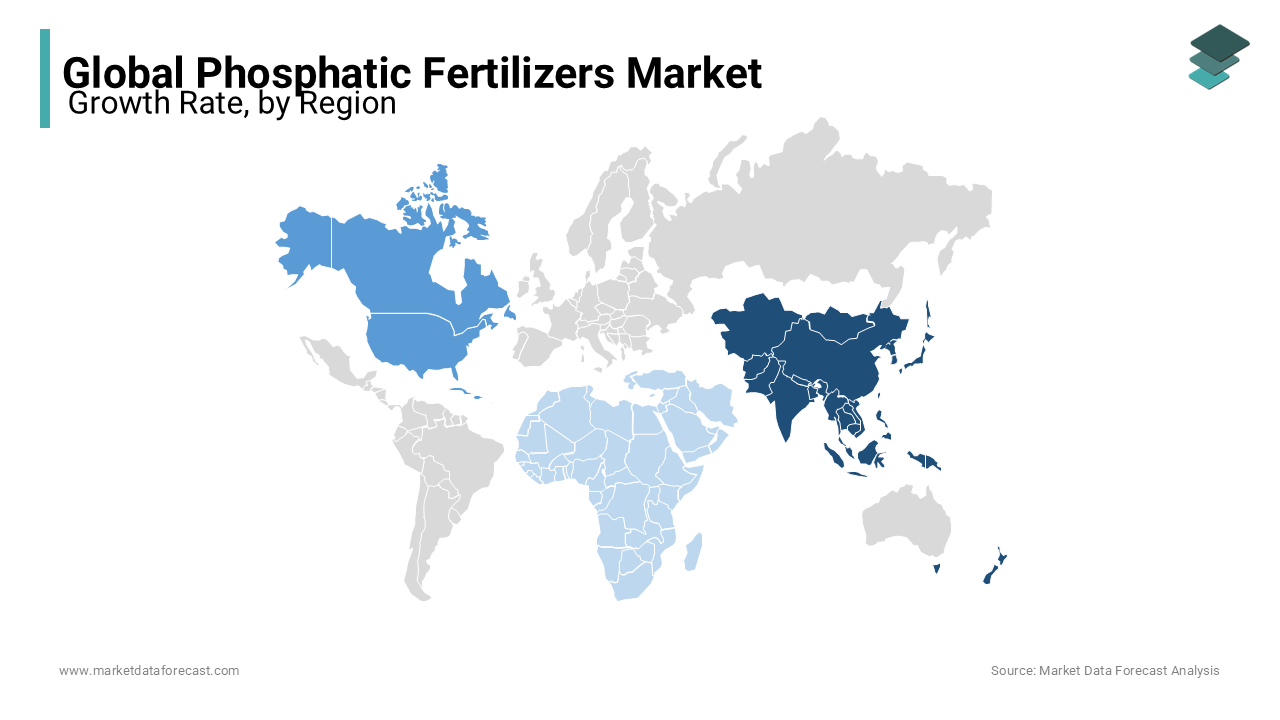
| By Region | Asia-Pacific (dominated with 38.9% share backed by continuous agricultural intensification) | Asia-Pacific & Middle East/Africa (highest growth trajectory and market penetration) |
Major Industry Players Profiled
Key enterprises shaping the competitive global phosphatic fertilizers market include CF Industries Holdings Inc. (U.S.), OCP Group (Morocco), The Mosaic Company (U.S.), Yara International ASA (Norway), PhosAgro (Russia), Eurochem (Russia), ICL (Israel), Coromandel International Ltd. (India), Agrium Inc. (Canada), and Potash Corp. of Saskatchewan (Canada).
 Download Free Sample Report
Global Phosphatic Fertilizers Market Size
The global phosphatic fertilizers market size was valued at USD 70.80 billion in 2025 and is anticipated to reach a valuation of USD 73.28 billion in 2026 and USD 96.49 billion by 2034, growing at a CAGR of 3.5% from 2026 to 2034.
Phosphatic fertilizers are essential agricultural inputs derived from phosphate rock, primarily including diammonium phosphate, monoammonium phosphate, and single superphosphate, which are critical for enhancing crop yield and soil fertility. Phosphorus is a fundamental macronutrient required for energy transfer, photosynthesis, and nutrient movement within plants, making these fertilizers indispensable for global food security. According to the Food and Agriculture Organization of the United Nations, approximately 40% of the world’s arable land suffers from phosphorus deficiency, necessitating regular supplementation to maintain agricultural productivity. According to the International Fertilizer Association, global phosphate consumption has risen by 15% over the past decade to support the dietary needs of a growing population. These agronomic realities underscore the vital role of phosphatic fertilizers in sustaining intensive farming practices. As arable land per capita declines, the reliance on high-efficiency fertilizers intensifies to maximize output from existing fields. The integration of sustainable mining practices and efficient application technologies further shapes the industry landscape. Governments worldwide prioritize domestic production to reduce import dependency, influencing trade dynamics and pricing structures. This strategic importance ensures that phosphatic fertilizers remain a cornerstone of modern agriculture, driving continuous innovation in formulation and delivery methods to optimize nutrient uptake and minimize environmental impact.
MARKET DRIVERS
Escalating Global Food Demand and Population Growth
The relentless increase in global population is majorly propelling the growth of the global phosphatic fertilizers market, as agricultural systems must produce more food from limited land resources. According to the projections of the United Nations Department of Economic and Social Affairs, the global population will reach 9.7 billion by 2050, requiring a 60% increase in food production to meet dietary needs. This demographic pressure forces farmers to adopt intensive agricultural practices that rely heavily on nutrient-rich inputs to maximize crop yields per hectare. According to the World Bank, cereal production must increase by 50% in developing countries alone to ensure food security, driving substantial consumption of phosphate-based nutrients. The direct correlation between population growth and fertilizer usage is evident, as higher planting densities deplete soil phosphorus reserves rapidly, necessitating regular replenishment. Consequently, governments and agricultural organizations promote the use of efficient phosphatic fertilizers to bridge the yield gap. This structural demand driver ensures long-term market stability, as food production cannot be decoupled from nutrient availability. Farmers increasingly view phosphatic fertilizers not as optional inputs, but as essential components of their production strategy to meet contractual obligations and market demands.
Government Subsidies and Strategic Agricultural Policies
Supportive government policies and financial subsidies significantly boost the adoption of phosphatic fertilizers by making them affordable for smallholder and commercial farmers alike, which is further aiding the global market expansion. As per the Ministry of Agriculture in India, fertilizer subsidies accounted for 1.8 trillion rupees in the fiscal year 2023, directly lowering the cost of diammonium phosphate for millions of farmers. This financial support encourages consistent application rates, preventing soil nutrient mining and ensuring stable crop outputs. According to the United States Department of Agriculture, conservation programs often include incentives for precise nutrient management, promoting the use of balanced phosphatic formulations to enhance soil health. These policy interventions create a favorable economic environment for fertilizer consumption, insulating farmers from volatile global price fluctuations. The relationship between subsidy levels and application rates is strong, as reduced costs lead to higher usage intensity across key cropping seasons. Governments recognize that food security is a national priority, leading to sustained investment in the agricultural input sector. Additionally, strategic stockpiling initiatives in major economies ensure supply continuity during geopolitical disruptions. These proactive measures stimulate market growth by guaranteeing demand and stabilizing prices, thereby encouraging manufacturers to expand production capacity and invest in distribution infrastructure.
MARKET RESTRAINTS
Environmental Regulations and Water Pollution Concerns
Stringent environmental regulations aimed at mitigating water pollution from agricultural runoff is impeding the global phosphatic fertilizers market expansion. According to the Environmental Protection Agency, phosphorus runoff contributes to 40% of impaired streams and lakes in the United States, leading to harmful algal blooms and eutrophication. These ecological damages have prompted regulators to impose strict limits on fertilizer application rates and timing, particularly in sensitive watershed areas. According to the European Environment Agency, nitrate and phosphate levels in groundwater exceed safe limits in 25% of monitoring stations across Europe, forcing member states to implement rigorous nutrient management plans. These regulatory constraints limit the volume of phosphatic fertilizers that farmers can legally apply, thereby capping market growth in developed regions. Compliance with these regulations often requires additional investments in precision application equipment and soil testing, increasing operational costs for farmers. The threat of penalties for noncompliance further discourages excessive use. Consequently, manufacturers face pressure to develop low-solubility or controlled-release formulations that minimize environmental leakage. While these innovations offer long-term benefits, the immediate regulatory burden suppresses traditional sales volumes and complicates market expansion in environmentally sensitive zones.
Volatility in Raw Material Prices and Supply Chain Disruptions
The inherent volatility in phosphate rock prices and supply chain instability is further hampering the global phosphatic fertilizers market growth. According to the World Bank Commodity Markets Outlook, phosphate rock prices fluctuated by 35% in 2022 due to geopolitical tensions and export restrictions from major producing nations like Morocco and China. This price instability makes it difficult for farmers to plan their input budgets and for manufacturers to maintain steady production schedules. According to the International Monetary Fund, supply chain bottlenecks increased freight costs by 20% globally, further elevating the final price of finished fertilizers. These economic pressures reduce profit margins for distributors and discourage farmers from purchasing optimal quantities, leading to under-application and potential yield losses. The concentration of phosphate reserves in a few countries creates geopolitical risks that disrupt global trade flows. Export bans or tariffs imposed by key producers can instantly tighten supply and spike prices in importing regions. This unpredictability hinders long-term investment in production capacity and discourages new entrants. Consequently, the market remains vulnerable to external shocks, limiting its ability to provide stable and affordable nutrients to the global agricultural sector.
MARKET OPPORTUNITIES
Development of Enhanced Efficiency Fertilizers
The emergence of enhanced efficiency fertilizers is a significant opportunity for market players to differentiate their products and address environmental concerns while maintaining efficacy. According to the International Plant Nutrition Institute, coated and stabilized phosphatic fertilizers can improve nutrient use efficiency by up to 20% compared to conventional granules, reducing waste and environmental leakage. This technological advancement appeals to environmentally conscious farmers and regulators who seek sustainable agricultural solutions. Companies are investing in research to develop polymer-coated diammonium phosphate and other innovative formulations that release nutrients in sync with crop uptake patterns. According to the Fertilizer Institute, adoption of enhanced efficiency products grew by 12% annually in North America, driven by demonstrated yield improvements and cost savings. These premium products command higher margins and foster customer loyalty through proven performance. The ability to offer customized solutions for specific soil types and crops further expands market reach. As precision agriculture technologies become more widespread, the integration of smart fertilizers with data-driven management systems creates new value propositions. This shift towards high-value-added products allows manufacturers to transcend commodity competition and build stronger brand equity in a crowded marketplace.
Expansion into Emerging Markets with Untapped Potential
Emerging economies in Africa, Southeast Asia, and Latin America offer substantial growth opportunities due to low current fertilizer usage and expanding agricultural sectors. According to the African Union, average phosphorus application rates in sub-Saharan Africa are less than 10 kilograms per hectare, compared to over 100 kilograms per hectare in developed regions, indicating massive untapped potential. Governments in these regions are actively promoting agricultural modernization to achieve food self-sufficiency, creating favorable conditions for market entry. According to the Asian Development Bank, agricultural productivity in Southeast Asia needs to increase by 30% to meet rising domestic demand, driving investment in modern inputs, including phosphatic fertilizers. Local production facilities are being established to reduce import dependency and lower costs for smallholder farmers. Partnerships with local distributors and agro-dealers facilitate market penetration in rural areas where infrastructure is limited. The growing middle class in these regions also increases demand for diverse crops that require intensive nutrient management. By focusing on these high-growth markets, companies can diversify their revenue streams and reduce reliance on mature markets. Strategic investments in education and extension services further drive adoption by demonstrating the economic benefits of proper fertilization.
MARKET CHALLENGES
Depletion of High Grade Phosphate Rock Reserves
The gradual depletion of high-grade phosphate rock reserves poses a long-term structural challenge to the sustainability of the phosphatic fertilizers industry. According to the United States Geological Survey, global economically recoverable phosphate reserves may last only 50 to 100 years at current consumption rates, raising concerns about future supply security. As high-grade ores become scarce, manufacturers must process lower-grade rocks, which require more energy and generate more waste, increasing production costs and environmental footprints. According to the National Research Council, processing low-grade phosphate rock can increase energy consumption by 25%, impacting profitability and carbon emissions. This resource constraint forces companies to invest in expensive beneficiation technologies and explore alternative sources, such as recycled phosphorus from wastewater. The uncertainty surrounding long-term resource availability discourages large-scale capital investments in new mining projects. Additionally, the geographical concentration of remaining high-quality reserves in politically unstable regions adds risk to supply chains. Manufacturers must adapt to changing ore qualities while maintaining product consistency, which requires continuous technological innovation. This fundamental resource limitation challenges the industry to transition towards a circular economy model to ensure long-term viability.
Lack of Farmer Awareness and Technical Knowledge
A significant lack of technical knowledge among smallholder farmers regarding optimal phosphorus application rates and methods hinders market growth and efficiency. According to the Food and Agriculture Organization of the United Nations, 60% of small-scale farmers in developing countries do not conduct soil tests before applying fertilizers, leading to inefficient use and potential soil degradation. This knowledge gap results in either under-application, which limits yields, or over-application, which wastes resources and harms the environment. According to the World Bank, extension services in many rural areas are understaffed and underfunded, failing to provide adequate training on modern nutrient management practices. Without proper guidance, farmers often rely on traditional methods or neighbor advice rather than scientific recommendations. This behavior limits the adoption of advanced phosphatic formulations that require specific application techniques to be effective. Manufacturers face difficulties in marketing sophisticated products to a customer base that lacks basic agronomic understanding. Bridging this knowledge gap requires significant investment in education and outreach programs, which may not yield immediate financial returns. Consequently, the market struggles to realize its full potential as inefficient practices persist among a large segment of the global farming community.
REPORT COVERAGE
| REPORT METRIC | DETAILS |
| Market Size Available | 2025 to 2034 |
| Base Year | 2025 |
| Forecast Period | 2026 to 2034 |
| CAGR | 3.5% |
| Segments Covered | By Type, Application, And Region |
| Various Analyses Covered | Global, Regional and Country Level Analysis; Segment-Level Analysis; DROC; PESTLE Analysis; Porter’s Five Forces Analysis; Competitive Landscape; Analyst Overview of Investment Opportunities |
| Regions Covered | North America, Europe, APAC, Latin America, Middle East & Africa |
| Market Leaders Profiled | CF Industries Holdings Inc. (U.S.), OCP (Morocco), Agrium Inc. (Canada), Potash Corp. of Saskatchewan (Canada), Mosaic (U.S.), Eurochem (Russia), ICL (Israel), Yara International ASA (Norway), Coromandel International Ltd. (India), Phosagro (Russia) |
SEGMENTAL ANALYSIS
By Type Insights
The diammonium phosphate segment held 46.4% of the global market share in 2025 due to its efficiency in providing immediate phosphorus availability during early plant growth stages. This widespread adoption is further supported by its physical stability and ease of handling, making it a preferred choice for bulk blending operations. According to the United States Department of Agriculture, DAP is the primary phosphorus source for over 60% of corn and soybean acres in North America, highlighting its critical role in staple crop production. The relation between its chemical composition and agronomic performance ensures consistent demand across diverse climatic zones. Farmers favor DAP because it delivers 18% nitrogen and 46% phosphorus pentoxide, offering a cost-effective solution for basal application. Its compatibility with other fertilizers allows for customized nutrient management plans without risking chemical incompatibility. This versatility secures its position as the industry standard, ensuring that manufacturers prioritize DAP production capacity to meet the foundational needs of global agriculture.
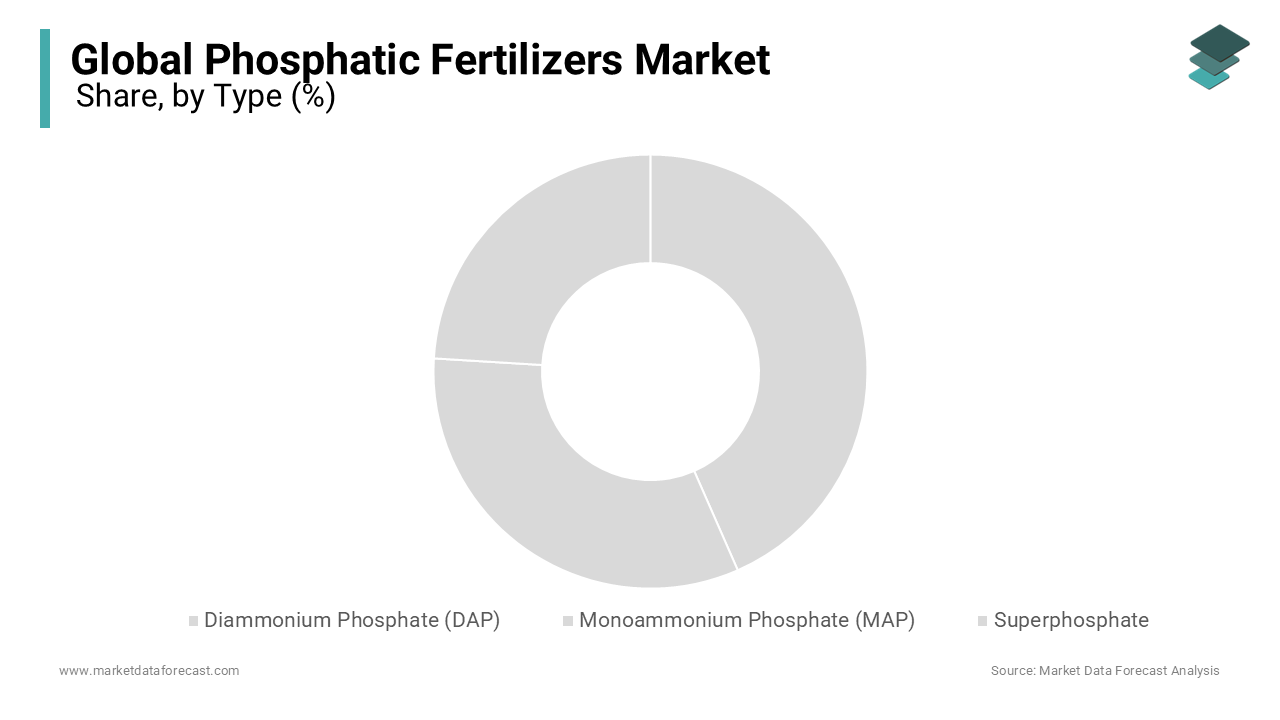
On the other side, the monoammonium phosphate segment is the fastest-growing segment and is predicted to record a CAGR of 5.4% over the forecast period in the global market owing to its superior performance in alkaline soils and its effectiveness as a starter fertilizer. According to the International Plant Nutrition Institute, MAP is 20% more effective than DAP in high pH soils common in regions like Western Canada and parts of Australia, where it reduces ammonia volatilization losses. This agronomic advantage drives adoption among farmers seeking to maximize nutrient use efficiency in challenging soil conditions. According to the Canadian Fertilizer Institute, MAP usage in prairie provinces increased by 15% over the last five years as growers shifted towards precision placement techniques that benefit from its acidic reaction. The relation between soil chemistry and fertilizer choice is critical, as MAP helps solubilize native soil phosphorus while providing essential nutrients. Its lower pH also makes it safer for seed contact, allowing for closer placement to germinating seeds without risk of burn. This specific utility addresses a growing need for optimized early season nutrition in intensive farming systems. As soil testing becomes more prevalent, the identification of alkaline conditions prompts targeted MAP application, fueling its rapid growth trajectory.
By Application Insights
The grains and oilseeds segment held the 50.4% of the global market share in 2025. The leading position of grains and oilseeds segment in the global market is attributed to the vast acreage dedicated to staple crops like wheat, corn, rice, and soybeans. According to the Food and Agriculture Organization of the United Nations, cereals occupy nearly 50% of the world’s arable land, creating an immense baseline demand for phosphorus to sustain yields. Governments worldwide prioritize these crops for national food security, often subsidizing fertilizer use to ensure stable production levels. According to the United States Department of Agriculture, corn and soybean farmers in the US applied over 4 million metric tons of phosphate fertilizers in 2023, underscoring the sector's dominance. The direct correlation between planted area and fertilizer consumption ensures that grains and oilseeds remain the primary driver of market volume. These crops have high phosphorus requirements during early growth stages to establish strong root systems, making phosphatic fertilizers indispensable. The global trade in grains further incentivizes producers to maximize output through optimal nutrient management. As population growth drives up demand for animal feed and biofuels derived from these crops, the pressure to maintain high yields sustains robust fertilizer consumption. This structural reliance on staple crops guarantees the continued leadership of this application segment.
However, the fruits and vegetables segment is estimated to expand at a healthy CAGR of 6.06% over the forecast period in the global market owing to the rising health-conscious dietary shifts, changing dietary habits and increasing health consciousness among consumers. The World Health Organization recommends a daily intake of 400 grams of fruits and vegetables, driving global production expansion to meet this nutritional guideline. According to the United Nations Department of Economic and Social Affairs, per capita consumption of fresh produce has increased by 12% in emerging economies over the past decade, stimulating agricultural investment in horticulture. High-value crops like berries, citrus, and leafy greens have intense phosphorus demands for flowering and fruit set, leading to higher fertilizer application rates per hectare compared to field crops. The relation between health trends and agricultural practices is direct, as farmers expand acreage to capitalize on premium prices. Urbanization also increases demand for convenient fresh foods, prompting the development of peri-urban farming hubs that rely heavily on efficient nutrient inputs. This shift in consumer preference transforms fruits and vegetables from niche markets into major drivers of fertilizer demand. The economic incentives for high-quality produce encourage farmers to invest in optimal nutrition programs, boosting consumption of specialized phosphatic formulations.
REGIONAL ANALYSIS
Asia Pacific Phosphatic Fertilizers Market Analysis
Asia Pacific dominated the market by accounting for 38.9% of the global market share in 2025 and is likely to record the highest growth trajectory over the next few years, propelled by continuous agricultural intensification, massive population pressure and the need for food self-sufficiency in countries like China and India. According to the Food and Agriculture Organization of the United Nations, Asia consumes over 50% of the world’s phosphate fertilizers, primarily for rice, wheat, and maize production. China is the largest producer and consumer, with the Ministry of Agriculture reporting annual phosphate consumption exceeding 12 million metric tons. India’s subsidy policies drive high usage rates, although efficiency remains a challenge. The region is witnessing a shift towards balanced fertilization, as governments promote soil health cards and testing. Rapid urbanization is reducing arable land, forcing farmers to intensify production through higher input use. The growing middle class increases demand for diverse crops, including fruits and vegetables, boosting demand for specialized phosphates. Infrastructure improvements in logistics facilitate distribution to remote rural areas. However, environmental concerns regarding water pollution are beginning to shape policy, leading to gradual reforms in subsidy structures. The sheer scale of agricultural activity in Asia Pacific ensures its continued leadership in global phosphatic fertilizer consumption, despite efforts to improve efficiency.
North America Phosphatic Fertilizers Market Analysis
North America captured 23.6% of the global market share in 2025 due to its highly mechanized agricultural sector and large-scale production of corn and soybeans. According to the United States Department of Agriculture, American farmers applied 3.8 million metric tons of phosphate fertilizers in 2023, reflecting the region's intensive cropping systems. The presence of major phosphate rock reserves in Florida and Idaho supports a robust domestic production industry, reducing reliance on imports. According to the Canadian Fertilizer Institute, phosphate consumption in Canada has remained stable due to efficient nutrient management practices and widespread soil testing. The region is characterized by high adoption of precision agriculture technologies, which optimize fertilizer use and minimize environmental impact. Regulatory frameworks in both the US and Canada promote sustainable farming, encouraging the use of enhanced efficiency products. The mature market status means growth is driven by product innovation rather than volume expansion. Trade dynamics with Mexico also influence regional flows, as cross-border agricultural integration increases. The strong financial position of North American farmers allows for consistent investment in high-quality inputs. This combination of resource availability, technological advancement, and regulatory stability ensures North America remains a key pillar of the global phosphatic fertilizers market.
Europe Phosphatic Fertilizers Market Analysis
Europe is likely to experience stable to controlled market development over the next few years, shaped by strict sustainability mandates, stringent environmental regulations and a focus on sustainable agricultural practices. According to the European Environment Agency, nutrient surplus levels have decreased by 15% in the EU due to strict limits on fertilizer application under the Nitrates Directive. This regulatory pressure drives demand for high-efficiency phosphatic fertilizers that minimize runoff and leaching. According to the European Fertilizer Manufacturers Association, consumption of water-soluble and specialized phosphates has grown by 8% annually, reflecting the shift towards precision fertigation in horticulture. The region relies heavily on imports for phosphate rock, making it sensitive to global supply chain disruptions. However, strong recycling initiatives aim to recover phosphorus from wastewater and sewage sludge, creating alternative supply sources. The Farm to Fork Strategy targets a 20% reduction in fertilizer use by 2030, pushing manufacturers to innovate in nutrient use efficiency. Despite volume constraints, the high-value nature of European agriculture supports premium product sales. The focus on organic and sustainable farming also influences market dynamics, though conventional phosphatic fertilizers remain essential for staple crop production. This balance between regulation and productivity defines the European market landscape.
As per recent agricultural outlooks, Latin America is likely to exhibit robust expansion over the next few years, driven by export-oriented grain and oilseed farming. According to the Brazilian Agricultural Research Corporation, Brazil consumed over 3 million metric tons of phosphate fertilizers in 2023, driven by the expansion of soybean acreage in the Cerrado region. The region relies heavily on imports for phosphate rock and finished fertilizers, making it vulnerable to global price fluctuations. However, domestic production capabilities are expanding in countries like Peru and Mexico to reduce dependency. According to the Inter-American Development Bank, agricultural productivity in Latin America has increased by 20% over the last decade, supported by improved input access. The adoption of no-till farming is widespread, influencing phosphorus management strategies and requiring efficient placement methods. Government initiatives in Argentina and Brazil support credit access for farmers, facilitating input purchases. The region’s tropical soils often have high phosphorus fixation capacity, necessitating higher application rates to ensure availability. This agronomic challenge drives demand for reactive phosphate sources and innovative formulations. As global demand for protein and biofuels grows, Latin America’s export-oriented agriculture will continue to drive robust fertilizer consumption.
Middle East and Africa Phosphatic Fertilizers Market Analysis
The Middle East and Africa are likely to witness accelerating market penetration over the next few years, supported by targeted food security investments, population growth and agricultural development initiatives. According to the African Union, fertilizer use in Africa averages only 15 kilograms per hectare, far below the global average, indicating substantial untapped potential. Morocco is a key player as the holder of the world’s largest phosphate rock reserves, supplying a significant portion of global demand. According to the Moroccan Office Chérifien des Phosphates, exports exceed 30 million metric tons annually, supporting global food security. Sub-Saharan African countries are implementing subsidy programs to boost smallholder farmer access to inputs, driving gradual market expansion. Water scarcity in the Middle East promotes the use of efficient irrigation and fertigation systems, increasing demand for soluble phosphates. According to the African Development Bank, improving soil fertility is critical for achieving food security goals in the region. Political instability and infrastructure deficits remain challenges, but public-private partnerships are improving distribution networks. The strategic importance of phosphate resources gives the region geopolitical leverage. As agricultural modernization progresses, the Middle East and Africa are poised for accelerated growth in phosphatic fertilizer consumption.
COMPETITIVE LANDSCAPE
The competitive landscape of the Phosphatic Fertilizers Market is characterized by intense rivalry among a few large integrated producers and numerous regional manufacturers. Major players compete on the basis of cost efficiency, product quality, and supply chain reliability rather than price alone. The market exhibits high barriers to entry due to significant capital requirements for mining and processing infrastructure. Incumbent firms leverage their control over phosphate rock reserves to maintain cost advantages and influence global pricing dynamics. Competition is further intensified by geopolitical factors that disrupt trade flows and create supply uncertainties. Companies must continuously innovate to meet stringent environmental regulations and changing customer preferences for sustainable products. Strategic alliances with logistics providers and distributors are essential for ensuring timely delivery to remote agricultural areas. The presence of state owned enterprises in key producing countries adds complexity to market dynamics. Smaller specialized firms compete by offering niche products tailored to specific crops or soil conditions. This dynamic environment fosters continuous improvement in operational efficiency and product development benefiting the global agricultural sector.
KEY MARKET PLAYERS
Companies playing a leading role in the global phosphatic fertilizer market are
- CF Industries Holdings Inc. (U.S.)
- OCP (Morocco)
- Agrium Inc. (Canada)
- Potash Corp. of Saskatchewan (Canada)
- Mosaic (U.S.)
- Eurochem (Russia)
- ICL (Israel)
- Yara International ASA (Norway)
- Coromandel International Ltd. (India)
- Phosagro (Russia).
Top Players In The Market
- The Mosaic Company stands as a global leader in concentrated crop nutrients with significant operations in phosphate mining and production. The company recently completed the divestiture of its Brazilian fertilizer distribution business to focus on core production assets and improve operational efficiency. This strategic move allows Mosaic to concentrate resources on enhancing its North American manufacturing capabilities and expanding its premium product portfolio. Mosaic continues to invest in sustainable mining practices and water conservation technologies to address environmental concerns. The company also launched new digital tools for farmers to optimize nutrient application rates based on real time soil data. These initiatives strengthen its position by aligning with modern precision agriculture trends. By prioritizing high value products and operational excellence, Mosaic ensures long term competitiveness in the evolving global fertilizer landscape while maintaining strong relationships with key agricultural stakeholders.
- OCP Group is the world’s largest exporter of phosphate rock and a major producer of phosphatic fertilizers based in Morocco. The company recently announced significant investments in green ammonia production facilities to create carbon neutral fertilizer products. This initiative aims to reduce the environmental footprint of its operations and meet growing demand for sustainable agricultural inputs. OCP has also expanded its blending and distribution networks across Africa and Asia to improve market access for smallholder farmers. The group collaborates with international research institutions to develop customized fertilizer solutions tailored to specific soil conditions. These efforts enhance its global reach and reinforce its commitment to food security. By leveraging its vast reserves and technological innovation, OCP strengthens its leadership position and supports sustainable agricultural development worldwide.
- PhosAgro is a leading Russian producer of phosphate based fertilizers with a strong presence in domestic and export markets. The company recently modernized its production facilities to increase capacity and improve product quality for key crops like wheat and sunflowers. PhosAgro has focused on optimizing its supply chain logistics to ensure reliable delivery despite geopolitical challenges. The company actively participates in industry forums to promote best practices in nutrient management and soil health. It also invests in research and development to create more efficient fertilizer formulations that minimize environmental impact. These actions help PhosAgro maintain its competitive edge and expand its customer base. By prioritizing operational resilience and product innovation, the company strengthens its market position and contributes to global agricultural productivity.
Top Strategies Used By Key Market Participants
Key players in the Phosphatic Fertilizers Market primarily focus on vertical integration and strategic partnerships to secure raw material supplies and expand distribution networks. Companies invest heavily in research and development to create enhanced efficiency fertilizers that reduce environmental impact and improve crop yields. They frequently collaborate with agricultural technology firms to integrate digital tools for precision nutrient management. Mergers and acquisitions are common strategies used to consolidate market presence and access new geographic regions. Leading participants also emphasize sustainability by adopting green manufacturing processes and recycling technologies. Pricing strategies often involve long term contracts with large agricultural cooperatives to ensure stable revenue streams. Additionally, companies prioritize regulatory compliance and engage in policy advocacy to shape favorable legislative frameworks. Educational initiatives for farmers help drive adoption of advanced products and build brand loyalty. These multifaceted approaches enable firms to navigate market volatility and maintain competitive advantage.
MARKET SEGMENTATION
This research report on the global phosphatic fertilizer market has been segmented and sub-segmented based on type, application, and region.
By Type
- Diammonium Phosphate (DAP)
- Monoammonium Phosphate (MAP)
- Superphosphate
- Others
By Application
- Grains & Oilseeds
- Fruits & Vegetables
- Others
By Region
- North America
- Europe
- Asia-Pacific
- Latin America
- Middle-East and Africa