- Product Description Description
- Table of Contents TOC
- List of Table & Figure LOT
- Get Free Sample PDF Sample PDF
Market Size, 2025
$5.48 BnMarket Estimate, 2026
$6.05 BnMarket Forecast, 2034
$13.35 BnCAGR, 2026–2034
10.40%Executive Summary: Global Prebiotic Ingredients Market
- Market Scope: Comprehensive market analysis of the global prebiotic ingredients industry covering ingredients (yeast, bacteria), applications (food & beverages, dietary supplements, animal feed), types (oligosaccharides, inulin, polydextrose), sources (roots, grains, vegetables), and regional landscapes across North America, Europe, Asia-Pacific, South America, and the Middle East & Africa.
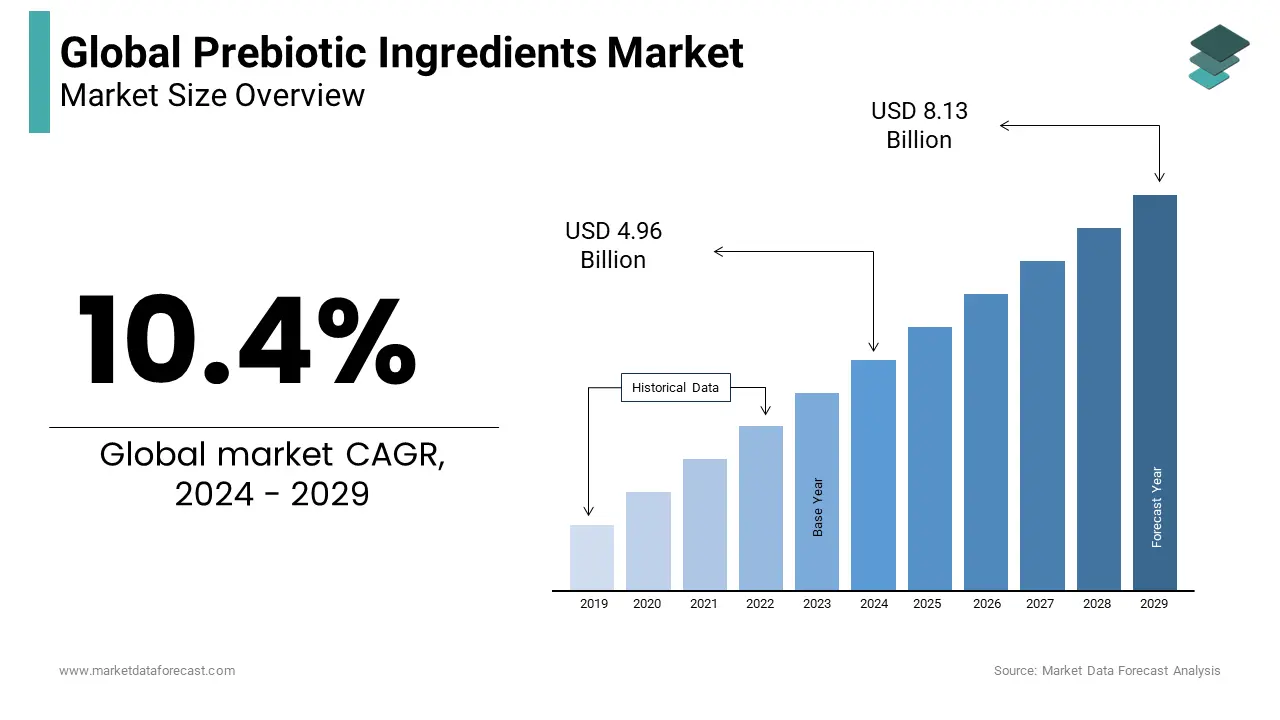
- Market Valuation: Valued at USD 5.48 billion in 2025, estimated at USD 6.05 billion in 2026, and projected to reach USD 13.35 billion by 2034, registering a strong CAGR of 10.40% (2026–2034).
- Primary Growth Drivers: Rising consumer awareness regarding gut health, immunity, weight management, and preventive healthcare; extensive integration of prebiotics in functional foods, beverages, dietary supplements, and poultry feed; and changing lifestyles leading to a higher incidence of digestive and metabolic disorders.
Key Market Segment Metrics (2026–2034)
| Category | Leading Segment / Position | Growth Dynamics |
|---|---|---|
| By Ingredients | Bacteria Segment (historically drives market demand, heavily utilized in probiotic foods, beverages, and supplements) | Yeast-derived components are expanding as animal feed and immune health applications scale globally. |
| By Application | Prebiotic Food & Beverages (led the market, driven by high consumption of functional dairy like yogurt and bakery goods) | Dietary supplements and animal feed applications are registering fast adoption due to rising preventive health trends. |
| By Type | Oligosaccharides & Inulin (core market segments providing essential dietary fiber and gut health benefits) | Polydextrose is projected to grow at a considerable rate backed by broad food industry integration. |
| By Region | Europe (recorded the largest regional share at 35.5%, supported by high consumer awareness, advanced food sectors, and key market players) | Asia-Pacific is positioned to become the second-largest market, fueled by rising living standards and preference for functional foods. |
Major Market Players & Market Structure
Market Structure: Competitive global marketplace dominated by major food and biotechnology multinational enterprises investing heavily in R&D, regulatory compliance, and strategic supply partnerships.
Key Companies: Nestle, Yakult Honsha Co., Ltd, Chr. Hansen Holding A/S, Danone S.A, Arla Foods, Danisco A/S, and Lallemand Inc.
Global Prebiotic Ingredients Market Size
The global prebiotic ingredients market size was expected to be worth USD 5.48 Billion in 2025 and is anticipated to be worth USD 13.35 billion by 2034 from USD 6.05 billion In 2026, growing at a CAGR of 10.40% during the forecast period.
Prebiotics are carbohydrates that are not digested by enzymes and digestive acids, which enhance the growth or activity of beneficial bacteria in the human intestine. They help improve intestinal barrier function, strengthen the immune system, reduce stomach inflammation, increase overall digestive health, minimize the risk of diarrhea, increase calcium absorption, improve bone density, and reduce risk factors of cardiovascular disease. Mannan-oligosaccharides (MOS), inulin, fructose-oligosaccharides (FOS), oligosaccharides, galacto-oligosaccharides (GOS), and polydextrose are various types of prebiotic components beneficial to human and animal health. Prebiotic ingredients treat and prevent a variety of health problems, including antibiotic-related diarrhea, inflammatory bowel disease, visible bowel syndrome, allergic conditions such as allergic rhinitis (hay fever), atopic dermatitis (eczema), colic in babies, and necrotizing enteritis. Low birth weight refers to the terms prebiotics and dietary fiber, which are used instead for eating mechanisms that are not digested by the gastrointestinal tract. Carbohydrates like dietary fiber are possible prebiotics. Prebiotic ingredients affect stomach bacteria by increasing the number of useful anaerobic bacteria and reducing the population of potential pathogenic microorganisms.
MARKET DRIVERS
The growing consumer perception of the health benefits of prebiotics is primarily propelling the growth of the prebiotic ingredients market.
With the growing demand for healthy foods containing prebiotic ingredients, the market for prebiotic ingredients is expected to grow, mainly in the United States and European countries. In keeping with the trend, processed foods are widely consumed, keeping the gut healthy that friendly bacteria need. The bakery and confectionery sector consumes the most emulsifiers, while the meat industry is emerging as a growing segment of the market. Prebiotic ingredients are key ingredients that promote the growth of beneficial bacteria.
The growth of the global market is further driven by the growing consumer awareness of the health benefits of consuming prebiotics increases. These prebiotic ingredients are widely used in digestive health products and provide many benefits related to immunity, weight management, and digestion. Prebiotics can be used to prevent oral health, bacterial vaginosis, and diseases related to the urinary tract. It can also be used to prevent diseases such as respiratory infections, necrotizing enteritis, and intestinal disease. In addition, information on preventive care is available on the Internet, helping to raise awareness. A variety of factors, such as rising disposable income, rising living standards, an aging population, and changing attitudes towards health care, are increasing awareness of preventive care. The risk of developing these diseases is particularly high in the elderly population. Prebiotics have proven to be a safe and readily available measure to prevent the onset of these diseases.
Increased use of prebiotics in poultry feed to improve digestion, performance, and the immune system to enhance the overall productivity of animals and the versatility of prebiotic components. It can be easily integrated into a wide range of foods and beverages. This trend is expected to continue to drive the global prebiotic ingredients market during the forecast period. The demand for these ingredients is mainly due to the increased consumption of the dietary supplement. Prebiotic ingredients are used in food to prevent digestive problems and other health problems. They are beneficial bacteria that are widely used to treat digestive problems, nervous system disorders, and mental illness. Health problems are the result of harmful and busy lifestyles, such as long working hours, mental stress, poor eating habits, excessive food intake, excessive alcohol consumption, and smoking. Prebiotic ingredients are often used in the food industry, such as dairy, confectionery, beverages, processed food, and many other sub-industries. This habit of consumers expecting the growth of the global prebiotic ingredients market. These benefits increase awareness among consumers and drive market growth. Increased intake of prebiotics and fiber-rich functional foods in the food and beverage industry is associated with benefits such as better digestion, less response to stress, better hormonal balance, and a reduction in cardiovascular disease. People are aware of the problems related to health and well-being, and health awareness has become a trend in the region, with the largest number of consumers and food manufacturers that can create huge market opportunities for prebiotic ingredients.
MARKET RESTRAINTS
Despite growing margins in the global prebiotic ingredients market, the high cost required for research on the applicability and safety of prebiotics has limited the market.
American market policy has strict rules. However, structural or functional applications are allowed. Manufacturers and distributors face challenges during production and distribution due to strict laws and regulations. The growing demand for prebiotics may allow more players to enter the market, but the high R&D cost of prebiotic ingredients is likely to limit the scalability of the global prebiotic ingredients market.
REPORT COVERAGE
| REPORT METRIC | DETAILS |
| Market Size Available | 2025 to 2034 |
| Base Year | 2025 |
| Forecast Period | 2026 to 2034 |
| CAGR | 10.4% |
| Segments Covered | By Ingredients, Application, Type, Source & Region |
| Various Analyses Covered | Global, Regional and Country Level Analysis; Segment-Level Analysis; DROC; PESTLE Analysis; Porter’s Five Forces Analysis; Competitive Landscape; Analyst Overview of Investment Opportunities |
| Regions Covered | North America, Europe, APAC, Latin America, Middle East & Africa |
| Market Leaders Profiled | Nestle, Yakult Honsha Co., Ltd, Chr. Hansen Holding A/S, Danone S.A, Arla Foods, Danisco A/S and Lallemand Inc |
SEGMENTAL ANALYSIS
Global Prebiotic Ingredients Market Analysis By Ingredients
The bacteria segment has driven the market and is expected to maintain its privileged position during the forecast period. Bacteria are widely used in applications such as probiotic foods and beverages and dietary supplements to provide health benefits for their guests. Widespread awareness of the bacteria has helped segment market demand in recent years, and this trend is expected to continue throughout the forecast period.
Global Prebiotic Ingredients Market Analysis By Application
The prebiotic food and beverage segment led the market in 2020. The increasing consumption of probiotic products such as yogurt is driving a growing demand for food and beverage applications. Additionally, major industry players are looking to enter into long-term supply agreements to inject proprietary strains into food products at food and beverage companies, especially in regions such as Central and South America.
Global Prebiotic Ingredients Market Analysis By Type
The polydextrose segment is expected to develop with a considerable growth rate in the coming years.
REGIONAL ANALYSIS
Europe recorded the largest share at 35.5% in the global prebiotic ingredients market in 2018, and the region is expected to remain dominant during the forecast period. The presence of leading companies, high awareness related to the use of prebiotics, and easy availability have supported the demand in this area and are foreseen to continue through the outlook period. Germany ranks first in the food service sector in Europe and is one of the main consumers in the market for additives and ingredients, including emulsifiers, in the region. The country's bakery and confectionery sector consumes the majority of emulsifiers, while the meat industry is emerging as a growth segment of the market that is expected to lead the market in the future. The Asia Pacific is expected to become the second-largest market after Europe by 2026. The growing preference for functional foods and rising living standards are expected to benefit the local market in the foreseen years.
KEY MARKET PLAYERS
Nestle, Yakult Honsha Co., Ltd, Chr. Hansen Holding A/S, Danone S.A, Arla Foods, Danisco A/S, and Lallemand Inc. are some of the notable companies in the global prebiotic ingredients market.
RECENT HAPPENINGS IN THE MARKET
- Friesland Campina acquired shares in Best Cheese Corporation, a US manufacturer and supplier of specialty cheeses, in December 2018.
- In October 2016, Cargill announced in the Philippines that it would expand its animal nutrition capabilities to manufacture premixed feed solutions. This has enabled Cargill to meet the growing demand from its domestic customers.
DETAILED SEGMENTATION OF THE GLOBAL PREBIOTIC MARKET INCLUDED IN THIS REPORT
This research report on the global prebiotic market has been segmented and sub-segmented based on ingredients, application, type, source, and region.
By Ingredients
- Yeast
- Bacteria
By Application
- Food & Beverages
- Dietary Supplements
- Animal Feed
By Type
- Oligosaccharides
- Inulin
- Polydextrose
By Source
- Roots
- Grains
- Vegetables
By Region
- North America
- Europe
- Asia-Pacific
- South America
- Middle East & Africa