- Product Description Description
- Table of Contents TOC
- List of Table & Figure LOT
- Get Free Sample PDF Sample PDF
Market Size, 2025
$7.61 BnMarket Estimate, 2026
$7.86 BnMarket Forecast, 2034
$10.13 BnCAGR, 2026–2034
3.22%Global Pretzel Market Report Summary
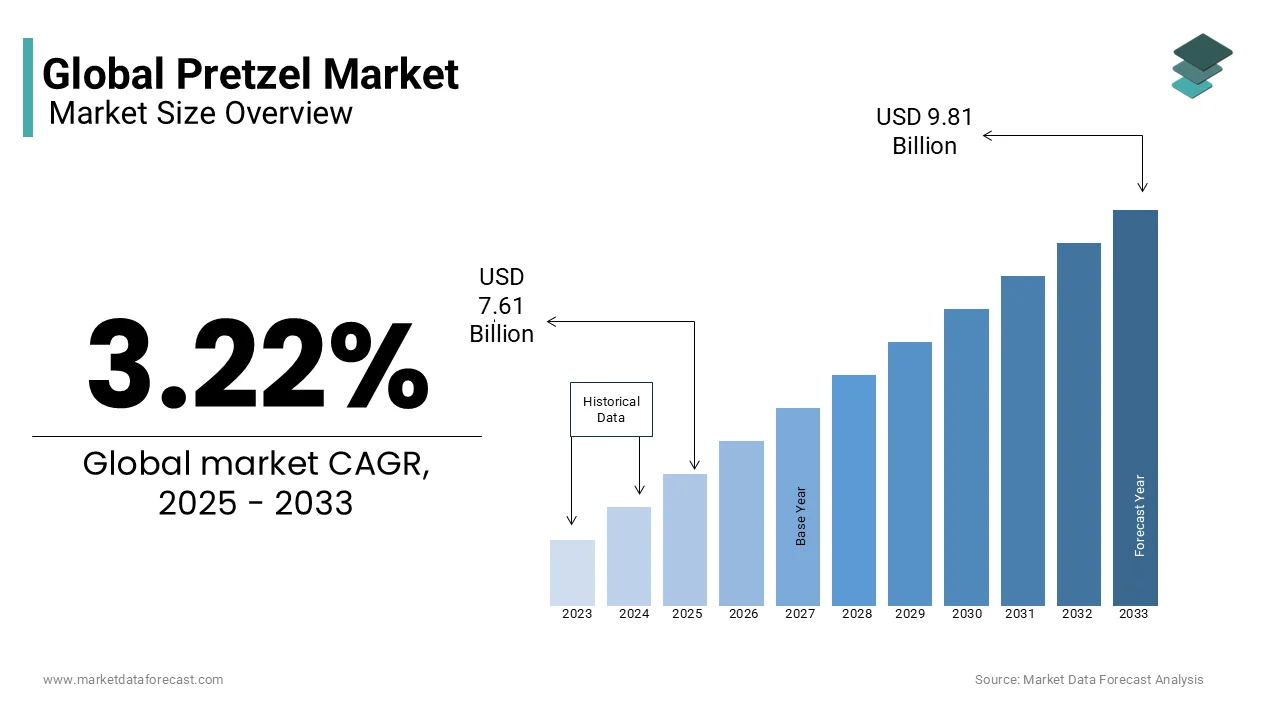
The global pretzel market was valued at USD 7.61 billion in 2025 and is estimated to reach USD 7.86 billion in 2026, and is projected to reach USD 10.13 billion by 2034, growing at a CAGR of 3.22% during the forecast period. Market growth is driven by increasing demand for convenient snack products, rising preference for savory snacks, and expanding retail availability. Pretzels are widely consumed due to their portability, variety of flavors, and suitability for on-the-go snacking. The growing popularity of healthier baked snack alternatives is further supporting steady market growth globally.
Key Market Trends
- Rising demand for convenient and ready to eat snacks is driving market growth.
- Increasing preference for savory and baked snack products is boosting demand.
- Growing innovation in flavors and healthier pretzel varieties is supporting market expansion.
- Expansion of supermarkets and organized retail channels is enhancing product availability.
- Rising consumer interest in low fat snack alternatives is influencing market trends.
Segmental Insights
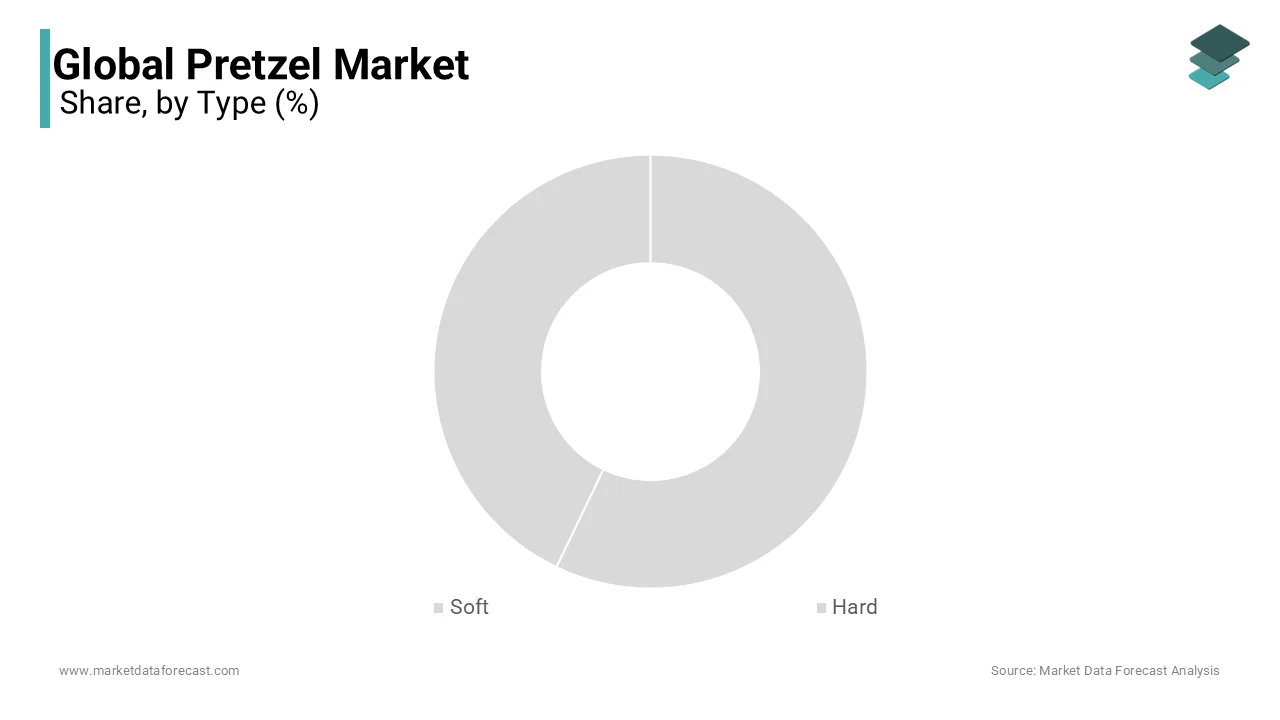
- Based on type, the hard pretzels segment accounted for 57.8% of the global pretzel market share in 2025. This dominance is attributed to their long shelf life, crunchy texture, and strong consumer preference.
- Based on content, the salted pretzels segment held a substantial share of the global pretzel market in 2025, driven by traditional taste preference and widespread availability.
- Based on distribution channel, the supermarkets and hypermarkets segment accounted for 51.4% of the global pretzel market share in 2025, supported by extensive product assortment and convenient purchasing options.
Regional Insights
- The global pretzel market is experiencing steady growth across regions, supported by rising snack consumption and retail expansion.
- North America was the largest contributor, accounting for 45.5% of the global pretzel market share in 2025, driven by strong snacking culture, established brands, and high consumer demand for savory snacks.
Competitive Landscape
The global pretzel market is highly competitive, with key players focusing on flavor innovation, product diversification, and expansion of retail distribution networks to strengthen their market position. Companies are investing in healthier snack formulations, branding strategies, and new product launches. Prominent players in the global pretzel market include Auntie Anne’s, Boulder Brands, ConAgra, Frito-Lay, Herr Foods, J & J Snacks, Mars, Mr. Pretzel, Pretzels Inc, and Snyder’s-Lance.
Global Pretzel Market Size
The Global Pretzel market size was calculated to be USD 7.61 billion in 2025 and is anticipated to be worth USD 10.13 billion by 2034 from USD 7.86 billion in 2026, growing at a CAGR of 3.22% during the forecast period
A pretzel is a type of baked pastry or snack bread, traditionally shaped into a distinctive, symmetrical, twisted knot. This market bridges the gap between traditional bakery items and convenient snack foods offering both soft chewy varieties and hard crunchy formats. The definition extends beyond simple retail sales to include food service applications in stadiums airports and quick service restaurants where pretzels serve as a popular accompaniment to beverages. According to the United States Department of Agriculture wheat remains the primary ingredient with annual domestic production exceeding 1.8 billion bushels ensuring a stable raw material base for manufacturers. The cultural significance of pretzels is deeply rooted in European traditions particularly in Germany and Austria but has evolved into a global phenomenon especially in North America. As per the National Association of Convenience Stores salty snacks constitute a significant portion of impulse purchases reflecting the role of pretzels in on the go consumption patterns. The market is influenced by shifting consumer preferences toward healthier snacking options leading to innovations in whole grain and reduced sodium formulations. The Food and Drug Administration regulations on labeling and nutritional content further shape product development strategies. This industry is characterized by a blend of artisanal craftsmanship and industrial scale production catering to diverse taste profiles ranging from classic salted to innovative flavored coatings. The versatility of pretzels allows them to be positioned as both a standalone snack and a component in broader meal solutions.
MARKET DRIVERS
Rising Demand for Convenient and Portable Snack Options
The increasing pace of modern life and the growing preference for on the go consumption have greatly driven the demand for pretzels as a convenient snack option, which in turn contributes to the growth of the pretzel market. Consumers across various demographics seek food items that are easy to carry require minimal preparation and provide immediate satiety. According to the International Labour Organization, while absolute working hours are stable or slightly declining in developed economies, the increasing irregularity of work schedules has significantly compressed the time allocated for traditional meal preparation, fueling the "snackification" of diets. This lifestyle constraint has fueled the growth of the ready to eat snack sector where pretzels hold a prominent position due to their portability and long shelf life. The National Retail Federation notes that convenience stores and vending machines have seen a steady increase in sales of packaged salty snacks including pretzels as consumers prioritize speed and accessibility. Soft pretzels have also gained traction in food service venues such as malls and transportation hubs where they are served fresh and warm appealing to shoppers looking for a quick comfort food fix. The versatility of pretzels allows them to be consumed at any time of day making them a versatile choice for breakfast lunch or dinner substitutes. Furthermore the rise of single serve packaging has enhanced their appeal among health conscious individuals who prefer portion controlled snacks. This alignment with contemporary lifestyle needs ensures that pretzels remain a staple in the snacking repertoire of busy consumers driving consistent volume growth in the market.
Innovation in Flavor Profiles and Product Diversification
Continuous innovation in flavor profiles and product diversification serves as a major growth enabler for the Pretzel Market. This attracts new consumer segments and encourages repeat purchases. Manufacturers are moving beyond traditional salted varieties to introduce exotic and bold flavors such as jalapeño cheddar cinnamon sugar and everything bagel seasoning. According to Mintel the launch of new snack products with unique and adventurous flavors has increased significantly as brands seek to differentiate themselves in a crowded marketplace. This trend is particularly evident among younger consumers who view snacking as an experiential activity rather than just a means of sustenance. The introduction of dipped pretzels coated with chocolate yogurt or caramel has expanded the market into the confectionery segment appealing to those with a sweet tooth. Additionally the development of gluten free and whole grain pretzels caters to specific dietary needs and health preferences broadening the consumer base. The Specialty Food Association highlights that artisanal and gourmet pretzels are gaining popularity as consumers seek higher quality and authentic ingredients. Collaborations with popular condiment brands have also led to limited edition flavors that create buzz and drive trial. These innovations not only refresh the product offering but also allow manufacturers to command premium prices. By constantly evolving the flavor landscape the industry maintains consumer interest and stimulates demand in a mature market.
MARKET RESTRAINTS
Health Concerns Regarding High Sodium and Refined Carbohydrates
Growing health consciousness among consumers hinders the expansion of the Pretzel Market. This is due to concerns regarding high sodium content and refined carbohydrates. Traditional pretzels are often perceived as unhealthy snacks due to their substantial salt levels which can contribute to hypertension and cardiovascular issues. According to the World Health Organization excessive sodium intake is a leading risk factor for high blood pressure affecting billions of people globally. In response many consumers are actively seeking low sodium alternatives or reducing their overall consumption of salty snacks. The Centers for Disease Control and Prevention reports that the majority of adults exceed the recommended daily limit for sodium primarily through processed and packaged foods. This public health narrative has led to increased scrutiny of snack food labels prompting some shoppers to avoid pretzels in favor of healthier options such as nuts seeds or fresh fruit. Although manufacturers have introduced reduced sodium varieties these products often face criticism for compromised taste and texture. The American Heart Association emphasizes the importance of reading nutrition labels and choosing foods with lower sodium content further influencing consumer behavior. Additionally the high glycemic index of refined flour used in standard pretzels is a concern for individuals managing diabetes or weight. These health perceptions create a barrier to growth as the market struggles to balance traditional taste expectations with evolving nutritional standards.
Competition from Alternative Salty Snacks and Healthy Substitutes
Intense competition from a wide array of alternative salty snacks and healthy substitutes restricts the growth potential of the Pretzel Market. Consumers today have access to an unprecedented variety of snack options including potato chips tortilla chips popcorn crackers and vegetable sticks which vie for shelf space and consumer attention. According to NielsenIQ the salty snack category is highly fragmented with new entrants constantly introducing innovative products that capture market share. Popcorn in particular has emerged as a strong competitor due to its perception as a whole grain and lower calorie alternative to pretzels. The Popcorn Board reports that popcorn consumption has risen steadily as it is marketed as a light and airy snack suitable for health conscious individuals. Additionally the rise of protein rich snacks such as beef jerky and roasted chickpeas appeals to fitness enthusiasts looking for functional benefits beyond simple satisfaction. Private label brands from major retailers also offer competitive pricing putting pressure on established pretzel brands to maintain margins. The abundance of choices empowers consumers to switch brands or categories easily based on price promotions or novelty factors. This saturated landscape makes it difficult for pretzel manufacturers to distinguish their products and sustain loyalty. The constant need to innovate and compete on multiple fronts erodes profitability and limits market expansion.
MARKET OPPORTUNITIES
Expansion into Premium and Artisanal Segments
The expansion into premium and artisanal segments offers a significant opportunity for the Pretzel Market. This caters to consumers who value quality, authenticity, and unique culinary experiences. There is a growing trend toward gourmet snacking where individuals are willing to pay higher prices for products made with high quality ingredients and traditional methods. According to the Specialty Food Association sales of specialty foods including artisanal baked goods have outpaced conventional food sales reflecting this shift in consumer preference. Artisanal pretzels often feature organic flour sea salt and creative toppings such as truffle oil aged cheeses or herbs which differentiate them from mass produced counterparts. Bakeries and local producers can leverage this trend by emphasizing hand crafted techniques and small batch production. The rise of food tourism and culinary exploration has also increased demand for authentic regional specialties including traditional German style pretzels. Retailers are responding by dedicating shelf space to premium snack aisles where artisanal pretzels can be showcased alongside other gourmet items. Online direct to consumer channels further enable niche brands to reach a wider audience without the constraints of physical retail distribution. By positioning pretzels as a sophisticated snack rather than a commodity manufacturers can tap into a lucrative market segment. This strategy not only enhances brand equity but also drives higher profit margins through value added offerings.
Growth in Food Service and On Premise Consumption
The growth in food service and on-premises consumption offers a substantial prospect for the pretzel market. This is particularly true in venues such as sports stadiums, bars, and entertainment centers. Soft pretzels are a popular concession item due to their ease of preparation strong aroma and appeal as a comfort food. According to the National Restaurant Association food service operators are increasingly incorporating signature snack items into their menus to enhance customer experience and drive incremental sales. The association of pretzels with beer and social gatherings creates a natural synergy in hospitality settings where they are often served with mustard or cheese dips. The expansion of fast casual dining concepts has also created opportunities for pretzel based meals such as pretzel sandwiches and burgers which appeal to customers seeking hearty and familiar flavors. Stadiums and arenas report high sales volumes of soft pretzels during events leveraging the captive audience and impulse buying behavior. Partnerships with major sports leagues and entertainment venues can provide significant exposure and brand visibility for pretzel manufacturers. Additionally the trend toward experiential dining encourages operators to offer customizable pretzel stations where customers can choose their own toppings and dips. This interactive element enhances engagement and drives repeat visits. By focusing on the food service channel the industry can capitalize on the social and communal aspects of pretzel consumption.
MARKET CHALLENGES
Volatility in Raw Material Costs and Supply Chain Disruptions
Volatility in raw material costs and supply chain disruptions is a major limitation for the Pretzel Market. This affects production efficiency and profit margins. The primary ingredients for pretzels including wheat flour salt and yeast are subject to price fluctuations driven by weather conditions geopolitical tensions and global demand. According to the Food and Agriculture Organization of the United Nations global food prices have experienced significant volatility in recent years with cereal prices rising due to supply chain bottlenecks and climate related crop failures. Extreme weather events such as droughts and floods in key wheat producing regions can lead to shortages and higher input costs for manufacturers. The World Bank highlights that inflation in food commodities has been a persistent issue forcing producers to either absorb costs or pass them on to consumers. When prices are increased demand elasticity may cause a decline in sales volume particularly among price sensitive segments. Additionally disruptions in logistics and transportation networks can delay the delivery of raw materials and finished goods impacting inventory management and shelf availability. The International Chamber of Commerce notes that non tariff barriers and regulatory changes further complicate international trade adding layers of complexity to supply chains. These challenges necessitate robust risk management strategies and diversified sourcing options which can be costly for smaller players. The inability to stabilize costs hinders long term planning and investment in innovation.
Regulatory Pressure on Labeling and Nutritional Content
Regulatory pressure on labeling and nutritional content obstructs the expansion of the pretzel market. Governments worldwide are implementing stricter guidelines to combat obesity and related health issues. Authorities are increasingly mandating clear and prominent disclosure of sodium sugar and calorie content on packaging to inform consumer choices. In the United States the Food and Drug Administration has updated nutrition facts labels to include added sugars and revised serving sizes which impacts how pretzels are marketed and perceived. Compliance with these evolving regulations requires significant investment in reformulation packaging redesign and legal consultation. The World Health Organization advocates for policies that reduce the availability of high salt snacks in schools and public institutions further restricting market access. Manufacturers must navigate a complex landscape of varying national and regional standards which increases operational complexity and costs. Failure to comply can result in fines product recalls and reputational damage. Additionally the push for front of pack labeling systems such as traffic light ratings may negatively impact the image of traditional pretzels if they are flagged as high in sodium. These regulatory hurdles force companies to continuously adapt their products and marketing strategies to remain compliant and competitive.
REPORT COVERAGE
| REPORT METRIC | DETAILS |
| Market Size Available | 2025 to 2034 |
| Base Year | 2025 |
| Forecast Period | 2026 to 2034 |
| CAGR | 3.22% |
| Segments Covered | By Type, Content, Distribution Channel And Region |
| Various Analyses Covered | Global, Regional and Country Level Analysis; Segment-Level Analysis; DROC; PESTLE Analysis; Porter’s Five Forces Analysis; Competitive Landscape; Analyst Overview of Investment Opportunities |
| Regions Covered | North America, Europe, APAC, Latin America, Middle East & Africa |
| Market Leaders Profiled | Auntie, AnnesBoulder Brands, ConAgra, Frito-Lay, Herr Foods, J & J Snacks, Mars, Mr. Pretzel, Pretzels Inc, Snyders-Lance. |
SEGMENTAL ANALYSIS
By Type Insights
The hard pretzels segment dominated the global Pretzel Market and accounted for a 57.8% share in 2025. This dominance of the segment is driven by its exceptional shelf stability and convenience which align perfectly with modern consumer lifestyles. The low moisture content of hard pretzels allows them to remain fresh for extended periods without the need for preservatives or refrigeration making them ideal for mass distribution and stockpiling. According to the United States Department of Agriculture the average shelf life of hard baked goods significantly exceeds that of soft variants reducing waste for both retailers and consumers. This durability makes hard pretzels a staple in pantry stocking behaviors particularly among families and bulk buyers. Hard pretzels are also less prone to damage during transportation compared to soft pretzels ensuring consistent product quality upon arrival at retail outlets. Their portability and ease of consumption without mess make them a preferred choice for on the go snacking in schools offices and outdoor activities. The versatility of hard pretzels allows them to be packaged in various sizes from single serve bags to large family packs catering to diverse consumption occasions. This combination of logistical efficiency and consumer convenience cements the dominance of hard pretzels in the market driving consistent volume sales across all distribution channels. The cost effectiveness and efficiency of mass production further solidify the leadership of hard pretzels in the Pretzel Market. Industrial baking processes for hard pretzels are highly automated allowing manufacturers to produce large volumes at lower unit costs compared to soft pretzels which often require more labor intensive handling and faster distribution cycles. According to the Bureau of Labor Statistics productivity in the commercial baking industry has increased due to technological advancements in mixing shaping and baking equipment specifically designed for dry goods. This economies of scale enables manufacturers to offer hard pretzels at competitive price points making them accessible to a broad demographic including price sensitive consumers. The ability to store raw materials and finished goods for longer periods reduces inventory holding costs and minimizes the risk of spoilage. The Food Marketing Institute highlights that private label hard pretzels are among the most profitable items for retailers due to their low procurement costs and high turnover rates. Additionally the standardization of hard pretzel shapes and sizes facilitates efficient packaging and stacking optimizing logistics and storage space. This operational efficiency translates into higher profit margins for producers and retailers encouraging widespread availability and promotional support. The affordability of hard pretzels ensures they remain a resilient category even during economic downturns when consumers seek value oriented snack options.
The soft pretzels segment is expected to exhibit a noteworthy CAGR of 5.8% between 2026 and 2034 due to the expansion of food service operations and the trend toward experiential dining. Unlike hard pretzels which are primarily retail products soft pretzels are heavily associated with immediate consumption in venues such as stadiums malls airports and quick service restaurants. According to the National Restaurant Association the food service sector has seen a resurgence in comfort food offerings with soft pretzels being a key item due to their warm texture and customizable toppings. The sensory appeal of freshly baked soft pretzels including their aroma and visual presentation drives impulse purchases among consumers seeking a premium snack experience. Major chains like Auntie Anne s and Pretzelmaker have expanded their footprint globally introducing innovative flavors and dipping sauces that enhance the perceived value of the product. The International Council of Shopping Centers reports that food court sales have increased as shoppers spend more time in malls seeking entertainment and dining experiences. Soft pretzels fit seamlessly into this environment offering a satisfying and shareable snack. The ability to serve soft pretzels warm and fresh creates a distinct advantage over packaged alternatives fostering customer loyalty and repeat visits. This focus on freshness and service drives the rapid growth of the soft pretzel segment. Innovation in gourmet flavors and the use of premium ingredients contribute significantly to the rapid growth of the soft pretzel segment. Manufacturers and food service operators are moving beyond traditional salted varieties to introduce artisanal options featuring ingredients such as jalapeño cheddar garlic parmesan and cinnamon sugar. According to Mintel the launch of new snack products with bold and unique flavors has increased as brands seek to differentiate themselves in a competitive market. Soft pretzels serve as an excellent canvas for these innovations due to their neutral base and ability to absorb flavors. The Specialty Food Association notes that consumers are increasingly willing to pay a premium for high quality and authentic ingredients driving demand for gourmet pretzel options. The integration of soft pretzels into meal solutions such as pretzel burgers and sandwiches has also expanded their usage occasions beyond snacking. This versatility appeals to younger demographics who view food as a form of self expression and social engagement. Social media platforms play a crucial role in promoting visually appealing pretzel creations driving viral trends and immediate consumer trial. The perception of soft pretzels as a customizable and indulgent treat enhances their appeal in the premium snack category. This continuous innovation and elevation of the product experience drive the exceptional growth trajectory of the soft pretzel segment.
By Content Insights
The salted pretzels segment led the pretzel market and captured a substantial share in 2025. This leading position of the segment is attributed to the enduring consumer preference for savory flavors and the role of salt in enhancing the taste and texture of the baked good. Salt is not only a flavor enhancer but also a critical component in the traditional pretzel making process contributing to the characteristic brown crust and chewy interior. The sensory satisfaction provided by the combination of salt and carbohydrates triggers reward pathways in the brain reinforcing habitual consumption. Salted pretzels are versatile and pair well with various dips and beverages making them a popular choice for social gatherings and sporting events. The ubiquity of salted pretzels in retail outlets ensures high visibility and accessibility driving consistent sales volume. Traditional brands leverage this familiarity to maintain brand loyalty among older demographics who grew up consuming these products. The simplicity of the salted variant also appeals to consumers seeking straightforward and recognizable snack options. This deep rooted cultural acceptance and sensory appeal sustain the leadership of salted pretzels in the global market. The functional role of salt in preservation and texture stability further supports the dominance of salted pretzels in the market. Salt acts as a natural preservative by reducing water activity which inhibits the growth of microorganisms and extends the shelf life of the product. Th stability is particularly important for hard pretzels which rely on a crisp texture for consumer acceptance. The presence of salt on the surface also provides a tactile contrast that enhances the eating experience. Retailers prefer salted pretzels due to their lower return rates and reduced waste compared to unsalted or lightly seasoned variants. The consistency in flavor and texture provided by standard salting levels ensures consumer satisfaction and repeat purchases. Manufacturing processes are optimized for salted pretzels allowing for efficient production and quality control. The widespread availability of iodized salt and other seasoning blends facilitates easy production scaling. This technical advantage combined with consumer expectation ensures that salted pretzels remain the default choice in the Pretzel Market driving the majority of volume sales.
The unsalted pretzels segment is predicted to witness the highest CAGR of 4.5% over the forecast period owing to increasing health consciousness and the demand for low sodium snack options. Consumers are actively seeking ways to reduce their daily sodium intake to manage blood pressure and improve overall cardiovascular health. Unsalted pretzels offer the same carbohydrate satisfaction and crunch without the added sodium making them an attractive option for health aware shoppers. Manufacturers are responding by clearly labeling unsalted products and marketing them as heart healthy choices. Dietitians and nutritionists often recommend unsalted pretzels as a safe snack for children and individuals with dietary restrictions. The availability of unsalted pretzels in health food stores and mainstream supermarkets has increased reflecting this growing demand. This alignment with public health guidelines and personal wellness goals drives the rapid adoption of unsalted pretzels. The versatility of unsalted pretzels in culinary applications and their suitability for specific dietary restrictions contribute to their rapid growth. Unsalted pretzels serve as a neutral base for various recipes allowing chefs and home cooks to control the seasoning levels in dishes such as pretzel crusted chicken or salad toppings. Additionally unsalted pretzels are suitable for individuals following strict low sodium diets due to medical conditions such as kidney disease or hypertension. Unsalted pretzels are also preferred by parents who wish to limit their children s sodium exposure from an early age. The rise of clean label trends encourages consumers to choose products with minimal additives and simple ingredient lists. Unsalted pretzels often fit this criterion appealing to those seeking pure and unprocessed food options. This functional and dietary versatility expands the consumer base for unsalted pretzels beyond traditional snackers driving sustained growth in this niche segment.
By Distribution Channel Insights
The supermarkets and hypermarkets segment held the majority share of 51.4% of the Pretzel Market in 2025. This supremacy of the segment is credited to its extensive product variety and the convenience of one stop shopping. These retail formats offer a wide range of pretzel types brands and flavors under one roof catering to diverse consumer preferences and budgets. The ability to compare prices read labels and select from multiple options enhances the shopping experience for value conscious consumers. Supermarkets often feature prominent displays and promotional offers on pretzels driving impulse purchases and volume sales. The organized layout and categorization of products in supermarkets make it easy for shoppers to locate specific items. Additionally the presence of private label brands alongside national brands provides options for different budget levels. The consistent stock levels and reliable supply chain of supermarkets ensure that pretzels are always available. This reliability builds consumer trust and loyalty. The integration of loyalty programs and digital coupons further incentivizes purchases in these channels. The dominance of supermarkets and hypermarkets is reinforced by their ability to meet the comprehensive needs of shoppers efficiently. The strong supply chain integration and competitive pricing strategies of supermarkets and hypermarkets significantly contribute to their dominance in the Pretzel Market. Large retail chains have established direct relationships with manufacturers and distributors allowing them to negotiate favorable terms and maintain low prices. Supermarkets leverage their purchasing power to offer discounts and bulk deals on pretzels attracting price sensitive shoppers. The efficient logistics networks of these retailers ensure timely replenishment of stocks reducing the risk of out of stock situations. This price competitiveness makes supermarkets the preferred channel for regular household purchases. Additionally the ability to launch store wide promotions and seasonal campaigns drives traffic and sales volume. The integration of online and offline channels through click and collect services further enhances convenience. Shoppers can order pretzels online and pick them up at the store combining digital ease with physical accessibility. This omnichannel approach strengthens the position of supermarkets as the leading distribution channel. The combination of low prices wide selection and operational efficiency sustains their market leadership.
The online retailers segment is estimated to register the fastest CAGR of 7.2% between 2026 and 2034. This rapid expansion of the segment is driven by increasing digital penetration and the convenience of home delivery. The proliferation of smartphones and high speed internet has made online grocery shopping accessible to a broader audience. Online platforms offer an extensive range of pretzel products including niche and international brands that may not be available in local stores. The ability to browse reviews and compare prices online empowers consumers to make informed decisions. Home delivery services eliminate the need for physical travel saving time and effort for busy individuals. This convenience is particularly valued by elderly consumers and those with limited mobility. The availability of subscription services for regular deliveries of staple items like pretzels further enhances customer retention. Online retailers often provide detailed product information and nutritional data aiding health conscious shoppers. The seamless integration of payment gateways and secure transactions builds trust in online shopping. This combination of accessibility variety and convenience drives the rapid expansion of online retailers in the Pretzel Market. Personalized recommendations and targeted marketing strategies employed by online retailers enhance consumer engagement and drive the rapid growth of this channel. E commerce platforms utilize data analytics to understand consumer preferences and browsing behavior allowing them to offer tailored product suggestions. Online stores send customized emails and notifications about discounts on preferred pretzel brands encouraging repeat purchases. The ability to create wish lists and save favorite items simplifies the shopping process for returning customers. Social media integration allows brands to reach potential buyers through targeted ads and influencer collaborations. Online retailers also offer bundled deals and cross selling opportunities based on purchase history increasing average order values. The transparency of online reviews and ratings helps build confidence in product quality. Additionally the ease of returning unsatisfactory items reduces purchase risk. These digital enhancements create a engaging and user friendly shopping experience. The focus on personalization and customer centric services distinguishes online stores from traditional retail channels. This strategic use of technology and data drives the exceptional growth of online retailers in the Pretzel distribution landscape.
REGIONAL ANALYSIS
North America Pretzel Market Analysis
North America was the top performer in the global Pretzel Market and accounted for a 45.5% share in 2025. This dominance of the North American market is propelled by driven by deep cultural integration and high per capita snack intake. The market status in this region is characterized by a mature consumer base that views pretzels as a staple snack rather than a novelty. The prevalence of hard pretzels in households and soft pretzels in food service venues ensures robust demand across all channels. Also, the region benefits from established manufacturing infrastructure and strong brand recognition among major players. Health trends are influencing product development with a rise in whole grain and reduced sodium options. The food service sector in stadiums and malls continues to drive soft pretzel sales. The market is highly competitive with intense rivalry among national and private label brands. Innovation in flavors and packaging keeps the category fresh. The strong retail network ensures widespread availability. North America remains the cornerstone of the global pretzel industry setting trends for other regions.
Europe Pretzel Market Analysis
Europe was the next prominent region in the global Pretzel Market and captured a 30.2% share in 2025. This growth of the European market is fuelled by its historical origins and traditional baking culture. The market status in this region is defined by a strong preference for fresh soft pretzels particularly in Germany Austria and Switzerland. The demand for artisanal and bakery fresh pretzels is high with consumers prioritizing quality and authenticity over packaged convenience. Retail sales of packaged hard pretzels are growing but remain secondary to fresh options. Health consciousness is driving demand for organic and whole grain varieties. The region benefits from strict food safety standards and high consumer trust in local products. Tourism also contributes to market growth as visitors seek traditional culinary experiences. The market is fragmented with many local players. Innovation focuses on premium ingredients and traditional recipes. Europe remains a key market for high quality and authentic pretzel products.
Asia Pacific Pretzel Market Analysis
Asia Pacific is an emerging region in the global Pretzel Market due to urbanization and the adoption of western snacking habits. The market status in this region is characterized by growing awareness of pretzels as a convenient and trendy snack among younger demographics. International brands are entering the market through partnerships with local distributors. The popularity of coffee culture in urban centers has boosted the consumption of soft pretzels in cafes. Retailers are expanding their imported snack sections offering a variety of pretzel flavors. The region faces challenges related to taste preferences as salty snacks compete with traditional local favorites. However the convenience of packaged pretzels appeals to busy urban professionals. E commerce is a key distribution channel reaching tech savvy consumers. The market is in early stages of development with significant growth potential. Education and marketing efforts are needed to build familiarity. Asia Pacific offers lucrative opportunities for expansion and innovation.
Latin America Pretzel Market Analysis
Latin America expanded steadily in the global Pretzel owing to increasing urbanization and the influence of north american food trends. The region is seeing gradual adoption of pretzels particularly in Brazil Mexico and Argentina where international fast food chains are prevalent. Pretzels are often positioned as premium imports catering to affluent urban consumers. Local manufacturers are beginning to produce pretzels to reduce costs and increase accessibility. The market faces competition from traditional salty snacks such as chips and crackers. However the uniqueness of the pretzel shape and texture offers differentiation. Retail expansion in modern trade formats is improving availability. The region benefits from a young population open to new food experiences. Economic volatility can impact discretionary spending on snacks. Despite challenges the market shows steady growth potential. Strategic marketing and localization of flavors can drive adoption. Latin America represents an opportunity for gradual market penetration.
Middle East and Africa Pretzel Market Analysis
The Middle East and Africa region is anticipated to grow notably in the global Pretzel Market from 2026 to 2034 due to niche consumption and import dependency. The market is primarily driven by expatriate communities and tourists in Gulf Cooperation Council countries where international food options are widely available. In the Middle East high disposable incomes support the purchase of imported gourmet snacks. Pretzels are found in upscale supermarkets and hotels. The region faces challenges related to limited local production and high import costs. However the growing hospitality sector creates demand for soft pretzels in hotels and restaurants. Awareness of pretzels is low among the general population. Opportunities exist in introducing pretzels as part of western style dining experiences. The market is small but offers potential for niche players. Focus on premium positioning and tourism sectors can drive growth. The region remains a minor but developing part of the global pretzel landscape.
COMPETITIVE LANDSCAPE
The competition in the global pretzel market is characterized by the presence of established multinational corporations and regional artisanal bakeries vying for dominance through product differentiation and brand loyalty. Major players leverage their extensive distribution networks and economies of scale to maintain strong market positions while smaller firms compete on quality and uniqueness. The market is moderately consolidated with key brands controlling significant shelf space in retail outlets. Innovation in flavors and healthy formulations serves as a primary differentiator attracting health conscious consumers. Price competitiveness remains crucial in the mass market segment forcing businesses to optimize costs. The rise of private label brands from major retailers intensifies pressure on branded manufacturers to justify premium pricing. Sustainability credentials and ethical sourcing are increasingly important for brand reputation. Regulatory compliance regarding food safety and labeling shapes competitive dynamics. Companies must continuously adapt to changing consumer trends and dietary preferences. The integration of digital sales channels offers new avenues for growth. Overall the market demands strategic agility and continuous innovation to sustain profitability amidst fluctuating raw material costs.
Key Market Players
Some of the major key players in the global pretzel market are
- Auntie Anne’s
- Boulder Brands
- ConAgra
- Frito-Lay
- Herr Foods
- J & J Snacks
- Mars
- Mr. Pretzel
- Pretzels Inc
- Snyder’s-Lance
Top Players in the Market
- J&J Snack Foods Corp is a leading manufacturer and distributor of branded snack foods with a dominant presence in the soft pretzel segment. The company owns the SuperPretzel brand which is widely recognized for its high quality frozen soft pretzels available in retail and food service channels. Recent strategic initiatives include expanding production capacity to meet growing demand and introducing new flavor variations such as cinnamon sugar and jalapeño cheese. J&J has also invested in sustainable packaging solutions to align with environmental goals. The company strengthens its market position through partnerships with major retailers and convenience store chains ensuring widespread product availability. Their focus on innovation and operational efficiency drives consistent growth. J&J leverages strong brand equity and extensive distribution networks. As a result, they maintain a competitive edge in the global pretzel market.
- Auntie Anne s International LLC is a prominent player in the global pretzel market specializing in freshly baked soft pretzels served through a vast franchise network. The company operates thousands of locations worldwide offering a variety of pretzel products including dips and combos. Recent actions to strengthen its market position include expanding into international markets such as Asia and the Middle East through strategic franchising agreements. Auntie Anne s has also launched digital ordering platforms and loyalty programs to enhance customer engagement and retention. The company focuses on menu innovation by introducing limited time offers and seasonal flavors to drive foot traffic. Their commitment to quality and customer service reinforces brand loyalty. Auntie Anne's continues to grow its global footprint by adapting to local tastes and leveraging technology. This approach allows the brand to maintain leadership in the food service pretzel segment.
- Snyder s Lance Inc is a major competitor in the global pretzel market known for its diverse portfolio of salty snacks including hard pretzels under brands like Snyder s of Hanover and Lance. The company serves both retail and food service sectors with a wide range of products catering to different consumer preferences. Recent efforts to strengthen its market position include acquiring complementary brands to expand product offerings and entering new geographic markets. Snyder s Lance has invested in supply chain optimization to improve efficiency and reduce costs. The company also focuses on health conscious innovations by introducing whole grain and reduced sodium options. Marketing campaigns emphasize the heritage and quality of their pretzels appealing to traditional consumers. Snyder's-Lance balances innovation with core brand values. By doing so, it sustains its competitive position in the global snack industry.
Top Strategies Used by Key Market Participants
Key players in the Pretzel Market predominantly employ product innovation and channel expansion to maintain competitive advantage. Companies introduce new flavors and formats such as gluten free or organic variants to cater to evolving consumer preferences. Strategic partnerships with food service providers and retail chains ensure broad distribution and visibility. Investment in digital marketing and e commerce platforms enhances direct to consumer sales and brand engagement. Sustainability initiatives including eco friendly packaging and responsible sourcing appeal to environmentally conscious shoppers. Mergers and acquisitions enable consolidation and access to new technologies or geographic regions. Pricing strategies focus on value offerings to attract price sensitive consumers while premium lines target niche segments. These multifaceted strategies ensure resilience and growth in the dynamic global pretzel sector.
MARKET SEGMENTATION
This research report on the global pretzel market has been segmented and sub-segmented based on type, content, distribution channel & region.
By Type
- Soft
- Hard
By Content
- Unsalted Pretzels
- Salted Pretzels
By Distribution Channel
- Convenience Stores
- Supermarkets
- Hypermarkets
- Online Retailers
- Specialist Retailers
- Other Distribution Channels
By Region
- North America
- Europe
- Asia-Pacific
- Latin America
- Middle East and Africa