- Product Description Description
- Table of Contents TOC
- List of Table & Figure LOT
- Get Free Sample PDF Sample PDF
Market Size, 2025
$849 MnMarket Estimate, 2026
$887.2 MnMarket Forecast, 2034
$1261.7 MnCAGR, 2026–2034
4.5%Global Rice Flour Market Size, Growth, Trends & Forecast (2026–2034)
The global rice flour market size was valued at USD 849.04 million in 2025, is anticipated to reach USD 887.25 million in 2026, and is projected to scale to USD 1,261.76 million by 2034, expanding at a compound annual growth rate (CAGR) of 4.50% during the forecast period from 2026 to 2034. Market expansion is primarily driven by the escalating prevalence of celiac disease and gluten intolerance, rising demand for clean-label and natural food ingredients, and the continuous expansion of ready-to-eat convenience food sectors.
Key Executive Metrics (At-a-Glance)
- 2025 Base Valuation: USD 849.04 Million
- 2026 Current Valuation: USD 887.25 Million
- 2034 Forecast Valuation: USD 1,261.76 Million
- Compound Annual Growth Rate (CAGR): 4.50% (2026–2034)
- Leading Regional Market: Asia-Pacific (accounting for 60.3% of the global market share in 2025 due to traditional dietary habits, high domestic rice production, and massive consumption bases)
- Key Geographic Regions Covered: North America, Europe, Asia-Pacific, Latin America, and Middle East & Africa
Core Market Drivers & Opportunities
- Gluten-Free Dietary Shifts: Increasing diagnoses of celiac disease and non-celiac gluten sensitivity boosting demand for safe, wheat-alternative baking and snack ingredients.
- Clean Label and Organic Preferences: Growing consumer preference for single-ingredient, unprocessed, non-GMO, and additive-free food components.
- Convenience Food Evolution: Rapid urbanization and hectic lifestyles accelerating the application of rice flour in ready-to-eat instant meals, snacks, and bakery goods.
Primary Market Restraints & Challenges
- Arsenic Accumulation Concerns: Naturally occurring arsenic absorption in rice plants leading to strict regulatory caps and consumer safety hesitancy.
- High Glycemic Index (GI): Elevated carbohydrate digestion rates in white rice flour posing metabolic hurdles for diabetic and health-conscious consumer segments.
- Raw Material Price Volatility: Climate-driven weather extremities (floods/droughts) disrupting raw paddy yields and creating supply chain instability.
Market Segmentation
| Segment Category | Largest Segment | Fastest-Growing Segment |
|---|---|---|
| By Product Type | White Rice Flour (Holding 55.4% market share in 2025 due to fine texture, neutral flavor, and high cost-effectiveness) | Brown Rice Flour (Projected at a CAGR of 7.8% driven by whole-grain health awareness and higher dietary fiber) |
| By Application | Rice Noodle and Rice Pasta (Accounted for 35.4% market share in 2025 anchored by robust Asian culinary traditions) | Bakery and Bread Products (Projected at a CAGR of 8.5% from 2026–2034 driven by rising gluten-free home baking and commercial production) |
Major Industry Players Profiled
Key global market leaders shaping the rice flour ecosystem include Ebro Foods S.A., Archer Daniels Midland Company (ADM), Ingredion Incorporated, Burapa Prosper, Thai Flour Industry, Ardent Mills Canada, ConAgra Foods Inc., Koda Farms, Associated British Foods plc, General Mills Inc., and Pornkamon Rice Flour Mills.
Global Rice Flour Market Size
The global rice flour market size was valued at USD 849.04 million in 2025. The global market size is expected to reach USD 1,261.76 million in 2034 from USD 887.25 million in 2026, with a CAGR of 4.50% in the forecast period 2026 to 2034.

The rice flour is fine powder derived from milled rice grains serving as a fundamental ingredient in both culinary and industrial applications. This versatile product is categorized primarily into white rice flour and brown rice flour with the latter retaining the bran layer for enhanced nutritional value. Rice flour acts as a critical alternative to wheat flour particularly for individuals requiring gluten free diets due to celiac disease or gluten sensitivity. It is extensively utilized in baking noodles snacks and as a thickening agent in sauces and soups. According to the Food and Agriculture Organization of the United Nations, global rice production reached approximately 515 million metric tons in 2023 establishing a robust raw material base for flour manufacturing. Furthermore, as per the World Health Organization the prevalence of celiac disease affects roughly 1% of the global population driving consistent demand for safe gluten free alternatives. The Asia Pacific region remains the dominant producer and consumer leveraging traditional dietary habits that incorporate rice as a staple. In Europe and North America rising health consciousness and lifestyle diseases such as diabetes are accelerating the adoption of rice flour. The market dynamics are influenced by technological advancements in milling processes which improve texture and shelf life.
MARKET DRIVERS
Surging Prevalence of Gluten Intolerance and Celiac Disease Fuels Demand for Safe Alternatives
The increasing diagnosis of celiac disease and non-celiac gluten sensitivity is elevating the growth of rice flour market. Consumers diagnosed with these conditions must strictly avoid gluten containing grains, such as wheat barley and rye making rice flour an ideal substitute due to its naturally gluten free composition. According to the Celiac Disease Foundation, approximately 1 in 100 people worldwide suffer from celiac disease with many cases remaining undiagnosed. This substantial patient pool creates a steady and growing demand for certified gluten free products. Rice flour is preferred for its neutral flavor and ability to mimic the texture of wheat flour in baked goods when combined with other starches. Retailers are expanding their gluten free sections to accommodate this shift offering a wide variety of rice flour-based products. Manufacturers are obtaining rigorous certifications to assure consumers of product safety and purity. The emotional and physical relief provided by gluten free options fosters strong brand loyalty.
Rising Consumer Preference for Clean Label and Natural Ingredients in Food Production
The modern consumers are increasingly scrutinizing food labels seeking products with minimal processing and recognizable ingredients, which is additionally elevating the growth of rice flour market. Rice flour aligns perfectly with the clean label trend as it is a single ingredient product free from artificial additives and preservatives. As per the study, sales of clean label packaged foods grew by 12% annually in recent years. Rice flour serves as an effective anti caking agent and texture enhancer in snacks confectionery and dairy products. Its versatility allows it to be used in baby foods where safety and simplicity are paramount. Parents prefer rice flour for infant nutrition due to its easy digestibility and low allergenic potential. The cosmetic industry also utilizes rice flour for its oil absorbing and soothing properties in natural skincare formulations. Brands leverage the natural image of rice flour to enhance product appeal and justify premium pricing. Regulatory support for transparent labeling further encourages this trend. As the demand for wholesome and unprocessed foods intensifies rice flour remains a key ingredient for manufacturers aiming to meet consumer expectations for purity and health.
MARKET RESTRAINTS
Health Concerns Regarding Arsenic Accumulation in Rice Based Products Limit Consumer Confidence
The growing concern over arsenic levels in rice and its derivatives is restricting the growth of rice flour market. Rice plants absorb arsenic from soil and water more readily than other crops leading to potential accumulation in the grain. According to the European Food Safety Authority, inorganic arsenic is a known carcinogen and chronic exposure poses health risks particularly to infants and young children. This has led to stricter regulatory limits in several countries including the European Union which set maximum levels for inorganic arsenic in rice intended for infants. Consumer awareness of these risks has resulted in hesitancy among parents and health-conscious buyers. Some healthcare providers recommend limiting rice flour consumption in favor of alternative gluten free flours such as oat or almond flour. Manufacturers face increased costs for testing and sourcing low arsenic rice varieties to comply with regulations. Negative media coverage regarding arsenic content can damage brand reputation and reduce sales. The industry must invest in advanced milling techniques that remove arsenic rich outer layers without compromising nutritional value.
High Glycemic Index of White Rice Flour Poses Challenges for Diabetic and Health Conscious Consumers
The high glycemic index GI of white rice flour with adoption among diabetic patients and individuals managing blood sugar levels is also impeding the growth of rice flour market. White rice flour is rapidly digested and absorbed leading to sharp spikes in blood glucose which is detrimental to metabolic health. According to the American Diabetes Association foods with a high GI can increase the risk of type 2 diabetes and cardiovascular complications. Data from Harvard T.H. Chan School of Public Health shows that white rice flour has a GI value of approximately 95 which is significantly higher than whole wheat or legume based flours. This nutritional profile limits its appeal to the growing segment of health conscious consumers seeking low GI options. While brown rice flour offers a lower GI it still falls within the moderate range and may not suit strict dietary requirements. Competitors such as chickpea almond and coconut flours offer lower carbohydrate and higher protein alternatives gaining market share. Manufacturers struggle to balance texture and taste while reducing the glycemic impact of rice flour. Reformulation efforts often require blending with fiber rich ingredients which can alter product characteristics.
MARKET OPPORTUNITIES
Expansion of Ready to Eat and Convenience Food Segments Creates New Application Avenues
The rapid growth of the ready to eat RTE and convenience food sectors is certainly to create new opportunity for the growth of rice flour market. Urbanization and busy lifestyles have increased demand for quick meal solutions such as instant noodles rice cakes and frozen snacks. Rice flour is a key ingredient in producing gluten free crackers crisps and extruded snacks that cater to health aware shoppers. Manufacturers are innovating with rice flour-based pasta and pizza crusts to provide familiar comfort foods with a healthier profile. The versatility of rice flour allows it to be used in batter coatings for fried foods providing a crisp texture without gluten. Investment in advanced extrusion technologies enables the creation of novel textures and shapes enhancing consumer appeal. Private label brands are increasingly incorporating rice flour into their convenience ranges to capture value conscious buyers. The expansion of e-commerce platforms facilitates the distribution of specialized rice flour products to wider audiences.
Growing Demand for Organic and Non GMO Rice Flour in Premium Market Segments
The increasing consumer preference for organic and non-genetically modified organism Non-GMO products is additionally to elevate the growth of rice flour market. Shoppers are willing to pay a premium for rice flour that is certified organic ensuring it is free from synthetic pesticides and fertilizers. Data from the Organic Trade Association indicates that organic food sales in North America exceeded 60 billion USD with grains and flours being a significant category. Organic rice flour appeals to environmentally conscious consumers who prioritize ecological balance and soil health. Non GMO verification further enhances trust among buyers concerned about genetic engineering in food supplies. Retailers are dedicating shelf space to organic flour blends featuring rice as a primary component. Specialty stores and online marketplaces facilitate access to niche organic brands. Manufacturers are partnering with certified organic farmers to secure reliable supply chains. The transparency offered by blockchain technology allows consumers to trace the origin of their rice flour. As awareness of environmental impacts grows the demand for certified organic rice flour will continue to rise.
MARKET CHALLENGES
Volatility in Raw Material Prices Due to Climate Change and Supply Chain Disruptions
The price volatility in raw rice supplies caused by climate change and logistical disruptions is acting as a barrier for the growth of rice flour market. Rice cultivation is highly sensitive to weather conditions requiring specific temperatures and water availability. According to the Intergovernmental Panel on Climate Change, extreme weather events such as droughts and floods are becoming more frequent threatening crop yields. These fluctuations lead to unpredictable pricing for millers and manufacturers affecting profit margins. Supply chain bottlenecks exacerbated by geopolitical tensions and fuel cost increases further complicate procurement. Port congestion and shipping delays result in longer lead times and higher inventory costs. Small scale farmers who produce a significant portion of the world’s rice lack resources to adapt to climate stressors. This vulnerability translates into inconsistent supply quality and quantity for industrial buyers. Manufacturers struggle to maintain stable pricing for end consumers amidst rising input costs. Hedging strategies are complex and often inaccessible for smaller players.
Intense Competition from Alternative Gluten Free Flours Limits Market Penetration
The intense competition from a diverse array of alternative gluten free flours, such as almond coconut chickpea and quinoa flour is also to pose as a major challenge for the growth of rice flour market. These alternatives often offer superior nutritional profiles including higher protein fiber and healthy fats compared to rice flour. Consumers seeking low carbohydrate and keto friendly diets prefer these alternatives due to their lower glycemic impact. The distinct flavors and textures of alternative flours appeal to adventurous cooks and bakers looking for variety. Rice flour is often perceived as bland or gritty requiring blending with other starches to achieve desirable results. This perception limits its standalone appeal in premium baking segments. Manufacturers of alternative flours invest heavily in marketing emphasizing health benefits and sustainability. Retailers allocate limited shelf space to a wide variety of gluten free options diluting the visibility of rice flour. Price competitiveness also varies with some alternative flours becoming more affordable due to scaled production.
REPORT COVERAGE
| REPORT METRIC | DETAILS |
| Market Size Available | 2025 to 2034 |
| Base Year | 2025 |
| Forecast Period | 2026 to 2034 |
| CAGR | 4.50% |
| Segments Covered | By Product Type, Application, and Region |
| Various Analyses Covered | Global, Regional and Country Level Analysis; Segment-Level Analysis; DROC; PESTLE Analysis; Porter’s Five Forces Analysis; Competitive Landscape; Analyst Overview of Investment Opportunities |
| Regions Covered | North America, Europe, APAC, Latin America, Middle East & Africa |
| Market Leaders Profiled | Burapa Prosper, Archer Daniels Midland Company, Thai Flour Industry, Ardent Mills Canada, Rose Brand, ConAgra Foods, Inc, Koda Farms, Associated British Foods plc, Lieng Tong, General Mills Inc, Pornkamon Rice Flour Mills |
SEGMENTAL ANALYSIS
By Product Type Insights
The white rice flour segment was the largest by holding 55.4% of the global rice flour market share in 2025 with its neutral flavor profile fine texture and widespread availability which make it the preferred base for gluten free formulations. The food industry extensively utilizes white rice flour in the production of snacks cereals and baby foods because of its high digestibility and low allergenic potential. Its long shelf life and stability during storage further enhance its appeal to manufacturers seeking consistent supply chains. The cost effectiveness of white rice flour compared to specialty flours allows it to penetrate mass market segments effectively. Retailers stock white rice flour prominently due to its high turnover rates and broad consumer acceptance. The established infrastructure for milling and distributing white rice ensures reliable availability across global markets.
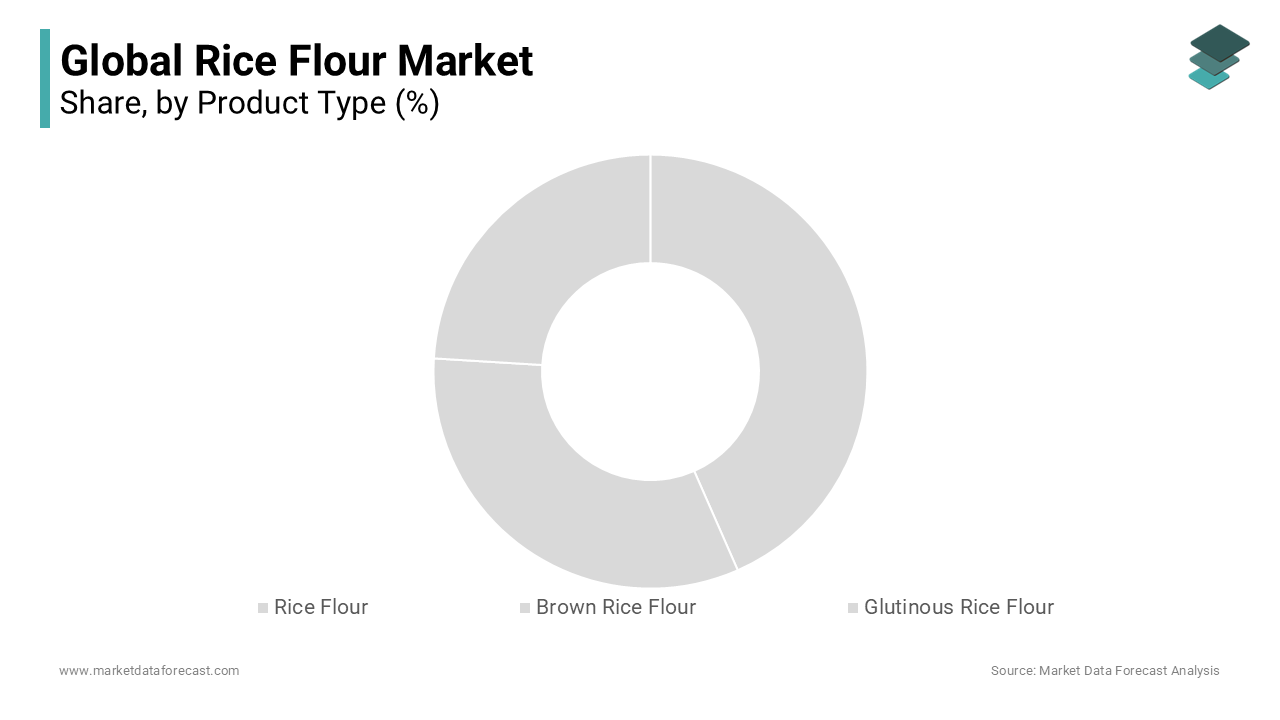
The brown rice flour segment is projected to witness a fastest CAGR of 7.8% during the forecast period with increasing consumer awareness of the nutritional benefits associated with whole grains including higher fiber protein and antioxidant content. Data from the International Food Information Council reveals that 45% of consumers actively seek whole grain ingredients to improve their dietary health. Brown rice flour is particularly popular among individuals managing diabetes and cardiovascular conditions due to its lower glycemic index compared to white rice flour. The rise of clean label trends encourages manufacturers to replace refined flours with nutrient dense alternatives. Retailers are expanding their health food aisles to include organic and stone ground brown rice flour varieties. The versatility of brown rice flour in baking smoothies and energy bars appeals to fitness enthusiasts. Social media influencers promote brown rice flour as a superfood ingredient driving trial among younger demographics. As scientific evidence supporting the health benefits of whole grains accumulates consumer preference shifts towards brown rice flour.
By Application Insights
The rice noodle and rice pasta segment was accounted in holding 35.4% of the rice flour market share in 2025 with the culinary traditions of Asia where rice noodles are a staple food item. According to the ASEAN Food Federation rice noodle consumption in Southeast Asia exceeds 10 kilograms per capita annually. The globalization of Asian cuisine has introduced rice noodles to Western markets where they are appreciated for their gluten free status and unique texture. Data from the National Restaurant Association shows that Asian inspired dishes featuring rice noodles are among the top trending menu items in the United States. The convenience of dried rice noodles appeals to busy consumers seeking quick meal solutions. Manufacturers offer various shapes and widths to suit different culinary applications from stir fries to soups. The rise of e commerce facilitates the distribution of authentic Asian ingredients to international customers. Retailers dedicate significant shelf space to rice noodle brands reflecting steady demand. The versatility of rice pasta as a wheat alternative in Italian style dishes further broadens its appeal. Health conscious consumers prefer rice pasta for its lighter digestibility.
The bakery and bread products segment is expected to grow at a fastest CAGR of 8.5% from 2026 to 2034. The rising demand for gluten free baked goods driven by celiac disease and lifestyle choices is one of the major factors boosting the growth of segment. According to the Celiac Disease Foundation, the number of diagnosed cases has increased significantly prompting a surge in gluten free bread and cake consumption. The pandemic induced home cooking revival further accelerated this trend as consumers experimented with alternative flours. Rice flour is a key ingredient in gluten free flour blends providing structure and lightness to baked goods. Manufacturers are innovating with pre mixed rice flour blends that simplify the baking process for amateurs. Social media platforms feature numerous recipes using rice flour inspiring consumers to try homemade breads and pastries. Retailers expand their gluten free bakery sections to accommodate diverse preferences. The improvement in taste and texture of rice flour based products through advanced formulation techniques enhances consumer satisfaction.
REGIONAL ANALYSIS
Asia Pacific Rice Flour Market Analysis
Asia Pacific was the out performer in the global rice flour market by accounting for 60.3% of share in 2025. The region's dominance is driven by its status as the primary producer and consumer of rice globally. According to the Food and Agriculture Organization of the United Nations Asia produces over 90% of the world's rice ensuring abundant raw material availability. Traditional dietary habits in countries like China India Thailand and Vietnam incorporate rice flour in noodles dumplings and desserts. Urbanization leads to increased consumption of convenience foods such as instant noodles and snacks. Government initiatives to support rice milling infrastructure enhance production efficiency. The presence of major rice exporting nations facilitates robust trade networks within the region. Cultural festivals and religious ceremonies drive seasonal spikes in rice flour consumption. Local manufacturers innovate with value added products to capture domestic markets. The growing middle class seeks premium and organic rice flour options.
North America Rice Flour Market Analysis
North America rice flour market was positioned second by holding 15.3% of share in 2025 with high health consciousness and a significant prevalence of gluten related disorders. According to the study, millions of Americans follow a strict gluten free diet driving demand for alternative flours. The well-developed retail infrastructure ensures widespread availability of diverse rice flour products. Major food companies invest in research and development to improve the functionality of rice flour in baking. The trend towards clean label and natural ingredients supports market growth. E commerce platforms facilitate direct to consumer sales of specialty rice flours. Regulatory standards for gluten free labeling build consumer trust. The popularity of Asian cuisine introduces rice noodles and snacks to broader audiences. Innovation in sports nutrition and baby food sectors creates new application avenues. North America remains a key driver of premium and functional rice flour trends.
Europe Rice Flour Market Analysis
Europe rice flour market growth is likely to grow with the strict food safety regulations and growing demand for organic products. Consumer awareness of celiac disease and gluten sensitivity is high particularly in Western Europe. Retailers focus on sustainability and ethical sourcing appealing to conscious consumers. The rise of vegan and plant-based diets supports the use of rice flour in dairy alternatives. Cross border trade within the EU facilitates market expansion. Manufacturers invest in local processing to reduce carbon footprints. The emphasis on quality and transparency ensures long term loyalty.
Latin America Rice Flour Market Analysis
Latin America rice flour market growth is likely to grow with the strong tradition of rice consumption in daily meals. According to the study, food security initiatives support local rice production. Brazil and Mexico are the largest markets driven by population size. Data from Nielsen shows that sales of rice based snacks are growing in urban areas. Affordability is a key factor influencing purchasing decisions. Local brands dominate the market with competitive pricing. The rise of modern retail formats enhances distribution. Health trends are emerging but price sensitivity remains high. Manufacturers are focusing on cost efficiency. The potential for growth lies in expanding processed food applications.
Middle East and Africa Rice Flour Market Analysis
The Middle East and Africa rice flour market growth is driven by urbanization and changing dietary habits. According to the survey, rice consumption is increasing as a staple food. The Gulf Cooperation Council countries are the primary markets due to higher income levels. Data from Euromonitor indicates that imports of specialty flours are rising. Traditional uses in confectionery and thickening agents support demand. Local production is limited leading to reliance on imports. International brands are expanding their presence. Retail infrastructure is improving with the growth of supermarkets. E commerce is nascent but growing. Price sensitivity varies across the region. Supply chain challenges persist in some African countries. The young population demographic supports long term growth. The region offers untapped opportunities for market entry.
COMPETITIVE LANDSCAPE
The Rice Flour Market features a fragmented competitive landscape with a mix of large multinational corporations and numerous regional millers. Major companies leverage economies of scale and extensive distribution networks to maintain dominance while smaller entities focus on niche segments such as organic or artisanal flours. Innovation serves as a critical differentiator with firms continuously improving texture and functionality to compete with wheat flour. Price competition remains significant particularly in commodity segments where margins are thin. Strategic alliances and joint ventures are common as companies seek to secure raw material supplies and access new technologies. Sustainability has emerged as a key competitive factor with brands emphasizing ethical sourcing and environmental responsibility. Regulatory compliance regarding food safety and labeling standards adds complexity to operations. The rise of private label brands in retail channels poses a challenge to established names. Companies must balance cost efficiency with quality assurance to retain customer loyalty.
KEY MARKET PLAYERS
Major Key Players in the Global Rice Flour Market are
- Burapa Prosper
- Archer Daniels Midland Company
- Thai Flour Industry
- Ardent Mills Canada
- Rose Brand
- ConAgra Foods Inc
- Koda Farms
- Associated British Foods plc
- Lieng Tong
- General Mills Inc
- Pornkamon Rice Flour Mills
Top Players in the Market
- Ebro Foods S.A. stands as a global leader in the rice sector with extensive operations in milling and distribution. The company manages a diverse portfolio of rice brands and supplies high quality rice flour to industrial and retail markets worldwide. Recent strategic initiatives include expanding its production capacity in key regions to meet rising demand for gluten free products. Ebro Foods invests heavily in sustainable farming practices and water conservation technologies to ensure long term resource availability. The corporation focuses on innovation by developing specialized rice flour blends for bakery and baby food applications. Its commitment to quality and sustainability reinforces its position as a key player in the global rice flour market.
- ADM is a major global agricultural processor and food ingredient provider with a significant presence in the rice flour segment. The company leverages its vast network to source premium rice grains and process them into fine flours for various industries. ADM focuses on product innovation by creating functional rice flour ingredients that improve texture and nutritional value in food formulations. Recent actions include investing in advanced milling technologies to enhance efficiency and reduce environmental impact. The company collaborates with food manufacturers to develop customized solutions for gluten free and clean label products. ADM emphasizes transparency and traceability in its supply chain to build trust with customers. Its robust infrastructure and global reach ensure consistent delivery of high quality rice flour products to clients worldwide.
- Ingredion Incorporated is a leading ingredient solutions provider that offers a wide range of rice flour products for food and industrial applications. The company utilizes its expertise in starch technology to create specialized rice flours with improved functionality and performance. Ingredion focuses on meeting consumer demands for clean label and plant based ingredients through continuous research and development. Recent strategies include expanding its portfolio of organic and non GMO rice flour options to cater to health conscious markets. The company invests in sustainable sourcing programs to support farmers and reduce its carbon footprint. Ingredion collaborates with customers to co create innovative formulations that enhance product appeal.
Top Strategies Used by the Key Market Participants
Key players in the Rice Flour Market primarily focus on product innovation and diversification to meet evolving consumer preferences. Companies invest in developing specialized blends and functional ingredients that enhance texture and nutritional value in gluten free applications. Strategic expansions into emerging markets enable firms to tap into growing demand for rice based products. Sustainability initiatives including responsible sourcing and eco friendly processing are central to corporate strategies. Digital transformation enhances supply chain transparency and operational efficiency. Partnerships with food manufacturers facilitate the development of customized solutions for specific dietary needs. Cost optimization through advanced milling technologies improves margins.
MARKET SEGMENTATION
This research report on the global Rice Flour Market has been segmented and sub-segmented based on Product Type, Application & region.
By Product Type
- Rice Flour
- Brown Rice Flour
- Glutinous Rice Flour
- Others
By Application
- Rice Noodle
- Rice Pasta
- Sweets and Desserts
- Snacks
- Bakery and Bread Products
- Thickening Agent
- Animal Feed
- Pet Food
- Non-Food
By Region
- North America
- Europe
- The Asia Pacific
- Latin America
- The Middle East and Africa