- Product Description Description
- Table of Contents TOC
- List of Table & Figure LOT
- Get Free Sample PDF Sample PDF
Market Size, 2025
$21.02 BnMarket Estimate, 2026
$22.3 BnMarket Forecast, 2034
$35.81 BnCAGR, 2026–2034
6.1%Global Salad Dressings and Mayonnaise Market Summary
The global salad dressings and mayonnaise market was valued at USD 21.02 billion in 2025 and is projected to reach USD 35.81 billion by 2034, growing at a CAGR of 6.1% from 2026 to 2034. With a forecasted market size of USD 22.30 billion in 2026, the industry is poised for steady and healthy growth, driven by rising consumer demand for convenient, flavorful, and ready-to-use condiments, increasing health consciousness, and the growing popularity of salads and fast food globally.
The salad dressings and mayonnaise market encompasses a wide range of emulsified sauces and flavor enhancers used in daily cooking, foodservice, and processed foods. These include traditional and flavored mayonnaise, vinaigrettes, creamy dressings, ranch, Caesar, and specialty variants such as organic, low-fat, plant-based, and clean-label formulations. The products are widely used in households, restaurants, and ready-to-eat meals.
Key Market Trends
- Rising demand for clean-label, non-GMO, and allergen-free salad dressings and mayonnaise is reshaping product development.
- Growth in plant-based and vegan mayonnaise (e.g., egg-free formulations using aquafaba or oils) is attracting health- and sustainability-conscious consumers.
- Expansion of e-commerce and organized retail is improving accessibility and variety for consumers worldwide.
- Increasing use of dressings and mayonnaise in fusion cuisines and street food is boosting consumption in emerging markets.
Key Market Insights
- Based on type, the mayonnaise segment dominated the market in 2025, capturing 53.9% of the global share, owing to its versatile use in sandwiches, burgers, dips, and salads, as well as strong brand loyalty and widespread availability.
- Based on application, the daily use segment led the market with a 56.6% share in 2025, reflecting the integration of dressings and mayonnaise into routine meals across both home and commercial kitchens.
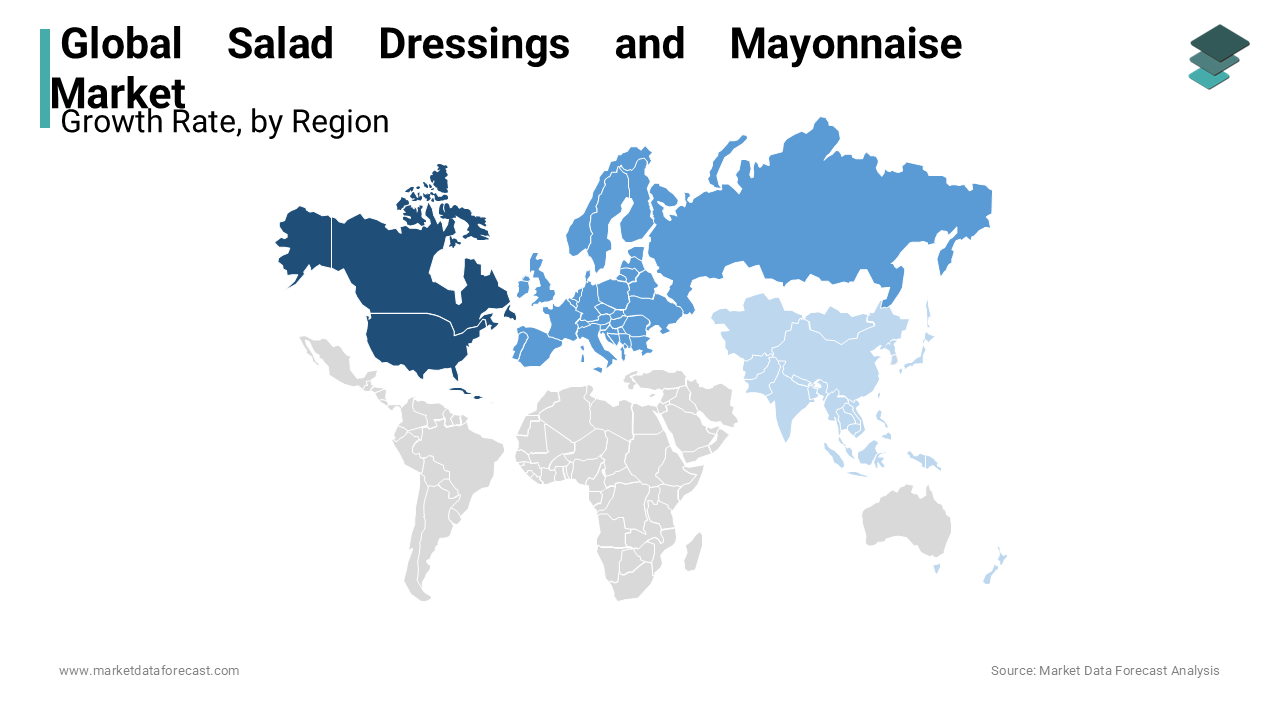
- Regionally, North America and Europe are considered mature and advanced markets, characterized by high consumption rates, product innovation, and strong retail distribution. These regions are expected to maintain significant growth through premiumization, organic offerings, and functional ingredients.
- Meanwhile, the Asia Pacific market is gaining momentum, fueled by the rapid expansion of fast food chains, urbanization, changing dietary habits, and increasing exposure to Western cuisine are key factors driving demand for mayonnaise and salad dressings in countries like China, India, Japan, and Southeast Asian nations.
- Prominent companies shaping the global salad dressings and mayonnaise market include Hellmann’s (Unilever), Best Foods (owned by Kraft Heinz), Heinz, French’s (McCormick & Company), Mondelez International (via Kraft Foods Group Inc.), and Tostito’s Salsa (Frito-Lay, a subsidiary of PepsiCo), who are investing in innovation, sustainable sourcing, and marketing to capture evolving consumer preferences.
Global Salad Dressings and Mayonnaise Market Size
The global Salad Dressings and Mayonnaise Market size was calculated to be USD 21.02 billion in 2025, and is anticipated to be worth USD 35.81 billion by 2034 from USD 22.30 billion in 2026 growing at a CAGR of about 6.1% during the conjecture period. The market is expected to post healthy growth in the future.

Salad dressings and mayonnaise are emulsified food products primarily composed of oil, vinegar or acidulants, and functional ingredients such as egg yolk or plant-based stabilizes, which are designed to enhance flavor, texture, and palatability of raw and prepared dishes. According to the World Health Organization, condiment use, particularly in processed forms, has risen in parallel with urban eating habits, including ready-to-eat meals and home-based fast food.
MARKET DRIVERS
Expansion of Ready-to-Eat and Meal Kit Consumption
The proliferation of convenience-driven food formats as integral flavor components is propelling the growth of the salad dressings and mayonnaise market. According to the United Nations Conference on Trade and Development, global sales of pre-prepared meals surpassed $200 billion in 2023, with meal kits growing at 12% annually in Europe and North America. These kits frequently include single-serve dressing pouches or flavored mayonnaise to ensure culinary consistency and ease of preparation. A 2023 NielsenIQ analysis revealed that 78% of refrigerated meal kits in the U.S. contain at least one proprietary dressing or mayo-based sauce. Additionally, in Asia-Pacific, the rise of bento-style boxed meals in Japan and Korea has driven demand for umami-rich dressings and creamy mayonnaise variants, with Kewpie Corporation reporting a 19% increase in single-serve mayo sachet sales in 2023. This shift toward time-efficient, restaurant-style home dining has cemented dressings and mayonnaise as essential elements in modern meal architecture.
Culinary Fusion and Global Flavor Adoption
The increasing popularity of international cuisines for region-specific dressings and mayonnaise variants is transforming them from basic condiments into gourmet flavor carriers, which is escalating the growth of the salad dressings and mayonnaise market. As per the Global Language Monitor, searches for “Korean gochujang dressing” and “yuzu mayonnaise” increased by 140% and 92% respectively between 2021 and 2023, reflecting consumer appetite for ethnic taste profiles. This cross-cultural culinary experimentation has prompted manufacturers like Hellmann’s and Kraft to launch globally inspired limited editions, leveraging authenticity and novelty to capture evolving consumer palates.
MARKET RESTRAINTS
Health Concerns Related to High Fat and Sodium Content
The persistent consumer apprehension regarding the high fat, calorie, and sodium levels is impeding the growth of the salad dressings and mayonnaise market. According to the World Health Organization, the average tablespoon of regular mayonnaise contains approximately 90–100 calories and 9 grams of fat, predominantly from refined oils, contributing to dietary imbalance when consumed excessively.
Volatility in Key Raw Material Prices, Particularly Edible Oils
The production of salad dressings and mayonnaise is heavily dependent on refined vegetable oil primarily soybean, sunflower, and rapeseed, whose prices fluctuate due to geopolitical tensions, climate disruptions, and export restrictions is degrading the growth of the salad dressings and mayonnaise market. According to the International Grains Council, global soybean oil prices surged by 34% between 2021 and 2022 due to supply chain disruptions from the Ukraine conflict and droughts in South America.
MARKET OPPORTUNITIES
Development of Plant-Based and Allergen-Free Mayonnaise Alternatives
The surge in veganism and egg allergy awareness has created a fertile ground for egg-free mayonnaise formulations using pea protein, aquafaba, or starch-based emulsifiers, which is accelerating the growth of the salad dressings and mayonnaise market. As per the Vegan Society, the number of vegans in the U.S. and UK doubled between 2018 and 2023, reaching over 4 million people. Brands like Just Egg and Hellmann’s Vegan have capitalized on this shift, with plant-based mayo sales growing at 18% annually, according to the Plant Based Foods Association. Clinical studies conducted by the American Academy of Allergy, Asthma & Immunology indicate that egg allergy affects approximately 2% of children globally, reinforcing demand for safe alternatives. These innovations align with clean-label and inclusive nutrition trends, which is positioning plant-based emulsions as a high-growth niche.
Integration of Functional Ingredients for Gut and Immune Health
The manufacturers are increasingly fortifying dressings and mayonnaise with probiotics, prebiotic fibers, and omega-3 fatty acids to align with the functional food movement is ascribed to fuel the growth of the salad dressings and mayonnaise market. According to the Global Prebiotic Association, consumer demand for gut-health-enhancing foods grew by 26% between 2020 and 2023, with fermented ingredients gaining particular traction. In Japan, Kewpie has introduced a probiotic-infused mayonnaise containing Lactobacillus brevis, clinically shown to improve intestinal flora in a 2023 study by Kyoto University.
MARKET CHALLENGES
Maintaining Emulsion Stability in Clean-Label and Reduced-Additive Formulations
The manufacturers face technical difficulties in replacing synthetic stabilizers and preservatives without compromising product integrity is creating new challenges for the growth of the salad dressings and mayonnaise market. Traditional mayonnaise relies on additives like xanthan gum and calcium disodium EDTA to maintain emulsion stability and shelf life, but clean-label variants must achieve the same performance using natural alternatives such as pectin or modified starches. According to a 2023 study in Food Hydrocolloids, 42% of clean-label mayonnaise prototypes exhibited phase separation within six weeks under standard storage conditions.
Regulatory Divergence in Labeling and Health Claim Standards
Differing national regulations on fat content definitions, allergen labeling, and permissible health claims create compliance complexities for multinational brands is also hampering the growth of the salad dressings and mayonnaise market. For instance, the European Union defines “light” mayonnaise as containing less than 55% fat, whereas the U.S. FDA requires a 30% reduction from the reference product to use the term “light.” According to the Codex Alimentarius Commission, over 30 countries have unique standards for emulsified sauces, complicating global product harmonization.
REPORT COVERAGE
| REPORT METRIC | DETAILS |
| Market Size Available | 2025 to 2034 |
| Base Year | 2025 |
| Forecast Period | 2026 to 2034 |
| CAGR | 6.1% |
| Segments Covered | By Type, Application, And Region |
| Various Analyses Covered | Global, Regional and Country Level Analysis; Segment-Level Analysis; DROC; PESTLE Analysis; Porter’s Five Forces Analysis; Competitive Landscape; Analyst Overview of Investment Opportunities |
| Regions Covered | North America, Europe, APAC, Latin America, Middle East & Africa |
| Market Leaders Profiled | Tostito’s Salsa, Best Foods Mayonnaise, Heinz, French’s Classic Mustard, Mondelez International (Kraft Foods Group Inc.), and Hellmann’s Inc |
SEGMENTAL ANALYSIS
By Type Insights
The mayonnaise segment held 54.3% of the global salad dressings and mayonnaise market share in 2025 with its multifunctional role across culinary applications by extending far beyond salads into sandwiches, dips, and sauce bases. As per the U.S. Department of Agriculture, over 90% of American households purchase mayonnaise regularly, with usage in deviled eggs, coleslaw, and burger spreads reinforcing its staple status. The product’s creamy texture and umami-enhancing properties make it a preferred fat carrier in processed foods that further entrenching its position in both home and commercial kitchens.
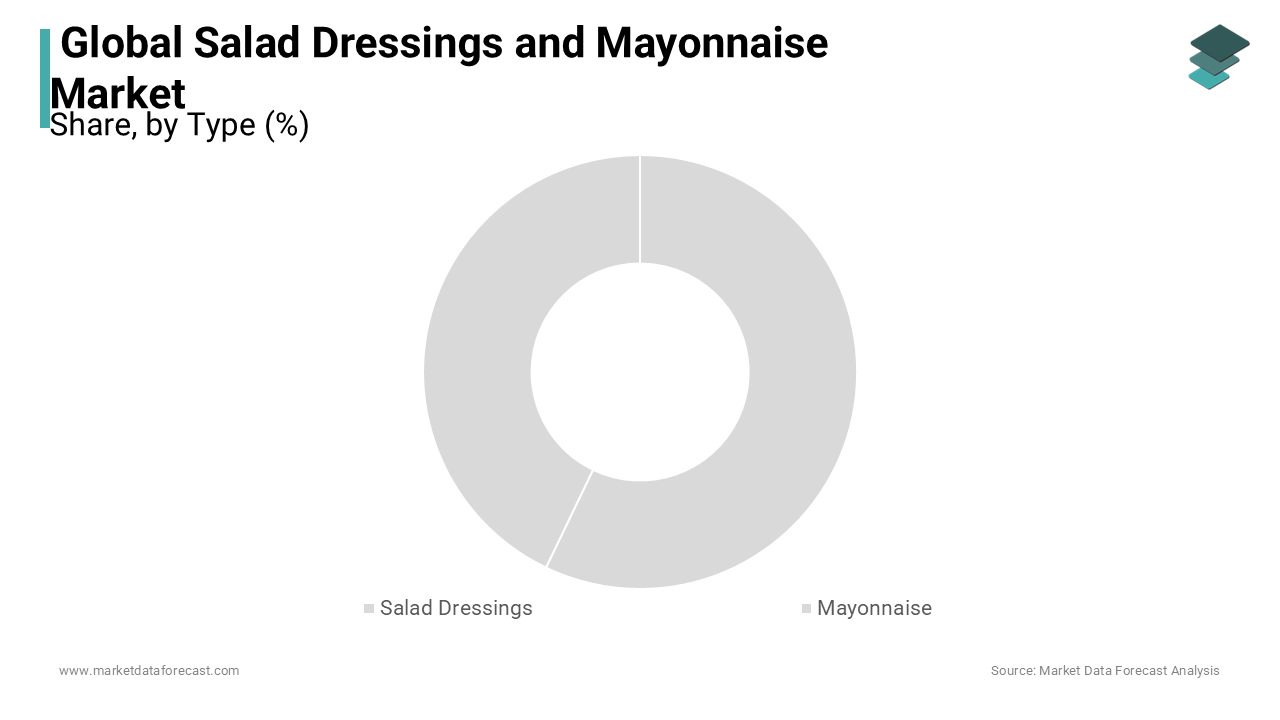
Salad dressings segment is likely to grow with an expected CAGR of 6.7% from 2026 to 2034 owing to the rising health consciousness and the global shift toward plant-forward diets. As per the World Health Organization, fruit and vegetable intake remains below recommended levels in 80% of countries, prompting public and private initiatives to enhance palatability of raw produce through flavorful dressings. As per 2023 study in Public Health Nutrition, adults who used vinaigrettes consumed 32% more leafy greens than those who avoided dressings. Innovations such as olive oil-based, low-sugar, and probiotic-infused formulations have expanded appeal among wellness-focused consumers.
By Application Insights
The Daily use segment was accounted in holding a prominent share of the salad dressings and mayonnaise market in 2025 with deeply embedded role of dressings and mayonnaise in household meal preparation across both developed and emerging economies. In the United States, the average household consumes approximately 2.6 bottles of mayonnaise and 1.8 bottles of salad dressing annually, according to NielsenIQ’s 2023 pantry tracking survey. The convenience of ready-to-use bottles, combined with strong brand loyalty for household names like Hellmann’s and Kewpie, sustains consistent retail demand. Additionally, the rise of home entertaining and weekend cooking has amplified usage frequency, particularly in urban middle-class households.
The food industry segment is anticipated to grow at a CAGR of 7.1% during the forecast period with the expansion of quick-service restaurants (QSRs), ready-to-eat meals, and foodservice outsourcing. According to the International Foodservice Manufacturers Association, over 40% of restaurant menu items in North America now include a proprietary dressing or mayo-based sauce, such as sriracha mayo or ranch aioli. Additionally, institutional catering in hospitals and schools is adopting portion-controlled dressing dispensers to standardize flavor and reduce waste. The increasing use of private-label and co-manufactured dressings by meal kit providers further amplifies industrial demand.
REGIONAL ANALYSIS
North America Salad Dressings and Mayonnaise Market Insights
North America was the largest contributor in the salad dressings and mayonnaise market by accounting for 37.2% of the share in 2025. The U.S. market is characterized by high per capita usage, with the average consumer consuming over 1.8 kilograms of mayonnaise and 1.2 liters of salad dressing annually, as reported by the USDA Economic Research Service. The prevalence of sandwich culture, barbecues, and potato salads in American cuisine reinforces routine use. The integration of dressings into plant-based food pairings, such as vegan coleslaw and grain bowls will further enhance the growth of the market in this region.
Europe Salad Dressings and Mayonnaise Market Insights
Europe salad dressings and mayonnaise market was positioned second with 30.3% of the shar ein 2025. The European Commission’s Farm to Fork Strategy has prompted reformulation efforts to reduce salt and sugar in commercial dressings, with major brands complying ahead of 2026 targets. Additionally, private-label penetration exceeds 40% in countries like the UK and Spain, which is increasing price competition. However, artisanal and cold-pressed variants are gaining traction among premium consumers, particularly in Scandinavia and Benelux.
Asia Pacific Salad Dressings and Mayonnaise Market Insights
The Asia Pacific salad dressings and mayonnaise market growth is likely to have significant growth opportunities during the forecast period. Japan’s sophisticated condiment culture and India’s rising urban middle class. Japan, despite its small population, accounts for nearly 15% of global mayonnaise sales by value, as noted by Japan’s Ministry of Economy, Trade and Industry. Kewpie Corporation alone controls over 60% of the domestic market, with its umami-rich, egg-yolk-based formula considered superior in texture and depth. In India, urbanization and Western dietary influences have increased mayonnaise use in sandwiches, pizzas, and street food variants like “ mayo chat.” According to the Indian Brand Equity Foundation, packaged condiment sales grew by 14% in 2023, with mayonnaise emerging as the fastest-growing category.
Latin America Salad Dressings and Mayonnaise Market Insights
Latin America salad dressings and mayonnaise market growth is likely to have prominent growth opportunities in the coming years. Brazilian cuisine incorporates mayonnaise into dishes like salada de macarrão (pasta salad) and misto quente (grilled ham and cheese), driving household penetration. As per Brazil’s Institute for Applied Economic Research, 82% of urban households purchase mayonnaise monthly, with usage peaking during festive seasons. The rise of fast-casual chains like Bob’s and Giraffas has further institutionalized mayo-based sauces in burgers and fries. Additionally, local manufacturers such as Seara and Hellmann’s Brazil have introduced reduced-fat and garlic-infused variants to cater to health-conscious consumers.
Middle East and Africa Salad Dressings and Mayonnaise Market Insights
The Middle East and Africa salad dressings and mayonnaise market growth with Saudi Arabia and South Africa as primary contributors. In Saudi Arabia, the growing popularity of international fast-food chains has increased demand for standardized dressings and mayonnaise in shawarma and burger applications. As per the Saudi Food and Drug Authority, imports of ready-to-use sauces rose by 22% between 2021 and 2023, driven by the expansion of franchise restaurants.
KEY MARKET PLAYERS AND COMPETITIVE LANDSCAPE
Companies playing a notable role in the global salad dressings and mayonnaise market include Tostitos Salsa, Best Foods Mayonnaise, Heinz, French’s Classic Mustard, Mondelez International (Kraft Foods Group Inc.), and Hellmann’s Inc.
The competition in the Salad Dressings and Mayonnaise Market is intensifying as global brands confront regional specialists and evolving consumer expectations. While multinational corporations dominate through brand recognition and distribution strength, local manufacturers counter with culturally attuned flavors and cost-effective offerings. Differentiation increasingly hinges on innovation in health attributes, such as plant-based composition, reduced sugar, and added functional benefits like probiotics. The rise of e-commerce and food delivery platforms has redefined consumer access by enabling direct engagement and personalized marketing.
TOP PLAYERS IN THE MARKET
Kewpie Corporation
Kewpie Corporation has profoundly shaped the Asia-Pacific salad dressings and mayonnaise market through its premium, umami-rich formulations rooted in Japanese culinary tradition. The company has expanded its footprint beyond Japan by introducing region-specific variants such as spicy miso mayo and yuzu vinaigrette in South Korea, Taiwan, and Southeast Asia. In 2023, Kewpie launched a clean-label, organic mayonnaise line in Australia, responding to rising demand for transparent ingredient sourcing. It has also strengthened supply chain resilience by establishing a new production facility in Thailand to serve ASEAN markets. Kewpie collaborates with local chefs and foodservice providers to co-develop menu items featuring its products, reinforcing brand integration in both home and professional kitchens. Its emphasis on egg quality and proprietary emulsification techniques has positioned Kewpie as a benchmark for taste and texture in the premium condiment segment.
Unilever (Hellmann’s)
Hellmann’s, under Unilever’s global portfolio, has solidified its presence in the Asia-Pacific market by adapting its iconic mayonnaise and dressing formulations to local taste preferences and dietary trends. The brand has introduced reduced-sugar, plant-based, and flavored variants such as sriracha and wasabi mayo in India, Indonesia, and the Philippines to align with regional palates. In 2023, Hellmann’s partnered with food delivery platforms like Swiggy and GrabKitchen to feature its products in virtual restaurant concepts, increasing consumer engagement. The company also launched a sustainability initiative in Vietnam, transitioning to recyclable packaging and reducing carbon emissions in distribution. Hellmann’s digital campaigns emphasizing “real taste, real food” have resonated with younger demographics, while its collaborations with culinary influencers have driven trial and brand loyalty across urban centers in the region.
Nestlé
Nestlé has strategically expanded its influence in the Asia-Pacific salad dressings and mayonnaise market through localized innovation and fortified formulations. The company leverages its R&D centers in Singapore and Japan to develop culturally relevant products, such as a probiotic-enriched mayonnaise launched in 2023 that supports digestive health—a growing consumer priority in East Asia. In India, Nestlé introduced a tomato-chili dressing tailored for use with street food and chaat, bridging traditional snacks with modern convenience. The company has also integrated its condiments into broader foodservice offerings, including Maggi-branded meal kits that include pre-portioned dressings.
TOP STRATEGIES USED BY THE KEY MARKET PLAYERS
Key players in the Salad Dressings and Mayonnaise Market are leveraging product localization, health-oriented reformulation, digital engagement, sustainable packaging, and foodservice partnerships to strengthen their competitive edge. Companies are tailoring flavor profiles and ingredient compositions to align with regional culinary traditions and dietary preferences. Investment in plant-based, low-sodium, and functional formulations addresses growing health consciousness. Strategic collaborations with food delivery platforms and QSRs enhance brand visibility in commercial applications. Digital marketing and influencer partnerships drive consumer trial among younger demographics. Additionally, transitioning to recyclable materials and reducing carbon footprints in production and logistics support long-term brand equity in environmentally aware markets, ensuring resilience in a category defined by both tradition and innovation.
RECENT HAPPENINGS IN THE MARKET
- In January 2023, Kewpie Corporation opened a new production facility in Thailand to enhance regional supply efficiency and support growing demand for its premium mayonnaise across ASEAN countries.
- In May 2023, Hellmann’s launched a plant-based mayonnaise variant in India and Indonesia, formulated with sunflower oil and free from eggs, which is targeting the rising vegan and allergy-conscious consumer base.
- In August 2023, Nestlé introduced a probiotic-fortified mayonnaise in Japan, clinically tested for gut health benefits by marking a strategic shift toward functional condiments in the Asia-Pacific market.
- In October 2023, Hellmann’s partnered with GrabKitchen in Southeast Asia to integrate its dressings into virtual restaurant menus, which is increasing brand visibility in the fast-growing food delivery sector.
- In March 2025, Kewpie Corporation introduced an organic, cold-pressed olive oil-based vinaigrette in Australia by aligning with clean-label trends and expanding its premium product portfolio in Oceania.
MARKET SEGMENTATION
This research report on the global salad dressings and mayonnaise market has been segmented and sub-segmented based on type, application & region.
By Type
- Salad Dressings
- Mayonnaise
- Other
By Application
- Daily Use
- Food Industry
- Other
By Region
- North America
- Europe
- Middle East and Africa
- Asia and Pacific
- Latin America