- Product Description Description
- Table of Contents TOC
- List of Table & Figure LOT
- Get Free Sample PDF Sample PDF
Market Size, 2025
$20.73 BnMarket Estimate, 2026
$21.51 BnMarket Forecast, 2034
$28.92 BnCAGR, 2026–2034
3.77%Executive Summary: Tomato Ketchup Market
- Market Scope: Global tomato ketchup market analysis covering product types, application segments, distribution channels, regional dynamics, and condiment manufacturing technology adoption metrics.
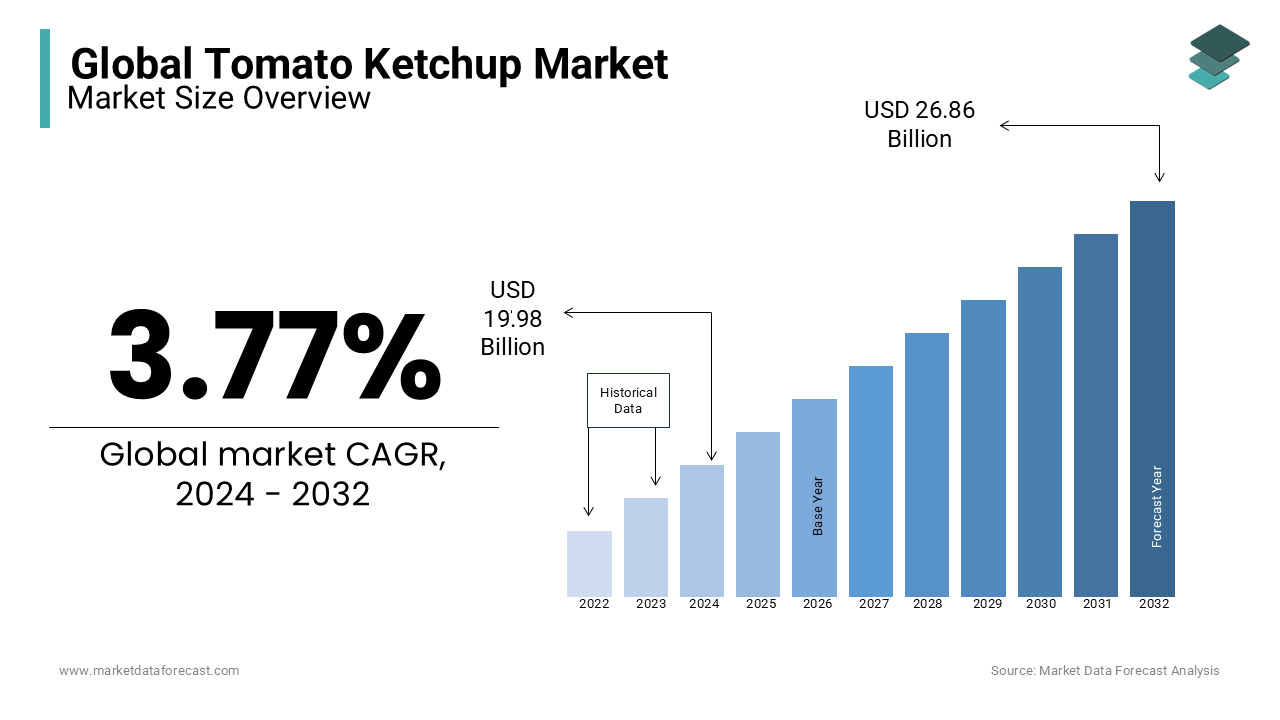
- Market Valuation: Valued at USD 20.73 billion in 2025, estimated at USD 21.51 billion in 2026, and projected to reach USD 28.92 billion by 2034, registering a CAGR of 3.77% from 2026 to 2034.
- Primary Growth Drivers: Rapid expansion of the quick-service restaurant (QSR) industry, rising urbanization, and increasing consumer demand for convenient ready-to-eat meals.
Key Market Segment Metrics (2026–2034)
| Category | Leading Segment (Position) | Fastest-Growing / Key Growth Segment |
|---|---|---|
| By Type & Application | Regular ketchup (dominated by type in 2025) & Direct family consumption (64.5% application share in 2025) | Flavored ketchup (fastest-growing type at 5.8% CAGR) & Food services (fastest-growing application at 6.2% CAGR) |
| By Channel & Innovation | Hypermarkets & Supermarkets (led channels with a 53.2% share in 2025) | Online retail stores (fastest-growing channel at 9.5% CAGR), organic/low-sugar variants, and recyclable packaging |
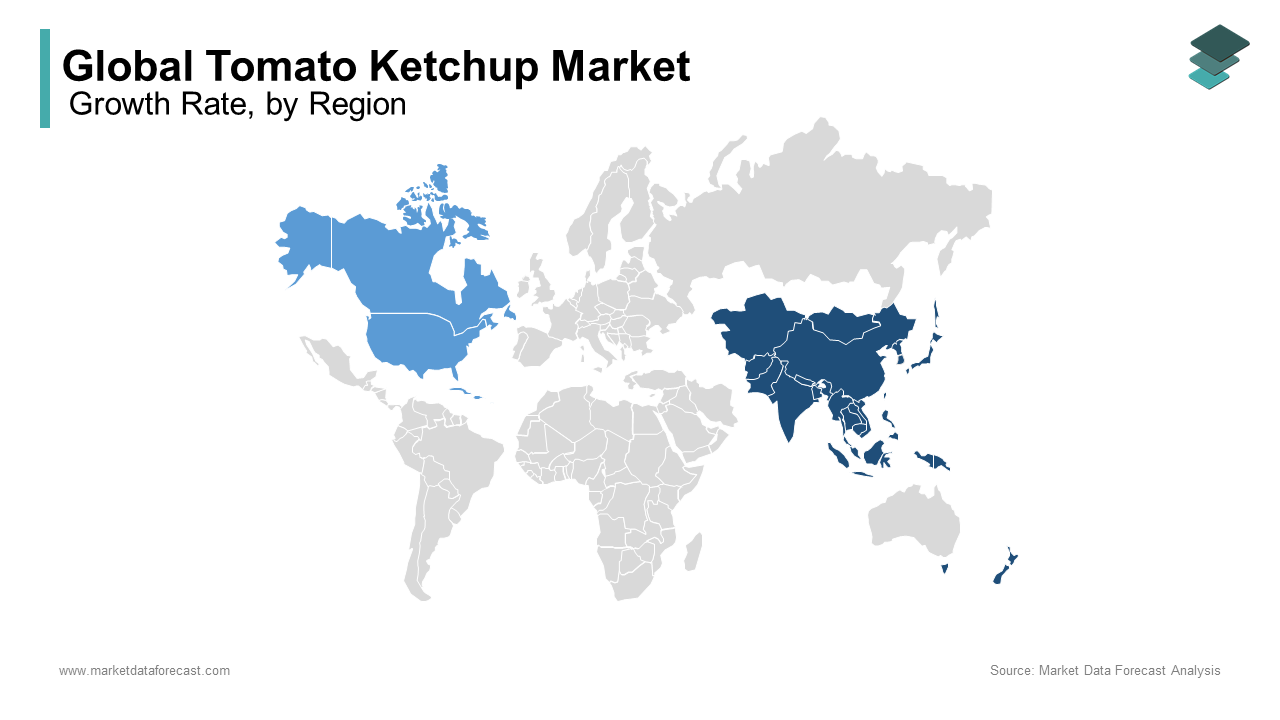
| By Region Segment | North America (led regionally with a 34.6% market share in 2025, followed by Europe at 28.4%) | Emerging markets in Asia Pacific and Latin America driven by rising disposable incomes and QSR growth |
Major Market Players & Market Structure
Market Structure: Highly competitive global condiment sector characterized by production capacity expansions, organic and low-sugar product formulations, sustainable packaging investments, and QSR chain partnerships.
Key Companies: H. J. Heinz Company, Nestle India Ltd, Campbell Soup Company, ConAgra Foods Inc, General Mills Inc, Tate & Lyle plc, Lee Kum Kee, Premier Foods Plc, The Kraft Heinz Company, Conagra Brands, and Del Monte Foods.
Global Tomato Ketchup Market Size
The global tomato ketchup market size was valued at USD 20.73 billion in 2025 and is expected to reach USD 28.92 billion by 2034 from USD 21.51 billion in 2026. The market is projected to grow at a CAGR of 3.77%.
Tomato ketchup is a sweet, tangy, and smoothly pureed tomato-based condiment. This product serves as a fundamental staple in global culinary practices, functioning both as a table condiment and a key ingredient in food preparation. The market definition extends beyond traditional formulations to include organic, low-sodium,m and no-added-sugar variants that cater to evolving health consciousness. According to the Food and Agriculture Organization of the United Nations (FAO), Latin America and the Caribbean lose or wwasteapproximately 15% of its available food annually across the supply chain. Globally, FAO data shows that 12% of all food is lost due to insufficient refrigeration, emphasizing the critical need for sustainable cold chain investments. As per the United States Department of Agriculture, the average annual consumption of tomatoes per capita in developed nations remains high, reflecting the deep integration of tomato-based products into daily diets. The market is characterized by intense competition among multinational conglomerates and regional players who strive to differentiate through flavor innovation and packaging convenience. Regulatory standards regarding soluble solids content and acidity levels vary by region, influencing formulation strategies. The shift towards clean label products has prompted manufacturers to eliminate high fructose corn syrup and artificial preservatives. Consumer preference for convenience foods and quick-service restaurant meals further sustains demand. The market dynamics are also influenced by agricultural volatility, affecting raw material costs. Sustainability initiatives in sourcing and packaging are becoming critical differentiators. This sector represents a mature yet evolving landscape where tradition meets modern dietary preferences and environmental responsibility.
MARKET DRIVERS
Expansion of the Quick Service Restaurant Industry and Convenience Food Consumption
The rapid expansion of the quick-service restaurant industry globally is driving the growth of the tomato ketchup market. This is due to the ubiquitous use of ketchup as a standard accompaniment to fast-food items. Burgers, fries, chicken nuggets, and hot dogs are traditionally served with ketchup, making it an essential component of the fast food value proposition. The growth of food delivery platforms has further amplified this demand as consumers order comfort foods that typically require dipping sauces. According to the National Restaurant Association, the U.S. restaurant footprint spans hundreds of thousands of operational locations (including a baseline of over 660,000 eating and drinking establishments). A massive portion of this ecosystem relies directly on quick-service formats requiring streamlined, bulk condiment and ingredient procurement models. The consistency and brand recognition of major ketchup providers ensure that quick service chains maintain uniform taste profiles across locations. This institutional demand provides a stable revenue stream for manufacturers who supply large-volume contracts. The rise of cloud kitchens and virtual brands also contributes to increased ketchup usage as these operations focus exclusively on delivery-friendly menus. Furthermore, the globalization of Western fast food chains in emerging markets such as India and China introduces ketchup to new consumer bases who adopt it as part of modern dining habits. The convenience factor of ready-to-eat meals packaged with single-serve ketchup sachets also drives retail sales. This driver is reinforced by the inability of consumers to easily replicate the specific tangy sweetness of commercial ketchup at home, ensuring continued reliance on branded products.
Rising Urbanization and Changing Lifestyle Patterns Driving Demand for Ready-to-Eat Meals
Increasing urbanization and shifting lifestyle patterns, such as busy schedules and dual-income households, are significantly boosting the demand for ready-to-eat meals and the expansion of the tomato ketchup market. These convenient food options frequently incorporate tomato ketchup. Urban consumers often lack the time for elaborate cooking, leading to a reliance on convenient food solutions such as frozen snacks, instant noodles, and pre-prepared sandwiches. As per the United Nations Department of Economic and Social Affairs, the global urban population is projected to reach 68 percent by 205,0 creating a concentrated market for convenience foods. Tomato ketchup serves as a versatile flavor enhancer that improves the palatability of simple and often bland, ready-to-eat items. The association of ketchup with comfort and familiarity makes it a preferred choice for families seeking to add variety to simple dishes. Manufacturers respond by offering resealable bottles and squeeze packs that align with the on-the-go lifestyles of urban dwellers. The penetration of modern retail formats such as supermarkets and hypermarkets in developing regions ensures widespread availability of diverse ketchup brands. Marketing campaigns often target young professionals and students, emphasizing speed and taste. The integration of ketchup into fusion cuisines and street food trends in urban areas further expands its application beyond traditional Western dishes. This demographic shift ensures a consistent and growing base of consumers who prioritize convenience without compromising on flavor.
MARKET RESTRAINTS
Growing Health Consciousness and Concerns Over High Sugar Content
The increasing awareness of health risks associated with high sugar consumption is a major barrier to the growth of the traditional segment within the tomato ketchup market. Standard ketchup formulations contain substantial amounts of added sugars or high fructose corn syrup to balance the acidity of tomatoes and vinegar. As per the World Health Organization, excessive sugar intake is linked to obesity type 2 diabetes and cardiovascular diseases, prompting public health campaigns to reduce consumption. Many consumers are actively reading nutrition labels and avoiding products with high added sugar content. According to the Centers for Disease Control and Prevention, nearly 40 percent of adults in the United States are obese, driving a shift towards healthier dietary choices. This trend leads to a decline in the consumption of regular ketchup in favor of low-sugar or sugar-free alternatives, which often have smaller market volumes. The perception of ketchup as an unhealthy condiment rather than a natural tomato product discourages its use in home cooking among health-conscious individuals. Schools and healthcare institutions are increasingly restricting the availability of sugary condiments in their cafeterias, further limiting institutional demand. Manufacturers face the challenge of reformulating products to reduce sugar without compromising taste and texture, which requires significant research and development investment. The higher cost of natural sweeteners used in healthy variants also limits their accessibility to price-sensitive consumers. This restraint forces companies to diversify their portfolios but cannibalizes sales of their core high-volume products. The stigma associated with processed sugars continues to impact brand loyalty and purchase frequency.
Volatility in Raw Material Prices and Supply Chain Disruptions
The volatility in raw material prices, particularly for tomatoes and sugar, greatly constrains the expansion of the tomato ketchup market. These ingredients remain highly vulnerable to both unexpected climatic conditions and fluctuating geopolitical factors. Tomatoes are perishable crops highly susceptible to weather extremes such as droughts, floods, and unseasonal rains, which can drastically reduce yields and increase costs. As per the Food and Agriculture Organization of the United Nations, climate change has led to increased frequency of extreme weather events affecting agricultural productivity in major tomato-producing regions like California and Italy. According to the World Bank, global food price indices have shown significant fluctuations in recent years, impacting the input costs for food processors. Sugar prices are also influenced by global trade policies and energy markets since sugarcane is often used for ethanol production. These fluctuations force manufacturers to either absorb higher costs, reducing profit margins, or pass them on to consumers, risking demand elasticity. Supply chain disruptions caused by logistical barriers and labor shortages further exacerbate the issue, leading to delays in production and distribution. Small and medium-sized enterprises are particularly vulnerable as they lack the bargaining power to secure long-term fixed price contracts with suppliers. The reliance on specific tomato varieties with high Brix levels for ketchup production limits sourcing flexibility. Inability to predict raw material costs complicates financial planning and inventory management. This instability hinders long-term investment in capacity expansion and innovation. Companies must invest in hedging strategies and diversified sourcing, which increases operational complexity and costs.
MARKET OPPORTUNITIES
Development of Organic and Clean Label Product Variants
The growing demand for organic and clean-label food products provides a clear path for the growth of the tomato ketchup market. This is because consumers are seeking transparency and natural ingredients. Organic ketchup made from certified organic tomatoes and free from synthetic pesticides and genetically modified organisms appeals to health-conscious and environmentally conscious buyers. According to the FiBL, global retail sales of organic food and drink grew by roughly 5% to reach €145 billion, indicating resilient demand rather than rapid double-digit expansion. Only select individual countries, like Estonia (+13%) and the Netherlands (+12.5%), have maintained double-digit growth rates recently. Manufacturers can leverage this trend by obtaining organic certifications and highlighting sustainable farming practices on packaging. According to the Soil Association Certification Organic Market Report, the UK organic market bounced back with a 7.3% total market growth. Within UK retail channels, the organic ambient grocery segment (which includes oils, vinegars, canned items, and home baking) drove a significant 11.6% increase in sales, proving to be a key growth vector. The clean label movement encourages the removal of artificial preservatives, colors, and flavors, which aligns with the desire for minimally processed foods. Brands that use natural sweeteners such as agave nectar or stevia instead of high fructose corn syrup can differentiate themselves in a crowded market. This opportunity allows companies to command premium pricing and enhance brand loyalty among niche segments. Partnerships with local organic farmers can ensure a stable supply of high-quality raw materials while supporting community sustainability. Marketing campaigns emphasizing purity and health benefits can attract millennials and parents who prioritize nutrition for their families. The expansion of organic sections in mainstream supermarkets improves accessibility for these products. By innovating within this space, manufacturers can capture a growing segment of consumers willing to pay more for perceived quality and safety. This strategy also aligns with corporate social responsibility goals, enhancing overall brand reputation.
Expansion into Emerging Markets with Rising Disposable Incomes
Emerging markets in the Asia Pacific, Latin America, and Africa offer significant growth opportunities for the tomato ketchup market. This is due to rising disposable incomes and the adoption of Western dietary habits. As the middle class expands in countries such as India, China, Brazil, and Nigeria, there is increased spending on packaged foods and condiments. The introduction of international fast food chains in these markets familiarizes consumers with ketchup as a standard accompaniment to burgers and fries. Local manufacturers can capitalize on this trend by producing affordable ketchup variants tailored to local taste preferences, such as spicier or sweeter formulations. The penetration of modern retail channels and e-commerce platforms facilitates distribution to remote areas. Government initiatives promoting food processing industries also support market growth by improving infrastructure and regulatory frameworks. Collaborations with local distributors can enhance market reach and brand visibility. The young demographic profile of these regions ensures a long-term customer base for ketchup products. Marketing efforts focusing on versatility and ease of use can drive adoption in households. By establishing a strong presence in these high-growth markets, companies can diversify their revenue streams and reduce dependency on saturated developed markets. This expansion strategy is crucial for sustaining long-term growth in the global condiment industry.
MARKET CHALLENGES
Intense Competition from Alternative Condiments and Sauces
Intense competition from a wide array of alternative condiments and sauces that offer diverse flavor profiles and perceived health benefits challenges the growth of the tomato ketchup market. Consumers are increasingly experimenting with mayonnaise, mustard, barbecue sauce, sriracha, and artisanal dips, which dilute the dominance of ketchup. Driven by an increasing demand for global flavors, consumer interest in complex spice profiles and ethnic condiments has experienced significant growth. The Specialty Food Association notes that condiment and sauce sales surged 8.7% due to these global trends, forcing traditional ketchup manufacturers to heavily innovate with spicy and global flavor product lines. The rise of gourmet and specialty sauces in quick-service restaurants also challenges the standard inclusion of ketchup. The perception of ketchup as a basic or generic product makes it vulnerable to substitution by more exciting options. Manufacturers must continuously innovate to maintain relevance, which requires significant investment in research and development. The fragmentation of the condiment market means that ketchup competes not only with other tomato-based products but with entirely different flavor categories. Private label brands offering lower-priced alternatives further intensify price competition, eroding margins for established players. The ability of small artisanal brands to capture niche markets through unique formulations adds pressure on large corporations. Consumers are less loyal to specific ketchup brands and more willing to switch based on taste trends. This dynamic environment requires agile marketing and product development strategies. Failure to adapt to changing flavor preferences can result in declining market share. The challenge lies in reinforcing the iconic status of ketchup while expanding into adjacent flavor territories.
Regulatory Pressures and Labeling Requirements
Stringent regulatory pressures and evolving labeling requirements are major hurdles for the Tomato Ketchup Market. Governments worldwide are implementing these stricter standards to improve food safety and nutritional information. Regulations regarding sugar content, sodium levels, and the use of additives vary significantly across regions, requiring manufacturers to maintain multiple formulations. According to European Commission Food Labeling Rules, all pre-packed foods must feature a mandatory nutrition declaration detailing energy, fats, carbohydrates, total sugars, and salt, alongside highlighted allergens. According to the Food and Drug Administration in the United States, updated nutrition facts labels highlight added sugar,s drawing attention to the high sugar content in standard ketchup. Compliance with these regulations increases operational costs and complexity for global brands. The implementation of sugar taxes in several countries, including Mexico and the United Kingdom, further increases the retail price of sugary condiments, reducing demand. Manufacturers must invest in reformulation to meet regulatory thresholds without compromising technically challenging taste. The risk of non-compliance leads to potential fines and reputational damage. Additionally, regulations regarding plastic packaging and sustainability are forcing companies to redesign packaging, which involves significant capital expenditure. The lack of harmonized global standards creates barriers to trade and efficiency. Keeping pace with changing regulatory landscapes requires dedicated legal and compliance teams. This challenge restricts flexibility in product development and marketing. Companies must balance regulatory compliance with consumer expectations for taste and affordability. Navigating this complex web of regulations is essential for maintaining market access and competitiveness.
REPORT COVERAGE
| REPORT METRIC | DETAILS |
| Market Size Available | 2025 to 2034 |
| Base Year | 2025 |
| Forecast Period | 2026 to 2034 |
| CAGR | 3.77% |
| Segments Covered | By Product Type, Application, Distribution Channel, And Region |
| Various Analyses Covered | Global, Regional, and Country-Level Analysis; Segment-Level Analysis; DROC; PESTLE Analysis; Porter’s Five Forces Analysis; Competitive Landscape; Analyst Overview of Investment Opportunities |
| Regions Covered | North America, Europe, APAC, Latin America, Middle East & Africa |
| Market Leaders Profiled | H. J. Heinz Company, Nestle India Ltd, Campbell Soup Company, ConAgra Foods Inc, General Mills Inc, Tate & Lyle plc, Lee Kum Kee, Premier Foods Plc |
SEGMENTAL ANALYSIS
By Product Type Insights
The regular ketchup segment dominated the Tomato Ketchup Market and accounted for a substantial share in 2025. Its entrenched status as a universal condiment in global cuisines and its cost-effectiveness compared to specialized variants are driving the dominance of this segment. This segment benefits from decades of brand building and consumer habit formation, where regular ketchup is the default pairing for fast food items such as French fries, burgers, and hot dogs. The simplicity of the ingredient list in regular ketchup, comprising tomato concentrate, vinegar, sugar, and salt, allows for efficient mass production and economies of scale. The familiarity of the taste profile reduces the barrier to trial for new consumers and ensures consistent repeat purchases. Institutional buyers such as schools, hospitals, and corporate cafeterias prefer regular ketchup for its standardized flavor and lower procurement costs. The widespread availability of regular ketchup in various pack sizes, from single-serve sachets to bulk containers, ensures accessibility for diverse consumption occasions. Marketing efforts by major brands have historically focused on reinforcing the classic taste of regular ketchup, creating strong brand loyalty. The lack of need for consumer education regarding usage further supports its dominance. This segment remains resilient despite health trends because it is often viewed as an occasional indulgence rather than a daily staple, allowing consumers to justify its consumption within a balanced diet.
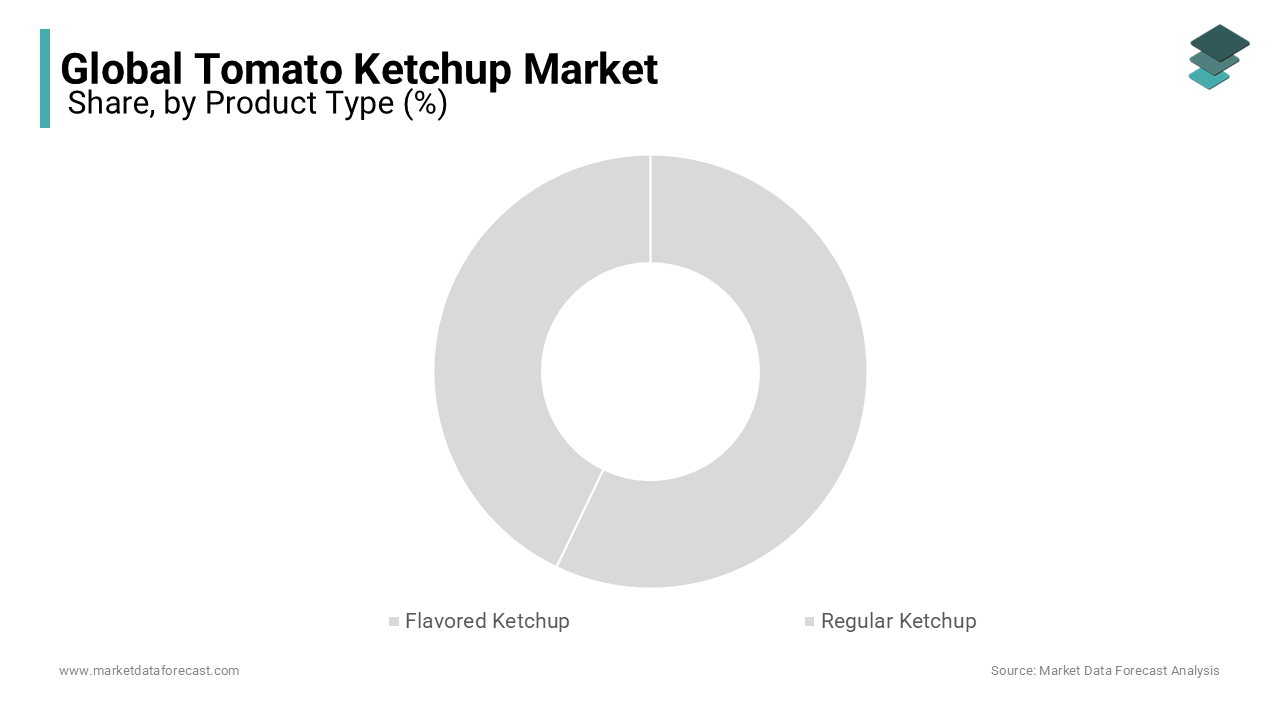
On the other hand, the flavored ketchup segment is expected to exhibit a noteworthy CAGR of 5.8% from 2026 to 2034 due to increasing consumer desire for novel taste experiences and premium product offerings. This segment covers varieties infused with herbs, spices, and other ingredients such as garlic, basil, sriracha, and truffle, which appeal to adventurous eaters and food enthusiasts. The influence of social media and food blogging has accelerated the adoption of unique ketchup flavors as users seek to recreate restaurant-quality dishes at home. Flavored ketchups allow brands to command higher price points and target niche markets that are less price sensitive. The growth of gourmet burger joints and fusion cuisine restaurants has normalized the use of specialized sauces, encouraging retail consumers to purchase similar products for home use. Manufacturers are leveraging clean label trends by using natural ingredients and avoiding artificial additives in flavored variants, which appeals to health-conscious shoppers. The versatility of flavored ketchups in marinades, dips, and cooking applications expands their utility beyond traditional dipping. This segment benefits from limited edition releases and seasonal variations that create urgency and drive trial. The ability to cater to specific dietary preferences, such as gluten-free or organic, further enhances its appeal.
By Application Insights
In 2025, the direct family consumption segment led the Tomato Ketchup Market and captured a 64.5% share. This leading position of the segment was attributed to the high penetration of ketchup in household pantries and its versatility in home cooking. Ketchup is a staple condiment in millions of households globally, used not only as a dip but also as an ingredient in recipes such as meatloaf, casseroles, and sauces. The convenience of having a ready-to-use flavor enhancer aligns with the busy lifestyles of modern families who seek quick meal solutions. The availability of ketchup in various packaging formats, such as squeeze bottles and glass jars, caters to different household preferences and storage needs. Brand loyalty plays a significant role in this segment as families tend to stick to trusted brands that offer consistent quality and taste. Promotional activities in supermarkets, such as bundle deals and discounts, further encourage bulk purchases for home use. The perception of ketchup as a kid-friendly condiment ensures its presence in households with children who are often selective eaters. The emotional connection to comfort foods associated with ketchup reinforces its regular usage. This segment is less susceptible to economic downturns as ketchup is considered an affordable luxury that provides satisfaction without significant expense. The widespread distribution network ensures that ketchup is readily available in neighborhood stores, enhancing accessibility for daily consumption.
However, the food services segment is predicted to witness the highest CAGR of 6.2% during the forecast period, owing to the rapid expansion of the quick service restaurant industry and the rise of food delivery platforms. Restaurants, fast food chains, and cloud kitchens consume large volumes of ketchup in bulk packaging to serve with menu items and for use in kitchen preparations. The proliferation of food delivery apps has increased the volume of orders for items typically accompanied by ketchup, such as fries and nuggets, leading to higher institutional demand. Food service operators prioritize consistency and cost efficiency, leading them to partner with major ketchup manufacturers for a reliable supply. The trend towards customization in fast food menus allows customers to request extra sauces, increasing per-order usage. Cloud kitchens, which operate exclusively for delivery, rely heavily on standardized condiments to maintain quality across multiple virtual brands. The recovery of the hospitality sector post-pandemic has further boosted demand as dine-in services resume. Bulk packaging innovations such as pump dispensers and portion control sachets help restaurants manage waste and costs. This segment benefits from long-term contracts and steady volume growth, making it a critical focus area for manufacturers seeking to expand their market share.
By Distribution Channel Insights
The hypermarkets and supermarkets segment held the majority share of 53.2% of the tomato ketchup market in 2025. This supremacy of the segment was credited to its ability to offer a wide variety of brands and pack sizes under one roof, facilitating one-stop shopping for consumers. These retail formats provide ample shelf space for both mainstream and premium ketchup brands, allowing for effective visual merchandising and promotional displays. The availability of bulk packs and multi-buy offers in hypermarkets appeals to families and institutional buyers looking to stock up on essentials. Private-label ketchup brands offered by supermarket chains provide affordable alternatives that attract price-sensitive shoppers. The strategic placement of ketchup near complementary products such as frozen foods and snacks drives impulse purchases. Supermarkets also benefit from established loyalty programs that encourage repeat visits and brand switching through targeted coupons. The trust associated with large retail chains ensures product quality and freshness, which is crucial for perishable goods. The extensive reach of supermarket networks in urban and suburban areas ensures broad market coverage. This channel remains dominant due to the habitual nature of grocery shopping and the immediate gratification of physical product acquisition. The ability to physically inspect packaging and check expiration dates further enhances consumer confidence in this channel.
But the online retail stores segment is estimated to register the fastest CAGR of 9.5% between 2026 and 2034. This quick surge of the segment is fuelled by the increasing adoption of e-commerce platforms and the convenience of home delivery. Consumers are increasingly turning to online grocery shopping to save time and avoid crowded stores, a trend accelerated by the pandemic. The ability to subscribe to regular deliveries of essential items like ketchup ensures a consistent supply and reduces the hassle of frequent shopping trips. Online retailers often provide detailed product descriptions and customer reviews, helping shoppers make informed decisions about new or premium ketchup brands. The availability of niche and imported ketchup varieties online caters to consumers seeking specific flavors or organic options not found in local stores. Digital marketing and personalized recommendations drive engagement and sales on these platforms. The integration of quick commerce services promising delivery within hours further enhances the appeal of online purchasing for immediate needs. Packaging innovations, such as leak-proof containers, ensure the safe transit of liquid products. The ease of comparing prices across multiple vendors empowers consumers to find the best deals. This channel offers significant growth potential as internet penetration increases in emerging markets and logistics infrastructure improves.
REGIONAL ANALYSIS
North America Tomato Ketchup Market Analysis
North America was the top performer in the global tomato ketchup market and accounted for a 34.6% share in 2025. This growth of the regional market was driven by high per capita consumption and a mature retail infrastructure that ensures widespread product availability. The region is characterized by a strong cultural affinity for fast food and convenience meals, where ketchup is a standard accompaniment. As per the United States Department of Agriculture, the United States is one of the largest producers and consumers of processed tomato products, including ketchup. The presence of major global ketchup brands headquartered in the region fosters intense competition and continuous innovation in product formulations. The high level of urbanization and busy lifestyles drives demand for convenient food solutions, boosting ketchup sales. The region also leads in the adoption of health-conscious trends, prompting manufacturers to introduce low-sugar and organic options. The well-developed supply chain and cold storage facilities ensure product quality and freshness from factory to shelf. Regulatory standards for food safety and labeling are strictly enforced, maintaining consumer trust. The prevalence of supermarket chains and e-commerce platforms facilitates easy access to diverse ketchup products. Marketing campaigns often leverage nostalgia and family values to reinforce brand loyalty. The region serves as a trendsetter for new flavors and packaging innovations that often spread to other markets. The strong economic base supports premiumization trends in the condiment sector.
Europe Tomato Ketchup Market Analysis
Europe was positioned second in the Tomato Ketchup Market and captured a 28.4% share in 2025. This expansion of the European market was supported by a strong demand for organic and premium product variants. Consumers in countries such as Germany, France, and the United Kingdom are increasingly health-conscious and environmentally aware, influencing their purchasing decisions. According to data from the Research Institute of Organic Agriculture (FiBL), the European market for organic food continues to grow steadily, reaching record retail sales highs. Concurrently, consumer research demonstrates that this demand increasingly intersects with the "clean label" movement, boosting the development of organic alternatives in secondary grocery segments like condiments. Strict regulatory frameworks regarding food additives and sugar content drive manufacturers to reformulate products to meet higher standards. The presence of diverse culinary traditions in Europe leads to varied flavor preferences, with some regions preferring spicier or herb-infused ketchups. The retail landscape is dominated by supermarket chains that exert significant pressure on suppliers for sustainable practices. Private label brands offer high-quality organic ketchup at competitive prices, challenging established brands. The emphasis on sustainability extends to packaging with a shift towards recyclable materials. Food safety regulations are stringent, ensuring high product integrity. The market is mature with slow volume growth but value growth driven by premiumization. Consumer education on nutrition influences buying behavior, favoring transparent labeling. The region is a hub for innovation in natural and healthy condiment formulations.
Asia Pacific Tomato Ketchup Market Analysis
The Asia Pacific region is an emerging player in the global tomato ketchup market due to rapid urbanization and the increasing adoption of Western food habits among younger demographics. Countries such as China, India, and Japan are witnessing a surge in the popularity of fast food chains and quick service restaurants, which utilize ketchup extensively. Macroeconomic trackers indicate a significant surge in purchasing power across the Asia-Pacific region. The expansion of the middle class is creating a large customer base for branded ketchup products. Local manufacturers are introducing flavors tailored to regional palates, such as spicy or sweet variants, to compete with international brands. The growth of e-commerce and modern retail formats improves product accessibility in urban and semi-urban areas. Cultural acceptance of ketchup as a versatile ingredient in fusion cuisines further boosts consumption. Government initiatives promoting food processing industries support local production capabilities. The young population is open to experimenting with new flavors and brands, driving market dynamism. Marketing efforts focus on lifestyle and convenience, appealing to urban professionals. The region offers significant potential for volume growth as penetration rates increase in rural areas. Infrastructure improvements facilitate better distribution networks.
Latin America Tomato Ketchup Market Analysis
Latin America is moving ahead steadfastly in the tomato ketchup market owing to economic dynamics and distinct local taste preferences. Countries like Brazil, Mexico, and Argentina have vibrant food cultures where ketchup is used in various traditional and modern dishes. The dominance of local brands that offer affordable options competes with international giants. The popularity of street food and casual dining establishments supports consistent demand for ketchup. Local manufacturers often adjust sweetness and spice levels to suit regional preferences, creating differentiated products. The growth of modern retail channels in urban centers improves access to branded ketchup. Economic instability can lead to inflation, affecting raw material costs and final prices. However, the resilience of the food sector ensures steady consumption. The rise of the middle class in certain countries drives demand for premium and imported brands. Cultural events and social gatherings often feature foods paired with ketchup. The market is characterized by a mix of formal and informal distribution channels. Innovation in packaging sizes caters to different income segments. The region offers opportunities for growth through localized product strategies.
Middle East And Africa Tomato Ketchup Market Analysis
The Middle East and Africa region is anticipated to expand notably in the tomato ketchup market during the forecast period due to tourism and the influence of expatriate communities. In Gulf Cooperation Council countries, the hospitality sector drives demand for high-quality ketchup in hotels and restaurants. As per the World Tourism Organization, the region attracts millions of tourists annually who expect international standard food services. The presence of a large expatriate population from Asia and Europe creates demand for familiar condiment brands. In Africa, the market is fragmented with varying levels of development across countries. South Africa has a more mature market with established retail chains offering diverse ketchup options. In other African nations, informal markets play a significant role in distribution. The hot climate influences packaging requirements to ensure product stability. Local production is limited in many countries, leading to reliance on imports. Economic disparities affect purchasing power, with premium brands catering to affluent segments. The growth of quick-service restaurants in urban areas boosts institutional demand. Cultural dietary habits vary widely, influencing consumption patterns. The market offers potential for growth as infrastructure improves and the middle class expands. Regulatory standards are evolving to ensure food safety.
COMPETITION OVERVIEW
The competitive landscape of the Tomato Ketchup Market is characterized by intense rivalry between established multinational corporations and emerging regional brands. Major players leverage strong brand equity and extensive distribution networks to maintain dominance, while smaller competitors focus on niche segments such as organic or artisanal ketchups. Innovation in product formulations, including reduced sugar and clean label options, is a key differentiator as health consciousness rises among consumers. Price competition remains significant in mass market segments, prompting companies to optimize supply chains for cost efficiency. Private label brands from large retail chains pose a threat by offering affordable alternatives with comparable quality. Marketing strategies emphasize emotional connections and heritage to build loyalty amidst a crowded marketplace. The rise of e-commerce has lowered barriers to entry, allowing direct-to-consumer brands to gain traction. Regulatory pressures regarding labeling and sustainability force continuous adaptation in packaging and ingredients. Collaborations with food service providers secure long-term contracts and steady revenue streams. Companies must balance tradition with innovation to meet diverse global demands. Agility in responding to flavor trends and health concerns is essential for sustaining market share. The market remains dynamic with frequent product launches and shifting consumer preferences, driving competitive intensity.
KEY MARKET PLAYERS
A few major players in the global tomato ketchup market include
- H. J. Heinz Company
- Nestle India Ltd
- Campbell Soup Company
- ConAgra Foods Inc
- General Mills Inc
- Tate & Lyle plc
- Lee Kum Kee
- Premier Foods Plc
Top Strategies Used by Key Market Participants
Key players in the Tomato Ketchup Market primarily employ product innovation and sustainability initiatives to maintain a competitive advantage. Companies invest heavily in research and development to create healthy variants such as low-sugar organic and no-added-preservative options. Strategic partnerships with quick-service restaurants ensure consistent bulk sales and brand visibility. Manufacturers focus on sustainable sourcing of tomatoes to mitigate supply chain risks and appeal to eco-conscious consumers. Digital marketing campaigns target younger demographics through social media engagement and influencer collaborations. Expansion into emerging markets with rising disposable incomes provides new growth opportunities. Packaging innovations such as recyclable materials and convenient dispensers enhance user experience and brand loyalty. Price competitiveness remains crucial in mass market segments while premiumization drives value in niche categories. Mergers and acquisitions allow larger firms to consolidate market presence and acquire innovative brands. These combined strategies enable manufacturers to address evolving consumer preferences and regulatory requirements effectively.
Leading Players in the Tomato Ketchup Market
- The Kraft Heinz Company stands as a dominant force in the global tomato ketchup market, leveraging its iconic Heinz brand, which is synonymous with quality and taste. The company maintains a vast distribution network that ensures product availability in retail outlets and food service establishments worldwide. Recent actions include investing in sustainable sourcing initiatives for tomatoes to reduce environmental impact and secure supply chain stability. Kraft Heinz has also launched organic added-sugar variants to cater to health-conscious consumers seeking cleaner labels. The firm utilizes advanced digital marketing strategies to engage younger demographics through social media platforms. Their focus on innovation extends to packaging improvements such as recyclable bottles and convenient squeeze formats. By prioritizing operational efficiency and brand heritage, Kraft Heinz continues to reinforce its leadership position. The company actively collaborates with quick-service restaurant chains to maintain its status as the preferred condiment partner. These strategic efforts ensure sustained relevance and growth in a competitive landscape.
- Conagra Brands contributes significantly to the tomato ketchup market through its diverse portfolio, including the Hunt’s brand, which is widely recognized for its rich flavor profile. The company focuses on delivering value-driven products that appeal to budget-conscious families while maintaining high-quality standards. Recent strategies involve expanding its presence in the food service sector by offering bulk packaging solutions for restaurants and institutions. Conagra Brands has invested in research and development to create new flavored ketchup varieties that align with current culinary trends. The firm emphasizes transparency in ingredient sourcing and has committed to reducing sodium content in its products. Marketing campaigns highlight the versatility of ketchup in home cooking, encouraging broader usage occasions. Conagra also leverages e-commerce platforms to reach direct consumers with exclusive offers and bundles. Their commitment to sustainability includes efforts to minimize waste in manufacturing processes. By balancing affordability with innovation, Conagra Brands strengthens its competitive position. The company continues to adapt to changing consumer preferences through agile product development.
- Del Monte Foods plays a vital role in the global tomato ketchup market by offering premium-quality products derived from carefully selected tomatoes. The company emphasizes the natural goodness of its ingredients, appealing to consumers who prioritize health and wellness. Recent actions include the introduction of organic ketchup lines that meet strict certification standards and attract environmentally aware buyers. Del Monte Foods has expanded its distribution channels in emerging markets where demand for branded condiments is rising. The firm invests in agricultural partnerships to ensure a consistent supply of high-brix tomatoes, which enhance flavor and texture. Packaging innovations such as easy pour bottles improve user experience and convenience. Del Monte actively engages in community outreach programs to support local farmers and promote sustainable farming practices. The brand leverages its reputation for quality to command premium pricing in specific segments. Marketing efforts focus on the freshness and purity of ingredients, differentiating them from competitors. By maintaining a strong focus on product integrity, Del Monte Foods sustains its market presence. The company continues to explore new flavor profiles to diversify its offerings.
RECENT HAPPENINGS IN THE MARKET
- In March 2023, The Kraft Heinz Company launched a new organic ketchup variant in North America to cater to health-conscious consumers and strengthen the Tomato Ketchup Market's presence.e
- In June 2023, Conagra Brands expanded its food service packaging options for Hunt’s ketchup to increase institutional sales and strengthen the Tomato Ketchup Markett presen.ce
- In September 2023, Del Monte Foods introduced a recyclable bottle design for its premium ketchup line to enhance sustainability credentials and strengthen the Tomato Ketchup Market's presence.
- In January 2024, The Kraft Heinz Company partnered with major quick-service restaurant chains in Europe to secure long-term supply contracts and strengthen the Tomato Ketchup Market's presence.e
- In May 2024, Conagra Brands launched a digital marketing campaign targeting millennial parents to boost brand engagement and strengthen the Tomato KetchuMarket's presence.
DETAILED SEGMENTATION OF THE GLOBAL TOMATO KETCHUP MARKET IS INCLUDED IN THIS REPORT
This research report on the global tomato keIS tchup market has been segmented and sub-segmented based on product type, application, distribution channel, & region.
By Product Type
- Flavored Ketchup
- Regular Ketchup
By Application
- Direct Family Consumption
- Food Services
- Others
By Distribution Channel
- Convenience Stores
- Online Retail Stores
- Hypermarket/Supermarket
- Specialty Stores
- Others
By Region
- North America
- Europe
- Asia-Pacific
- Latin America
- Middle East and Africa