- Product Description Description
- Table of Contents TOC
- List of Table & Figure LOT
- Get Free Sample PDF Sample PDF
Market Size, 2025
$6,432.44 BnMarket Estimate, 2026
$7,470 BnMarket Forecast, 2034
$24,710 BnCAGR, 2026–2034
16.13%Executive Summary: State of the Hospitality Market
- Market Scope: Comprehensive global hospitality market analysis covering service categories, customer types, lodging/recreation segments, regional leadership frameworks, and key strategic developments.
- Market Valuation: Valued at USD 6,432.44 billion (2025), estimated at USD 7,470 billion (2026), and projected to reach USD 24,710 billion by 2034, registering a robust CAGR of 16.13% (2026–2034).
- Primary Growth Drivers: Resurgence of leisure and experiential travel demand, alongside accelerated adoption of digital transformation and contactless technologies. Opportunities include alternative accommodations and ESG-driven guest engagement, balanced against persistent labor shortages and rising operational costs.
Key Market Segment Metrics (2026–2034)
| Category | Leading Segment (2025 Position) | Fastest-Growing Segment |
|---|---|---|
| By Services & Type | Accommodation (captured 52.3% share); Lodging (held 46.5% market share in 2025) | Meeting and event services (CAGR of 8.7%) & Recreation segment (anticipated CAGR of 9.4%) |
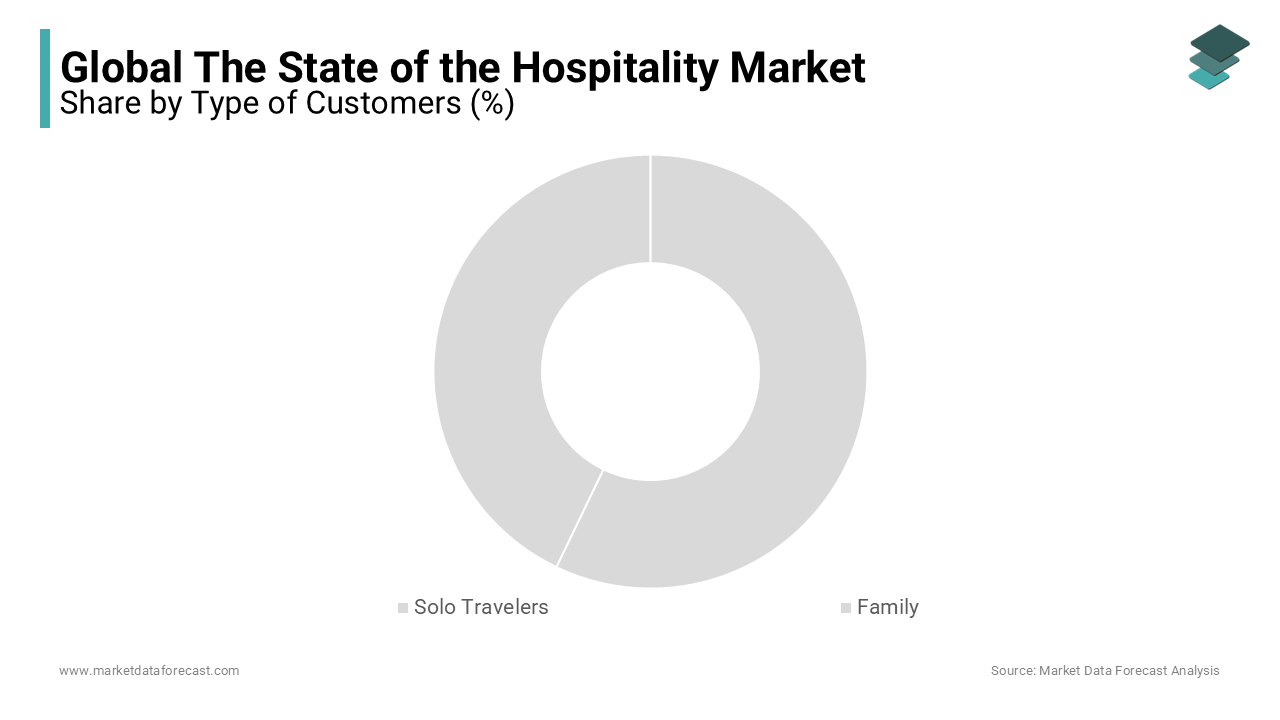
| By Customer Type | Solo travelers (rule with the prominent market share) | Family segment (showcases huge growth and expansion opportunities) |
| By Region / Country | North America (top performer capturing 34.3% share in 2025, followed by Europe at 31.2%) | Latin America (likely to witness the strongest growth opportunities during the forecast period) |
Major Market Players & Market Structure
Market Structure: Highly competitive global hospitality and food-service landscape featuring major global groups and brands competing intensely on luxury portfolio rebrandings, predictive analytics, blockchain identities, and integrated wellness destinations.
Key Companies: Compass Group Plc, Subway, Marriott International, Hilton Worldwide Holdings Inc., Intercontinental Exchange Inc., Starbucks Coffee, Sodexo, Aramark Corporation, McDonald's, Chick-fil-A, and Elior Group.
The State of the Hospitality Market Size
The state of the hospitality market reached USD 6,432.44 billion in 2025, is expected to grow to USD 7,470 billion in 2026, and is anticipated to touch USD 24,710 billion by 2034, at a CAGR of 16.13% from 2026 to 2034.
State of the Hospitality is a traditional lodging and service paradigm, evolving into a multidimensional ecosystem shaped by shifting consumer behaviors, technological integration, and socio-economic dynamics. The rise of remote work has enabled the proliferation of "workcations" and extended stays, with Airbnb reporting that 42% of its bookings in 2023 were for stays exceeding 28 days. Urban centers and coastal destinations are witnessing renewed occupancy pressures, while secondary cities and rural regions are being reimagined as viable hospitality hubs. The Bureau of Labor Statistics notes that employment in accommodation and food services reached 15.2 million in 2023, nearing pre-pandemic levels, though labor composition has shifted toward part-time and gig-based roles.
MARKET DRIVERS
Resurgence of Leisure and Experiential Travel Demand
The reemergence of leisure travel, with travelers prioritizing unique experiences over conventional itineraries, is propelling the growth of the State of the Hospitality Market. Following the constraints of the pandemic era, there has been a pronounced psychological shift toward "revenge travel," where individuals seek meaningful, immersive, and often emotionally restorative journeys. Destinations offering curated local experiences such as culinary tours, wellness retreats, and cultural immersions are witnessing higher booking premiums and longer average stays. The rise of social media as a travel inspiration tool has amplified this trend such as Instagram and TikTok collectively generated over 40 billion views on travel-related content in 2023, according to Meta’s internal analytics, which is influencing destination choices and hotel selection.
Accelerated Adoption of Digital Transformation and Contactless Technologies
The integration of digital infrastructure has become an enabler of operational efficiency and guest satisfaction, which additionally enhances the growth of the State of the Hospitality Market. Travelers now expect seamless, frictionless interactions from booking to checkout, driving widespread adoption of contactless solutions. According to the American Hotel & Lodging Association, over 78% of mid-to-upper-tier hotels in the U.S. implemented mobile check-in and digital key capabilities by 2023, a fourfold increase from 2019. This shift was catalyzed by health concerns during the pandemic but has persisted due to its convenience and alignment with tech-savvy consumer preferences. Marriott International reported that 55% of its guest interactions were conducted via mobile devices in 2023, including room service requests, concierge services, and billing.
MARKET RESTRAINTS
Persistent Labor Shortages and Workforce Retention Challenges
Many hotels and restaurants struggle to fill roles, from housekeeping and front-desk staff to chefs and managers, which is a key restraining factor for the growth of the State of Hospitality Market. The U.S. Bureau of Labor Statistics reports that the accommodation and food services sector had 890,000 job openings in December 2023, while experiencing a quit rate of 4.4%, the highest among all industries. The National Restaurant Association notes that 72% of operators cited staffing as their top challenge in 2023, with many forced to reduce operating hours or limit services. Additionally, the perception of hospitality work as transient or lacking career progression discourages long-term engagement. The Cornell School of Hotel Administration found that 45% of new hires in hotel operations leave within the first six months, citing inadequate training and poor work-life balance. Unionization efforts in cities like Los Angeles and New York have emerged in response, with 28% of hotel workers in these markets now unionized, according to the Economic Policy Institute, as employees seek better wages and protections. These labor dynamics constrain revenue potential, as understaffed properties cannot maintain cleanliness standards or deliver personalized service, which directly impacts guest satisfaction and online reviews.
Rising Operational Costs and Energy Price Volatility
The hospitality operators are confronting escalating operational expenditures in energy, supplies, and insurance, which erode profit margins and limit reinvestment capacity. The U.S. Energy Information Administration indicates that commercial electricity prices rose by 14% between 2022 and 2023, with natural gas prices peaking at $8.20 per million BTU in early 2023, a 32% year-on-year increase. For hotels, energy constitutes 4% to 6% of total operating costs, according to the Environmental Protection Agency, which is making them highly vulnerable to utility fluctuations. Luxury and full-service properties, which rely on climate control, lighting, and water heating for guest comfort, are especially exposed. In addition to energy, supply chain disruptions have inflated the cost of linens, toiletries, and food ingredients. The Bureau of Labor Statistics reports that hotel supply prices increased by 18% from 2021 to 2023, with single-use amenities and imported goods seeing the steepest rises. Insurance premiums have also surged; the National Council on Compensation Insurance found that workers’ compensation rates for hospitality employers increased by 21% in 2023 due to higher claims frequency.
MARKET OPPORTUNITIES
Expansion of Alternative Accommodations and Niche Market Segments
The diversification of lodging options beyond traditional hotels is solely to create new opportunities for the growth of the State of the Hospitality Market. Travelers are increasingly favoring unique, non-standardized stays such as vacation rentals, glamping sites, boutique inns, and heritage properties. According to the U.S. Census Bureau, the number of short-term rental listings in the U.S. grew by 23% between 2021 and 2023, with platforms like Airbnb and Vrbo reporting that 42% of bookings were for stays exceeding four weeks. This shift reflects a desire for space, privacy, and local authenticity, particularly among families, remote workers, and multi-generational groups. The rise of "workcations" has further fueled demand for properties equipped with dedicated workspaces, high-speed internet, and extended-stay amenities. Additionally, niche segments such as wellness retreats, agritourism, and eco-lodges are gaining traction. The Global Wellness Institute estimates that the wellness tourism market reached $825 billion globally in 2023, with North America accounting for 38% of spending. Properties integrating yoga, meditation, and holistic health programs are commanding premium rates and higher guest loyalty.
Integration of Sustainability and ESG-Driven Guest Engagement
Sustainability has transitioned from a peripheral concern to a core operational and marketing imperative, which is additionally to fuel the growth of the State of the Hospitality Market. Travelers are increasingly aligning their lodging choices with environmental and social values, creating a competitive advantage for properties that demonstrate genuine ESG (Environmental, Social, and Governance) commitment. Booking.com reports that 76% of global travelers in 2023 preferred to stay in eco-certified accommodations, with 48% willing to pay a premium for sustainable options. In response, leading operators are implementing energy-efficient lighting, water-saving fixtures, waste reduction programs, and carbon offset initiatives. The U.S. Environmental Protection Agency states that hotels participating in the ENERGY STAR program reduced energy use by an average of 22% between 2020 and 2023. Beyond infrastructure, transparency is key guests now expect real-time data on their stay’s environmental footprint. Marriott International introduced a "Green Stay" program in 2023, allowing guests to opt out of daily housekeeping and track water and energy savings via an app, resulting in a 15% reduction in linen washing across participating properties. Additionally, sourcing local food, supporting community initiatives, and eliminating single-use plastics enhance brand authenticity.
MARKET CHALLENGES
Geopolitical Instability and Travel Disruptions
The geopolitical tensions and global instability, which can abruptly alter travel flows and consumer confidence, are acting as a big barrier to the growth of the State of the Hospitality Market. Conflicts, diplomatic tensions, and regional unrest have a cascading effect on international tourism, affecting everything from flight availability to insurance coverage. The U.S. Department of State issued over 120 travel advisories in 2023, including Level 4 "Do Not Travel" warnings for countries like Ukraine, Sudan, and Afghanistan, directly impacting hotel occupancy in adjacent regions. Even indirect effects are significant; the Red Sea shipping disruptions in late 2023 led to rerouted flights and increased airfares, discouraging long-haul leisure travel. According to the International Air Transport Association, transatlantic passenger demand dropped by 8% in Q1 2024 compared to projections due to security concerns and flight cancellations. These disruptions are compounded by inconsistent visa policies and changing entry requirements, which deter spontaneous travel. For hospitality operators, this volatility makes long-term planning difficult and increases reliance on domestic markets.
Cybersecurity Vulnerabilities in Digital Booking and Guest Data Systems
Escalating cybersecurity risks in guest data management and reservation systems also impede the growth of the State of the Hospitality Market. The industry handles vast amounts of sensitive information, including payment details, passport numbers, and personal preferences, making it a prime target for cyberattacks. According to the U.S. Cybersecurity and Infrastructure Security Agency, the accommodation sector experienced a 37% increase in reported data breaches in 2023 compared to the previous year, with ransomware attacks affecting over 150 hotel chains globally. A notable incident involved a major reservation platform used by independent hotels, which suffered a breach compromising 3.2 million guest records, as confirmed by the Federal Trade Commission. Smaller properties, which often lack dedicated IT security teams, are especially vulnerable. The Ponemon Institute found that 68% of mid-sized hotels do not conduct regular cybersecurity audits by leaving systems exposed. Additionally, the integration of third-party booking engines, mobile apps, and cloud-based property management systems expands the attack surface.
REPORT COVERAGE
| REPORT METRIC | DETAILS |
| Market Size Available | 2025 to 2034 |
| Base Year | 2025 |
| Forecast Period | 2026 to 2034 |
| CAGR | 16.13% |
| Segments Covered | By Service, Type of Customers, Type, and Region. |
| Various Analyses Covered | Global, Regional, and Country Level Analysis; Segment-Level Analysis, DROC, PESTLE Analysis, Porter’s Five Forces Analysis, Competitive Landscape, Analyst Overview of Investment Opportunities |
| Regions Covered | North America, Europe, APAC, Latin America, Middle East & Africa |
| Market Leaders Profiled | Compass Group Plc, Subway, Marriott International, Hilton Worldwide Holdings Inc., Intercontinental Exchange Inc., Starbucks Coffee, Sodexo, Aramark Corporation, McDonald's, Chick-fil-A and Elior Group, Marriott International, and Others. |
SEGMENTAL ANALYSIS
By Services Insights
The accommodation service segment dominated the State of the Hospitality Market by capturing 52.3% of the share in 2025. The accommodation is the foundational requirement for any overnight journey, making it the most consistent and predictable segment across geographies and traveler types. According to the U.S. Department of Commerce, international visitors spent $126 billion in the United States in 2023, with lodging accounting for 38% of total expenditures. As per the American Hotel & Lodging Association, the U.S. lodging inventory includes over 5.6 million guest rooms, with independent properties representing 60% of the total. This flexibility allows operators to adapt to market shifts, such as the decline in business travel and the rise of leisure demand.
The Meeting & Event services segment is deemed to register a CAGR of 8.7% from 2025 to 2033, with the resurgence of in-person conferences, trade shows, and corporate gatherings having revitalized demand for event-capable venues. After a sharp decline during 2020–2021, the number of professional meetings rebounded to 1.2 million in North America in 2023, as reported by the Professional Convention Management Association. Companies are increasingly recognizing the value of face-to-face collaboration, networking, and team building, which virtual platforms cannot fully replicate. The Global Business Travel Association notes that corporate event spending reached $67 billion in 2023, a 34% increase from 2022. Organizers are blending physical gatherings with digital streaming, requiring advanced technology integration and on-site support staff. The Events Industry Council found that 68% of events in 2023 incorporated hybrid elements, increasing demand for high-speed internet, broadcast studios, and technical personnel. The Society for Human Resource Management reports that 52% of firms increased their event budgets in 2023 to enhance workplace culture.
By Type of Customers Insights
The solo travelers segment is ruling with the prominent share of the market, whereas the family segment has been showcasing huge growth opportunities in recent years. Increasing expenditure on traveling, especially in urban cities, has become more common in the present generation people where their preference to travel solo is anticipated to increase the share of the market to some extent. The launch of various customized packages for family travelers and raising awareness over the easy availability of all the services available online are surging the growth rate of the market.
By Type Insights
The lodging segment was the largest and held 46.5% of the State of the Hospitality Market share in 2025. Lodging remains an indispensable component of every travel journey, whether for leisure, business, or extended stays. According to the U.S. Travel Association, domestic overnight trips in the United States reached 1.8 billion in 2023, each requiring at least one night’s accommodation. The National Association of Realtors notes that 42% of vacation home buyers in 2023 intended to use their properties for short-term rentals, which reflects the integration of alternative lodging into the mainstream supply. Traditional hotels, resorts, and boutique inns continue to attract institutional demand, particularly from corporate contracts and group bookings.
The recreation segment is anticipated to grow with an expected CAGR of 9.4% from 2025 to 2033. The rising demand for experiential and wellness-focused travel has elevated recreation from an ancillary service to a primary travel motivator. Travelers are increasingly prioritizing activities such as hiking, yoga retreats, adventure sports, and cultural immersion over passive tourism. The Outdoor Industry Association reports that participation in outdoor recreation reached 175 million Americans in 2023, a 15% increase since 2019, with spending on outdoor gear and guided experiences totaling $1.2 trillion annually. Destinations are responding by integrating recreation into their core offerings. National parks saw 312 million recreational visits in 2023, as documented by the National Park Service, the highest in a decade. Resorts and lodges are now embedding guided tours, fitness programs, and nature-based activities into guest itineraries, transforming stays into active, health-oriented experiences.
REGIONAL ANALYSIS
North America: The State of the Hospitality Market Insights
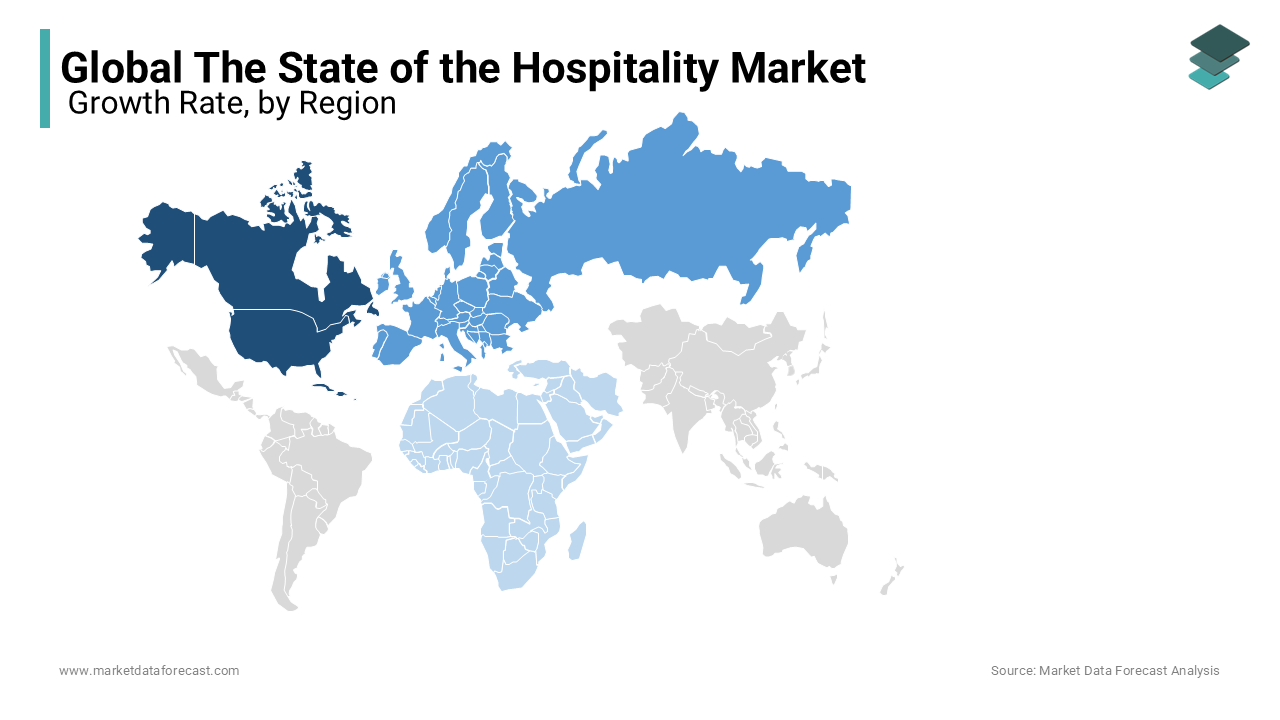
North America was the top performer of the State of the Hospitality Market by capturing 34.3% of the share in 2025 with the travel infrastructure, high disposable income, and cultural affinity for domestic and international travel. In the United States, domestic travel spending reached $1.1 trillion in 2023, with leisure travel accounting for 86% of all trips, according to the Bureau of Economic Analysis. Canada’s tourism sector rebounded strongly, welcoming 23.8 million international visitors in 2023, 92% of pre-pandemic levels, as documented by Statistics Canada. The region benefits from a dense network of full-service hotels, major airline hubs, and world-renowned destinations such as New York, Orlando, and Banff. Additionally, the rise of remote work has fueled demand for extended stays and secondary city tourism. The integration of digital booking platforms and contactless services has further modernized the guest experience.
Europe: The State of the Hospitality Market Insights
Europe was positioned second by holding 31.2% of the share in 2025 with its rich cultural heritage, extensive rail networks, and high concentration of UNESCO World Heritage Sites over 400 as documented by UNESCO. France, Italy, and Spain collectively welcomed over 200 million international tourists in 2023, according to the World Tourism Organization, driven by demand for art, cuisine, and historic cities. The European Union’s Digital Green Certificate facilitated seamless cross-border travel, boosting intra-regional mobility. Additionally, sustainability is a defining characteristic; the European Environment Agency reports that 62% of hotels in the EU participate in eco-certification programs.
Asia Pacific: The State of the Hospitality Market Insights
Asia Pacific State of the Hospitality Market is attributed to have significant CAGR in the coming years with the rising middle-class populations, urbanization, and government-led tourism initiatives in countries like China, India, and Thailand. China’s domestic tourism market generated $780 billion in spending in 2023, as reported by the Ministry of Culture and Tourism, despite delayed international reopening. India saw a 28% increase in foreign tourist arrivals in 2023, reaching 7.5 million, according to the Ministry of Tourism. Japan’s tourism rebound was dramatic, with 25 million visitors in 2023 85% of 2019 levels as noted by the Japan National Tourism Organization. The expansion of luxury resorts, integrated entertainment complexes, and airport-city developments in Southeast Asia is reshaping regional dynamics.
Latin America: The State of the Hospitality Market Insights
Latin America State of the Hospitality Market is likely to witness a strongest growth opportunities during the forecast period. Brazil leads with 6.6 million international arrivals in 2023, according to the Brazilian Ministry of Tourism, driven by events like Carnival and eco-tourism in the Amazon. Mexico welcomed 50 million visitors in 2023, as documented by INEGI, with beach resorts in Cancún and Los Cabos remaining top draws. Argentina and Colombia are gaining traction for cultural and adventure tourism, supported by improved safety and visa policies. However, economic volatility and infrastructure gaps limit scalability. The region is witnessing growth in boutique hotels and sustainable lodges, particularly in Costa Rica and Chile.
Middle East & Africa: The State of the Hospitality Market Insights
The Middle East and Africa State of the Hospitality Market growth is likely to grow exponentially in the next coming years. The Gulf Cooperation Council nations, particularly the UAE and Saudi Arabia, are driving regional transformation through massive investments in tourism infrastructure. The UAE welcomed 14.9 million visitors in 2023, according to Dubai’s Department of Economy and Tourism, supported by mega-events like Expo 2020 and the FIFA World Cup 2022 legacy.
COMPETITIVE LANDSCAPE
KEY MARKET PLAYERS
Companies playing a prominent role in the state of the hospitality market include
- Compass Group Plc
- Subway
- Marriott International
- Hilton Worldwide Holdings Inc.
- Intercontinental Exchange Inc.
- Starbucks Coffee
- Sodexo
- Aramark Corporation
- McDonald's
- Chick-fil-A
- Elior Group
- Others
The competitive dynamics of the global hospitality market are no longer defined solely by room count or geographic presence but by agility, brand relevance, and experiential differentiation. While multinational chains maintain dominance through scale and loyalty ecosystems, the rise of alternative accommodations, independent boutiques, and lifestyle brands has fragmented the landscape, forcing incumbents to innovate continuously. Digital fluency has become a prerequisite, with guest expectations centered on seamless booking, contactless access, and personalized service delivery through mobile platforms.
TOP LEADING PLAYERS IN THE MARKET
Marriott International
Marriott International stands as a defining force in the global hospitality landscape by operating an expansive portfolio that spans luxury, lifestyle, and extended-stay segments across more than 140 countries. The company has redefined scale and consistency in hotel management by combining brand diversification with operational excellence, offering everything from boutique properties to large convention-ready resorts. Its leadership is anchored in a culture of innovation, guest-centric service design, and strategic brand acquisitions that cater to evolving traveler preferences. Marriott has been instrumental in advancing digital integration, loyalty ecosystems, and sustainable hospitality practices, setting benchmarks for the industry.
Hilton Worldwide
Hilton Worldwide has established itself as a pioneer in hospitality innovation, combining heritage with forward-thinking operational strategies to maintain a dominant presence across key markets. The company’s strength lies in its balanced portfolio of iconic brands from Waldorf Astoria to Hampton by Hilton that serve diverse traveler segments while maintaining a unified commitment to quality and guest experience. Hilton has been a leader in digital transformation, introducing mobile key technology and contactless services years ahead of industry norms. Its focus on employee engagement, environmental stewardship, and inclusive travel has elevated corporate responsibility as a core competitive advantage.
TOP STRATEGIES USED BY KEY MARKET PARTICIPANTS
The cultivation of ecosystem-based loyalty programs that transcend individual stays to encompass dining, travel, entertainment, and lifestyle partnerships is top most strategy followed by many key players. These platforms are designed to deepen customer engagement by offering integrated rewards across a spectrum of services, transforming occasional guests into long-term brand advocates. By collaborating with airlines, credit card issuers, and retail brands, operators create value networks that increase switching costs and enhance customer retention.
Another approach is the strategic repositioning of real estate through adaptive reuse and mixed-use development. Companies are converting underutilized office spaces, historic buildings, and industrial sites into boutique hotels, co-living spaces, and experiential destinations. This not only reduces acquisition costs but also enables differentiation through narrative-driven design and cultural authenticity, appealing to travelers seeking unique, locally rooted experiences.
Also, embedding sustainability into core operations rather than treating it as a peripheral initiative will expand the company’s product portfolio. Leading players are integrating energy-efficient systems, eliminating single-use plastics, sourcing locally, and pursuing third-party environmental certifications as standard practice. This goes beyond compliance by serving as a brand differentiator that resonates with environmentally conscious travelers and institutional investors alike, aligning profitability with planetary responsibility.
RECENT MARKET DEVELOPMENTS
- In March 2024, Marriott International launched a global rebranding of its luxury portfolio, unifying Waldorf Astoria, St. Regis, and The Ritz-Carlton under a shared experiential framework to enhance premium guest engagement and cross-brand loyalty.
- In August 2023, Hilton Worldwide partnered with a leading AI firm to deploy an enterprise-wide predictive analytics system that optimizes room pricing, staffing allocation, and guest preference forecasting across its global property network.
- In November 2023, Accor acquired a minority stake in a sustainable hospitality startup specializing in zero-waste resort operations with its commitment to environmental innovation and circular economy principles.
- In January 2024, Hyatt Hotels Corporation opened its first integrated wellness and co-living destination in Austin, Texas, combining extended-stay accommodations with fitness programming and remote work facilities.
- In June 2024, InterContinental Hotels Group introduced a blockchain-based guest identity platform to streamline check-in and enhance data security across its franchise network in North America and Europe.
MARKET SEGMENTATION
The state of the hospitality market research report has been segmented and sub-segmented based on services, type of customers, services, and region.
By Services
- Accommodation
- Food & beverage
- Entertainment & Leisure
- Travel & Transportation
- Luxury & Boutique
- Meeting & Event
- Others
By Type of Customers
- Solo Travelers
- Family
By Type
- Recreation
- Lodging
- Food & Beverage
- Travel & Tourism
By Region
- North America
- Europe
- Asia Pacific
- Latin America
- Middle East & Africa