- Product Description Description
- Table of Contents TOC
- List of Table & Figure LOT
- Get Free Sample PDF Sample PDF
Market Size, 2025
$43.30 BnMarket Estimate, 2026
$45.15 BnMarket Forecast, 2034
$63.08 BnCAGR, 2026–2034
4.27%UK Online Advertising Market Report Summary
The UK online advertising market was valued at USD 43.30 billion in 2025, is estimated to reach USD 45.15 billion in 2026, and is projected to reach USD 63.08 billion by 2034, growing at a CAGR of 4.27% from 2026 to 2034. Market growth is driven by increasing digital media consumption, widespread smartphone adoption, and growing investments in data-driven marketing strategies. Businesses across industries are allocating larger portions of their marketing budgets to online channels to enhance customer engagement, improve brand visibility, and optimize advertising performance. The expansion of programmatic advertising, AI-powered targeting tools, and mobile-first marketing strategies is further supporting market growth across the United Kingdom.
Key Market Trends
- Increasing adoption of programmatic and automated advertising solutions.
- Growing use of AI-driven audience targeting and personalization technologies.
- Rising dominance of mobile advertising and app-based marketing campaigns.
- Expansion of video advertising, social media marketing, and influencer-driven promotions.
- Increasing focus on privacy-compliant advertising and first-party data strategies.
Segmental Insights
- Based on advertising format, the search advertising segment dominated the UK online advertising market by accounting for 45.5% share in 2025, driven by strong advertiser demand for performance-based marketing, measurable outcomes, and high consumer engagement through search engines.
- Based on platform, the mobile applications segment led the market by capturing 57.6% share in 2025, supported by growing smartphone usage, increased app engagement, and rising mobile commerce activity.
- Based on end-user vertical, the retail segment held the largest share of the market with 22.5% in 2025, driven by intense competition among retailers and the growing importance of digital advertising in influencing consumer purchasing decisions across multiple product categories.
Regional Insights
The UK online advertising market continues to demonstrate strong growth, supported by high internet penetration, advanced digital infrastructure, and widespread adoption of online marketing technologies.
- The United Kingdom was the largest online advertising market in Europe, accounting for 32.3% share in 2025.
- Growth is supported by increasing digital media consumption, a highly developed e-commerce ecosystem, and strong adoption of data-driven marketing strategies by businesses.
- The continued expansion of mobile advertising, programmatic platforms, and digital content consumption is expected to sustain market growth throughout the forecast period.
Competitive Landscape
The UK online advertising market is characterized by intense competition among global technology companies, digital advertising platforms, and marketing technology providers. Market participants are focusing on advanced audience-targeting capabilities, AI-powered advertising solutions, programmatic media-buying platforms, and privacy-focused advertising technologies to strengthen their market positions. Strategic acquisitions, platform innovation, and investments in advertising analytics are shaping competitive dynamics across the market.
Prominent companies operating in the UK online advertising market include Apple Inc., Google LLC, Meta Platforms, Inc. (Facebook), Microsoft Corporation, Amazon.com, Inc., X Corp. (formerly Twitter, Inc.), The Trade Desk, Adobe, Adform, and Equativ.
UK Online Advertising Market Size
The UK online advertising market was valued at USD 43.30 billion in 2025, is estimated to reach USD 45.15 billion in 2026, and is projected to reach USD 63.08 billion by 2034, growing at a CAGR of 4.27% from 2026 to 2034.
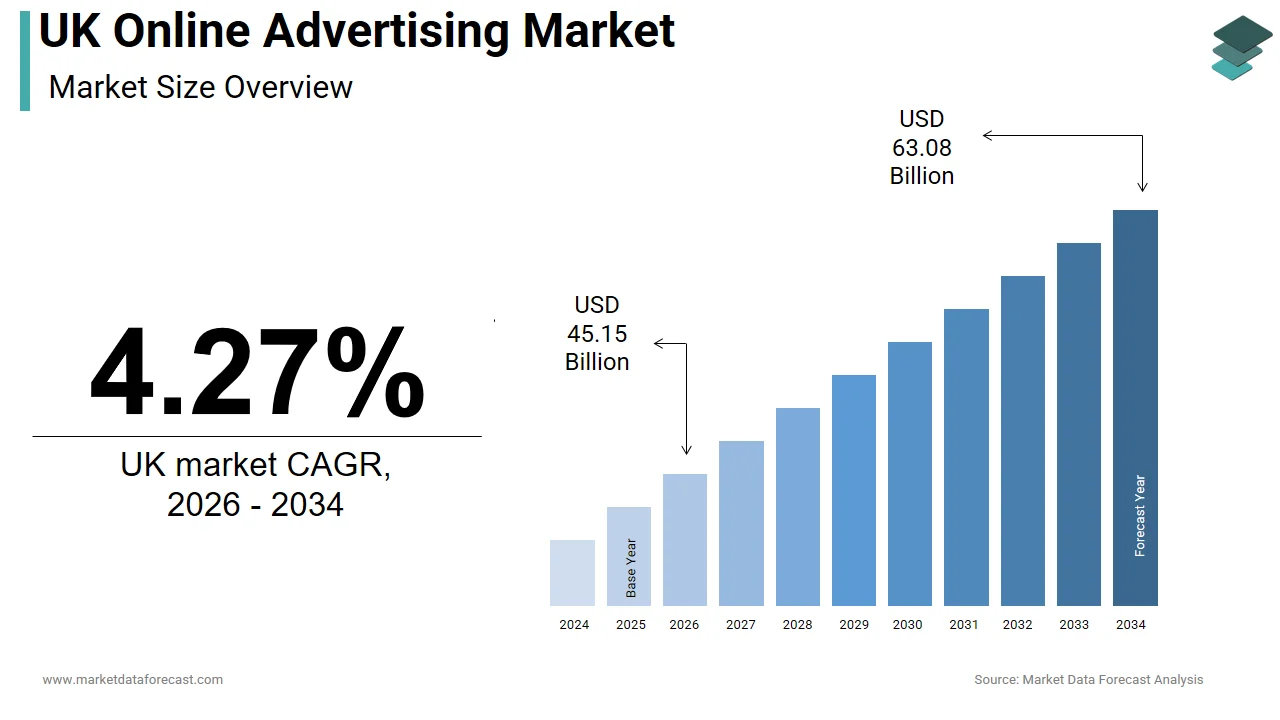
Online advertising is the practice of using the internet to deliver targeted promotional messages to audiences. It utilizes digital platforms, like search engines, social media, and websites, to drive brand awareness, website traffic, and sales through formats like paid search, display banners, and video ads. This market includes display advertisements, search engine marketing, social media promotions, and video advertising across multiple digital touchpoints. The market operates in a highly connected society where digital penetration is exceptionally high. According to data from the Office for National Statistics, 96% of households in Great Britain had internet access as early as 2020, establishing a mature foundation for near-universal digital advertising reach. Ofcom shows that the average UK adult spends over 4 hours daily online (4 hours and 20 minutes), creating substantial inventory for advertisers to capture consumer attention. Research indicates that mobile devices drive the majority of global web traffic, meaning advertising strategies must strictly prioritize mobile-optimized formats. The Office for National Statistics shows a clear demographic divide: nearly all individuals (99%) aged 16 to 24 use the internet regularly, whereas active online usage sits lower among older age brackets. This broad age distribution enables advertisers to target diverse consumer segments effectively. The regulatory environment shaped by the Digital Markets Act and data protection frameworks influences how companies collect and utilize consumer information for advertising purposes, creating a balanced landscape between innovation and privacy protection.
MARKET DRIVERSa
Pervasive Smartphone Adoption Driving Mobile First Advertising Strategies
The widespread adoption of smartphones is propelling the United Kingdom online advertising market forward. This creates constant connectivity and enables location-based targeting capabilities. Ofcom indicates that smartphone ownership among UK adults reached approximately 88% by 2023, expanding closer to 95% in subsequent years. This high penetration rate means that advertisers can reach consumers throughout their daily routines, whether commuting, shopping, or relaxing at home. Academic research from Lancaster University revealed that the average smartphone user reflexively interacts with or checks their device roughly 85 times per day. Studies show that mobile applications dictate up to 90% of total mobile screen time, proving why brands aggressively prioritize in-app ad environments over standard mobile web browsers. Mobile infrastructure reports across major networks confirm that UK 5G connections reliably deliver real-world median download speeds between 80Mbps and 210Mbps, easily handling rich interactive media and high-definition video. Location-based services utilized by a large share of smartphone owners allow advertisers to deliver geographically relevant messages, increasing conversion rates according to sources. The integration of mobile wallets used by a notable share of consumers facilitates direct response advertising, where users can make purchases immediately after viewing an advertisement. This seamless journey from awareness to transaction strengthens the return on investment for advertisers and justifies increased spending on mobile-focused campaigns.
Expanding E-Commerce Penetration Fueling Performance-Based Advertising Demand
The rapid growth of electronic commerce in the country further boosts the expansion of the United Kingdom online advertising market. This happens as retailers compete for visibility in an increasingly crowded digital marketplace. Official indexes from the Office for National Statistics demonstrate that e-commerce stabilized at roughly 27% of total UK retail spending in 2023, setting a permanent baseline above pre-pandemic levels. This substantial share of digital transactions means that brands must maintain a strong online presence through continuous advertising efforts to capture market share. A study notes that the core digital retail market in the UK captures an overwhelming majority of the population, with tens of millions interacting with digital commerce channels. Competition among retailers drives up advertising expenditure, with major players allocating a portion of their revenue toward digital marketing activities, according to research. Search engine advertising remains particularly crucial, with a considerable percentage of product searches beginning on search engines before consumers visit retailer websites. Social commerce is emerging as a significant channel, with consumers making purchases directly through social media platforms. This trend encourages brands to invest in shoppable advertisements that integrate purchasing functionality within social feeds. The average order value for customers acquired through paid advertising is higher than that of organic traffic, demonstrating the quality of conversions driven by strategic ad placements. These factors collectively ensure that e-commerce growth continues to stimulate robust demand for diverse online advertising formats.
MARKET RESTRAINTS
Stringent Data Privacy Regulations Limiting Targeting Capabilities
The implementation of comprehensive data protection legislation is a significant constraint on the United Kingdom online advertising market. This restricts how companies collect, process, and utilize personal information for targeting purposes. The United Kingdom General Data Protection Regulation requires explicit consent from users before their data can be used for advertising, which has reduced the addressable audience for personalized campaigns. Research commissioned by the Information Commissioner's Office (ICO) reveals that while public awareness of fundamental privacy rights is high, a substantial portion of consumers remain unclear about the granular tracking mechanisms behind personalized digital advertising. Research indicates that changes to cross-site tracking heavily disrupt traditional display advertising tactics, forcing brands to transition toward first-party identifiers. Multi-year tracking data compiled by AppsFlyer reveals that roughly half of global smartphone users actively opt into app tracking when prompted, with the remaining half choosing to decline permissions. The decline of cross-site tracking has accelerated a reliance on contextual advertising, which leverages advanced keyword and emotional sentiment mapping to effectively mirror the engagement rates of traditional behavioral targeting. Enterprise risk assessments show that large corporations allocate millions of pounds annually to data protection infrastructure to ensure complete legal compliance across digital advertising frameworks. The uncertainty surrounding future regulations, including potential restrictions on artificial intelligence-driven profiling, creates hesitation among advertisers to invest in advanced targeting technologies. Small and medium enterprises face particular challenges as they lack resources to develop first-party data strategies, resulting in competitive disadvantages against larger corporations with established customer databases.
Ad Blocking Technology Adoption Reducing Reach And Effectiveness
The proliferation of ad-blocking software is also a substantial obstacle to the United Kingdom online advertising market. This prevents advertisements from reaching intended audiences and diminishes campaign performance metrics. A study indicates that roughly one-third of online users in the United Kingdom actively deploy ad-blocking tools, presenting a unique challenge for standard programmatic display advertising formats. Sources highlight that younger demographics, specifically those aged 18 to 34, adopt ad-blocking technologies at significantly higher rates than the national average, making them harder to reach via conventional web browsers. Research emphasizes that ad-blocking and ad containment tools divert substantial potential ad revenue away from digital publishers annually, forcing a shift toward alternative monetization strategies. Consumer behavior studies demonstrate that as internet users become increasingly proficient at identifying sponsored content online, native formats require higher editorial quality to overcome banner blindness. Performance metrics across major video hosting networks show that the overwhelming majority of digital audiences opt to skip pre-roll advertisements the moment a skip option becomes available. The arms race between advertisers developing blocker-proof techniques and users installing more sophisticated blocking tools creates an unstable environment where campaign outcomes remain unpredictable. Audience engagement studies warn that enforcing rigid anti-ad-block walls can alienate web traffic, as a notable percentage of users prefer to leave a domain entirely rather than whitelisting the platform or disabling their extensions. This dynamic forces advertisers to diversify into influencer marketing and organic content strategies, which require longer development cycles and offer less immediate measurability compared to traditional paid placements.
MARKET OPPORTUNITIES
Emergence Of Connected Television Opening New Premium Inventory
The rapid adoption of connected television devices creates substantial opportunities for the United Kingdom online advertising market. This merges traditional television viewing habits with digital targeting precision and measurability. Connected TV adoption has matured into a dominant home infrastructure across the United Kingdom, establishing an expansive audience footprint for internet-enabled streaming platforms. Ofcom emphasizes that UK audiences commit considerable daily viewing time to streaming content, yielding massive advertising availability across premium digital platforms. Connected television advertising offers advantages over traditional broadcast, including precise audience segmentation based on viewing behavior, demographic profiles, and household characteristics. Research shows that addressable CTV campaigns dramatically reduce audience ad waste compared to traditional linear broadcasting by utilizing data-driven household identifiers. The format supports interactive elements such as clickable overlays and QR codes that enable direct response with engagement rates higher than standard video ads. Commercial streaming entities like ITVX and Channel 4 have scaled their free, ad-supported digital environments to capture tens of millions of registered profiles across the UK market. Sources indicate that programmatic CTV budgets continue to climb significantly year-on-year, allowing brands to manage automated digital campaigns with high flexibility. Brand safety is enhanced through controlled environments, unlike open web display advertising. The ability to measure actual conversions rather than just impressions appeals to performance-focused marketers. This convergence of television credibility with digital accountability positions connected television as a high-growth segment within the broader online advertising landscape.
Artificial Intelligence Integration Enhancing Campaign Optimization
The integration of artificial intelligence technologies is a key growth area for the United Kingdom online advertising market. This enables sophisticated automation, predictive analytics, and real-time optimization that improve campaign efficiency and return on investment. Artificial intelligence-powered platforms can analyze billions of data points to identify patterns and predict consumer behavior with significant accuracy, according to research by McKinsey. Machine learning algorithms optimize bidding strategies in programmatic advertising, reducing cost per acquisition while improving conversion rates. Natural language processing enables dynamic creative optimization where advertisement copy and visuals are automatically adjusted based on individual user preferences, increasing click-through rates. Chatbot integration within advertisements allows immediate customer interaction with a portion of consumers preferring instant responses to inquiries, as per research. Predictive analytics help advertisers identify high-value customer segments before they exhibit purchase intent, enabling proactive engagement strategies. Image recognition technology analyzes visual content to ensure brand safety and contextual relevance with 95 percent accuracy, according to Clarifai studies. Voice-activated advertising through smart speakers reached millions of United Kingdom households, according to sources, creating new audio advertising formats. Generative artificial intelligence tools reduce content production time, allowing brands to create personalized variations at scale, as noted by Forrester. The ability to process and act upon data in milliseconds enables real-time bid adjustments, maximizing budget efficiency. These technological advancements lower barriers to sophisticated advertising strategies, making them accessible to smaller businesses while providing competitive advantages to early adopters who can leverage artificial intelligence capabilities before competitors.
MARKET CHALLENGES
Intensifying Competition For Consumer Attention Fragmenting Audiences
The exponential growth in digital content consumption creates intense competition for consumer attention, which is a significant challenge for the United Kingdom online advertising market. This is because audiences are becoming increasingly fragmented across numerous platforms and channels. The average person encounters a large number of advertisements daily, according to research by Yankelovich, leading to advertising fatigue and diminished responsiveness. Attention spans have decreased for evaluating content, as per studies, making it difficult for advertisements to convey meaningful messages. Consumers actively multitask with a notable share using multiple devices simultaneously during media consumption, diluting the impact of any single advertisement. The proliferation of streaming services, social media platforms, news aggregators, and niche communities means that no single channel commands a dominant audience share, requiring advertisers to maintain a presence across different platforms on average. This fragmentation increases complexity and costs as each platform requires customized creative assets and management approaches. View-through rates for display advertisements have declined, indicating severe banner blindness. The saturation of influencer marketing, with a considerable portion of brands partnering with creators, has reduced authenticity and effectiveness. Consumers develop psychological resistance to persuasive messaging. This environment demands increasingly sophisticated creative strategies and substantial testing budgets to identify effective approaches amidst noise.
Rising Customer Acquisition Costs Squeezing Profit Margins
The steady escalation of customer acquisition costs is a critical hurdle for the United Kingdom online advertising market. Increased competition for limited premium inventory is driving up pricing while economic pressures constrain marketing budgets. Social media advertising costs rose across major platforms, with Facebook and Instagram experiencing the steepest increases due to high demand from e-commerce brands. Return on advertising spend has declined for every pound invested. Small and medium enterprises face particular pressure, with a portion reporting that rising advertising costs threaten profitability. The concentration of advertising inventory among a few dominant platforms, including Google, Meta, and Amazon, gives these companies substantial pricing power, enabling regular price increases. Economic uncertainty leads to a reduction in overall budgets while expecting maintained performance, according to research, creating unrealistic expectations. Attribution complexities mean that a notable share of advertising spend cannot be accurately measured, leading to inefficient allocation. The shift toward privacy-compliant measurement reduces visibility into campaign performance, making optimization more difficult and costly. Brands must invest in sophisticated analytics infrastructure, requiring additional expenditure of advertising budgets. These compounding factors squeeze margins and force difficult trade-offs between reach frequency and conversion objectives, challenging sustainable growth strategies.
REPORT COVERAGE
| REPORT METRIC | DETAILS |
| Market Size Available | 2025 to 2034 |
| Base Year | 2025 |
| Forecast Period | 2026 to 2034 |
| Segments Covered | By Advertising Format, Platform, Pricing Model, End User Vertical, and Region. |
| Various Analyses Covered | Global, Regional, and Country-Level Analysis, Segment-Level Analysis, Drivers, Restraints, Opportunities, Challenges; PESTLE Analysis; Porter’s Five Forces Analysis, Competitive Landscape, Analyst Overview of Investment Opportunities |
| Countries Covered | United Kingdom |
| Market Leaders Profiled | Apple, Inc., Google LLC, Facebook, Inc. (Meta Platforms, Inc.), Microsoft Corporation, Amazon.com, Inc., Twitter, Inc., The Trade Desk, Adobe, Adform, Equativ, and Others. |
SEGMENTAL ANALYSIS
By Advertising Format Insights
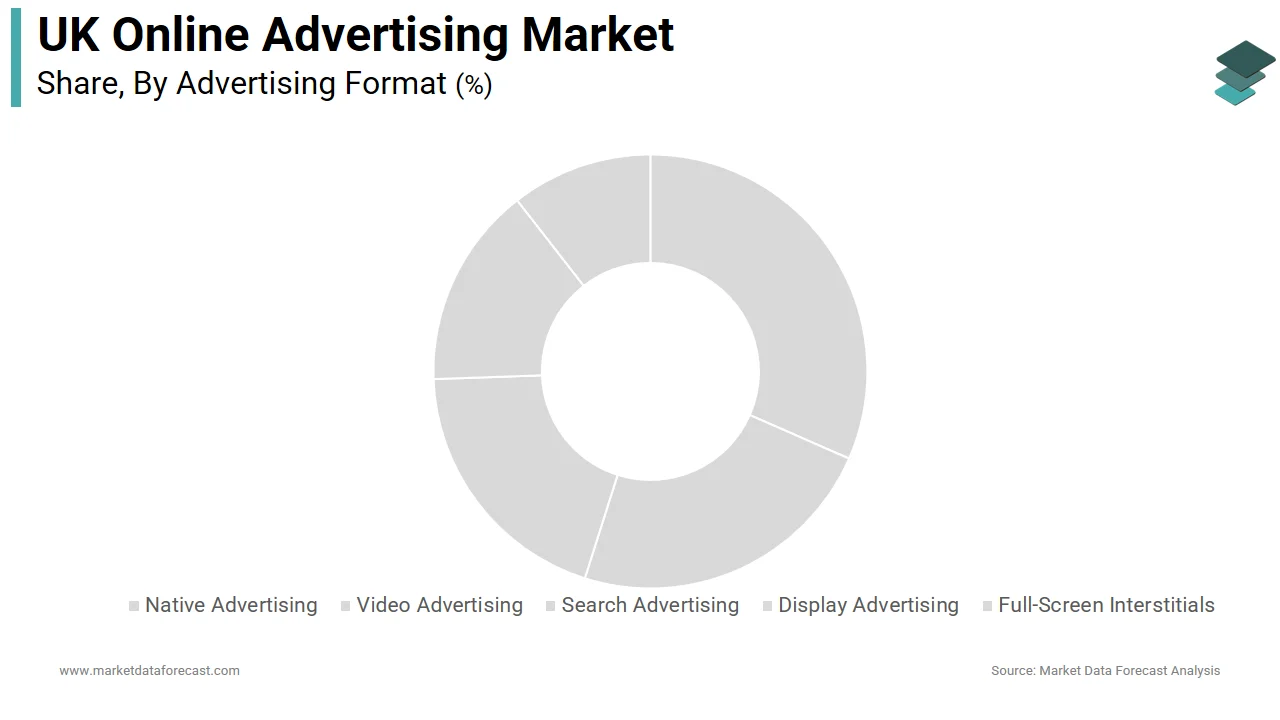
The search advertising segment led the United Kingdom online advertising market and captured a 45.5% share in 2025. Its unparalleled intent-based targeting capabilities and measurable return on investment have contributed to the leading position of this segment. This format captures consumers at the precise moment they express interest in products or services, ensuring high relevance and conversion potential. The fundamental strength of search advertising lies in its ability to connect brands with users who are actively seeking solutions, making it the most efficient channel for performance marketing. Research indicates that the majority of modern shopping journeys begin or feature touchpoints online, with search remaining a core element of initial product discovery. This behavior creates a qualified audience pool where advertisements align directly with user needs, resulting in conversion rates that are higher than display advertising. Retailers allocate a portion of their digital budgets to search campaigns. Local search queries have grown year on year, with a portion of people who search for something nearby visiting a business within a day. This direct correlation between search activity and commercial action justifies the premium pricing of search inventory and sustains its market leadership. Advertisers value the transparency of search metrics, which allow precise tracking of keyword performance, enabling continuous optimization that further enhances efficiency and solidifies its dominant position.
The technological sophistication underlying search advertising platforms enables precise matching between user queries and advertiser offerings, creating a highly efficient marketplace that maximizes value for both parties. Modern search engines utilize artificial intelligence and machine learning to understand the semantic meaning behind queries rather than relying solely on keyword matching. According to a study, this contextual understanding has improved ad relevance scores, leading to better user experiences and higher advertiser satisfaction. The implementation of smart bidding strategies allows automated adjustment of bids based on real-time signals such as device type, location, time of day, and user history, optimizing spend allocation. These algorithms process a substantial volume of data points per auction, ensuring that the most appropriate advertisement is shown to each user. Quality score mechanisms reward advertisers who create relevant landing pages and compelling ad copy with lower costs per click, reducing barriers for small businesses. Dynamic search ads automatically generate headlines and landing pages based on website content covering long tail queries that account for a notable share of all searches, according to research. This comprehensive coverage ensures that advertisers capture niche demand that would otherwise remain untapped. The continuous evolution of these technologies maintains search advertising at the forefront of digital marketing effectiveness, sustaining its leadership position.
The video advertising segment is likely to experience the fastest CAGR of 14.5% during the forecast period due to increasing consumer preference for visual content and the proliferation of high-speed internet infrastructure, enabling seamless video consumption across devices. The shift toward video content consumption reflects fundamental changes in how audiences prefer to receive information and entertainment, creating unprecedented demand for video advertising inventory. Short-form video platforms have experienced explosive growth, with TikTok reaching millions of monthly active users in the United Kingdom. This demographic engagement translates directly into advertising opportunities, with most internet traffic expected to come from video by 2025. Video advertisements achieve more shares than text and image content combined, demonstrating superior viral potential. Brand recall rates for video ads are higher compared to those for static formats, according to studies indicating stronger memory retention. The emotional connection facilitated by video storytelling results in higher purchase intent among viewers. Live streaming has emerged as a powerful subsegment. Interactive video features such as shoppable overlays and choose your own adventure formats engage users for longer than passive viewing. These engagement metrics justify increased advertiser investment, driving the segment's exceptional growth trajectory as brands recognize video's unique ability to convey complex messages and build emotional connections efficiently.
The widespread deployment of fifth-generation mobile networks and fiber optic broadband infrastructure has removed technical barriers that previously limited video advertising adoption, enabling high-quality, seamless viewing experiences. Fiber broadband subscriptions have grown to millions of households, representing significant penetration ensuring stable home connectivity for extended viewing sessions. These infrastructure improvements enable advertisers to utilize richer formats, including 360-degree videos, augmented reality overlays, and interactive elements that require substantial bandwidth. Loading times for video advertisements have decreased on fifth-generation networks, according to the Ericsson Mobility Report, reducing abandonment rates significantly. Connected television devices benefit from this infrastructure, with many households now owning smart televisions capable of streaming high-definition content. Cloud-based video processing allows dynamic insertion of localized advertisements into streaming content, reaching significant accuracy. These technological foundations support increasingly sophisticated video advertising formats that deliver superior user experiences while providing advertisers with detailed performance metrics, driving continued investment and segment growth.
By Platform Insights
The mobile applications segment dominated the United Kingdom online advertising market and accounted for a 57.6% share in 2025. They dominate advertising expenditure and user attention by delivering immersive, personalized experiences that fit flawlessly into daily life. The pervasive integration of mobile applications into everyday life generates substantial advertising inventory as users spend considerable time engaged with various apps for communication, entertainment, shopping, and productivity. Social media applications alone account for notable hours of this usage, with WhatsApp, Facebook, and Instagram dominating engagement metrics. Gaming applications attract millions of active players in the United Kingdom, spending a significant number of minutes per session. Shopping applications have seen growth in session duration as consumers browse products, compare prices, and read reviews within dedicated retail apps. In-app advertising formats, including rewarded videos, interstitials, and native placements, achieve engagement rates higher than mobile web banners. Push notifications drive higher open rates compared to email marketing, enabling timely promotional messaging. The personalization capabilities of applications allow advertisers to leverage device data, location information, and usage patterns to deliver highly relevant advertisements. This combination of extensive usage time, diverse application categories, and advanced targeting capabilities establishes mobile applications as the primary platform for digital advertising investment.
Mobile applications offer diverse and effective monetization strategies that provide advertisers with flexible options to achieve specific campaign objectives while delivering strong returns on investment. In-app purchase integration allows advertisers to track direct revenue attribution, with 65 percent of mobile commerce transactions occurring within applications, according to Statista data. Rewarded video advertisements, where users voluntarily watch ads in exchange for in-app benefits, achieve notable completion rates significantly outperforming forced view formats. Native advertising within applications blends seamlessly with content, resulting in higher engagement rates compared to traditional banner ads. Programmatic in-app buying has matured with real-time bidding platforms processing billions of requests daily in the United Kingdom market, enabling efficient inventory acquisition. Retargeting capabilities within applications achieve higher conversion rates compared to those for cold audiences, demonstrating the value of reaching engaged users. Cross-promotion networks allow developers to advertise their other applications to existing users, reducing acquisition costs. The availability of detailed analytics, including session length, retention rates, and lifetime value metrics, enables precise optimization of advertising spend. These sophisticated monetization mechanisms, combined with measurable outcomes, make mobile applications the preferred platform for performance-driven advertisers seeking accountable results.
The social media platforms segment is on the rise and is expected to be the fastest-growing segment in the market by witnessing a CAGR of 12.8% from 2026 to 2034, owing to evolving platform functionalities that transform social networks into comprehensive commerce and engagement ecosystems. In addition, the convergence of social media and electronic commerce creates powerful advertising opportunities where discovery, consideration, and purchase occur within unified environments, eliminating friction in the customer journey. Instagram Shopping features have been adopted by a substantial number of United Kingdom businesses, enabling product tagging in posts and stories that drive higher engagement than standard posts, as reported by Hootsuite. A study reported that most weekly users have made a purchase based on pins from brands, highlighting the platform's influence on buying decisions. Live shopping events on social platforms notably achieve conversion rates during broadcasts, significantly exceeding traditional e-commerce averages. The integration of augmented reality try-on features for beauty and fashion products reduces return rates. Social proof mechanisms, including user-generated content and influencer endorsements embedded within advertisements, increase trust. Payment integrations with Apple Pay, Google Pay, and platform-specific wallets streamline checkout processes, reducing cart abandonment. These seamless shopping experiences transform social media from awareness channels into direct sales drivers, attracting increased advertising budgets from retailers seeking measurable revenue impact.
Advanced recommendation algorithms employed by social media platforms dramatically extend the reach of advertising content beyond existing follower bases, enabling brands to discover and engage new audiences with unprecedented precision. TikTok's For You page algorithm analyzes a large number of data points per user, including watch time interactions and content preferences, to serve highly personalized content. This system enables advertisements to achieve viral distribution with top-performing branded content reaching millions of views organically, as reported by Influencer Marketing Hub. Instagram's Explore page delivers content to users based on similar interests, exposing brands to audiences with higher affinity scores, according to Later social media analytics. LinkedIn's professional graph allows business-to-business advertisers to target decision makers with significant accuracy based on job title, industry, and company size, as stated by LinkedIn Marketing Solutions. Cross-platform syndication enables advertisements created for one network to be automatically optimized for others, reducing production costs. Lookalike audience modeling identifies users with characteristics similar to existing customers, achieving higher conversion rates than broad targeting. Real-time trend detection allows brands to capitalize on emerging topics with advertisements appearing within hours of trend identification, as noted by Brandwatch analytics. This algorithmic amplification ensures that advertising investments achieve maximum visibility among receptive audiences, driving the segment's rapid growth.
By End User Vertical Insights
In 2025, the retail segment held the majority share of 22.5% of the United Kingdom online advertising market because of intense competition among merchants and the critical importance of digital visibility in influencing purchasing decisions across diverse product categories. The highly fragmented and competitive nature of the retail sector forces businesses to maintain a constant advertising presence to capture consumer attention and defend market share against numerous rivals. Official business registers from the Office for National Statistics highlight a highly dense and competitive retail landscape across the United Kingdom, making distinct digital advertising and strategic market differentiation essential for brand survival. Competitive market pressures push major retailers to commit significant portions of their overall marketing budgets directly into digital channels to optimize consumer acquisition. Price comparison platforms command massive consumer attention in the United Kingdom, driving retail brands to bid aggressively for visibility during the decision-making stage of the shopping journey. Seasonal retail milestones like Black Friday and the winter holidays trigger massive ad spend surges as brands compete for consumer holiday budgets. New e-commerce entrants must carefully balance capital allocation, focusing initial expenditures on targeted digital awareness campaigns to establish early market visibility. Private label brands are aggressively optimizing their digital presence, leveraging search and social channels to challenge established legacy manufacturers. Flash sale models effectively leverage scarcity and urgency-driven messaging to capture immediate consumer interest and accelerate the path to purchase. The low switching costs for consumers mean that brands must continuously remind shoppers of their value propositions, preventing defection to competitors. This relentless competitive pressure ensures that retail remains the largest advertiser category, sustaining its market leadership through substantial and consistent investment levels.
The evolution of retail toward omnichannel models necessitates sophisticated advertising strategies that coordinate messaging across multiple digital touchpoints to create seamless customer experiences that drive both online and offline sales. Studies from the Royal Mail indicate that the widespread popularity of click-and-collect services requires retailers to deploy localized, location-based advertising to successfully bridge online shopping with physical store foot traffic. Integrating customer rewards programs with mobile applications allows brands to deliver hyper-personalized notifications that significantly outperform generalized, mass-market promotions. Incorporating augmented reality features for virtual product trials significantly elevates consumer purchasing confidence while helping to mitigate high product return rates. The adoption of voice-enabled smart assistants creates unique audio branding opportunities, requiring long-term optimization for conversational search phrases. Social media integration with inventory systems enables real-time promotion of available stock, reducing missed sales opportunities. Customer data platforms unify online and offline behavior, enabling retargeting of store visitors. The complexity of managing these interconnected channels demands substantial advertising investment in technology and creative assets, reinforcing retail's position as the dominant vertical in online advertising expenditure.
The health care segment is expected to exhibit a noteworthy CAGR of 16.2% between 2026 and 2034. This accelerated growth is propelled by increasing consumer focus on wellness, digital health adoption, and regulatory changes enabling broader pharmaceutical advertising. Growing public awareness of health and wellness has transformed consumers into proactive managers of their wellbeing, driving demand for health-related information products and services that advertisers are eager to supply. NHS Digital reports indicate that a significant portion of the population now utilizes official online triage services and health content, reflecting a sustained shift toward digital-first healthcare information seeking. The adoption of wearable fitness technology continues to rise steadily across the United Kingdom, creating a valuable audience segment for health-related advertising. Increased public awareness has driven a surge in individuals seeking information and support for therapy services, prompting providers to expand their digital outreach. Telemedicine consultations grew during recent years and stabilized, sustaining demand for platform advertising. NHS England has actively expanded its use of virtual wards and remote monitoring technologies to manage chronic conditions at home, creating new commercial avenues for medical technology suppliers. Yoga and meditation application downloads increased year on year as per App Annie data, indicating sustained interest in holistic health solutions. The democratization of health information empowers consumers to research conditions, treatments, and providers extensively before making decisions, creating multiple advertising touchpoints throughout the patient journey. This behavioral shift toward proactive health management ensures continued growth in health care advertising expenditure.
The emergence of digital therapeutics, wearable health devices, and artificial intelligence-powered diagnostic tools creates new advertising categories as innovative companies seek to educate consumers and health care professionals about novel solutions. Remote patient monitoring devices prescribed by physicians reached a large number of units, creating business-to-business advertising opportunities targeting health care providers. Genetic testing services marketed directly to consumers have grown annually. Chronic disease management platforms partner with insurers requiring coordinated business-to-business and business-to-consumer advertising strategies. Regulatory approval of digital prescriptions for conditions like insomnia and anxiety opens new therapeutic categories requiring educational advertising campaigns, as stated by the Medicines and Healthcare products Regulatory Agency guidelines. The clinical validation of digital interventions legitimizes them as medical treatments, justifying premium positioning and substantial marketing budgets. This innovation pipeline ensures sustained growth in health care advertising as new solutions continuously enter the market, requiring consumer education and adoption efforts.
COUNTRY ANALYSIS
UK Online Advertising Market Analysis
The United Kingdom was the largest online advertising market in Europe and occupied a 32.3% share in 2025. This growth of the UK market was driven by the country's advanced digital infrastructure, high internet penetration rates, and sophisticated advertiser ecosystem that collectively create an environment conducive to substantial online advertising investment. The market benefits from a concentrated population with 96 percent household internet access, as per the Office for National Statistics, ensuring a broad reach for digital campaigns. London serves as a global advertising hub, hosting the headquarters of major agencies and technology platforms that drive innovation and best practice development across the region. The regulatory framework established through the United Kingdom General Data Protection Regulation provides clarity for advertisers while protecting consumer rights, creating a balanced operating environment. English language dominance facilitates content creation and campaign scaling without translation costs, enhancing efficiency compared to multilingual European markets. The country's strong e-commerce sector, accounting for 27 percent of retail sales according to the Office for National Statistics, generates sustained demand for performance advertising. Financial services concentration in London drives high-value business-to-business advertising. The presence of world-class universities produces talent for the advertising technology sector, with thousands of digital marketing professionals employed in the country. Brexit-related adjustments have been largely absorbed, with advertising growth resuming annually. The mature market exhibits sophisticated measurement capabilities with a large share of advertisers utilizing multi-touch attribution models, enabling optimized budget allocation. This combination of scale, sophistication, and stability ensures the United Kingdom maintains its leadership position in the European online advertising landscape.
COMPETITIVE LANDSCAPE
The competitive landscape of the United Kingdom online advertising market is characterized by intense rivalry among global technology giants, specialized niche platforms, and traditional media companies transitioning to digital models. Dominant players leverage vast data repositories and advanced algorithmic capabilities to offer superior targeting and measurement solutions that attract the majority of advertiser spending. Smaller specialized firms compete by offering unique inventory access, innovative ad formats, or industry-specific expertise that larger platforms cannot easily replicate. The barrier to entry remains high due to significant technology infrastructure requirements and established network effects favoring incumbents. Regulatory scrutiny regarding data privacy and market concentration adds complexity, forcing all participants to invest heavily in compliance and transparent practices. Consolidation activities through acquisitions enable larger entities to expand their service offerings and eliminate potential threats. Advertisers increasingly demand accountability and proven return on investment, pressuring platforms to demonstrate tangible business outcomes rather than mere impression volumes. This dynamic environment fosters continuous innovation but also creates pressure on profit margins as competition for premium inventory intensifies across all digital channels.
KEY MARKET PLAYERS
The major players in the UK online advertising market include
- Apple, Inc.
- Google LLC
- Facebook, Inc. (Meta Platforms, Inc.)
- Microsoft Corporation
- com, Inc.
- Twitter, Inc.
- The Trade Desk
- Adobe
- Adform
- Equativ
TOP PLAYERS IN THE MARKET
- Google maintains a dominant position in the United Kingdom online advertising landscape through its comprehensive suite of search and display advertising tools. The company continuously enhances its artificial intelligence capabilities to improve ad targeting precision and measurement accuracy for British advertisers. Recent initiatives include expanding privacy sandbox technologies to replace third-party cookies while maintaining effective audience segmentation. Google has also strengthened partnerships with major United Kingdom publishers to ensure premium inventory availability across its demand side platforms. The integration of YouTube shopping features directly into video advertisements has created new revenue streams for content creators and brands alike. These strategic developments reinforce its infrastructure leadership and deepen advertiser reliance on its ecosystem for performance marketing objectives across multiple digital touchpoints.
- Meta Platforms leverages its extensive social media networks, including Facebook and Instagram, to deliver highly engaging visual advertising experiences to United Kingdom audiences. The company has heavily invested in reel formats and short-form video content to capture shifting consumer attention patterns among younger demographics. Recent enhancements to its business messaging tools enable seamless customer service interactions directly within advertisement interfaces, improving conversion rates significantly. Meta has also introduced advanced augmented reality try-on features for retail advertisers, allowing users to visualize products before purchase. The platform continues to refine its machine learning algorithms to optimize ad delivery while navigating evolving data privacy regulations. These innovations sustain high engagement levels and attract substantial advertising budgets from brands seeking immersive social commerce opportunities.
- Amazon Advertising has rapidly expanded its influence in the United Kingdom market by capitalizing on its vast e-commerce database and direct purchase intent signals. The company offers sponsored product placements that appear prominently during consumer search journeys, driving immediate sales conversions for retailers. Recent expansions include integrating advertising options into Prime Video streaming services, providing brands access to premium television audiences. Amazon has also developed sophisticated attribution models that track offline purchases resulting from online ad exposure, enhancing return on investment visibility. The launch of self-service advertising portals enables small and medium enterprises to manage campaigns efficiently without agency support. These strategic moves leverage its unique closed-loop ecosystem to offer advertisers measurable outcomes that differentiate its platform from traditional digital media competitors.
TOP STRATEGIES USED BY KEY MARKET PARTICIPANTS
Key players in the United Kingdom online advertising market employ several critical strategies to maintain competitive advantages and drive growth. Artificial intelligence integration remains paramount as companies utilize machine learning algorithms to optimize bidding strategies, enhance targeting precision, and personalize creative content at scale. Privacy-first approaches are widely adopted, with firms developing contextual advertising solutions and first-party data frameworks to comply with stringent regulations while maintaining campaign effectiveness. Platform diversification is another common strategy where advertisers spread budgets across search, social video, and connected television channels to mitigate risk and maximize reach. Strategic partnerships between technology providers, publishers, and agencies facilitate seamless inventory access and improved measurement capabilities. Investment in proprietary analytics tools enables deeper insights into consumer behavior and attribution modeling. Continuous innovation in ad formats such as interactive video, shoppable posts, and augmented reality experiences keeps engagement levels high. These multifaceted strategies ensure sustained relevance and profitability in an increasingly complex digital landscape.
MARKET SEGMENTATION
This research report on the UK online advertising market has been segmented and sub-segmented based on the following categories.
By Advertising Format
- Native Advertising
- Video Advertising
- Search Advertising
- Display Advertising
- Full-Screen Interstitials
- Others
By Platform
- Mobiles Application
- Social Media Platforms
- Laptops, Desktops & Tablets
- Others
By Pricing Model
- Flat Rate Pricing Model
- Cost Per Mille Pricing Model
- Cost Per Click Pricing Model
By End User Vertical
- Media & Entertainment
- BFSI
- Education
- Retail & Consumer Goods
- IT & Telecom
- Healthcare
- Others