- Product Description Description
- Table of Contents TOC
- List of Table & Figure LOT
- Get Free Sample PDF Sample PDF
Market Size, 2025
$55.42 BnMarket Estimate, 2026
$64.00 BnMarket Forecast, 2034
$202.55 BnCAGR, 2026–2034
15.49%U.S. Healthcare IT Market Report Summary
The U.S. healthcare IT market was valued at USD 55.42 billion in 2025, is estimated to reach USD 64.00 billion in 2026, and is projected to reach USD 202.55 billion by 2034, growing at a CAGR of 15.49% during the forecast period from 2026 to 2034. The growth of the U.S. healthcare IT market is driven by the increasing adoption of electronic health records, rising demand for telehealth services, and growing investments in healthcare infrastructure modernization. Additionally, the expansion of artificial intelligence, cloud computing, interoperability solutions, and remote patient monitoring technologies is further accelerating market growth.
Key Market Trends
- Rising adoption of electronic health records (EHRs) across hospitals and healthcare facilities
- Increasing demand for telehealth and virtual care platforms driven by remote healthcare delivery trends
- Growing integration of artificial intelligence and predictive analytics in clinical decision-making
- Expansion of remote patient monitoring solutions for chronic disease management
- Strong focus on interoperability and secure healthcare data exchange systems
Segmental Insights
- Based on solution, the clinical solutions segment was the largest and held a significant share of the U.S. healthcare IT market in 2025. The segment’s dominance is attributed to the widespread adoption of electronic health records, clinical decision support systems, and patient management platforms across healthcare organizations.
- Based on component, the software and services segment accounted for the largest share of the U.S. healthcare IT market in 2025. This dominance is driven by the growing need for cloud-based healthcare applications, IT consulting, implementation services, and cybersecurity solutions.
- Based on end user, the healthcare providers segment was the largest contributor to the U.S. healthcare IT market in 2025. The segment growth is supported by the increasing digitalization of hospitals, ambulatory centers, and physician practices to improve patient care and operational efficiency.
Regional Insights
The U.S. healthcare IT market is witnessing strong growth across regions such as California, Washington, Oregon, New York, and the rest of the United States, supported by the presence of advanced healthcare infrastructure, strong technology adoption, and favorable government initiatives promoting healthcare digitalization. The country continues to lead globally in healthcare innovation, AI integration, and telehealth adoption, making it a key hub for healthcare IT expansion.
Competitive Landscape
The U.S. healthcare IT market is highly competitive and characterized by the presence of global technology companies, healthcare software providers, and specialized digital health firms competing through innovation, interoperability capabilities, and cloud-based healthcare solutions. Companies are increasingly focusing on AI-driven analytics, telehealth integration, cybersecurity enhancements, and advanced patient engagement platforms to strengthen their market positions. Prominent players in the U.S. healthcare IT market include McKesson Corporation, Epic Systems Corporation, Cerner Corporation, GE Healthcare, Philips Healthcare, Athena Health, Inc., Allscripts Healthcare Solutions, Inc., Oracle Corporation, Cognizant Technology Solutions Corporation, Dell Technologies, Optum, Inc., and Infor, Inc.
 Download Free Sample Report
U.S. Healthcare IT Market Size
The U.S. healthcare IT market size was valued at USD 55.42 billion in 2025, is estimated to reach USD 64.00 billion in 2026, and is projected to reach USD 202.55 billion by 2034, growing at a CAGR of 15.49% from 2026 to 2034.
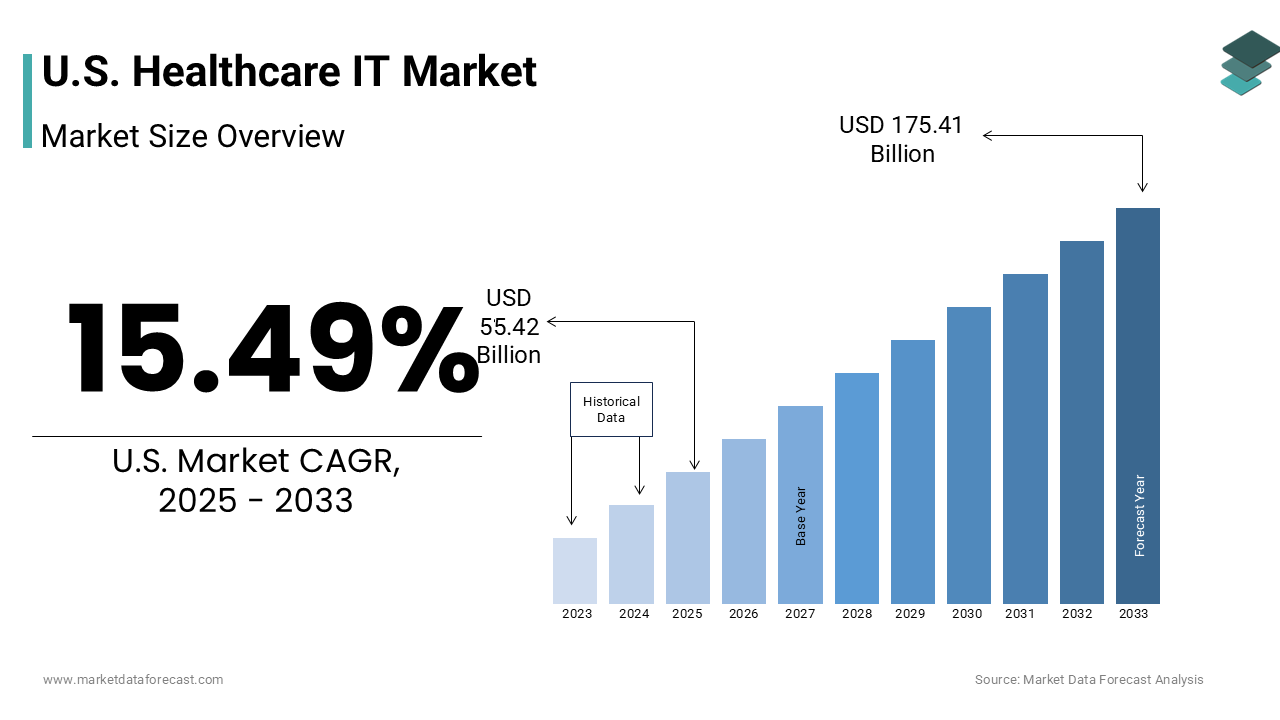
The U.S. healthcare IT market is likely to witness sustained expansion over the next few years, as infrastructure modernization becomes a top priority for federal and private stakeholders. The healthcare IT encompasses a broad array of technologies and software solutions, designed to manage clinical, administrative, and financial operations within the healthcare ecosystem. This sector includes electronic health records, telemedicine platforms, revenue cycle management systems, and data analytics tools that facilitate the digitization of patient care. The transition from paper-based records to digital systems has fundamentally altered how providers deliver services and interact with patients. According to the Office of the National Coordinator for Health Information Technology, approximately 96% of non-federal acute care hospitals in the U.S. have adopted a certified electronic health record technology. This widespread adoption underscores the critical role of IT infrastructure in modern medical practice. Furthermore, as per the Centers for Medicare and Medicaid Services, over 400 million individuals are covered by programs that require robust data reporting and interoperability standards. These regulatory mandates drive continuous investment in compliant IT solutions. The aging population also contributes to market dynamics, as chronic disease management requires sophisticated monitoring and data integration. As per the Urban Institute and Census Bureau data, individuals aged 65 and older are projected to reach 80 million by 2040, necessitating scalable healthcare IT systems. The integration of artificial intelligence and machine learning further enhances diagnostic accuracy and operational efficiency. Providers increasingly rely on real-time data to make informed clinical decisions and optimize resource allocation. This technological evolution supports value-based care models that prioritize patient outcomes over volume of services. The market is characterized by ongoing innovation aimed at improving accessibility, reducing costs, and enhancing the overall quality of care delivery across diverse healthcare settings.
MARKET DRIVERS
Mandates for interoperability and data exchange drive system upgrades and integration
Federal mandates requiring seamless data exchange between different healthcare systems is a key driver for the U.S. healthcare IT market. The 21st Century Cures Act and subsequent rules from the Office of the National Coordinator for Health Information Technology prohibit information blocking and require providers to share patient data electronically. According to the Office of the National Coordinator for Health Information Technology, these regulations compel healthcare organizations to upgrade their existing IT infrastructure to support standardized application programming interfaces. This regulatory pressure ensures that patient information can flow freely across different platforms, improving care coordination and reducing redundant testing. As per the American Hospital Association, over 80% of hospitals have implemented some form of health information exchange to comply with these standards. The need for interoperability drives demand for middleware solutions and integration engines that connect disparate electronic health record systems. As per the Healthcare Information and Management Systems Society, interoperable data exchange can reduce administrative costs by up to 15%, by automating prior authorizations and referrals. Furthermore, payers are increasingly requiring detailed clinical data for value-based reimbursement models, which necessitates robust data aggregation capabilities. The push for nationwide health information networks encourages providers to invest in cloud-based solutions that facilitate secure and scalable data sharing. These regulatory and economic incentives create a sustained demand for advanced healthcare IT solutions that ensure compliance and enhance operational efficiency. Consequently, the mandate for interoperability acts as a powerful catalyst for market growth and technological adoption.
Rising prevalence of chronic diseases necessitates advanced remote monitoring solutions
The increasing prevalence of chronic diseases, such as diabetes, heart disease, and respiratory conditions drives the adoption of remote patient monitoring and related healthcare IT solutions, which is further propelling the expansion of the U.S. healthcare IT market. Chronic diseases account for a significant portion of healthcare expenditures and require continuous management to prevent complications and hospitalizations. According to the Centers for Disease Control and Prevention, six in ten adults in the U.S. have a chronic disease, and four in ten have two or more. This high burden of illness creates an urgent need for technologies that enable proactive care management outside traditional clinical settings. Remote patient monitoring devices integrated with healthcare IT platforms allow providers to track vital signs and symptoms in real time. As per the American Medical Association, remote monitoring can reduce hospital readmissions by up to 38% for patients with heart failure. The ability to intervene early, based on data alerts, improves patient outcomes and reduces the strain on emergency departments. Furthermore, the aging population is more likely to suffer from multiple chronic conditions, making home-based monitoring essential for maintaining quality of life. As per the National Council on Aging, technology-enabled care services are increasingly covered by Medicare, expanding access for seniors. The integration of these devices with electronic health records ensures that clinicians have a comprehensive view of patient health. This synergy between hardware and software drives demand for comprehensive healthcare IT ecosystems that support chronic disease management. Consequently, the rising tide of chronic illness fuels sustained growth in the healthcare IT sector.
MARKET RESTRAINTS
High implementation and maintenance costs restrict adoption among smaller providers
The substantial financial burden associated with implementing and maintaining healthcare IT systems is primarily hindering the expansion of the U.S. healthcare IT market. Initial costs for software licensing, hardware installation, and staff training can be prohibitive for organizations with limited capital reserves. According to the Medical Group Management Association, the average cost of implementing an electronic health record system for a small practice exceeds 150,000 dollars, excluding ongoing maintenance fees. These expenses include regular software updates, cybersecurity measures, and technical support, which add to the total cost of ownership. As per the American Academy of Family Physicians, nearly 30% of independent practices have considered closing or merging due to financial pressures exacerbated by IT investments. Furthermore, the complexity of integrating new systems with legacy infrastructure often requires specialized consultants, increasing implementation timelines and costs. As per the Healthcare Financial Management Association, smaller providers struggle to achieve economies of scale, making it difficult to justify the return on investment for advanced IT solutions. The rapid pace of technological change also means that systems may become obsolete quickly, requiring frequent upgrades. This financial strain limits the ability of smaller entities to adopt innovative technologies, such as artificial intelligence or predictive analytics. Consequently, the high cost barrier creates a disparity in technology adoption between large health systems and smaller practices, hindering widespread market penetration and equitable access to advanced care tools.
Interoperability issues and lack of standardization hinder seamless data integration
Despite regulatory pushes for interoperability, significant technical and semantic barriers remain that hinder the seamless integration of healthcare IT systems and further impeding the U.S. market growth. Different vendors often use proprietary data formats and standards that are incompatible with one another, creating silos of information. According to the Office of the National Coordinator for Health Information Technology, while most providers can send electronic health information, fewer than 60% can receive and integrate it into their workflows effectively. This lack of true interoperability forces clinicians to manually enter data or rely on fax machines, which is inefficient and prone to errors. As per the Healthcare Information and Management Systems Society, physicians spend an average of 15 hours per week on administrative tasks related to data entry and reconciliation. The absence of universal standards for data exchange complicates the development of integrated care platforms and limits the utility of aggregated data for population health management. As per the Journal of the American Medical Informatics Association, semantic interoperability remains a challenge, because different systems may define clinical terms differently, leading to misinterpretation of data. Furthermore, the fragmentation of the healthcare landscape with numerous stakeholders, including hospitals, labs, and pharmacies, exacerbates the difficulty of establishing seamless connections. These technical hurdles increase the complexity and cost of IT implementations, discouraging some providers from pursuing full integration. Until industry-wide standards are universally adopted and enforced, interoperability issues will continue to restrain the full potential of the healthcare IT market.
MARKET OPPORTUNITIES
Expansion of telehealth services creates demand for integrated virtual care platforms
The sustained expansion of telehealth services is a significant opportunity for the U.S. healthcare IT market, by driving demand for integrated virtual care platforms. The pandemic accelerated the adoption of remote consultations, and this trend has persisted as patients and providers recognize the convenience and accessibility of virtual care. According to the Centers for Disease Control and Prevention, telehealth visits accounted for approximately 15% of all outpatient visits in 2023, indicating a permanent shift in care delivery models. This growth creates opportunities for IT vendors to develop comprehensive platforms that combine video conferencing, electronic health records, and remote monitoring capabilities. As per the American Telemedicine Association, 85% of consumers prefer providers who offer telehealth options, highlighting the competitive advantage of digital readiness. Furthermore, the integration of artificial intelligence into telehealth platforms enables triage and preliminary diagnosis, enhancing the efficiency of virtual visits. As per the National Library of Medicine, AI-driven chatbots can handle up to 40% of routine patient inquiries, reducing the workload on clinical staff. The expansion of broadband access through federal initiatives also supports the growth of telehealth in rural areas, widening the potential user base. Additionally, payers are increasingly reimbursing for virtual care services, making it a viable revenue stream for providers. These factors collectively create a robust environment for innovation and investment in telehealth IT solutions. By offering seamless and secure virtual care experiences, IT companies can capture a growing segment of the healthcare market.
Integration of artificial intelligence for predictive analytics enhances clinical decision making
The integration of artificial intelligence and machine learning into healthcare IT systems offers a promising opportunity for the U.S. healthcare IT market. AI algorithms can analyze vast amounts of patient data to identify patterns and predict adverse events before they occur. According to the National Institutes of Health, AI-driven predictive models can reduce hospital readmissions by up to 20%, by identifying high-risk patients who need early intervention. This capability allows providers to allocate resources more effectively and improve patient outcomes. As per the Journal of Medical Internet Research, AI tools can diagnose certain conditions, such as diabetic retinopathy, with accuracy comparable to human specialists. Furthermore, AI can streamline administrative processes, such as coding and billing, by automating repetitive tasks. As per the Healthcare Financial Management Association, automation of revenue cycle tasks can reduce denial rates by 15%, improving cash flow for healthcare organizations. The ability to process unstructured data from clinical notes and imaging studies also unlocks valuable insights for research and personalized medicine. Additionally, AI-powered virtual assistants can enhance patient engagement, by providing personalized health recommendations and reminders. These applications demonstrate the broad potential of AI to transform various aspects of healthcare delivery. By leveraging these technologies, IT vendors can offer high-value solutions that address critical challenges in cost and quality. This innovation drives market growth and positions healthcare IT as a key enabler of modern medical practice.
MARKET CHALLENGES
Cybersecurity threats pose significant risks to patient data and system integrity
The increasing frequency and sophistication of cyberattacks present a major challenge to the U.S. healthcare IT market, by threatening the security of sensitive patient data and the integrity of critical systems. Healthcare organizations are prime targets for ransomware and data breaches, due to the high value of medical records on the black market. According to the Department of Health and Human Services, there were over 700 reported healthcare data breaches in 2023, affecting millions of individuals. These incidents disrupt clinical operations, compromise patient privacy, and result in substantial financial penalties and reputational damage. As per the Ponemon Institute, the average cost of a healthcare data breach exceeds 10 million dollars, which is the highest of any industry. The complexity of healthcare IT environments, with numerous connected devices and legacy systems, creates multiple vulnerabilities that attackers can exploit. As per the Food and Drug Administration, medical devices, such as insulin pumps and pacemakers, are increasingly connected to networks, raising concerns about patient safety in the event of a cyberattack. Furthermore, the shortage of cybersecurity professionals in the healthcare sector makes it difficult for organizations to implement robust defense mechanisms. Compliance with evolving regulations, such as the Health Insurance Portability and Accountability Act, requires continuous monitoring and updating of security protocols. These challenges necessitate significant investment in cybersecurity infrastructure and training, diverting resources from other strategic initiatives. Until security measures keep pace with emerging threats, the risk of cyberattacks will remain a persistent and formidable challenge for the healthcare IT industry.
Regulatory complexity and compliance burdens strain operational resources
The complex and evolving regulatory landscape governing healthcare IT imposes significant compliance burdens that strain operational resources and hinder innovation, which is further challenging the U.S. healthcare IT market expansion. Providers and IT vendors must navigate a myriad of federal and state regulations, including the Health Insurance Portability and Accountability Act, the 21st Century Cures Act, and various state privacy laws. According to the American Hospital Association, compliance with these regulations requires dedicated staff and extensive documentation, increasing administrative overhead. As per the Healthcare Compliance Professionals Association, healthcare organizations spend an average of 10% of their operating budget on compliance activities. The frequent updates to regulatory requirements necessitate continuous monitoring and adaptation of IT systems, which can be costly and time-consuming. As per the Office for Civil Rights, enforcement actions for HIPAA violations have increased by 20% in recent years, highlighting the strict scrutiny faced by the industry. Furthermore, the lack of harmonization between different regulatory frameworks creates confusion and inefficiency for multi-state health systems. The pressure to meet meaningful use criteria and interoperability standards, while maintaining security and privacy, adds another layer of complexity. These regulatory demands divert attention and resources away from clinical care and technological innovation. Small and medium-sized providers are particularly affected, as they lack the legal and technical expertise to manage compliance effectively. Consequently, the regulatory burden acts as a significant challenge that slows down the adoption of new technologies and increases the overall cost of healthcare IT implementation.
REPORT COVERAGE
| REPORT METRIC | DETAILS |
| Market Size Available | 2025 to 2034 |
| Base Year | 2025 |
| Forecast Period | 2026 to 2034 |
| Segments Covered | By Solution, Component, End User and Region. |
| Various Analyses Covered | Global, Regional, & Country Level Analysis; Segment-Level Analysis, Drivers, Restraints, Opportunities, Challenges, PESTLE Analysis, Porter’s Five Forces Analysis, Competitive Landscape, Analyst Overview of Investment Opportunities |
| Key Market Players | McKesson Corporation (U.S.), Epic Systems Corporation (U.S.), Cerner Corporation (U.S.), GE Healthcare (U.S.), Philips Healthcare (Netherlands), Athena Health, Inc. (U.S.), Allscripts Healthcare Solutions, Inc. (U.S.), Oracle Corporation (U.S.), Cognizant Technology Solutions Corporation (U.S.), Dell Technologies (U.S.), Optum, Inc. (U.S.), and Infor, Inc. (U.S.). |
SEGMENTAL ANALYSIS
By Solution Insights
The clinical solutions segment accounted for the leading share of the U.S. healthcare IT market in 2025 due to the fundamental necessity of digitalizing patient care and ensuring regulatory compliance and the widespread mandate for Electronic Health Records, which serve as the backbone of modern clinical operations. According to the Office of the National Coordinator for Health Information Technology, approximately 96% of non-federal acute care hospitals have adopted certified electronic health record technology. This near-universal adoption creates a sustained demand for upgrades, maintenance, and interoperability enhancements. Furthermore, the shift toward value-based care requires robust population health management tools to track patient outcomes across entire cohorts. As per the Centers for Medicare and Medicaid Services, over 50% of Medicare beneficiaries are now covered under value-based care models, necessitating advanced analytics to manage risk and quality metrics. The integration of mobile health applications also supports chronic disease management, by enabling continuous patient engagement outside clinical settings. As per the Pew Research Center, 85% of Americans own a smartphone, facilitating the widespread use of health apps for monitoring vitals and medication adherence. These technologies empower providers to deliver personalized care and reduce hospital readmissions. The critical nature of clinical data in decision making ensures that clinical solutions remain the largest segment. Providers prioritize investments that directly impact patient safety and care quality, thereby sustaining the leadership of this segment in the overall market landscape.
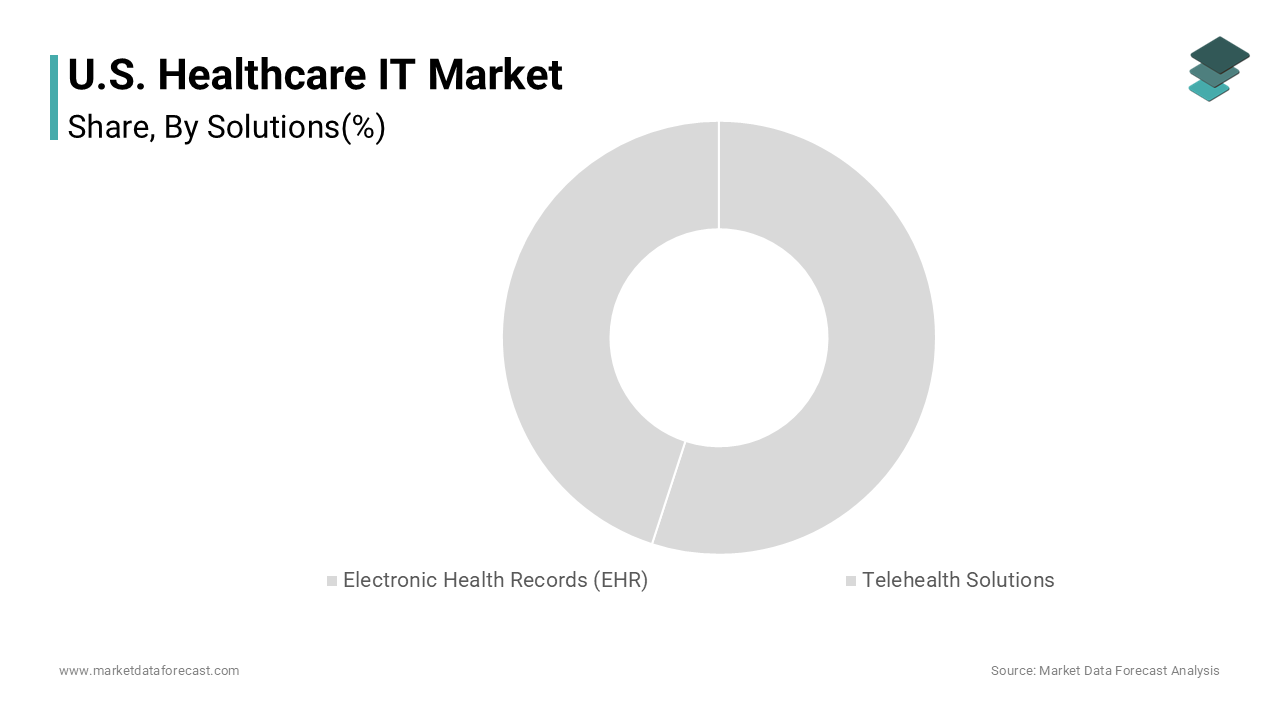
However, the non-clinical solutions segment is emerging as the fastest growing segment within the U.S. healthcare IT market and is predicted to record a CAGR of 14.4% during the forecast period owing to the increasing complexity of healthcare financing and the need for operational efficiency in revenue cycle management. Healthcare providers face mounting pressure to optimize cash flow and reduce administrative burdens amidst rising operational costs. According to the Medical Group Management Association, the average cost to collect each dollar of revenue has increased by 15% in recent years, prompting organizations to invest in automated billing and claims processing systems. Revenue cycle management solutions leverage artificial intelligence to detect coding errors and streamline prior authorizations, significantly reducing denial rates. As per the Healthcare Financial Management Association, automated revenue cycle tools can improve collection rates by up to 20%, by accelerating payment cycles. Additionally, supply chain management solutions are gaining traction, as hospitals seek to control procurement costs for medical supplies and pharmaceuticals. As per the American Hospital Association, supply chain expenses account for nearly 40% of a hospital’s total budget, making efficient management crucial for financial stability. The integration of customer relationship management tools also helps providers enhance patient retention and satisfaction, by personalizing communication. These financial and operational imperatives drive the accelerated adoption of non-clinical IT solutions, as organizations strive to maintain profitability in a challenging economic environment.
By Component Insights
The software and services segment led the market by capturing the largest share of the U.S. healthcare IT market in 2025. The growth of the software and services segment in the U.S. market is attributed to the critical role of applications and professional support in managing complex healthcare operations and the reliance on sophisticated software platforms, such as electronic health records and practice management systems, that require continuous updates and technical assistance. According to the Healthcare Information and Management Systems Society, over 80% of healthcare organizations outsource some aspect of their IT management to ensure system reliability and security. This dependence on external expertise drives significant spending on implementation, training, and ongoing support services. Furthermore, the shift toward cloud-based software models allows providers to access scalable solutions, without heavy upfront hardware investments. As per data from Gartner, cloud-based healthcare software adoption has grown by 25% annually, as organizations seek flexibility and reduced maintenance burdens. The complexity of integrating disparate systems also necessitates specialized consulting services, to ensure seamless data flow and interoperability. As per Deloitte, healthcare providers spend approximately 30% of their IT budget on professional services, to navigate regulatory changes and technological upgrades. The recurring nature of software subscriptions and service contracts ensures a stable and growing revenue stream for vendors. Additionally, the need for cybersecurity services to protect sensitive patient data further boosts this segment. These factors collectively establish software and services as the cornerstone of the healthcare IT ecosystem, driving sustained market leadership.
On the other end, the hardware segment is anticipated to record a promising CAGR of 12.5% during the forecast period in the U.S. healthcare IT market owing to the increasing deployment of connected medical devices and infrastructure upgrades. The proliferation of Internet of Things devices in healthcare settings necessitates robust hardware foundations, to support real-time data transmission and processing. According to the Food and Drug Administration, the number of connected medical devices has increased by 40% in the past three years, reflecting the trend toward remote patient monitoring and smart hospital initiatives. Hospitals are investing heavily in servers, storage systems, and networking equipment, to handle the vast volumes of data generated by these devices. As per data from the International Data Corporation, healthcare spending on infrastructure hardware has risen by 15% annually, to support big data analytics and artificial intelligence applications. Furthermore, the expansion of telehealth services requires high-quality endpoints, such as cameras, microphones, and tablets, to ensure effective virtual consultations. As per the American Telemedicine Association, 70% of healthcare providers have upgraded their hardware infrastructure to support high-definition video conferencing and secure data exchange. The adoption of wearable health trackers also contributes to hardware growth, as patients increasingly monitor their health at home. These devices generate continuous streams of data, that must be captured and transmitted reliably. The need for modernized infrastructure to support digital transformation initiatives ensures that hardware remains a fast-growing component of the healthcare IT market.
By End User Insights
The healthcare providers segment accounted for the largest share of the U.S. healthcare IT market in 2025 due to their direct responsibility for patient care and regulatory compliance. Hospitals and ambulatory surgical centers are the primary adopters of healthcare IT solutions, as they manage large volumes of patient data and complex clinical workflows. According to the American Hospital Association, there are over 6,000 registered hospitals in the U.S., each requiring comprehensive IT systems for electronic health records, billing, and inventory management. The scale of operations in these facilities necessitates substantial investment in technology to ensure efficiency and safety. As per data from the Centers for Disease Control and Prevention, hospitals account for nearly 30% of national health expenditures, highlighting their significant influence on IT spending. Furthermore, the mandate for meaningful use of electronic health records compels providers to continuously upgrade their systems to meet federal standards. As per the Office of the National Coordinator for Health Information Technology, providers must demonstrate specific capabilities in health information exchange to avoid penalties. The increasing prevalence of chronic diseases also drives demand for population health management tools among provider groups. These factors ensure that healthcare providers remain the largest consumers of healthcare IT solutions. Their focus on improving clinical outcomes and operational efficiency sustains high levels of investment in technology. The central role of providers in the healthcare ecosystem guarantees their continued dominance in the market.
However, the healthcare payers segment is emerging as the fastest growing end user segment and is predicted to expand at a CAGR of 15.2% during the forecast period owing to the transition to value-based care and the need for advanced data analytics. Insurance companies and government programs are increasingly leveraging IT solutions to manage risk, assess provider performance, and detect fraud. According to the Kaiser Family Foundation, private health insurance premiums have risen by 20% over the past five years, prompting payers to seek cost containment strategies through technology. Data analytics platforms enable payers to identify high-risk members and implement preventive care interventions that reduce long-term costs. As per data from the National Association of Insurance Commissioners, payers are investing heavily in predictive modeling tools to enhance underwriting accuracy and claims processing efficiency. The integration of artificial intelligence allows for automated claims adjudication, which reduces administrative expenses and improves member satisfaction. As per McKinsey, AI-driven automation can reduce claims processing time by up to 50%, providing significant operational benefits. Furthermore, the expansion of Medicare Advantage plans requires sophisticated IT infrastructure to manage diverse benefit structures and provider networks. Payers are also adopting customer relationship management systems to improve member engagement and retention. These strategic initiatives drive rapid adoption of healthcare IT solutions among payers. The focus on data-driven decision making and cost efficiency positions payers as a dynamic and rapidly expanding segment in the market
REGIONAL ANALYSIS
United States Healthcare IT Market Analysis
The U.S. is projected to maintain its position as the global leader in healthcare technology for the next several years, due to its robust innovation ecosystem and high per capita healthcare spending. The U.S. holds the largest share of the global healthcare IT market. This dominant position is underpinned by a highly developed healthcare infrastructure, substantial government investment, and a strong emphasis on technological innovation. The market status in the region is characterized by rigorous regulatory requirements and a competitive landscape of established technology vendors and innovative startups. A primary driving factor for this leadership is the widespread adoption of electronic health records mandated by federal legislation. According to the Office of the National Coordinator for Health Information Technology, nearly all eligible hospitals and professionals have adopted certified electronic health record technology, creating a robust foundation for further digitalization. Furthermore, the high prevalence of chronic diseases and an aging population drive demand for advanced care management solutions. As per data from the Centers for Disease Control and Prevention, six in ten adults in the U.S. have at least one chronic disease, necessitating continuous monitoring and data integration. The presence of major technology hubs, such as Silicon Valley and Boston, fosters continuous innovation in artificial intelligence and data analytics. As per the National Institutes of Health, the U.S. leads globally in healthcare-related research and development expenditure, ensuring a steady pipeline of new technologies. Additionally, the complex payment ecosystem, involving multiple private and public payers, creates a need for sophisticated revenue cycle and interoperability solutions. These structural and behavioral factors solidify the U.S. as the central hub for healthcare IT advancement and market activity.
COMPETITIVE LANDSCAPE
The competition in the U.S. healthcare IT market is intense and characterized by a mix of established technology giants specialized healthcare software vendors and emerging digital health startups. Major players compete on the basis of product functionality interoperability capabilities and customer service quality. The market is fragmented with numerous providers offering varying levels of integration from standalone applications to comprehensive enterprise platforms. Differentiation is achieved through unique features such as artificial intelligence driven insights cloud native architectures and seamless connectivity with medical devices. Price competitiveness remains a factor particularly for smaller practices seeking cost effective solutions. Strategic mergers and acquisitions are frequent as larger firms aim to consolidate market presence and acquire niche technologies. The rise of value based care models drives competition as vendors strive to offer tools that improve patient outcomes and reduce costs. Regulatory compliance requirements also influence competitive dynamics as providers seek solutions that meet strict federal standards. Ultimately success depends on the ability to deliver secure scalable and user friendly technologies that address the complex needs of modern healthcare delivery systems.
KEY MARKET PLAYERS
A few of the major companies in the U.S. healthcare IT market include
- McKesson Corporation (U.S.)
- Epic Systems Corporation (U.S.)
- Cerner Corporation (U.S.)
- GE Healthcare (U.S.)
- Philips Healthcare (Netherlands)
- Athena Health, Inc. (U.S.)
- Allscripts Healthcare Solutions, Inc. (U.S.)
- Oracle Corporation (U.S.)
- Cognizant Technology Solutions Corporation (U.S.)
- Dell Technologies (U.S.)
- Optum, Inc. (U.S.)
- Infor, Inc. (U.S.)
Top Players in the US Market
Oracle Corporation
Oracle Corporation plays a pivotal role in the U.S. healthcare IT market through its comprehensive cloud infrastructure and specialized electronic health record solutions. The company leverages its robust database technology to support large scale health systems requiring secure and scalable data management. Recent actions to strengthen its market position include the strategic acquisition of Cerner which expanded its footprint in clinical information systems and population health management. Oracle has integrated artificial intelligence capabilities into its healthcare cloud platform to enhance predictive analytics and operational efficiency for providers. The company focuses on interoperability by enabling seamless data exchange across diverse healthcare settings. By combining its enterprise software expertise with clinical workflows Oracle aims to reduce administrative burdens and improve patient outcomes. These initiatives position the company as a key enabler of digital transformation in the healthcare sector.
Microsoft Corporation
Microsoft Corporation significantly contributes to the U.S. healthcare IT market by providing advanced cloud computing services and artificial intelligence tools tailored for healthcare organizations. The company offers Azure Health Data Services which facilitate secure storage and analysis of complex medical data while ensuring compliance with regulatory standards. Recent actions to strengthen its market position include partnerships with major hospital networks to deploy generative AI solutions that assist clinicians with documentation and decision support. Microsoft has also enhanced its Teams platform with healthcare specific features to support telehealth and remote patient monitoring. The company invests heavily in cybersecurity measures to protect sensitive patient information from emerging threats. By focusing on open standards and interoperability Microsoft enables healthcare providers to integrate diverse applications seamlessly. These efforts drive innovation and improve the overall efficiency of healthcare delivery systems.
Epic Systems Corporation
Epic Systems Corporation is a leading provider of electronic health record software in the U.S. serving a vast majority of large health systems and hospitals. The company is renowned for its integrated platform that connects clinical administrative and financial functions into a unified system. Recent actions to strengthen its market position include the expansion of its interoperability network allowing patients and providers to share health information securely across different organizations. Epic has introduced new modules for remote patient monitoring and virtual care to address the growing demand for decentralized services. The company continuously updates its software with advanced analytics tools that help providers manage population health and reduce costs. By prioritizing user experience and data accessibility Epic ensures that clinicians can deliver high quality care efficiently. Its commitment to innovation and customer support maintains its strong presence in the competitive healthcare IT landscape.
Top Strategies Used by Key Market Participants
Key players in the U.S. healthcare IT market primarily employ strategic acquisitions and technological innovation to maintain competitive advantages. Companies invest heavily in artificial intelligence and machine learning to enhance diagnostic accuracy and automate administrative tasks. This technological adoption improves operational efficiency and reduces burden on clinical staff. Providers also focus on expanding cloud based offerings to ensure scalability and data security for healthcare organizations. Strategic partnerships with telecommunications firms and device manufacturers help create integrated ecosystems for remote patient monitoring. Additionally firms prioritize interoperability standards to facilitate seamless data exchange across different platforms. Customer centric approaches such as intuitive user interfaces and comprehensive training programs further differentiate market leaders. These multifaceted strategies ensure sustained growth and resilience in a rapidly evolving regulatory and technological landscape.
RECENT MARKET DEVELOPMENTS
- In January 2023, Allscripts Healthcare Solutions acquired Kareo, a cloud-based healthcare IT company with a specialty in electronic health records (EHRs), that targets small and medium-sized physician healthcare units. The Allsciprts aims to reach and expand its business to the small and medium-sized physicians market.
- In March 2023, Oracle Corporation acquires Aidoc, which specializes in AI that provides software for detecting and diagnosing medical conditions in radiology images, Oracle plans to integrate the technology after further research into the Healthcare IT systems.
MARKET SEGMENTATION
This report on the U.S. healthcare IT market has been segmented and sub-segmented into the following categories.
By Solution
- Electronic Health Records (EHR)
- Telehealth Solutions
By Component
- Software and Services
- Hardware
By End User
- Healthcare Providers
- Healthcare Payers
By Country
- California
- Washington
- Oregon
- New York
- Rest of the United States