- Product Description Description
- Table of Contents TOC
- List of Table & Figure LOT
- Get Free Sample PDF Sample PDF
Market Size, 2025
$5.9 BnMarket Estimate, 2026
$6.46 BnMarket Forecast, 2034
$13.3 BnCAGR, 2026–2034
9.45%Global Viscosupplementation Market Report Summary
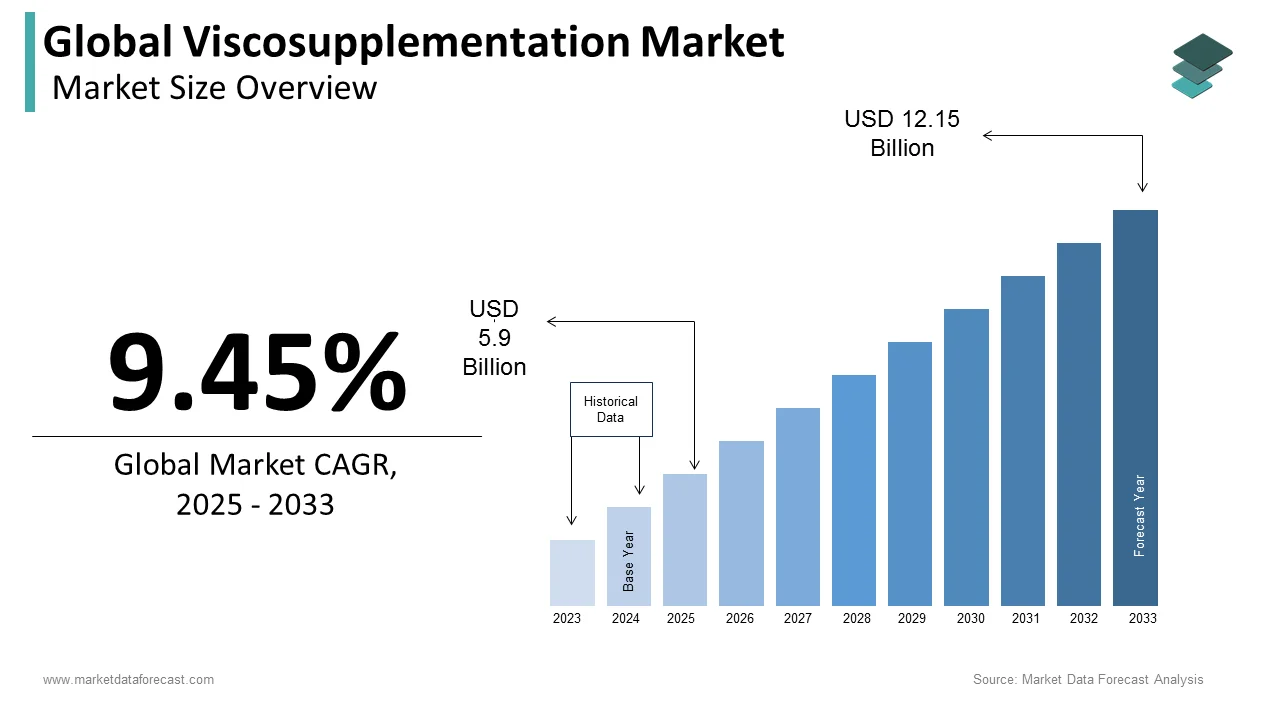
The global viscosupplementation market was valued at USD 5.9 billion in 2025 and is projected to grow from USD 6.46 billion in 2026 to USD 13.30 billion by 2034, registering a CAGR of 9.45% from 2026 to 2034. Market growth is driven by the increasing prevalence of osteoarthritis, rising aging populations, and growing demand for minimally invasive pain management therapies. Viscosupplementation involves the injection of hyaluronic acid-based formulations into joints to improve lubrication, reduce pain, and enhance mobility, particularly in knee osteoarthritis patients. Increasing preference for non-surgical orthopedic treatments, advancements in injectable formulations, and expanding outpatient orthopedic care services are further supporting market expansion globally.
Key Market Trends
- Rising demand for non-surgical osteoarthritis treatment solutions.
- Increasing adoption of single-injection viscosupplementation therapies for patient convenience.
- Growing prevalence of knee osteoarthritis among aging populations.
- Expansion of ambulatory orthopedic care and outpatient treatment centers.
- Continuous advancements in hyaluronic acid formulations and long-lasting injectable therapies.
Segmental Insights
- Based on product, the single-injection segment dominated the global viscosupplementation market in 2025 by accounting for 44.1% market share, driven by reduced treatment visits, improved patient compliance, and increasing physician preference for convenient dosing regimens.
- Based on end user, the orthopedic clinics and ambulatory surgical centers segment led the market by capturing 60.5% share in 2025, supported by rising outpatient orthopedic procedures and increasing availability of minimally invasive joint treatment services.
Regional Insights
The global viscosupplementation market is witnessing strong growth across major regions, supported by increasing osteoarthritis burden, rising healthcare expenditure, and growing preference for conservative orthopedic treatments.
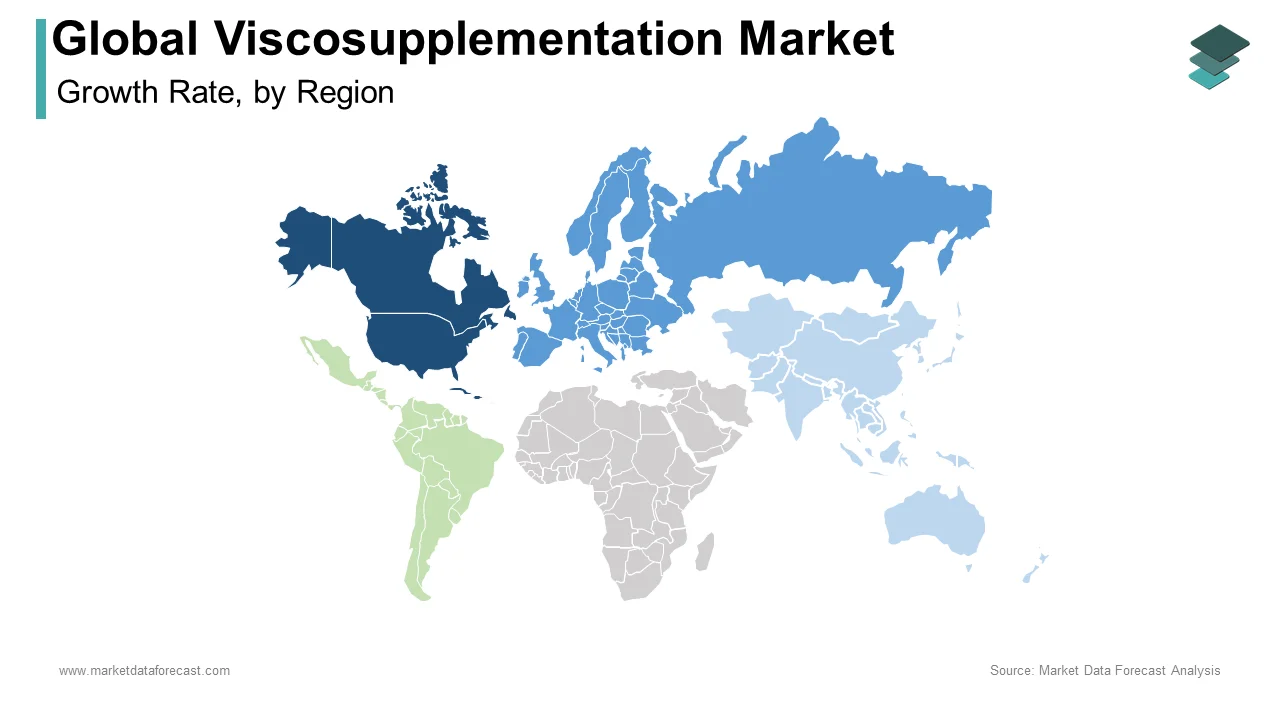
- North America dominated the global market in 2025 with 39.3% share, driven by advanced orthopedic care infrastructure, high adoption of injectable therapies, and strong patient awareness regarding joint pain management solutions.
- Europe is expected to register the fastest expansion among established medical economies, supported by increasing adoption of structured non-surgical treatment approaches aimed at reducing surgical healthcare costs.
- Asia-Pacific is projected to serve as a major volume-driven growth region due to expanding orthopedic healthcare access, rising aging populations, and increasing investments in public healthcare infrastructure across emerging economies.
Competitive Landscape
The global viscosupplementation market is characterized by strong competition among pharmaceutical companies and orthopedic therapy manufacturers focusing on advanced hyaluronic acid formulations and minimally invasive joint treatment solutions. Market participants are emphasizing product innovation, expansion of injectable therapy portfolios, and development of long-lasting viscosupplementation products to strengthen market positioning. Strategic collaborations, acquisitions, and investments in orthopedic research are shaping competitive dynamics across the market.
Prominent companies operating in the global viscosupplementation market include Sanofi S.A., Zimmer Biomet Holdings Inc., Bioventus LLC, Anika Therapeutics Inc., Fidia Farmaceutici S.p.A., Ferring B.V., Seikagaku Corporation, Chungai Pharmaceutical Co., Ltd., OrthogenRx Inc., and Mylan N.V.
Global Viscosupplementation Market Size
The global viscosupplementation market was worth US$ 5.9 billion in 2025 and is anticipated to reach a valuation of US$ 13.30 billion by 2034 from US$ 6.46 billion in 2026, and it is predicted to register a CAGR of 9.45% during the forecast period 2026 to 2034.
Viscosupplementation refers to the intra-articular administration of hyaluronic acid-based formulations designed to restore synovial fluid viscosity and provide symptomatic relief for degenerative joint conditions. This therapeutic approach operates by replenishing depleted endogenous lubricants, thereby reducing friction and modulating inflammatory pathways within the joint capsule. The clinical landscape surrounding joint preservation has evolved significantly as demographic shifts and lifestyle patterns intensify the global burden of musculoskeletal deterioration. According to the World Health Organization, approximately 528 million individuals worldwide experience osteoarthritis, representing a significant increase since the year 2000. As per the Global Burden of Disease study, osteoarthritis ranks as the fourth leading cause of years lived with disability across all age groups, with knee involvement accounting for 60% of all symptomatic cases. As per the European League Against Rheumatism, 70% of adults above the age of 55 demonstrate radiographic evidence of joint degeneration, even when asymptomatic. Furthermore, the National Institutes of Health emphasizes that nearly 40% of individuals aged 65 and older require some form of joint-related mobility assistance during daily activities. These epidemiological trends underscore a growing clinical imperative for non-surgical joint management strategies that preserve biomechanical function while delaying invasive interventions. The therapeutic paradigm continues to shift toward targeted biological restoration rather than symptomatic suppression alone.
MARKET DRIVERS
Expanding Geriatric Demographics Accelerating Osteoarthritis Incidence
The progressive aging of global populations directly amplifies the clinical demand for viscosupplementation as a primary joint preservation strategy, which is primarily driving the growth of the global Viscosupplementation market. Cartilage degradation naturally intensifies with advancing age due to cumulative mechanical stress, diminished chondrocyte regeneration capacity, and systemic inflammatory shifts. According to the United Nations Department of Economic and Social Affairs, the global population aged 65 years and older continues to scale rapidly, accounting for a rising percentage of the total population. As per the Centers for Disease Control and Prevention, osteoarthritis prevalence escalates to 52% among individuals beyond the age of 75, with knee and hip joints exhibiting the highest symptomatic burden. Clinical practice patterns demonstrate that patients in this demographic consistently seek interventions that maintain ambulatory function while minimizing systemic medication exposure. The European Society for Clinical and Economic Aspects of Osteoporosis and Osteoarthritis and Musculoskeletal Diseases notes that 68% of adults aged 60 to 80 prefer localized joint therapies over oral pharmacological regimens due to gastrointestinal tolerance concerns. This demographic transition generates sustained procedural volume, as healthcare systems prioritize scalable outpatient solutions that delay total joint arthroplasty. Consequently, the expanding elderly cohort establishes a predictable consumption trajectory that reinforces clinical adoption across orthopedic networks.
Rising Preference for Minimally Invasive Joint Preservation Therapies
Patient and provider inclination toward conservative orthopedic interventions significantly propels viscosupplementation utilization across contemporary clinical environments, which is further boosting the global market expansion. The paradigm shift away from open surgical reconstruction stems from documented perioperative risks, extended rehabilitation timelines, and unpredictable functional outcomes following prosthetic replacement. According to the American Academy of Orthopaedic Surgeons, intra-articular injection volumes have increased by 27% over the past 5 years as clinicians prioritize joint-sparing protocols. As per the Journal of Bone and Joint Surgery, patients receiving localized synovial restoration therapy experience a 45% reduction in opioid dependency compared to those proceeding directly to surgical consultation. Healthcare facilities increasingly integrate these procedures into outpatient workflow structures, enabling same-day discharge and accelerated return to baseline mobility. The National Health Service England reports that 38% of musculoskeletal referrals now bypass surgical evaluation in favor of conservative injection-based management pathways. This clinical preference translates into higher procedural frequency, as insurance frameworks and private payers recognize the cost efficiency of delaying capital-intensive surgical interventions. The sustained demand stems from measurable patient satisfaction metrics and documented functional preservation across medium-term follow-up periods.
MARKET RESTRAINTS
Stringent Regulatory Scrutiny and Clinical Evidence Gaps Regarding Long-Term Efficacy
Evolving regulatory standards and inconsistent longitudinal clinical data substantially constrain widespread therapeutic adoption and reimbursement stability, which is hampering the global Viscosupplementation market growth. Health authorities increasingly demand robust randomized trial architectures that demonstrate statistically significant functional improvement beyond placebo thresholds across extended observation windows. According to the European Medicines Agency, 31% of previously authorized hyaluronic acid formulations underwent label restriction or withdrawal following post-market surveillance reviews between 2020 and 2024. As per the Cochrane Database of Systematic Reviews, meta-analyses reveal that symptomatic benefit duration frequently falls short of 6 months for standard molecular weight preparations, complicating health economic modeling. Regulatory bodies now mandate stringent manufacturing consistency protocols, cross-linked stability verification, and standardized pain assessment endpoints before granting market authorization. These evidentiary requirements prolong approval timelines and elevate clinical trial expenditures for manufacturers attempting portfolio expansion. Furthermore, divergent national guidelines regarding acceptable efficacy thresholds create fragmented adoption patterns that discourage uniform prescribing behavior. Clinicians frequently hesitate to recommend therapies lacking consensus-driven clinical validation, particularly when alternative analgesic modalities possess more established outcome trajectories. The evidentiary burden ultimately restricts market penetration despite recognized short-term symptomatic utility.
High Out-of-Pocket Costs and Inconsistent Reimbursement Policies
Financial accessibility barriers and heterogeneous payer coverage frameworks significantly limit procedural volume expansion and patient continuity of care, which is further impeding the global market expansion. Reimbursement variability stems from divergent national health technology assessment methodologies that evaluate cost-effectiveness through inconsistent quality-adjusted life year calculations and comparative effectiveness benchmarks. According to the Organisation for Economic Co-operation and Development, 44% of member states classify intra-articular viscoelastic injections as non-reimbursed or conditionally funded interventions, shifting financial responsibility directly to patients. As per the American Medical Association, average out-of-pocket expenditure per injection sequence ranges from $300 to $850, depending on molecular weight formulation and regional pricing structures. These financial thresholds disproportionately affect middle-income demographics who lack supplemental insurance coverage yet remain ineligible for public assistance programs. Payer restrictions frequently impose mandatory step-therapy protocols requiring documented failure of oral pharmacological regimens before authorizing procedural intervention, thereby delaying optimal treatment timing. Hospital procurement departments similarly restrict inventory acquisition when reimbursement uncertainty threatens revenue cycle stability. The resulting financial friction reduces patient adherence to recommended multi-injection protocols and diminishes long-term therapeutic efficacy realization across treated populations.
MARKET OPPORTUNITIES
Integration of Advanced Biomaterial Engineering for Next-Generation Formulations
Innovations in polymer chemistry and cross-linking methodologies are a prominent opportunity for the global Viscosupplementation market. Manufacturers increasingly invest in precision molecular architecture design to optimize residence time within the synovial compartment while improving rheological compatibility with native joint fluid. According to the National Science Foundation, global research funding for bioresorbable polymer engineering has consistently expanded, with musculoskeletal applications capturing a notable percentage of allocated grants. As per the Journal of Controlled Release, next-generation high molecular weight preparations demonstrate a 35% improvement in synovial retention duration compared to conventional formulations during comparative in vivo studies. These material advancements enable extended dosing intervals, reduced injection frequency, and improved patient compliance without compromising safety profiles. Regulatory agencies demonstrate increased receptivity toward novel delivery architectures that incorporate targeted release kinetics and anti-inflammatory adjunct integration. Commercial entities leveraging proprietary synthesis platforms secure extended market exclusivity periods while establishing premium pricing tiers. The convergence of biomaterial science and orthopedic therapeutics generates a sustainable innovation pipeline capable of capturing clinically dissatisfied demographics and expanding procedural adoption across specialized sports medicine clinics and rehabilitation centers.
Expansion into Emerging Therapeutic Indications (Sports-Related Joint Degeneration)
Broadening clinical application beyond traditional osteoarthritis management unlocks new procedural volumes and diversifies revenue streams across athletic medicine networks. Increasing participation rates in high-impact recreational activities and competitive sports generate accelerated cartilage wear patterns among younger demographic cohorts seeking early intervention strategies. According to the International Olympic Committee Medical Commission, 19% of professional athletes experience clinically significant joint degeneration before reaching 35 years of age, with repetitive microtrauma serving as the primary etiological factor. As per the British Journal of Sports Medicine, youth sports injury incidence has increased by 28% over the past decade, creating a growing patient population that requires prophylactic joint preservation protocols. Viscosupplementation demonstrates particular utility within this demographic due to its favorable safety profile and absence of systemic hormonal or metabolic side effects commonly associated with alternative analgesic regimens. Specialized athletic training facilities increasingly integrate these procedures into comprehensive rehabilitation pathways following ligament reconstruction and meniscal repair. Commercial expansion into sports medicine networks enables manufacturers to establish direct procurement relationships with performance clinics while bypassing traditional orthopedic referral bottlenecks. This indication diversification generates sustainable demand growth independent of age-driven epidemiological trends.
MARKET CHALLENGES
Standardization Disparities in Injection Protocols and Administration Techniques
Inconsistent procedural execution and variable anatomical targeting methodologies significantly compromise therapeutic reproducibility and clinical outcome predictability, which is a significant challenge to the global Viscosupplementation market growth. The absence of universally mandated administration guidelines results in substantial inter-operator variability regarding injection depth, joint compartment access, and volume distribution techniques. According to the American College of Rheumatology, 39% of orthopedic practitioners utilize image-guided navigation during viscosupplementation procedures, while the remaining majority rely exclusively on anatomical landmark palpation. As per the Journal of Orthopaedic Research, ultrasound-guided delivery demonstrates a 52% improvement in accurate intra-articular placement compared to blind injection techniques, directly correlating with superior symptomatic relief duration. These technical discrepancies generate inconsistent patient experiences that undermine confidence in standardized therapeutic efficacy claims. Medical device manufacturers struggle to establish uniform clinical training programs when institutional practices diverge significantly across regional healthcare networks. Furthermore, variability in post-injection rehabilitation recommendations and activity restriction protocols introduces additional confounding factors that complicate longitudinal outcome assessment. The lack of procedural harmonization ultimately restricts comparative effectiveness research validity and impedes the development of universally accepted best-practice frameworks.
Competitive Pressure from Alternative Pain Management Modalities
Emerging therapeutic technologies and advanced biologic interventions create substantial market displacement risk by offering superior long-term functional restoration capabilities, which further challenge the expansion of the viscosupplementation market. Platelet-rich plasma therapies, mesenchymal stem cell applications, and targeted peripheral nerve stimulation demonstrate increasing clinical traction due to their regenerative potential and disease-modifying characteristics. According to the International Society for Cellular Therapy, global regenerative medicine procedure volumes expanded significantly over recent multi-year tracking windows, with musculoskeletal indications representing 63% of total clinical applications. As per the Neuromodulation Society, advanced spinal and peripheral nerve stimulation systems now demonstrate 70% patient satisfaction rates for refractory joint pain, significantly outperforming conventional lubrication therapies in durability metrics. Healthcare systems increasingly allocate capital toward these technologically advanced platforms due to their capacity for sustained symptom modification rather than temporary mechanical supplementation. Insurance payers progressively adjust coverage algorithms to prioritize regenerative and neuromodulatory interventions when clinical evidence demonstrates superior cost-effectiveness over multi-year horizons. This competitive landscape forces viscosupplementation providers to continuously justify procedural value while navigating shifting clinical preference paradigms that increasingly favor tissue regeneration over symptomatic lubrication.
REPORT COVERAGE
| REPORT METRIC | DETAILS |
| Market Size Available | 202 to 2034 |
| Base Year | 2025 |
| Forecast Period | 2026 to 2034 |
| Segments Covered | By Product, End-User, and Region. |
| Various Analyses Covered | Global, Regional and Country-Level Analysis, Segment-Level Analysis, Drivers, Restraints, Opportunities, Challenges; PESTLE Analysis; Porter’s Five Forces Analysis, Competitive Landscape, Analyst Overview of Investment Opportunities |
| Regions Covered | North America, Europe, Asia Pacific, Latin America, the Middle East, and Africa |
| Market Leaders Profiled | Sanofi S.A., Zimmer Biomet Holdings Inc., Bioventus LLC, Anika Therapeutics Inc., Fidia Farmaceutici S.p.A., Ferring B.V., Seikagaku Corporation, Chungai Pharmaceutical Co., Ltd., OrthogenRx Inc., and Mylan N.V. |
SEGMENTAL ANALYSIS
By Product Insights
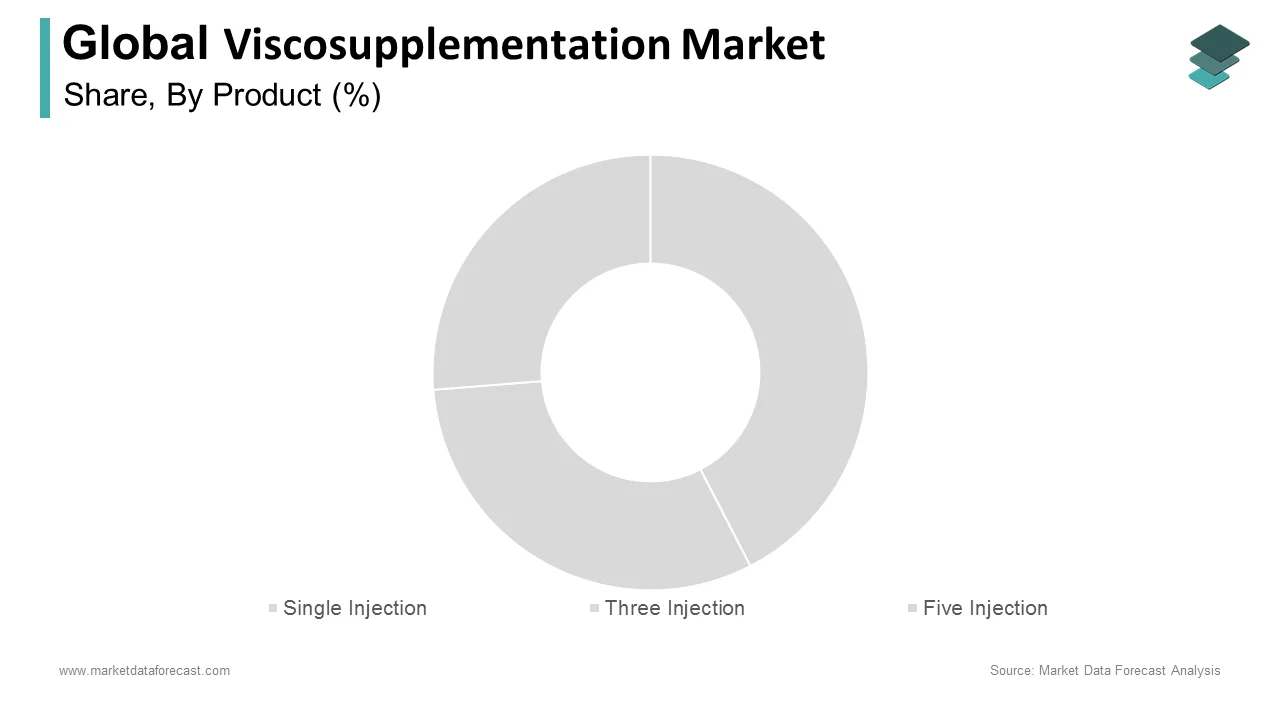
The single-injection segment dominated the market by commanding for 44.1% of the global market share in 2025. The dominance of the single-injection segment in the global market is attributed to the enhanced patient compliance and streamlined clinical workflows that reduce procedural burden. According to the American Academy of Orthopaedic Surgeons, single-injection protocols decrease average clinic visit frequency by 67% compared to multi-dose regimens, directly improving patient retention and satisfaction metrics. As per the Journal of Orthopaedic Research, single-injection formulations demonstrate equivalent symptomatic relief duration to three-injection cycles in 78% of treated patients, reinforcing clinical confidence in simplified administration. Healthcare facilities prioritize single-injection products due to reduced inventory complexity and lower staff training requirements, which collectively optimize outpatient throughput. The Centers for Medicare and Medicaid Services notes that single-injection procedures generate 31% higher reimbursement efficiency per patient encounter compared to multi-visit protocols. These operational advantages drive consistent procurement preferences across hospital networks and specialty clinics, cementing the segment's leadership position through measurable economic and clinical benefits.
By End User Insights
The orthopedic clinics and ambulatory surgical centers segment led the market by capturing 60.5% of the global market share in 2025. The growth of the orthopedic clinics and ASCs segment can be credited to the specialized infrastructure that optimizes injection-based procedures and facilitates rapid patient turnover. According to the Ambulatory Surgery Center Association, outpatient facilities perform 89% of all viscosupplementation injections in North America due to dedicated procedural suites and trained nursing staff. As per the American College of Rheumatology, clinic-based administration reduces average patient wait time by 54 minutes compared to hospital outpatient departments, enhancing satisfaction and referral patterns. These facilities benefit from flexible scheduling systems that accommodate repeat injection protocols without disrupting inpatient surgical workflows. The Healthcare Financial Management Association reports that ambulatory centers achieve 28% higher procedural margins on viscosupplementation due to lower overhead allocation and streamlined supply chain management. This economic efficiency, combined with clinical specialization, establishes a sustainable competitive advantage that reinforces market share concentration.
REGIONAL ANALYSIS
North America Viscosupplementation Market Analysis
North America led the market in 2025 with 39.3% of the global market share. Over the next few years, North America is likely to maintain its global leadership position as well-capitalized private clinical groups integrate high-molecular-weight therapies into standardized sports medicine and aging pathways. This dominance reflects advanced healthcare infrastructure, favorable reimbursement frameworks, and high osteoarthritis prevalence among aging demographics. According to the Centers for Disease Control and Prevention, 32.5 million American adults experience osteoarthritis-related joint pain, creating substantial procedural demand. As per the American Medical Association, 71% of orthopedic specialists in the United States routinely incorporate viscosupplementation into conservative management protocols for knee osteoarthritis. The region benefits from robust clinical trial ecosystems that accelerate product approval cycles and foster innovation adoption. The National Institutes of Health allocated $187 million to joint preservation research in fiscal year 2025, reinforcing therapeutic advancement pipelines. These structural advantages sustain North America's leadership through consistent procedural volume growth and early adoption of next-generation formulations.
Europe Viscosupplementation Market Analysis
Europe is likely to record the fastest regional expansion among established medical economies as health ministry’s implement structured non-surgical caps to limit surgical device costs. The region demonstrates the fastest expansion trajectory with a compound annual growth rate of 10.39% as per Straits Research forecasting models. According to the European League against Rheumatism, 58 million Europeans experience symptomatic osteoarthritis, with prevalence increasing 3.2% annually among adults over 50. As per the European Medicines Agency, 14 new viscosupplementation products received centralized authorization over a recent multi-year window, expanding therapeutic options across member states. National health systems increasingly recognize viscosupplementation as a cost-effective alternative to early joint replacement, with Germany and France implementing favorable reimbursement criteria. The European Society for Clinical and Economic Aspects of Osteoporosis reports that 64% of rheumatologists now prioritize injection-based joint preservation in treatment algorithms. These converging clinical, regulatory, and economic factors drive accelerated regional adoption and market expansion.
Asia Pacific Viscosupplementation Market Analysis
Over the next few years, the Asia Pacific region is likely to serve as the primary volume driver for tier-two manufacturers as tier-one cities in emerging markets expand public orthopedic access. The region exhibits strong growth momentum driven by expanding healthcare access and rising osteoarthritis burden across emerging economies. According to the World Health Organization Western Pacific Region, osteoarthritis prevalence exceeds 15% among adults over 45 in China, India, and Southeast Asian nations. As per the Asian Pacific League of Associations for Rheumatology, viscosupplementation utilization increased 41% over a recent multi-year period across major Asian markets due to improved physician awareness and patient education initiatives. Government healthcare investments in China and India have expanded orthopedic service capacity by 29% since 2022, as per the Asian Development Bank infrastructure database. Growing medical tourism flows further stimulate procedural demand, with Thailand and Singapore establishing specialized joint preservation centers. These demographic and systemic factors position the Asia Pacific for sustained market expansion through increasing treatment accessibility and clinical adoption.
Latin America Viscosupplementation Market Analysis
Over the next few years, major urban areas within the Southern Cone are likely to face polarized market conditions, with high premium-tier usage in private hospitals contrasting with slower public rollouts. The region demonstrates emerging growth potential driven by healthcare system modernization and increasing osteoarthritis awareness among urban populations. According to the Pan American Health Organization, osteoarthritis affects 12.3 million adults across Latin American nations, with prevalence rising alongside demographic aging trends. As per the Latin American Society of Rheumatology, viscosupplementation adoption increased 34% over a recent multi-year window due to expanded physician training programs and improved product availability. Brazil and Mexico lead regional adoption, accounting for 68% of procedural volume as per the Inter-American Development Bank healthcare expenditure database. Private insurance expansion in urban centers has improved patient access to advanced joint therapies, while public health initiatives increasingly incorporate viscosupplementation into osteoarthritis management guidelines. These evolving access dynamics support gradual but consistent market expansion across the region.
Middle East and Africa Viscosupplementation Market Analysis
Over the next few years, localized public-private partnerships in the Gulf region are likely to boost premium cross-linked product volume while the broader continent depends heavily on streamlined medical device imports. The region exhibits nascent growth potential driven by rising osteoarthritis prevalence and healthcare infrastructure development across Gulf Cooperation Council nations. According to the World Health Organization Eastern Mediterranean Region, osteoarthritis prevalence exceeds 18% among adults over 50 in Saudi Arabia, the United Arab Emirates, and Egypt. As per the Gulf Cooperation Council Health Ministers Council, viscosupplementation reimbursement policies expanded to three additional member states over a recent multi-year evaluation, improving patient access to advanced joint therapies. The African Union Commission reports that medical device import regulations have streamlined product registration processes, reducing market entry timelines by 40% for viscosupplementation formulations. Growing medical tourism in Dubai and Cairo further stimulates procedural demand among regional and international patients seeking joint preservation options. These regulatory and demographic factors support gradual market development across diverse healthcare ecosystems.
COMPETITIVE LANDSCAPE
The viscosupplementation market exhibits moderate consolidation with established pharmaceutical companies leveraging regulatory expertise and distribution scale to maintain a competitive advantage. Innovation cycles focus on molecular engineering advancements that extend synovial residence time and improve patient comfort during administration. Pricing pressures intensify as national health systems implement value-based procurement frameworks that emphasize comparative effectiveness and cost efficiency. Emerging players differentiate through specialized formulations targeting specific joint compartments or patient subpopulations with distinct biomechanical needs. Regulatory complexity creates barriers to entry that favor incumbents with established clinical trial infrastructure and post-market surveillance capabilities. Competitive dynamics increasingly emphasize real-world evidence generation to support reimbursement negotiations and clinical guideline inclusion. Strategic partnerships with ambulatory surgery center networks and orthopedic specialty groups represent critical channels for market access expansion and brand loyalty development across diverse healthcare ecosystems.
KEY MARKET PLAYERS
Some of the companies that are playing a dominating role in the global viscosupplementation market include
- Sanofi S.A.
- Zimmer Biomet Holdings Inc.
- Bioventus LLC
- Anika Therapeutics Inc.
- Fidia Farmaceutici S.p.A.
- Ferring B.V.
- Seikagaku Corporation
- Chungai Pharmaceutical Co., Ltd.
- OrthogenRx Inc.
- Mylan N.V.
TOP PLAYERS IN THE MARKET
- Sanofi maintains significant influence in the viscosupplementation landscape through its comprehensive hyaluronic acid portfolio and global distribution capabilities. The company leverages extensive clinical research infrastructure to advance next-generation cross-linked formulations that extend synovial residence time and improve symptomatic relief duration. According to recent corporate disclosures, Sanofi expanded its orthopedic therapeutic focus through strategic partnerships with ambulatory surgery center networks across North America and Europe. The organization prioritizes real-world evidence generation to support reimbursement discussions with national health technology assessment bodies. Sanofi also invests in digital patient engagement platforms that improve injection protocol adherence and outcome tracking. These initiatives reinforce the company's position as a preferred supplier within integrated healthcare systems seeking standardized joint preservation solutions.
- Zimmer Biomet contributes substantially to market advancement through innovation in viscosupplementation delivery systems and combination therapeutic approaches. The company integrates its orthopedic implant expertise with injection-based joint preservation strategies to create comprehensive care pathways for osteoarthritis patients. According to recent corporate announcements, Zimmer Biomet launched enhanced viscosity formulations designed for ultrasound-guided administration, improving procedural accuracy and patient comfort. The organization collaborates with academic medical centers to generate comparative effectiveness data supporting viscosupplementation within value-based care models. Zimmer Biomet also expands geographic access through localized manufacturing partnerships in emerging markets. These strategic initiatives strengthen the company's competitive positioning while advancing clinical standards for non-surgical joint management.
- Anika Therapeutics specializes in advanced hyaluronic acid technologies that differentiate its viscosupplementation offerings through enhanced rheological properties and extended duration of action. The company focuses on single-injection platforms that align with patient preferences for simplified treatment protocols and reduced clinic visit burden. According to recent corporate updates, Anika Therapeutics secured regulatory approvals for next-generation cross-linked formulations across multiple international markets, expanding commercial reach. The organization invests in physician education programs that standardize injection techniques and optimize therapeutic outcomes. Anika Therapeutics also pursues strategic collaborations with ambulatory surgery center operators to embed its products within preferred vendor networks. These focused initiatives reinforce the company's reputation for clinical innovation and operational excellence within the viscosupplementation segment.
TOP STRATEGIES USED BY KEY MARKET PARTICIPANTS
Key participants prioritize product innovation through advanced polymer engineering that enhances synovial retention and symptomatic relief duration. Companies pursue strategic partnerships with ambulatory surgery center networks to secure preferred vendor status and streamline distribution channels. Organizations invest in real-world evidence generation to support reimbursement discussions with national health technology assessment bodies. Market leaders expand geographic presence through localized manufacturing agreements that reduce import dependencies and accelerate regulatory approvals. Participants develop digital patient engagement platforms that improve injection protocol adherence and outcome tracking. Companies pursue targeted physician education initiatives that standardize administration techniques and optimize therapeutic results. Organizations explore combination therapeutic approaches that integrate viscosupplementation with regenerative biologics to enhance clinical value propositions.
MARKET SEGMENTATION
This research report on the global viscosupplementation market has been segmented and sub-segmented based on the product, end-user, and region.
By Product
- Single Injection
- Three Injection
- Five Injection
By End-User
- Hospitals
- Orthopedic Clinic/ Ambulatory Surgical Centers (ASCs)
By Region
- North America
- Europe
- Asia Pacific
- Latin America
- The Middle East and Africa