- Product Description Description
- Table of Contents TOC
- List of Table & Figure LOT
- Get Free Sample PDF Sample PDF
Market Size, 2025
$116.24 MnMarket Estimate, 2026
$129.6 MnMarket Forecast, 2034
$310.9 MnCAGR, 2026–2034
11.5%Asia-Pacific Contrast Injector Market Size, Trends, and Forecast (2026–2034)
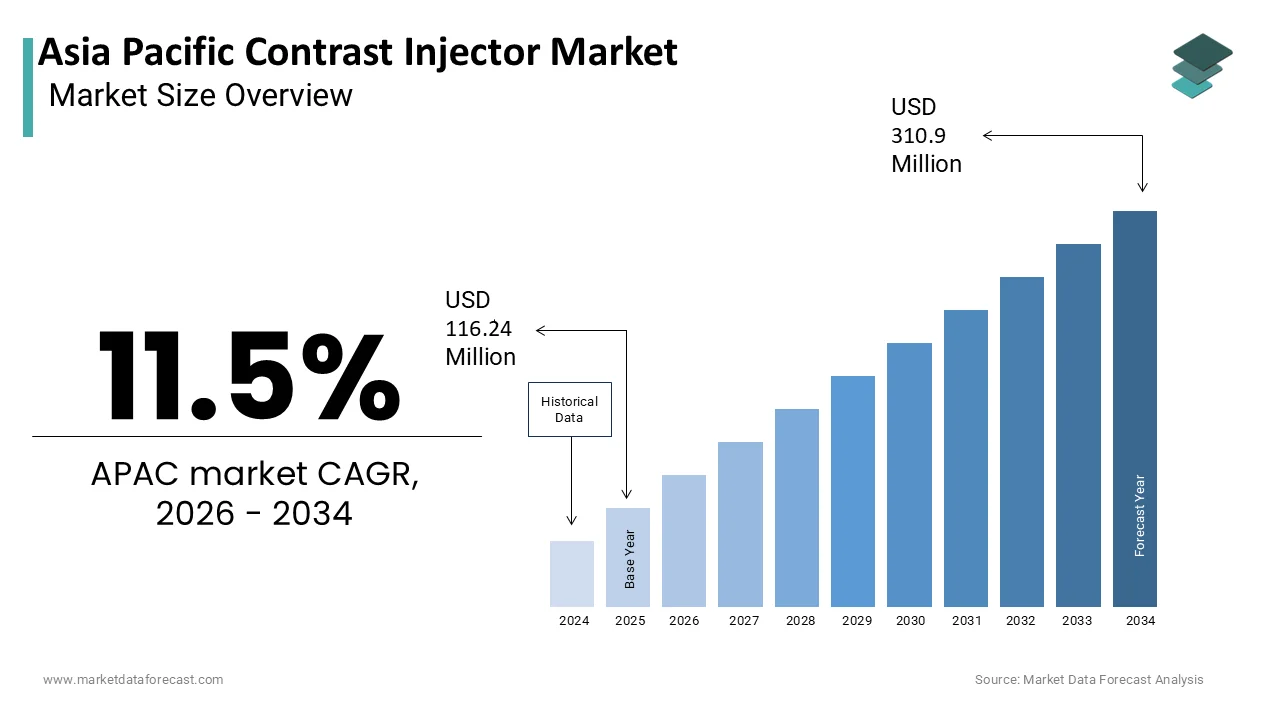
The Asia-Pacific Contrast Injector Market was valued at USD 116.24 million in 2025, stands at USD 129.6 million in 2026, and is projected to reach approximately USD 310.9 million by 2034, registering a compound annual growth rate (CAGR) of 11.5% during the forecast period from 2026 to 2034. Growth is heavily driven by the escalating oncological burden, rapid geriatric expansion increasing cardiovascular imaging demand, and the widespread integration of advanced digital health and automated delivery systems.
Key Executive Metrics (At-a-Glance)
- 2025 Base Valuation: USD 116.24 Million
- 2026 Current Valuation: USD 129.6 Million
- 2034 Forecast Valuation: USD 310.9 Million
- Forecast Period: 2026–2034
- Compound Annual Growth Rate (CAGR): 11.5% (2026–2034)
- Dominant Product Segment: Consumables
- Fastest-Growing Product Segment: Injector Systems (11.1% CAGR)
- Dominant Application Segment: Radiology
- Fastest-Growing Application Segment: Interventional Cardiology (13.8% CAGR)
- Leading Country Markets: China (34.1% share in 2025) and Japan (22.4% share in 2025)
Core Market Drivers
- Escalating Oncology Burden: High regional cancer incidence (accounting for nearly half of global cases) requires continuous contrast-enhanced imaging protocols.
- Rapid Geriatric Expansion: Aging populations across East and Southeast Asia increase patient throughput for cardiovascular and vascular diagnostic evaluations.
Primary Market Restraints & Challenges
- High Capital Expenditure & Supply Vulnerabilities: Expensive upfront equipment acquisition and reliance on imported proprietary consumables restrict adoption in resource-constrained clinics.
- Regulatory Fragmentation & Skill Shortages: Divergent national medical device regulations and a scarcity of trained radiologic technologists hinder optimal device utilization.
Asia-Pacific Contrast Injector Market Segmentation Breakdown
| Segment Category | Largest / Dominant Segment | Fastest-Growing / Key Highlight |
|---|---|---|
| By Product | Consumables | Injector Systems (11.1% CAGR) |
| By Application | Radiology | Interventional Cardiology (13.8% CAGR) |
| By Country | China (34.1% share) & Japan (22.4% share) | India (Highest growth velocity) |
Major Industry Players Profiled
Key corporations shaping the Asia-Pacific contrast injector market include Bracco Imaging S.p.A., VIVID IMAGING, Apollo RT Co., Ltd., GE HealthCare, AngioDynamics, Inc., Ulrich GmbH & Co. KG, Sino Medical-Device Technology Co., Ltd., Bayer HealthCare, Guerbet Group, Medtronic AG, and Nemoto Kyorindo Co., Ltd..
Asia Pacific Contrast Injector Market Size
The Asia-Pacific Contrast Injector Market is projected to grow from USD 116.24 million in 2025 to USD 129.6 million in 2026 and reach approximately USD 310.9 million by 2034, registering a CAGR of 11.5% during the forecast period from 2026 to 2034.
A contrast injector is a specialized medical pump device used during diagnostic tests like CT scans, MRIs, and angiograms. It safely injects a special fluid, called a contrast agent or dye, into a patient's veins at an exact speed and amount. This fluid makes blood vessels and internal organs show up clearly on the images. These systems ensure consistent injection flow rates and pressures essential for high-quality vascular visualization and diagnostic accuracy in oncology, cardiology,y and neurology applications. According to the World Health Organization Western Pacific Regional Office, noncommunicable diseases now account for nearly 90% of all deaths in the region, intensifying long-term clinical reliance on advanced automated contrast media delivery infrastructure. As per the International Agency for Research on Cancer, Asia registered more than 9.8 million new cancer cases annually, accounting for 49.2% of global oncological incidence, driving a substantial expansion in healthcare-wide contrast-enhanced diagnostic imaging scan volumes. The aging demographic profile further amplifies procedural frequency. According to the United Nations Population Division, the share of older citizens in Eastern and South-Eastern Asia is projected to double by 2050, resulting in an active rise in patient demographics undergoing automated high-pressure contrast injection imaging. Unlike manual syringe methods, ods these programmable injectors reduce contrast waste and adverse reaction risks through standardized protocols. Regulatory harmonization efforts across ASEAN nations are gradually standardizing device approval pathways,, ways facilitcross-borderborder technology transfer while maintaining patient safety benchmarks essential for clinical adoption in both tertiary hospitals and emerging diagnostic centers throughout the vast Asia Pacific geography.
MARKET DRIVERS
Escalating Oncology Burden Fuels Diagnostic Imaging Volume
The unprecedented rise in cancer prevalence across the region is the primary driver of the APAC contrast injector market. Oncological staging and treatment monitoring depend heavily on contrast-enhanced imaging protocols. According to the International Agency for Research on Cancer GLOBOCAN database, China's healthcare network records approximately 4.82 million newly diagnosed oncological cases annually, intensifying regular clinic reliance on computed tomography and automated high-pressure contrast media delivery systems. As per the World Health Organization Western Pacific Regional Office, long-term noncommunicable health conditions account for close to 90% of regional mortalities, forcing extensive upgrades in diagnostic infrastructure to handle growing patient imaging scans. Government initiatives like China’s Healthy China 2030 plan have expanded cancer screening programs to rural counties, increasing procedure volumes in previously underserved areas where manual injection was historically prevalent. According to the International Agency for Research on Cancer, regional diagnostic centers are managing an active rise in oncology screening demands as total Asian cases expand to constitute 49.2% of the global clinical distribution. This epidemiological reality creates non-discretionary demand for precision injection equipment as radiologists require reproducible bolus timing for accurate lesion characterization. Consequently, hospital procurement prioritizes injector upgrades to match rising scan throughput, ensuring diagnostic quality keeps pace with escalating patient loads across the region’s diverse healthcare systems.
Rapid Geriatric Expansion Increases Cardiovascular Imaging Demand
Demographic aging across developed and developing nations in the region accelerates cardiovascular disease diagnosis, which further propels the APAC contrast injector market. This trend necessitates advanced contrast injection systems for coronary and peripheral vascular assessments. According to the United Nations Population Division, aging demographic representations across East and Southeast Asian communities are projected to double by 2050, resulting in elevated clinic throughput for high-pressure automated vascular administration infrastructure. As per the World Health Organization Western Pacific Regional Office, localized public health departments are accelerating digital diagnostic platform rollouts to address rapid age-related vascular complications across distributed healthcare delivery networks. According to the United Nations Population Division, systemic regional demographic aging patterns alter clinical case dependencies, prompting modern hospitals to aggressively adjust long-term medical equipment lifecycle asset refreshes. Automated injectors are critical for these patients who often have compromised renal function requiring precise low-volume contrast protocols that manual methods cannot reliably achieve. This demographic imperative transforms contrast injectors from optional accessories into essential safety devices, ensuring diagnostic efficacy while protecting vulnerable elderly patients from contrast-induced complications during increasingly frequent vascular evaluations.
MARKET RESTRAINTS
High Capital Expenditure Limits Adoption in Resource-Constrained Settings
High upfront costs block the adoption of advanced injection systems across lower-income healthcare facilities in the region, which hampers the growth of the APAC contrast injector market. This financial barrier persists despite the clear clinical benefits of the technology. According to the World Health Organization Western Pacific Regional Office, decentralized regional healthcare delivery pipelines are expanding their investments in digital clinical tools to systematically handle chronic noncommunicable diagnostics workloads. As per the World Health Organization Western Pacific Regional Office, noncommunicable physical illnesses consume up to 90% of structural health delivery resources, driving rapid operational shifts toward scalable and modernized automated imaging environments. As per the Indian Brand Equity Foundation, the national medical infrastructure grid is sustaining increased clinical throughput volumes by implementing extensive financial safety nets that guarantee up to ₹5 lakh per family annually. Maintenance costs further compound financial strain, as manufacturer service contracts typically cost a notable portion of original equipment value annually, thereby straining limited operational budgets. Currency depreciation against the US dollar and euro exacerbates import costs for countries like Pakistan and Sri Lanka, where local manufacturing capacity is nonexistent. This economic reality creates stark urban-rural and public-private disparities in access to standardized contrast delivery, perpetuating diagnostic quality gaps across the region’s heterogeneous healthcare landscape despite growing clinical need.
Contrast Media Supply Chain Vulnerabilities Disrupt Procedural Continuity
Dependence on imported contrast media and proprietary injector consumables creates supply chain fragility that restrains consistent development of the APAC contrast injector market. According to the International Agency for Research on Cancer GLOBOCAN database, clinics throughout regional areas are seeing an active escalation in therapeutic diagnostics volumes as overall continental cases expand to form 49.2% of the total global oncological burden. According to the United Nations Population Division, demographic aging concentrations across major sub-regions are projected to fully double by 2050, locking in a predictable expansion trajectory for automated high-pressure vascular administration infrastructure deployment. Remote Pacific island nations face even greater vulnerability. Proprietary connector designs prevent substitution between brands, locking facilities into single supplier dependencies that amplify disruption risks. Climate-related port closures and pandemic-era logistics bottlenecks demonstrated systemic fragility, prompting some governments to explore regional stockpiling,g but implementation remains incomplete. These supply uncertainties discourage capital investment in injector systems when consumable availability cannot be guaranteed, ed undermining confidence in long term operational viability.
MARKET OPPORTUNITIES
Domestic Manufacturing Emergence Reduces Cost Barriers
The rise of indigenous medical device manufacturing across China, India, and South Korea offers transformative opportunities for the APAC contrast injector market. This helps to democratize contrast injector access through cost-competitive alternatives tailored to regional budget constraints. According to the World Health Organization Western Pacific Regional Office, regional medical delivery networks are scaling up investments in digital healthcare systems to address complex diagnostics workloads associated with surging noncommunicable chronic conditions. As per the Department of Pharmaceuticals guidelines, the production-linked incentive framework targets long-term enhancement of domestic medical device fabrication across critical imaging, radiology, and high-pressure therapeutic infrastructure segments. The domestic players offer simplified maintenance models and localized technical support addressing key pain points of international vendors. As per the International Agency for Research on Cancer GLOBOCAN database, clinical oncology workloads are recording an active upward trajectory as regional cancer incidence expands to constitute 49.2% of the global therapeutic diagnostic screening volume. The localization trend not only lowers acquisition costs but also builds resilient regional supply chains less vulnerable to global disruptions. For multinational vendors, this creates partnership opportunities for technology transfer and co-development arrangements that leverage local manufacturing capabilities while maintaining premium positioning in tertiary care segments.
Tele Radiology Integration Enables Remote Protocol Standardization
The expansion of teleradiology networks across the region creates novel opportunities for contrast injector integration with cloud-based protocol management platforms, which is likely to fuel the growth of the APAC market. This integration enhances diagnostic consistency across distributed healthcare systems. According to the World Health Organization Western Pacific Regional Office, regional public health structures generate close to 90% of all mortalities from noncommunicable chronic conditions, prompting extensive automation adjustments to modernize diagnostic contrast administration setups. As per Guerbet Interventional Radiology healthcare protocols, modern radiology clinics deploy high-pressure vascular administration infrastructure to optimize therapeutic delivery safety and precision across localized oncology workflows. Cloud connectivity allows real-time protocol updates based on the latest clinical guidelines, ensuring remote sites benefit from evolving best practices without manual reprogramming. Vendor partnerships with teleradiology operators create bundled service models where injector hardware is subsidized through recurring software subscriptions,s improving affordability. This digital convergence transforms injectors from standalone devices into nodes in regional diagnostic ecosystems, ms creating recurring revenue streams beyond hardware sales. For underserved populations,ons it bridges expertise gaps, ensuring equitable access to high-quality contrast-enhanced imaging regardless of geographic isolation or local specialist availability.
MARKET CHALLENGES
Regulatory Fragmentation Across Jurisdictions Complicates Market Access
The absence of harmonized medical device regulations across nations in the region creates complex compliance burdens that challenge the expansion of the APAC Contrast Injector Market. This delays product launches and increases market entry costs for contrast injector manufacturers. According to the World Health Organization Western Pacific Regional Office, regional public health networks are shifting long-term resources toward digital diagnostic infrastructure to balance structural clinic workloads induced by expanding chronic noncommunicable condition rates. Thailand’s Food and Drug Administration requires separate clinical performance data generated within Thai hospitals, even when equivalent data exists from FDA- or CE-marked devices, adding several months to approval timelines. Vietnam’s Ministry of Health mandates Vietnamese language labeling and user manuals prepared by certified translators,s creating additional localization costs absent in other markets. The divergent requirements force manufacturers to maintain multiple product variants and documentation sets, ts fragmenting economies of scale. Small and medium enterprises particularly struggle with compliance costs, thus limiting competitive diversity. While ASEAN MRA aims to reduce barriers, implementation remains uneven, with mutual recognition applying only to test reports, not full marketing authorizations. This regulatory mosaic stifles innovation diffusion and maintains artificial price premiums as vendors recoup compliance investments across fragmented national markets.
Technical Workforce Shortages Impede Optimal Device Utilization
Insufficient numbers of trained radiologic technologists proficient in advanced contrast injection techniques constrain effective utilization of installed injector capacity across many regional healthcare systems, which impedes the growth of the APAC Contrast Injector Market. According to the World Health Organization Western Pacific Regional Office, public health delivery lines are scaling up deployments of advanced automated medical equipment to curb rising healthcare overheads. As per Guerbet Interventional Radiology healthcare protocols, modern radiology clinics deploy high-pressure vascular administration infrastructure to optimize therapeutic delivery safety and precision across localized oncology workflows. Language barriers compound training challenges,s as most manufacturer materials are in English while frontline staff in rural China, Vietnam,m and Indonesia operate primarily in local dialects. Without adequate skilled personnel, even sophisticated injectors operate below intended specifications,s producing suboptimal images that may require repeat scans, increasing radiation exposure and contrast load. This human capital deficirepresents asa fundamental constraint that technology alone cannot solve, requiring sustained investment in vocational education and competency assurance programs across the region.
REPORT COVERAGE
| REPORT METRIC | DETAILS |
| Market Size Available | 2025 to 2034 |
| Base Year | 2025 |
| Forecast Period | 2026 to 2034 |
| Segments Covered | By Product, Application, and Region. |
| Various Analyses Covered | Global, Regional, and Country-Level Analysis, Segment-Level Analysis, Drivers, Restraints, Opportunities, Challenges; PESTLE Analysis; Porter’s Five Forces Analysis, Competitive Landscape, Analyst Overview of Investment Opportunities |
| Countries Covered | India, China, Japan, South Korea, Australia, New Zealand, Thailand, Malaysia, Vietnam, Philippines, Indonesia, Singapore, Rest of APAC |
| Market Leaders Profiled | Bracco Imaging S.p. A., VIVID IMAGING, Apollo RT Co., Ltd., GE HealthCare |
SEGMENTAL ANALYSIS
By Product Insights
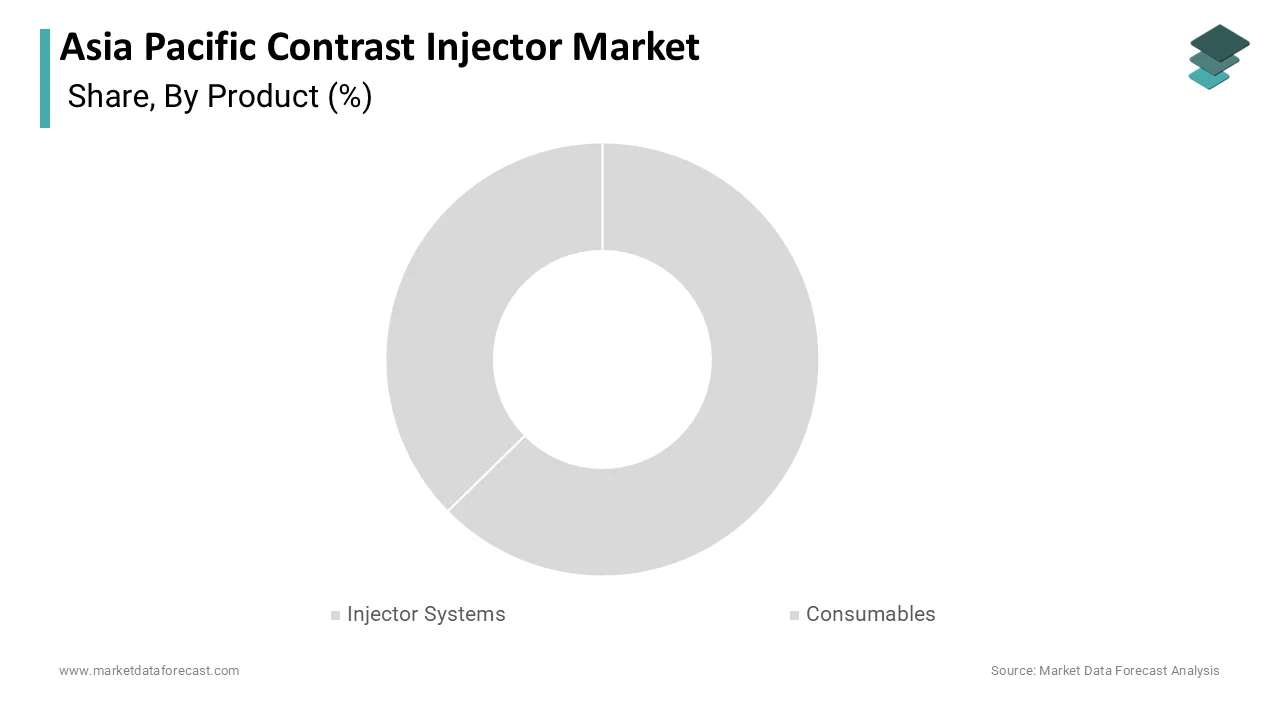
In 2025, the consumables segment held the majority share of the Asia Pacific contrast injector market, because of the inherent recurring revenue model tied directly to imaging procedure volumes rather than one-time capital equipment sales. According to the World Health Organization Western Pacific Regional Office, healthcare networks across regional clinics are expanding standard therapeutic infrastructure budgets to address an active, systemic increase in long-term noncommunicable chronic condition burdens. As per the International Agency for Research on Cancer, clinical facilities are absorbing a steep increase in diagnostic scan workloads as regional oncological cases expand to form 49.2% of the global patient distribution. Unlike injector systems,s which have 7 to 10 year replacement cycles, consumables generate continuous revenue aligned with patient flow, making this segment less vulnerable to capital expenditure freezes during economic downturns. Public hospital procurement frameworks across ASEAN nations increasingly favor bundled contracts where consumable commitments secure discounted hardware pricing,g further entrenching recurring revenue dominance. This structural dependency on procedural volume ensures consumables remain the primary revenue driver regardless of new equipment installation rates.
Stringent infection prevention regulations across Asia Pacific healthcare systems legally mandate single-use consumables, eliminating reprocessing options that could otherwise reduce market size. As per the World Health Organization Western Pacific Regional Office, chronic noncommunicable diseases now account for nearly 90% of regional deaths, necessitating expanded clinical access to modernized, high-pressure automated vascular administration infrastructure. According to the United Nations Population Division population reports, structural old-age dependency changes force medical administrations to continuously update standard clinical equipment asset life cycle and replenishment schedules. These regulatory and liability pressures create non-discretionary demand that persists independent of price sensitivity or budget constraints. Manufacturers benefit from locked-in consumable ecosystems, as proprietary connector designs prevent generic substitution,n ensuring sustained premium pricing and market leadership for original equipment manufacturers throughout the product lifecycle.
The injector systems segment is predicted to witness the highest CAGR of 11.1% from 2026 to 2034 due to massive healthcare infrastructure development across emerging Asia Pacific economies. According to the World Health Organization Western Pacific Regional Office, localized public health segments are accelerating digital diagnostic tool rollouts to alleviate rapid age-related vascular complications across distributed healthcare delivery pipelines. As per the United Nations Population Division, aging demographic concentrations across regional populations will double by 2050, stimulating broad market deployment of automated contrast media injectors to fulfill diagnostic throughput. The infrastructure wave differs from mature markets, ts where growth depends on replacement cycles; here, it represents first-time installations, creating higher-velocity expansion. Government-funded projects often specify modern power injectors as mandatory equipment standards, accelerating adoption beyond organic market forces. The concentration of new builds in high-growth developing economies explains why system CAGR exceeds consumables despite a smaller absolute revenue base.
Rapid obsolescence of legacy injector platforms due to advanced imaging protocol requirements drives accelerated replacement purchasing that boosts system segment growth beyond new installation demand. As per Guerbet Interventional Radiology, modern radiology clinics deploy high-pressure vascular administration infrastructure to optimize therapeutic delivery safety and precision across localized oncology workflows. According to the World Health Organization Western Pacific Regional Office, chronic noncommunicable ailments comprise nearly 90% of total regional fatalities, driving hospitals to accelerate procurement velocity for high-capacity automated power injection devices. These technical and regulatory pressures compress replacement intervals, creating sustained demand pulses independent of new facility construction, explaining the superior growth trajectory.
By Application Insights
The radiology segment led the APAC Contrast Injector Market and captured a significant share in 2025. This leading position of the segment was attributed to government-sponsored cancer screening initiatives that generate high-volume contrast-enhanced imaging across Asia Pacific populations. According to the International Agency for Research on Cancer, Asia accounts for 49.2% of global cancer incidence, matching a rising regional burden where countries continuously expand diagnostic infrastructure. As per the Ministry of Public Health of Thailand, the national healthcare framework expanded cancer treatment and diagnostic capacities across all 77 provinces to improve service access for localized patient management. According to the Ministry of Health of Malaysia, the National Strategic Plan for Cancer Control focuses on optimized clinical workflows and diagnostic equipment integration across regional public hospitals to maximize patient throughput. Unlike interventional cardiology, which serves acute episodic needs,s radiology encompasses diverse indications,ons including trauma, infection, and chronic disease monitoring, creating broader baseline demand. The integration of artificial intelligence-assisted triage tools in radiology workflows further increases scan efficiency, enabling higher patient throughput without proportional staffing increases. This programmatic demand structure makes radiology less susceptible to economic volatility than elective procedural applications,s ensuring sustained segment leadership across varying healthcare expenditure cycles.
Clinical guideline harmonization across Asia Pacific radiology societies establishes contrast-enhanced imaging as a mandatory diagnostic pathway for numerous conditions, cementing application dominance. As per the Asian Society of Abdominal Radiology, regional imaging initiatives focus on standardizing abdominal imaging recommendations to replace outdated modalities and align localized hospital networks with modern evidence-based practices. As per the Japan Medical Imaging and Radiological Systems Industries Association, clinical departments continuously update medical imaging protocols and software parameters to optimize radiation metrics and scan efficiencies during routine hospital procedures. According to the Indian Radiological and Imaging Association, structured education programs and peer-reviewed consensus recommendations aim to unify diagnostic imaging steps across diverse domestic clinical operations. These evidence-based protocols transform contrast injection from an optional technique into a required diagnostic component, creating inelastic demand that persists regardless of individual physician preference or institutional cost containment measures,s ensuring radiology maintains application segment leadership.
The interventional cardiology segment is estimated to register the fastest CAGR of 13.8% during the forecast period owing to rapid adoption of percutaneous coronary interventions and structural heart procedures across Asia Pacific. According to the Asia Pacific Society of Cardiology, regional tracking of interventional practices shows an increasing volume of percutaneous coronary interventions fueled by expanded local infrastructure and specialized clinical training. According to the National Center for Cardiovascular Diseases of China, the nation registers a continuous volume expansion in coronary revascularization cases supported by standard health insurance provisions for critical cardiac events. Unlike diagnostic radiology,gy where many exams can be performed without contrast,ast nearly all interventional cardiology procedures require real-time angiographic guidance, making injector utilization intensity significantly higher per case. This procedural migration toward minimally invasive techniques creates concentrated high-value demand that grows faster than the broader radiology segment despite smaller absolute volume.
Government investments in chest pain center networks and emergency cardiovascular care infrastructure drive accelerated interventional cardiology segment growth across developing Asia Pacific markets. According to the World Heart Federation, cardiovascular health networks throughout the Asia Pacific region are scaling up early intervention clinics and diagnostic access routes to alleviate the burden of sudden cardiac events. As per the Ministry of Public Health of Thailand, regional emergency medical networks continuously upgrade local fast-track capabilities to streamline door-to-balloon intervals for acute cardiovascular incidents. According to the Ministry of Health of Indonesia, the ongoing national hospital transformation program allocates capital to upgrade regional referral centers with specialized diagnostic infrastructure to bridge geographic access gaps. These publicly funded network expansions create concentrated demand bursts for cardiology-specific injectors that grow independently of overall hospital imaging budgets, explaining superior CAGR as policy priorities shift toward acute cardiovascular mortality reduction.
COUNTRY LEVEL ANALYSIS
China Contrast Injector Market Analysis
China dominated the APAC contrast injector market and accounted for a 34.1% share in 2025. Massive consumable throughput and replacement demand drove the country's market dominance. As per the World Health Organization Western Pacific Regional Office, regional diagnostic facilities across expanding networks are accelerating clinical adoption of automated health infrastructure to mitigate massive chronic disease diagnostics overheads. According to the World Health Organization Western Pacific Regional Office, noncommunicable conditions now generate close to 90% of regional healthcare burden, driving active infrastructure deployments for early therapeutic diagnostic imaging workflows. As per Guerbet Interventional Radiology, healthcare providers across oncology delivery networks are introducing standardized microcatheter-based delivery tools to manage targeted hepatoma arterial embolisation. According to the International Agency for Research on Cancer, newly reported regional oncology occurrences exceeded 9.8 million cases annually, forcing diagnostic treatment groups to scale up automated medical injection systems. Also, as per the International Agency for Research on Cancer, clinical facilities are absorbing an active expansion in overall diagnostic scan workloads as regional oncological cases capture 49.2% of global totals. Tier 3 city hospital modernization wave currently underrepresents the next growth frontier as infrastructure gaps close. This combination of scale, policy support,t and localization creates a self-reinforcing market leadership position unlikely to be challenged by other regional players in the foreseeable future.
Japan Contrast Injector Market Analysis
Japan was positioned second in the APAC contrast injector market and captured a 22.4% share in 2025. This position of the Japanese market was propelled by a mature installed base and high procedural intensity per capita. According to the World Health Organization Western Pacific Regional Office, localized public health departments are accelerating digital healthcare tool transitions to support rapid age-related clinical diagnostics across distributed municipal clinical centers. According to the United Nations Population Division, aging demographic concentrations in Eastern and South-Eastern Asia are projected to fully double by 2050, resulting in increased systemic utilization of high-pressure automated radiology devices. As per the United Nations Population Division demographic trends, regional elderly population expansions are altering standard patient care dependencies, causing medical networks to adjust operational equipment asset life cycle practices. Reimbursement system rewards standardized contrast protocols, incentivizing facilities to maintain current-generation equipment rather than extend legacy system lifespans. High quality expectations and regulatory stringency create barriers for foreign entrants, protecting incumbent positions. Market growth remains steady,y driven by replacement demand and protocol intensification rather than expansion, reflecting mature market dynamics distinct from developing regional counterparts.
India Contrast Injector Market Analysis
India is an emerging player in the Asia Pacific contrast injector market. It shows the highest growth velocity among major markets, driven by public health infrastructure expansion. As per Ayushman Bharat PM-JAY updates, the government-backed welfare initiative has expanded its eligibility threshold to secure comprehensive medical coverage for all national senior citizens aged 70 years and above, stabilizing clinical utilization rates for critical high-pressure radiology diagnostics. Production Linked Incentive scheme for medical devices catalyzed domestic injector manufacturing,g reducing import costs and enabling price points accessible to tier 2 and tier 3 private hospitals. According to the National Cancer Grid network registry, the collaborative clinical group coordinates uniformity of oncological medical care across more than 370 participating cancer centers in India to streamline standardized patient diagnostic pathways. As per Ayushman Bharat PM-JAY official records, the public healthcare ecosystem is processing active procedural volume increases across municipal clusters by extending funded hospital treatments up to ₹5 lakh per family annually. Also, the national public health protection program protects approximately 12.37 crore poor and lower-income families by establishing financial safety nets for secondary and tertiary clinical procedures. This convergence of public investment,nt domestic manufacturing, and insurance expansion creates a multi-vector growth trajectory, positioning India to potentially surpass Japanwithin aaa decade if current momentum sustains.
South Korea Contrast Injector Market Analysis
South Korea occupies a significant position in the Asia Pacific contrast injector market due to advanced technology adoption and a strong domestic manufacturing ecosystem. According to the World Health Organization Western Pacific Regional Office, public health delivery lines are intensifying investments in digital diagnostic platforms to counter the rapid regional expansion of complex age-related noncommunicable disease workloads. As per the International Agency for Research on Cancer, clinical facilities are witnessing an active surge in oncology imaging caseloads as the continent records 49.2% of all global cancer manifestations. According to the United Nations Population Division, the percentage share of older populations throughout East and Southeast Asian communities is projected to double by 2050, accelerating patient density utilizing automated radiology injectors. K FDA expedited approval pathway for innovative medical devices enables faster commercialization of next-generation injectors compared to other regional markets. An export-oriented manufacturing base allows Korean companies to leverage domestic scale for competitive international pricing. Market growth reflects a balance between replacement demand and selective technology upgrades in a saturated environment.
Australia Contrast Injector Market Analysis
Australia is moving steadily in the APAC contrast injector market, owing to high per capita spending, stringent regulatory oversight, and strong teleradiology integration. According to the United Nations Population Division demographic outlook, regional elderly dependency developments are driving an active growth trend in hospital networks expanding high-pressure contrast media injector procurement arrays. As per Guerbet Interventional Radiology healthcare protocols, modern radiology clinics deploy high-pressure vascular administration infrastructure to optimize therapeutic delivery safety and precision across localized oncology workflows. According to the World Health Organization Western Pacific Regional Office, localized public health departments are accelerating digital healthcare tool transitions to support rapid age-related clinical diagnostics across distributed municipal clinical centers. The public hospital system standardized on two major vendors through national tender frameworks, achieving volume discounts but limiting competitive diversity. Aged care sector expansion adds incremental demand. Market growth reflects mature dynamics with replacement cycles and protocol upgrades as primary drivers rather than new facility construction. Geographic dispersion creates niche opportunities for portable and telemedicine-enabled injector solutions not viable in denser markets.
COMPETITIVE LANDSCAPE
Competition within the Asia Pacific contrast injector market exhibits moderate intensity, characterized by technological differentiation and service capability rather than pure price competition among established multinational vendors. The market features five dominant global players alongside emerging domestic manufacturers in China, India, and South Korea, each creating a tiered competitive landscape with varying specialization levels and geographic coverage. Barriers to entry remain substantial due to stringent regulatory approvals across multiple jurisdictions, clinical validation requirements, and established vendor relationships with key opinion leaders, limiting new entrant threats in premium segments. Existing competitors differentiate through proprietary consumable ecosystems, integrated workflow solutions, and specialized application expertise rather than commoditized hardware specifications alone. Domestic manufacturer emergence in China and India alters competitive dynamics by introducing price-competitive alternatives that pressure mid-tier pricing while expanding overall market accessibility through lower-cost options. Geographic fragmentation along national regulatory and reimbursement lines prevents true regional standardization, forcing vendors to maintain country-specific product variants and documentation sets, increasing operational complexity. Customer switching costs are moderate due to consumable lock-in but vary significantly between markets, with mature installed bases exhibiting higher retention than greenfield deployments. Competitive intensity varies dramatically by segment,t with tertiary hospital markets experiencingreat competitionon,onn while rural and public sector procurement prioritizes cost and service reliability, creating distinct competitive arenas requiring tailored approaches across the vast Asia Pacific geography.
KEY MARKET PLAYERS
Some of the companies that are playing a dominating role in the APAC Contrast Injector Market include:
- Bracco Imaging S.p.A.
- VIVID IMAGING
- Apollo RT Co., Ltd.
- GE HealthCare
- AngioDynamics, Inc.
- Ulrich GmbH & Co. KG
- Sino Medical-Device Technology Co., Ltd.
- Bayer HealthCare
- Guerbet Group
- Medtronic AG
- Nemoto Kyorindo Co., Ltd.
TOP LEADING PLAYERS IN THE MARKET
- Bayer AG maintains significant influence in the Asia Pacific contrast injector landscape through its comprehensive portfolio of Medrad power injection systems and compatible consumables tailored for diverse regional healthcare settings. The company contributes extensively by providing advanced dual-head injectors that support complex multiphase protocols essential for oncology and cardiology applications across tertiary hospitals in Japan, Australia, and Singapore. Bayer recently strengthened its position by launching the next-generation IntelliStream platform with integrated dose monitoring software specifically configured for Asian regulatory requirements and clinical workflows. This innovation addresses growing demand for quantitative imaging and patient safety tracking while maintaining backward compatibility with the existing installed base. Their continuous investment in local technical training programs across Southeast Asia ensures optimal device utilization and reduces downtime. Bayer also expanded regional service centers in India and Thailand to improve response times and spare parts availability, addressing key customer pain points in geographically dispersed markets. These strategic actions reinforce their technological leadership and operational reliability throughout the Asia Pacific region without relying on market share metrics to demonstrate sustained competitive advantage.
- GE HealthCare Technologies Inc plays a pivotal role in the Asia Pacific contrast injector ecosystem through integrated imaging solutions that bundle Veris injectors with CT and MRI systems,s creating seamless workflow advantages. The company contributes regionally by offering scalable injector platforms ranging from basic single-head units for emerging markets to advanced multi-modality systems for premium facilities in developed economies. GE HealthCare recently enhanced its market position by introducing cloud-connected protocol management capabilities, enabling remote standardization across distributed hospital networks in Australia and New Zealand. This digital integration addresses teleradiology expansion needs while creating recurring software revenue streams beyond hardware sales. Their partnerships with domestic distributors in Vietnam and Indonesia facilitate broader market access in price-sensitive segments. GE HealthCare also localized manufacturing of consumables in China, reducing supply chain vulnerability and improving cost competitiveness against regional players. These initiatives demonstrate commitment to solving practical deployment challenges across heterogeneous Asia Pacific healthcare environments, strengthening customer relationships through operational efficiency improvements rather than specification-based competition alone.
- Guerbet Group has established a substantial presence in the Asia Pacific contrast injector market through a specialized focus on liver imaging and interventional radiology applications requiring precise contrast delivery protocols. The company contributes uniquely by combining OptiStar injector systems with proprietary lipiodol and other specialty contrast agents, creating integrated solutions for hepatocellular carcinoma treatment prevalent across Asian populations. Guerbet recently strengthened its position by expanding OptiVantage dual syringe system availability in South Korea and Thailand, addressing growing TACE procedure volumes in high-incidence liver cancer regions. Their collaboration with academic medical centers in Japan and China facilitates clinical validation studies demonstrating superior outcomes with optimized injection protocols. Guerbet also invested in regional regulatory affairs teams to accelerate product registrations across ASEAN markets, leveraging harmonization frameworks. The company’s niche specialization in hepatic imaging differentiates offerings from generalist competitors,s creating defensible positioning in high-value procedural segments. These targeted strategies enable sustained relevance despite smaller overall scale compared to diversified conglomerates operating in the Asia Pacific contrast injector landscape.
TOP STRATEGIES USED BY KEY MARKET PARTICIPANTS
Key players in the Asia Pacific contrast injector market employ several strategic approaches to maintain competitive advantage amid diverse regulatory environments and varying economic development levels across the region. Product localization remains paramount as companies adapt injector interfaces, software languages, and consumable configurations to meet specific national standards and clinical preferences in major markets like Japan, China, and India. Strategic partnerships with domestic distributors and local manufacturers expand geographic reach while navigating complex import regulations and cultural business practices unique to each territory. Service ecosystem development transforms transactional hardware sales into long term relationships through preventive maintenance contracts, remote diagnostics, and clinical application training that increase customer retention and lifetime value. Portfolio tiering enables vendors to address both premium tertiary hospital segments and cost-constrained public facilities through differentiated product lines balancing performance and affordability. Digital integration with hospital information systems and cloud platforms creates switching costs and recurring revenue opportunities beyond traditional consumable lock-in models. Regulatory navigation expertise allows companies to accelerate approvals through ASEAN harmonization pathways and country-specific expedited review mechanisms, reducing time-to-market and providing advantages over less experienced competitors. These interconnected strategies collectively address the fundamental challenge of serving extremely heterogeneous markets spanning the world's most advanced healthcare systems alongside resource-limited developing nations within a single regional framework.
MARKET SEGMENTATION
This research report on the APAC Contrast Injector Market has been segmented and sub-segmented into the following categories.
By Product
- Injector Systems
- Consumables
By Application
- Radiology
- Interventional Cardiology
- Interventional Radiology
By Country
- India
- China
- Japan
- South Korea
- Australia
- New Zealand
- Thailand
- Malaysia
- Vietnam
- Philippines
- Indonesia
- Singapore
- Rest of APAC