- Product Description Description
- Table of Contents TOC
- List of Table & Figure LOT
- Get Free Sample PDF Sample PDF
Market Size, 2025
$14.63 BnMarket Estimate, 2026
$15.38 BnMarket Forecast, 2034
$22.9 BnCAGR, 2026–2034
5.1%Executive Summary: Global Beetroot Powder Market
- Market Scope: Comprehensive global beetroot powder industry analysis covering types (conventional, organic), applications (curries, gravies, food color), distribution channels, packaging formats, regional leadership frameworks, strategic corporate developments, and competitive landscapes.
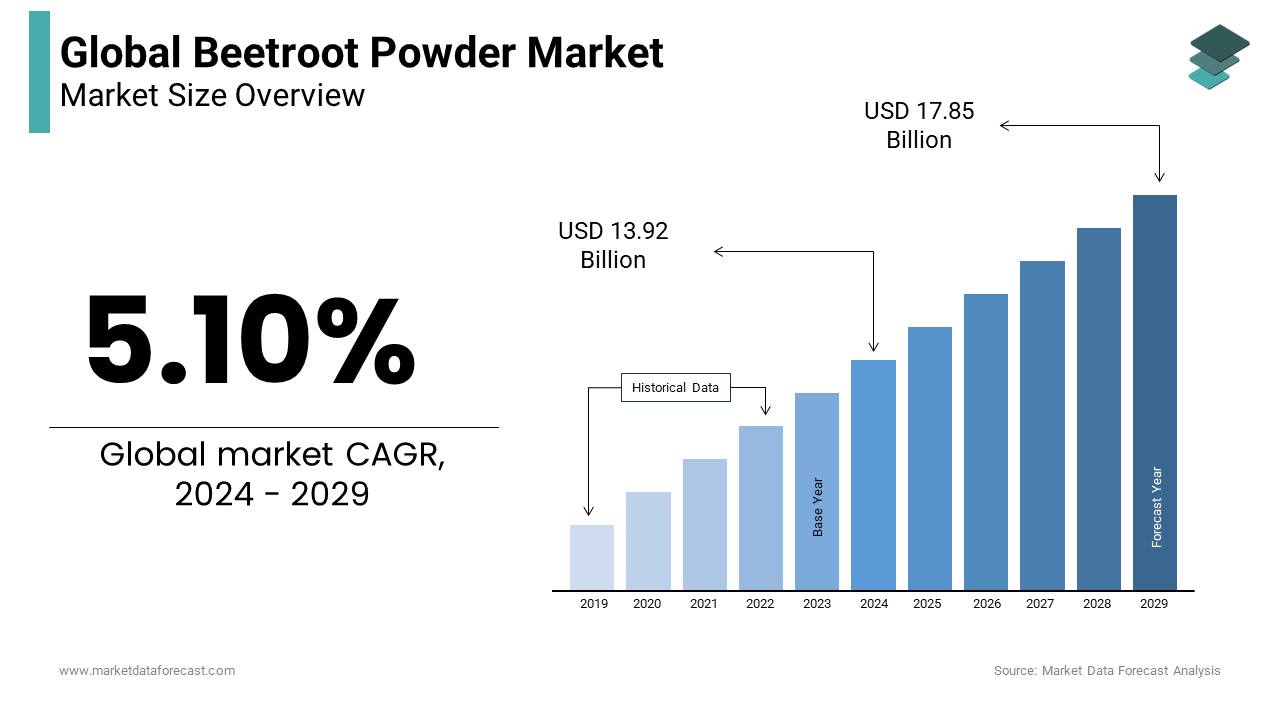
- Market Valuation: Valued at USD 14.63 billion (2025), estimated at USD 15.38 billion (2026), and projected to reach USD 22.90 billion by 2034, registering a steady CAGR of 5.10% (2026–2034).
- Primary Growth Drivers: Natural/synthetic ingredient avoidance, natural colorant/functional additive demand, sports nutrition performance enhancement, clean-label artificial dye alternatives, and convenience product innovation (smoothies, snack bars). Restraints include nutrient potency loss and superfood competition.
Key Market Segment Metrics (2026–2034)
| Category | Leading Segment / Region (Position) | Fastest-Growing Segment |
|---|---|---|
| By Application & Type | Curries and gravies segment (led in 2025 via colorant/flavor utility) & Conventional beetroot powder (dominated type segment in 2025 due to cost-effectiveness and stable supply) | Food Colour application (highest CAGR via clean-label demand) & Organic variants (highest CAGR via health-conscious consumption) |
| By Distribution & Packaging | Supermarkets and hypermarkets (held major distribution share in 2025) & Bags packaging (led due to bulk utility) | Online sales via e-commerce expansion & Bottles packaging for premium consumer products |
| By Region / Country | Asia Pacific (led by China, Japan, and India through 2026) & North America (significant growth led by U.S., Canada, and Mexico) | Emerging markets scaling functional sports nutrition and cosmetic applications |
Major Market Players & Market Structure
Market Structure: Highly competitive global functional powder and natural ingredient sector characterized by local distributor collaborations, sustainable sourcing frameworks, functional sports nutrition formulations, and clean-label cosmetic innovations.
Key Companies: Yesraj Agro Exports Pvt, Radiance Ltd, NutraMarks, Bioglan, Nature's Way Products LLC, Natures Aid Ltd, Go Superfood, Super Sprout LLC & Juices International Pty Ltd, and Botanical Ingredients Ltd.
Global Beetroot Powder Market Size
The global beetroot powder market size was calculated to be USD 14.63 billion in 2025 and is anticipated to be worth USD 22.90 billion by 2034 from USD 15.38 billion in 2026, growing at a CAGR of 5.10% during the forecast period. Increased awareness of the harmful effects of synthetic or chemical components in a variety of products can increase the use of natural ingredients, supporting this target market.
Beets powder is used to flavor and color various foods and is a new antioxidant that is gaining popularity with health-conscious consumers. Beet powder can be an excellent addition to the human diet these days. Beet powder is made up of betaine phytochemicals that help the proper functioning of the cardiovascular system and help process amino acids in the kidneys and liver. Beet powder is also a rich source of chlorine, iodine, iron, magnesium, calcium, potassium, phosphorus, copper, sodium, riboflavin, thiamine, vitamins, fiber, and so on that can improve the oxygen content in the blood. The surge in the usage of beet powder in cosmetic, pharmaceutical and food-based industries are predicted to improve the booming growth during the calculated period.
MARKET DRIVERS
The crucial factor that is promoting the growth of beet powder consumption globally is the demand for the product in the renowned food and beverage firms.
Additionally, increasing the use of powdered beets in hamburgers and pizzas, along with an increase in disposable income, is another factor expected to drive growth in the global target market. In addition, the increased use of beet powder in the cosmetics industry due to changes in consumer preference for organic foods high in antioxidants increased preference for ready-to-eat consumers, and lifestyle changes of consumers have led to sales growth worldwide. One of the other factors expected to lead the modern root powder market. The demand for beet powder in the food and beverage sector is increasing. 1 tablespoon of beet powder is nutritionally equivalent to 1 beetroot. In the food industry, beet powder can be used as a food colorant, flavor enhancer, and others. Due to the health benefits provided by beet powder, the consumption of the young population is increasing. As beet powder improves the flavor and nutritional value in the food, the call from the fast food industries is increasing due to the consumption of pizzas and burgers, which in turn is driving the usage of beet powder. Beet powder is also used in the cosmetic industry due to its high antioxidant content, which promotes market demand. Increasing awareness of the use of personal care and natural ingredients in these products can fuel industrial growth as demand for natural cosmetics and personal care products increases. Beetroot powder is widely used in cosmetics, including anti-aging scrubs, face masks, creams and lotions, and removes anti-aging free radicals to prevent skin aging. Beetroot powder is also used for lip balm and lip gloss, giving red or pink to accelerate product demand.
Increased health care awareness among consumers that can increase demand for a variety of health functional food products can lead to modern market demand for powders. Beet powder is widely used because athletes improve performance and reduce muscle pain. It also lowers blood triglyceride levels to help with liver disease and lower blood pressure to maintain balanced health and promote demand for products. Major manufacturers are focusing on collaborating with local players to improve product offerings and expand their geographic presence, and existing players are directing them to offer naturally-sourced products due to consumer penchant for organic products. Beetroot powder consists of betaine phytochemicals and is very useful for the proper functioning of the cardiovascular system and helps to process amino acids in the kidneys. The call for beet powder in the food and beverage industry is multiplying. In the food industry, beet powder is also used to add color to flavor enhancers, flavoring agents, and various food products. Due to the health benefits of sugar beet powder, consumption of sugar beet powder is increasing among younger populations. To increase flavor and increase nutritional value, the use of beet powder in various fast foods, such as pizzas and hamburgers, has increased, which has intensified its demand. Beet powder has also been used in the cosmetic industry to promote demand for beet powder due to its high antioxidant content.
REPORT COVERAGE
| REPORT METRIC | DETAILS |
| Market Size Available | 2025 to 2034 |
| Base Year | 2025 |
| Forecast Period | 2026 to 2034 |
| CAGR | 5.10% |
| Segments Covered | By Application, Type, Distribution Channel, Packaging, and Region |
| Various Analyses Covered | Global, Regional & Country Level Analysis; Segment-Level Analysis, DROC, PESTLE Analysis, Porter’s Five Forces Analysis, Competitive Landscape, Analyst Overview of Investment Opportunities |
| Regions Covered | North America, Europe, APAC, Latin America, Middle East & Africa |
| Market Leaders Profiled | Yesraj Agro Exports Pvt, Radiance Ltd, NutraMarks, Bioglan, Nature's Way Products LLC, Natures Aid Ltd, Go Superfood, Super Sprout LLC & Juices International Pty Ltd, Botanical Ingredients Ltd and Others. |
SEGMENTAL ANALYSIS
By Application Insights
The Curries and Gravies segment led the beetroot powder market in 2025. Beetroot powder is widely used in curries, sauces, and gravies as a natural colorant and flavor enhancer. Its deep red pigment enhances the visual appeal of dishes, while its mild earthy sweetness balances flavors. With the increasing demand for natural ingredients in food preparation, beetroot powder has gained popularity in both home cooking and the food processing industry.
The Food Colour segment is on the rise and is anticipated to grow at the highest CAGR by application in the market during the forecast period. As artificial food dyes face growing scrutiny due to health concerns, manufacturers are shifting to natural colorants like beetroot powder. It is widely used in bakery products, dairy, snacks, and beverages to provide vibrant red hues without synthetic additives. The rising consumer preference for clean-label, plant-based, and organic food products is driving the rapid growth of this segment.
By Type Insights
The conventional segment dominated the beetroot powder market in 2025 due to its widespread availability and cost-effectiveness. Conventional beetroot powder is extensively used in food processing, beverages, and dietary supplements due to its natural color and nutrient-rich properties. It is preferred by large-scale food manufacturers and commercial users due to its affordability and stable supply.
The organic segment is predicted to register the highest CAGR in the global beetroot powder market over the forecast period. With increasing consumer demand for clean-label, chemical-free, and sustainably sourced products, organic beetroot powder is gaining traction in health-conscious and premium food segments. The rise in vegan, organic, and non-GMO food trends is further accelerating the growth of this segment.
By Distribution Channel Insights
The supermarkets/hypermarkets segment had the major share of the global beetroot powder market in 2025. These stores offer a wide variety of food products, including health supplements and natural food ingredients, making beetroot powder easily accessible to consumers. The ability to physically inspect products and compare brands before purchasing contributes to the dominance of this segment. Additionally, bulk purchasing options and promotional discounts drive higher sales in supermarkets and hypermarkets.
The online sales segment is expected to grow at a promising CAGR over the forecast period and account for a notable share of the beetroot powder market. The rising trend of e-commerce, convenience shopping, and direct-to-consumer sales has boosted online purchases of health and organic products. Consumers are increasingly opting for online platforms due to wider product availability, doorstep delivery, and access to customer reviews. The growing influence of digital marketing and subscription-based models further supports the rapid expansion of this segment.
By Packaging Insights
The bags segment led the market by packaging in 2025 due to its cost-effectiveness, lightweight nature, and ease of storage. Bags are widely used for bulk packaging, making them popular among food manufacturers, retailers, and health-conscious consumers who purchase beetroot powder for regular use. Resealable pouches also help maintain product freshness and extend shelf life.
The Bottles segment is estimated to do well in the beetroot powder market over the forecast period. Bottles offer better protection against moisture and contamination, making them ideal for premium and organic beetroot powder brands. With the increasing demand for high-quality, well-packaged, and easy-to-use health supplements, bottled packaging is gaining popularity, especially in online and retail stores
REGIONAL ANALYSIS
Based on regional segmentation, the global beet powder market covers Asia Pacific, North America, the Middle East and Africa, Eastern Europe, Latin America and Western Europe. The beet production areas are France, Germany, Ukraine, Russia and the United States. North America, led by the Canadian, Mexican and US beet powder market sizes, should register significant growth during the forecast period. Growth in the food and beverage market may accelerate product growth as demand for natural food colors increases and interest in synthetic colors increases. Beet powder is widely used as a natural food coloring in a variety of foods such as curries, smoothies, gravy, ketchup, pancakes, and red velvet cakes, giving it a red color to promote the growth of the local market. The size of the sugar beet market, led by the United Kingdom, France and Germany, will continue to show significant growth by 2026. As the trend towards personal care increases, the demand for personal care products may increase, leading to resulting in a larger regional market. Beetroot powder maintains the elasticity and firmness of the skin, making it a widely used anti-aging cream and lotion with excellent antioxidant properties that drive local demand for products. The modern Asia Pacific powder market, led by China, Japan and India, is expected to grow significantly by 2026. Increased consumer awareness of a healthy lifestyle and increased sports activity to improve sports performance are key factors in the regional growth of products. Beet powder is used to prevent liver and kidney disease because it contains betaine plant chemicals that improve cardiovascular function. It also increases nitric oxide levels in the human body, affects blood vessels, lowers blood pressure, improves sports performance, and promotes local demand for products.
KEY PLAYERS IN THE GLOBAL BEETROOT POWDER MARKET
Major Key Players in the Global Beetroot Powder Market are Yesraj Agro Exports Pvt, Radiance Ltd, NutraMarks, Bioglan, Nature's Way Products LLC, Natures Aid Ltd, Go Superfood, Super Sprout LLC & Juices International Pty Ltd, Botanical Ingredients Ltd and Others.
DETAILED SEGMENTATION OF THE GLOBAL BEETROOT POWDER MARKET INCLUDED IN THIS REPORT
This research report on the global beetroot powder market has been segmented and sub-segmented based on application, type, distribution channel, packaging, and region.
By Application
- Curries and gravies
- Food Colour
- Soups
- Coatings
- Others
By Type
- Organic
- Conventional
By Distribution Channel
- Online Sales
- Retailer Shope
- Departmental Stores
- Super/Hypermarkets
By Packaging
- Cans
- Bottles
- Bags
By Region
- North America
- Europe
- The Asia Pacific
- Latin America
- The Middle East and Africa