- Product Description Description
- Table of Contents TOC
- List of Table & Figure LOT
- Get Free Sample PDF Sample PDF
Market Size, 2025
$778 MnMarket Estimate, 2026
$824.84 MnMarket Forecast, 2034
$1,317 MnCAGR, 2026–2034
6.02%Global Dengue Testing Market Report Summary
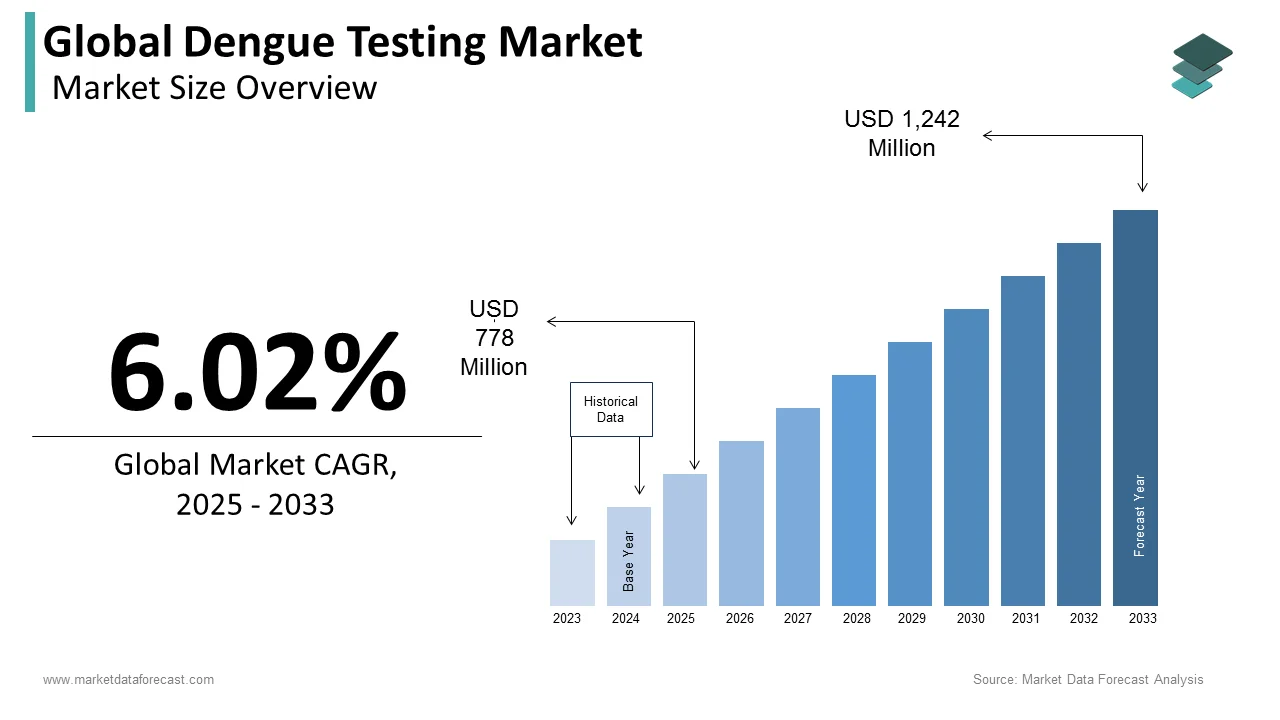
The global dengue testing market was valued at USD 778 million in 2025 and is projected to grow from USD 824.84 million in 2026 to USD 1,317 million by 2034, registering a CAGR of 6.02% from 2026 to 2034. Market growth is driven by the rising incidence of dengue fever, increasing awareness of early disease diagnosis, and expanding public health surveillance programs in endemic regions. Growing investments in infectious disease diagnostics, improvements in laboratory infrastructure, and the adoption of rapid and highly accurate testing technologies are further supporting market expansion.
Key Market Trends
- Rising incidence of dengue infections and other mosquito-borne diseases globally.
- Increasing adoption of rapid diagnostic tests and ELISA-based testing methods.
- Growing investments in public health surveillance and infectious disease monitoring.
- Expansion of point-of-care diagnostic solutions for early disease detection.
- Continuous advancements in molecular diagnostics and multiplex infectious disease testing.
Segmental Insights
- Based on product, the ELISA-based tests segment dominated the global dengue testing market in 2025, driven by their high sensitivity, specificity, and widespread use for detecting dengue antibodies and antigens in clinical laboratories.
- Based on end user, the hospitals segment held the largest share of the market by accounting for 44.7% in 2025, supported by increasing patient admissions during dengue outbreaks, availability of advanced diagnostic facilities, and comprehensive infectious disease management services.
Regional Insights
The global dengue testing market continues to expand across major regions, supported by increasing disease surveillance, government healthcare initiatives, and improvements in diagnostic infrastructure.
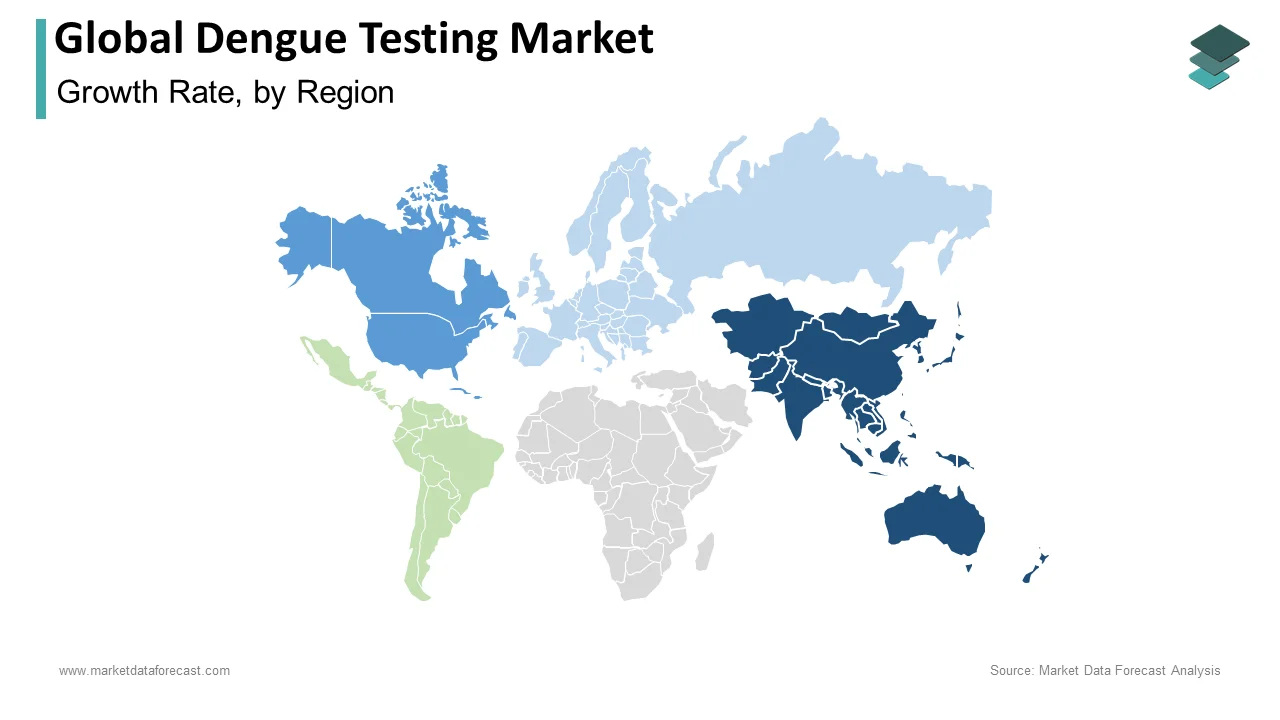
- Asia-Pacific dominated the global market in 2025 by accounting for 44.15% share, driven by the high burden of dengue infections, favorable climatic conditions for mosquito transmission, expanding healthcare infrastructure, and strong government-led disease control programs.
- Latin America is expected to witness fluctuating growth during the forecast period, as diagnostic demand remains closely linked to seasonal dengue outbreaks, climate variability, and epidemic cycles across endemic countries.
- North America is projected to maintain a stable but niche market presence, supported by diagnostic demand associated with international travel, imported dengue cases, and occasional localized outbreaks.
Competitive Landscape
The global dengue testing market is highly competitive, with leading diagnostics companies focusing on developing rapid, accurate, and reliable testing solutions for infectious disease detection. Market participants are investing in advanced immunoassays, molecular diagnostics, point-of-care testing platforms, and multiplex diagnostic technologies to strengthen their market position. Strategic collaborations, product launches, regulatory approvals, and continued investments in infectious disease diagnostics continue to shape the competitive landscape.
Prominent companies operating in the global dengue testing market include Thermo Fisher Scientific, Abbott Laboratories, Bio-Rad Laboratories, Roche Molecular Systems, NovaTec Immundiagnostica, Abnova, OriGene Technologies, InBios International, SD Biosensor Inc., Certest Biotec, PerkinElmer, and Quest Diagnostics.
Global Dengue Testing Market Size
The global dengue testing market was valued at USD 778 million in 2025. The global market is projected to grow from USD 824.84 million in 2026 to reach USD 1,317 million by 2034, exhibiting a compound annual growth rate (CAGR) of 6.02% during the forecast period 2026 to 2034.
Dengue testing comprises diagnostic solutions designed to detect the dengue virus and its associated antibodies in human blood samples, facilitating timely clinical intervention and epidemiological surveillance. These tests include rapid diagnostic kits, enzyme-linked immunosorbent assays, and molecular techniques such as reverse transcription polymerase chain reaction, which are critical for distinguishing dengue from other febrile illnesses like malaria and Zika. The global health landscape faces an escalating burden of arboviral diseases driven by urbanization and climate change. According to the World Health Organization, the total number of dengue cases reported globally reached 5 million in 2023, representing a significant increase over historical trends. As per data from the World Health Organization, an estimated 390 million dengue infections occur annually, with approximately 96 million resulting in clinical illness. The expansion of Aedes mosquito habitats into temperate regions due to rising global temperatures has extended the virus's transmission season and geographic range. In Europe, local transmissions have been recorded in France and Italy, indicating a shifting epidemiological pattern that requires robust diagnostic infrastructure. Early and accurate diagnosis is paramount because severe dengue can lead to shock syndrome and hemorrhage if not managed promptly. The integration of point-of-care testing in primary healthcare settings enhances accessibility in resource-limited areas where laboratory infrastructure is scarce. Regulatory bodies are increasingly emphasizing the standardization of diagnostic accuracy to prevent misdiagnosis, which can exacerbate disease spread and mortality rates in endemic zones.
MARKET DRIVERS
Rising Global Prevalence and Geographic Expansion of Dengue Fever
The escalating incidence of dengue fever globally is fuelling the expansion of the global dengue testing market as healthcare systems strive to manage the growing patient load. According to the World Health Organization, dengue is now endemic in more than 100 countries, with the Asia-Pacific, Latin America, and Africa bearing the highest disease burden. As per data from the Pan American Health Organization, the Americas reported over 3 million cases in 2023, marking one of the highest peaks in recent history due to favorable climatic conditions for vector proliferation. This surge necessitates a proportional increase in diagnostic capacity to ensure timely identification and isolation of cases. The geographic expansion of the Aedes aegypti mosquito into previously unaffected temperate zones has further amplified demand. For instance, European health authorities noted a significant rise in locally acquired cases in southern Europe, prompting the deployment of additional testing resources. According to the European Centre for Disease Prevention and Control, the risk of autochthonous transmission in Europe has increased due to warmer winters and increased international travel. Healthcare providers in non-endemic regions are now incorporating dengue into differential diagnoses for patients with travel history or unexplained fever. This shift drives the adoption of multiplex diagnostic panels that can simultaneously detect multiple arboviruses. The sheer volume of suspected cases during outbreak seasons strains existing laboratory capabilities, creating an urgent need for scalable high-throughput testing solutions that can process large sample volumes efficiently while maintaining accuracy.
Government Initiatives and Public Health Surveillance Programs
Robust government funding and strategic public health initiatives are significantly propelling the global dengue testing market expansion. According to the National Institutes of Health, several national health ministries have integrated dengue surveillance into their mandatory reporting systems, requiring confirmed laboratory diagnosis for case validation. As per data from the Ministry of Health in Brazil, the government launched a comprehensive vector control and diagnostic enhancement program, allocating substantial budget resources to distribute rapid diagnostic tests to primary care centers in remote areas. These initiatives aim to reduce the time between symptom onset and treatment initiation, which is critical for preventing severe complications. In Southeast Asia, countries like Thailand and Vietnam have established national reference laboratories equipped with real-time polymerase chain reaction capabilities to monitor viral serotypes and detect outbreaks early. According to reports from the Association of Southeast Asian Nations, regional collaboration frameworks facilitate the sharing of diagnostic protocols and reagent supplies, ensuring consistent testing standards. Government tenders for bulk procurement of diagnostic kits often drive market volume, as public sector institutions constitute a major share of consumption. Furthermore, international organizations, such as the Bill and Melinda Gates Foundation, support research and development of affordable point-of-care tests for low-resource settings. These coordinated efforts create a stable demand environment for manufacturers while encouraging innovation in cost-effective diagnostic technologies that align with public health goals of reducing morbidity and mortality associated with dengue fever.
MARKET RESTRAINTS
Limited Access to Advanced Diagnostic Infrastructure in Rural Areas
A significant restraint on the dengue testing market is the inadequate availability of sophisticated diagnostic infrastructure in rural and remote regions where the disease burden is often highest. According to the World Health Organization, nearly 80% of the global population at risk for dengue lives in Asia, where rural healthcare facilities frequently lack the necessary equipment for molecular testing. As per data from the Lancet Global Health, many primary health centers in endemic regions rely solely on clinical symptoms for diagnosis due to the absence of laboratory technicians and a reliable electricity supply. This reliance on clinical judgment leads to high rates of misdiagnosis, as dengue symptoms overlap with malaria, chikungunya, and leptospirosis. The cold chain requirements for transporting biological samples to central laboratories further complicate logistics in tropical climates, where temperature fluctuations can degrade sample integrity. According to industry analysis, the cost of establishing and maintaining a fully equipped molecular laboratory can exceed 50,000 dollars, which strains the budgetary constraints of many district hospitals. Consequently, patients often face delayed diagnosis or receive inappropriate treatment, increasing the risk of severe outcomes. The lack of trained personnel to operate complex instruments such as real-time polymerase chain reaction machines also limits the scalability of advanced testing methods. While rapid diagnostic tests offer a solution, their sensitivity varies significantly, affecting reliability. This infrastructural gap creates a disparity in healthcare quality between urban and rural populations, hindering effective disease management and control efforts in the most vulnerable communities.
Variability in Test Sensitivity and Specificity Across Serotypes
The inherent biological complexity of the dengue virus, which comprises four distinct serotypes, is further hindering the global dengue testing market growth. According to the Centers for Disease Control and Prevention, cross-reactivity with other flaviviruses such as Zika and yellow fever can lead to false positive results in serological assays, particularly in regions where multiple viruses co-circulate. As per data from the Journal of Clinical Microbiology, the sensitivity of non-structural protein 1 antigen detection tests can drop by 70% after the fifth day of illness, when antibody levels rise and antigen levels decline. This temporal variation requires clinicians to select the appropriate test based on the duration of symptoms, which is not always feasible in busy clinical settings. The presence of secondary infections with different serotypes further complicates interpretation, as antibody responses can be atypical and difficult to distinguish. According to industry reports, the lack of a universal gold standard for dengue diagnosis makes it difficult to validate new tests accurately. Variations in performance across different geographic populations due to genetic differences in immune response also affect test efficacy. Manufacturers struggle to develop assays that maintain high sensitivity and specificity across all four serotypes and stages of infection. This variability undermines clinician confidence in rapid tests, leading to overreliance on slower but more accurate molecular methods. The resulting diagnostic uncertainty can delay appropriate clinical management and hinder effective epidemiological tracking of specific serotype circulation patterns.
MARKET OPPORTUNITIES
Integration of Point of Care Testing in Primary Healthcare Settings
The decentralization of diagnostic services through the adoption of point of care testing presents a substantial opportunity for market growth by enabling rapid diagnosis at the community level. According to the World Health Organization, point of care tests provide results within 15 to 30 minutes, allowing immediate clinical decision-making without the need for centralized laboratory infrastructure. As per data from the Clinton Health Access Initiative, the deployment of handheld rapid diagnostic devices in various resource-limited settings has improved case detection rates by up to 40% compared to traditional referral systems. These portable devices require minimal training to operate and do not depend on stable electricity or cold chain storage, making them ideal for remote settings. The ability to differentiate between dengue and other febrile illnesses at the first point of contact reduces unnecessary antibiotic prescriptions and hospital admissions. According to industry analysis, the demand for multiplex point-of-care panels that detect dengue, malaria, and chikungunya simultaneously is rising among private practitioners and public health programs. Technological advancements in microfluidics and lateral flow assays are enhancing the sensitivity of these devices to match laboratory standards. Governments and non-governmental organizations are increasingly prioritizing the distribution of these tests to bridge the diagnostic gap in underserved areas. This trend opens new revenue streams for manufacturers who can tailor products for decentralized use while contributing to global health security by enabling early outbreak detection and response in remote communities.
Development of Multiplex Molecular Diagnostic Panels
The emergence of multiplex molecular diagnostic panels that can simultaneously detect multiple arboviruses offers a significant opportunity for the dengue testing market. According to the American Society for Microbiology, multiplex polymerase chain reaction assays can identify dengue, Zika, chikungunya, and yellow fever viruses in a single test run, reducing turnaround time and sample volume requirements. As per data from global diagnostic market reports, the adoption of these panels in reference laboratories has increased by approximately 25% annually as clinicians seek to rule out differential diagnoses quickly during outbreak seasons. This technology is particularly valuable in tropical regions where overlapping symptoms make clinical differentiation impossible. The ability to identify the specific pathogen enables targeted public health interventions, such as vector control measures tailored to the specific mosquito species involved. According to industry reports, the integration of next-generation sequencing with multiplex panels allows for the identification of novel viral strains and monitoring of mutations that may affect vaccine efficacy. Hospitals and diagnostic centers are investing in these advanced platforms to improve patient throughput and reduce the cost per test by consolidating multiple assays into one workflow. Regulatory approvals for these multiplex systems are accelerating, facilitating their entry into mainstream clinical practice. This technological evolution supports the transition from single pathogen testing to comprehensive syndromic surveillance, enhancing the overall capability of healthcare systems to manage complex infectious disease landscapes effectively.
MARKET CHALLENGES
High Cost of Molecular Diagnostic Equipment and Reagents
The substantial financial investment required for molecular diagnostic equipment and the recurring cost of specialized reagents remain a major challenge for the global dengue testing market expansion. According to the World Bank, the initial capital expenditure for a real-time polymerase chain reaction machine typically ranges from 20,000 to 50,000 dollars, which is prohibitive for many district hospitals in developing nations. As per data from the Global Fund, the ongoing cost of proprietary reagents and maintenance contracts further strains limited healthcare budgets, limiting the frequency of testing during peak seasons. Many healthcare facilities cannot afford the continuous supply chain of high-quality reagents, which often require cold storage and have short shelf lives. According to industry analysis, the total cost of ownership for molecular diagnostics includes specialized training for technicians and regular calibration, which adds to the operational burden. In contrast, rapid diagnostic tests are cheaper but often lack the sensitivity required for early detection or serotype differentiation. This cost barrier forces healthcare providers to ration testing, leading to underreporting of cases and delayed outbreak responses. The dependency on imported reagents also exposes laboratories to currency fluctuations and supply chain disruptions, which can halt testing operations entirely. Manufacturers face pressure to reduce prices while maintaining quality, but the high research and development costs associated with molecular assays limit their ability to lower prices significantly. This economic constraint restricts access to accurate diagnosis for millions of patients in endemic regions, perpetuating the cycle of undetected transmission and severe disease outcomes.
Regulatory Hurdles and Lack of Standardized Validation Protocols
The absence of harmonized regulatory standards and validated protocols for dengue diagnostic tests creates significant barriers to market entry and global interoperability. According to the International Organization for Standardization, there is no universally accepted reference material for evaluating the performance of dengue assays, leading to inconsistencies in sensitivity and specificity claims across different manufacturers. As per data from the Food and Drug Administration, the approval process for new diagnostic devices varies significantly between regions, requiring separate clinical trials and documentation for each market. This fragmentation increases the time and cost required for companies to launch new products globally. In many endemic countries, regulatory frameworks are either underdeveloped or inconsistently enforced, allowing substandard tests to enter the market. According to reports from the World Health Organization, prequalification programs help ensure quality, but coverage remains limited, leaving many national markets reliant on unverified products. The lack of standardized evaluation criteria makes it difficult for healthcare providers to compare different tests objectively. Variations in sample handling and processing protocols further complicate result interpretation across different laboratories. This regulatory ambiguity discourages investment in innovation as companies face uncertain approval timelines and potential post-market liabilities. Harmonizing global standards would facilitate faster adoption of reliable tests, but achieving consensus among diverse regulatory bodies remains a complex and protracted process that hinders the rapid deployment of improved diagnostic solutions.
REPORT COVERAGE
| REPORT METRIC | DETAILS |
| Market Size Available | 2025 to 2034 |
| Base Year | 2025 |
| Forecast Period | 2026 to 2034 |
| Segments Covered | By Product, End-Userr, and Region. |
| Various Analyses Covered | Global, Regional and Country-Level Analysis, Segment-Level Analysis, Drivers, Restraints, Opportunities, Challenges; PESTLE Analysis; Porter’s Five Forces Analysis, Competitive Landscape, Analyst Overview of Investment Opportunities |
| Regions Covered | North America, Europe, Asia Pacific, Latin America, Middle East & Africa |
| Market Leaders Profiled | Thermo Fisher Scientific, Abbott Laboratories, Roche Molecular Systems, NovaTec Immundiagnostica, Abnova, OriGene Technologies, InBios International, Certest Biotec, PerkinElmer, and Quest Diagnostics., and Others. |
SEGMENTAL ANALYSIS
By Product Insights
The ELISA-based tests segment had the largest share of the global market in 2025. The dominance of ELISA-based tests segment is primarily because they serve as the foundational tool for large-scale seroprevalence studies and confirmatory diagnosis in centralized laboratories. According to the World Health Organization, ELISA remains the reference standard for validating rapid diagnostic tests due to its superior sensitivity and specificity in detecting IgM and IgG antibodies during convalescent phases. As per data from the Pan American Health Organization, national reference laboratories in endemic regions may process thousands of samples monthly during peak transmission seasons using automated ELISA platforms to manage high-volume surveillance efficiently. The ability to batch process 96 samples simultaneously significantly reduces the cost per test, making it economically viable for public health programs with limited budgets. Furthermore, ELISA kits offer quantitative results that enable researchers to monitor antibody titers, which is critical for vaccine efficacy trials and epidemiological modeling. According to industry analysis, government tenders for national dengue control programs frequently specify ELISA as the mandatory confirmatory method following positive rapid test results, ensuring consistent procurement volumes. The established supply chain and regulatory approval history of ELISA kits also reduce adoption barriers compared to newer molecular technologies. This segment dominance is sustained by the indispensable role of serological surveillance in guiding vector control policies and assessing population immunity levels across vast geographic areas where individual patient management is secondary to outbreak containment strategies.
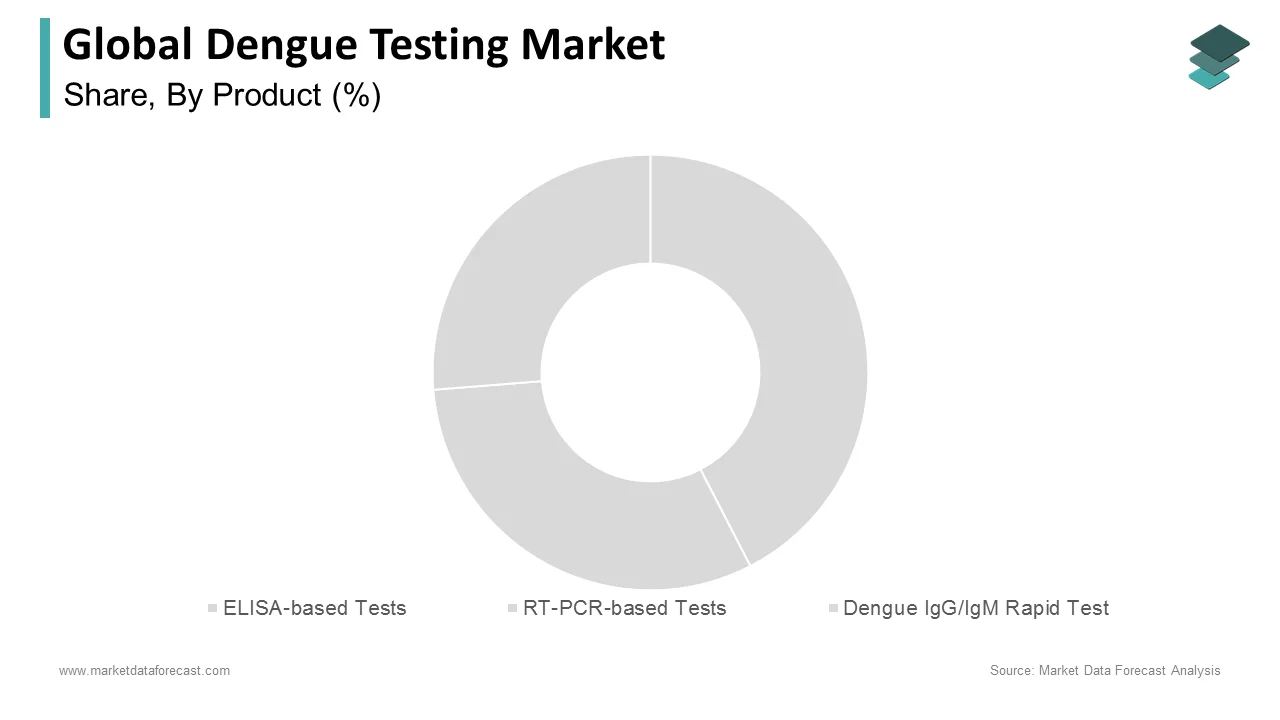
On the other side, the RT-PCR-based tests segment is projected to grow significantly as healthcare systems increasingly prioritize early and precise viral detection during the acute febrile phase. According to the Centers for Disease Control and Prevention, molecular assays can detect dengue viral RNA within the first five days of symptom onset when antibody-based tests remain negative, enabling timely clinical intervention. As per data from the European Centre for Disease Prevention and Control, the increasing frequency of imported cases in non-endemic regions has prompted hospitals to adopt RT PCR as the primary diagnostic tool for travelers presenting with fever to rule out other pathogens quickly. The technology's ability to differentiate between all four dengue serotypes provides essential epidemiological data for predicting severe disease risk, since secondary infections with heterologous serotypes carry higher mortality rates. According to industry reports, technological advancements in extraction-free protocols have reduced turnaround time to under two hours, making RT PCR feasible for emergency department use. Government initiatives to strengthen genomic surveillance networks post-pandemic have also allocated funding for molecular equipment upgrades in regional laboratories. This growth reflects a paradigm shift toward precision diagnostics, where identifying the specific viral genotype informs both individual patient management and real-time public health response strategies during emerging outbreaks.
By End User Insights
The hospitals segment held 44.7% of the global market share in 2025. The growth of the hospitals segment in the global market is attributed to the primary point of care for patients presenting with acute febrile illness. According to the World Health Organization, over 80% of suspected dengue cases initially present at hospital emergency departments, requiring immediate triage and diagnostic confirmation to guide fluid management and monitoring protocols. As per data from the Ministry of Health in Thailand, tertiary hospitals may conduct hundreds of dengue tests daily during epidemic peaks to distinguish severe cases requiring intensive care from mild cases suitable for outpatient management. The integration of diagnostic laboratories within hospital premises enables rapid turnaround times, which are critical for preventing progression to dengue shock syndrome. Hospitals also bear responsibility for managing complications such as hemorrhage and organ failure, necessitating repeated testing to monitor disease progression and treatment response. According to industry analysis, private hospital chains in Latin America and Southeast Asia have invested heavily in automated testing platforms to reduce length of stay and improve patient outcomes. Insurance reimbursement policies in many countries also favor hospital-based testing, creating financial incentives for in-house diagnostic capabilities. This segment leadership is reinforced by the clinical complexity of dengue management, which requires close coordination between laboratory results and bedside care decisions that cannot be replicated in standalone diagnostic centers.
On the other hand, the public health laboratories segment is expected to see robust growth in the coming years as governments increasingly invest in centralized surveillance to combat expanding arboviral threats. According to the Association of Southeast Asian Nations, regional health security frameworks now require member states to maintain accredited reference laboratories capable of confirming dengue cases and conducting serotype surveillance year-round. As per data from the Africa Centres for Disease Control and Prevention, numerous national public health laboratories were established or upgraded in sub-Saharan Africa between 2022 and 2024 specifically to enhance arbovirus detection capacity. These facilities serve as central hubs for validating field-collected samples, training personnel, and maintaining quality assurance standards across decentralized testing networks. International funding mechanisms, such as the Global Health Security Agenda, have provided capital grants for equipment procurement and workforce development, accelerating infrastructure expansion. According to industry reports, the integration of public health laboratories into global genomic surveillance networks has increased demand for advanced molecular platforms capable of sequencing viral genomes for variant tracking. Climate change-induced range expansion of Aedes mosquitoes into new territories has further compelled governments to establish surveillance baselines in previously unaffected regions. This growth trajectory reflects the strategic prioritization of laboratory capacity as a core component of national health security rather than merely a clinical support function.
REGIONAL ANALYSIS
Asia Pacific Dengue Testing Market Analysis
Asia Pacific held 44.15 of the global market share in 2025 and is projected to continue its dominance in the global market for the next few years, supported by massive public health efforts and a high baseline of endemic transmission, reflecting its status as the world's most heavily affected region with hyperendemic circulation across multiple serotypes. According to the World Health Organization, the region accounts for 75% of global dengue cases, with countries like India, Indonesia, Vietnam, and the Philippines reporting millions of infections annually. As per data from the National Center for Vector-Borne Disease Control, India alone conducts millions of dengue tests yearly through a network of government and private laboratories to support case management and outbreak response. The sheer volume of clinical presentations drives massive consumption of both rapid tests for primary care and ELISA for confirmation. According to industry analysis, domestic manufacturers in China and India produce affordable rapid diagnostic kits that dominate local markets, while multinational companies supply premium molecular platforms to reference laboratories. Government-funded universal health coverage schemes in Thailand and Malaysia ensure broad access to testing, reducing financial barriers for patients. The region's diverse healthcare systems, ranging from advanced urban hospitals to rural primary care centers, create demand across all product segments and end user categories. This overwhelming disease burden establishes Asia Pacific as the undisputed volume leader shaping global manufacturing priorities and innovation agendas for dengue diagnostics.
Latin America Dengue Testing Market Analysis
Latin America is anticipated to show fluctuating market growth over the next few years, as demand remains tightly coupled with the unpredictable nature of regional climate events and epidemic cycles. According to the Pan American Health Organization, the region experienced record-breaking transmission in 2023 with over 4 million cases reported, driving unprecedented testing volumes across Brazil, Colombia, and Argentina. As per data from the Brazilian Ministry of Health, the Unified Health System distributed millions of rapid diagnostic tests in recent years to decentralize diagnosis and alleviate pressure on central laboratories. The region's reliance on public sector procurement makes market size highly sensitive to government budget allocations and emergency declarations. According to industry reports, private diagnostic chains have expanded molecular testing offerings in major cities, catering to middle-class patients seeking faster confirmation than public system wait times allow. International organizations frequently supplement national supplies during crisis periods, creating temporary demand surges. The co-circulation of Zika and chikungunya viruses necessitates multiplex testing approaches, particularly during overlapping outbreaks. This volatility presents both opportunities and challenges for suppliers who must maintain flexible production capacity to respond to unpredictable epidemic dynamics while navigating complex public procurement processes.
North America Dengue Testing Market Analysis
North America is likely to maintain a stable but niche market presence over the next few years as diagnostic demand remains closely tied to international travel patterns and occasional local outbreaks. According to the Centers for Disease Control and Prevention, the United States reports hundreds of travel-associated dengue cases annually, with testing concentrated in major international airports and academic medical centers serving returning travelers. As per data from the Public Health Agency of Canada, provincial laboratories have enhanced molecular testing capacity following autochthonous outbreaks in Florida and Texas, prompting neighboring jurisdictions to upgrade diagnostic readiness. The region's advanced healthcare infrastructure ensures widespread availability of RT PCR and ELISA platforms, but utilization remains seasonal and geographically clustered. According to industry analysis, insurance coverage for dengue testing is generally limited to confirmed travel-related illness, affecting out-of-pocket costs for uninsured populations. Research institutions in North America also contribute to market demand through clinical trials for dengue vaccines and therapeutics, requiring standardized diagnostic endpoints. The absence of endemic transmission means that testing volumes are highly sensitive to international travel patterns and outbreak notifications from endemic countries. This niche positioning creates a stable but low-volume market dependent on surveillance vigilance and traveler awareness rather than routine clinical practice.
Europe Dengue Testing Market Analysis
Europe is expected to experience steady growth in diagnostic demand for the next few years as shifting climate patterns continue to increase the potential for local transmission. According to the European Centre for Disease Prevention and Control, locally acquired dengue cases in France, Italy, and Spain have been reported with increasing frequency between 2022 and 2024, prompting national health authorities to integrate dengue into routine differential diagnosis protocols. As per data from the Robert Koch Institute, German reference laboratories have expanded molecular testing capacity since 2023 to accommodate rising suspicion indices among clinicians encountering unexplained fevers. The region's strong regulatory framework ensures high-quality standards, with CE-marked assays dominating the market landscape. According to industry reports, tourism-heavy Mediterranean countries maintain surge capacity testing capabilities activated during summer months when Aedes albopictus activity peaks. European Union-funded research projects on emerging arboviruses also drive procurement of advanced diagnostic platforms for academic and public health institutions. The shifting epidemiological profile from purely imported to locally transmitted cases fundamentally alters testing algorithms, requiring broader geographic distribution of diagnostic resources beyond traditional travel clinics. This transformation positions Europe as a dynamic growth market where diagnostic preparedness is increasingly viewed through the lens of climate adaptation and emerging infectious disease resilience.
Middle East and Africa Dengue Testing Market Analysis
The Middle East and Africa region is poised for significant development in the next few years as investments in national laboratory systems and public health infrastructure continue to rise. The Middle East and Africa region holds a notable share of the global dengue testing market but exhibits significant growth potential driven by infrastructure development and expanding surveillance networks. According to the Africa Centres for Disease Control and Prevention, over 20 African nations have established or strengthened national arbovirus reference laboratories since 2020 with support from international partners, enhancing diagnostic capacity. As per data from the Saudi Ministry of Health, the kingdom maintains robust testing infrastructure along Red Sea coastal provinces where dengue is endemic, serving both resident populations and Hajj pilgrims. The region's diverse epidemiology, ranging from hyperendemic zones in Sudan and Yemen to sporadic transmission in Gulf states, requires tailored diagnostic strategies. According to industry analysis, foreign direct investment in healthcare infrastructure across East Africa is creating new markets for diagnostic equipment and consumables. Climate change and urbanization are expanding suitable habitats for Aedes vectors into previously unaffected highland areas, prompting proactive surveillance investments. Limited domestic manufacturing capacity means the region relies heavily on imports, creating opportunities for international suppliers who can navigate regulatory requirements and provide technical support. This emerging status reflects the intersection of development assistance, climate adaptation, and health system strengthening efforts reshaping diagnostic landscapes across diverse national contexts.
COMPETITIVE LANDSCAPE
The competitive landscape of the dengue testing market features intense rivalry among established diagnostic giants and specialized regional manufacturers striving to balance cost-effectiveness with clinical accuracy. Major corporations leverage extensive distribution networks and brand recognition to secure long-term contracts with government health ministries and international aid organizations. Innovation centers on developing point-of-care tests with higher sensitivity that match laboratory-grade performance while maintaining ease of use for non-specialist personnel. Price competition is fierce in low-income countries where budget constraints dictate procurement decisions, forcing suppliers to optimize manufacturing efficiencies. Intellectual property rights regarding specific antigen targets and assay formats become critical differentiators as companies seek to protect proprietary technologies. Regulatory hurdles vary significantly across regions, requiring adaptable compliance strategies and localized clinical validation studies. The entry of new players from Asia offering affordable alternatives challenges traditional market leaders, prompting continuous improvement in value propositions. Collaboration with academic researchers facilitates evidence-based product enhancements, ensuring alignment with evolving clinical guidelines. Customer loyalty depends on consistent supply reliability, technical support, and proven performance in real-world epidemic conditions, making operational excellence as vital as technological advancement.
KEY MARKET PLAYERS
Companies playing a leading role in the global dengue testing market profiled in this report are
- Thermo Fisher Scientific
- Abbott Laboratories
- Bio Rad Laboratories
- Roche Molecular Systems
- NovaTec Immundiagnostica
- Abnova
- OriGene Technologies
- InBios International
- SD Biosensor Inc
- Certest Biotec
- PerkinElmer
- Quest Diagnostics
TOP PLAYERS IN THE MARKET
- Abbott Laboratories maintains a prominent position in the dengue testing market through its comprehensive portfolio of rapid diagnostic tests and automated immunoassay systems. The company focuses on delivering high-sensitivity and specificity assays that enable early detection of dengue virus antigens and antibodies. Recent strategic initiatives include expanding manufacturing capacity in emerging markets to ensure consistent supply during outbreak seasons. Abbott collaborates with global health organizations to validate its diagnostic tools in diverse epidemiological settings, ensuring reliability across different dengue serotypes. The firm invests heavily in research and development to integrate digital connectivity features into point-of-care devices, facilitating real-time data reporting for public health surveillance. Its commitment to quality and accessibility strengthens its reputation as a trusted partner for healthcare providers worldwide.
- Bio Rad Laboratories contributes significantly to the dengue diagnostics sector by offering robust enzyme-linked immunosorbent assay kits and molecular testing solutions for reference laboratories. The company specializes in high-throughput platforms that support large-scale seroprevalence studies and confirmatory testing required by national health programs. Recent actions involve enhancing its multiplex PCR capabilities to simultaneously detect dengue alongside other arboviruses such as Zika and chikungunya. Bio Rad prioritizes regulatory compliance, obtaining approvals from major health authorities to facilitate global market access. The corporation emphasizes technical support and training for laboratory personnel, ensuring optimal performance of its complex diagnostic systems. Strategic partnerships with academic institutions drive continuous improvement in assay accuracy and clinical utility, reinforcing its leadership in specialized diagnostic applications.
- SD Biosensor Inc is a leading manufacturer of rapid diagnostic tests known for its innovative lateral flow technologies that provide quick and accurate dengue diagnosis at the point of care. The company focuses on developing user-friendly kits that require minimal training, making them ideal for resource-limited settings and primary healthcare centers. Recent strategies include launching next-generation combo tests that detect both NS1 antigen and IgM/IgG antibodies to improve diagnostic window coverage. SD Biosensor actively participates in international procurement tenders, supplying millions of test kits to government health ministries in endemic regions. The firm invests in quality assurance processes meeting World Health Organization prequalification standards to ensure global trust. Its agile production capabilities allow rapid scaling during epidemics, strengthening its position as a critical supplier for public health emergency response.
TOP STRATEGIES USED BY KEY MARKET PARTICIPANTS
Key players in the dengue testing market primarily focus on product innovation to develop multiplex assays that can simultaneously detect multiple arboviruses, enhancing diagnostic efficiency in co-endemic regions. Manufacturers invest heavily in research and development to improve the sensitivity and specificity of rapid diagnostic tests, particularly for early acute phase detection. Expansion into emerging markets through local partnerships and technology transfer agreements helps reduce costs and ensures reliable supply chains during outbreaks. Companies prioritize regulatory approvals from major health authorities such as the FDA and WHO prequalification to facilitate global market access and build trust. Strategic collaborations with public health organizations and governments enable participation in large-scale surveillance programs and bulk procurement tenders. Integration of digital health technologies into point-of-care devices supports real-time data collection and epidemiological tracking. Sustainability initiatives drive the adoption of eco-friendly packaging and waste reduction practices, aligning with global environmental standards.
KEY MARKET PLAYERS
Companies playing a leading role in the global dengue testing market profiled in this report are
- Thermo Fisher Scientific
- Abbott Laboratories
- Roche Molecular Systems
- NovaTec Immundiagnostica
- Abnova
- OriGene Technologies
- InBios International
- Certest Biotec
- PerkinElmer
- Quest Diagnostics
GLOBAL DENGUE TESTING MARKET NEWS
- Roche and GenMark Diagnostics entered into a definitive merger agreement in March 2021 for Roche to entirely acquire GenMark in an all-cash deal for USD 24.05 per share.
- In September 2021, CoSara Diagnostics Pvt Ltd announced receiving regulatory permission from the Central Drug Standard Control Organization (CDSCO) to produce and distribute the SARAGENE Dengue Test Kit. The SARAGENE Dengue Test Kit is an in vitro diagnostic test based on Real-Time Polymerase Chain Reaction Technology that employs Co-Diagnostics' unique CoPrimers technology.
MARKET SEGMENTATION
This research report on the global dengue testing market has been segmented and sub-segmented based on the product, end-user, and region.
By Product
- ELISA-based Tests
- RT-PCR-based Tests
- Dengue IgG/IgM Rapid Test
By End-User
- Hospitals
- Public Health Laboratory
- Diagnostic centers
- Others
By Region
- North America
- Europe
- Asia-Pacific
- Latin America
- Middle East and Africa