- Product Description Description
- Table of Contents TOC
- List of Table & Figure LOT
- Get Free Sample PDF Sample PDF
Market Size, 2025
$92.88 MnMarket Estimate, 2026
$101.49 MnMarket Forecast, 2034
$206 MnCAGR, 2026–2034
9.27%Europe Cryotherapy Market Report Summary
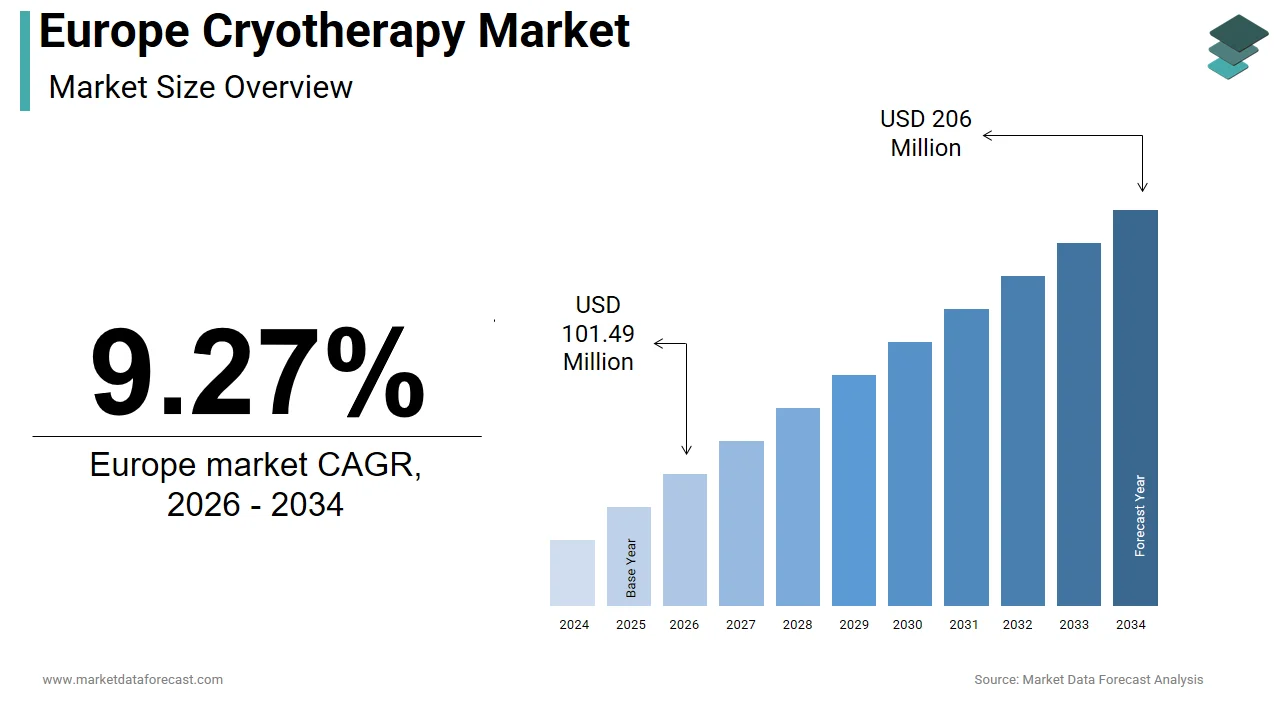
The Europe cryotherapy market was valued at USD 92.88 million in 2025, is estimated to reach USD 101.49 million in 2026, and is projected to reach USD 206 million by 2034, growing at a CAGR of 9.27% from 2026 to 2034. Market growth is driven by increasing adoption of minimally invasive treatment methods, rising demand for pain management therapies, and growing popularity of wellness and recovery treatments across Europe. Cryotherapy is widely used in medical, sports, and aesthetic applications due to its effectiveness in reducing inflammation, accelerating recovery, and improving overall well-being. Additionally, expanding wellness tourism, advancements in cryotherapy equipment, and increasing awareness of therapeutic benefits are further supporting market growth.
Key Market Trends
- Increasing adoption of cryotherapy for pain management and rehabilitation.
- Rising popularity of whole-body cryotherapy in wellness and sports recovery.
- Growing use of cryotherapy in dermatology and aesthetic treatments.
- Expansion of wellness centers and medical spas across Europe.
- Increasing advancements in cryochambers and cryosauna technologies.
Segmental Insights
- Based on product, the cryochambers and cryosaunas segment dominated the Europe cryotherapy market in 2025, driven by their widespread use in wellness centers and sports recovery facilities.
- Based on application, the pain management segment held the largest share in 2025, supported by increasing demand for non-invasive therapies to treat chronic pain and inflammation.
- Based on end user, the hospitals and specialty clinics segment led the market in 2025, driven by the availability of advanced treatment infrastructure and increasing adoption of cryotherapy in clinical settings.
Regional Insights
The Europe cryotherapy market is witnessing steady growth across major countries due to increasing healthcare adoption, wellness trends, and sports recovery applications.
- Germany led the regional market in 2025 with 24.4% share, supported by its advanced medical infrastructure and strong wellness industry.
- France holds a significant position in the market, driven by its strong healthcare system and growing wellness tourism sector.
- The United Kingdom is expected to experience notable growth due to the expansion of private wellness centers and increasing adoption of sports science-based recovery solutions.
Competitive Landscape
The Europe cryotherapy market is characterized by the presence of specialized equipment manufacturers and wellness solution providers. Market participants are focusing on technological innovation, expanding product offerings, and strengthening distribution networks. Strategic partnerships, product development, and expansion of wellness applications are shaping competitive dynamics across the region.
Prominent companies operating in the Europe cryotherapy market include Zimmer MedizinSysteme GmbH, CryoAction Limited, Air Liquide S.A., WEINTEC, METRUM CRYOFLEX Sp. z o.o., Cryomed s.r.o., CryoAction, CryoIQ, and Impact Cryotherapy.
Europe Cryotherapy Market Size
The Europe cryotherapy market was valued at USD 92.88 million in 2025, is estimated to reach USD 101.49 million in 2026, and is projected to reach USD 206 million by 2034, growing at a CAGR of 9.27% from 2026 to 2034.
Cryotherapy encompasses a specialized therapeutic landscape utilizing extreme cold temperatures to induce physiological responses for medical treatment, pain management, and athletic recovery. This domain includes whole body cryotherapy chambers, localized cryotherapy devices, and cryosurgical systems employed across hospitals, sports clinics, and wellness centers. According to Eurostat, the proportion of individuals in the European Union aged 65 and older has created a substantial demographic base susceptible to chronic musculoskeletal conditions that often require non-invasive thermal interventions. As per the European Observatory on Health Systems and Policies, chronic pain affects a significant portion of the adult population across Europe, which is driving demand for alternative analgesic modalities beyond pharmaceutical solutions. As per the European Agency for Safety and Health at Work, musculoskeletal disorders account for a large share of work-related health problems, further amplifying the need for effective recovery technologies in occupational health settings. Furthermore, the rise of professional sports infrastructure within the continent, with many registered sports clubs in Germany according to the German Olympic Sports Confederation, establishes a robust ecosystem for performance recovery applications. These epidemiological and societal factors converge to define the current scope of cryotherapy adoption, shifting its perception from a niche luxury service to an integral component of modern rehabilitative and preventive healthcare strategies throughout European nations.
MARKET DRIVERS
Escalating Prevalence of Chronic Musculoskeletal Disorders and Arthritis
The surging incidence of chronic musculoskeletal conditions and degenerative joint diseases is primarily driving the growth of the European cryotherapy market. According to the Global Burden of Disease Study, low back pain remains the leading cause of disability in Europe, generating immense pressure on national health systems to provide effective non-surgical interventions. As per clinical guidelines from the European League Against Rheumatism, cryotherapy is increasingly recognized as a viable adjunct therapy for managing inflammation and pain associated with rheumatoid arthritis and osteoarthritis. According to the data from the World Health Organization European Region, the prevalence of arthritis is projected to rise due to population aging, which is creating a sustained pipeline of patients seeking relief from joint stiffness and swelling. Medical practitioners are integrating localized cryotherapy into standard rehabilitation protocols because it offers rapid vasoconstriction followed by vasodilation, which significantly reduces edema and accelerates tissue healing without the side effects of non-steroidal anti-inflammatory drugs. Furthermore, occupational health programs across industrial nations like France and Italy are adopting whole body cryotherapy to treat workers suffering from repetitive strain injuries, reflecting a broader shift toward preventive care. This growing clinical acceptance, backed by empirical evidence of efficacy in pain reduction and functional improvement, drives consistent demand for advanced cryotherapy equipment in both public hospitals and private physiotherapy clinics.
Expanding Integration of Cryotherapy in Professional Sports and Athletic Recovery
The widespread institutionalization of cryotherapy within professional sports organizations and high-performance training centers is further aiding the expansion of the European cryotherapy market. According to the Union of European Football Associations, there are many registered football clubs across the continent, many of which now incorporate whole body cryotherapy as a standard recovery protocol for elite athletes following intense physical exertion. As per research published in the British Journal of Sports Medicine, exposure to extreme cold for short durations significantly reduces markers of muscle damage and perceived soreness, leading to faster return to play times for competitors. Major sporting events hosted in Europe, such as the Olympic Games and various continental championships, have showcased the utility of cryogenic recovery, which is influencing adoption rates at grassroots levels. As per the data from the German Sport University Cologne, a majority of Bundesliga teams utilize cryochambers in their training facilities, setting a benchmark for other leagues and sports disciplines including rugby, basketball, and athletics. The trend extends beyond professional realms to amateur enthusiasts and fitness centers, where consumers increasingly seek premium recovery services to enhance performance and longevity. Additionally, national sports federations in countries like Sweden and Norway are investing in public sports medicine infrastructure that includes cryotherapy units, democratizing access to these technologies. This deep integration into the sporting culture of Europe ensures a steady demand for both stationary chamber installations and portable localized devices, solidifying the market trajectory.
MARKET RESTRAINTS
Stringent Regulatory Frameworks and Lack of Standardized Reimbursement Policies
Rigid regulatory classifications and the absence of unified reimbursement mechanisms across European nations are primarily impeding the growth of the European cryotherapy market. According to the European Commission regulations on medical devices, whole body cryotherapy chambers often fall into a complex regulatory gray area between wellness equipment and class IIa medical devices, requiring extensive clinical validation and conformity assessments that delay market entry. As per health technology assessment reports from the United Kingdom National Institute for Health and Care Excellence, there is currently insufficient high-quality evidence to recommend routine commissioning of whole-body cryotherapy for most conditions within the National Health Service, limiting access to private pay patients. Reimbursement policies vary drastically between member states, with countries like Germany offering partial coverage for specific indications under statutory health insurance while others like Spain and Italy largely exclude these therapies from public funding. Data from the European Health Insurance Consortium indicates that out-of-pocket expenditure for non-reimbursed thermal therapies acts as a deterrent for lower-income demographics, restricting market penetration to affluent segments. Furthermore, the lack of standardized treatment protocols and dosage guidelines creates uncertainty among insurers regarding cost effectiveness and safety profiles. This fragmented regulatory landscape forces providers to navigate disparate national requirements, increasing operational costs and complicating cross border expansion strategies for equipment manufacturers and clinic chains alike.
Safety Concerns Regarding Extreme Cold Exposure and Potential Adverse Events
Persistent safety concerns surrounding the physiological risks of extreme cold exposure and the potential for severe adverse events are further inhibiting the European cryotherapy market growth. According to case studies published in the European Journal of Applied Physiology, improper administration of whole-body cryotherapy can lead to cold burns, frostbite, and hypotension, particularly in individuals with undiagnosed cardiovascular conditions or Raynaud's phenomenon. As per safety alerts issued by national health authorities in France and Belgium, there have been documented incidents of asphyxiation due to nitrogen leakage in poorly ventilated chambers, which indicates critical infrastructure requirements that many smaller wellness centers fail to meet. The European Resuscitation Council emphasizes that sudden exposure to extreme cold can trigger arrhythmias or hypertensive crises in vulnerable populations, which is requiring rigorous pre-screening procedures that are not universally enforced. Data from consumer protection agencies indicates a rising number of complaints related to inadequate staff training and lack of emergency protocols in commercial cryotherapy spas, eroding public trust. Furthermore, the long-term effects of repeated cryogenic exposure on skin integrity and nerve function remain incompletely understood, creating hesitation among medical professionals to prescribe these treatments broadly. These safety apprehensions compel regulatory bodies to impose strict operational guidelines, increasing compliance costs for operators and potentially limiting the hours of operation or patient throughput, thereby constraining overall market growth and scalability.
MARKET OPPORTUNITIES
Technological Advancements in Portable and Localized Cryotherapy Devices
The rapid evolution of portable and targeted cryotherapy technologies presents a promising opportunity for the European cryotherapy market. According to innovation trends identified by the Fraunhofer Institute, recent developments enable the creation of lightweight handheld devices capable of delivering precise cooling without the need for bulky liquid nitrogen tanks. As per market adoption data from the European Home Healthcare Association, the demand for home-use medical devices has surged, driven by an aging population preferring independent management of chronic pain conditions. These portable units allow physiotherapists to offer mobile services and enable athletes to receive immediate treatment on the field, significantly broadening the addressable market. Manufacturers are integrating smart sensors and digital connectivity into these devices to monitor skin temperature and treatment duration, enhancing safety and ensuring protocol adherence. Data from the European Patent Office shows a notable increase in patent filings related to portable cryogenic applicators, indicating robust investment in this segment. Furthermore, the lower capital expenditure required for portable units compared to whole body chambers lowers the barrier to entry for small clinics and individual practitioners. This technological shift facilitates the decentralization of cryotherapy services, allowing penetration into rural areas and underserved communities where large-scale infrastructure is economically unviable and thus unlocking new revenue streams.
Strategic Partnerships Between Wellness Tourism and Medical Spa Sectors
The convergence of the thriving European wellness tourism industry with advanced medical spa offerings creates a lucrative opportunity for the European cryotherapy market. According to the European Spas Association, the wellness tourism sector in Europe generates significant revenue annually, with millions of visitors seeking holistic health experiences that combine relaxation with therapeutic interventions. As per travel industry analysis from the World Travel and Tourism Council, health oriented travel is growing faster than general tourism, with destinations in Austria, Hungary, and Iceland increasingly incorporating whole body cryotherapy into their flagship treatment packages. Luxury resorts and medical spas are differentiating their portfolios by offering cryotherapy alongside traditional hydrotherapy and massage, attracting high-net-worth individuals willing to pay a premium for cutting-edge recovery modalities. Data from hospitality groups indicates that packages including cryotherapy sessions command higher price premiums compared to standard wellness retreats, driving higher profit margins for facility operators. Furthermore, collaborations between cryotherapy equipment manufacturers and hotel chains facilitate the installation of state of the art chambers in exclusive locations, serving as live showcases for the technology. The integration of cryotherapy into corporate wellness retreats and executive health programs further expands the customer base beyond leisure travelers. This synergy between tourism and therapeutic innovation leverages Europe's reputation as a global hub for health and wellness, which is fostering a high-value market segment that supports the adoption of advanced cryogenic technologies.
MARKET CHALLENGES
Standardization of Treatment Protocols and Clinical Evidence Gaps
The absence of universally accepted treatment protocols and the fragmentation of clinical evidence regarding optimal dosing and efficacy are significant challenges to the European cryotherapy market expansion. According to a systematic review published in the Cochrane Library, significant heterogeneity exists in current studies regarding exposure times, temperatures, and frequency of sessions, making it difficult to draw definitive conclusions about best practices. As per statements from the European Society of Physical and Rehabilitation Medicine, the lack of consensus guidelines leads to inconsistent application by practitioners, resulting in variable patient outcomes that complicate the establishment of credibility within the broader medical community. Data from clinical trial registries show that relatively few randomized controlled trials on whole body cryotherapy have been completed in Europe over the last decade compared to other physical therapies. This scarcity of high-quality evidence impedes the formulation of clear clinical pathways and discourages insurance providers from covering the costs. Furthermore, the variability in equipment specifications across different manufacturers means that results obtained with one type of chamber may not be replicable with another, confounding research efforts. Establishing standardized operating procedures requires extensive collaboration among researchers, clinicians, and regulatory bodies, which is a process that is often slow and resource-intensive. Until robust, reproducible data confirm specific therapeutic benefits for distinct conditions, cryotherapy risks remain on the periphery of mainstream medicine, limiting its integration into standard care pathways.
High Operational Costs and Energy Consumption Requirements
The substantial operational expenditures associated with maintaining ultra-low temperature environments and the intense energy consumption of cryotherapy systems are further challenging the regional market expansion. According to energy efficiency reports from the European Environment Agency, whole body cryotherapy chambers require continuous cooling or frequent refilling with liquid nitrogen, leading to electricity or gas costs that can constitute a large share of total operational expenses for a clinic. As per utility price data from Eurostat, industrial electricity prices in Europe have reached record highs in recent years, which severely impacts the profitability of energy-intensive industries. The reliance on liquid nitrogen also introduces supply chain vulnerabilities and logistical costs, particularly for facilities located in remote areas where delivery frequencies are lower. Data from business sustainability audits indicates that the carbon footprint of operating multiple cryochambers is significant, conflicting with the growing corporate mandate for environmental stewardship and green certification in the healthcare sector. Providers must invest in expensive insulation upgrades and energy recovery systems to mitigate these costs, increasing the initial capital barrier. Furthermore, the maintenance of specialized equipment to ensure safety and performance adds to the ongoing financial burden. These economic pressures force many smaller operators to limit session availability or increase prices, potentially reducing accessibility for the average consumer and slowing the overall adoption rate of cryotherapy services across the region.
REPORT COVERAGE
| REPORT METRIC | DETAILS |
| Market Size Available | 2025 to 2034 |
| Base Year | 2025 |
| Forecast Period | 2026 to 2034 |
| Segments Covered | By Product, Application, End-user, and Country. |
| Various Analyses Covered | Global, Regional, and Country-Level Analysis, Segment-Level Analysis, Drivers, Restraints, Opportunities, Challenges; PESTLE Analysis; Porter’s Five Forces Analysis, Competitive Landscape, Analyst Overview of Investment Opportunities |
| Countries Covered | UK, France, Spain, Germany, Italy, Russia, Sweden, Denmark, Switzerland, Netherlands, Turkey, Czech Republic, and the Rest of Europe. |
| Market Leaders Profiled | Zimmer MedizinSysteme GmbH, CryoAction Limited, Air Liquide S.A., WEINTEC, METRUM CRYOFLEX Sp. z o.o., Cryomed s.r.o., CryoAction, CryoIQ and Impact Cryotherapy. |
SEGMENTAL ANALYSIS
By Product Insights
The cryochambers and cryosaunas segment dominated the market by holding the major share of the European cryotherapy market in 2025. The dominance of cryochambers and cryosaunas segment in the European market is majorly driven by the widespread proliferation of whole body cryotherapy facilities across wellness centers, sports clubs, and dedicated clinics. The surging consumer demand for holistic recovery and wellness experiences that extend beyond clinical treatment into lifestyle enhancement is further contributing to the expansion of the segment in the regional market. According to the European Spas Association, the number of facilities offering whole body cryotherapy in Europe has increased significantly in recent years, reflecting a shift toward preventive health and performance optimization. As per reports from the German Olympic Sports Confederation, top-tier football and athletics teams in Germany now operate on-site cryochambers, establishing a standard of care that influences broader market adoption. The ability of these units to treat multiple users simultaneously or offer a unique experiential service allows operators to generate higher revenue per square meter compared to localized devices. Additionally, advancements in safety features and nitrogen efficiency have reduced operational barriers, making installation feasible for a wider range of business models. This combination of cultural acceptance, proven athletic benefits, and economic viability for service providers solidifies the position of cryochambers as the leading product category in the region.
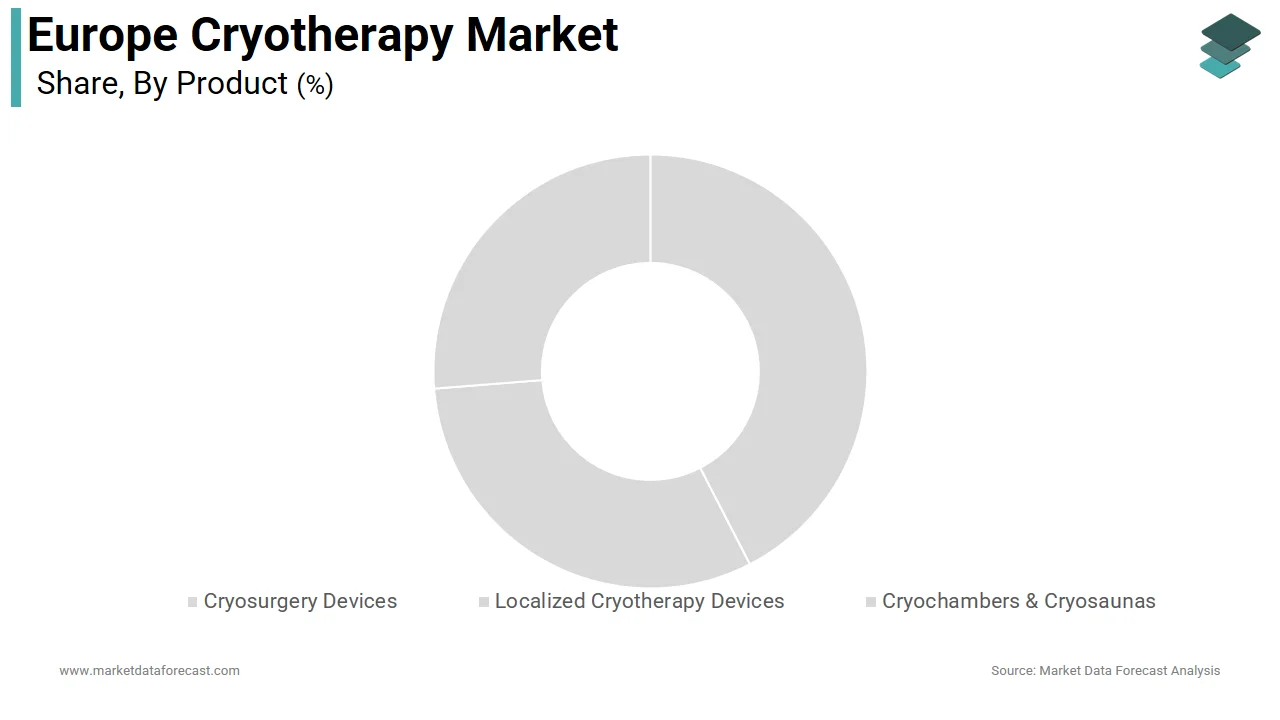
However, the localized cryotherapy devices segment is anticipated to grow at a promising CAGR of 9.5% over the forecast period, owing to the increasing preference for targeted, non-invasive pain management solutions that can be administered in diverse settings ranging from hospitals to home care environments. According to the European League Against Rheumatism, there is a growing emphasis on precise thermal interventions for specific joint pathologies such as osteoarthritis of the knee or shoulder impingement, where whole body exposure is unnecessary or contraindicated. As per the European Patent Office, filings for portable and handheld cryogenic applicators have risen recently, indicating robust research and development activity focused on miniaturization and ease of use. These devices allow physiotherapists to deliver controlled cooling directly to injured tissues with greater accuracy than ice packs, enhancing therapeutic outcomes while minimizing the risk of frostbite to surrounding healthy skin. The lower capital cost and minimal space requirements of localized units make them accessible to small private practices and mobile healthcare providers who cannot afford large chamber installations. Furthermore, the rising prevalence of chronic pain conditions among the aging European population drives demand for convenient, on-demand relief tools that patients can potentially use under supervision or at home. This versatility and alignment with personalized medicine trends propel the localized segment to the forefront of market growth.
By Application Insights
The pain management segment held the highest share of the European cryotherapy market in 2025 due to the critical need for effective non-pharmacological interventions to address the widespread burden of acute and chronic pain across the continent and the escalating crisis of opioid dependence and the associated push by European health authorities to prioritize multimodal pain strategies that include physical modalities like cryotherapy. According to the European Pain Federation, chronic pain affects a large portion of the adult population in Europe, creating a massive patient pool seeking alternatives to long-term medication use. As per the World Health Organization Regional Office for Europe, cold therapy is recommended as a first line treatment for various musculoskeletal conditions due to its ability to reduce nerve conduction velocity and inhibit inflammatory mediators effectively. The integration of cryotherapy into postoperative rehabilitation protocols across major European hospitals has become standard practice, particularly for orthopedic surgeries, where controlling swelling and pain is crucial for early mobilization. Furthermore, the cost effectiveness of cryotherapy compared to prolonged pharmaceutical regimens appeals to healthcare payers operating under constrained budgets, encouraging wider adoption in public health systems. The versatility of cryotherapy in treating conditions ranging from sports injuries to rheumatoid arthritis ensures its central role in pain management portfolios, which is maintaining its status as the most significant application sector in the market.
On the other side, the recovery, health, and beauty segment is emerging as the fastest-growing sector in the European market and is estimated to expand at a CAGR of 10.5% over the forecast period. Factors such as the convergence of sports science, wellness tourism, and aesthetic medicine and the evolving consumer perception of cryotherapy as an essential component of a healthy lifestyle and beauty regimen rather than solely a medical treatment are propelling the expansion of the recovery, health and beauty segment in the European market. According to the Global Wellness Institute, the European wellness economy is valued at hundreds of billions of euros, with recovery services representing one of the fastest expanding categories due to heightened health consciousness among urban populations. As per trends observed in the aesthetic industry, cryotherapy is increasingly utilized for skin tightening, cellulite reduction, and anti-aging treatments, attracting a demographic that traditionally did not seek medical cryo services. The influence of social media and celebrity endorsements has further popularized whole body cryotherapy as a trendy activity for detoxification and energy boosting, driving footfall in commercial spas and fitness centers. Data from the hospitality sectors indicates that luxury hotels and resorts across Austria and Switzerland are integrating cryosaunas into their spa menus to attract high-net-worth tourists seeking cutting-edge wellness experiences. The expansion of corporate wellness programs that include cryotherapy sessions for stress reduction and employee well-being also contributes to this surge. This broadening of applications beyond clinical necessity into the realm of self-care and beautification fuels the exceptional growth trajectory of this segment.
By End User Insights
The hospitals and specialty clinics segment led the market by capturing the major share of the European cryotherapy market in 2025 due to the established role of these institutions as the primary providers of medically indicated cryosurgical and therapeutic procedures. The concentration of specialized medical expertise and advanced equipment required for complex cryoablation procedures in oncology, cardiology, and dermatology within hospital settings is further boosting the growth of the hospitals and specialty clinics segment in the European market. According to the European Society for Medical Oncology, a significant proportion of cancer treatments involving cryoablation are performed in accredited hospital centers due to the need for sterile environments and multidisciplinary support teams. As per the European Observatory on Health Systems and Policies, public and private hospitals remain the main point of access for patients with severe musculoskeletal disorders requiring prescribed cryotherapy under professional supervision. The reimbursement frameworks in many European countries often cover cryotherapy procedures when delivered in recognized medical facilities, ensuring a steady stream of patients and revenue. Furthermore, the rigorous regulatory standards for medical devices and procedures mandate that high risk interventions take place in controlled clinical environments, limiting the scope of practice for non-medical entities. The trust placed in hospital-based care by the aging population, who are the primary consumers of cryo-surgical services, further reinforces the market leadership of this segment. The continuous investment in hospital infrastructure and the integration of cryotherapy into standard surgical pathways sustain its dominant position.
However, the spas and fitness centers segment is anticipated to exhibit a promising CAGR of 11.5% over the forecast period, owing to the democratization of cryotherapy and its integration into mainstream fitness and wellness cultures and the strategic adoption of whole body cryotherapy by commercial gyms and luxury spas as a premium differentiator to attract and retain members seeking enhanced recovery and wellness services. According to EuropeActive, the health and fitness club sector in Europe has seen a resurgence in membership numbers, with operators increasingly investing in value-added services like cryosaunas to boost member engagement and average revenue per user. As per consumer behavior studies, there is a rising trend among millennials and Gen Z consumers to prioritize recovery and mental well-being, viewing cryotherapy sessions as a routine part of their fitness regimen, similar to sauna or massage. The lower regulatory barriers for wellness-focused cryotherapy compared to medical applications allow spas and fitness centers to deploy equipment more rapidly and with less administrative burden. Data from the wellness tourism sector indicates that facilities offering cryotherapy experience higher occupancy rates and can command premium pricing for day passes and membership tiers. The expansion of boutique fitness studios and dedicated cryotherapy bars in major urban centers like London, Paris, and Berlin further accelerates market penetration. This shift toward consumer-driven, lifestyle-oriented usage positions spas and fitness centers as the most dynamic growth engine in the end-user landscape.
COUNTRY LEVEL ANALYSIS
Germany Cryotherapy Market Analysis
Germany held a leading position in the European cryotherapy market with 24.4% of the regional market share in 2025 and is expected to maintain steady growth due to its established medical and wellness infrastructure. The German market is characterized by a high density of both medical and wellness facilities offering cryogenic treatments, supported by a robust reimbursement system that covers specific therapeutic indications. According to the German Federal Statistical Office, the country hosts numerous saunas and wellness centers, many of which have integrated cryochambers as a standard offering alongside traditional hydrotherapy. A key driving factor is the strong presence of renowned research institutions and medical associations that have validated the efficacy of cryotherapy, fostering high levels of trust among the population and medical community. As per the German Society for Physical Medicine and Rehabilitation, cryotherapy is widely prescribed for rheumatic diseases and sports injuries, ensuring consistent demand in clinical settings. The country's leadership in engineering and manufacturing also supports a domestic supply chain for high-quality cryotherapy equipment, reducing costs and facilitating innovation. Furthermore, the popularity of winter sports and a highly active population creates a natural synergy for recovery technologies.
France Cryotherapy Market Analysis
France occupies a prominent position in the European cryotherapy market and is anticipated to grow further with its strong healthcare system and luxury wellness tourism sector. The French market reflects a dual dynamic where cryotherapy is utilized in prestigious medical centers for clinical indications while simultaneously gaining traction in high-end spas and thalassotherapy resorts. According to the French National Authority for Health, there is growing recognition of cryotherapy as a complementary treatment for chronic pain and inflammatory conditions, leading to increased referrals from general practitioners. A primary driving factor is the country's status as a global destination for wellness tourism, with regions like the French Alps and the Côte d'Azur attracting affluent visitors seeking cutting-edge recovery and beauty treatments. As per the French Federation of Thermism and Climatism, the integration of modern cryogenic technologies into traditional spa offerings has revitalized the sector and expanded its appeal to younger demographics. The government's support for the French Tech initiative also encourages startups to innovate in the health and wellness space, including the development of smart cryotherapy devices. Furthermore, the strong emphasis on aesthetics and beauty in French culture drives demand for cryotherapy applications in skin rejuvenation and cellulite reduction.
United Kingdom Cryotherapy Market Analysis
The United Kingdom holds a significant position in the European cryotherapy market and is expected to expand further with the growth of its private wellness sector and sports science community. The UK cryotherapy market is defined by a clear separation between NHS provision, which is limited, and a vibrant private market where cryotherapy flourishes in elite sports clubs, private hospitals, and boutique wellness studios. According to UK Active, the health and fitness industry in the UK has seen growing investment in recovery technologies, with cryochambers becoming a common feature in premium gym chains and professional football academies. A major driving factor is the high concentration of world-class sports organizations and universities researching cryotherapy, which generates evidence and publicity that fuels consumer interest. As per the British Association of Sport and Exercise Sciences, the use of whole-body cryotherapy by professional athletes has normalized the treatment for the general public, creating a trickle-down effect. The rising prevalence of chronic pain and the search for non-drug alternatives in the UK healthcare landscape also contribute to growth in private physiotherapy clinics. Additionally, the trend toward biohacking and optimized living among urban professionals in London and other major cities drives demand for quick, effective wellness interventions.
Italy Cryotherapy Market Analysis
Italy maintains an important role in the European cryotherapy market and is expected to grow steadily with its strong tradition of thermal healing and integration of modern cryotherapy. The Italian market is influenced by the country's unique approach to health tourism, where ancient thermal traditions are increasingly combined with contemporary technologies like cryosaunas to offer comprehensive wellness packages. According to the Italian Federation of Thermal Establishments, there has been a strategic push to modernize spa offerings to attract a broader international clientele, leading to significant investments in cryogenic equipment. A key driving factor is the strong cultural emphasis on aesthetics and physical well-being, which drives demand for cryotherapy applications in beauty and anti-aging treatments alongside sports recovery. As per ISTAT, the wellness and tourism sector is a vital part of the Italian economy, and the addition of cryotherapy enhances the value proposition of Italian destinations. The presence of numerous professional sports teams, particularly in football and cycling, also fosters a culture of advanced recovery methods among athletes and enthusiasts. Furthermore, the growing awareness of non-invasive pain management solutions among the aging Italian population supports clinical adoption.
Switzerland Cryotherapy Market Analysis
Switzerland holds a notable position in the European cryotherapy market and is expected to continue growing with its premium healthcare services and luxury wellness tourism. The Swiss market is characterized by the highest penetration of high-end cryotherapy facilities per capita, often located within exclusive clinics and five-star hotel spas catering to an affluent global clientele. According to the Swiss Federal Statistical Office, the country's healthcare expenditure per capita is among the highest globally, reflecting a willingness to invest in advanced therapeutic and preventive technologies. A primary driving factor is the concentration of world-renowned private clinics specializing in longevity and regenerative medicine, where cryotherapy is a staple component of comprehensive treatment protocols. As per the Swiss Spa Industry, the integration of cryotherapy into luxury wellness retreats attracts high-net-worth individuals seeking the best available recovery and anti-aging solutions. The country's strong association with winter sports and alpine training further normalizes the use of cold therapy for performance and recovery among residents and visitors. Furthermore, the rigorous quality standards and certification processes in Switzerland ensure that cryotherapy services are delivered with the highest levels of safety and efficacy, reinforcing consumer confidence.
COMPETITIVE LANDSCAPE
The competition within the Europe Cryotherapy Market is characterized by a dynamic mix of established medical device manufacturers and emerging wellness technology startups vying for dominance through technological differentiation and service excellence. Market participants constantly strive to outperform rivals by introducing energy-efficient electric chambers that address the high operational costs associated with traditional nitrogen-based systems. The landscape features moderate barriers to entry for basic wellness units but high hurdles for medical-grade equipment due to stringent regulatory requirements under the European Medical Device Regulation. Companies differentiate themselves by offering comprehensive after-sales support, including staff training, maintenance contracts, and software integration for patient data management. Strategic alliances with sports federations and luxury hotel chains play a crucial role in securing high-visibility installations that serve as powerful marketing assets. The shift toward home use and portable devices has intensified competition as firms race to develop compact and safe solutions for personal use. Price pressure from budget manufacturers forces premium brands to emphasize quality, safety certifications, and proven clinical outcomes. This competitive environment fosters rapid innovation in thermal control systems and user experience design, ensuring that only the most adaptable and customer-focused companies thrive in the region.
KEY MARKET PLAYERS
The leading companies operating in the Europe cryotherapy market include:
- Zimmer MedizinSysteme GmbH
- CryoAction Limited
- Air Liquide S.A.
- WEINTEC
- METRUM CRYOFLEX Sp. z o.o.
- Cryomed s.r.o.
- CryoAction
- CryoIQ
- Impact Cryotherapy
TOP PLAYERS IN THE MARKET
- Impact Cryotherapy stands as a prominent innovator in the European landscape, renowned for manufacturing advanced whole-body cryotherapy chambers and localized devices that serve both medical and wellness sectors. The company contributes significantly to the global market by exporting high-quality equipment to North America and Asia while maintaining strict adherence to European safety standards. Recent strategic actions include the launch of next-generation electric cryochambers that eliminate the need for liquid nitrogen, thereby reducing operational costs and environmental impact for facility operators. Impact Cryotherapy has also expanded its service network across Germany and France to provide rapid maintenance and training support. By focusing on energy efficiency and user safety features such as advanced oxygen monitoring systems, the firm strengthens its reputation as a reliable partner for hospitals and premium spas. These initiatives enable the company to capture growing demand for sustainable and cost-effective thermal therapy solutions in an increasingly competitive environment.
- CryoAction is a leading provider of mobile and fixed cryotherapy solutions in Europe, distinguished by its unique business model that brings whole body cryotherapy directly to sports teams, corporate events, and wellness festivals. The company plays a vital role globally by demonstrating the versatility of cryogenic treatments through its fleet of mobile units, which serve as effective marketing tools for the technology. Recent efforts to solidify its market position involve partnering with major football clubs and Olympic training centers to establish permanent installations following successful mobile trials. CryoAction has introduced enhanced data tracking software that allows athletes to monitor their recovery metrics alongside cryotherapy sessions, adding significant value to its service offering. The firm actively engages in educational campaigns to raise awareness about the benefits of cold therapy among healthcare professionals and fitness enthusiasts. By bridging the gap between clinical application and lifestyle wellness, CryoAction continues to drive adoption rates and expand the accessibility of cryotherapy services throughout the European continent.
- WEINTEC serves as a key engineering force in the Europe Cryotherapy Market, specializing in the design and production of robust cryosaunas and custom built cooling systems for diverse industrial and therapeutic applications. The company contributes to the global sector by leveraging German engineering precision to deliver durable and highly efficient machines that operate reliably in demanding environments. Recent strategic moves include the development of modular cryotherapy units that can be easily installed in existing spa facilities or medical clinics with minimal structural modifications. WEINTEC has strengthened its market presence by obtaining new certifications for medical device compliance, allowing its products to be used in regulated clinical settings across the European Union. The firm also focuses on integrating smart control interfaces that enable precise temperature regulation and remote diagnostics. Through continuous innovation in thermal insulation materials and refrigeration technology, WEINTEC ensures its offerings meet the evolving needs of customers seeking high-performance and long-lasting cryotherapy infrastructure.
TOP STRATEGIES USED BY KEY MARKET PARTICIPANTS
Key players in the Europe Cryotherapy Market primarily employ product innovation strategies focused on developing electric cryochambers that reduce reliance on liquid nitrogen and lower operational costs for end users. Companies frequently engage in strategic partnerships with professional sports organizations and wellness resorts to showcase the efficacy of their technologies and build brand credibility. Another prevalent approach involves expanding service networks to provide comprehensive training, maintenance, and regulatory compliance support to clinic operators. Manufacturers are increasingly investing in research and development to create portable and localized devices that broaden the addressable market beyond specialized centers. Firms also prioritize obtaining medical device certifications to unlock reimbursement opportunities and gain entry into hospital systems. Additionally, participants utilize digital marketing and educational campaigns to demystify cryotherapy benefits for consumers and healthcare providers. These combined strategies enable market leaders to navigate regulatory complexities and capitalize on the growing demand for non-invasive therapeutic solutions.
MARKET SEGMENTATION
This research report on the Europe cryotherapy market has been segmented and sub-segmented into the following categories.
By Product
- Cryosurgery Devices
- Tissue Contact Probes
- Tissue Spray Probes
- Epidermal and Subcutaneous Cryoablation Devices
- Localized Cryotherapy Devices
- Cryochambers & Cryosaunas
By Application
- Surgical Applications
- Oncology
- Cardiology
- Dermatology
- Other Surgical Applications
- Pain Management
- Recovery, Health, and Beauty
By End User
- Hospitals & Specialty Clinics
- Cryotherapy Centers
- Spas & Fitness Centers
By Country
- UK
- France
- Spain
- Germany
- Italy
- Russia
- Sweden
- Denmark
- Switzerland
- Netherlands
- Turkey
- Czech Republic
- Rest of Europe