- Product Description Description
- Table of Contents TOC
- List of Table & Figure LOT
- Get Free Sample PDF Sample PDF
Market Size, 2025
$10.10 BnMarket Estimate, 2026
$10.82 BnMarket Forecast, 2034
$18.84 BnCAGR, 2026–2034
7.17%Europe Flexible Electronics Market Report Summary
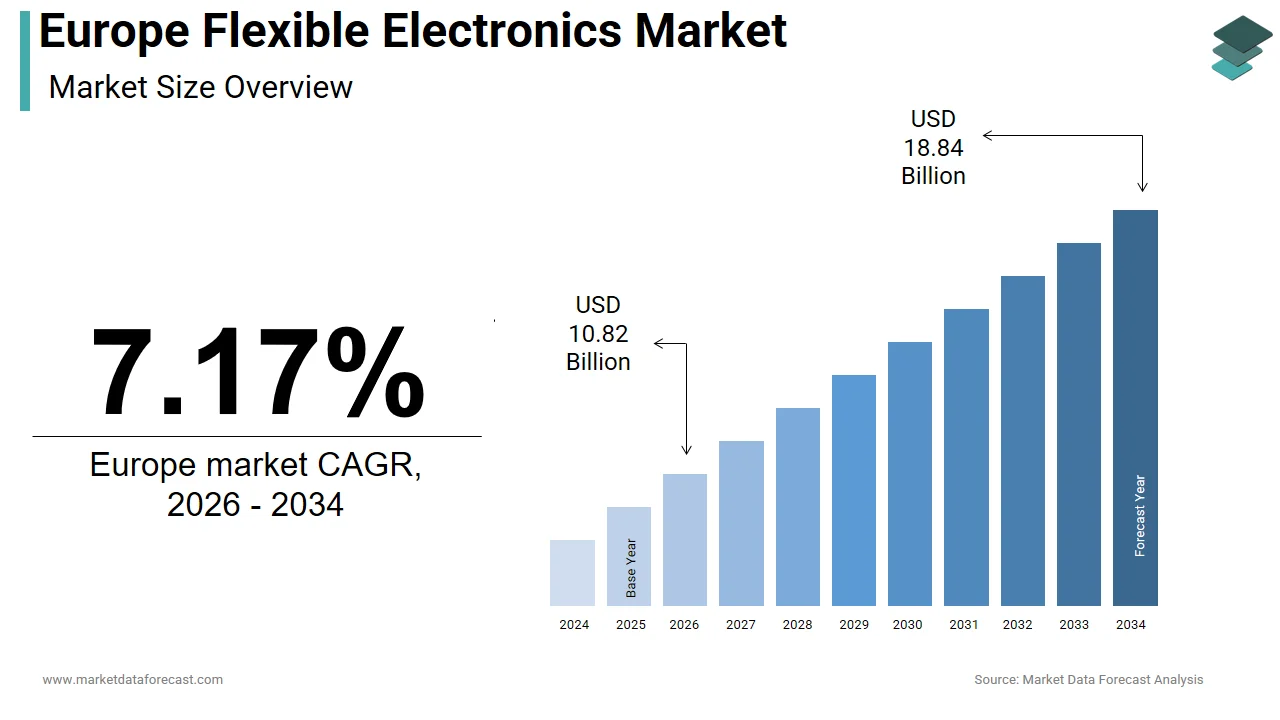
The Europe flexible electronics market was valued at USD 10.10 billion in 2025, is expected to reach USD 10.82 billion in 2026, and is projected to grow to USD 18.84 billion by 2034, expanding at a CAGR of 7.17% from 2026 to 2034. Market growth is driven by rising adoption of wearable medical devices, smart packaging, flexible displays, and printed sensors, alongside increasing investments in Industry 4.0, digital healthcare, and advanced manufacturing technologies. Europe’s strong research ecosystem, sustainability focus, and expanding roll-to-roll production capabilities are reinforcing regional competitiveness in next-generation electronic materials and devices.
Key Market Trends
- Growing demand for wearable health monitoring and biosensing devices
- Expansion of printed and roll-to-roll electronics manufacturing
- Rising adoption of flexible displays in consumer electronics and automotive dashboards
- Integration of flexible electronics in smart packaging and logistics tracking
- Increased focus on eco-friendly substrates and recyclable electronic components
Segmental Insights
- Based on component, the flexible sensors segment dominated the market with 36.6% share in 2025, driven by strong demand in healthcare monitoring, industrial automation, and environmental sensing.
- Based on application, the medical and healthcare segment led the market with 33.8% share in 2025, supported by the growing use of wearable diagnostics, smart patches, and remote patient monitoring systems.
Regional Insights
The European flexible electronics market demonstrates strong geographic concentration, supported by advanced manufacturing ecosystems and innovation networks.
- Germany dominated the market with 26.2% share in 2025, driven by its leadership in automotive electronics, industrial automation, and applied research institutions.
- The United Kingdom held 18.4% share, supported by semiconductor innovation, startup ecosystems, and digital health investments.
- The Netherlands is projected to register the fastest growth, owing to its open innovation model, cross-institutional collaboration, and leadership in roll-to-roll manufacturing technologies, particularly around Eindhoven and Holst Centre.
Competitive Landscape
The Europe flexible electronics market features a moderately fragmented and innovation-driven competitive environment, combining global electronics leaders, specialized sensor developers, and research-oriented institutions. Competition centers on materials science capabilities, scalable manufacturing processes, device miniaturization, and system integration expertise. Strategic partnerships between industry and research organizations are critical for accelerating commercialization. Companies are increasingly investing in printed electronics, energy-harvesting components, and flexible battery technologies to differentiate offerings. Sustainability compliance, supply chain resilience, and IP portfolios are becoming key competitive factors as adoption expands across healthcare, automotive, and consumer electronics sectors.
Key players operating in the market include E Ink Holdings, Blue Spark Technologies, Bosch Sensortec, AU Optronics, Pragmatic Semiconductor, Samsung Electronics, LG Electronics, Enfucell, 3M, and others.
Europe Flexible Electronics Market Size
The Europe flexible electronics market was valued at USD 10.10 billion in 2025, is estimated to reach USD 10.82 billion in 2026, and is projected to reach USD 18.84 billion by 2034, growing at a CAGR of 7.17% from 2026 to 2034.
Flexible electronics refer to electronic circuits and devices fabricated on conformable substrates such as polyimide, PET, or thin metal foils that can bend, stretch, or roll without compromising functionality. These systems encompass flexible displays, sensors, printed circuit boards, organic light-emitting diodes, and energy storage components integral to wearables, medical patches, smart packaging, and automotive interiors. Unlike rigid silicon-based electronics, flexible variants enable seamless integration into curved surfaces, moving parts, and human-centric applications where comfort and adaptability are paramount. According to the European Commission’s Key Enabling Technologies report, flexible electronics are designated as a strategic industrial capability under the EU Chips Act and Horizon Europe initiatives due to their role in digital sovereignty and advanced manufacturing. According to Eurostat, the EU spent around €328 billion on research and development in 2021, showing steady growth compared with previous years, with advanced materials research a significant area of focus. Flexible substrates remain among the fastest-growing categories in this field. Furthermore, according to the European Environment Agency, electronic waste generation in the EU has been steadily increasing in recent years, which is driving interest in ultra-thin, low-material-footprint electronics that support circular design principles (greenco-project.eu). This convergence of technological innovation, sustainability imperatives, and industrial policy positions flexible electronics not as a niche novelty but as a foundational enabler of next-generation smart products across Europe.
MARKET DRIVERS
EU Green Deal and Sustainable Electronics Initiatives Drive Material Innovation
Europe’s regulatory push toward eco design and circular electronics has catalysed demand for flexible electronics that minimize resource use, which enable disassembly, and reduce hazardous content, and is one of the major factors propelling the growth of the European flexible electronics market. As per the Ecodesign for Sustainable Products Regulation, adopted in 2023, all electronic devices placed on the EU market by 2030 must be repairable, upgradable, and contain a minimum recycled content, requirements inherently aligned with flexible printed electronics that use additive manufacturing and minimal raw materials. According to the European Environment Agency, printed flexible circuits consume up to 90% less copper and eliminate etching chemicals compared to traditional PCBs, significantly lowering environmental impact. As per the Right to Repair Directive, manufacturers are compelled to design modular products, and flexible interconnects allow components like batteries or sensors to be detached without soldering, a feature already implemented in smart clothing by companies like Wearable X in Sweden. According to the Joint Research Centre, flexible organic photovoltaics achieve 40% lower carbon footprints over their lifecycle than rigid silicon panels, due to low-temperature processing and lightweight transport. As per the EU, targeting a 50% reduction in e-waste by 2030, flexible electronics transition from performance differentiators to compliance enablers in Europe’s regulated product landscape.
Expansion of Medical and Healthcare Wearables for Remote Monitoring
The integration of flexible electronics into medical diagnostics and chronic disease management is accelerating due to Europe’s aging population and post pandemic telehealth adoption, which is further promoting the growth of the European flexible electronics market. According to Eurostat, 22.3% of the EU population was aged 65 or older in 2023, with a rising prevalence of cardiovascular, diabetes, and respiratory conditions requiring continuous physiological monitoring. Flexible biosensors, printed on skin-conforming patches, enable long-term measurement of ECG, hydration, glucose, and oxygen saturation without discomfort or motion artifacts. As per the European Medicines Agency, data from CE-marked wearable sensors are recognized as valid endpoints in clinical trials, validating their diagnostic credibility. According to BioIntelliSense and Pragmatic Semiconductor, disposable ECG patches have been deployed across German and Dutch hospitals, transmitting real-time arrhythmia alerts to clinicians. As per the Karolinska Institute, heart failure patients using flexible monitoring patches reduced hospital readmissions by 31% over six months. According to France’s Social Security, remote cardiac monitoring devices are reimbursed under its digital health pathway program. As reimbursement expands and sensor accuracy improves, flexible electronics evolve from consumer gadgets to clinically validated tools embedded in Europe’s preventive and personalized care infrastructure.
MARKET RESTRAINTS
Limited Domestic Manufacturing Capacity for Advanced Materials
Despite strong R&D capabilities, Europe faces acute dependency on Asian and North American suppliers for critical materials essential to flexible electronics production, which is creating supply chain vulnerability and primarily hindering the growth of the European flexible electronics market. According to the European Commission’s Critical Raw Materials Act, over 85% of high-purity polyimide films and conductive silver inks used in EU flexible circuits are imported, primarily from Japan, South Korea, and the United States. These materials require ultra-consistent thickness, surface energy, and thermal stability, specifications met by only a handful of global producers. The lack of localized production increases lead times and costs. As per the European Photonics Industry Consortium, European printed electronics startups wait an average of 14 weeks for substrate deliveries, delaying prototyping and scaling. Although the EU Chips Act includes funding for advanced packaging and heterogeneous integration, it largely overlooks flexible substrate manufacturing. As per Holst Centre in the Netherlands, pilot lines remain research-focused rather than volume-oriented. Without strategic investment in domestic coating, printing, and metallization infrastructure, Europe risks ceding leadership in a technology it helped pioneer, undermining both industrial competitiveness and supply resilience in a geopolitically sensitive domain.
Fragmented Standards and Certification Pathways Across Member States
The absence of harmonized testing protocols and safety standards for flexible electronics creates significant barriers to cross-border commercialization and clinical adoption in Europe, which is further hindering the regional market expansion. While general electronics fall under the CE marking framework, flexible devices, particularly those used in medical or automotive contexts, face overlapping and sometimes contradictory requirements from national notified bodies. According to the European Committee for Standardization, no unified standard exists for bend cycle durability or biocompatibility of skin-worn electronics, forcing manufacturers to undergo redundant validation in each target market. As per the Organic Electronics Association, 72% of European SMEs delayed product launches due to inconsistent interpretations of EN 60601 for medical wearables across Germany, France, and Italy. Similarly, automotive applications must comply with ISO 16750 for environmental stress, while OEM-specific curvature fatigue tests increase development costs. The lack of standardized performance metrics also hinders procurement; public hospitals hesitate to adopt novel patches without benchmarked reliability data. Until the EU establishes a single certification framework for mechanical robustness, electrical stability, and human interface safety, innovation will remain fragmented and scale-constrained across the internal market.
MARKET OPPORTUNITIES
Integration into Smart Packaging for Food Safety and Traceability
Europe presents a high-value opportunity for flexible electronics in intelligent packaging that enhances food safety, reduces waste, and supports circular economy goals. According to the European Commission, nearly 88 million tonnes of food are wasted annually in the EU, with spoilage during distribution accounting for over 30% of losses. Flexible time temperature indicators, oxygen sensors, and RFID tags printed directly onto packaging can monitor freshness in real time and alert consumers or retailers before degradation occurs. Companies like Thin Film Electronics and Pragmatic Semiconductor have developed ultra-low-cost NFC sensors that change state when exposed to unsafe temperatures, integrated into dairy and meat packaging across Scandinavian supermarkets. As per the EU’s Farm to Fork Strategy, smart labeling is explicitly encouraged to extend shelf life and reduce household waste. Moreover, as per the Digital Product Passport initiative under the Ecodesign Regulation, embedded data carriers will soon be required on all packaging, creating massive demand for printable flexible tags. According to Wageningen University, smart packaging reduced spoilage by 22% in pilot programs with Dutch retailers in 2023. As regulations tighten and consumer awareness grows, flexible electronics will transform passive containers into active guardians of food integrity across Europe’s supply chains.
Growth of Automotive Interior Sensing and Human-Machine Interfaces
The evolution of vehicle cabins toward immersive, connected experiences is driving demand for comfortable, flexible electronics that enable seamless human-machine interaction without compromising aesthetics or safety. According to the European Automobile Manufacturers Association, over 90% of new passenger cars sold in the EU in 2023 featured touch-sensitive surfaces or gesture controls, many implemented via printed capacitive sensors on curved dashboards, door panels, and steering wheels. Flexible pressure and proximity sensors allow automakers like BMW and Volvo to embed controls directly into leather or fabric surfaces, eliminating mechanical buttons and reducing part count. Moreover, health monitoring seats with integrated ECG and respiration sensors, developed by partners like Bosch and imec, are entering premium models to support driver alertness systems mandated under the EU General Safety Regulation. As per the European New Car Assessment Programme, points are now awarded for occupant monitoring capabilities, incentivizing adoption. According to the Fraunhofer Institute for Reliability and Microintegration, flexible printed sensors withstand 100,000 bend cycles at a 5 millimeter radius, meeting automotive durability standards. As vehicles become “third living spaces,” flexible electronics provide the invisible yet intelligent layer that merges comfort, safety, and connectivity in Europe’s mobility future.
MARKET CHALLENGES
Thermal and Environmental Stability Limitations in Real World Conditions
Despite laboratory advances, flexible electronics often degrade prematurely when exposed to real-world thermal, humidity, and mechanical stresses common in European climates and usage scenarios, which further challenges the expansion of the European flexible electronics market. According to research published by the Technical University of Delft, organic transistors lose 40% of charge carrier mobility after 500 hours at 85 degrees Celsius and 85% relative humidity, conditions routinely encountered in automotive dashboards or outdoor wearables. Encapsulation technologies using atomic layer deposition or multilayer barriers remain costly and incompatible with high-speed roll-to-roll printing, limiting commercial viability. As per the VTT Technical Research Centre of Finland, a 2023 field trial found that flexible glucose sensors failed in 30% of cases during Nordic winter conditions due to delamination at subzero temperatures. Similarly, repeated bending in textile integrated circuits causes microcracks in conductive traces, leading to intermittent failures. According to the European Standard EN 60068, environmental testing lacks specific protocols for flexible form factors, leaving reliability claims unverified. Until low-cost robust encapsulation and intrinsically stable materials like metal oxide semiconductors achieve scale, flexible electronics will struggle to meet the decade long lifespans expected in automotive, medical, and industrial applications, constraining trust and adoption beyond short term consumer gadgets.
High Cost of Roll-to-Roll Production Infrastructure and Low Yields
The economic viability of flexible electronics in Europe is hindered by the enormous capital expenditure required for high-throughput roll-to-roll manufacturing and persistently low production yields compared to conventional silicon fabs, which further challenge the regional market growth. According to the European Association for Printed Electronics, establishing a pilot line capable of printing 10,000 square meters per day requires over 20 million euros in investment, yet most European startups operate on sub-meter-wide lab coaters incapable of volume production. Yield losses compound the challenge; alignment errors, ink drying inconsistencies, and substrate defects result in functional yields below 70% for multilayer circuits, as reported by the Holst Centre in 2023, far below the 99% standard in semiconductor manufacturing. This inefficiency inflates unit costs, making flexible sensors uncompetitive for price-sensitive applications like smart packaging unless subsidized. Moreover, the fragmented nature of the European supply chain, with ink developers, substrate suppliers, and integrators scattered across countries, increases logistics complexity and quality variability. As per the EU’s Important Project of Common European Interest on Microelectronics, initiatives aim to boost advanced manufacturing, but they focus primarily on silicon rather than printed electronics. Without coordinated public-private investment in shared pilot lines, standardized processes, and yield improvement programs, Europe’s flexible electronics sector will remain trapped in the valley of death between innovation and industrialization.
REPORT COVERAGE
| REPORT METRIC | DETAILS |
| Market Size Available | 2025 to 2034 |
| Base Year | 2025 |
| Forecast Period | 2026 to 2034 |
| Segments Covered | By Component, Application, and Country. |
| Various Analyses Covered | Global, Regional, and Country-Level Analysis, Segment-Level Analysis, Drivers, Restraints, Opportunities, Challenges; PESTLE Analysis; Porter’s Five Forces Analysis, Competitive Landscape, Analyst Overview of Investment Opportunities |
| Countries Covered | UK, France, Spain, Germany, Italy, Russia, Sweden, Denmark, Switzerland, Netherlands, Turkey, Czech Republic, and the Rest of Europe. |
| Market Leaders Profiled | E Ink Holdings, Inc. (YFY, Inc.), Blue Spark Technologies, Inc., General Electric Company, Palo Alto Networks, Inc., Bosch Sensortec GmbH, AU Optronics Corporation, Pragmatic Semiconductor Ltd, CCL Industries, Inc., Samsung Electronics Co., Ltd. (Samsung Group), LG Electronics, Inc. (LG Corporation), Enfucell Oy, Holst Centre / TNO, 3M Company, and Others. |
SEGMENTAL ANALYSIS
By Component Insights
The flexible sensors segment dominated the Europe flexible electronics market by holding 36.6% of the regional market share in 2025. The growth of the flexible sensors segment in the regional market is driven by their versatility across healthcare, automotive, and industrial applications, where conformable, low-power, and real-time data capture is essential. One key driver is the integration of flexible sensors into remote patient monitoring systems to address Europe’s aging demographic and chronic disease burden. According to Eurostat, 22.3% of the EU population was aged 65 or older in 2023, with cardiovascular and respiratory conditions requiring continuous physiological tracking. Flexible ECG, respiration, and hydration sensors printed on skin-adherent patches enable long-term wear without irritation, critical for clinical compliance. As per the European Medicines Agency, data from CE-marked wearable biosensors are accepted as valid endpoints in regulatory trials, accelerating adoption. Companies like Pragmatic Semiconductor and TNO have deployed disposable cardiac patches across Dutch and German hospitals, transmitting arrhythmia alerts in real time. According to the Karolinska Institute, a 2023 study demonstrated that heart failure patients using flexible monitoring reduced hospital readmissions by 31% over six months. As per France’s Social Security, remote cardiac monitoring is reimbursed under its digital health pathways. With rising reimbursement and proven clinical outcomes, flexible sensors have become indispensable tools in Europe’s preventive care infrastructure.
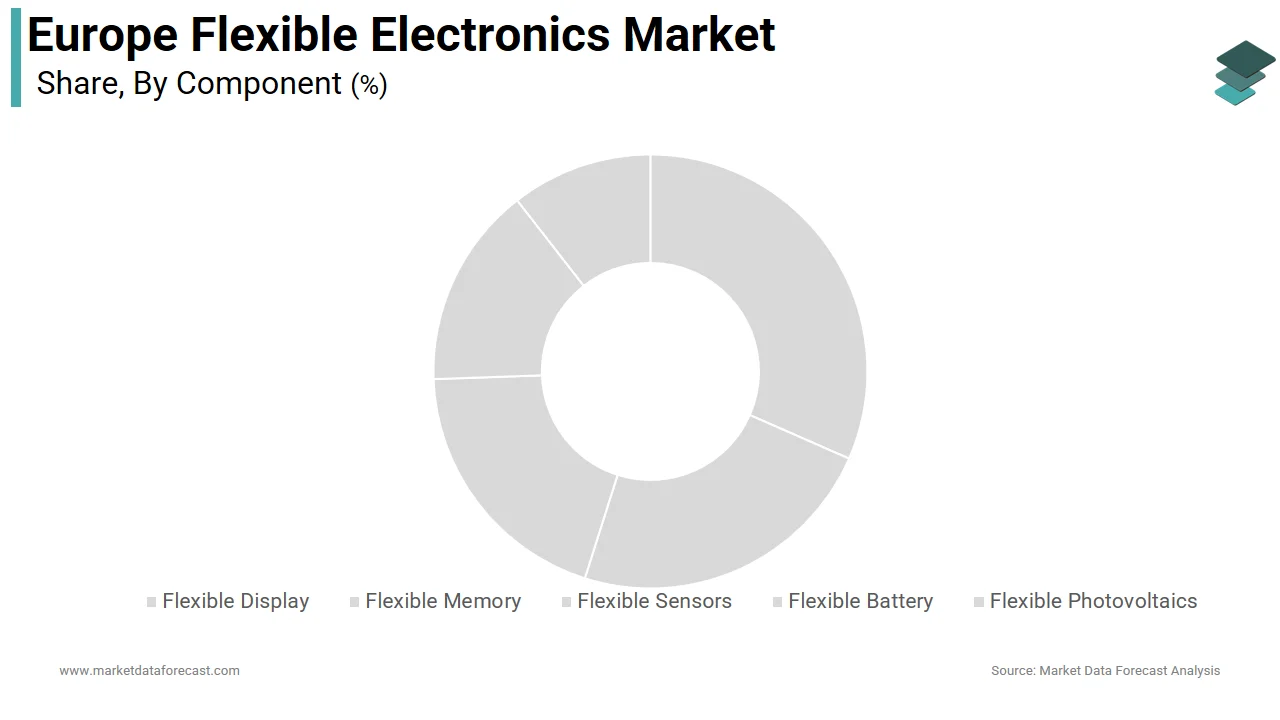
The flexible photovoltaics segment is the fastest growing and is estimated to record a CAGR of 22.9% over the forecast period, owing to the urgent demand for lightweight renewable energy sources integrated into buildings, vehicles, and portable devices under the EU Green Deal. A major factor is the EU’s Energy Performance of Buildings Directive, which mandates that all new public buildings incorporate renewable energy generation from 2025. Flexible organic photovoltaics (OPV) can be laminated onto curved facades, windows, and roofing membranes where rigid panels are impractical. According to the Joint Research Centre, OPV modules achieve up to 40% lower carbon footprints over their lifecycle than silicon counterparts, due to low-temperature roll-to-roll processing and minimal material use. Companies like Heliatek in Germany and Epishine in Sweden already supply semi-transparent OPV films for smart building integration, installed in pilot projects across Copenhagen and Munich. As per the European Space Agency, terrestrial applications of ultra-light solar films are funded for emergency shelters and military gear where weight is critical. According to the European Environment Agency, building integrated photovoltaics could meet 25% of EU urban electricity demand by 2030 if flexible formats achieve scale. As circular economy principles prioritize low embedded energy materials, OPV transitions from niche alternative to mainstream enabler of decentralized clean power across Europe.
By Application Insights
The medical and healthcare segment led the market by capturing 33.8% of the regional market share in 2025. The dominance of the medical and healthcare segment in this regional market can be credited to the convergence of demographic pressure, digital health policy, and clinical validation of wearable diagnostics. Europe’s aging population intensifies demand for non-invasive continuous monitoring solutions that reduce hospitalizations and support independent living. According to the World Health Organization, chronic diseases account for 87% of deaths in the EU, with cardiovascular conditions alone affecting over 60 million people. Flexible biosensors, printed on breathable patches, enable long-term measurement of ECG, oxygen saturation, glucose, and hydration without skin irritation or motion artifacts. As per the European Commission’s Digital Health Action Plan, wearable data integration into electronic health records is explicitly promoted, creating interoperability incentives. Reimbursement frameworks are evolving. According to Germany’s GBA Federal Joint Committee, separate billing codes for remote cardiac monitoring were approved in 2023, while France’s national health insurance covers prescribed digital therapeutics. Clinical evidence strengthens adoption. As per The Lancet Digital Health, a multicenter trial confirmed that post stroke patients using flexible gait sensors improved rehabilitation adherence by 45%. With strong regulatory pathways, clinical trust, and public funding, medical applications anchor the flexible electronics ecosystem in high-value, lifesaving use cases across Europe.
The automotive segment is the fastest-growing and is predicted to register a CAGR of 20.2% over the forecast period, owing to the evolution of vehicle interiors into immersive, connected environments that prioritize safety, comfort, and personalization through comfortable electronics. According to the European Automobile Manufacturers Association, over 90% of new passenger cars sold in the EU in 2023 featured touch-sensitive surfaces or gesture controls, many implemented via printed capacitive sensors on curved dashboards, steering wheels, and door panels. Flexible pressure and proximity sensors allow automakers like BMW, Volvo, and Stellantis to embed controls directly into leather or fabric, eliminating mechanical buttons and reducing part count. Moreover, health monitoring seats with integrated ECG and respiration sensors are entering premium models to support driver alertness systems mandated under the EU General Safety Regulation. As per the European New Car Assessment Programme, points are now awarded for occupant monitoring capabilities, incentivizing adoption. According to the Fraunhofer Institute for Reliability and Microintegration, a 2024 study confirmed that flexible printed sensors withstand 100,000 bend cycles at a 5 millimeter radius, meeting automotive durability standards. As vehicles transform into “third living spaces,” flexible electronics provide the invisible, intelligent layer that merges aesthetics, functionality, and safety, positioning automotive as Europe’s highest velocity growth vector for conformable circuits.+
COUNTRY-LEVEL ANALYSIS
Germany Flexible Electronics Market Analysis
Germany held the leading position in the European flexible electronics market in 2025 by accounting for 26.2% of the regional market share. The dominance of Germany in the European market is driven by its advanced manufacturing base, strong automotive sector, and strategic R and D investments. The country hosts global leaders like Bosch and Siemens that integrate flexible sensors into industrial IoT and automotive systems, while supporting startups through Fraunhofer institutes. According to the Federal Ministry for Economic Affairs, over 1.2 billion euros were allocated to printed electronics under the “Electronics Made in Germany” initiative between 2021 and 2023. Automotive OEMs, including BMW and Mercedes-Benz, deploy flexible interior controls and driver monitoring patches developed with local partners like PolyIC. Moreover, Germany’s Energiewende policy accelerates building integrated photovoltaics, with companies like Heliatek supplying OPV films for smart facades in Berlin and Stuttgart. With world-class pilot lines at Holst Centre Germany and robust IP protection, the nation serves as Europe’s engineering and scaling hub for next-generation flexible circuits.
United Kingdom Flexible Electronics Market Analysis
The United Kingdom captured 18.4% of the European flexible electronics market share in 2025. The growth of the UK in the European market is attributed to the world-leading academic research, agile startups, and post Brexit focus on tech sovereignty. The UK is home to the Cambridge Graphene Centre and Pragmatic Semiconductor, whose ambient printed RFID and sensor platforms are deployed globally. According to Innovate UK, over 80 million pounds were granted to flexible electronics projects in 2023 under the Smart Sustainable Plastic Packaging and Digital Health programs. The National Health Service actively pilots flexible biosensors for remote cardiac and diabetes monitoring, creating real-world validation pathways unmatched elsewhere. Companies like Wearable X develop smart clothing with embedded haptic feedback, used in physiotherapy across NHS trusts. Moreover, as per the UK’s Medicines and Healthcare products Regulatory Agency, clear borderline guidance is provided for wearable diagnostics, enabling faster CE Marking. With deep talent pools, strong venture capital activity, and clinical testbeds, the UK excels at translating lab breakthroughs into regulated commercial products.
Netherlands Flexible Electronics Market Analysis
The Netherlands is anticipated to showcase a promising CAGR in the European flexible electronics market during the forecast period, owing to its open innovation model, cross-institutional collaboration, and leadership in roll-to-roll manufacturing. The country hosts the Holst Centre, a joint initiative by TNO and imec, that operates one of Europe’s most advanced pilot lines for flexible sensors and OPV. According to the Dutch Ministry of Economic Affairs, over 200 million euros were invested in flexible electronics infrastructure between 2020 and 2023 through the National Growth Fund. Companies like TNO and Solliance Solar Research drive the commercialization of medical patches and building-integrated photovoltaics, adopted by Philips and DSM. The Netherlands also serves as a logistics and regulatory gateway; its notified bodies provide efficient CE certification, while Rotterdam port enables global distribution. Academic excellence at TU Delft and Eindhoven University of Technology ensures continuous talent and IP flow. This ecosystem of shared infrastructure, agile regulation, and industrial partnership makes the Netherlands Europe’s collaborative nucleus for scalable, flexible electronics.
Sweden Flexible Electronics Market Analysis
Sweden is projected to account for a notable share of the European flexible electronics market during the forecast period, due to the sustainability-driven innovation, strong public health integration, and leadership in organic electronics. The country prioritizes eco design, as per the Swedish Environmental Protection Agency, all electronics must minimize hazardous content and support disassembly, principles inherently met by printed flexible circuits. Companies like Epishine produce indoor light-harvesting OPV modules used in smart building sensors across Scandinavia, while Combient Invest supports medtech startups developing biodegradable biosensors. According to Vinnova, Sweden’s innovation agency, over 60 million euros were funded for flexible healthcare projects in 2023, targeting elderly care and chronic disease management. Karolinska University Hospital runs Europe’s largest trial of flexible ECG patches for heart failure patients, generating real-world evidence that informs EU reimbursement policies. With high digital literacy, universal healthcare, and green industrial policy, Sweden fosters human-centric flexible electronics that balance performance, planetary boundaries, and social impact.
France Flexible Electronics Market Analysis
France is estimated to register a healthy CAGR in the European flexible electronics market during the forecast period due to the state-led industrial strategy, defense applications, and digital health transformation. The France 2030 investment plan allocated 500 million euros to advanced electronics, including flexible substrates for aerospace and medical wearables. Thales and Safran integrate conformable antennas and health monitors into military uniforms and aircraft cabins, leveraging CEA Leti’s R and D in Grenoble. In healthcare, the national digital health agency ANS promotes interoperable wearable data through its Mon Espace Santé platform, creating demand for certified flexible biosensors. According to the French National Research Agency, over 40 flexible electronics startups emerged between 2021 and 2023, supported by Bpifrance grants and incubators like Station F. Automotive supplier Valeo develops touch-sensitive interior surfaces for Stellantis vehicles, using printed sensors made in Normandy. With coordinated public investment, strong engineering schools, and cross-sectoral use cases, France bridges defense, precision medicine, and consumer innovation to sustain dynamic growth in flexible electronics.
COMPETITIVE LANDSCAPE
Competition in the Europe flexible electronics market is characterized by a dual structure comprising industrial giants leveraging scale and specialized R and D hubs driving foundational innovation. Incumbents like Bosch and Thales integrate flexible components into broader system offerings for automotive and defense, benefiting from established supply chains and certification expertise. Meanwhile, agile startups such as Pragmatic Semiconductor disrupt with novel manufacturing paradigms like ambient printed circuits that bypass traditional semiconductor constraints. The market is not price-driven but defined by application specificity, regulatory compliance, and material performance under real-world conditions. New entrants face high barriers, including capital intensity, yield challenges, and fragmented standards, yet benefit from strong public funding through Horizon Europe and national innovation agencies. Collaboration dominates over pure competition with shared pilot lines, open IP pools, and cross-institutional projects accelerating collective progress. Ultimately, leadership is determined by the ability to transition from lab novelty to a certified, scalable solution that meets Europe’s exacting demands for safety, sustainability, and human-centric design.
KEY MARKET PLAYERS
The leading companies operating in the Europe flexible electronics market include:
- E Ink Holdings, Inc. (YFY, Inc.)
- Blue Spark Technologies, Inc.
- General Electric Company
- Palo Alto Networks, Inc.
- Bosch Sensortec GmbH
- AU Optronics Corporation
- Pragmatic Semiconductor Ltd
- CCL Industries, Inc.
- Samsung Electronics Co., Ltd. (Samsung Group)
- LG Electronics, Inc. (LG Corporation)
- Enfucell Oy
- Holst Centre / TNO
- 3M Company
TOP PLAYERS IN THE MARKET
- Bosch Sensortec is a German technology leader specializing in microelectromechanical systems and flexible sensor solutions integrated into automotive, consumer, and industrial applications across Europe. The company leverages its expertise in semiconductor manufacturing to develop ultra-thin conformable pressure and inertial sensors that enable touchless interfaces and health monitoring in vehicles and wearables. Bosch collaborates closely with European OEMs, including BMW and Siemens, to embed flexible sensing into next-generation human-machine interfaces. Recently, the company expanded its Reutlingen facility to pilot high-volume roll-to-roll production of printed flexible sensors for automotive interiors. It also launched a new line of biocompatible ECG patches co-developed with Charité Berlin for remote cardiac monitoring under Germany’s digital health reimbursement framework. These initiatives reinforce Bosch’s role as a bridge between precision engineering and scalable, flexible electronics in regulated European markets.
- Pragmatic Semiconductor is a UK-based innovator and global leader in ambient printed flexible integrated circuits with a transformative impact on smart packaging, healthcare, and logistics across Europe. The company’s proprietary FlexIC technology enables ultra-low-cost NFC and sensor tags printed directly onto paper or plastic using standard printing presses by eliminating silicon dependency. Pragmatic partners with NHS England to deploy temperature monitoring patches for vaccine transport and with Unilever for intelligent food packaging that reduces waste. In recent years, the company commissioned a 100-million-euro factory in Durham capable of producing billions of flexible chips annually, which is the first high-volume flexible IC fab in Europe. It also joined the EU’s Chips Act alliance to strengthen supply chain resilience. Through relentless focus on sustainability, scalability, and real-world utility, Pragmatic redefines what flexible electronics can achieve beyond traditional rigid paradigms.
- Holst Centre, a Netherlands based R and D hub jointly operated by TNO and imec, serves as Europe’s premier innovation engine for flexible electronics, spanning healthcare, energy, and automotive domains. While not a commercial vendor, Holst Centre develops foundational technologies that are licensed to global manufacturers like Philips and Solliance. The center operates one of Europe’s most advanced pilot lines for roll-to-roll fabrication, enabling rapid prototyping and process validation for startups and multinationals alike. Recently, Holst Centre demonstrated a fully printed ECG patch with 24-hour battery life, now being trialed in Dutch hospitals, and launched a recyclable OPV module for building integration. Funded by the Dutch government and EU Horizon programs, it bridges academic research and industrial scale-up, ensuring Europe retains leadership in next-generation conformable electronics through open collaboration and shared infrastructure.
TOP STRATEGIES USED BY THE KEY MARKET PARTICIPANTS
Key players in the Europe flexible electronics market pursue strategies centred on application-driven innovation, regulatory alignment, and ecosystem collaboration. Companies focus on high-value verticals such as medical diagnostics, automotive sensing, and sustainable packaging, where flexible form factors solve real-world problems unmet by rigid electronics. Strategic partnerships with hospitals, automakers, and consumer brands provide validation pathways and volume pull-through. Investment in pilot lines and roll-to-roll infrastructure addresses the scale gap between lab prototypes and commercial production. Sustainability is embedded through biodegradable substrates, low-energy processing, and circular design principles aligned with EU Ecodesign mandates. Regulatory preparedness ensures compliance with CE marking medical device and automotive safety standards across fragmented national frameworks. Open innovation models via research consortia and public-private partnerships reduce risk R and D and accelerate time to market. These approaches collectively position flexible electronics not as speculative technology but as purpose-built solutions for Europe’s societal and industrial challenges.
MARKET SEGMENTATION
This research report on the Europe flexible electronics market has been segmented and sub-segmented into the following categories.
By Component
- Flexible Display
- Flexible Memory
- Flexible Sensors
- Flexible Battery
- Flexible Photovoltaics
By Application
- Consumer Electronics
- Medical & Healthcare
- Aerospace & Defense
- Automotive
- Energy & Power
- Others
By Country
- United Kingdom
- France
- Spain
- Germany
- Italy
- Russia
- Sweden
- Denmark
- Switzerland
- Netherlands
- Rest of Europe