- Product Description Description
- Table of Contents TOC
- List of Table & Figure LOT
- Get Free Sample PDF Sample PDF
Market Size, 2025
$2.23 BnMarket Estimate, 2026
$2.35 BnMarket Forecast, 2034
$3.57 BnCAGR, 2026–2034
5.38%Europe Food and Beverages Market Report Summary
The Europe food and beverages market was valued at USD 2.23 billion in 2025, is estimated to reach USD 2.35 billion in 2026, and is projected to reach USD 3.57 billion by 2034, growing at a CAGR of 5.38% during the forecast period from 2026 to 2034. The growth of the Europe food and beverages market is driven by changing consumer lifestyles, rising demand for convenience foods, and increasing preference for healthy and natural products. The expansion of organized retail, innovation in product offerings, and growing consumption of processed and packaged foods are further supporting market growth. Additionally, increasing focus on sustainability, clean label ingredients, and functional foods is shaping the future of the market across Europe.
Key Market Trends
- Growing demand for fresh and natural food products driven by health awareness and clean eating trends among consumers.
- Increasing dominance of supermarkets and hypermarkets supported by wide product availability and strong retail infrastructure.
- Rising preference for convenience and ready to eat food products due to busy lifestyles and urbanization.
- Expansion of private label brands and premium food offerings across retail chains.
- Increasing focus on sustainable packaging and ethically sourced ingredients among leading food manufacturers.
Segmental Insights
- Based on distribution channel, the offline segment was the largest and held a significant share of the Europe food and beverages market in 2025. The dominance of this segment is attributed to strong retail networks, consumer preference for in store purchases, and availability of diverse product options.
- Based on offline segment, supermarkets and hypermarkets accounted for 58.5% of the Europe food and beverages market share in 2025. This segment leads due to convenience, competitive pricing, and access to a wide variety of food and beverage products under one roof.
- Based on processing type, the raw and fresh products segment accounted for 54.3% of the Europe food and beverages market share in 2025. The growth of this segment is driven by increasing consumer preference for minimally processed and nutritious food options.
Regional Insights
- The Europe food and beverages market is experiencing steady growth across major economies supported by evolving consumer preferences and strong retail infrastructure.
- Germany was the largest contributor, accounting for 24.8% of the Europe food and beverages market share in 2025, driven by high consumer spending, strong food processing industry, and well established retail distribution channels.
Competitive Landscape
The Europe food and beverages market is highly competitive with global and regional players focusing on product innovation, sustainability, and expanding their distribution networks. Companies are investing in healthier product portfolios, plant based alternatives, and premium offerings to meet changing consumer demands. Prominent players in the Europe food and beverages market include Nestlé S.A., PepsiCo Inc., Unilever PLC, Danone S.A., Mondelez International Inc., General Mills Inc., The Kraft Heinz Company, Ferrero International S.A., Mars Incorporated, and Associated British Foods PLC.
Europe Food and Beverages Market Size
The Europe food and beverages market size was valued at USD 2.23 billion in 2025 and is projected to reach USD 3.57 billion by 2034 from USD 2.35 billion in 2026, growing at a CAGR of 5.38%.
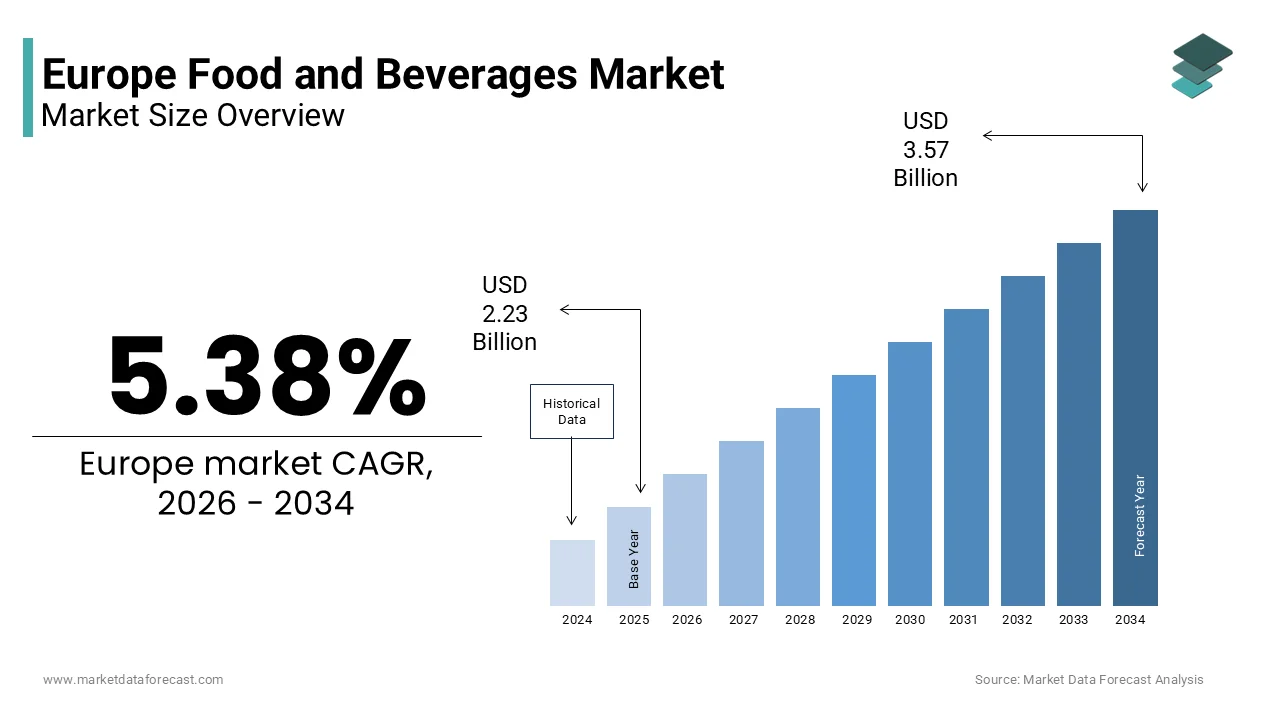
The food and beverages are a vast and intricate ecosystem encompassing the production, processing, distribution, and consumption of edible goods and drinks, across the European continent. It spans diverse categories including fresh produce, dairy, meat, bakery, confectionery, alcoholic and non-alcoholic drinks, and processed foods. The stringent regulatory frameworks ensuring safety and quality, alongside a growing emphasis on sustainability and ethical sourcing. The European Environment Agency notes that food systems contribute nearly 30% of global greenhouse gas emissions, prompting intense scrutiny and reform efforts within the region. Consumer behavior is shifting rapidly, with the European Commission observing that over 55% of citizens now consider environmental impact when making purchasing decisions. National statistics from France indicate that household expenditure on food and non-alcoholic beverages averages around 16% of total disposable income, reflecting its essential nature. Meanwhile, the World Health Organization reports that obesity rates in Europe have reached alarming levels, with over 59% of adults classified as overweight, driving demand for healthier alternatives.
MARKET DRIVERS
Escalating Demand for Plant Based and Alternative Protein Solutions
The surging preference for plant-based diets and alternative protein sources is greatly influencing the growth of Europe food and beverages market. Consumers are increasingly motivated by health concerns, environmental awareness, and animal welfare considerations to reduce their intake of traditional animal proteins. As per the European Vegetarian Union, the number of vegetarians and vegans in Europe has doubled over the last decade, which is creating a substantial and loyal customer base for innovative food products. This shift is not limited to niche demographics but has permeated mainstream consumption, with major retailers dedicating significant shelf space to meat and dairy alternatives. The development of advanced food technologies, such as fermentation and extrusion, has improved the texture and taste of these alternatives by making them more palatable. Furthermore, government initiatives in countries like Germany and the Netherlands are providing subsidies for research into sustainable protein sources by accelerating product innovation. The European Food Safety Authority has also approved several novel protein ingredients, facilitating market entry for new players.
Intensifying Consumer Focus on Health and Functional Nutrition
The heightened awareness regarding the link between diet and long-term health serves toward functional and fortified products is levelling up the growth of Europe food and beverages market. Modern consumers actively seek foods that offer specific health benefits beyond basic nutrition, such as immune support, gut health improvement, and mental well-being enhancement. As per the Global Nutrition Report, chronic diseases related to poor diet cost European healthcare systems over 100 billion euros annually, prompting individuals to take proactive measures through their dietary choices. This trend has spurred the proliferation of products enriched with vitamins, minerals, probiotics, and adaptogens. The aging population in regions like Italy and Germany, further amplifies this demand, as older adults prioritize foods that support mobility and cognitive function. Additionally, the rise of personalized nutrition, fueled by digital health apps and DNA testing kits, allows consumers to tailor their diets to specific genetic profiles, creating new avenues for product customization. Retailers are responding by labeling products with clear health claims and nutritional scores, such as the Nutri Score system adopted by several EU nations.
MARKET RESTRAINTS
Persistent Inflationary Pressures on Raw Material and Energy Costs
The soaring inflation rates affecting raw materials and energy inputs constitute is impeding the growth of Europe food and beverages market. The sector faces unprecedented cost volatility due to geopolitical tensions, supply chain disruptions, and adverse weather conditions impacting agricultural yields. As per the study, food inflation in the Eurozone reached historic highs of over 18% in recent periods, which is forcing manufacturers to absorb costs or pass them on to price sensitive consumers. Energy intensive processes such as freezing, drying, and packaging have become significantly more expensive, with natural gas prices in Europe fluctuating wildly following geopolitical conflicts. The reliance on imported ingredients like wheat, vegetable oils, and spices exposes the industry to global commodity market shocks and currency exchange risks. Farmers are also grappling with higher fertilizer and fuel costs, which translate into elevated prices for primary agricultural commodities. Consequently, many producers are forced to reformulate products with cheaper ingredients or reduce pack sizes, potentially compromising quality and brand equity.
Stringent Regulatory Compliance and Labeling Requirements
The rigorous and ever evolving regulatory frameworks regarding food safety, labeling, and health claims to agility and speed-to-market for industry participants is also degrading the growth of Europe food and beverages market. The European Union maintains some of the strictest food laws globally, requiring comprehensive traceability, allergen declaration, and nutritional information on all packaged goods. As per the European Commission, the implementation of the Farm to Fork Strategy has introduced additional layers of compliance concerning sustainability claims, pesticide residues, and nutrient profiling. Navigating this complex legal landscape demands substantial resources for legal counsel, testing, and documentation, which disproportionately burdens smaller companies. This uncertainty discourages innovation in functional foods where manufacturers fear investing in research only to be denied marketing rights. Furthermore, the divergence in national regulations across member states regarding novel foods and additives creates fragmentation, necessitating tailored strategies for each market. The mandatory introduction of front-of-pack labeling schemes in various countries adds complexity to packaging design and logistics.
MARKET OPPORTUNITIES
Expansion of Digital Commerce and Direct to Consumer Models
The rapid digitization of the grocery shopping experience to reach consumers through novel channels is key factor leveraging new opportunities for the growth of Europe food and beverages market. The adoption of online food retailing has moved from a convenience option to a fundamental pillar of distribution, accelerated by changing lifestyle patterns and technological advancements. As per Eurostat, the share of individuals in the EU ordering food and groceries online rose in recent years, with double digit growth rates observed in Southern and Eastern European countries. This shift enables brands to bypass traditional retail intermediaries and establish direct relationships with customers through proprietary e commerce platforms and subscription services. Data from Nielsen IQ suggests that direct to consumer models allow companies to gather valuable first party data on purchasing behavior, facilitating personalized marketing and product recommendations. The emergence of quick commerce services promising delivery within minutes has further revolutionized urban consumption patterns, creating demand for specialized SKUs suited for immediate consumption. Additionally, social commerce integration allows brands to sell directly through social media platforms, leveraging influencer partnerships to drive impulse purchases. The ability to offer exclusive online bundles, limited edition flavors, and customized nutrition plans enhances customer loyalty and lifetime value.
Innovation in Sustainable Packaging and Circular Economy Solutions
The growing imperative for environmental stewardship to differentiate itself through sustainable packaging innovations is also to enhance the growth of Europe food and beverages market. Consumers and regulators alike are demanding a reduction in single use plastics and a transition toward biodegradable, compostable, or recyclable materials. As per the European Plastics Strategy, the EU aims to ensure all plastic packaging is reusable or recyclable by 2030, driving massive investment in alternative materials. Companies adopting circular economy principles can enhance their brand image and secure preferential listing with eco conscious retailers. Data from the Ellen MacArthur Foundation indicates that transitioning to reusable packaging models could generate savings of over 10 billion euros annually for the European fast moving consumer goods sector. Innovations such as edible films, mushroom based packaging, and refill stations are gaining traction, appealing to environmentally aware demographics. Furthermore, clear communication of sustainability efforts through QR codes and digital passports builds trust and transparency. Startups specializing in upcycled ingredients and zero waste production methods are attracting significant venture capital, signaling a shift in investor sentiment. Brands that successfully integrate these solutions into their supply chains not only mitigate regulatory risks but also tap into a growing segment of consumers willing to pay a premium for green credentials.
MARKET CHALLENGES
Supply Chain Vulnerability and Geopolitical Instability
The fragility of global supply chains exacerbated by geopolitical tensions is one of the major challenges for the growth of Europe food and beverages market. The region relies heavily on imports for key ingredients such as grains, oils, and spices by making it susceptible to disruptions caused by conflicts, trade wars, and logistical bottlenecks. As per the World Trade Organization, disruptions in the Black Sea region alone threatened 30% of global wheat and corn supplies, sending shockwaves through European flour mills and bakeries. The dependency on just-in-time delivery models leaves little buffer for unexpected delays, leading to stockouts and price volatility. Furthermore, labor shortages in the logistics sector, compounded by Brexit related friction, hinder the efficient movement of perishable goods across borders. The concentration of supply sources for certain commodities creates single points of failure that can paralyze production lines. Companies face the daunting task of diversifying supplier bases while managing increased complexity and cost. The inability to predict future disruptions undermines long term planning and investment confidence. This pervasive uncertainty forces businesses to hold higher inventory levels, tying up capital and increasing warehousing costs, thereby challenging the traditional efficiency metrics of the industry.
Labor Shortages Across Agricultural and Processing Sectors
The acute labor shortages in farming, food processing, and hospitality sectors with the operational capacity is also to impede the growth of Europe food and beverages market. Demographic shifts, an aging workforce, and the unattractiveness of low wage manual labor roles have created a persistent gap in available talent. As per the European Federation of Food Drink and Tobacco Workers, the industry faces a deficit of over 500000 workers across key production hubs, leading to reduced output and increased overtime costs. The reliance on seasonal migrant labor has become increasingly precarious due to stricter immigration policies and pandemic related travel restrictions. This scarcity drives up wage bills, eroding profit margins for producers who cannot easily automate certain tasks like fruit picking or meat butchery. The shortage extends to skilled roles such as food technologists and quality assurance experts, stifling innovation and compliance capabilities. Furthermore, the physical demands and perceived lack of career progression deter younger generations from entering the field. Companies are forced to invest heavily in automation and robotics, which requires significant capital expenditure and technical expertise.
REPORT COVERAGE
| REPORT METRIC | DETAILS |
| Market Size Available | 2025 to 2034 |
| Base Year | 2025 |
| Forecast Period | 2026 to 2034 |
| CAGR | 5.38% |
| Segments Covered | By Distribution Channel, Offline Segment, Processing Type, Dietary Preference, and Region |
| Various Analyses Covered | Global, Regional, & Country Level Analysis; Segment-Level Analysis; DROC, PESTLE Analysis; Porter’s Five Forces Analysis; Competitive Landscape; Analyst Overview of Investment Opportunities |
| Regions Covered | UK, France, Spain, Germany, Italy, Russia, Sweden, Denmark, Switzerland, Netherlands, Turkey, and the Czech Republic |
| Market Leaders Profiled | Nestlé S.A., PepsiCo Inc., Unilever PLC, Danone S.A., Mondelez International Inc., General Mills Inc., The Kraft Heinz Company, Ferrero International S.A., Mars Incorporated, and Associated British Foods PLC |
SEGMENTAL ANALYSIS
By Distribution Channel Insights
The offline distribution channel segment held a prominent share of the Europe food and beverages market in 2025 with the deep-rooted cultural habit of physical grocery shopping where consumers prefer to inspect fresh produce, meat, and dairy products personally before purchase. The extensive network of hypermarkets and supermarkets that serve as one-stop destinations for weekly household provisioning will also bolster the growth of segment. As per data from Eurostat, over 75% of European households still conduct their primary grocery shopping in physical stores, valuing the immediate availability and tactile experience of selecting items. The robust presence of traditional wet markets and specialty shops in Southern and Eastern Europe, which maintain strong community ties and offer localized products that online platforms struggle to replicate. Furthermore, the social aspect of shopping, where consumers engage with butchers, bakers, and greengrocers, reinforces loyalty to brick-and-mortar establishments. The ability of offline stores to offer instant gratification without delivery wait times or shipping fees continues to make them the preferred choice for the majority of the population by ensuring their continued market leadership despite digital encroachment.
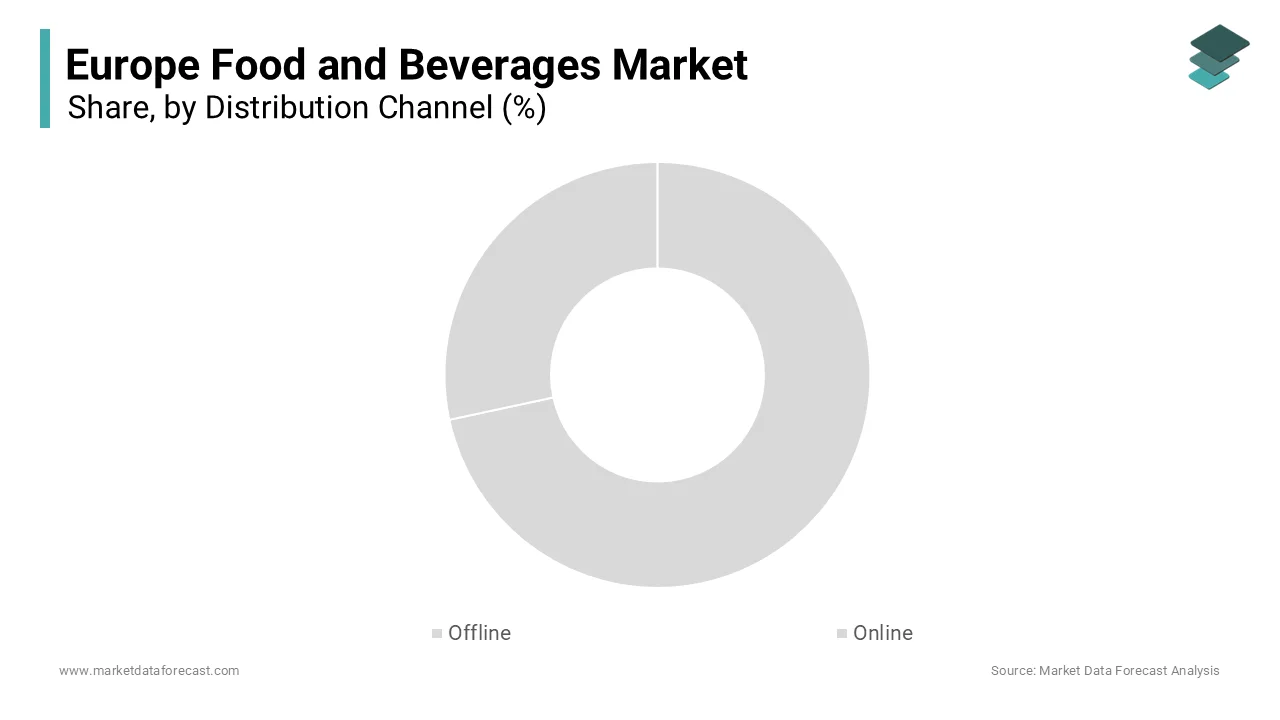
The online distribution channel is swiftly emerging at a fastest CAGR of 11.4% throughout the forecast period with a fundamental shift in consumer lifestyle towards convenience and the increasing sophistication of last-mile logistics networks across the continent. The proliferation of quick commerce services that promise delivery of groceries within 15 to 30 minutes by catering to urban professionals and spontaneous purchasing needs will also to escalate the growth of segment. The integration of advanced artificial intelligence and personalized recommendation engines on e-commerce platforms, which enhance the user experience and increase basket sizes is also escalating the growth of segment. Data from the Digital Commerce Association reveals that online grocery shoppers in Europe now spend an average of 18% more per transaction compared to offline shoppers due to targeted upselling and subscription models. The pandemic acted as a catalyst, permanently altering habits among older demographics who previously resisted digital grocery shopping. Additionally, the rise of direct-to-consumer brands offering niche, organic, and specialty products that are unavailable in standard supermarkets has created a dedicated online customer base.
By Offline Segment Insights
The supermarkets and hypermarkets segment was the largest by accounting for 58.5% of the Europe food and beverages market due to their ability to offer an unparalleled variety of products under one roof, combined with aggressive pricing strategies that appeal to cost-conscious consumers. The economies of scale that allow these large-format stores to negotiate lower prices with suppliers and pass savings on to shoppers. As per data from the European Retail Round Table, the top five retail chains in Europe control over 40% of the total grocery market, leveraging their purchasing power to maintain competitive shelf prices. The continuous modernization of store formats to include in-store bakeries, butcheries, and ready-to-eat meal sections, which mimic the quality of specialty shops while offering convenience is additionally boosting the growth of the segment. The integration of loyalty programs and digital coupons within these stores further enhances customer retention and data collection capabilities. Moreover, the strategic location of these outlets in both urban centers and suburban areas ensures high accessibility for a broad demographic.
The foodservice sector segment is anticipated to grow at a CAGR of 6.8% from 2025 to 2034 owing to the post-pandemic recovery of hospitality and a shifting consumer preference for experiential dining and social interaction outside the home. The rising demand for convenience and ready-to-consume meals among dual-income households and younger generations, who prioritize time-saving solutions over cooking is also propelling the growth of Europe food and beverages market. The diversification of culinary offerings, with a surge in ethnic cuisines, health-focused menus, and premium fast-casual concepts attracting a wider audience is also enhancing the growth of segment. The integration of technology such as table-side ordering apps and contactless payment systems has improved operational efficiency and customer satisfaction. Furthermore, the trend of "foodie" culture, propelled by social media influence that encourages consumers to try new dining experiences regularly.
By Processing Type Insights
The raw and fresh products segment was the largest by accounting for 54.3% of the Europe food and beverages market share in 2025 with European cultural emphasis on fresh ingredients, culinary traditions, and the perception of higher nutritional value associated with unprocessed foods. The strong consumer preference for seasonal produce, fresh meat, and dairy, which are staples in daily diets across the continent is also fuelling the growth of segment. As per the European Commission, over 70% of European consumers state that freshness is the most important factor when purchasing food, often prioritizing it over price or brand. The robust infrastructure of local supply chains and farmers' markets that ensure the rapid movement of perishable goods from farm to table is also to surge the growth of segment. Data from Eurostat reveals that sales of fresh fruits and vegetables in the EU remain consistently high, with per capita consumption exceeding 120 kilograms annually in countries like Italy and Greece. The regulatory environment also supports this segment through strict labeling laws that highlight origin and production methods, fostering trust in fresh products. Additionally, the rise of health consciousness has led to a decline in the consumption of heavily processed items in favor of whole foods. The ability of retailers to source locally reduces carbon footprints and appeals to environmentally aware shoppers.
The processed foods segment is projected to expand at a CAGR of 5.2% from 2026 to 2034 owing to the escalating demand for convenience, longer shelf life, and innovative functional benefits that modern lifestyles require. The proliferation of value-added processed products, such as ready-to-eat meals, plant-based alternatives, and fortified snacks that cater to busy consumers seeking quick yet nutritious options. The technological advancements in food processing that allow for the preservation of nutrients and flavors, while reducing the need for artificial preservatives is also enhancing the growth of this segment. The expansion of private label processed ranges by major retailers offers affordable alternatives that drive volume growth. Furthermore, the development of specialized processed foods for specific dietary needs, such as gluten-free or low-sodium variants, opens new market niches. The ability of processed foods to offer consistency, safety, and convenience ensures their rapid adoption among diverse consumer groups.
REGIONAL ANALYSIS
Germany Food and Beverages Market Analysis
Germany was the largest contributor of the Europe food and beverages market by accounting for 24.8% of share in 2025. The growth of the market in this country is driven by its massive consumption volume and highly efficient retail distribution network. The country's robust economy and high disposable income, which supports steady demand for both staple and premium food items is also levelling up the growth of segment. As per data from the Federal Office for Agriculture and Food, German household expenditure on food and non-alcoholic beverages exceeds 200 billion euros annually, making it the biggest spender in the region. The growing trend towards organic and sustainable products is another key driver, with Germany being the largest market for organic food in Europe. Statistics from the Organic Trade Association show that sales of organic products reached 15 billion euros recently, driven by stringent quality standards and consumer trust. The presence of major global food manufacturers and a strong export-oriented processing industry further bolster the market growth.
France Food and Beverages Market Analysis
France food and beverages market held second position by capturing 18.6% of the share in 2025 with its rich culinary heritage and high per capita expenditure on quality food and wine. The strong domestic production of dairy, wine, and baked goods, which fosters national pride and consistent consumption is also to level up the growth of Europe food and beverages market. The government's active promotion of the "Eat French" campaign and strict regulations on food quality support local producers is also gearing up the growth of the market in this country. Data from the National Institute of Statistics indicates that French consumers spend a high percentage of their income on food compared to many other European nations, prioritizing quality over quantity. The rise of health consciousness has also led to increased demand for organic and locally sourced items. Furthermore, the vibrant foodservice sector, including world-class restaurants and local bistros, drives significant demand for high-quality ingredients. France's ability to blend tradition with innovation in food production ensures its continued influence and strong market performance.
United Kingdom Food and Beverages Market Analysis
The United Kingdom food and beverages market growth is driven by its high level of innovation and openness to international cuisines. The mix of traditional preferences and a rapid adoption of new food trends, including plant-based diets and ethnic foods is elevating the growth of the market in this country. Another attribute is the concentrated retail sector dominated by a few large supermarket chains that drive efficiency and private label growth. As per data from the Department for Environment Food and Rural Affairs, the UK food and drink manufacturing sector contributes over 30 billion pounds to the economy, employing hundreds of thousands of people. The strong presence of convenience stores and quick-service restaurants caters to the fast-paced urban lifestyle.
Italy Food and Beverages Market Analysis
Italy food and beverages market growth is driven by the iconic food products and strong adherence to traditional manufacturing methods. A powerful export orientation in pasta, cheese, wine, and cured meats, alongside a discerning domestic consumer base is also to escalate the growth of market. As per data from the Italian National Institute of Statistics, the food and beverage industry is the largest manufacturing sector in Italy, with exports exceeding 60 billion euros annually. The strong network of small and medium-sized enterprises specializing in artisanal production ensures high quality and authenticity. The Mediterranean diet continues to influence consumption patterns, driving demand for olive oil, fresh vegetables, and seafood. Furthermore, the tourism sector significantly boosts food consumption, as visitors seek authentic culinary experiences.
Spain Food and Beverages Market Analysis
Spain food and beverages market growth is likely to grow with its vast agricultural output and a culture that places food at the center of social life. Statistics from the Spanish Association of Manufacturers of Food and Beverages indicate that investment in food technology and innovation has grown by 12% by enhancing productivity and product quality. The thriving tourism industry further amplifies demand, with millions of visitors consuming local specialties year-round. Additionally, the rise of health-conscious eating has boosted the market for natural and organic products. Spain's strategic location and favorable climate allow for year-round production by making it a vital supplier and a robust domestic market within Europe
COMPETITIVE LANDSCAPE
The competition in the Europe food and beverages market is intensely fierce characterized by the presence of massive multinational corporations alongside numerous agile local and regional players. Dominant firms leverage their scale to negotiate favorable terms with retailers and invest heavily in research and development to launch innovative products that meet evolving consumer demands. The market witnesses constant rivalry based on brand equity, product quality, price competitiveness, and sustainability credentials as shoppers become increasingly discerning about health and environmental impact. Private label brands offered by major supermarket chains have gained significant traction, exerting pressure on established brands to differentiate themselves through unique value propositions and premium offerings. Consolidation activities remain frequent as large entities acquire smaller innovative companies to expand their portfolios and enter new categories rapidly. Geographic expansion and supply chain resilience are critical competitive factors especially given recent global disruptions. The regulatory landscape adds another layer of complexity requiring companies to adapt quickly to new labeling laws and safety standards.
KEY MARKET PLAYERS
Some of the notable key players in the Europe food and beverages market are
- Nestlé S.A.
- PepsiCo Inc.
- Unilever PLC
- Danone S.A.
- Mondelez International Inc.
- General Mills Inc.
- The Kraft Heinz Company
- Ferrero International S.A.
- Mars Incorporated
- Associated British Foods PLC
Top Players in the Market
- Nestle S.A. stands as the largest food and beverage company globally with a profound footprint across Europe. The Swiss giant manages an extensive portfolio ranging from coffee and confectionery to infant nutrition and pet care, serving millions of consumers daily. Its contribution to the global market is defined by relentless innovation in nutrition and sustainability initiatives that set industry benchmarks. To strengthen its European position, Nestlé has recently accelerated its transition toward regenerative agriculture, sourcing key ingredients like cocoa and coffee through verified sustainable supply chains. The company also invested heavily in expanding its plant-based product lines under brands like Garden Gourmet to meet shifting consumer preferences. Furthermore, Nestlé continues to optimize its manufacturing network by upgrading facilities with smart technologies to enhance efficiency and reduce carbon emissions. These strategic moves reinforce its commitment to quality and environmental stewardship, ensuring it remains a dominant force capable of adapting to evolving dietary trends and regulatory demands throughout the continent.
- Unilever PLC operates as a multinational consumer goods powerhouse with a significant presence in the European food and beverages sector, particularly in savory snacks, ice cream, and condiments. The Anglo-Dutch corporation contributes globally by championing purpose-led brands that integrate social and environmental goals into their core business models. In Europe, Unilever has focused on revitalizing its food portfolio by divesting lower-growth assets and acquiring brands that align with health and wellness trends. Recent actions include the expansion of its plant-based meat alternatives under The Vegetarian Butcher brand and the reformulation of products to reduce salt and sugar content in response to public health guidelines. The company also launched ambitious climate action plans aiming for net-zero emissions across its value chain by 2039. These efforts demonstrate its agility in navigating complex market dynamics while maintaining its status as a leader in sustainable and nutritious food solutions.
- Danone S.A. is a French multinational corporation renowned for its leadership in dairy products, plant-based alternatives, waters, and specialized nutrition. The company plays a pivotal role in the global market by prioritizing health-focused offerings and advocating for a circular economy model. Within Europe, Danone strengthens its position through continuous innovation in fermentation technologies and the development of organic and locally sourced product lines. Recent strategic moves include the acquisition of premium organic brands to cater to the growing demand for clean-label foods and the implementation of reusable packaging pilots in key markets to reduce plastic waste. Danone has also committed to achieving carbon neutrality in its operations and enhancing water stewardship practices across its supply chain. These initiatives underscore its dedication to delivering high-quality nutrition while addressing environmental challenges, solidifying its reputation as a forward-thinking leader in the European food landscape.
Top Strategies Used by Key Market Participants
Key players in the Europe food and beverages market primarily utilize product portfolio diversification to mitigate risks and capture emerging consumer trends such as plant-based diets and functional nutrition. Companies aggressively pursue mergers and acquisitions to gain access to innovative startups and niche brands that offer rapid growth potential in specific categories. Another major strategy involves heavy investment in sustainability initiatives including regenerative agriculture and circular packaging to comply with strict environmental regulations and appeal to eco-conscious shoppers. Firms also focus on digital transformation by enhancing e-commerce capabilities and leveraging data analytics for personalized marketing and supply chain optimization. Cost leadership through operational efficiency and automation remains crucial to combat inflationary pressures on raw materials and energy. Additionally, manufacturers are reformulating products to reduce sugar, salt, and fat content to align with government health guidelines and avoid taxation.
MARKET SEGMENTATION
This research report on the European food and beverages market has been segmented and sub-segmented based on categories.
By Distribution Channel
- Offline
- Online
By Offline Segment
- Supermarkets or Hypermarkets
- Convenience Stores
- Specialty Stores
- Foodservice
By Processing Type
- Raw or Fresh
- Processed
By Dietary Preference
- Vegan
- Vegetarian
- Keto or Paleo
- Gluten Free
- Other
By Country
- UK
- France
- Spain
- Germany
- Italy
- Russia
- Sweden
- Denmark
- Switzerland
- Netherlands
- Turkey
- Czech Republic
- Rest of Europe