- Product Description Description
- Table of Contents TOC
- List of Table & Figure LOT
- Get Free Sample PDF Sample PDF
Market Size, 2025
$33.55 BnMarket Estimate, 2026
$35.63 BnMarket Forecast, 2034
$57.65 BnCAGR, 2026–2034
6.20%Europe Functional Beverage Market Report Summary
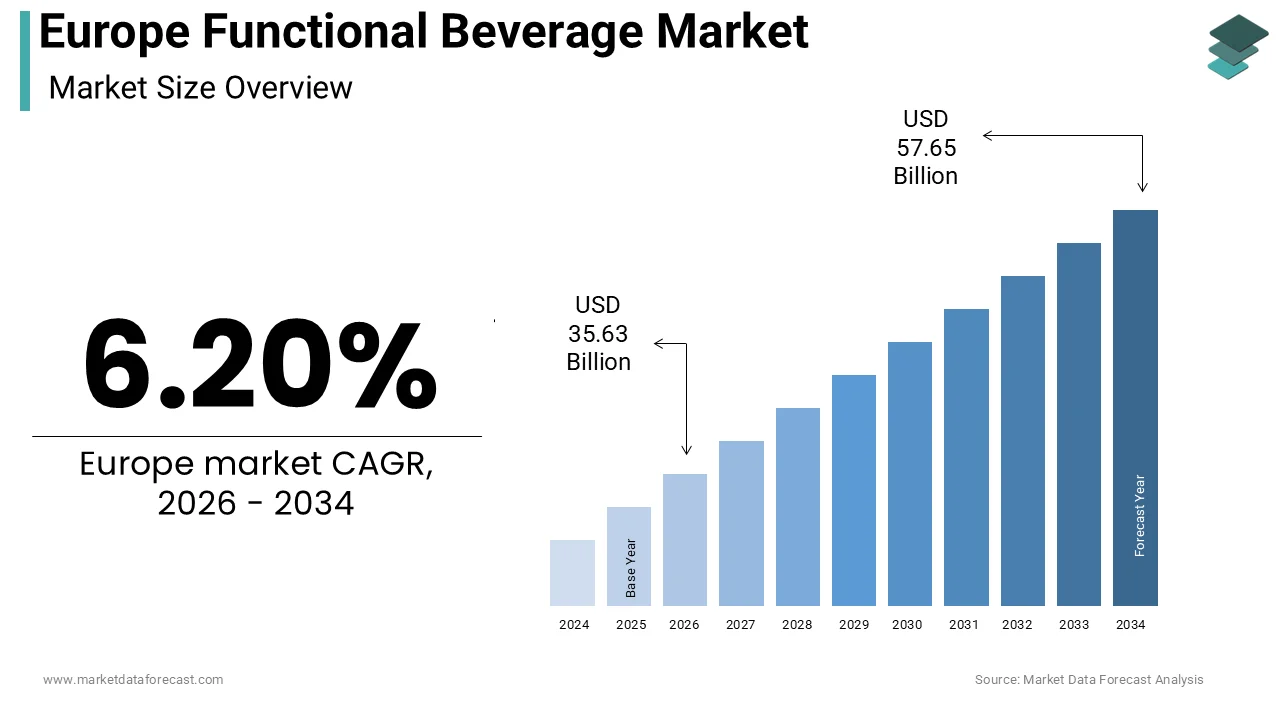
The Europe functional beverage market was valued at USD 33.55 billion in 2025, is estimated to reach USD 35.63 billion in 2026, and is projected to reach USD 57.65 billion by 2034, growing at a CAGR of 6.20% from 2026 to 2034. Market growth is driven by increasing consumer awareness of health and wellness, rising demand for fortified and functional drinks, and a growing shift toward preventive healthcare. Functional beverages, including energy drinks, fortified juices, and probiotic drinks, are gaining popularity due to their perceived health benefits. Additionally, innovation in ingredients such as adaptogens, vitamins, and plant-based formulations is further supporting market expansion across Europe.
Key Market Trends
- Rising demand for health and wellness-oriented beverages.
- Increasing popularity of immune-boosting and functional drinks.
- Growing innovation in plant-based and natural ingredients.
- Expansion of premium and niche functional beverage categories.
- Increasing availability through organized retail and e-commerce channels.
Segmental Insights
- Based on product type, the energy drinks segment dominated the Europe functional beverage market by capturing 42.3% share in 2025, driven by high consumption among young adults and working professionals.
- Based on functionality, the immune support segment held the largest share of 35.4% in 2025, supported by heightened health awareness following recent global health concerns.
- Based on distribution channel, the supermarkets and hypermarkets segment led the market with 58.3% share in 2025, due to wide product availability and strong consumer preference for organized retail.
Regional Insights
The Europe functional beverage market is witnessing steady growth across major countries due to evolving consumer preferences and increasing health awareness.
- Germany led the regional market, supported by high consumption of energy drinks and strong retail infrastructure.
- The United Kingdom is experiencing notable growth due to early adoption of innovative functional beverages such as kombucha, wellness shots, and adaptogen-infused drinks.
- France holds a significant position, driven by increasing demand for health-oriented beverages aligned with the concept of well-being (“bien-être”).
Competitive Landscape
The Europe functional beverage market is highly competitive, with the presence of global beverage giants and regional players. Companies are focusing on product innovation, clean-label ingredients, and expanding their functional product portfolios. Strategic partnerships, marketing initiatives, and new product launches are shaping competitive dynamics across the region.
Prominent companies operating in the Europe functional beverage market include PepsiCo, Inc., The Coca-Cola Company, Red Bull GmbH, Danone SA, and Monster Beverage Corp.
Europe Functional Beverage Market Size
The Europe functional beverage market was valued at USD 33.55 billion in 2025, is estimated to reach USD 35.63 billion in 2026, and is projected to reach USD 57.65 billion by 2034, growing at a CAGR of 6.20% from 2026 to 2034.
The functional beverages are non-alcoholic drinks formulated with specific bioactive ingredients designed to deliver health benefits beyond basic hydration and nutrition. The global pioneer in regulatory standards for health claims is shaping the formulation strategies of manufacturers worldwide. As per data from the European Food Safety Authority, over 90% of submitted health claim applications undergo rigorous scientific assessment by ensuring that only substantiated benefits reach the consumer. The European Commission notes that chronic lifestyle-related diseases account for nearly 86% of all deaths in the European Union, driving a preventative health culture that favors functional consumption. Furthermore, Eurostat indicates that life expectancy in the EU has reached 81 years by creating an aging demographic increasingly focused on longevity and vitality through diet. Meanwhile, the World Health Organization reports that physical inactivity affects 25% of European adults, spurring demand for sports and energy solutions.
MARKET DRIVERS
Escalating Consumer Focus on Preventive Health and Wellness
The paradigm shift from curative medicine to preventative health management is accelerating the growth of Europe functional beverage market. Consumers are increasingly proactive about maintaining their health status through daily dietary choices, which is viewing beverages as convenient vehicles for essential nutrients and functional compounds. As per the Global Wellness Institute, the European wellness economy is valued at over 1 trillion dollars, with nutrition representing the largest expenditure category as individuals seek to mitigate risks of chronic conditions. This health consciousness drives demand for drinks fortified with vitamins D and C, zinc, and antioxidants to bolster immune systems, a trend accelerated by recent global health crises. Data from the European Consumer Organisation indicates that 72% of shoppers now read ingredient labels specifically to identify functional benefits such as stress reduction or heart health support. The aging population further amplifies this driver, with older adults seeking beverages that support joint mobility and cognitive function without the sugar content of traditional sodas. Retailers respond by dedicating significant shelf space to these enhanced options, validating their mainstream appeal. The integration of functional beverages into daily routines offers a convenient way for busy Europeans to address nutritional gaps, thereby sustaining market expansion driven by a deep-seated desire for long-term vitality and disease prevention.
Rising Demand for Mental Performance and Stress Relief Solutions
The growing awareness of the link between nutrition and cognitive function, with the adoption of functional beverages targeted at mental clarity and stress management, is additionally boosting the growth of Europe functional beverage market. Modern lifestyles characterized by high pressure, digital overload, and sleep deprivation have created a substantial market for nootropic drinks and adaptogen-infused beverages that promise to enhance focus and reduce anxiety. This demand has spurred innovation in formulations containing L-theanine, ginseng, ashwagandha, and B vitamins, which are marketed to improve concentration and mood stability. Data from Mintel reveals that launches of beverages claiming mental health benefits in Western Europe increased by 35% over the last two years, reflecting a rapid response to consumer needs. Students and professionals alike are incorporating these drinks into their daily regimens to maintain productivity without the jittery side effects associated with high-caffeine energy drinks. Furthermore, the destigmatization of mental health issues encourages open discussion and experimentation with functional products that support psychological well-being. Brands that successfully communicate scientific backing for their cognitive claims gain significant traction, positioning mental performance as a critical growth pillar for the sector.
MARKET RESTRAINTS
Stringent Regulatory Frameworks Governing Health Claims
The rigorous regulatory environment enforced by the European Union regarding health and nutrition claims on product innovation and marketing agility is restricting the growth of the functional beverage market. The European Food Safety Authority maintains a highly conservative stance, approving only a fraction of submitted claims due to the requirement for extensive clinical evidence, which limits the ability of manufacturers to communicate specific benefits to consumers. As per the European Commission, out of thousands of submitted health claim applications, only approximately 450 have been authorized for use on food and beverage labels, leaving many innovative ingredients without permissible marketing language. This restriction forces companies to rely on generic messaging or structural claims that may not resonate as strongly with health-conscious buyers, thereby dampening sales potential. Data from the International Life Sciences Institute indicates that the cost of generating the necessary scientific dossier for a single health claim can exceed 1 million euros, a barrier that disproportionately affects small and medium-sized enterprises. The disparity between approved claims in Europe versus other regions like North America also complicates global brand strategies, requiring distinct formulations and packaging for the European market.
High Sugar Content and Negative Perception of Artificial Additives
The persistent presence of high sugar levels in many functional beverages and the growing consumer aversion to artificial additives is also hampering the growth of Europe functional beverage market. As per the World Health Organization, excessive sugar intake is a leading cause of obesity and type 2 diabetes in Europe, prompting public health campaigns that specifically target sugary beverages through taxation and warning labels. Data from the European Soft Drinks Association shows that several member states have implemented sugar taxes that have reduced sales of high-sugar functional drinks by forcing reformulation efforts that can compromise taste and efficacy. Furthermore, a significant segment of consumers actively avoids artificial colors, flavors, and preservatives, associating them with potential long-term health risks. Statistics from a survey by the European Consumer Organisation reveal that many respondents prefer products with natural ingredients only, rejecting those with synthetic additives even if they offer functional benefits. This awareness creates a dichotomy where manufacturers struggle to balance stability, taste, and functionality with the demand for natural, low-sugar profiles, limiting the addressable market for traditional formulations.
MARKET OPPORTUNITIES
Expansion of Plant-Based and Natural Functional Ingredients
The surging preference for plant-based diets and natural ingredients to innovate with botanically derived actives is creating new opportunities for the growth of Europe functional beverage market. Consumers are increasingly seeking functional benefits from recognizable sources such as herbs, roots, fruits, and seeds rather than synthetic isolates, aligning with the broader clean-label movement. As per the Plant Based Foods Association, sales of plant-based products in Europe grew by 21% recently, with beverages being a key category for expansion into functional territories like immunity and digestion. This trend opens avenues for ingredients like turmeric, ginger, elderberry, and hemp, which offer potent health benefits while satisfying the demand for natural provenance. European consumers look for "natural" claims on beverage packaging, driving manufacturers to reformulate existing lines and launch new botanical blends. The opportunity extends to sustainable sourcing, where brands can leverage the environmental credentials of plant ingredients to appeal to eco-conscious buyers. Additionally, the versatility of plant extracts allows for unique flavor profiles that differentiate products in a crowded market.
Personalization Through Digital Health Integration and Customization
The emergence of digital health technologies and beverage consumption to deliver personalized nutrition solutions tailored to individual biological needs is also levelling up the growth of Europe functional beverage market. Advances in wearable technology, DNA testing, and health apps enable consumers to understand their specific nutrient deficiencies and performance goals by creating demand for bespoke functional drinks. As per the Digital Health Coalition, over 30% of Europeans now use health tracking devices, generating vast amounts of data that can inform personalized beverage recommendations. This shift allows brands to move beyond one-size-fits-all offerings to subscription models where drinks are customized based on real-time health metrics or genetic profiles. Startups are already leveraging AI algorithms to formulate drinks targeting specific concerns like hydration balance, sleep quality, or recovery speed. The ability to engage consumers through direct-to-consumer channels fosters deeper brand loyalty and provides valuable feedback loops for continuous product refinement. Embracing this digital transformation positions companies at the forefront of the precision nutrition revolution by unlocking new revenue streams and redefining the relationship between consumers and functional beverages.
MARKET CHALLENGES
Supply Chain Volatility for Specialized Bioactive Ingredients
The instability of global supply chains for specialized bioactive ingredients in terms of consistency and cost-efficiency is one of the challenges for the growth of Europe functional beverage market. Many key functional components, such as specific adaptogens, rare botanical extracts, and high-purity vitamins, are sourced from limited geographic regions, making them vulnerable to climate change, geopolitical tensions, and logistical disruptions. This volatility complicates production planning and forces companies to either absorb higher costs or pass them on to consumers, potentially dampening demand in a price-sensitive environment. Furthermore, the stringent quality requirements for functional ingredients mean that alternative suppliers cannot be easily qualified, prolonging recovery times from supply shocks. The lack of diversified sourcing options for niche actives creates a bottleneck that threatens the scalability of innovative products.
Intense Market Saturation and Difficulty in Brand Differentiation
The new and existing players attempting to distinguish their offerings amidst a sea of similar claims and formulations are acting as a barrier for the growth of Europe functional beverage market. With low barriers to entry for basic fortification, the products are promising identical benefits ranging from energy boosts to immune support, which is leading to consumer confusion and brand fatigue. As per Nielsen IQ, the number of new functional beverage launches in Europe increased by 40% over the last three years, by intensifying competition for limited retail shelf space and consumer attention. This saturation makes it increasingly difficult for brands to communicate unique value propositions without resorting to aggressive pricing strategies that erode margins. Data from Kantar Worldpanel indicates that brand loyalty in the beverage sector is declining, with 55% of consumers willing to switch brands for better prices or novel flavors, with long-term customer retention. The proliferation of private-label functional drinks from major retailers further squeezes branded manufacturers, offering comparable benefits at lower price points. Differentiating through packaging or marketing alone is no longer sufficient; companies must invest heavily in proprietary ingredients or clinically validated formulations to stand out.
REPORT COVERAGE
| REPORT METRIC | DETAILS |
| Market Size Available | 2025 to 2034 |
| Base Year | 2025 |
| Forecast Period | 2026 to 2034 |
| Segments Covered | By Product Type, Functionality, Packaging Type, Distribution Channel, and Country. |
| Various Analyses Covered | Global, Regional, and Country-Level Analysis, Segment-Level Analysis, Drivers, Restraints, Opportunities, Challenges; PESTLE Analysis; Porter’s Five Forces Analysis, Competitive Landscape, Analyst Overview of Investment Opportunities |
| Countries Covered | UK, France, Spain, Germany, Italy, Russia, Sweden, Denmark, Switzerland, Netherlands, Turkey, Czech Republic, and the Rest of Europe. |
| Market Leaders Profiled | PepsiCo, Inc., The Coca-Cola Company, Red Bull GmbH, Danone SA, Monster Beverage Corp., and Others. |
SEGMENTAL ANALYSIS
By Product Type Insights
The energy drinks segment accounted in holding 42.3% of the Europe functional beverage market share in 2025, with the entrenched culture of high-performance lifestyles and the widespread acceptance of these beverages as essential tools for maintaining alertness among students, professionals, and shift workers. As per data from Euromonitor International, per capita consumption of energy drinks in countries like Germany and the United Kingdom exceeds 15 liters annually, reflecting a deep integration into daily routines. The second critical driver is the continuous innovation in product formulations, such as sugar-free variants and those enriched with natural caffeine sources or nootropics, which have expanded the addressable market to health-conscious consumers who previously avoided traditional high-sugar options. Furthermore, the affordability and ready-to-drink convenience of these products make them a preferred choice for impulse purchases at checkout counters and vending machines.
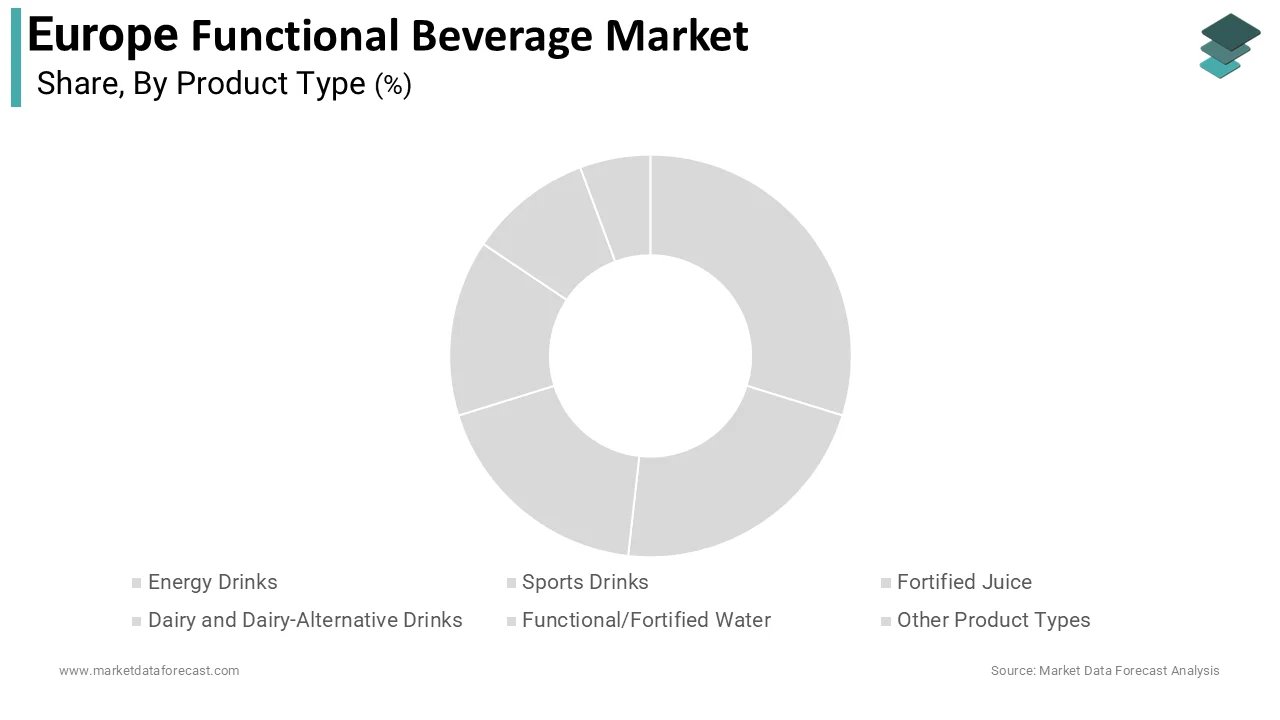
The sports drinks segment is likely to witness the fastest CAGR of 7.8% throughout the forecast period, with a societal shift towards active living and the increasing participation in organized sports and fitness activities across all age groups. The evolving perception of sports drinks from specialized hydration solutions for elite athletes to everyday wellness beverages for recreational exercisers seeking electrolyte replenishment and recovery support is greatly impacting the growth of the segment. The reformulation of sports drinks to include clean-label ingredients, lower sugar content, and added functional benefits like protein or vitamins by aligning with broader nutritional trends. Furthermore, the rise of endurance events such as marathons and triathlons in major European cities has heightened awareness of the importance of proper hydration strategies, driving trial and adoption. The expansion of flavored water hybrids that offer mild functional benefits without the heaviness of traditional isotonic drinks also contributes to this robust growth trajectory.
By Functionality Insights
The immune support functionality segment was the largest by holding 35.4% of the Europe functional beverage market in 2025, owing to the heightened health consciousness triggered by recent global pandemics, which has made boosting immunity a top priority for consumers of all ages. The primary driver for this leadership is the widespread belief in the preventative power of nutrients like Vitamin C, Vitamin D, Zinc, and Elderberry, leading to a surge in demand for beverages fortified with these specific bioactives. As per data from the European Food Safety Authority, public awareness campaigns regarding the role of micronutrients in immune function have resulted in a 40% increase in consumer inquiries about fortified products in the last three years. A second crucial factor is the seasonal nature of immune concerns, particularly during winter months in Northern Europe, which drives cyclical spikes in sales and encourages year-round habit formation among vulnerable populations such as the elderly and children. Furthermore, the versatility of immune support claims allows them to be integrated into various beverage types ranging from juices and teas to waters and shots, broadening their market reach.
The digestive health functionality segment is anticipated to grow at a CAGR of 9.2% during the forecast period, with the increasing prevalence of gastrointestinal issues and the growing understanding of the gut-brain axis, which links digestive health to overall mental and physical well-being. A major driving factor is the rising consumer interest in probiotics, prebiotics, and fermented ingredients like kombucha and kefir, which are perceived as natural solutions for bloating, irregularity, and immune modulation. The trend towards personalized nutrition and gut microbiome testing has educated consumers on the specific strains needed for their individual health profiles, prompting them to seek targeted functional beverages. Additionally, the destigmatization of discussing digestive issues has encouraged open marketing and broader acceptance of these products. The convergence of traditional fermentation knowledge with modern scientific validation positions digestive health as a high-growth engine within the functional landscape.
By Distribution Channel Insights
The supermarkets and hypermarkets segment accounted in holding 58.3% of the Europe functional beverage market share in 2025, with the one-stop shopping convenience these large-format stores offer, allowing consumers to purchase functional beverages alongside their regular grocery items during weekly provisioning trips. A primary factor sustaining this dominance is the extensive shelf space dedicated to health and wellness categories by enabling retailers to display a wide variety of brands, flavors, and functionalities under one roof, which facilitates comparison and impulse buying. As per data from the European Retail Round Table, over 75% of packaged beverage sales in countries like France, Germany, and Spain occur within hypermarkets due to their ability to offer competitive pricing through bulk purchasing and promotional deals. The second critical driver is the trust consumers place in established retail chains regarding product quality and safety, which is particularly important for functional products making health claims. Furthermore, the integration of loyalty programs and digital coupons by major retailers enhances customer retention and drives volume sales for functional brands. The ability of these chains to launch private-label functional lines at lower price points further solidifies their market position by making them the primary gateway for mass-market adoption.
The online retail segment is projected to expand at a CAGR of 12.5% throughout the forecast period, owing to the shifting consumer behavior towards digital commerce and the demand for home delivery services, a trend significantly accelerated by recent global events that normalized online grocery shopping. The emergence of specialized e-commerce platforms and direct-to-consumer brand websites that offer a wider variety of niche and premium functional beverages than typically found in local brick-and-mortar stores. As per reports from Eurostat, online food and beverage sales in the European Union grew by 35% in the last three years, with functional drinks being one of the fastest-growing sub-categories due to subscription models and bundled offerings. These platforms leverage advanced logistics partnerships to guarantee next-day delivery, effectively addressing previous concerns about shipping liquids. Another factor is the wealth of information and reviews available online, where consumers can research specific health benefits, ingredient transparency, and user experiences before purchasing by fostering informed decision-making. Data from the Digital Commerce Association shows that 48% of millennials and Gen Z consumers in Europe prefer purchasing health-focused beverages online due to the ease of comparing prices and accessing exclusive product launches. The subscription model adopted by many online brands, offering regular deliveries of curated boxes, fosters customer loyalty and recurring revenue, fueling the segment's exceptional growth trajectory.
COUNTRY LEVEL ANALYSIS
Germany Functional Beverage Market Analysis
Germany was the top performer of the Europe functional beverages market by holding high consumption of energy drinks and a strong preference for scientifically backed health products. The disciplined consumer base that values efficacy and quality is driving demand for premium functional formulations with clear benefit statements. The robust fitness culture and the widespread participation in sports activities fuel the consumption of sports and recovery drinks across the population. The country's strict regulatory environment regarding health claims ensures that only products with substantial evidence succeed, fostering a market built on trust and transparency. Statistics from the Federal Office for Consumer Protection indicate that sales of sugar-free and naturally fortified beverages have grown by 20% annually, reflecting the health-conscious mindset of German consumers. Furthermore, the presence of major global and local manufacturers in Germany creates a competitive ecosystem that drives continuous innovation in flavors and functional ingredients.
United Kingdom Functional Beverage Market Analysis
The United Kingdom functional beverage market growth is likely to grow with its early adoption of trendy functional categories such as kombucha, shot drinks, and adaptogen-infused waters. The market status is influenced by a dynamic and diverse consumer base that is highly receptive to innovation and willing to experiment with new health concepts. The post-pandemic focus on mental well-being and immunity has specifically boosted sales of drinks containing nootropics and immune-boosting vitamins. Statistics from Kantar Worldpanel reveal that UK consumers are among the most likely in Europe to switch brands in search of better functional benefits, forcing manufacturers to maintain high levels of innovation. Additionally, the strong presence of convenience stores and online retailers facilitates the rapid distribution of niche products.
France Functional Beverage Market Analysis
France functional beverage market growth is expected to grow with a rich culinary heritage, with a growing demand for health-oriented drinks that align with the concept of "bien-être" or well-being. The market status is characterized by a preference for natural ingredients and elegant packaging, with consumers favoring functional beverages that feel like a lifestyle choice rather than a medicinal supplement. A primary driving factor is the increasing awareness of the link between diet and long-term health, driven by government initiatives promoting healthy eating and reducing sugar consumption. The strong tradition of consuming mineral waters provides a solid foundation for the expansion into functionalized waters with added benefits like magnesium or calcium. Data from the French Ministry of Agriculture indicates that consumers are increasingly seeking organic certification on functional beverages, viewing it as a mark of quality and safety. Furthermore, the influence of the gastronomic culture encourages the development of sophisticated flavors and premium positioning, allowing functional drinks to be enjoyed in social settings.
Italy Functional Beverage Market Analysis
Italy's functional beverage market growth is likely to grow with its deep-rooted culture of fresh juices and herbal infusions, which naturally transitions into the functional beverage category. The market status is defined by a strong preference for plant-based and naturally derived functional ingredients, reflecting the Mediterranean diet's emphasis on whole foods. The primary driver of this market strength is the high consumption of coffee and the subsequent rise of functional coffee alternatives and energy boosters that cater to the Italian love for caffeine but with added health benefits. The country's vibrant tourism industry also amplifies demand, as visitors seek refreshing and revitalizing drinks that align with the healthy Italian lifestyle. Statistics from the Italian Federation of Food Industries highlight that the demand for sugar-free and low-calorie functional options is rising rapidly among health-conscious urbanites. Furthermore, the strong agricultural sector provides a steady supply of high-quality raw materials for functional formulations, supporting local manufacturing.
Spain Functional Beverage Market Analysis
Spain functional beverage market growth is driven by its high levels of sports participation and outdoor lifestyle, which drive significant consumption of sports and hydration drinks. The market status is defined by a warm climate that necessitates frequent rehydration, creating a natural demand for functional beverages throughout much of the year. As per data, over 40% of the Spanish population engages in regular sports activity, providing a large and loyal customer base for functional hydration products. The rising trend of wellness tourism along the coastlines further boosts demand for detox waters and immune-boosting shots among both locals and visitors. Furthermore, the increasing availability of functional beverages in vending machines and beach kiosks ensures high accessibility.
COMPETITIVE LANDSCAPE
The competition in the Europe functional beverage market is intensely fierce, characterized by the presence of global giants alongside agile local startups and private label brands. Dominant players leverage their scale and distribution networks to maintain shelf space while smaller firms compete on innovation and niche targeting. The market witnesses constant rivalry based on ingredient transparency, taste profile, and scientific validation of health claims as consumers become increasingly discerning. Brands are increasingly differentiating themselves through clean label formulations and sustainable packaging to appeal to environmentally conscious buyers. The rise of direct-to-consumer models allows new entrants to bypass traditional retail barriers and build loyal communities quickly. Regulatory compliance regarding health claims acts as a significant barrier that favors established companies with resources for clinical testing. Price wars are common in saturated categories like energy drinks, forcing companies to optimize costs without compromising quality. This dynamic environment requires continuous adaptation and heavy investment in marketing to secure consumer loyalty amidst a flood of new product launches.
KEY MARKET PLAYERS
The leading companies operating in the Europe functional beverage market include:
- PepsiCo, Inc.
- The Coca-Cola Company
- Red Bull GmbH
- Danone SA
- Monster Beverage Corp.
TOP PLAYERS IN THE MARKET
- The Coca-Cola Company stands as a global beverage titan with a profound influence on the Europe functional beverage market through its diverse portfolio of energy, sports, and hydration brands. The corporation leverages its unmatched distribution network to ensure widespread availability of functional products across every European nation. Its global contribution is defined by massive investment in research and development to create innovative formulations that address specific consumer health needs. Recent actions to strengthen its market position include the expansion of its Fairlife brand into European markets and the reformulation of Powerade to include electrolytes with zero sugar. The company has also acquired several niche functional startups to rapidly integrate novel ingredients like adaptogens into its mainstream offerings.
- PepsiCo Inc. operates as a leading multinational food and beverage corporation with a significant footprint in the Europe functional beverage market via its Gatorade and Propel brands. The company contributes globally by pioneering sports science research that drives the development of advanced hydration and recovery solutions for athletes and active consumers. In Europe, PepsiCo has focused on tailoring its product lines to meet local taste preferences and strict nutritional guidelines. Recent actions to strengthen its market position include the launch of new Gatorade Zero varieties specifically designed for the European market and partnerships with major sports leagues to enhance brand visibility. The firm has also invested heavily in digital engagement platforms to connect directly with fitness enthusiasts and provide personalized nutrition advice. Furthermore, PepsiCo continues to expand its portfolio of plant-based and clean-label functional drinks to capture the growing health-conscious demographic.
- Red Bull GmbH is an Austrian powerhouse that fundamentally created and continues to dominate the global energy drink category with a strong stronghold in Europe. The company contributes to the global market by setting the standard for functional branding through its extensive sponsorship of extreme sports, music, and cultural events. Its involvement in the European market is characterized by deep local engagement and a premium positioning strategy that resonates with young adults. Recent actions to strengthen its market position include the introduction of new sugar-free and organic editions to cater to changing consumer demands for healthier options. Red Bull has also expanded its production facilities across Europe to ensure supply chain resilience and reduce carbon emissions. The company consistently invests in high-profile marketing campaigns that reinforce its image as a provider of mental and physical energy.
TOP STRATEGIES USED BY KEY MARKET PARTICIPANTS
Key players in the Europe functional beverage market primarily employ aggressive product innovation strategies to launch new formulations featuring natural ingredients and zero sugar profiles. Companies heavily invest in strategic acquisitions of emerging niche brands to rapidly gain access to novel functional ingredients and dedicated consumer bases. Another major strategy involves extensive sponsorship of sports events and fitness influencers to build brand credibility and connect directly with target demographics. Firms also focus on expanding distribution channels by strengthening partnerships with online retailers and convenience stores to ensure maximum product accessibility. Additionally, participants prioritize sustainability initiatives by adopting recyclable packaging and ethical sourcing practices to comply with strict European regulations. advantage.
MARKET SEGMENTATION
This research report on the Europe functional beverage market has been segmented and sub-segmented into the following categories.
By Product Type
- Energy Drinks
- Sports Drinks
- Fortified Juice
- Dairy and Dairy-Alternative Drinks
- Functional/Fortified Water
- Other Product Types
By Functionality
- Digestive Health
- Immune Support
- Bone and Joint Health
- Other Functionalities
By Packaging Type
- PET/Glass Bottles
- Cans
- Tetra Paks
- Others
By Distribution Channel
- Supermarkets and Hypermarkets
- Convenience Stores
- Speciality Store
- Online Retail Stores
- Others
By Country
- United Kingdom
- France
- Spain
- Germany
- Italy
- Russia
- Sweden
- Denmark
- Switzerland
- Netherlands
- Rest of Europe