Europe Pet Food Nutraceuticals Market Size, Share, Trends and Growth Forecast Research Report, Segmented By Ingredient Type, Function Type, Pet Type, Application Type and Country (United Kingdom, France, Spain Germany And Italy, Russia, Sweden, Denmark, Switzerland, Netherlands And Rest of Europe), Industry Analysis From 2026 to 2034
Market Size, 2025
$1.81 BnMarket Estimate, 2026
$1.88 BnMarket Forecast, 2034
$2.59 BnCAGR, 2026–2034
4.08%Europe Pet Food Nutraceuticals Market Size
The European pet food nutraceuticals market was valued at USD 1.81 billion in 2025 and is anticipated to reach USD 1.88 billion in 2026 and USD 2.59 billion by 2034, estimated to grow at a CAGR of 4.08% during the forecast period from 2026 to 2034.

Pet Food Nutraceuticals Market refers to the pet nutrition that integrates bioactive compounds into pet food to deliver targeted health benefits beyond basic sustenance. These functional ingredients, such as probiotics, omega fatty acids, glucosamine, antioxidants, and plant-derived phytonutrients, are formulated to support joint mobility, digestive wellness, immune resilience, and cognitive function in companion animals. This market is distinct from conventional pet food due to its therapeutic orientation and alignment with the humanization of pets.
As per sources, many European pet owners consider their animals to be family members, which reflects the strengthening human-animal bond in European society. According to a 2023 report from the European Commission citing Eurostat data, the European Union is home to over 72 million dogs and more than 83 million cats.
MARKET DRIVERS
Rising Pet Humanization Fuels Demand for Advanced Nutritional Solutions
Pet humanization has fundamentally altered purchasing behavior across Europe, with owners increasingly applying human wellness standards to their pets’ diets, which drives the growth of tEuropeanope pet food nutraceuticals market. This cultural shift is especially evident among younger demographics who view preventive care as essential. According to sources, European pet owners are increasingly focused on their pets' health and seeking tailored, high-quality pet food solutions. German pet owners value quality food products, including natural, organic, and free-from varieties. According to research, a large proportion of dog owners in Europe independently choose nutritional supplements for their pets, highlighting a growing trend toward proactive pet health management and consumer-driven purchasing behavior. As per sources, the increasing prevalence of age-related conditions such as osteoarthritis among older dogs is driving consistent demand for nutraceuticals that support joint function and overall mobility in companion animals. This emotional and financial investment in pet longevity is accelerating adoption of science-backed functional foods, particularly in Western and Northern Europe, where disposable income and veterinary access are high.
Growing Prevalence of Pet Obesity Drives Preventive Nutritional Interventions
Companion animal obesity has become a widespread health concern in Europe, acting as a powerful driver for nutraceutical innovation, which boosts the expansion of the European pet food nutraceuticals market. A significant share of companion animals in Europe are classified as overweight or obese, underscoring rising concerns about pet nutrition and lifestyle management across the region, according to studies. This condition significantly elevates risks for diabetes, cardiovascular disease, and musculoskeletal disorders, prompting owners to seek proactive dietary strategies. Functional ingredients such as L-carnitine, green tea catechins, and soluble fibers are increasingly incorporated into weight management formulations to modulate metabolism and enhance satiety. As per sources, clinical findings suggest that nutraceutical-enriched weight management diets can enhance fat reduction more effectively than conventional calorie-restricted feeding programs, improving overall metabolic outcomes in dogs. Furthermore, veterinarians in several European countries, including Italy, Spain, and the Netherlands, increasingly incorporate nutraceutical interventions into obesity management strategies, reflecting the growing integration of functional nutrition in clinical practice, as per research. This clinical endorsement, combined with rising owner awareness, strengthens the role of metabolic health-focused nutraceuticals as a core growth vector in the European market.
MARKET RESTRAINTS
Stringent Regulatory Classification Hinders Ingredient Innovation
The European regulatory framework impedes the growth of thEuropeanpe pet food nutraceuticals market. This is due to the ambiguous categorization of nutraceuticals between feed additives and veterinary medicinal products. According to research, European regulations require that any feed ingredient making physiological claims undergo a full authorization process, which remains lengthy and resource-intensive for manufacturers. As per sources, approval rates for novel nutraceutical ingredients in animal feed remain relatively low across the European Union, which reflects the stringent evaluation procedures associated with such regulatory reviews. Research shows that botanical-based ingredients such as turmeric and milk thistle often face added regulatory scrutiny due to natural variations in their active compound profiles, making standardization and approval more complex. Consequently, manufacturers often limit formulations to a narrow set of pre-approved ingredients such as omega-3 fatty acids or fructooligosaccharides, which stifles product differentiation and discourages small enterprises from entering the market.
Consumer Skepticism Regarding Efficacy and Transparency
The lack of conviction among a significant portion of European consumers about the real-world benefits and labeling accuracy of nutraceutical products is restricting the expansion of the European pet food nutraceuticals market. According to studies, many pet owners across Europe remain skeptical about the credibility of health-related claims made on animal nutrition products, especially when scientific backing is not clearly communicated. As per research, independent laboratory testing in Germany has shown inconsistencies between labeled and actual ingredient concentrations in several pet joint health supplements, raising concerns about product quality control. According to sources, only a small proportion of pet food and supplement brands in Europe currently provide third-party verification for ingredient sourcing and bioavailability, underscoring the need for greater transparency within the industry. A lack of mandatory clinical data and standardized benchmarks erodes consumer confidence, which in turn limits a product's premium pricing potential and inhibits its adoption by selective customers.
MARKET OPPORTUNITIES
Expansion of Veterinary Telemedicine Enables Personalized Nutraceutical Recommendations
The rapid integration of digital health platforms into veterinary care is generating new prospects for the growth of theEuropeane pet food nutraceuticals market. According to sources, teleconsultations for pets surged, with the embedding of remote diagnostics into standard care protocols. A majority of pet owners using telemedicine platforms receive tailored supplement suggestions as part of their virtual consultations, which reflects the growing integration of digital tools in personalized animal nutrition, as per studies. Integrated e-prescription systems now allow direct fulfillment of condition-specific formulations, such as renal support blends or calming botanicals, through affiliated pet pharmacies. Besides, as per sources, the expansion of digital health record systems across the European Union now enables veterinarians to access comprehensive information on millions of companion animals, supporting more data-driven and preventive healthcare delivery. This digital infrastructure is particularly transformative in rural areas with limited specialist access, offering scalable distribution for evidence-based nutraceuticals.
Emergence of Sustainable and Traceable Ingredient Sourcing Models
Sustainability is evolving from a niche preference to a mainstream expectation among European pet owners, which opens fresh opportunities for the expansion of thEuropeanpe pet food nutraceuticals market. According to research, a growing majority of European consumers prioritize ingredient sourcing and environmental impact when choosing premium pet food products, reflecting the rise of sustainability-driven purchasing behavior. This shift is driving investment in eco-conscious nutraceutical sources, such as algae-derived DHA and polyphenols extracted from food industry byproducts. As per sources, technological advances such as algae-based omega-3 production are enabling manufacturers to significantly reduce greenhouse gas emissions compared to traditional fish oil sourcing, aligning with broader climate goals. Pet food brands adopting blockchain-enabled traceability systems for natural ingredients are experiencing notable improvements in consumer trust and brand perception across the region.
MARKET CHALLENGES
Fragmented Regulatory Standards Across EU Member States Complicate Market Harmonization
Regulatory interpretation remains highly fragmented at the national level, which challenges the growth of the European pet food nutraceuticals market. While overarching rules are set under Regulation EC No 767/2009, individual member states apply divergent criteria for health claims, permissible ingredients, and labeling formats. According to research, European pet food regulations remain highly fragmented, with varying national interpretations of functional benefit claims creating complexity for manufacturers operating across multiple EU markets. For example, a probiotic strain approved in France may require a full novel food dossier in Poland. As per sources, a considerable share of nutraceutical pet food products face regulatory delays when introduced into Central European countries, largely due to differing national approval standards and labeling requirements. These regulatory inconsistencies are contributing to higher compliance costs for producers, prompting industry stakeholders to call for greater harmonization of functional claim definitions across the European Union. The absence of a unified EU framework for functional pet food ingredients will continue to constrain market scalability and innovation.
Limited Clinical Validation Infrastructure for Pet Nutraceutical Efficacy
A systemic gap in independent, rigorous clinical validation impedes the expansion of the European pet food nutraceuticals market. Unlike human supplements, which benefit from established endpoints and regulatory pathways, pet food actives lack standardized biomarkers or universally accepted trial protocols. Furthermore, adverse event reporting for nutraceuticals remains voluntary and decentralized under the European Veterinary Pharmacovigilance Network, limiting post-market safety surveillance. The veterinary market risks stagnation due to persistent uncertainty, which erodes trust among professionals and evidence-oriented consumers. This outcome is likely without coordinated public-private investment in independent validation infrastructure, similar to the European Medicines Agency's veterinary framework.
REPORT COVERAGE
| REPORT METRIC | DETAILS |
| Market Size Available | 2025 to 2034 |
| Base Year | 2025 |
| Forecast Period | 2026 to 2034 |
| CAGR | 4.08% |
| Segments Covered | By Ingredient Type, Function Type, Pet Type, Application Type, and Country |
| Various Analyses Covered | Regional and Country-Level Analysis, Segment-Level Analysis, DROC, PESTLE Analysis, Porter’s Five Forces Analysis, Competitive Landscape, Analyst Overview of Investment Opportunities |
| Regions Covered | Germany, the UK, France, Spain, Russia, Sweden, Denmark, Italy, Switzerland, the Netherlands, and the Rest of Europe. |
| Market Leaders Profiled | Diana group, BASF SE, Chr. Hansen A/S, Kemin Industries Inc., Nutraceutical International LLC, and Royal DSM N.V. |
SEGMENTAL ANALYSIS
By Pet Insights
In 2025, the dogs segment dominated the European pet food nutraceuticals market by accounting for 48.2% share. The dominance of the dog segment is primarily driven by higher per-pet expenditure, greater prevalence of age-related and breed-specific health conditions, and stronger integration of functional nutrition into canine wellness protocols across veterinary practices. Dogs in Europe face a disproportionately high burden of chronic diseases that necessitate long-term nutraceutical intervention. The clinical realities drive consistent consumption of glucosamine, chondroitin, omega-3 fatty acids, and L-carnitine-based products. Veterinarians in the region routinely prescribe or recommend nutraceuticals as adjunctive therapy, which supports the segment’s market dominance. European dog owners demonstrate significantly higher willingness to invest in premium health solutions compared to owners of other pets. In countries, a portion of dog owners purchase specialized functional foods containing probiotics or cognitive support ingredients, as per sources. This financial commitment is amplified by the emotional bond between owners and dogs. Such deep emotional investment translates into consistent demand for scientifically formulated nutraceuticals, particularly in aging populations where preventive care is prioritized over reactive treatment.
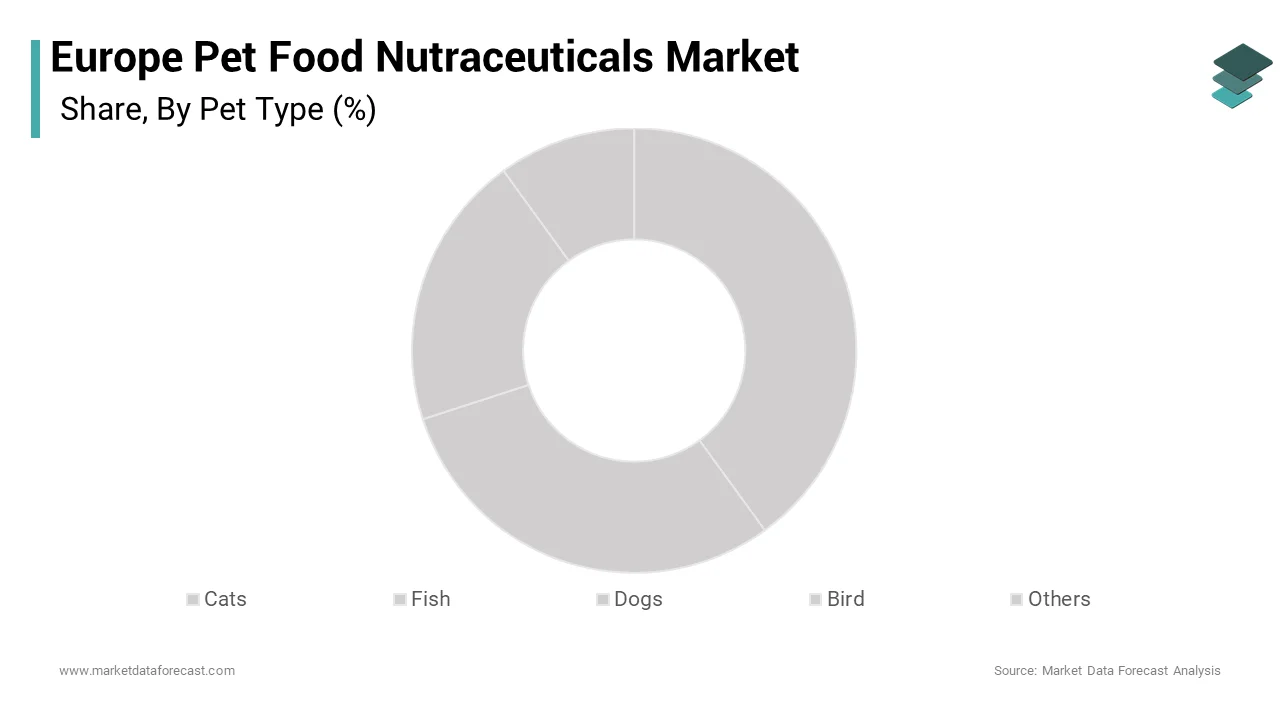
The cat segment is estimated to register the fastest CAGR of 9.4% from 2025 to 2033. The rapid growth of the cat segment is fueled by rising indoor cat ownership, increasing diagnoses of feline-specific conditions, and growing availability of palatable, species-tailored nutraceutical formats. The shift toward indoor cat rearing across urban Europe has intensified exposure to lifestyle-related health challenges. According to studies, a portion of cats in the United Kingdom, France, and Italy now live exclusively indoors, an increase since 2019. This confinement elevates risks of urinary tract disorders, obesity, and stress-induced dermatological issues. These emerging health patterns are prompting formulators to develop cat-specific delivery systems, such as powder blends and liquid supplements, that overcome feline taste sensitivities, thereby expanding market accessibility. Recent innovations in palatability and bioavailability have overcome historical barriers to nutraceutical adoption in cats. Historically, cats rejected many functional supplements due to bitter taste or unfamiliar textures. However, microencapsulation of omega-3 fatty acids and probiotics in fish oil-based carriers increased voluntary intake among domestic cats. These advancements are supported by rising veterinary endorsement. This convergence of product innovation and professional validation is accelerating market penetration across Southern and Central Europe.
By Application Insights
The digestive health segment captured the largest share of 24.6% of thEuropeanpe Pet Food Nutraceuticals Market in 2025. Widespread gastrointestinal sensitivities among companion animals and the proven efficacy of probiotics and prebiotics in managing such conditions significantly contributed to the growth of the digestive health segment. Gastrointestinal issues represent one of the most common reasons for veterinary consultations across Europe. Chronic enteropathy affects a portion of dogs and cats in the EU, with symptoms including diarrhea, vomiting, and malabsorption. This evidence base has led to widespread integration of digestive nutraceuticals into both therapeutic and maintenance diets, particularly among premium pet food brands that now routinely include live probiotic cultures in dry kibble through advanced stabilization techniques. Digestive health nutraceuticals benefit from robust scientific validation and seamless integration into mainstream pet food formats. The trend is supported by regulatory clarity. This convergence of regulatory acceptance, manufacturing feasibility, and clinical consensus has cemented digestive health as the cornerstone application segment in the European nutraceutical pet food landscape.
The food allergies segment is anticipated to witness the fastest CAGR of 11.2% from 2025 to 2033. The swift expansion of the food allergies segment is driven by rising diagnosis rates, increased owner awareness, and the development of hypoallergenic functional ingredients. Veterinary diagnostics for food allergies have improved significantly, leading to higher identification rates across Europe. According to sources, adverse food reactions account for a portion of all allergic skin conditions in dogs in the EU, with common triggers including beef, dairy, and wheat. Cats are also increasingly affected, with the Royal Veterinary College documenting a twenty-seven percent increase in feline food hypersensitivity diagnoses since 2020. This diagnostic clarity has shifted treatment paradigms from symptomatic relief to elimination diets fortified with nutraceuticals like hydrolyzed proteins, quercetin, and omega-6 modulators that reduce inflammatory responses. As a result, demand for allergen-specific functional foods has surged, particularly in urban centers where pet owners have greater access to dermatology specialists. Manufacturers are responding to allergy concerns with advanced ingredient technologies that minimize immune activation while delivering nutritional benefits. The innovations, coupled with rising consumer willingness to pay premiums for allergy-safe nutrition, position the food allergies segment for sustained high growth.
COUNTRY ANALYSIS
Germany Pet Food Nutraceuticals Market Analysis
Germany dominated the European Pet Food Nutraceuticals Market, accounting for 22.4% share in 2025. The domination of Germany is attributed to its advanced veterinary infrastructure and high consumer willingness to invest in preventive pet health. The country is home to over twenty-one million dogs and cats, with a portion of households purchasing premium or functional pet foods. A key driver is the deep integration of nutraceuticals into clinical practice. Besides, Germany leads in regulatory compliance, with the Federal Institute for Risk Assessment maintaining a publicly accessible database of approved feed additives, fostering consumer trust. The presence of major pet food manufacturers such as Vitakraft and Josera further strengthens domestic innovation, with a share of functional pet food originating from German companies, according to the German Feed Industry Association.
United Kingdom Pet Food Nutraceuticals Market Analysis
The United Kingdom was the second largest region in theEuropeane pet food nutraceuticals market and captured 18.9% share in 2024. The growth of the United Kingdom is driven by extreme levels of pet humanization and rapid adoption of digital veterinary services. As per studies, a portion of British pet owners consider their animals as children, translating into high expenditure on health-oriented nutrition. Telemedicine has further amplified nutraceutical access. Furthermore, the UK’s post-Brexit regulatory autonomy has enabled faster approval of novel ingredients, with the Veterinary Medicines Directorate clearing fifteen new botanical actives for pet use. This agile framework, combined with strong e-commerce penetration, cements the UK’s position as a high-growth, high-value market.
France Pet Food Nutraceuticals Market Analysis
France expanded steadily in the European pet food nutraceuticals market, with a strong culture of premium pet care and clear regulatory pathways for functional ingredients. A significant factor is the country’s alignment with the European Pharmacopoeia standards, which provide precise monographs for nutraceutical actives like glucosamine sulfate and probiotic strains by ensuring product consistency. Furthermore, France has one of Europe’s highest densities of veterinary dermatologists, which facilitates early diagnosis of conditions requiring nutraceutical intervention. Consumer education also plays a role.
Italy Pet Food Nutraceuticals Market Analysis
Italy saw a gradual rise in theEuropeane pet food nutraceuticals market, with growth propelled by increasing pet adoption and an aging companion animal population. The demographic shift intensifies demand for mobility and cognitive support nutraceuticals. Apart from these, Italian consumers show a strong preference for natural ingredients. Local brands like Monge and Almo Nature have capitalized on this trend by launching algae-based omega-3 and olive polyphenol-enriched lines, contributing to Italy’s robust market expansion despite economic headwinds.
Netherlands Pet Food Nutraceuticals Market Analysis
The Netherlands is predicted to grow in the European pet food nutraceuticals market from 2025 to 2033, owing to its prominence in sustainable nutraceutical innovation and progressive pet health policies. The country also hosts Europe’s largest pet food research cluster, including the NutriPet Innovation Center. Regulatory support is equally strong. The Netherlands Food and Consumer Product Safety Authority operates a fast-track approval lane for sustainable functional ingredients by reducing review time by forty percent. These factors position the Netherlands not only as a key market but also as a continental innovation catalyst.
KEY MARKET PLAYERS
A few of the market players in the European pet food nutraceuticals market include
- Diana Group
- Nestlé Purina PetCare
- Hill’s Pet Nutrition
- Mars Petcare
- BASF SE
- Chr. Hansen A/S
- Kemin Industries Inc.
- Nutraceutical International LLC
- Royal DSM N.V.
Top Players In The Market
- Nestlé Purina PetCare has established a strong presence in the European Pet Food Nutraceuticals Market through its science-driven approach to functional pet nutrition. The company integrates clinically validated ingredients such as probiotics, omega fatty acids, and botanical antioxidants into its premium product lines, including Pro Plan and Purina ONE. In recent years, Purina has expanded its veterinary diet portfolio with targeted nutraceutical formulations for joint mobility and digestive health. The company collaborates closely with European veterinary institutions to conduct peer-reviewed studies that substantiate health claims. These initiatives reinforce its commitment to evidence-based innovation in the European market.
- Hill’s Pet Nutrition, a subsidiary of Colgate Palmolive, operates as a key contributor to thEuropeanpe Pet Food Nutraceuticals Market with its therapeutic and preventive nutrition platforms. The company’s Science Diet and Prescription Diet ranges incorporate nutraceutical actives like L-carnitine, glucosamine, and prebiotic fibers tailored to specific physiological needs. Hill’s emphasizes clinical validation and maintains an extensive network of veterinary advisors across Europe. This facility supports the development of next-generation functional ingredients aligned with European regulatory standards. Hill’s has also strengthened its digital outreach by launching a veterinarian portal that provides real-time nutritional guidance and supplement protocols, enhancing its professional engagement across the region.
- Mars Petcare leverages its global R and D infrastructure to deliver advanced nutraceutical solutions in the European market through brands such as Royal Canin and Greenies. Royal Canin’s breedand condition-specific diets feature targeted blends of antioxidants, amino acids, and joint support compounds developed through proprietary research. The company invests heavily in life stage nutrition with formulations addressing cognitive decline, dental health, and skin barrier integrity. These actions emphasize its dual focus on scientific rigor and environmental responsibility in strengthening its European footprint.
Top Strategies Used By The Key Market Participants
Key players in theEuropeane Pet Food Nutraceuticals Market prioritize science-backed product development through clinical validation and veterinary collaboration. They invest in proprietary research to formulate condition-specific nutraceutical blends that address joint health, digestive wellness, and immune support. Strategic partnerships with academic institutions and veterinary associations enhance credibility and accelerate product adoption. Companies also focus on sustainable and traceable ingredient sourcing to align with European consumer preferences and regulatory expectations. Digital engagement through telemedicine platforms and professional portals enables personalized recommendations and strengthens B2B relationships. Continuous innovation in palatability and delivery formats, such as micromicroencapsulation, compliancompliancecially in cats. Regulatory compliance and transparent labeling further build consumer trust across diverse European markets.
MARKET SEGMENTATION
This market research report on the European pet food nutraceuticals market is segmented and sub-segmented into the following categories.
By Ingredient Type
- Omega-3 Fatty Acids
- Proteins And Peptides
- Milk Bio Actives
- Probiotics, Dietary Fibre
- Others
By Function Type
- Nutrition/Therapeutic
- Supplements
By Pet Type
- Cats
- Fish
- Dogs
- Bird
- Others
By Application Type
- Weight Management
- Immune System
- Food Allergies
- Pain Relief
- Digestive Health
- Skin And Coat
- Eye Care
- Others
By Country
- United Kingdom
- France
- Spain
- Germany
- Italy
- Russia
- Sweden
- Denmark
- Switzerland
- Netherlands
- Rest of Europe
Frequently Asked Questions
What is the Europe pet food nutraceuticals market?
It refers to the regional industry for functional dietary ingredients added to pet food to support health, immunity, and wellbeing in dogs, cats, and other companion animals.
What are pet food nutraceuticals?
Nutraceuticals are bioactive compounds such as vitamins, probiotics, prebiotics, amino acids, and antioxidants included in pet diets for health benefits beyond basic nutrition.
What drives growth in the Europe pet food nutraceuticals market?
Rising pet ownership, humanization of pets, increased spending on pet health, and growing awareness of disease-preventive nutrition drive market growth.
What health benefits do nutraceuticals provide for pets?
They support joint health, digestive function, immune response, skin and coat quality, and overall vitality in companion animals.
Which nutraceutical ingredients are most common?
Probiotics, omega-3 fatty acids, glucosamine, chondroitin, L-carnitine, and antioxidants are among the most used nutraceuticals in pet food.
Why are pet owners choosing nutraceutical-enhanced food?
Pet owners choose nutraceutical formulations to promote wellness, prevent aging-related issues, and manage stress and obesity in pets.
How do regulations impact the pet food nutraceuticals market in Europe?
Strict EU safety standards, labeling requirements, and novel ingredient approvals influence product formulation and market entry.
Are natural and organic nutraceuticals gaining popularity?
Yes, demand for natural, clean-label, and plant-based nutraceuticals is rising due to health-conscious pet owner preferences.
Do nutraceuticals benefit senior pets?
Yes, senior pets often benefit from joint support, cognitive health nutrients, and digestive aids found in nutraceutical products.
. How does e-commerce affect sales of pet nutraceuticals?
E-commerce platforms expand product availability, offer subscription models, and boost sales through personalized recommendations.
Related Reports
Access the study in MULTIPLE FORMATS
Purchase options starting from
$ 2000
Didn’t find what you’re looking for?
TALK TO OUR ANALYST TEAM
Need something within your budget?
NO WORRIES! WE GOT YOU COVERED!
Call us on: +1 888 702 9696 (U.S Toll Free)
Write to us: sales@marketdataforecast.com