Europe Pet Market Size, Share, Trends & Growth Forecast Report By Type, Price Range, Gender, Sales Channel and Country UK, France, Spain, Germany, Italy, Russia, Sweden, Denmark, Switzerland, Netherlands, Turkey, Czech Republic & Rest of Europe) - Industry Analysis (2025 to 2033)
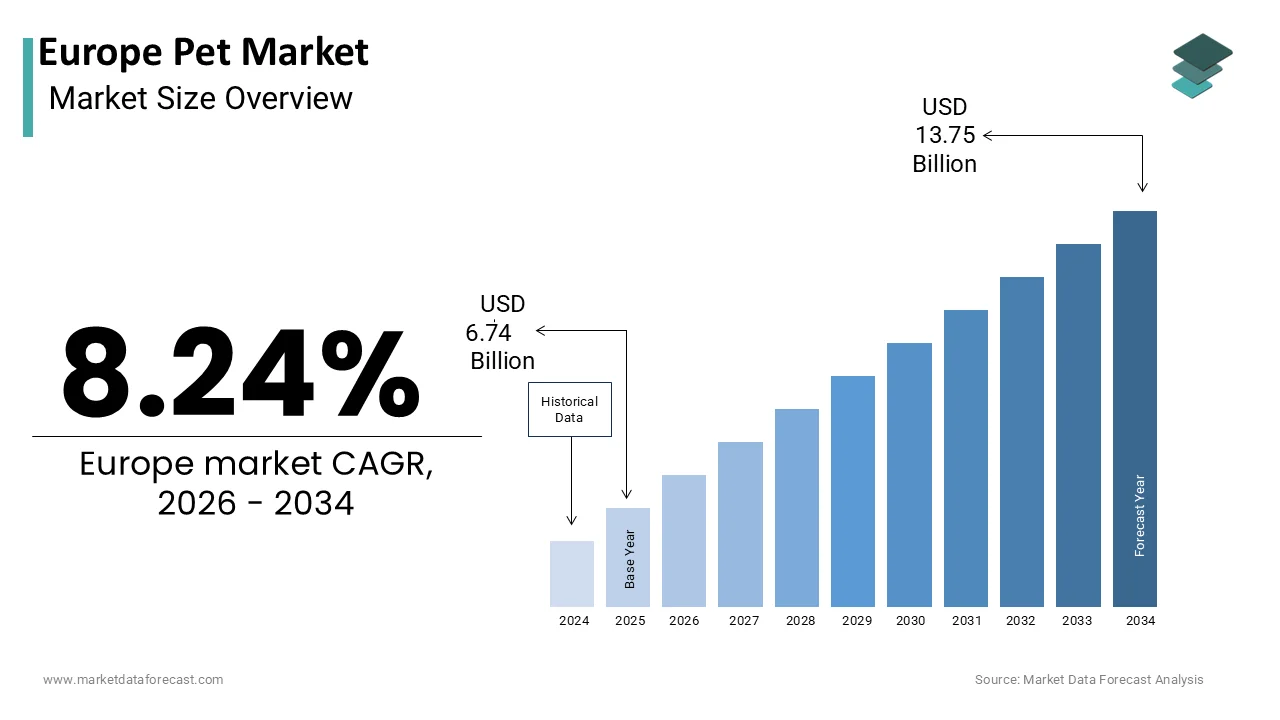
Market Size, 2025
$6.74 BnMarket Estimate, 2026
$7.30 BnMarket Forecast, 2034
$13.75 BnCAGR, 2026–2034
8.24%Europe Pet Market Size
The pet market size in Europe was worth USD 6.74 billion in 2025 and is estimated to be worth USD 13.75 billion by 2034, from USD 7.30 billion in 2026, growing at a CAGR of 8.24% from 2026 to 2034.
Europe pet market refers to the products, services, and healthcare dedicated to companion animals, primarily dogs, cats, and small mammals, within the European region. This market is shaped by evolving societal attitudes toward animal welfare, increasing pet humanization, and legislative frameworks governing pet ownership and treatment. Pet ownership is widespread, covering nearly half of European households, with dogs and cats being the most common. Urbanization trends and shifting demographic patterns, including aging populations and declining birth rates, have amplified emotional reliance on pets. These socio-behavioral and regulatory dynamics fundamentally redefine pet ownership from mere companionship to a structured, responsibility-driven practice.
MARKET DRIVERS
The deepening trend of pet humanization, where pets are increasingly regarded as integral family members rather than mere animals, is a pivotal driver of the Europe pet market. This psychological shift has catalyzed demand for premium products and services, including organic pet food, personalized healthcare, and luxury accessories. Also, a significant portion of EU citizens believe that animals are sentient beings deserving of high welfare standards, reinforcing emotional investment in pet well-being. The emotional bond translates into sustained demand for advanced veterinary treatments, grooming salons, and behavioral training, thereby expanding the service-oriented segment of the market and encouraging innovation in pet-centric offerings across Europe.
The rising prevalence of single-person households and aging populations, which has amplified pet adoption as a source of companionship and emotional stability, is another significant driver. Eurostat data from 2023 reveals that 36.2% of all European households consist of a single occupant, with countries like Sweden and Finland exceeding 40%. In parallel, the EU’s population aged 65 and over constitutes 20.8% of the total, as per Eurostat. These demographic shifts correlate strongly with pet ownership trends. In France, the number of households with pets increased between 2018 and 2023, primarily driven by retirees and urban singles. Pets serve as non-judgmental companions, mitigating social isolation, thereby sustaining long-term demand for pet-related goods and services across housing and healthcare sectors.
MARKET RESTRAINTS
The escalating cost of urban pet ownership, particularly in densely populated cities where housing and veterinary care expenses are disproportionately high, is one major restraint affecting the Europe pet market. Annual dog ownership costs in the UK commonly fall inthe low thousandss of pounds. Moreover, restrictive rental policies remain a barrier. These structural constraints reduce pet acquisition rates in urban centers, where population density and economic activity are otherwise conducive to market growth. The financial and logistical burdens associated with pet care in metropolitan areas thus stifle broader market penetration, particularly among lower-income and transient demographics.
Regulatory fragmentation across European nations presents another critical restraint on the Europe pet market, impeding harmonized trade, cross-border pet travel, and standardized welfare practices. While the EU’s Pet Travel Scheme facilitates movement within member states, discrepancies in national laws, such as breed-specific legislation and quarantine requirements, create operational complexities. Besides, variations in veterinary drug approvals delay the availability of advanced treatments across regions. These inconsistencies increase compliance costs for pet product manufacturers and service providers, discouraging pan-European scalability and reducing consumer confidence in uniform standards of care.
MARKET OPPORTUNITIES
The integration of digital health technologies and telemedicine for pets, driven by advancements in wearable devices and remote diagnostics, is a transformative opportunity within the Europe pet market. These devices monitor vital signs, sleep patterns, and behavioral anomalies, enabling early disease detection. Veterinary teleconsultations also surged post-pandemic. This digital shift enhances preventive care, reduces clinic congestion, and improves owner engagement, creating fertile ground for tech-driven startups and established healthcare providers to expand service portfolios and personalize pet wellness solutions.
Sustainable and ethically sourced pet products represent another burgeoning opportunity, as European consumers increasingly prioritize environmental responsibility in their purchasing decisions. A 2023 YouGov survey revealed that 68% of pet owners in France, Italy, and Spain prefer brands that use recyclable packaging and sustainably sourced ingredients. In response, companies like Mars Petcare and Nestlé Purina have launched carbon-neutral product lines across several EU markets. The Netherlands has seen a 42% year-on-year increase in sales of insect-based pet food, which requires 90% less land and emits 75% fewer greenhouse gases than traditional meat production, as per Wageningen University & Research. Additionally, the EU’s Farm to Fork Strategy indirectly supports innovation in alternative proteins for pets. This shift not only aligns with broader climate goals but also taps into a growing segment of eco-conscious millennials and Gen Z consumers, positioning sustainability as a key differentiator in brand loyalty and market expansion.
MARKET CHALLENGES
One critical challenge facing the Europe pet market is the shortage of qualified veterinary professionals, which strains service delivery and escalates care costs. As of 2023, the European Board of Veterinary Specialisation reported a deficit of approximately 12,000 veterinarians across the EU, with rural areas in Eastern Europe particularly underserved. In Romania, there is only one veterinarian per 12,000 pets, compared to one per 1,800 in Austria. This imbalance leads to extended waiting times and overburdened clinics, discouraging preventive care. Furthermore, the European Commission notes that 30% of veterinary graduates opt for non-clinical roles due to high stress and burnout rates. The scarcity is exacerbated by the stringent cross-border recognition of qualifications, limiting workforce mobility. Without systemic investment in veterinary education and improved working conditions, access to timely pet healthcare will remain uneven, constraining market growth and compromising animal welfare outcomes.
Another pressing challenge is the rising incidence of pet abandonment and illegal breeding, which undermines market integrity and public health. Economic hardship, unplanned littering, and lack of awareness contribute significantly. Simultaneously, illegal puppy farms continue to operate, particularly in Eastern Europe; Europol intercepted a notable number of illegally traded puppies in 2022, many suffering from untreated diseases. These operations distort pricing, erode trust in legitimate breeders, and increase the burden on animal shelters. Addressing these issues requires coordinated enforcement, public education, and stricter penalties, but fragmented national policies hinder effective intervention, posing ethical and operational challenges to the formal pet market.
REPORT COVERAGE
| REPORT METRIC | DETAILS |
| Market Size Available | 2025 to 2034 |
| Base Year | 2025 |
| Forecast Period | 2026 to 2034 |
| Segments Covered | By Type, Price Range, Gender, Sales Channel, and Region |
| Various Analyses Covered | Global, Regional, & Country Level Analysis; Segment-Level Analysis; DROC; PESTLE Analysis; Porter’s Five Forces Analysis; Competitive Landscape; Analyst Overview of Investment Opportunities |
| Regions Covered | China, Japan, India, Australia, and South Korea |
| Market Leaders Profiled | Mars Incorporated, Nestlé Purina, Colgate-Palmolive, Affinity Petcare, General Mills, Trupanion Inc., Deutsche Familienversicherung AG (DFV), Petplan (Allianz), Getsafe GmbH, Jab Holding Company, and others. |
SEGMENTAL ANALYSIS
By Type Insights
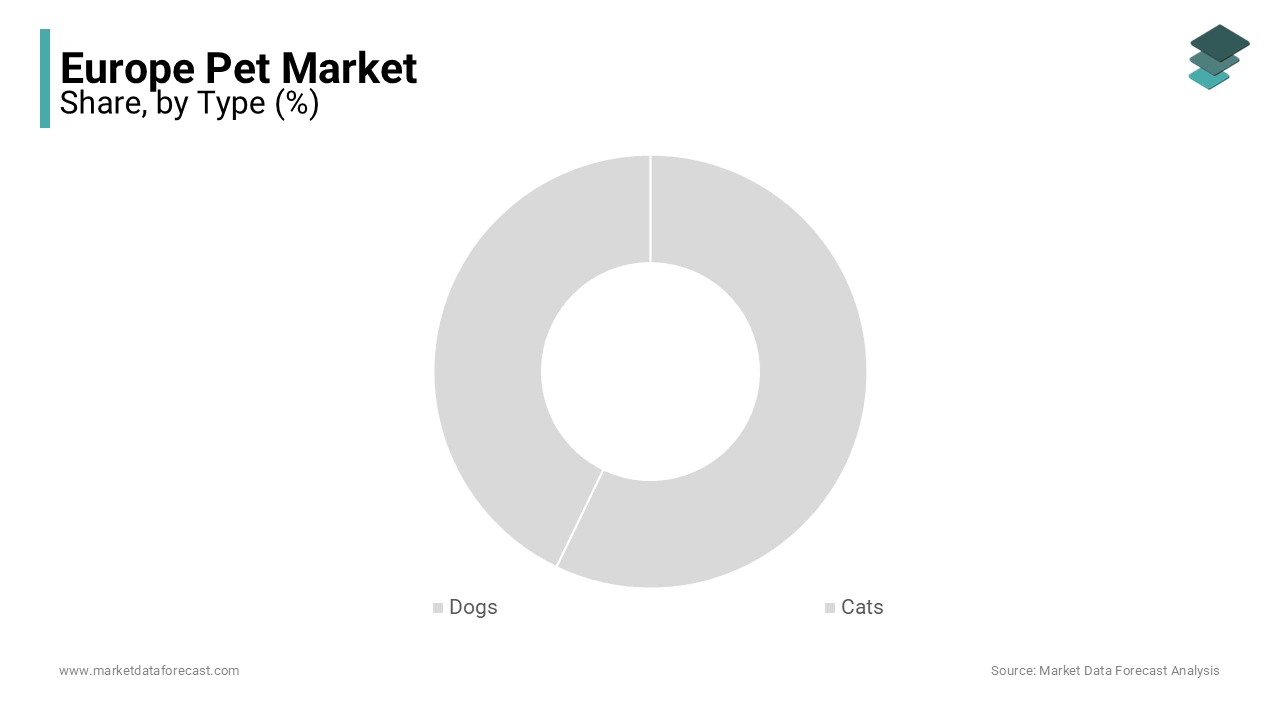
The dog segment dominated the Europe pet market by accounting for a 47.2% of total pet ownership across the region in 2025. With around 104 million dogs estimated to be living in European households, dogs remain the most prevalent companion animals. This dominance is primarily driven by their role in emotional support and family integration. Most dog owners in Western Europe consider their pets to be full family members, a sentiment that intensifies spending on nutrition, grooming, and veterinary care. In Germany, the continent’s one of the major dog-owning nations, over 10.5 million households own at least one dog, representing roughly 21% of all households. This deep emotional integration fuels demand for premium services such as dog training, pet insurance, and specialized diets, reinforcing the segment’s market leadership.
A further pivotal factor sustaining the dog segment’s supremacy is the institutionalization of canine roles beyond companionship, including assistance, therapy, and urban social integration. In France, municipalities have introduced “dog-friendly city” initiatives, expanding parks and public access point;, most of Parisian parks now allow leashed dogs. These structural accommodations normalize dog ownership in urban environments, reducing social friction. These institutional and societal adaptations solidify dogs’ entrenched position in European domestic life.
The cat segment is the fastest-growing category in the Europe pet market and is projected to expand at a CAGR of 6.8% from 2025 to 2033. This surge is largely because of the shifting urban living dynamics, where space constraints favour low-maintenance companions. In 2023, cats outnumbered dogs in the region, with around 127 million cats recorded in Europe. Their independent nature aligns with transient and compact living arrangements, particularly among young professionals and elderly residents. Moreover, cats require fewer outdoor excursions and less intensive training, reducing time and financial investment, making them ideal for city dwellers with constrained schedules.
A different key driver of the cat segment’s rapid expansion is the increasing focus on feline-specific healthcare and premium nutrition. Between 2020 and 2023, sales of prescription cat food in Germany rose, reflecting heightened awareness of urinary and renal health issues. Furthermore, innovations such as self-cleaning litter boxes and pheromone diffusers have entered mainstream retail, with smart cat product sales reaching substantial millions in recent years across Western Europe. These advancements not only improve care standards but also elevate the perceived value of cat ownership, stimulating market growth.
By Price Range Insights
The premium segment held the largest share of the Europe pet market at 56.3% of total revenue in 2025. This dominance is due to the widespread adoption of humanization trends, where pets are treated as family members, warranting high-quality care. Consumers increasingly scrutinize ingredient sourcing, favoring products with traceable proteins, functional additives, and sustainability certifications, which are hallmarks of the premium tier.
An additional critical factor reinforcing the premium segment’s leadership is the integration of advanced healthcare and wellness services. These policies often cover specialist treatments, including MRI scans and oncology. The rise of boutique pet boutiques and curated subscription boxes, such as those offered by French startup Woopets, further illustrates the shift toward experiential and personalized spending. These behavioral and economic shifts ensure sustained dominance of the premium tier.
The economy segment is experiencing the fastest growth in terms of volume, with a projected CAGR of 5.4% from 2025 to 2033. This acceleration is driven by economic pressures and inflationary trends that have reshaped consumer spending behaviours. Retailers like Lidl and Aldi have capitalized on this shift, expanding their in-house pet food lines across 14 European markets.
A further contributing factor is the growing accessibility of private-label and value brands in both online and offline channels. These products, often formulated to meet EU nutritional standards at lower price points, appeal to budget-sensitive yet responsible pet owners. Additionally, animal shelters and welfare organizations, such as the Polish Animal Foundation, recommend cost-effective diets for rescued pets, normalizingthet use of economy products. This combination of macroeconomic strain and improved product credibility fuels the segment’s rapid ascent.
By Sales Channel Insights
The offline sales channel remained the prominent one in the Europe pet market by commanding 63.7% of total sales in 2025. This dominance is sustained by the enduring consumer preference for tactile evaluation and immediate product availability, particularly for bulky items like pet food and litter. In Italy, a major portion of pet owners still purchase food from physical stores, with supermarkets and pet specialty retailers dominating offline transactions. Also, Germany reinforces this trend, where the majority of pet food is sold through brick-and-mortar outlets. The trust associated with in-person interactions, especially when seeking advice from store staff or veterinarians, further entrenches offline dominance.
A different critical factor is the integration of veterinary clinics and pet pharmacies within the offline ecosystem. In France, a significant share of prescription pet medications is dispensed directly through veterinary practices, creating a captive sales channel. Besides, loyalty programs at chains like Pets at Home in the UK have increased repeat offline purchases. Seasonal promotions, in-store grooming services, and product sampling events further enhance foot traffic. In Europe, a big share of consumers prefer to buy new pet products in-store to assess texture, smell, and packaging. These experiential and trust-based advantages ensure that offline channels remain the primary conduit for pet product acquisition across Europe.
The online sales channel is the fastest-growing segment and is expanding at a CAGR of 11.2% between 2025 and 2033. This acceleration is driven by the convenience of subscription models and algorithm-driven personalization. Platforms like Zooplus and Amazon Pet offer next-day delivery and AI-based product recommendations, enhancing user retention.
An additional key driver is the proliferation of niche and specialty brands that operate exclusively online. These brands leverage social media and influencer marketing to reach targeted demographics, particularly millennials and Gen Z. In Sweden, online pet product sales grew in 2023, outpacing general e-commerce growth. Additionally, the integration of telehealth services with online pharmacies allows seamless prescription renewals and home delivery, particularly in Austria and Denmark. This convergence of digital convenience, personalization, and specialized offerings propels the online channel’s rapid expansion.
REGIONAL ANALYSIS
Germany Pet Market Insights
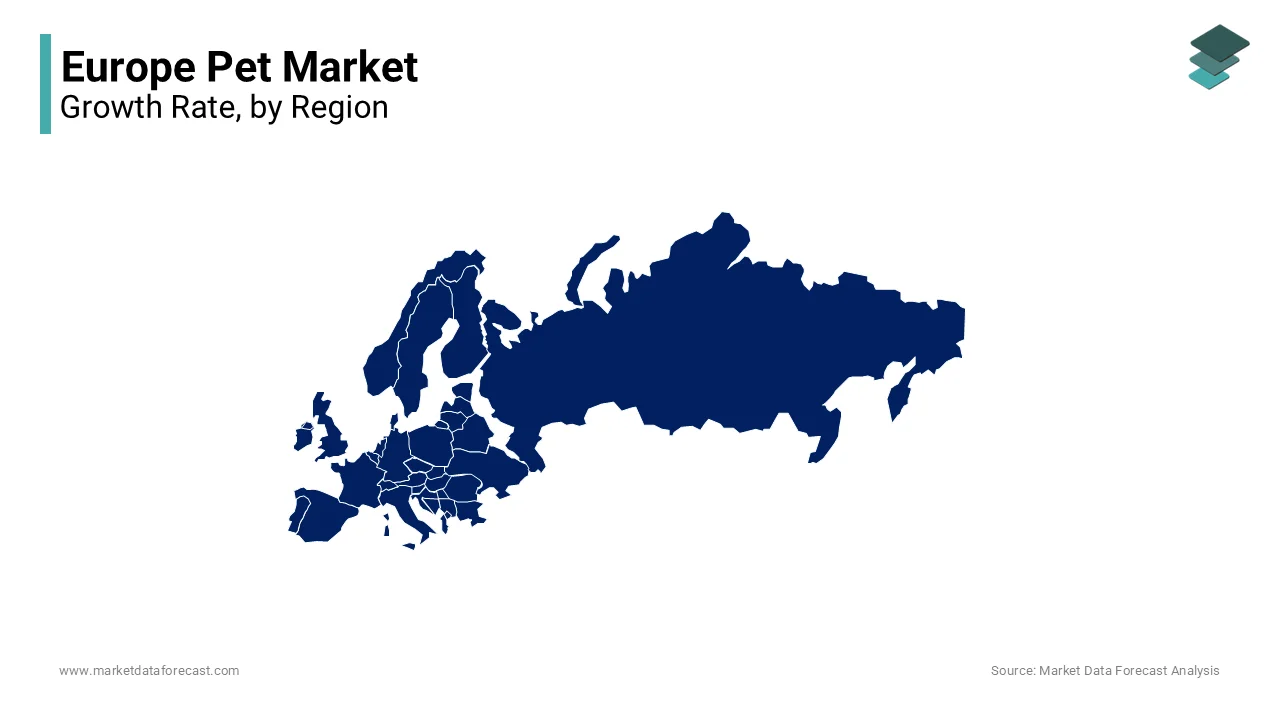
Germany stood as the largest national market within Europe by commanding a 18.3% of the region’s total pet industry revenue in 2025. The country’s market maturity is reflected in its high pet ownership rate, with 42% of households owning at least one pet. Germany’s lead position is underpinned by robust veterinary infrastructure and a culture of pet responsibility. The country also leads in premium product adoption, with organic pet food sales surging in 2023. Regulatory frameworks, such as mandatory liability insurance for dogs in certain states, further institutionalize pet ownership, ensuring sustained demand across healthcare, food, and accessories.
France Pet Market Insights
France is another key player in the market. The French market is characterized by a balanced mix of urban and rural pet ownership, with cats slightly outnumbering dogs in metropolitan areas. A key driver is the increasing medicalization of pet care. The government’s recognition of pets as sentient beings in civil law has elevated welfare standards, encouraging investment in high-quality nutrition and preventive treatments. Additionally, the rise of pet-friendly tourism has expanded lifestyle integration, reinforcing market growth.
United Kingdom Pet Market Insights
The United Kingdom occupies a key position, despite post-Brexit regulatory adjustments. The UK exhibits one of the highest pet insurance penetration rates globally. This financial safeguard encourages owners to pursue advanced treatments, driving demand for specialty veterinary services. Urban pet ownership remains strong. The proliferation of pet tech startups and subscription-based retailers like tails.com further illustrates the market’s innovation-driven trajectory, ensuring continued relevance in the European landscape.
Italy Pet Market Insights
Italy holds a notable share of the Europe pet market, with a distinct preference for cats, particularly in densely populated southern regions. As of 2023, Italy was home to approximately 10.2 million cats and 8.8 million dogs. The market is driven by emotional attachment and intergenerational pet keeping, with 79% of pet owners acquiring animals as family companions. Despite economic constraints, spending on pet healthcare rose, reflecting prioritization of well-being. Municipal initiatives in cities to expand pet-friendly public spaces have also normalized pet integration, fostering a supportive ecosystem for market expansion.
Spain Pet Market Insights
Spain is marked by a rising trend in pet adoption following the pandemic. Also, pet ownership increased by 25% between 2020 and 2023, with over 28 million pets now in households. The growth is particularly pronounced among younger demographics, with a notable share of adopters aged between 25 and 40. This blend of social normalization and digital innovation positions Spain as a dynamic and evolving market within Europe.
KEY MARKET PARTICIPANTS
Mars Incorporated, Nestlé Purina, Colgate-Palmolive, Affinity Petcare, General Mills, Trupanion Inc., Deutsche Familienversicherung AG (DFV), Petplan (Allianz), Getsafe GmbH, and Jab Holding Company are major players in the European pet market.
The competition in the Europe pet market is intense and multifaceted, shaped by the coexistence of global corporations, regional specialists, and emerging digital-native brands. Established players like Nestlé Purina and Mars Petcare leverage extensive R&D, distribution networks, and veterinary partnerships to maintain dominance, particularly in premium nutrition and healthcare. However, they face growing pressure from agile challengers offering sustainable, niche, or direct-to-consumer products. The rise of private-label brands from retailers such as Aldi and Lidl is intensifying price-based competition, especially in Central and Eastern Europe. Differentiation increasingly hinges on innovation in wellness, digital integration, and environmental responsibility. Regulatory scrutiny on pet food labeling and animal welfare also influences competitive dynamics. As consumer expectations evolve toward transparency and personalization, companies must balance scale with agility, making the European landscape one of the most sophisticated and dynamic in the global pet industry.
TOP PLAYERS IN THE MARKET
Nestlé Purina PetCare
Nestlé Purina PetCare is a leading force in the Europe pet market, renowned for its extensive portfolio spanning dry and wet pet food, treats, and nutritionally specialized diets. The company has reinforced its presence through continuous innovation in science-based formulations, particularly in gastrointestinal and joint health for aging pets. It also deepened its digital engagement by partnering with pet telehealth platforms in the UK to integrate nutritional advice into virtual consultations. Through strategic investments in local production facilities in Spain and Poland, Purina has enhanced supply chain resilience. Its collaboration with veterinary associations across Europe further solidifies its authority in pet nutrition, fostering trust among consumers and professionals alike.
Mars Petcare
Mars Petcare, a global leader in pet health and nutrition, plays a transformative role in the Europe pet market through its diversified operations in pet food, veterinary services, and diagnostics. The company operates numerous Banfield and VCA Animal Hospitals across Western Europe and has expanded its AniCura network, which manages a notable number of clinics in 12 European countries, focusing on advanced surgical and oncology care. It also introduced sustainable packaging across its Pedigree and Whiskas lines in Italy and Sweden. By integrating pet food with health services, Mars has pioneered a holistic care model, enhancing customer retention and reinforcing its reputation as an innovator in integrated pet wellness solutions.
Blue Buffalo Company
Blue Buffalo Company, now under the umbrella of Nestlé Purina, maintains a strong identity in the premium segment of the Europe pet market, particularly in natural and grain-free nutrition. Since its European expansion, Blue Buffalo has focused on educating consumers about high-quality ingredient sourcing, emphasizing real meat, fruits, and vegetables without artificial additives. It also collaborated with European pet influencers to promote transparency in labeling. Although distribution remains selective, Blue Buffalo has strengthened its foothold through e-commerce partnerships and presence in specialty pet retailers. Its emphasis on clean-label products resonates with health-conscious pet owners, positioning it as a trusted premium choice.
TOP STRATEGIES USED BY KEY MARKET PLAYERS
Key players in the Europe pet market are deploying strategic initiatives to consolidate their positions and respond to evolving consumer demands. Product innovation remains a cornerstone, with companies launching functional foods targeting specific health conditions such as obesity, renal disease, and cognitive decline in aging pets. Vertical integration is increasingly common, as seen in Mars Petcare’s expansion of veterinary networks, allowing seamless linkage between nutrition and healthcare. Digital transformation is another critical strategy, with firms investing in AI-driven pet health apps, teleconsultation platforms, and subscription-based delivery models to enhance customer engagement. Sustainability is driving reformulations and packaging overhauls, with major brands committing to carbon neutrality and recyclable materials. Additionally, strategic partnerships with animal welfare organizations and veterinary bodies are being leveraged to build trust and credibility. These multifaceted strategies enable companies to differentiate offerings, improve customer loyalty, and navigate regulatory and economic challenges across diverse European markets.
MARKET SEGMENTATION
This research report on the European pet market is segmented and sub-segmented based on type, price range, gender, sales channel, and country.
By Type
- Dogs
- Cats
- Others
By Price Range
- Premium
- Economy
By Gender
- Male
- Female
By Sales Channel
- Online
- Offline
- Others
By Country
- UK
- France
- Spain
- Germany
- Italy
- Russia
- Sweden
- Denmark
- Switzerland
- Netherlands
- Turkey
- Czech Republic
- Rest of Europe
Frequently Asked Questions
1. What is the Europe Pet Market?
The Europe pet market covers products and services for pets, including food, accessories, healthcare, and grooming.
2. What drives growth in the Europe Pet Market?
Rising pet ownership, humanization of pets, and demand for premium pet food and care products drive growth.
3. Which countries dominate the Europe Pet Market?
Germany, the U.K., and France lead the market, followed by Italy and Spain.
4. What product categories are popular in the Europe Pet Market?
Popular categories include pet food, toys, accessories, veterinary care, and grooming services.
5. Which distribution channels are key in the Europe Pet Market?
Supermarkets, pet specialty stores, veterinary clinics, and online platforms are the main channels.
6. Who are the leading players in the Europe Pet Market?
Key players include Mars Petcare, Nestlé Purina, Hill’s Pet Nutrition, Spectrum Brands, and Zoetis.
7. What consumer trends shape the Europe Pet Market?
Trends include pet humanization, online shopping, sustainable products, and tech-enabled pet care.
8. What challenges face the Europe Pet Market?
Challenges include strict regulations, rising product costs, and counterfeit pet care items.
Related Reports
Access the study in MULTIPLE FORMATS
Purchase options starting from
$ 2000
Didn’t find what you’re looking for?
TALK TO OUR ANALYST TEAM
Need something within your budget?
NO WORRIES! WE GOT YOU COVERED!
Call us on: +1 888 702 9696 (U.S Toll Free)
Write to us: sales@marketdataforecast.com