Europe Vascular Access Devices Market Research Report By Type, Application, End Users & Country (United Kingdom, France, Spain, Germany, Italy, Russia, Sweden, Denmark, Switzerland, Netherlands, Turkey, Czech Republic & Rest of Europe), Analysis on Size, Share, Trends & Growth Forecast (2026 to 2034)
Market Size, 2025
$1.42 BnMarket Estimate, 2026
$1.52 BnMarket Forecast, 2034
$2.64 BnCAGR, 2026–2034
7.14%Europe Vascular Access Devices Market Summary
Quick Market Facts
- Market size (2025): USD 1.42 billion
- Estimated size (2026): USD 1.52 billion
- Forecast size (2034): USD 2.64 billion
- Growth rate: 7.14% CAGR (2026 to 2034)
What Is This Market About?
- Covers medical devices used to access the bloodstream for therapy and diagnostics
- Includes peripheral and central catheters, ports, and accessories
- Essential for drug delivery, fluid therapy, nutrition, chemotherapy, and diagnostics
- Widely used across hospitals, ambulatory centers, and home care settings
Why Is the Market Growing?
- A rapidly aging population with higher rates of chronic diseases
- Rising prevalence of cancer, cardiovascular diseases, and diabetes
- High dependence on intravenous therapy in European clinical protocols
- Increasing procedural volumes for chemotherapy, antibiotics, and parenteral nutrition
What Is Limiting Market Growth?
- Stringent EU Medical Devices Regulation (MDR) is increasing approval timelines
- Fragmented reimbursement policies across European countries
- Budget constraints are limiting the adoption of premium infection-resistant devices
- Delays in product launches due to complex conformity assessments
Where Is Adoption Strongest?
- Germany, France, the United Kingdom, Italy, and Spain lead the market
- High procedural volumes in acute care hospitals and oncology centers
- Strong adoption supported by an established healthcare infrastructure
- Growing shift toward outpatient and home infusion services
Which Segments Lead the Market?
- Largest type: Peripheral vascular access devices
- Fastest-growing type: Central vascular access devices
- Top application: Drug administration
- Leading end users: Hospitals, followed by ambulatory care centers
What Opportunities Are Emerging?
- Expansion of home healthcare and outpatient infusion services
- Growing demand for long-term, durable vascular access solutions
What Are the Key Challenges?
- High incidence of catheter-related bloodstream infections (CRBSIs)
- Shortage of trained vascular access nurses and specialists
Who Are the Key Players?
- Becton Dickinson and Company
- B. Braun SE
- Teleflex Incorporated
- Smiths Medical, Inc.
- These companies compete through infection-prevention technologies, regulatory compliance, clinical training programs, and hospital partnerships.
Europe Vascular Access Devices Market Size
The vascular access devices market size in Europe was valued at USD 1.42 billion in 2025. The European market is further estimated to grow at a CAGR of 7.14% CAGR from 2026 to 2034 and be worth USD 2.64 billion by 2034 from USD 1.52 billion in 2026.
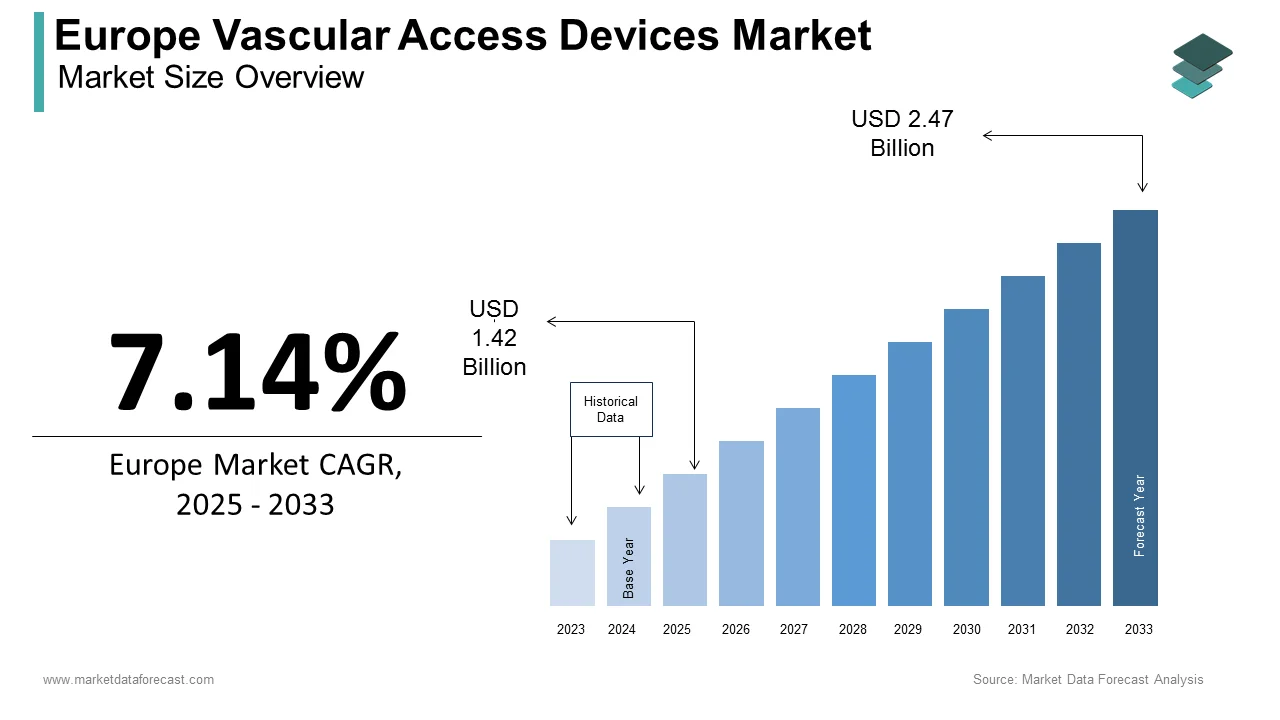
Vascular access devices are essential medical tools designed to establish reliable entry points into the circulatory system for the delivery of fluids, medications, nutrition, and diagnostic agents. In Europe, these devices serve as critical enablers of acute care, chronic disease management, and surgical interventions. The clinical reliance on such devices is deeply embedded in the region’s healthcare infrastructure, where intravenous therapy remains a cornerstone of treatment protocols. According to the European Centre for Disease Prevention and Control (ECDC), millions of patients in the European Union undergo peripheral venous catheter insertion annually as part of routine hospital care. According to Eurostat, more than one‑fifth of the EU population aged 65 and above lives with multiple chronic conditions, requiring regular vascular access for therapies such as chemotherapy, antibiotic regimens, or parenteral nutrition. This demographic and clinical reality underscores the indispensable role of vascular access devices in sustaining Europe’s advanced healthcare delivery model.
MARKET DRIVERS
Aging Population and Rising Prevalence of Chronic Diseases Drive Clinical Demand
The rapidly aging demographic structure of Europe is one of the key factors propelling the growth of the vascular access devices market. According to Eurostat, 31% of the European Union’s population was aged 60 or older in 2024, a figure projected to reach 36% by 2035. This aging cohort experiences high rates of comorbidities, including cancer, cardiovascular disorders, and diabetes, all of which necessitate repeated or continuous vascular access. As per the European Cancer Information System, over 3 million new cancer cases were diagnosed in the EU in 2023, with approximately 65% of patients receiving intravenous chemotherapy or supportive care via central lines. Similarly, as per the European Society of Cardiology, more than 60 million Europeans live with cardiovascular diseases requiring frequent infusions of anticoagulants or inotropes. These clinical patterns translate into consistent procedural volumes for vascular access device placement. Hospitals in Germany, Italy, and France alone perform over five million peripheral and central line insertions annually, as per national health service audits. The convergence of demographic aging and chronic disease burden thus creates an inelastic and growing demand base for vascular access technologies across the region. These aging demographics and chronic disease prevalence are directly driving sustained demand for vascular access devices in Europe.
MARKET RESTRAINTS
Stringent Regulatory Requirements and Complex Reimbursement Landscapes Delay Product Adoption
One of the primary restraints facing the European vascular access devices market is the fragmented and demanding regulatory and reimbursement environment. According to the European Commission, the implementation of the Medical Devices Regulation (EU) 2017/745 has significantly extended conformity assessment timelines, with notified bodies reporting an average review duration of 14 months for new vascular access products in 2024, up from nine months in 2020. Additionally, reimbursement decisions are made at the national level, leading to disparities in coverage. As per the European Observatory on Health Systems and Policies, only 9 EU member states provide uniform reimbursement for antimicrobial‑coated central venous catheters despite clinical evidence supporting their infection‑reducing benefits. In countries such as Spain and Italy, budget constraints have resulted in pricing ceilings that discourage manufacturers from launching premium devices. As per a 2023 survey by the European Association of Hospital Pharmacists, 48% of hospitals delayed adoption of novel vascular access systems due to uncertain or inadequate reimbursement codes. These regulatory and financial barriers not only increase time to market but also limit patient access to advanced safety‑enhanced technologies, thereby constraining overall market dynamism. These regulatory and reimbursement fragmentation are delaying innovation and restraining the adoption of advanced vascular access devices.
MARKET OPPORTUNITIES
Expansion of Home Healthcare and Outpatient Infusion Services Creates New Deployment Settings
The growing adoption of home healthcare and outpatient infusion services is a significant opportunity for the European vascular access devices market. According to the Organisation for Economic Co‑operation and Development, home‑based care services expanded by 22% across Western Europe between 2020 and 2024, which is driven by cost containment policies and patient preference for domiciliary treatment. This transition has elevated demand for durable, secure, and user‑friendly vascular access systems suitable for long‑term outpatient use. The European Union’s Strategic Agenda for Chronic Disease Management promotes ambulatory infusion for conditions such as oncology, autoimmune disorders, and rare diseases, reducing hospital bed occupancy. As per the European Home Care Association, over 1.8 million patients in France, Germany, and the Netherlands received intravenous antibiotics or biologics at home in 2023, requiring reliable peripherally inserted central catheters or implanted ports. Device manufacturers are responding with innovations such as low‑profile ports and catheters with integrated antimicrobial sleeves tailored for home care nursing protocols. As national health systems formalize home infusion frameworks and train community nurses in vascular access maintenance, this care setting is poised to become a high‑growth channel for next‑generation devices. This expansion of home healthcare is creating strong opportunities for vascular access devices in outpatient and domiciliary settings in the European region.
Integration of Telehealth and Remote Monitoring Enhances Device Value Proposition
The integration of telehealth and remote monitoring technologies offers another promising opportunity for vascular access devices in Europe. According to the European Commission, over 68% of EU member states implemented national telehealth strategies by 2024, with remote patient monitoring forming a core element. This digital shift creates demand for vascular access systems compatible with sensor‑enabled dressings or smart hubs that detect early signs of complications such as infiltration or infection. In Sweden and the Netherlands, pilot programs now utilize wearable patches paired with PICCs to transmit real‑time data on catheter site temperature and fluid pressure to clinical teams. As per the European Health Telematics Observatory, investments in remote monitoring infrastructure grew by 35% year‑on‑year in 2023, with vascular access complications identified as a priority use case due to their high-cost burden. Device companies are collaborating with digital health startups to embed connectivity features without compromising sterility or biocompatibility. This convergence of MedTech and digital health not only enhances patient safety but also positions vascular access devices as intelligent interfaces within value‑based care models, thereby opening new avenues for differentiation and reimbursement. The growing telehealth adoption and remote monitoring growth are generating opportunities for connected vascular access devices in this region.
MARKET CHALLENGES
High Incidence of Catheter‑Related Bloodstream Infections Undermines Clinical Confidence
The high incidence of catheter‑related bloodstream infections is primarily challenging the European vascular access devices market. According to the European Centre for Disease Prevention and Control, an estimated 75,000 catheter‑associated bloodstream infections occur annually in EU acute care hospitals, with central lines accounting for over 60% of cases. These infections lead to prolonged hospital stays, increased mortality, and substantial costs, with the European Society of Clinical Microbiology and Infectious Diseases estimating an average attributable expense of €18,000 per episode. Although antimicrobial and antiseptic‑impregnated catheters exist, their uptake is inconsistent due to variable national guidelines and procurement restrictions. A 2024 audit by the European Society of Intensive Care Medicine found that only 32% of ICUs in Southern and Eastern Europe routinely used infection‑resistant central lines compared to 61% in Nordic countries. This disparity reflects both resource limitations and clinical inertia. Until infection rates decline through standardized protocols and broader adoption of advanced devices, trust in long‑term vascular access solutions will remain constrained, particularly in high‑risk patient populations. The infection incidence remains high in Europe, and this is challenging clinical confidence and slowing the adoption of advanced vascular access devices.
Workforce Shortages and Skill Gaps Compromise Safe Device Insertion and Maintenance
Workforce shortages and skill gaps are another major challenge hindering the European vascular access devices market. According to the State of Health in the EU 2024 report, 13 out of 27 member states reported severe shortages in specialized nursing staff with vascular access competencies, particularly in rural and Eastern regions. According to the European Federation of Nurses Associations, only 45% of EU countries mandate formal certification for peripherally inserted central catheter placement, leaving practice standards variable. This gap contributes to higher complication rates, including malposition, pneumothorax, and occlusion, which undermine device efficacy and patient outcomes. In Italy and Poland, ultrasound‑guided insertion rates for central lines remain below 50% due to limited access to trained personnel and equipment, as per national health ministry data from 2023. Furthermore, high nurse turnover in acute care settings disrupts continuity of catheter maintenance, increasing risks of dislodgement or infection. Without targeted investment in standardized training programs, simulation labs, and task shifting to vascular access specialists, the full therapeutic potential of advanced devices cannot be realized across the European healthcare landscape.
REPORT COVERAGE
| REPORT METRIC | DETAILS |
| Market Size Available | 2025 to 2034 |
| Base Year | 2025 |
| Forecast Period | 2026 to 2034 |
| Segments Covered | By Type, Application, End-user, and Country. |
| Various Analyses Covered | Global, Regional, and Country-Level Analysis, Segment-Level Analysis, Drivers, Restraints, Opportunities, Challenges; PESTLE Analysis; Porter’s Five Forces Analysis, Competitive Landscape, Analyst Overview of Investment Opportunities |
| Countries Covered | UK, France, Spain, Germany, Italy, Russia, Sweden, Denmark, Switzerland, Netherlands, Turkey, Czech Republic, and the Rest of Europe. |
| Market Leaders Profiled | Becton Dickinson and Company, C.R. Bard Inc., Smiths Medical, Inc., Teleflex Incorporated, B. Braun SE, AngioDynamics, Terumo Corporation, Nipro Medical Corporation, Edwards Lifesciences Corporation, Ameco Medical, Romsons Scientific & Surgical Pvt. Ltd, and Prodimed. |
SEGMENTAL ANALYSIS
By Type Insights
The peripheral vascular access devices segment dominated the Europe vascular access devices market by holding 58% of the market in 2024. The dominance of the peripheral segment in this European market is attributed to its widespread use in short‑term intravenous therapy across emergency departments, surgical units, and outpatient settings. According to the European Centre for Disease Prevention and Control, more than 12 million peripheral intravenous catheter insertions occur annually in EU hospitals, with an average dwell time of about 72 hours per catheter. As per the European Society of Anaesthesiology, over 90% of surgical patients receive perioperative fluid and drug administration via peripheral lines, making them indispensable in perioperative care. National clinical guidelines in Germany, France, and the Netherlands mandate peripheral access as the first‑line approach for patients requiring IV therapy of less than seven days. This segment is expected to remain dominant over the forecast period as simplicity of insertion, low cost, and standardized replacement protocols sustain high procedural volumes.
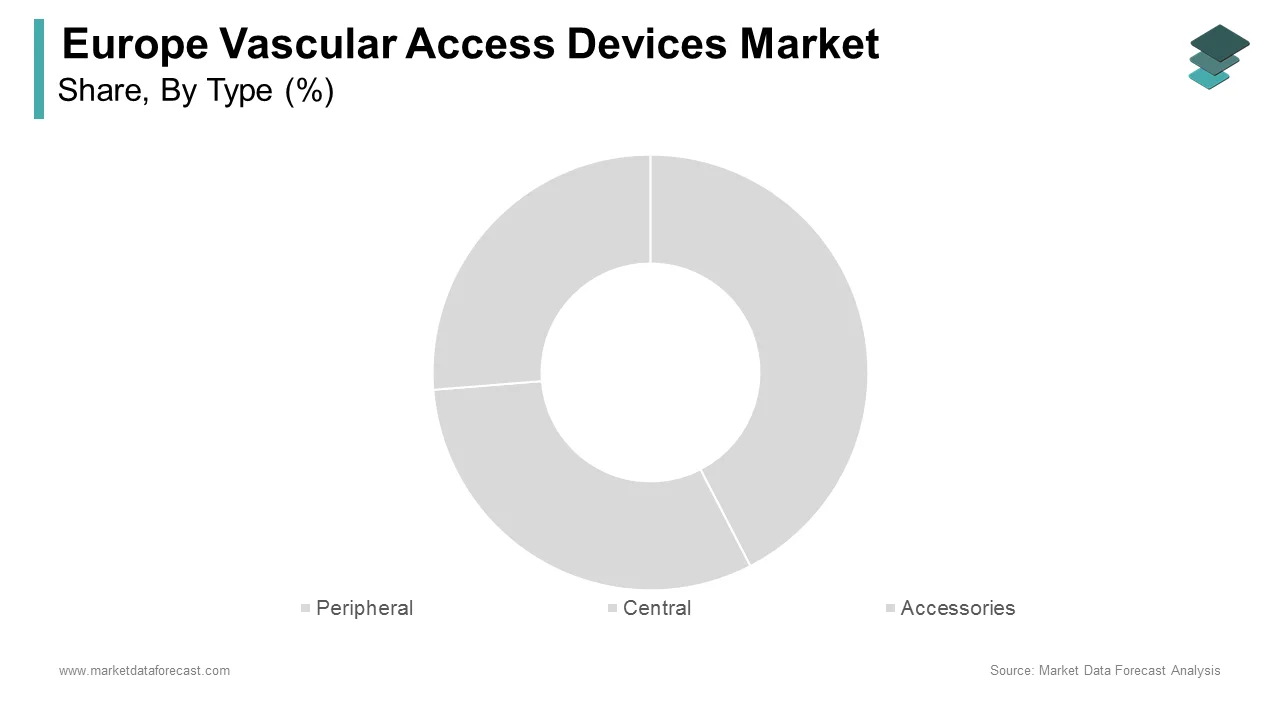
The central vascular access devices segment is anticipated to grow at a promising CAGR of 7.4% over the forecast period in the European market. The rising complexity of chronic disease management and expansion of long‑term infusion therapies are supporting the growth of the central segment in this European market. According to the European Cancer Information System, nearly 2 million cancer patients in the EU received chemotherapy or monoclonal antibody treatments via central lines in 2023. As per the European Society of Parenteral and Enteral Nutrition, more than 400,000 patients with gastrointestinal failure received home parenteral nutrition through implanted ports or tunneled catheters in 2024. The European Commission’s Chronic Care Initiative promotes outpatient management of complex conditions, necessitating durable central devices. This segment is expected to expand steadily over the forecast period as innovations such as antimicrobial‑coated ports and power‑injectable PICCs improve safety and broaden adoption.
By Application Insights
The drug administration segment held the leading position in the Europe vascular access devices market in 2024 and occupied 63% of the regional market share. The dominance of the drug administration segment in this European market is driven by the extensive use of intravenous routes for delivering antibiotics, analgesics, chemotherapeutics, and biologics. According to the European Medicines Agency, more than 45% of newly approved systemic therapies in 2023 required intravenous delivery due to poor oral bioavailability or the need for controlled plasma concentrations. As per the European Centre for Disease Prevention and Control, over 2.8 million hospital‑treated infections in the EU in 2023 involved IV antibiotic regimens. The European Society for Medical Oncology confirmed that nearly 90% of systemic cancer treatments are administered intravenously, often via central lines. This segment is expected to remain dominant over the forecast period as monoclonal antibodies and biologics for autoimmune and rare diseases further entrench IV drug delivery as a clinical standard.
The fluid and nutrition administration segment is expected to register the fastest CAGR of 6.9% over the forecast period in the European market. Rising incidence of gastrointestinal disorders, malnutrition, and post‑surgical recovery needs are propelling the growth of the fluid and nutrition segment in this European market. According to the European Society of Clinical Nutrition and Metabolism, more than 4 million hospitalized patients in the EU suffered from disease‑related malnutrition in 2023, with nearly 900,000 requiring total parenteral nutrition delivered through central vascular access devices. As per the European Neonatal Network, over 110,000 preterm infants required vascular access for fluid stabilization in 2023. Eurostat data show that nearly 30% of individuals over 80 in institutional care receive IV hydration or nutrient supplementation. This segment is expected to expand rapidly over the forecast period as national health systems integrate nutritional risk screening into admission protocols.
By End Users Insights
The hospitals segment captured 76% of the Europe vascular access devices market share in 2024. The leading position of the hospitals segment in this European market is attributed to their role as primary sites for acute care, surgery, intensive therapy, and complex chronic disease management. According to Eurostat, there are more than 6,200 acute care hospitals in the EU performing over 28 million surgical procedures annually, each requiring at least one vascular access device. As per the European Centre for Disease Prevention and Control, intensive care units alone utilize an average of three vascular access devices per patient during admission. National health service data from Germany and France indicate that more than 90% of central line insertions occur in hospital settings where imaging guidance and sterile protocols are available. This segment is expected to remain dominant over the forecast period as hospitals continue to serve as referral centers and training hubs for vascular access procedures.
The ambulatory care centers segment is anticipated to exhibit a CAGR of 8.1% over the forecast period in the European market. Healthcare system efforts to reduce hospital admissions and shift infusion therapies to outpatient settings are favouring the growth of the ambulatory care segment in this European market. According to the Organisation for Economic Co‑operation and Development, the number of ambulatory infusion centers in Western Europe increased by more than 30% between 2021 and 2024. As per the European Oncology Nursing Society, over 1.2 million cancer patients received outpatient IV therapy in 2023. National health authority reports from the Netherlands and Denmark confirm that more than 65% of new vascular access device placements for chronic conditions now occur in ambulatory centers. This segment is expected to expand rapidly over the forecast period as reimbursement policies evolve to cover outpatient vascular access procedures and patient demand for convenient care grows.
COUNTRY-LEVEL ANALYSIS
Germany Vascular Access Devices Market Analysis
Germany played the dominant role in the European vascular access devices market in 2024 and accounted for 24.5% of the European market share. The leading position of Germany in the European market can be credited to its advanced healthcare infrastructure, high procedural volumes, and strong adoption of evidence‑based protocols. According to the German Federal Statistical Office, millions of surgical and medical procedures annually require intravenous access, underscoring the scale of demand. The German Society for Vascular Access established national standards in 2022, mandating ultrasound guidance for central line placement in university hospitals, raising device quality requirements. According to the Robert Koch Institute, over half a million new cancer cases occur annually, necessitating extensive use of implantable ports and PICCs. Germany also hosts leading medtech manufacturers and academic centers that foster rapid uptake of antimicrobial and power‑injectable variants. Statutory health insurance ensures broad reimbursement, while stringent quality controls reinforce preference for premium devices.
France Vascular Access Devices Market Analysis
France was the second leading market for vascular access devices in Europe in 2024. The centralized healthcare planning, robust oncology networks, and proactive national guidelines have contributed to the growing demand for vascular access devices in France in 2024. According to the Haute Autorité de Santé, millions of patients receive intravenous therapies annually in public hospitals, with peripheral catheters used in the majority of cases. The French Society of Vascular Access introduced a national certification program for nurses in 2023, improving insertion success rates and reducing complications. France also leads in home infusion, with the Ministry of Solidarity and Health reporting hundreds of thousands of patients receiving IV antibiotics or chemotherapy at home. The national hospital procurement agency (UNIFAC) implements bulk purchasing agreements favoring coated catheters with proven infection‑reduction data. France is expected to remain a pivotal hub for standardized vascular access and home therapy expansion.
United Kingdom Vascular Access Devices Market Analysis
The United Kingdom is a promising market for vascular access devices in Europe. Factors such as the NHS infrastructure, chronic disease burden, and infection‑control priorities are propelling the growth of the UK market. According to NHS England, millions of peripheral venous catheters are used annually across acute trusts, with central lines placed in hundreds of thousands of patients for oncology and critical care. NICE updated vascular access guidelines in 2023, recommending antimicrobial‑impregnated catheters for high‑risk ICU patients, accelerating the adoption of premium devices. The Royal College of Nursing notes that over 180 hospitals employ vascular access nurse specialist teams, improving outcomes. Post‑Brexit, the MHRA maintains alignment with EU MDR standards, ensuring continued access to innovative devices. As same‑day surgery and home therapy programs expand, demand for reliable outpatient vascular access continues to grow.
Italy Vascular Access Devices Market Analysis
Italy is anticipated to account for a notable share of the European vascular access devices market over the forecast period, owing to the growing aging population, high cancer incidence, and regional disparities in care delivery. According to ISTAT, hundreds of thousands of new cancer cases are diagnosed annually, requiring vascular access for systemic therapy. The Italian Association of Medical Oncology reports that most chemotherapy cycles are administered via central venous catheters due to treatment duration and drug requirements. Southern regions report higher complication rates, prompting the Ministry of Health to launch a national vascular access training initiative in 2024 targeting thousands of nurses. Italy also has one of Europe’s highest rates of home parenteral nutrition, with tens of thousands of patients managed outside hospitals. These clinical and demographic factors, combined with gradual standardization, sustain Italy’s significant market role.
Spain Vascular Access Devices Market Analysis
Spain is estimated to record a healthy CAGR in the European vascular access devices market during the forecast period. The strong public health infrastructure, rising outpatient care, and infection‑control measures are contributing to the Spanish market growth. According to the Spanish Ministry of Health, millions of hospital admissions annually involve intravenous therapy, with peripheral catheters used in most cases. The Spanish Society of Vascular Access implemented a national registry in 2023 to track catheter‑related bloodstream infections, reporting significant reductions following protocol standardization. The Carlos III Health Institute notes rapid growth in outpatient chemotherapy sessions, driving demand for durable central access devices. Regional health authorities in Catalonia and Madrid introduced procurement criteria favoring antimicrobial‑coated devices based on cost‑benefit analyses. Spain is expected to remain a dynamic and steadily growing market in Southern Europe.
COMPETITIVE LANDSCAPE
The Europe vascular access devices market is characterized by intense competition among established multinational corporations and specialized medtech firms vying for clinical trust and institutional contracts. Competition is not solely price-driven, but centers on demonstrated clinical outcomes, safety features, regulatory compliance, and integration with care protocols. Leading companies differentiate through antimicrobial technologies, closed system designs, and digital connectivity capabilities that align with European priorities on infection control and value-based healthcare. The implementation of the EU Medical Devices Regulation has raised barriers to entry, favoring firms with robust quality management systems and post-market surveillance infrastructure. Regional variations in reimbursement policies, clinical practices, and workforce training further fragment the landscape, requiring tailored commercial approaches. As hospitals consolidate procurement and emphasize total cost of care rather than device cost alone, suppliers must prove economic and clinical value through real-world evidence and collaborative service models, making the competitive environment both sophisticated and relationship-driven.
KEY MARKET PLAYERS
The leading companies operating in the Europe vascular access devices market include:
- Becton Dickinson and Company
- R. Bard Inc.
- Smiths Medical, Inc.
- Teleflex Incorporated
- Braun SE
- AngioDynamics
- Terumo Corporation
- Nipro Medical Corporation
- Edwards Lifesciences Corporation
- Ameco Medical
- Romsons Scientific & Surgical Pvt. Ltd.
- Prodimed
TOP PLAYERS IN THE MARKET
- Becton Dickinson and Company is a global leader in vascular access technologies with a deep-rooted presence in Europe through its comprehensive portfolio of peripheral and central catheters, safety-engineered devices, and integrated care systems. The company actively contributes to global clinical standards by collaborating with European nursing and medical societies to advance vascular access protocols. In 2024, BD expanded its training academy network across Germany and Spain, offering simulation-based certification programs for nurses on ultrasound-guided insertion and complication prevention. It also launched a next-generation antimicrobial PICC line compliant with EU MDR requirements, enhancing patient safety in long-term therapies. These initiatives reinforce BD’s commitment to clinical excellence and sustainable healthcare delivery across the European region.
- Braun SE is a Germany-based multinational that plays a pivotal role in the Europe vascular access devices market through its focus on infection prevention, biocompatible materials, and closed system solutions. The company supplies hospitals across the EU with peripheral venous catheters, central lines, and accessories designed to align with stringent European safety norms. In recent years, B. Braun has intensified its investment in digital health integration by piloting smart infusion platforms that link vascular access data with electronic health records in Dutch and Swedish hospitals. It also introduced a new line of latex-free and DEHP-free central venous catheters in 2023 to address growing demand for eco-conscious medical products. These actions underscore its strategy of combining clinical safety with environmental responsibility.
- Teleflex Incorporated maintains a strong foothold in the Europe vascular access devices market through its Arrow brand, known for innovative central venous and arterial access solutions. The company supports global vascular access standardization by participating in European clinical guideline development and training initiatives. In 2024, Teleflex received CE Mark approval for its next-generation power injectable PICC with enhanced kink resistance and radiopacity tailored for oncology and imaging departments. It also partnered with university hospitals in France and Italy to establish vascular access centers of excellence, focusing on nurse education and complication tracking. These efforts position Teleflex as a solutions-oriented partner committed to improving long-term vascular access outcomes across diverse European healthcare settings.
TOP STRATEGIES USED BY THE KEY MARKET PARTICIPANTS
Key players in the Europe vascular access devices market prioritize innovation in infection-resistant and safety-engineered devices to address rising clinical concerns about catheter-related complications. They invest significantly in clinical education by establishing training academies and simulation labs in collaboration with nursing associations and hospitals. Regulatory compliance with the EU Medical Devices Regulation remains a core strategic focus, with companies redesigning product portfolios to meet updated technical documentation and post-market surveillance requirements. Geographic expansion of local application and support centers enhances customer engagement and rapid response capabilities. Additionally, they pursue strategic partnerships with integrated care providers to embed their devices into standardized clinical pathways, particularly in oncology home care and critical care settings, thereby securing long-term adoption and trust.
MARKET SEGMENTATION
This research report on the European vascular access devices market is segmented and sub-segmented into the following categories.
By Type
- Peripheral
- Central
- Accessories
By Application
- Drug Administration
- Fluid & Nutrition Administration
- Blood Transfusion
- Diagnostics Testing
By End Users
- Hospitals
- Clinics
- Ambulatory Care Centers
- Other End Users
By Country
- UK
- France
- Spain
- Germany
- Italy
- Russia
- Sweden
- Denmark
- Switzerland
- Netherlands
- Turkey
- Czech Republic
- Rest of Europe
Frequently Asked Questions
1. What is the size of the Europe vascular access devices market?
The Europe vascular access devices market is expected to reach USD 1.42 billion in 2025, driven by chronic disease management needs.
2. What drives growth in the Europe vascular access devices market?
Rising diabetes, cancer, and aging populations fuel demand for long-term access solutions in the Europe vascular access devices market.
3. Which countries lead the Europe vascular access devices market?
Germany, UK, and France dominate the Europe vascular access devices market with advanced hospitals and procedure volumes.
4. What devices rule the Europe vascular access devices market?
PICC lines and central catheters hold major shares in the Europe vascular access devices market for versatile applications.
5. How does dialysis impact the Europe vascular access devices market?
Chronic kidney disease drives dialysis catheter demand in the Europe vascular access devices market segment.
6. What trends shape the Europe vascular access devices market?
Antimicrobial coatings and power-injectable ports define trends in the Europe vascular access devices market safety.
7. Which end-users dominate the Europe vascular access devices market?
Hospitals lead with high procedure volumes in the Europe vascular access devices market usage.
8. Who are key players in the Europe vascular access devices market?
B. Braun, BD, Teleflex, and Medtronic compete in the Europe vascular access devices market innovations.
9. What challenges face the Europe vascular access devices market?
Infection risks and thrombosis concerns challenge device adoption in the Europe vascular access devices market.
10. How do central devices affect the Europe vascular access devices market?
CVADs like PICCs capture a significant share of the Europe vascular access devices market for long-term use.
Related Reports
Access the study in MULTIPLE FORMATS
Purchase options starting from
$ 2000
Didn’t find what you’re looking for?
TALK TO OUR ANALYST TEAM
Need something within your budget?
NO WORRIES! WE GOT YOU COVERED!
Call us on: +1 888 702 9696 (U.S Toll Free)
Write to us: sales@marketdataforecast.com