- Product Description Description
- Table of Contents TOC
- List of Table & Figure LOT
- Get Free Sample PDF Sample PDF
Market Size, 2025
$16.96 BnMarket Estimate, 2026
$17.41 BnMarket Forecast, 2034
$21.43 BnCAGR, 2026–2034
2.63%Global Colorectal Cancer Market Size
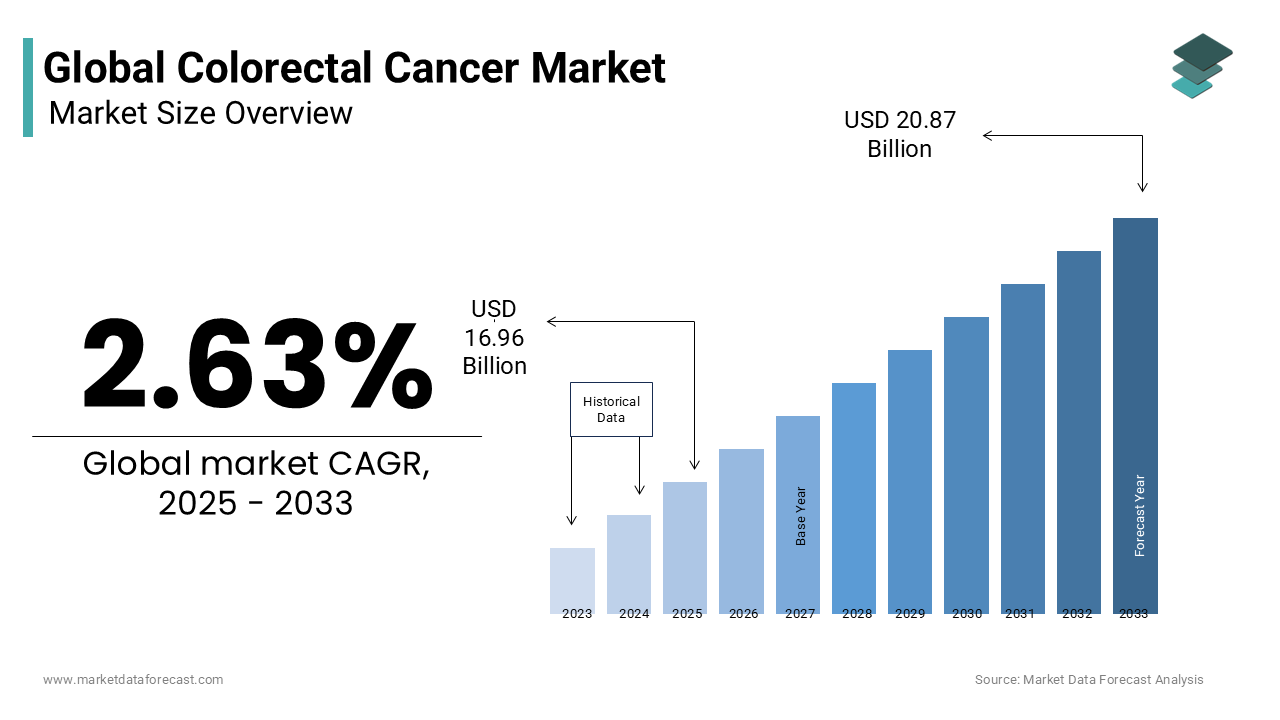
The colorectal cancer market size was valued at USD 16.96 billion in 2025. The global colorectal cancer market size is expected to be worth USD 17.41 billion in 2026 and USD 21.43 billion by 2034, growing at a CAGR of 2.63% from 2026 to 2034.
Colorectal cancer (CRC) arises predominantly from adenomatous polyps that undergo malignant transformation over time, with adenocarcinoma constituting over 95% of cases. The disease is characterized by complex molecular pathways, including chromosomal instability, microsatellite instability, and the serrated pathway, which inform both diagnosis and therapeutic strategy. As per the World Health Organization, colorectal cancer ranks as the third most commonly diagnosed cancer globally, with an estimated 2.2 million new cases anticipated annually by 2030 due to demographic shifts and lifestyle transitions.
MARKET DRIVERS
Rising Incidence of Early-Onset Colorectal Cancer in Younger Populations
The escalating incidence among individuals under 50 years of age is driving the growth of the European legal process outsourcing (LPO) market. According to the American Cancer Society, incidence rates for CRC in adults below 50 have nearly doubled since the 1990s, with rectal cancer showing the steepest increase rising by approximately 3.5% annually from 1992 to 2020. The surge in early-onset cases is strongly associated with sedentary lifestyles, high consumption of processed foods, and gut microbiome dysbiosis, as per longitudinal cohort studies published in The Lancet Gastroenterology & Hepatology.
Expansion of Molecular Profiling and Biomarker-Guided Therapies
The integration of genomic and molecular diagnostics into routine clinical practice for metastatic cases is also levelling up the growth of the European legal process outsourcing (LPO) market. Furthermore, the prevalence of RAS and BRAF mutations present in roughly 40% and 10% of CRC tumors, respectively has driven the development of targeted therapies like encorafenib in combination with cetuximab. Institutions such as the Mayo Clinic have reported a 40% increase in molecular testing adoption for CRC patients between 2018 and 2023
MARKET RESTRAINTS
Disparities in Access to Screening and Diagnostic Infrastructure
The curbing colorectal cancer mortality lies in the uneven global distribution of screening and diagnostic resources is hindering the growth of the European legal process outsourcing (LPO) market. As per the International Agency for Research on Cancer (IARC), over 60% of CRC-related deaths occur in low- and middle-income countries (LMICs), where organized screening programs are either absent or underfunded. These gaps result in late-stage diagnoses over 70% of cases in regions like Southeast Asia are detected at Stage III or IV as documented by the Global Initiative for Cancer Registry Development.
High Development Costs and Regulatory Hurdles for Targeted Therapies
The path to commercialization for novel colorectal cancer therapeutics with scientific complexity and financial burden for biomarker-specific agents is additionally limiting the growth of the European legal process outsourcing (LPO) market. For instance, drugs targeting KRAS G12C mutations, such as sotorasib, must undergo rigorous phase II trials enrolling only the 3–4% of CRC patients harboring this specific alteration, as per the AACR Project GENIE consortium. Additionally, regulatory agencies like the U.S. FDA demand robust real-world evidence for accelerated approvals, which is further prolonging timelines. These economic and procedural barriers discourage smaller biotech firms from entering the space by limiting innovation and reducing competitive pressure on pricing and accessibility.
MARKET OPPORTUNITIES
Integration of Artificial Intelligence in Early Detection and Risk Stratification
Artificial Intelligence (AI) is emerging as a transformative force in enhancing the accuracy and scalability of colorectal cancer screening, which is augmented in enhancing the growth of the European legal process outsourcing (LPO) market. As per a multicenter study published in Gastroenterology, AI-assisted colonoscopy systems increase adenoma detection rates by up to 14%, reducing the likelihood of interval cancers. Companies like Medtronic and Cosmo Pharmaceuticals have launched AI-powered endoscopic platforms that provide real-time polyp characterization, minimizing unnecessary resections and improving procedural efficiency.
Growth of Liquid Biopsy for Minimal Residual Disease Monitoring
The liquid biopsy technologies, particularly circulating tumor DNA (ctDNA) assays, are poised to redefine post-treatment surveillance in colorectal cancer, which is ascribed to bolster the growth of the European legal process outsourcing (LPO) markets. As per data from the DYNAMIC trial published in The New England Journal of Medicine, ctDNA-guided management reduced the use of adjuvant chemotherapy by 10% in Stage II colon cancer patients without compromising recurrence-free survival. This approach enables the detection of minimal residual disease (MRD) months before radiographic recurrence, offering a window for early intervention.
MARKET CHALLENGES
Tumor Heterogeneity and Adaptive Resistance Mechanisms
The colorectal cancer exhibits profound intra- and inter-tumoral heterogeneity that complicates the durability of targeted therapies, which is to hamper the growth of the European legal process outsourcing (LPO) market. For instance, patients treated with EGFR inhibitors like cetuximab often develop resistance through emergent KRAS, NRAS, or EGFR ectodomain mutations, as observed in longitudinal plasma sequencing studies conducted at MD Anderson Cancer Center. Additionally, the tumor microenvironment in CRC frequently promotes immunosuppressive phenotypes by limiting the efficacy of immunotherapies even in MSI-H cases. A study in Nature Medicine revealed that only 30–50% of MSI-H metastatic CRC patients respond to PD-1 inhibitors with primary and acquired resistance mechanisms remaining poorly understood.
Fragmentation in Clinical Data and Lack of Interoperability
The fragmentation of clinical, genomic, and outcomes data across disparate healthcare systems is impeding the growth of the European legal process outsourcing (LPO) market. As per a 2023 assessment by the Observational Health Data Sciences and Informatics (OHDSI) consortium, fewer than 20% of U.S. oncology practices utilize standardized data formats that enable cross-institutional research. This siloed infrastructure hampers the aggregation of real-world evidence needed for regulatory submissions and health technology assessments.
REPORT COVERAGE
| REPORT METRIC | DETAILS |
| Market Size Available | 2025 to 2034 |
| Base Year | 2025 |
| Forecast Period | 2026 to 2034 |
| Segments Covered | By Treatment, Diagnosis, and Region |
| Various Analyses Covered | Global, Regional & Country Level Analysis, Segment-Level Analysis; DROC, PESTLE Analysis, Porter's Five Forces Analysis, Competitive Landscape, Analyst Overview of Investment Opportunities |
| Regions Covered | North America, Europe, APAC, Latin America, Middle East & Africa |
| Market Leader Profiled | Abbott Diagnostics, Alere, Beckman Coulter, Clinical Genomics, Companion Dx, Hoffmann La Roche, Debiopharm Group, and Vaccinogen BD. |
SEGMENTAL ANALYSIS
By Diagnosis Insights
The colonoscopy segment was the largest and held 48.4% of the colorectal cancer market share in 2025 with its dual capability as both a screening and therapeutic tool, enabling real-time polypectomy during examination. According to the American Society for Gastrointestinal Endoscopy, over 14 million colonoscopies are performed annually in the United States alone, with a detection rate of precancerous adenomas exceeding 40% in individuals aged 50 and above.
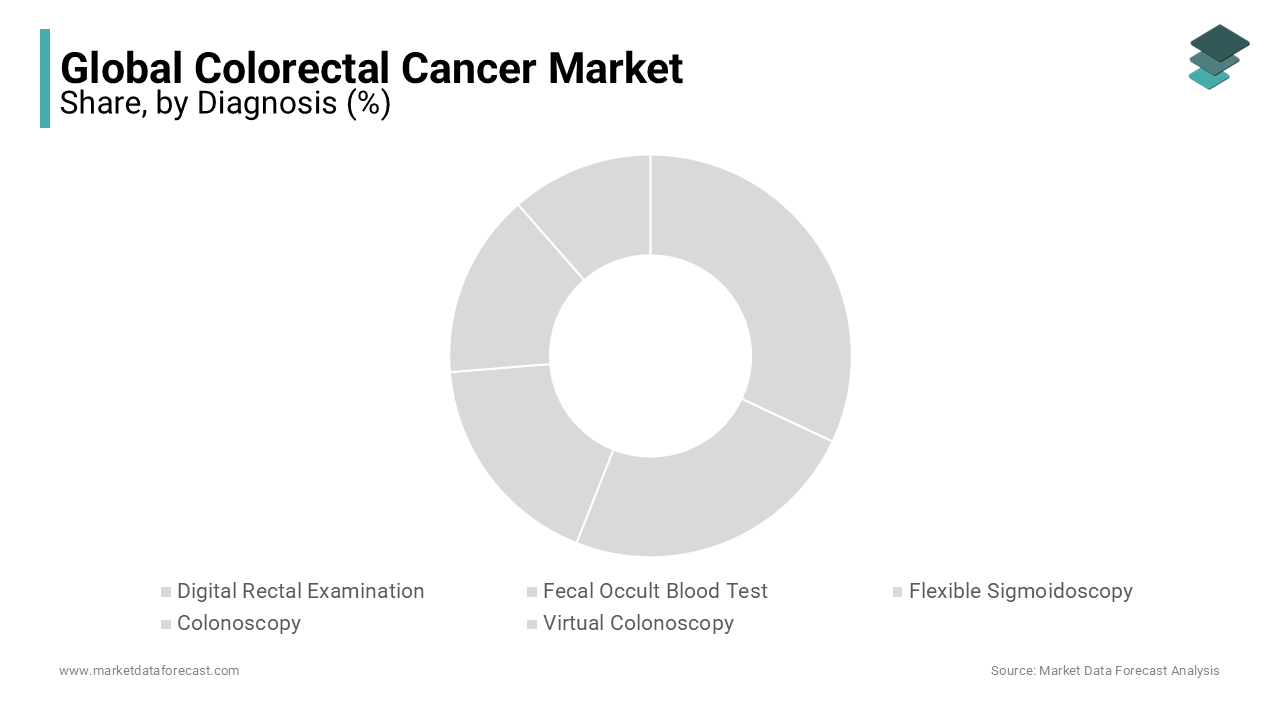
The Virtual colonoscopy segment is swiftly growing with an expected CAGR of 9.6% in the next coming years owing to the rising patient preference for non-invasive alternatives among those averse to sedation or conventional endoscopy. The technology’s adoption is further accelerated by advancements in artificial intelligence-assisted image interpretation, with systems like Aidoc’s AI platform reducing radiologist interpretation time by 30%, as demonstrated in a 2023 European Society of Gastrointestinal Imaging study.
By Treatment Insights
The chemotherapy segment held 42.3% of the colorectal cancer market share in 2025 with its foundational role across disease stages, particularly in adjuvant and palliative settings. The FOLFOX (5-fluorouracil, leucovorin, oxaliplatin) and FOLFIRI (5-fluorouracil, leucovorin, irinotecan) regimens remain first-line standards for metastatic disease, with response rates ranging from 40% to 55% as documented in the ACCENT (Adjuvant Colon Cancer End Points) database. According to the European Society of Medical Oncology, over 60% of Stage III colon cancer patients receive adjuvant chemotherapy, contributing to a 30% reduction in recurrence risk.
The targeted therapies segment is expected to grow at a CAGR of 11.3% throughout the forecast period with the increasing identification of actionable molecular alterations and the approval of precision agents such as cetuximab (anti-EGFR) and bevacizumab (anti-VEGF). As per the AACR Project GENIE registry, approximately 50% of metastatic colorectal cancer patients now undergo routine RAS and BRAF mutation testing by enabling biomarker-directed treatment selection.
REGIONAL ANALYSIS
North America Colorectal Cancer Market Analysis
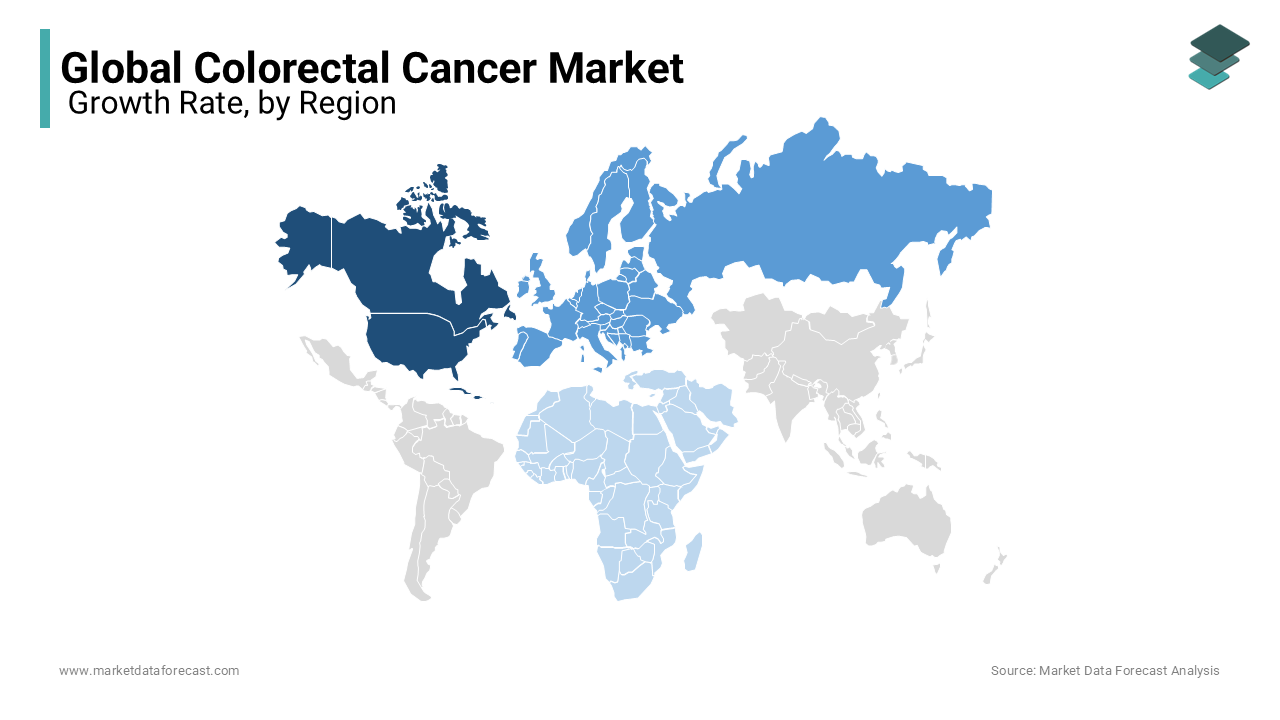
North America was the top performer in the European legal process outsourcing (LPO) market by capturing 40.3% of share in 2025 with the robust healthcare infrastructure, widespread adoption of screening programs, and rapid integration of novel therapeutics. The U.S. Preventive Services Task Force’s recommendation for screening initiation at age 45 has expanded the eligible population by nearly 20 million adults, as per the Centers for Disease Control and Prevention. Additionally, the prevalence of colorectal cancer is among the highest globally, with the American Cancer Society estimating 153,020 new cases in 2024.
Europe Colorectal Cancer Market Analysis
Europe colorectal cancer market was positioned next by capturing 22.3% of sahre in 2025. Organized fecal immunochemical test (FIT)-based screening programs cover more than 70% of the target population in countries like Germany and the Netherlands, contributing to a 40% reduction in CRC mortality since the 1990s, as noted by the European Commission’s Joint Research Centre. Moreover, the European Medicines Agency’s centralized approval system facilitates swift access to targeted therapies, while initiatives like the EU4Health program are expanding cross-border genomic data sharing by enhancing precision oncology deployment across member states.
Asia-Pacific Colorectal Cancer Market Analysis
The Asia-Pacific colorectal cancer market is lucratively growing with the rising incidence and healthcare modernization. China alone reports over 560,000 new CRC cases annually, surpassing all other nations, according to the National Cancer Center of China. Urbanization and dietary westernization marked by increased red meat consumption and declining fiber intake are key contributors, with a study in The Lancet Regional Health Western Pacific linking processed meat intake to a 28% higher CRC risk in East Asian populations.
Latin America Colorectal Cancer Market Analysis
Latin America colorectal cancer market is likely to have significant growth opportunities during the forecast period with a rising burden, with CRC incidence increasing by 2.1% annually over the past decade, as documented by the Latin American and Caribbean Cancer Registry Network. In Brazil, colorectal cancer has become the third most common cancer among men and women, with over 45,000 new cases diagnosed in 2023. However, access to timely diagnosis remains limited; the Ministry of Health reports that only 35% of public hospitals offer routine colonoscopy services.
Middle East and Africa Colorectal Cancer Market Analysis
The Middle East and Africa colorectal cancer market growth is likely to grow with the underdeveloped screening infrastructure and late-stage presentation. In South Africa, CRC incidence has risen by 1.8% per year since 2010, with the National Cancer Registry reporting over 7,000 new cases annually.
COMPETITIVE LANDSCAPE
The competitive landscape of the colorectal cancer market is characterized by intense innovation, strategic positioning, and a shift toward precision medicine. Established pharmaceutical and diagnostic firms are vying through advancements in molecular profiling, immunotherapy, and minimally invasive screening technologies. Competition is not solely price-driven but centers on clinical differentiation, regulatory milestones, and speed of market access. Companies are increasingly investing in real-world evidence generation and digital health integration to enhance product value. Regional disparities in healthcare infrastructure create both challenges and opportunities, prompting tailored market entry strategies.
KEY MARKET PLAYERS
Some notable companies dominating the global colorectal cancer market include
- Abbott Diagnostics
- Alere
- Beckman Coulter
- Clinical Genomics
- Companion Dx
- Hoffmann-La Roche
- Debiopharm Group
- Vaccinogen
- BD
Top Players in the Colorectal Cancer Market
Roche Diagnostics
Roche Diagnostics plays a pivotal role in the Asia Pacific colorectal cancer landscape through its molecular diagnostics and personalized healthcare solutions. The company has advanced the integration of biomarker testing in routine oncology practice, particularly with its cobas® KRAS Mutation Test and companion diagnostics for EGFR inhibitors. In Japan and South Korea, Roche collaborates with national cancer centers to expand access to liquid biopsy and microsatellite instability (MSI) testing. In 2023, it launched the AVENIO ctDNA Minimal Residual Disease kit in Australia and Singapore, enhancing post-treatment monitoring capabilities.
Abbott Laboratories
Abbott Laboratories has significantly contributed to colorectal cancer screening in the Asia Pacific by expanding access to non-invasive diagnostic tools, particularly through its i-STAT and Alinity platforms. The company’s focus on point-of-care testing enables rapid biomarker analysis in decentralized settings, an advantage in rural and underserved regions across India and Southeast Asia. In 2022, Abbott introduced a digital health integration for its diagnostic systems in Thailand, allowing real-time data sharing between clinics and central labs. It also collaborated with India’s Apollo Hospitals to deploy AI-assisted pathology solutions for early adenoma detection.
Exact Sciences Corporation
Exact Sciences has extended its influence in the Asia Pacific colorectal cancer market by introducing its Cologuard multi-target stool DNA test through strategic partnerships and regulatory approvals in Australia and South Korea. While the U.S. remains its core market, the company has initiated pilot programs in Japan and Taiwan to evaluate the adaptability of its non-invasive screening model to Asian populations. In 2023, Exact Sciences partnered with a leading Australian biobank to validate ctDNA-based detection algorithms for early-stage CRC. The company also invested in local educational campaigns to increase awareness of stool-based testing among primary care providers.
Top Strategies Used by Key Market Participants
Key players in the colorectal cancer market are deploying a combination of strategic collaborations, technological innovation, and geographic expansion to consolidate their positions. Major companies are increasingly forming alliances with academic institutions and healthcare networks to validate novel diagnostics and accelerate clinical adoption. Product innovation, particularly in liquid biopsy and AI-integrated platforms, is a dominant strategy to differentiate offerings in a competitive landscape. Firms are also investing in regulatory approvals across emerging markets to expand access to biomarker testing and targeted therapies
RECENT MARKET HAPPENINGS
- In October 2022, specialists identified many drug targets, a mini protein known as OMO-103, for cancers by specific mutations in genes that code for proteins, leading to unregulated growth, due to a protein essential for cell division, Myc, as a result of researchers' of OmomycTrusted growing understanding of the genome.
- In October 2022, a team from the University of Geneva used an optimized combination of drugs to attack cancer cells compared to chemotherapy to overcome resistance to treatment in the laboratory.
- In October 2022, a new gene was identified by researchers at the Tisch Cancer Institute at Mount Sinai for colon cancer growth, along with the discovery of a complex area of super-enhancer, for the first time.
- In October 2022, a new study from a national insurer's claims database, the Journal of the American College of Surgeons, suggested the more cost-effective FIT than mt-DNA testing for the noninvasive detection of colorectal without compromising the quality of care.
- In 2021, Epigenomics AG (Frankfurt Prime Standard: ECX, OTCQX: EPGNY; the "Company") announced that management disagreed and is highly disappointed with the decision not to hedge Epi proColon under the NCD published Tuesday by CMS.
- In 2019, EDP Biotech Corporation, a designer of in vitro diagnostics, zeroed in on early infection location and declared today that it has gone into a non-selective concurrence with Luminex Corporation (NASDAQ: LMNX). Under the terms, EDP Biotech will reserve the options to create, market, and sell its ColoPlex ™ colorectal disease indicative blood test utilizing Luminex xMAP® innovation.
- In 2019, Novigenix SA, a leading Immuno transcriptomics company that develops and markets solutions for early cancer detection and precision medicine, today announced promising data from a study of a new immune transcriptomic signature for the early detection of colorectal cancer (CRC) in the blood.
MARKET SEGMENTATION
This market research report on the global colorectal cancer market has been segmented and sub-segmented based on the treatment, diagnosis, and region.
By Diagnosis
- Digital Rectal Examination
- Fecal Occult Blood Test
- Flexible Sigmoidoscopy
- Colonoscopy
- Virtual Colonoscopy
By Treatment
- Surgery and Radiation Therapy
- Chemotherapy
- Targeted Therapies
- Resistance to Pharmacological Therapies
By Region
- North America
- Europe
- Asia Pacific
- Latin America
- Middle East & Africa