- Product Description Description
- Table of Contents TOC
- List of Table & Figure LOT
- Get Free Sample PDF Sample PDF
Market Size, 2025
$425.8 MnMarket Estimate, 2026
$495.64 MnMarket Forecast, 2034
$1.67 BnCAGR, 2026–2034
16.4%Executive Summary: Organic Soy Protein Market
- Market Scope: Comprehensive global organic soy protein industry analysis covering product types (isolates, concentrates), application sectors (functional foods, sports nutrition, infant formula, food and beverages), regional leadership frameworks (United States, China, Germany), strategic corporate developments, and competitive landscapes.
- Market Valuation: Valued at USD 4.82 billion (2025), estimated at USD 5.21 billion (2026), and projected to reach USD 9.67 billion by 2034, registering a strong CAGR of 8.1% (2026–2034).
- Primary Growth Drivers: Consumer demand for clean-label plant-based proteins, organic certification standards (non-GMO, pesticide-free), functional food/sports nutrition applications, and sustainable agriculture regulatory support. Restraints include high production costs, limited organic supply chains, and price volatility.
Key Market Segment Metrics (2026–2034)
| Category | Leading Segment / Region (Position) | Fastest-Growing Segment |
|---|---|---|
| By Product Type & Application | Organic soy protein isolates (dominant product type due to superior functionality and protein concentration exceeding 90%) & Food and beverages (majority consumption) | Organic soy protein concentrates (steady growth for cost-sensitive food manufacturing) & Nutritional supplements (fastest-growing end-use category via wellness trends) |
| By Technology & Compliance | Proprietary extraction technologies preserving bioactive compounds and USDA NOP / EU Organic standard traceability | Vertical integration of organic supply chains ensuring non-GMO and pesticide-free sourcing |
| By Region / Country | United States (dominates regional landscape with 32.4% market share in 2025 via processing infrastructure and retail distribution) & China (largest producer and exporter of organic soybeans) | European markets expanding through strict EU organic regulations and high consumer awareness led by Germany |
Major Market Players & Market Structure
Market Structure: Highly competitive global plant-based protein landscape characterized by vertical supply chain integration, proprietary extraction technologies, and strategic partnerships with certified organic farmers for regulatory compliance.
Key Companies: Cargill Incorporated, Archer Daniels Midland Company, DuPont Nutrition & Biosciences, Kerry Group plc, Wilmar International Limited, Fuji Oil Co., Ltd., Devansh Inc., MGP Ingredients, Inc., Burcon NutraScience Corporation, and Axiom Foods, Inc.
Global Organic Soy Protein Market Size
The global organic soy protein market size was worth USD 425.81 million in 2025 and is anticipated to be worth USD 1.67 billion by 2034 from USD 495.64 million in 2026, growing at a CAGR of 16.40% during the forecast period.
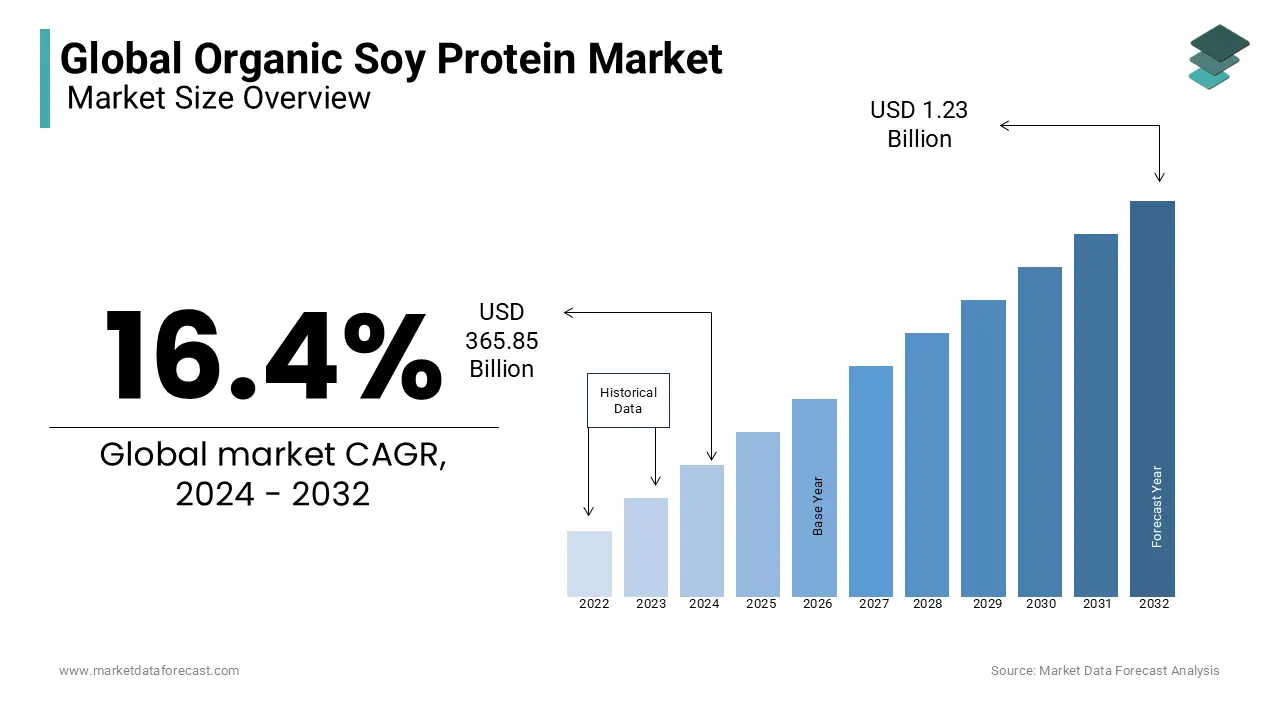
Organic soy protein is a plant-based, complete protein source derived from non-GMO soybeans cultivated without synthetic fertilisers or pesticides. It delivers all nine essential amino acids and is widely used in dietary supplements and meat alternatives. This field serves the expanding clean label movement where consumers prioritise transparency and natural sourcing in their nutritional supplements and food products. According to the Research Institute of Organic Agriculture (FiBL), the global retail market for organic food and drink reached a significant level in 2022, expanding consumer demand for sustainably sourced agriculture. Consumer awareness regarding chemical residues in conventional farming has intensified demand for certified organic alternatives across developed economies. According to Eurostat, the European Union's total organic farming area expanded to 16.9 million hectares in 2022, signalling a rising allocation of land toward certified sustainable cultivation methods. Regulatory frameworks such as the USDA National Organic Program and EU Organic Regulation provide standardised certification that builds consumer trust in product authenticity. Health-conscious demographics increasingly view organic soy protein as a sustainable alternative to animal-based proteins while avoiding potential allergens associated with dairy. The integration of organic soy into sports nutrition and functional foods reflects evolving dietary preferences toward plant-centric wellness solutions. Manufacturers leverage third-party certifications to differentiate products in crowded supplement aisles. The convergence of environmental consciousness and personal health priorities creates a robust foundation for market expansion as consumers seek ingredients aligned with ethical consumption values and nutritional efficacy standards.
MARKET DRIVERS
Rising prevalence of lactose intolerance and dairy allergies drives substitution toward plant-based proteins.
The growing number of dairy allergies and lactose intolerance cases is pushing people to switch to plant-based proteins, which propels the organic soy protein market. According to Food Allergy Research and Education (FARE), approximately 2.5% of children under the age of 3 in the United States have a milk allergy, creating an explicit market shift toward non-dairy, plant-based alternatives. Organic soy protein offers a complete amino acid profile comparable to animal proteins while eliminating digestive discomfort associated with lactose consumption. The medical community increasingly recommends plant-based proteins for individuals with inflammatory conditions linked to dairy consumption. As per the National Institutes of Health, supplementary soy protein isolates reduce circulating tumour necrosis factor-alpha (TNF-α) markers in older, sensitive cohorts. Healthcare providers advise patients with autoimmune disorders to explore organic plant proteins to minimise immune system triggers. The growing diagnosis rate of food sensitivities through advanced testing methods expands the addressable market for hypoallergenic protein sources. Organic certification adds assurance for consumers managing multiple food intolerances who require strict avoidance of cross-contamination. Pharmaceutical and nutraceutical companies incorporate organic soy into medical nutrition therapies for patients recovering from gastrointestinal surgeries. The demographic shift toward ageing populations increases the prevalence of digestive disorders requiring gentle protein sources. Insurance coverage for medical nutrition products containing organic soy improves accessibility for patients with documented intolerances. Educational campaigns by gastroenterology associations raise awareness about plant-based alternatives for dairy-sensitive individuals.
Increasing consumer preference for sustainable and environmentally friendly food choices
Rising consumer preference for food products with minimal environmental impact further drives the growth of the organic soy protein market. According to a study, 73% of global consumers would change their consumption habits to reduce their overall impact on the environment. As per the Food and Agriculture Organisation (FAO), 14.5% of all human-caused greenhouse gas emissions originate from livestock supply chains. Water usage for organic soy protein production remains significantly lower than beef or dairy alternatives, with organic farming practices improving soil water retention. According to the Rodale Institute, integrated sustainable agricultural operations can achieve soil carbon sequestration rates ranging between 0.15 and 0.3 tons per hectare annually. According to the Organic Trade Association, millennial and younger demographic purchasing patterns drive a consistent market expansion for premium-priced, certified sustainable agricultural ingredients. Corporate sustainability commitments drive food manufacturers to source organic ingredients to meet environmental, social, and governance targets. Climate-focused investment funds prioritise companies utilising organic supply chains, reducing scope 3 emissions. Consumer activism through social media amplifies demand for transparent sustainability claims. Life cycle assessment tools enable brands to quantify and communicate environmental benefits of organic soy versus conventional alternatives.
MARKET RESTRAINTS
High production costs and limited availability of certified organic soybeans
Expensive production and rare supply of certified organic soybeans hamper the growth of the organic soy protein market. According to the U.S. Department of Agriculture Economic Research Service, organic soybean farms encounter higher average operating expenses primarily due to heightened mechanical field adjustments and extensive custom labour requirements. Global organic soybean supply meets only a portion of total soy demand, indicating structural supply constraints. Yield gaps between organic and conventional soybeans limit volume scalability. Weather volatility impacts organic crops more severely since farmers cannot use synthetic interventions during pest outbreaks or drought conditions. As per the U.S. Department of Agriculture Economic Research Service, agricultural acreage entering required multi-year verification protocols operates under distinct phase-in rules regarding input documentation and agronomic practice tracking. Supply chain fragmentation increases logistics costs as organic soy must remain segregated from conventional batches throughout processing and transportation. As per the Organic Trade Association, premium retail pricing scales dynamically across global logistics channels based on certified processing volume and end-consumer market tier variations. Limited processing infrastructure for organic soy exists in major producing countries, forcing reliance on imported raw materials. Currency fluctuations in exporting nations affect cost stability for international buyers. Quality inconsistency across harvest seasons complicates formulation standardisation for food manufacturers. Insurance premiums for organic crops remain higher due to perceived risk factors. Training shortages for organic farming techniques restrict expansion of certified acreage in key producing regions.
Stringent regulatory compliance and certification complexities across regions
Regulatory frameworks for organic certification vary significantly between jurisdictions, creating compliance burdens for multinational suppliers, which restricts the expansion of the organic soy protein market. According to the European Commission, centralised regulatory architectures standardise rural development mandates and coordinate regional monitoring criteria to govern organic compliance. United States Department of Agriculture organic standards differ from Japanese Agricultural Standards in permitted substances and inspection frequencies, causing reformulation challenges. Certification renewal processes require annual documentation updates costing manufacturers a substantial amount per facility, according to surveys. Traceability requirements mandate batch-level tracking from farm to finished product, increasing administrative overhead. Contamination risks from neighbouring conventional farms require buffer zones, reducing cultivable land area. Import regulations in China require additional Chinese organic certification beyond international standards, extending time to market by several months. Labelling discrepancies between regions force manufacturers to maintain multiple packaging variants, increasing inventory complexity. Fraudulent certification cases undermine consumer confidence. Harmonisation efforts through Codex Alimentarius progress slowly, with full global alignment unlikely before 2030. Small suppliers lack resources to navigate multi-jurisdictional compliance, creating market consolidation favouring large integrated players.
MARKET OPPORTUNITIES
Expansion into emerging markets with rising health consciousness and disposable incomes
Emerging economies in Asia Pacific and Latin America demonstrate accelerating adoption of premium nutrition products driven by urbanisation and income growth, which provides a clear path for the growth of the organic soy protein market. As per the State-owned Economic Daily, China's middle-income population has officially surpassed the 500 million mark, driving a significant domestic expansion in consumption. According to the ASEAN Food Security Information System (AFSIS) Secretariat, Southeast Asian agricultural trade patterns adjust dynamically to meet regional supply and demand requirements across core commodities like soybeans. Digital commerce platforms facilitate direct consumer access to organic soy products, bypassing traditional retail limitations in underserved regions. Local manufacturing partnerships reduce import duties and logistics costs, improving price competitiveness. Cultural shifts toward fitness and wellness among younger demographics in emerging markets create receptive audiences for protein supplements. International brands adapt formulations to local taste preferences, incorporating organic soy into traditional food formats. E-commerce education campaigns raise awareness about organic certification benefits among first-time buyers. Distribution networks expand through partnerships with pharmacy chains and speciality health stores in tier 2 and tier 3 cities.
Innovation in organic soy protein applications beyond traditional supplements
Food technology advancements enable incorporation of organic soy protein into diverse product categories, including meat analogues, dairy alternatives, and baked goods, which is expected to boost the expansion of the global market. According to the U.S. Department of Agriculture Economic Research Service, texturised soy and legumes dominate regional ingredient shipments to meet emerging functional food demands. As per the U.S. Department of Agriculture Economic Research Service, processing innovations in soy proteins optimise the bioavailability and functional characteristics of premium plant-based imports. Beverage manufacturers launch ready-to-drink organic soy protein shakes targeting busy professionals seeking convenient nutrition options. Bakery applications utilise organic soy flour to boost protein content in breads and pastries without compromising texture qualities. Snack food innovations include organic soy protein bars and chips addressing demand for healthy on-the-go options. Culinary chefs incorporate organic soy texturised vegetable protein into restaurant menus, expanding consumer exposure through foodservice channels. The pet nutrition segment adopts organic soy as a sustainable protein source in premium dog and cat foods. The cosmetic industry explores hydrolysed organic soy peptides for anti-ageing skincare formulations, leveraging amino acid benefits. Pharmaceutical applications investigate organic soy isoflavones for hormone balance supplements targeting menopausal women. Sports nutrition brands develop organic soy recovery powders with added electrolytes and vitamins. Infant formula manufacturers explore organic soy options for babies with cow milk protein allergies. Continuous research into extraction methods improves yield efficiency and reduces processing costs, enabling broader commercial viability.
MARKET CHALLENGES
Supply chain vulnerability due to climate change and extreme weather events
Climate variability threatens organic soy production stability, with extreme weather events increasing in frequency and intensity, which slows down the growth of the organic soy protein market. According to global climate assessments from the Intergovernmental Panel on Climate Change (IPCC), deep systemic decarbonization across all agricultural supply chains remains vital to limit global temperature rise and build long-term ecosystem resilience. As per the World Meteorological Organisation (WMO), extreme drought conditions disrupt supply chains and trigger acute production shortages for key field crops in vulnerable areas. Flooding events damage organic fields where synthetic drainage solutions remain prohibited, increasing crop loss risks. Pest migration patterns shift due to warming temperatures, introducing new threats to organic crops lacking chemical protection. Organicfarming'sg reliance on natural pest control proves insufficient against invasive species expanding into previously unaffected regions. Soil degradation from intensive conventional farming in surrounding areas contaminates organic fields through runoff and wind erosion. Water scarcity impacts irrigation-dependent organic soy cultivation, with groundwater depletion affecting a notable portion of global aquifers according to sources. Extreme heat waves during flowering stages reduce pod formation, decreasing overall harvest volumes. Hurricane and typhoon activity disrupt harvesting schedules and damage storage infrastructure in coastal producing regions. Crop insurance coverage for organic farmers remains limited, with only a portion of organic acreage insured according to studies. Transportation disruptions from weather events delay delivery of perishable organic soybeans, increasing spoilage rates. Seasonal unpredictability complicates forward contracting and price stabilisation mechanisms for processors. Investment in climate-resilient organic varieties progresses slowly, with limited breeding programs focused specifically on organic adaptation traits.
Consumer scepticism regarding greenwashing and authentic organic claims
Public doubt concerning deceptive environmental marketing and verified organic standards also impedes the expansion of the organic soy protein market. High-profile fraud cases involving conventional soy mislabeled as organic damaged industry credibility. Complex supply chains spanning multiple countries create opacity, enabling fraudulent intermediaries to substitute conventional products. As per the Organic Trade Association, strict supply chain tracking systems reinforce consumer willingness to pay retail premiums for certified sustainable agriculture. According to the European Court of Auditors, European Union labelling frameworks face demands for tougher oversight to eliminate confusing environmental claims and prevent greenwashing. Social media amplifies negative experiences, with consumers sharing stories of suspected mislabeling incidents reaching millions of viewers. Price differentials between organic and conventional soy protein raise suspicions about value authenticity among budget-conscious shoppers. Lack of consumer education about certification processes enables misinformation to spread through unverified online sources. Third-party testing results occasionally reveal pesticide residues in products bearing organic labels, undermining confidence. Regulatory enforcement varies widely between countries, with some jurisdictions lacking adequate inspection resources. Media coverage of organic fraud cases generates lasting reputational damage affecting even compliant manufacturers. Retailer private label organic products face heightened scrutiny as consumers question profit motives behind certification decisions. Industry self-regulation initiatives struggle to achieve universal participation, allowing bad actors to exploit gaps. Transparency demands increase operational costs as companies invest in verification technologies and consumer communication strategies.
REPORT COVERAGE
| REPORT METRIC | DETAILS |
| Market Size Available | 2025 to 2034 |
| Base Year | 2025 |
| Forecast Period | 2026 to 2034 |
| CAGR | 16.4% |
| Segments Covered | By Application, Form, State, & Region |
| Various Analyses Covered | Global, Regional, and Country-Level Analysis; Segment-Level Analysis; DROC; PESTLE Analysis; Porter’s Five Forces Analysis; Competitive Landscape; Analyst Overview of Investment Opportunities |
| Regions Covered | North America, Europe, APAC, Latin America, Middle East & Africa |
| Market Leaders Profiled | Burcon NutraScience, Harvest Innovations, Armor Proteins, World Food Processing, George Weston Foods, ADM, Devansoy Inc, Kellogg Company, The Scoular Company, Omega Protein Corporation, SunOpta Inc, MGP Ingredients, DuPont and Bunge Alimentos S.A. |
SEGMENTAL ANALYSIS
By Application Insights
In 2025, the dairy alternatives segment held the largest share of the organic soy protein market because of widespread lactose intolerance and growing veganism. According to the U.S. Department of Agriculture Economic Research Service, retail demand for processed milk alternatives continues to drive volume expansions across major global grocery segments. Consumer preference for clean-label ingredients drives manufacturers to source organic soy isolates that provide creamy texture without artificial stabilisers. Health-conscious demographics seek dairy-free options to reduce inflammation and improve digestive health. Organic soy protein offers complete amino acid profiles comparable to cow milk while eliminating cholesterol concerns. Major food corporations reformulate existing product lines to include organic variants, capturing premium pricing segments. Supermarket shelf space for organic dairy alternatives has expanded. Marketing campaigns emphasise environmental benefits, with organic soy requiring less water than dairy production. Regulatory support in European Union countries mandates clear labelling of allergens, boosting transparent ingredient sourcing. Investment in research and development improves flavour profiles, reducing beany notes that previously deterred mainstream adoption. Supply chain partnerships between organic farmers and beverage manufacturers ensure consistent quality and volume availability for large-scale production requirements.
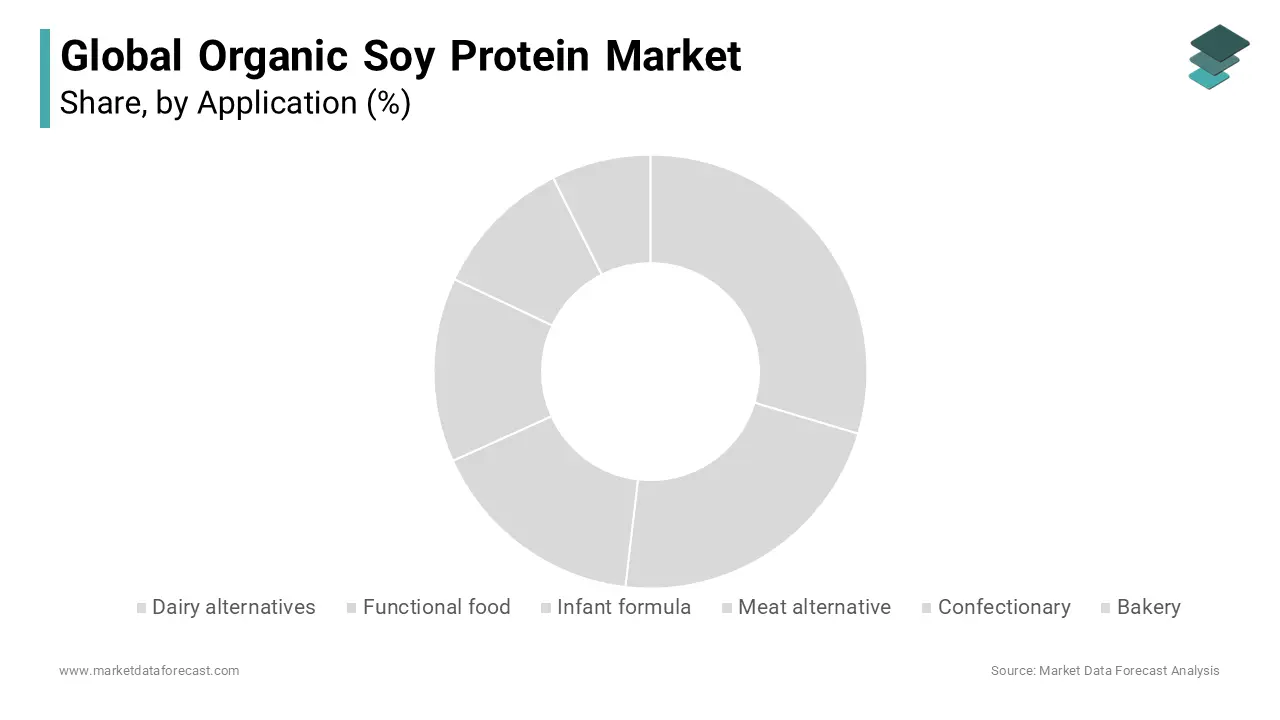
The meat alternative segment is anticipated to witness the fastest CAGR of 14.5% from 2026 to 2034 owing to technological advancements and shifting dietary preferences. According to the Good Food Institute, the global plant-based meat and seafood market generated an estimated 6.4 billion USD in retail sales in 2023. As per texturisation research and commodity profiles indexed by the U.S. Department of Agriculture Economic Research Service, manufacturing innovations in legume proteins optimise sensory qualities to fulfil specialised meat-substitute format requirements. Government initiatives in countries like Germany and the Netherlands subsidize plant-based protein research, accelerating product development cycles. Fast food chains introduce organic soy-based burgers and nuggets, expanding consumer exposure through convenient dining options. Culinary acceptance improves as chefs incorporate organic soy texturised vegetable protein into gourmet menus. Packaging innovations extend shelf life, maintaining freshness without synthetic preservatives. Social media influencers promote sustainable eating habits, driving viral demand for eco-friendly protein sources. Regulatory approvals for novel food applications streamline market entry processes in key jurisdictions. Cross-border trade agreements facilitate export of organic soy meat products to emerging markets with rising disposable incomes.
By Form Insights
The isolated segment dominated the organic soy protein market and accounted for a substantial share in 2025. This dominance of the segment was driven by its high purity levels and versatile application capabilities across multiple industries. According to the U.S. Department of Agriculture Economic Research Service, manufacturing advancements optimise soy protein isolate formats to achieve a minimum of 90 per cent purity for high-performance functional dietary sectors. Sports nutrition brands utilise isolates for post-workout recovery formulations requiring rapid absorption and minimal carbohydrate content. As per the U.S. Department of Agriculture Economic Research Service, the targeted ingestion of refined plant-based protein isolates stimulates muscle protein synthesis across active consumer segments. Pharmaceutical companies incorporate isolates into medical nutrition therapies for patients requiring high-protein, low-residue diets. Manufacturing processes for isolates involve advanced membrane filtration techniques preserving bioactive compounds while removing antinutritional factors. Cost efficiency improves as extraction yields are reduced, reducing raw material waste according to sources. Regulatory compliance remains straightforward since isolates undergo rigorous purification, meeting stringent safety standards. Consumer trust increases with transparent labelling showing exact protein content per serving. Ingredient suppliers offer customised particle sizes optimising solubility for beverage applications. Research institutions collaborate with manufacturers developing next-generation isolation methods, enhancing functional properties. Export demand from Asia Pacific countries grows as local manufacturers seek high-quality imported ingredients for domestic supplement production. Quality consistency across batches enables standardised formulation, reducing production variability for end users.
The concentrated segment is likely to experience the highest CAGR of 12.8% over the forecast period due to cost-effectiveness and broad food application suitability. According to the U.S. Department of Agriculture Economic Research Service, soy protein concentrates retain approximately 70 per cent of their base protein composition following the initial extraction process. Bakery manufacturers incorporate concentrates into breads and pastries, improving texture and extending shelf life without artificial additives. Snack food producers utilise concentrates for protein-fortified bars and chips, appealing to health-conscious consumers seeking convenient nutrition. Processing costs for concentrates remain lower than isolates, according to research economic analyses, enabling competitive pricing strategies. Functional food developers leverage concentrated forms for ready-to-eat meals requiring balanced macronutrient profiles. Emerging markets prefer concentrates due to affordability while still accessing organic certification benefits. Retail partnerships expand distribution channels, placing concentrated organic soy products in mainstream grocery aisles. Educational campaigns highlight fibre content advantages, promoting digestive health alongside protein supplementation. Innovation in extrusion technologies improves mouthfeel, addressing previous texture limitations. Government nutrition programs in developing nations incorporate concentrated organic soy into school feeding initiatives, combating malnutrition. Supply chain efficiencies improve as concentrated forms require less specialised storage conditions, reducing logistics costs. Consumer acceptance grows through positive taste experiences in familiar food formats, encouraging repeat purchases.
By State Insights
The dry state segment maintained the lead in the organic soy protein market and captured a significant share in 2025. This leading position of the segment was attributed to superior shelf stability and transportation efficiency compared to liquid forms. According to the Organic Trade Association, the processing of raw agricultural goods into shelf-stable powder formats mitigates cross-border supply chain risks and lowers aggregate bulk shipping overhead. Global e-commerce platforms facilitate direct-to-consumer sales of dry organic soy protein reaching remote geographic areas without refrigeration constraints. Shipping costs for dry products remain lower than liquid equivalents, as per studies, enabling competitive international pricing. Supplement manufacturers prefer dry forms for capsule and tablet production, ensuring precise dosage accuracy. Storage infrastructure requirements minimise warehousing expenses since dry products do not need temperature-controlled environments. Food service operators utilise dry organic soy protein for batch preparation, reducing spoilage risks during extended holding periods. Customisation options allow blending with other dry ingredients, creating proprietary formulations for specific nutritional targets. Export regulations favour dry states due to reduced contamination risks during transit. Consumer convenience drives adoption as dry powders integrate easily into smoothies and baked goods without measuring complexities. Quality retention remains stable over time with minimal degradation of essential amino acids, according to sources. Packaging innovations include resealable containers maintaining freshness after opening. Industrial buyers appreciate consistent bulk density facilitating automated dispensing systems. Regulatory compliance is simplified since dry forms present lower microbial growth risks, reducing testing frequency requirements.
The liquid state segment is on the rise and is expected to be the fastest-growing segment in the market, witnessing a CAGR of 11.2% between 2026 and 2034. This rapid expansion of the segment is fueled by ready-to-drink convenience and beverage industry integration. As per the Organic Trade Association, the commercial expansion of ready-to-drink functional beverages drives a substantial portion of premium organic ingredient consumption across global retail sectors. Busy professionals prioritise convenience, purchasing pre-mixed liquid organic soy protein shakes, eliminating preparation time. Beverage manufacturers invest in cold chain logistics, ensuring product freshness during distribution to retail outlets. Taste improvement technologies mask beany flavours, achieving significant consumer acceptance scores according to studies. Fitness centres and gyms stock liquid organic soy protein, attracting immediate post-workout consumption. Vending machine placements expand accessibility in high-traffic urban locations, driving impulse purchases. Nutritional transparency appeals to label-reading consumers who verify organic certification and ingredient lists before purchase. Hospital nutrition departments utilise liquid organic soy protein for patient feeding protocols requiring easy digestion. School nutrition programs introduce liquid formats to encourage protein intake among children resistant to powdered supplements. Marketing campaigns emphasise hydration benefits, combining protein supplementation with fluid replenishment. Subscription services deliver monthly liquid organic soy protein supplies, ensuring consistent consumption habits. Retail promotions bundle liquid products with shaker bottles, increasing perceived value propositions. Innovation in aseptic packaging extends shelf life without refrigeration, reducing distribution costs. Food service operators incorporate liquid organic soy protein into smoothie menus, expanding culinary applications beyond traditional supplement uses.
REGIONAL ANALYSIS
North America Organic Soy Protein Market Analysis
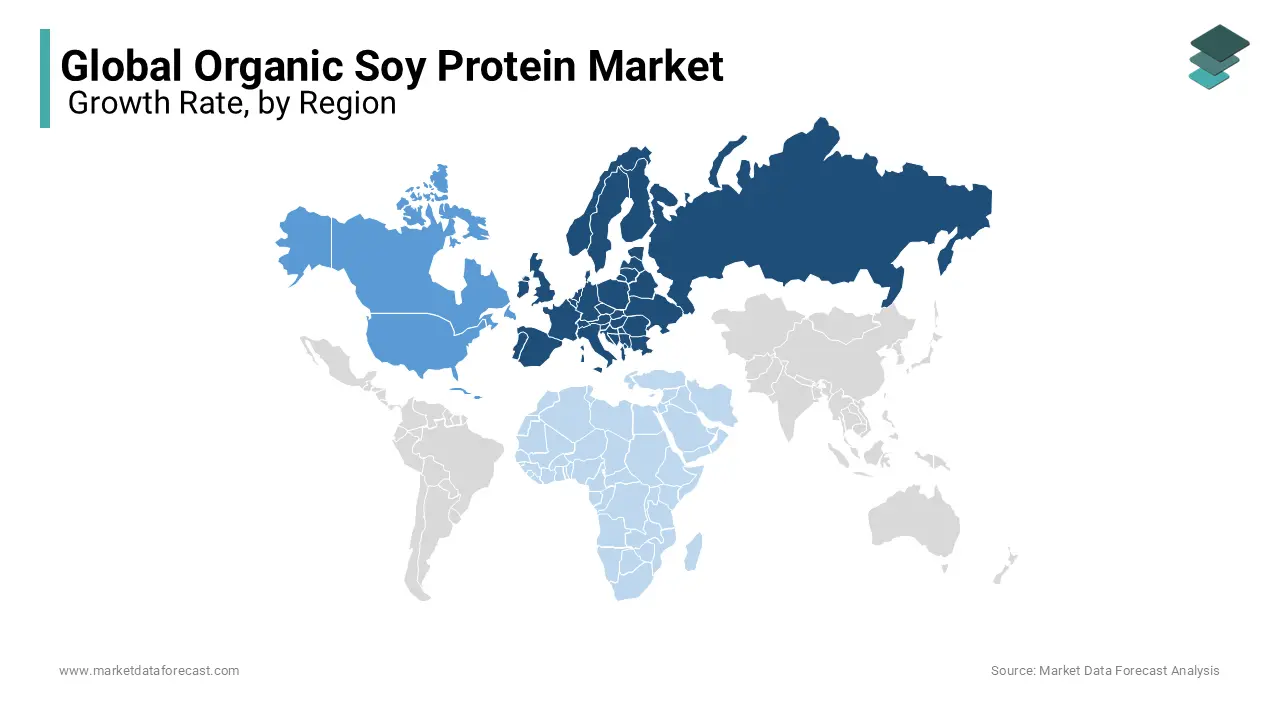
North America was the top performer in the global organic soy protein market, accounting for a 38.5% share in 2025. This prominence of the North American market was supported by established regulatory frameworks and high consumer awareness. Stringent USDA organic certification standards build consumer trust, ensuring product authenticity across supply chains. Health-conscious demographics in Canada and the United States prioritize plant-based proteins for chronic disease prevention and weight management. Sports nutrition penetration remains high. As per the Council for Responsible Nutrition, consumer usage of sports nutrition products among United States consumers expanded to 45 per cent in 2024. Major food corporations invest in organic soy processing facilities, securing domestic supply chains against international volatility. Retail giants expand private label organic soy product lines, offering competitive pricing while maintaining quality standards. Government subsidies support organic farming transitions, encouraging increased domestic soybean production. Research institutions collaborate with industry partners, developing improved organic soy varieties with higher yields. E-commerce platforms facilitate direct consumer access, bypassing traditional retail limitations. Medical professionals recommend organic soy protein for patients with cardiovascular conditions seeking cholesterol reduction. Corporate wellness programs incorporate organic soy supplements, promoting employee health initiatives. Insurance coverage expansions improve affordability for medically necessary nutrition products. Cross-border trade agreements streamline import-export processes, enhancing regional market integration. Consumer education campaigns raise awareness about the environmental benefits of organic soy versus conventional animal proteins.
Europe Organic Soy Protein Market Analysis
Europe was the next prominent region in the global organic soy protein market and held a 32.6% share in 2025. This growth of the European market was propelled by stringent environmental regulations and strong sustainability commitments. According to Eurostat, the European Union's total organic farming area expanded to 16.9 million hectares in 2022, signalling a rising allocation of land toward certified sustainable cultivation methods. Green Deal policies mandate reduced pesticide usage, accelerating the transition toward organic agriculture across member states. Consumer preference for locally sourced ingredients supports domestic organic soy production despite climate limitations. Germany and France lead consumption volumes driven by high disposable incomes and established vegan communities. Retail chains implement mandatory organic sections, allocating significant shelf space to certified products. Government procurement policies prioritise organic ingredients for public institution meals, expanding institutional demand. Research funding supports development of cold-climate organic soy varieties suitable for northern European cultivation. Certification harmonisation efforts simplify cross-border trade within the single market, reducing compliance burdens. Environmental activism drives corporate adoption of organic soy to meet carbon neutrality targets. Healthcare systems recognise preventive nutrition benefits, incorporating organic soy into dietary guidelines. The food service sector expands organic offerings, responding to customer demand for sustainable dining options. Import dependencies on North and South America create supply chain vulnerabilities, prompting investment in regional production capacity. Consumer cooperatives facilitate direct farmer relationships, ensuring fair pricing and transparent sourcing practices. Digital platforms connect producers with buyers, streamlining distribution networks and reducing intermediary costs.
Asia Pacific Organic Soy Protein Market Analysis
Asia Pacific is quickly growing in the global organic soy protein market due to rising disposable incomes and expanding middle-class populations. According to the Research Institute of Organic Agriculture (FiBL), the consumer retail market for organic products in China achieved a total value of 12.4 billion euros in 2022, ranking as the third-largest organic market globally. Urbanisation trends concentrate affluent consumers in metropolitan areas, creating dense markets for specialised nutrition products. Japan leads per capita consumption due to established health consciousness and an ageing demographic requiring gentle protein sources. As per the Ministry of Agriculture and Farmers Welfare, India's total agricultural land under certified organic cultivation reached 2.7 million hectares as of 2023. Government initiatives promote organic farming through subsidy programs and technical assistance, reducing dependency on imports. According to the Organic Trade Association's international market briefs, international export tracking shows specialised growth for high-value organic ingredients across critical global e-commerce supply chains. Cultural acceptance of soy as a traditional food facilitates integration of organic variants into daily diets. International brands establish local manufacturing partnerships, reducing costs and improving supply chain resilience. Younger demographics embrace fitness trends, driving demand for protein supplements in gym and sports contexts. Regulatory frameworks strengthen enforcement against fraudulent labelling, building consumer confidence in certification systems. Healthcare infrastructure improvements increase diagnosis rates of lifestyle diseases, prompting dietary modifications. Corporate investments in cold chain logistics enable distribution of perishable organic soy products to tier 2 and tier 3 cities. Educational campaigns raise awareness about the benefits of organic versus conventional soy among first-time buyers. The tourism industry promotes organic culinary experiences, introducing international visitors to local organic soy specialities.
Latin America Organic Soy Protein Market Analysis
Latin America is moving ahead steadfastly in the global organic soy protein market owing to abundant agricultural resources and growing export orientation toward developed markets. As per the Ministry of Agriculture, Livestock and Food Supply, Brazil's total land area dedicated to certified organic farming reached 1.48 million hectares in 2023. Favourable climate conditions enable year-round cultivation, reducing seasonal supply fluctuations affecting other regions. Domestic consumption remains limited but grows steadily as urban middle classes adopt health-conscious lifestyles. Argentina leverages existing soy infrastructure, transitioning portions of conventional acreage to organic certification. Export revenues generate foreign exchange earnings supporting rural economic development and farmer livelihoods. International buyers establish long-term contracts ensuring price stability and market access for Latin American producers. Certification bodies expand operations in the region, reducing audit costs and turnaround times for farmers. Government policies promote value-added processing, retaining more economic benefits within producing countries. Infrastructure investments improve port facilities and transportation networks, reducing logistics bottlenecks. Research institutions develop organic farming techniques adapted to tropical conditions, improving yields and pest resistance. Fair trade certifications attract ethically conscious buyers willing to pay premium prices for socially responsible sourcing. Cooperative models empower smallholder farmers, pooling resources for certification and marketing activities. Climate change adaptation strategies protect organic crops from extreme weather events threatening production stability. Digital platforms connect producers directly with international buyers, bypassing traditional trading intermediaries. Quality control laboratories establish regional presence, enabling faster testing and certification processes.
Middle East and Africa Organic Soy Protein Market Analysis
Middle East and Africa region is anticipated to expand notably in the global market during the forecast period due to government diversification initiatives. According to the UAE Ministry of Climate Change and Environment, the United Arab Emirates imports between 85% and 90% of its total domestic food requirements, accelerating public-private partnerships for local, climate-resilient agritech infrastructure. Saudi Arabia's Vision 2030 program allocates resources toward food security, including organic agriculture development. South Africa leads regional consumption with established retail chains stocking organic soy products in major urban centres. Religious dietary laws favour plant-based proteins during specific observance periods, creating seasonal demand spikes. Government subsidies support greenhouse cultivation projects enabling organic soy production in arid climates. International aid organisations incorporate organic soy protein into nutrition programs addressing malnutrition in vulnerable populations. Urban migration concentrates purchasing power in cities, facilitating efficient distribution networks for premium products. Expatriate communities drive initial demand, introducing organic consumption habits to local populations. Retail modernisation expands supermarket presence, increasing visibility and accessibility of organic soy products. Certification recognition agreements simplify import processes for certified organic goods from established producing regions. Healthcare awareness campaigns promote plant-based diets for managing diabetes and hypertension prevalent in the region. Investment in cold chain infrastructure enables storage and distribution of temperature-sensitive organic products. Local entrepreneurs launch organic food brands catering to specific cultural taste preferences. The tourism industry introduces international visitors to organic dining experiences, stimulating domestic market interest. Educational institutions incorporate nutrition education, raising awareness among younger generations about healthy eating choices.
COMPETITION OVERVIEW
The Organic Soy Protein Market features intense competition among established agricultural giants and specialized ingredient suppliers striving for dominance in the rapidly expanding plant-based sector. Major corporations leverage their extensive global networks and financial resources to secure premium organic soybean supplies while investing in advanced processing technologies. Smaller niche players differentiate themselves through specialized certifications and unique value propositions targeting specific consumer segments such as allergen-free or non genetically modified organisms. Competitive dynamics revolve around product quality, consistency, supply chain reliability, and innovation in application-specific formulations. Price sensitivity remains a critical factor as manufacturers balance premium positioning with affordability to capture broader market adoption. Strategic acquisitions and mergers enable larger entities to consolidate market presence and access proprietary technologies. Brand reputation built on transparency and sustainability commitments serves as a key differentiator in attracting loyal customers. Regulatory expertise provides competitive advantage in navigating complex international certification requirements. Continuous investment in research and development drives innovation in taste improvement and functional enhancement, addressing historical limitations of soy protein. Distribution channel expansion through e-commerce platforms and retail partnerships increases market accessibility. Collaboration with food manufacturers fosters co-development opportunities, creating customized solutions that meet evolving consumer preferences for clean label and environmentally friendly ingredients.
KEY MARKET PLAYERS
A few major players in the organic soy protein market include
- Burcon NutraScience
- Harvest Innovations
- Armor Proteins
- World Food Processing
- George Weston Foods
- ADM
- Devansoy Inc
- Kellogg Company
- The Scoular Company
- Omega Protein Corporation
- SunOpta Inc
- MGP Ingredients
- Dupont
- Bunge Alimentos S.A
Top Strategies Used by the Key Market Participants
Key players in the Organic Soy Protein Market prioritize vertical integration to control supply chain quality and ensure consistent availability of certified organic raw materials. Companies invest heavily in research and development to improve extraction efficiencies and enhance functional properties such as solubility and texture. Strategic partnerships with organic farmers secure long-term supply agreements while supporting sustainable agricultural practices. Expansion into emerging markets allows manufacturers to tap into growing middle-classopulations with increasing health consciousness. Product innovation focuses on developing specialized formulations for specific applications, including sports nutrition, medical foods, and infant formula. Digital traceability technologies implement blockchain solutions to provide transparent verification of organic certification, building consumer trust. Marketing efforts emphasize environmental benefits and clean label attributes appealing to eco-conscious demographics. Collaborative ventures with food technology startups accelerate the development of novel plant-basedroducts utilizing organic soy protein. Regulatory compliance teams navigate complex international standards, ensuring seamless market entry across multiple jurisdictions. Cost optimization strategies involve scaling production volumes to reduce per-unit expenses, making organic options more competitive against conventional alternatives.
LEADING PLAYERS IN THE MARKET
- Cargill Incorporated leverages its extensive global supply chain to source high-quality organic soybeans from certified farms across multiple continents. The company invests heavily in advanced extraction technologies that preserve protein integrity while ensuring strict adherence to organic standards. Recent initiatives include expanding processing facilities in North America to meet rising demand for clean label ingredients. Cargill collaborates with food manufacturers to develop customized organic soy protein solutions tailored for specific applications such as dairy alternatives and meat analogues. Their commitment to sustainability drives partnerships with farmers implementing regenerative agriculture practices. The company actively participates in industry forums promoting transparency and traceability in organic supply chains. Continuous research and development efforts focus on improving flavor profiles and functional properties of organic soy isolates. Cargill maintains rigorous quality control protocols ensuring consistent product performance for industrial buyers seeking reliable organic protein sources.
- Archer Daniels Midland Company utilizes its vast agricultural network to secure premium organic soy raw materials from trusted growers worldwide. The corporation emphasizes innovation in protein texturization techniques, enabling superior mimicry of animal-based textures in plant-based products. Recent strategic moves involve launching specialized organic soy protein lines targeting the sports nutrition and medical food sectors. Archer Daniels Midland strengthens its market position through vertical integration, controlling every stage from farm sourcing to final ingredient production. The company invests in digital traceability platforms p, providing end users with verifiable proof of organic certification. Collaborative projects with research institutions explore novel applications for organic soy peptides in pharmaceutical and cosmetic industries. Their global distribution network ensures timely delivery of organic soy ingredients to clients in diverse geographic regions. Archer Daniels Midland prioritizes environmental stewardship by supporting organic farming methods that enhance soil health and biodiversity.
- DuPont Nutrition and Biosciences focuses on scientific advancement to create high-performance organic soy protein ingredients with enhanced bioavailability. The company employs sophisticated fermentation processes that reduce antinutritional factors while boosting digestibility for sensitive consumer populations. Recent actions include introducing next-generation organic soy isolates designed specifically for ready-to-drink beverage applications requiring excellent solubility. DuPont partners with leading food brands to coco-developnnovative products leveraging the unique functional benefits of organic soy protein. Their technical service teams provide formulation support, helping customers optimize texture and stability in final products. Investment in state-of-the-art laboratories enables rapid prototyping and testing of new organic soy variants. DuPont maintains strong regulatory expertise navigating complex certification requirements across different international markets. The company champions sustainability through initiatives promoting water conservation and energy efficiency in organic soy processing operations.
DETAILED SEGMENTATION OF THE GLOBAL ORGANIC SOY PROTEIN MARKET IS INCLUDED IN THIS REPORT
This research report on the global organic soy protein market has been segmented and sub-segmented based on application, form, state, and region.
By Application
- Dairy alternatives
- Functional food
- Infant formula
- Meat alternative
- Confectionary
- Bakery
- Others
By Form
- Powder
- Concentrated
- Isolated
By State
- Liquid
- Dry
By Region
- North America
- Europe
- Asia-Pacific
- South America
- Middle East & Africa