- Product Description Description
- Table of Contents TOC
- List of Table & Figure LOT
- Get Free Sample PDF Sample PDF
Market Size, 2025
$44.56 BnMarket Estimate, 2026
$46.97 BnMarket Forecast, 2034
$71.53 BnCAGR, 2026–2034
5.40%Executive Summary: Artificial Organs Market
- Market Scope: Comprehensive global artificial organs market analysis covering organ types, material/technology categories, end-user settings, regional leadership frameworks, and clinical adoption hurdles.
- Market Valuation: Valued at USD 30.86 billion (2025), estimated at USD 33.32 billion (2026), and projected to reach USD 62.34 billion by 2034, registering a robust CAGR of 8.15% (2026–2034).
- Primary Growth Drivers: High prevalence of chronic organ failures caused by conditions such as cardiovascular disease, diabetes, and kidney disorders, coupled with severe donor shortages and technological breakthroughs in 3D bioprinting, biomaterials, and AI-integrated bionic systems. Technical and operational challenges include high device costs, strict regulatory approvals, and stringent immunological compatibility constraints.
Key Market Segment Metrics (2026–2034)
| Category | Leading Segment (2025 Position) | Fastest-Growing Segment |
|---|---|---|
| By Organ Type | Artificial Kidney (accounted for a dominant share of 51.24% in 2025) | Artificial Heart (projected to grow at a strong CAGR driven by magnetically levitated rotary pump advancements) |
| By Technology | Mechanical Artificial Organs (held the major market share of 59.73% in 2025) | Wearable / Externally Worn Devices (projected to register rapid growth supported by portable dialysis and hemofiltration systems) |
| By End User | Hospitals (retaining the primary engagement share due to centralized perfusion labs and transplant centers) | Ambulatory Surgical Centers (projected to register the fastest CAGR driven by compact outpatient organ-support procedures) |
| By Region | North America (dominated globally with a 46.27% market share in 2025) | Asia-Pacific (projected to be the fastest-growing regional market at an 11.04% CAGR) |
Major Market Players & Market Structure
Market Structure: Highly specialized and competitive medical technology landscape featuring leading global innovators competing on advanced biocompatible materials, miniaturized wearable mechanics, 3D bioprinting pipelines, and regulatory-approved clinical artificial organ systems.
Key Companies: Medtronic, Abiomed (J&J), Edwards Lifesciences, Boston Scientific Corporation, Cochlear Limited, CARMAT, SynCardia Systems, Berlin Heart, Asahi Kasei Medical, and Terumo Corporation.
Global Healthcare Advertising Market Size
The size of the global healthcare advertising market was worth USD 44.56 billion in 2025. The global market is anticipated to grow at a CAGR of 5.4% from 2026 to 2034 and be worth USD 71.53 billion by 2034 from USD 46.97 billion in 2026.
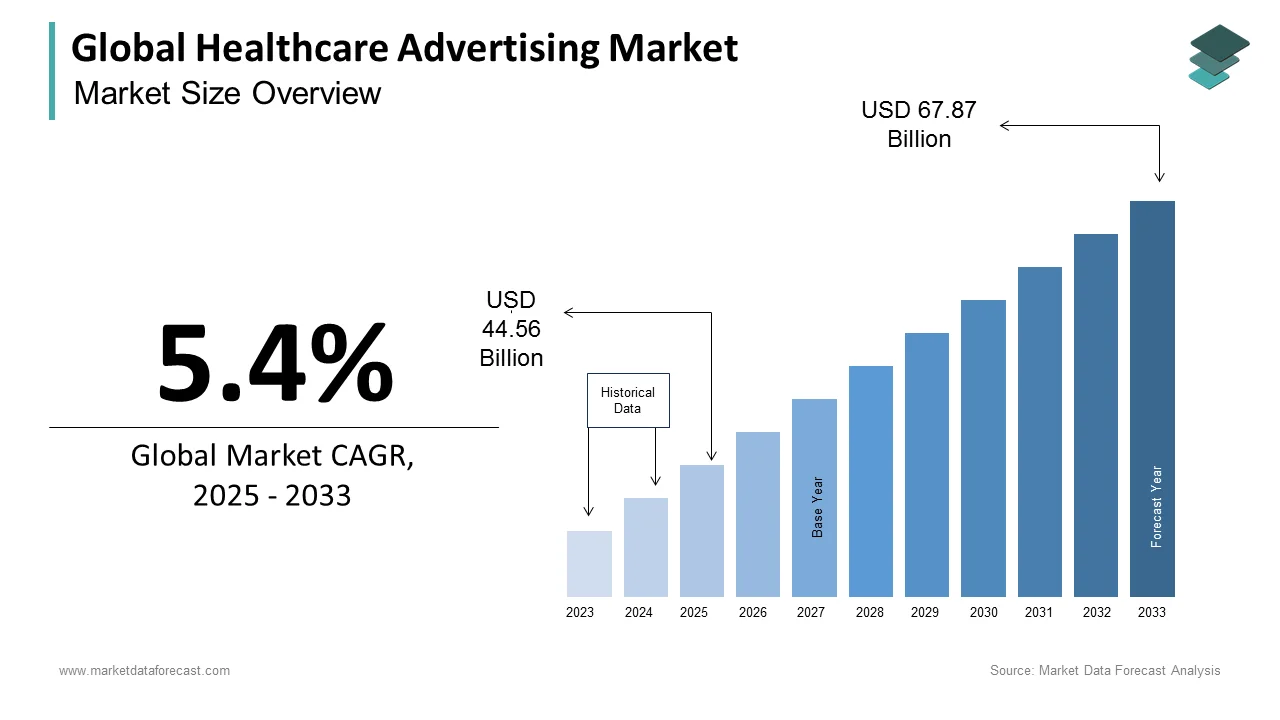
Healthcare Advertising is designed to promote medical products, services, treatments, and institutions to both healthcare professionals and consumers. Unlike conventional advertising, this domain operates within a highly regulated environment where messaging must adhere to strict ethical, legal, and scientific standards set by national and international bodies such as the U.S. Food and Drug Administration (FDA), the European Medicines Agency (EMA), and the World Health Organization (WHO).
MARKET DRIVERS
Proliferation of Chronic Diseases Requiring Long-Term Patient Engagement
The escalating global burden of chronic illnesses is driving the growth of the healthcare advertising market. As per the World Health Organization, non-communicable diseases such as cardiovascular conditions, diabetes, and cancer account for 74% of all deaths globally, with an estimated 41 million fatalities annually. According to the European Respiratory Society, 80% of chronic obstructive pulmonary disease (COPD) cases remain undiagnosed, which is leading to targeted digital outreach by inhaler producers through symptom-checker tools and geolocated ads. Pharmaceutical firms such as Novartis and Pfizer have launched multi-year digital campaigns for hypertension and osteoporosis, integrating AI-driven chatbots and personalized email sequences to improve medication compliance. These efforts are further amplified by patient advocacy groups, which collaborate with brands to disseminate educational content.
Expansion of Digital Health Platforms and Telemedicine Services
The rapid integration of digital technologies into healthcare delivery has created a fertile ground for innovative advertising models that align with evolving patient behaviors. According to the World Bank, global telemedicine usage surged by 300% between 2019 and 2022, with over 1.2 billion virtual consultations conducted annually in high- and middle-income countries. This shift has prompted hospitals, clinics, and health tech firms to invest heavily in digital branding and performance marketing to capture online patient traffic. Companies like Practo and Apollo 24/7 employ search engine optimization, paid social media campaigns, and influencer collaborations with doctors to drive user acquisition. Similarly, wearable device manufacturers such as Fitbit and Apple leverage health data insights to deliver personalized ad content related to heart rate anomalies or sleep disorders, often in partnership with insurers and clinics. The U.S. Federal Trade Commission confirms that health-related app downloads increased by 45% in 2022, with in-app advertising becoming a primary revenue stream. Additionally, AI-powered recommendation engines on platforms like WebMD and Mayo Clinic’s digital portal enable contextual ad placements based on user search history.
MARKET RESTRAINTS
Stringent Regulatory Oversight Limiting Advertising Creativity and Reach
The restrictive regulatory frameworks, which significantly limit message development and dissemination, are limiting the growth of the healthcare advertising market. This mandate, known as “fair balance,” limits the effectiveness of concise digital ads on platforms like Instagram or TikTok, where attention spans are short. In the European Union, the European Federation of Pharmaceutical Industries and Associations reports that 27 out of 27 member states prohibit direct-to-consumer advertising of prescription medications, which restricts pharmaceutical firms to scientific and educational outreach only. Additionally, the World Health Organization cautions against the commercialization of vaccines and antimicrobials, urging member states to impose strict controls to prevent misinformation. These regulatory hurdles increase compliance costs and reduce agility for global campaigns requiring localization.
Rising Public Awareness Toward Commercialized Health Messaging
The growing consumer distrust in profit-driven health communications, with the efficacy in the digital sphere where misinformation proliferate,s is also hampering the growth of the healthcare advertising market. As per the Edelman Trust Barometer 2023, only 52% of global respondents trust pharmaceutical companies to communicate honestly about drug benefits, while 61% believe advertisements exaggerate treatment outcomes. In response, platforms like Facebook and YouTube have imposed stricter policies on health ads; Meta reported in 2023 that it had removed over 1.2 million pieces of health misinformation, including ads for unapproved weight-loss drugs and stem cell therapies. Additionally, the British Medical Journal found that 70% of YouTube videos promoting dietary supplements contained unsubstantiated medical claims, many funded by hidden commercial interests.
MARKET OPPORTUNITIES
Integration of Artificial Intelligence in Targeted Healthcare Campaigns
The unlocking of unprecedented precision in audience segmentation, content personalization, and campaign optimization is creating new opportunities for the growth of the healthcare advertising market. For instance, machine learning algorithms can identify individuals searching for symptoms of multiple sclerosis and serve them educational content from pharmaceutical brands before a formal diagnosis is made, aligning with early intervention strategies. Companies like Roche and Eli Lilly utilize natural language processing to monitor social media sentiment and adjust messaging in real time, ensuring alignment with patient concerns. Google Health’s collaboration with Novartis in 2023 used search trend data to anticipate spikes in allergy medication demand by allowing for geographically optimized digital campaigns.
Growth of Health Literacy Initiatives Supported by Public-Private Partnerships
The prominence of improving health literacy through collaborative models involving governments, NGOs, and private enterprises is posing new opportunities for the growth of the healthcare advertising market. According to the World Health Organization, low health literacy affects over 50% of adults in both developed and developing nations, contributing to delayed diagnoses, medication errors, and poor chronic disease management. For example, the U.S. Centers for Disease Control and Prevention collaborated with Merck and Walgreens on the “Know Your Numbers” campaign, using television, radio, and digital ads to promote blood pressure and cholesterol screening, reaching over 45 million Americans in 2022.
MARKET CHALLENGES
Navigating Cross-Border Regulatory Disparities in Global Campaigns
The lack of harmonization in healthcare advertising regulations for multinational organizations seeking to deploy unified global campaigns is posing a new challenge for the growth of the healthcare advertising market. As per the International Coalition of Medicines Regulatory Authorities, 88 out of 120 countries prohibit direct-to-consumer advertising of prescription drugs, while others, such as the United States and New Zealand, permit it under specific conditions, creating a fragmented compliance landscape. For instance, a campaign deemed compliant in the U.S. may violate the Therapeutic Goods Advertising Code in Australia, where comparative claims between medications are restricted.
Ethical Dilemmas in Targeting Vulnerable Patient Populations
The increasing sophistication of data-driven advertising raises profound ethical concerns when campaigns target individuals with severe or life-threatening conditions. As per the Hastings Center, a bioethics research institute, the use of behavioral tracking to identify patients searching for terms like “terminal cancer” or “rare genetic disorder” blurs the line between informational outreach and emotional exploitation. Similarly, the British Medical Journal documented cases where patients with infertility were bombarded with ads for unproven stem cell therapies after visiting fertility clinic websites, often with exaggerated success rates.
REPORT COVERAGE
| REPORT METRIC | DETAILS |
| Market Size Available | 2025 to 2034 |
| Base Year | 2025 |
| Forecast Period | 2026 to 2034 |
| Segments Covered | By Type, Technology, Format, Form of Engagement, Approach, Application & Region. |
| Various Analyses Covered | Global, Regional and Country-Level Analysis, Segment-Level Analysis, Drivers, Restraints, Opportunities, Challenges; PESTLE Analysis; Porter’s Five Forces Analysis, Competitive Landscape, Analyst Overview of Investment Opportunities |
| Regions Covered | North America, Europe, Asia Pacific, Latin America, Middle East & Africa |
| Market Leaders Profiled | Syneos Health, Havas Health & You. (A Subsidiary of Havas Group), MCCANN WORLDGROUP (A Subsidiary of IPG), Wunderman Thompson (A Subsidiary of WPP plc), RevLocal, HLM Digital, Dobies Health Marketing, The Communications Strategy Group Inc., Healthcare Success, LLC, PUBLICIS GROUPE, CDM New York, FCB Worldwide, Inc. (A Subsidiary of IPG), VMLY&R (A Subsidiary of WPP plc), AbelsonTaylor, Inc., Thrive Internet Marketing Agency, LEVO Healthcare Consulting, Sagefrog Marketing Group, LLC, Distill Health, Trajectory. |
SEGMENTAL ANALYSIS
By Type Insights
The traditional advertising segment dominated the market and accounted for 30.8% of the global market share in 2023. Traditional advertising includes TV, radio, and print ads and is the largest segment in healthcare advertising. This dominance is due to its broad reach, especially among older demographics who may not engage with digital platforms as much. Traditional ads are effective for building brand recognition and trust, particularly in the pharmaceutical and hospital sectors, where consumers expect established, credible sources. Television, for example, is still a preferred medium for healthcare advertising, as it reaches a wide audience and allows for detailed storytelling that resonates with viewers.
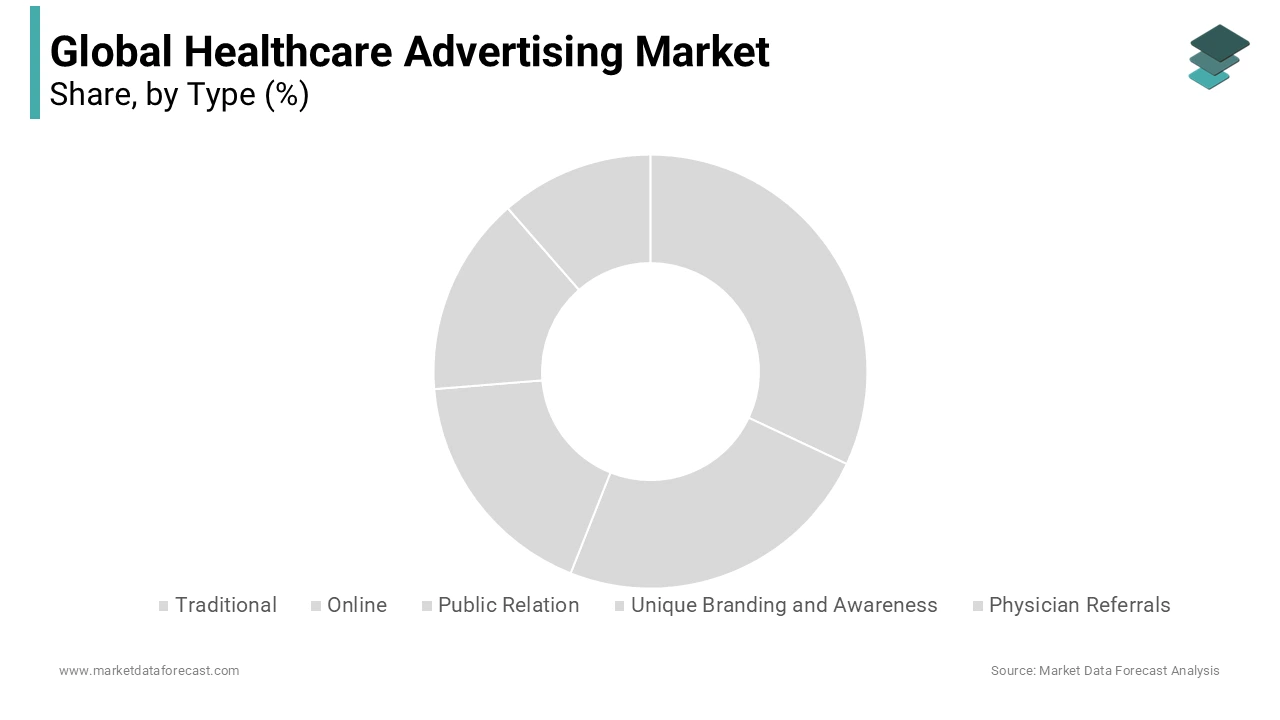
However, the online advertising segment is anticipated to register a CAGR of 12.28% over the forecast period. The shift toward digital platforms is fueled by consumers’ increasing preference for online health information and rising internet and smartphone usage. Digital ads on social media, search engines, and video platforms enable healthcare brands to reach target audiences with personalized messages, improving engagement and conversion. Additionally, online advertising offers valuable metrics and insights, allowing brands to refine their strategies in real time. With younger consumers relying heavily on digital sources, online advertising is critical for future growth in healthcare.
By Technology Insights
The telemedicine segment led the market and accounted for 50.8% of the global market share in 2023. The prominence of telemedicine in healthcare advertising is largely due to the rapid adoption of virtual health services, which surged during and after the COVID-19 pandemic. Telemedicine platforms now serve as a primary advertising channel, as they offer healthcare providers direct access to patients seeking real-time consultations and health information online. By promoting their services through telemedicine platforms, healthcare organizations can engage patients who are increasingly opting for remote consultations. Telemedicine’s reach and accessibility make it a highly effective medium for advertising a wide range of healthcare services and products.
The Artificial Intelligence (AI) segment is predicted to grow at the fastest CAGR of 16.66% over the forecast period. AI-powered tools enable healthcare advertisers to analyze vast amounts of data, uncover patient insights, and deliver highly personalized ads based on individual health needs. For example, AI can optimize ad placements and personalize messaging in real-time, improving engagement and conversion rates. AI’s ability to streamline campaign targeting and content personalization is driving its rapid adoption in healthcare advertising, particularly as consumers increasingly prefer tailored health information and recommendations.
By Format Insights
The display advertising segment held the leading position, accounting for 44.8% of the global market share in 2023. Display ads are highly visible and easily accessible, making them effective for brand awareness and targeting a broad audience. Healthcare companies use display ads on popular websites and social media platforms to reach both consumers and healthcare professionals. The format’s visual nature allows advertisers to present brand messages compellingly, often driving higher engagement rates, especially for large-scale healthcare campaigns and pharmaceutical ads.
The video advertising segment is growing rapidly and is expected to witness the fastest-growing CAGR of 15.3% over the forecast period. The growth of the video segment is driven by consumers’ increasing preference for video content, particularly on platforms like YouTube and Facebook, where health-related videos are highly popular. Video ads allow healthcare brands to explain complex topics, such as treatment options or health conditions, in an engaging and easily digestible format. Additionally, video content can reach a large audience, providing educational value while also building trust. The high engagement and storytelling potential of video ads make them a crucial investment area for healthcare advertisers aiming to boost user interaction and awareness.
By Form of Engagement Insights
The healthcare facility segment held the major share of the global market in 2024. The growth of the healthcare facility segment is majorly driven by the extensive use of traditional media such as print, television, and radio by healthcare facilities aiming to attract patients and increase service awareness. Healthcare facility advertising encompasses advertising efforts by hospitals, clinics, and healthcare institutions. For example, in the U.S., healthcare advertising spending surged by 11.5% in 2022, with a considerable share dedicated to traditional channels.
On the other hand, the online segment is the fastest-growing in the healthcare advertising market and is predicted to showcase a CAGR of 12.44% over the forecast period. This rapid growth is fuelled by the digital transformation within healthcare as providers increasingly rely on digital channels, including websites, social media, and online advertising, to reach patients. Additionally, more patients now look to online sources for health information, making digital advertising a pivotal means of patient engagement. Online advertising also provides a cost-effective, highly targeted, and measurable approach, which is attractive to healthcare marketers. U.S. digital ad spending in healthcare, for instance, is forecasted to grow by 10% in 2024, reflecting an industry-wide shift toward digital strategies. In summary, while the Healthcare Facility segment currently leads the market, the Online segment is growing quickly, driven by digital adoption and evolving consumer behavior.
By Application Insights
The pharmaceuticals segment had the major share of the global market in 2024 and is expected to continue holding the dominating position throughout the forecast period, owing to the substantial investments made by pharmaceutical companies in advertising their products to both healthcare professionals and consumers. This segment's prominence is seen in the U.S. alone, where pharmaceutical advertising spending reached approximately $6.58 billion in 2020, underscoring the importance of marketing in promoting new medications and educating the public on treatment options. The pharmaceuticals segment plays a vital role in driving consumer awareness and influencing prescribing behaviors.
On the other hand, the biopharmaceuticals segment is experiencing the fastest growth and is projected to grow at a CAGR of 8.5% from 2024 to 2032. This rapid expansion is attributed to ongoing innovations in biopharmaceuticals, particularly in developing biologics and personalized medicine, which require targeted advertising to educate healthcare providers and patients. Increased regulatory approvals and growing market competition within the biopharmaceutical space have also accelerated advertising efforts to differentiate products and capture market share. This growth highlights the segment’s importance in bringing advanced, often life-changing treatments to market and improving patient outcomes through effective communication and awareness strategies.
REGIONAL ANALYSIS
North America Healthcare Advertising Market Analysis
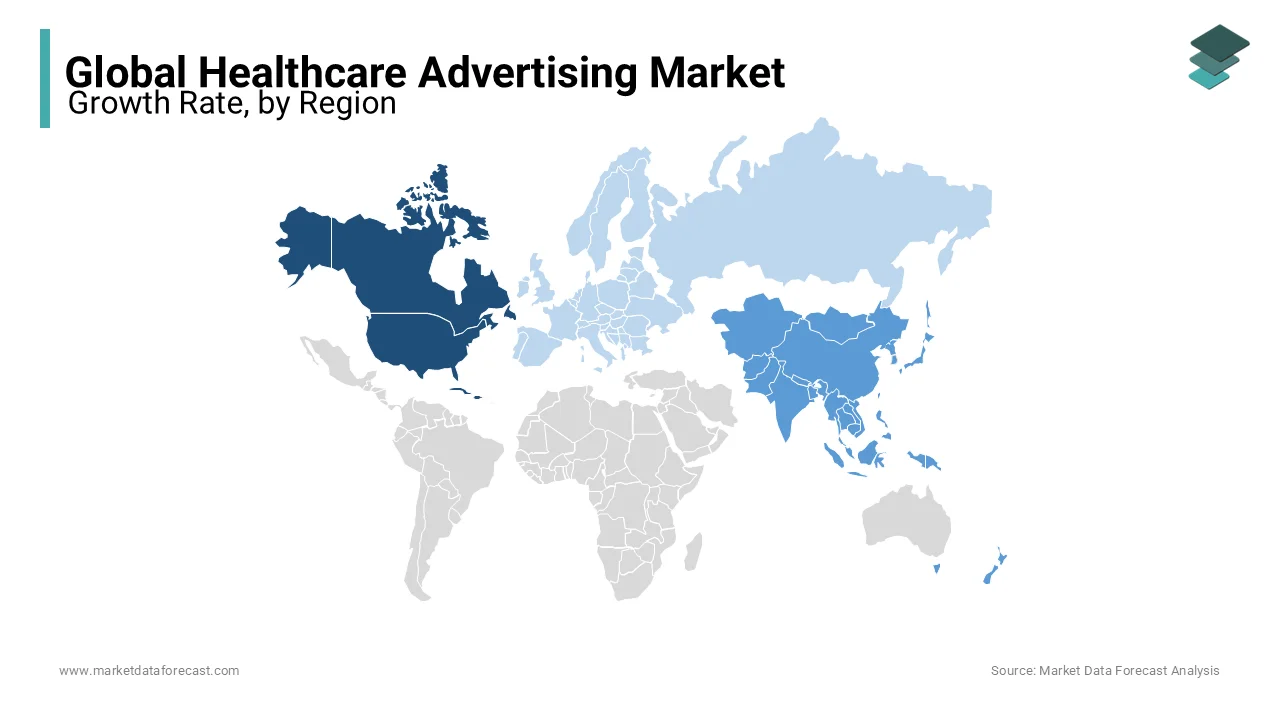
North America currently dominates the healthcare advertising market, and the domination is majorly driven by high healthcare expenditure and a strong pharmaceutical industry. The United States, which alone accounts for nearly 50% of the global healthcare advertising market as of 2024, is the primary contributor within this region. The presence of major pharmaceutical companies and high investments in healthcare marketing further fuel this dominance. Canada follows as a key player, supported by its robust healthcare framework. The Key trends in this region include digital marketing advancements and growing direct-to-consumer advertising in healthcare.
Europe Healthcare Advertising Market Analysis
Europe stands as the second-largest region in the global healthcare advertising market, with Germany, the United Kingdom, and France leading in terms of market share. Germany’s advanced pharmaceutical industry and strong healthcare systems make it the regional leader, followed closely by the United Kingdom and France. The European market is set to grow at a promising CAGR over the forecast period, owing to the increasing adoption of digital marketing in healthcare and greater public awareness of health and wellness issues. Factors such as stringent advertising regulations and a high demand for transparency in healthcare advertising influence this market. Nevertheless, Europe’s continued investment in digital health solutions supports its steady growth outlook.
Asia-Pacific Healthcare Advertising Market Analysis
The Asia-Pacific region is witnessing the fastest growth in the global healthcare advertising market. This rapid expansion is driven by rising healthcare infrastructure investments, digitalization, and growing awareness of healthcare services. China and India are the primary contributors to this regional growth, fueled by their large populations and expanding pharmaceutical sectors. China’s healthcare advertising market benefits from a strong digital landscape, while India’s market expansion is linked to the growth of its generic pharmaceutical industry. Other contributing factors include the rising penetration of mobile health applications and telemedicine services, which support broader access to healthcare information and services across the region.
Latin America Healthcare Advertising Market Analysis
Latin America holds a relatively smaller share of the global healthcare advertising market but is experiencing steady growth due to increased healthcare investments and expanding marketing activities. Brazil and Mexico are the dominant countries within this region, with improved healthcare infrastructure and heightened health awareness initiatives supporting market expansion. The demand for healthcare advertising in Latin America is increasingly influenced by a shift towards digital health platforms and social media channels, which are particularly effective in reaching the younger population segments across the region.
Middle East and Africa Healthcare Advertising Market Analysis
The Middle East and Africa region represents the smallest share of the global healthcare advertising market; however, it is expected to expand modestly over the next few years. The market growth in this region is majorly driven by increased healthcare spending and the growing adoption of digital marketing. The United Arab Emirates and South Africa are the leading countries within this region, supported by their well-developed healthcare sectors and greater investments in healthcare initiatives. Efforts to increase public health awareness and improve healthcare infrastructure are further supporting market growth, although challenges like limited digital infrastructure and economic constraints continue to influence the overall pace of expansion.
COMPETITIVE LANDSCAPE
The competitive dynamics of the healthcare advertising market are shaped by a convergence of pharmaceutical innovators, digital health platforms, and specialized marketing agencies vying for influence in a highly regulated yet rapidly digitizing environment. Multinational pharmaceutical companies such as Johnson & Johnson, Pfizer, and Novartis leverage their scientific credibility and global reach to dominate high-budget campaigns, particularly in chronic disease and vaccine awareness. However, regional players and health tech startups are challenging traditional models by deploying agile, data-centric strategies tailored to local markets. The rise of telemedicine and AI-powered patient engagement tools has lowered entry barriers, enabling digital-native firms to capture niche audiences through precision targeting. In the Asia Pacific, local agencies are gaining ground by offering culturally nuanced campaigns that global firms often struggle to replicate. Regulatory divergence across regions creates both challenges and opportunities, with companies differentiating themselves through compliance expertise and ethical branding. Advertising is no longer confined to promotion but is increasingly integrated into patient support programs, diagnostic pathways, and treatment adherence systems. The use of real-world evidence, influencer collaborations with medical professionals, and public-private partnerships has redefined competitive advantage.
KEY MARKET PLAYERS
The major players operating in the global healthcare advertising market profiled in this report are
- Syneos Health
- Havas Health & You
- MCCANN WORLDGROUP
- Wunderman Thompson
- RevLocal
- HLM Digital
- Dobies Health Marketing
- The Communications Strategy Group Inc.
- Healthcare Success, LLC
- PUBLICIS GROUPE
- CDM New York
- FCB Worldwide, Inc.
- VMLY&R
- AbelsonTaylor, Inc.
- Thrive Internet Marketing Agency
- LEVO Healthcare Consulting
- Sagefrog Marketing Group, LLC
- Distill Health
- Trajectory
- Others
TOP LEADING PLAYERS IN THE MARKET
- Johnson & Johnson maintains a significant presence in the Asia Pacific healthcare advertising landscape through its integrated approach to consumer and professional health communication. The company leverages its dual portfolio of over-the-counter medications and prescription therapies to deploy multi-channel campaigns across digital, television, and print media. In 2023, Johnson & Johnson launched a regional awareness initiative for its diabetes care products in India and Indonesia, partnering with local healthcare providers and digital platforms like Practo to enhance patient reach. It introduced culturally adapted content in regional languages, including Tamil, Bahasa, and Mandarin, to improve engagement in rural and semi-urban areas. The company has also invested in AI-driven patient journey mapping to optimize ad placements across search and social media. Collaborations with public health agencies in Thailand and Vietnam have strengthened its credibility in vaccine promotion and maternal health.
- Pfizer has strategically positioned itself as a leader in science-led healthcare advertising across the Asia Pacific, focusing on vaccine awareness, chronic disease management, and physician engagement. Following the global pandemic, Pfizer intensified its public health communication efforts, launching large-scale digital campaigns in Japan, South Korea, and Australia to combat vaccine hesitancy. In 2023, the company partnered with India’s Ministry of Health to support the “Har Ghar Dastak” immunization drive, utilizing radio, mobile vans, and social media influencers to disseminate information in remote areas. Pfizer also developed interactive digital platforms in Singapore and Malaysia to educate healthcare professionals on new oncology treatments, integrating real-world evidence into its messaging. The company has adopted AI-powered analytics to track campaign performance and refine outreach in real time.
- Novartis has established a robust footprint in Asia Pacific’s healthcare advertising market by pioneering data-driven, patient-centric communication strategies. The company focuses on high-burden therapeutic areas such as cardiovascular diseases, respiratory conditions, and rare disorders, deploying targeted digital campaigns to enhance early diagnosis and treatment adherence. In 2023, Novartis launched a mobile-first initiative in the Philippines and Vietnam, using geolocated ads and SMS alerts to inform patients about free screening camps for hypertension and diabetes. It collaborated with local telehealth platforms such as Doctor Anywhere and Medikoe to integrate educational content into virtual consultations. The company also introduced AI-powered chatbots in Japan and South Korea to answer patient queries about medication regimens by reducing information gaps.
TOP STRATEGIES USED BY THE KEY MARKET PARTICIPANTS
Key players in the healthcare advertising market are adopting multifaceted strategies to navigate regulatory complexity and capture evolving consumer behavior. Digital transformation remains central, with companies investing in AI-driven analytics, programmatic advertising, and omnichannel patient engagement platforms. Firms are increasingly leveraging real-world data from wearables and electronic health records to deliver hyper-personalized content while ensuring compliance with privacy regulations. Strategic partnerships with telehealth providers, e-pharmacies, and public health agencies enable broader reach and enhanced credibility. Content localization is prioritized, with campaigns adapted to regional languages, cultural norms, and disease prevalence patterns. Medical affairs teams are being integrated into marketing workflows to ensure scientific accuracy and regulatory adherence. Additionally, companies are shifting from product promotion to health education, using storytelling and influencer collaborations to build trust. Investment in employer wellness programs and B2B healthcare branding is expanding in private insurance and corporate health sectors. These strategies reflect a move toward sustainable, outcome-oriented advertising that balances commercial objectives with public health responsibility.
GLOBAL HEALTHCARE ADVERTISING MARKET NEWS
- In January 2023, Johnson & Johnson launched a multilingual digital campaign across India and Indonesia to promote its diabetes care portfolio, utilizing AI-driven audience segmentation and partnerships with local telehealth platforms to enhance patient engagement and treatment awareness.
- In May 2023, Pfizer collaborated with India’s Ministry of Health to support the national “Har Ghar Dastak” immunization campaign, deploying mobile vans, radio spots, and social media influencers to improve vaccine uptake in rural communities.
- In September 2023, Novartis introduced an AI-powered chatbot in Japan and South Korea to provide real-time information on cardiovascular medications by integrating the tool into hospital websites and teleconsultation platforms to improve patient adherence.
- In February 2024, Roche partnered with Singapore’s HealthTech Exchange to launch a data-driven advertising platform for oncology treatments by using anonymized patient journey insights to optimize digital outreach to healthcare professionals.
- In April 2024, GlaxoSmithKline expanded its digital health initiative in Thailand by launching a mobile app for asthma management that supported by targeted social media ads and collaborations with pulmonologists to drive user adoption.
MARKET SEGMENTATION
This research report on the global healthcare advertising market has been segmented and sub-segmented based on type, technology, format, engagement, approach, application & region.
By Type
- Traditional
- Television
- Print
- Magazines And Medical Journals
- Newspaper
- Others
- Radio
- Others
- Online
- Online Advertising
- Search Engine Optimization
- Mobile-First Website
- Social Media Advertising
- Others
- Public Relation
- Publicity
- Sponsorships
- Community Events
- Others
- Unique Branding and Awareness
- Internal Marketing
- Events
- Text And Email
- Phone Communication
- Patient Experience
- Others
- Employer Marketing
- Meeting And Presentation
- Business Targets
- Others
- Physician Referrals
- Others
By Technology
- Telemedicine
- Artificial Intelligence
- Personal Data Tracking
- Others
By Format
- Display
- Search
- Video
By Form of Engagement
- Healthcare Facility
- Online
- In-Home / In Person
- Others
By Approach
- Detailing (Healthcare Professional)
- Personal Data Tracking
- Telemedicine
- Artificial Intelligence
- Others
- Direct To Consumer Advertising
- Personal Data Tracking
- Telemedicine
- Artificial Intelligence
- Others
By Application
- Fitness And Diet Product and Service
- Over The Counter
- Health Hygiene
- Medical Insurance
- Corrective Lenses and Glasses
- Medical Devices and Equipment
- Pharmaceutical
- Prescription Medicines
- Biotech Companies
- Biopharmaceuticals
- Others
By Region
- North America
- Europe
- Asia-Pacific
- Latin America
- Middle East and Africa