- Product Description Description
- Table of Contents TOC
- List of Table & Figure LOT
- Get Free Sample PDF Sample PDF
Market Size, 2025
$128.8 MnMarket Estimate, 2026
$174.7 MnMarket Forecast, 2034
$2,004.9 MnCAGR, 2026–2034
35.66%Latin America Ancient Grain Market Report Summary
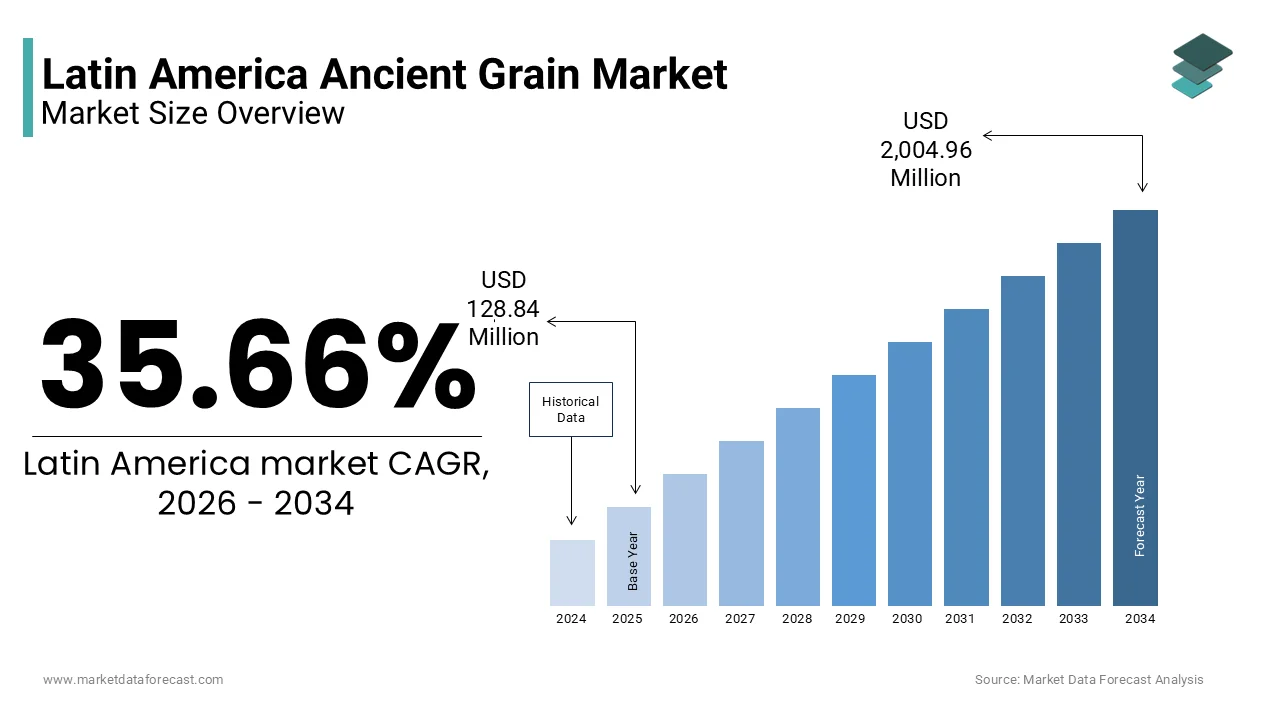
The Latin America ancient grain market was valued at USD 128.84 million in 2025, is estimated to reach USD 174.78 million in 2026, and is projected to reach USD 2,004.96 million by 2034, growing at a remarkable CAGR of 35.66% during the forecast period from 2026 to 2034. The growth of the Latin America ancient grain market is driven by increasing consumer demand for nutritious and functional foods, rising awareness of gluten-free diets, and growing adoption of ancient grains in bakery, snacks, cereals, and health food products. Expanding health-conscious consumer demographics, increasing investments in sustainable agriculture, and rising demand for plant-based ingredients are further supporting market growth across the region.
Key Market Trends
-
Rising consumer preference for nutrient-rich and functional food products is driving demand for ancient grains across Latin America.
-
Increasing adoption of gluten-free and plant-based diets is supporting the consumption of quinoa, amaranth, millet, and other ancient grains.
-
Growing demand for clean-label, organic, and minimally processed food products is encouraging product innovation.
-
Expanding use of ancient grains in bakery, breakfast cereals, snacks, and ready-to-eat foods is creating new growth opportunities.
-
Increasing investments in sustainable agriculture and local grain production are strengthening regional supply chains.
Segmental Insights
-
Based on application, the bakery segment dominated the Latin America ancient grain market in 2025. The segment's leadership is attributed to the increasing incorporation of ancient grains into bread, biscuits, cakes, and other baked products to enhance nutritional value and meet consumer demand for healthier alternatives.
-
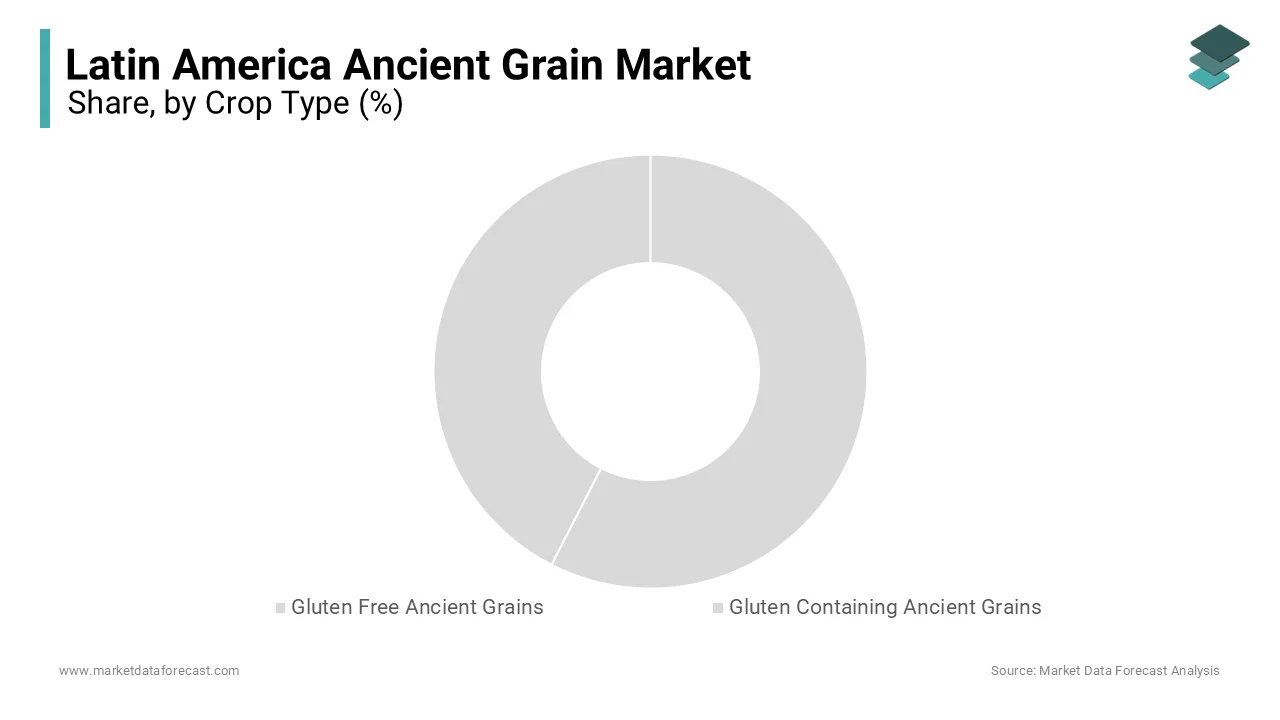
Based on crop type, the gluten-free ancient grains segment held the largest share of the Latin America ancient grain market in 2025. The segment's dominance is driven by rising awareness of gluten intolerance and celiac disease, along with growing consumer preference for naturally gluten-free and nutrient-dense grains.
Regional Insights
-
The Latin America ancient grain market is witnessing rapid growth due to increasing health awareness, rising demand for functional foods, and expanding applications of ancient grains across the food industry.
-
Brazil holds a significant position in the Latin America ancient grain market. The country's growth is supported by increasing consumer awareness of healthy eating, expanding food processing industries, growing demand for gluten-free products, and rising investments in sustainable agriculture.
-
Peru remains a major market due to its strong production of quinoa and other native ancient grains, along with a well-established export industry.
Competitive Landscape
The Latin America ancient grain market is moderately competitive, with manufacturers focusing on product innovation, sustainable sourcing, and expansion of gluten-free and organic product portfolios to strengthen their market positions. Companies are investing in advanced grain processing technologies, strategic partnerships, and new product development to meet the growing demand from bakery, cereals, snacks, and health food industries. Key players operating in the Latin America ancient grain market include Ardent Mills (U.S.), Andean Naturals SAC, Snyder's-Lance Inc. (U.S.), Crunchmaster Inc. (U.S.), Ancient Harvest LLC, SK Food International (U.S.), Purely Elizabeth Inc. (U.S.), Quinoa Corporation, Great River Organic Milling Inc. (U.S.), Urbane Grain Inc. (U.S.), Nature's Path Foods (Canada), and GFB Great Foods (India).
Latin America Ancient Grain Market Size
The Latin American ancient grain market size was valued at USD 128.84 million in 2025, and is expected to reach USD 2,004.96 million by 2034 from USD 174.78 million in 2026, with a CAGR of 35.66% during the forecast period.
Ancient grains are cereal grains and seeds that have remained largely unchanged for hundreds or thousands of years. These crops are indigenous to the Andean region and Mesoamerica, representing a vital component of the region's agricultural biodiversity and cultural heritage. Unlike modern hybridized grains, ancient grains are prized for their resilience to harsh climatic conditions and their superior nutritional profiles, which include high levels of protein, fiber, and essential amino acids. According to the Food and Agriculture Organization of the United Nations, the Andean region produces over 90% of the global quinoa supply, with Peru and Bolivia serving as the primary exporters. This geographical concentration underscores the strategic importance of Latin America in the global food security landscape. The region has witnessed a resurgence in the consumption of these traditional crops, driven by both domestic health awareness and international demand for superfoods. As per the Inter American Institute for Cooperation on Agriculture, smallholder farmers in the highlands continue to rely on these crops for subsistence and income, preserving traditional farming practices. The integration of ancient grains into modern food products, such as gluten free pasta, energy bars, and plant-based milks, has transformed them from niche staples into mainstream commodities. This shift is supported by government initiatives aimed at promoting sustainable agriculture and improving rural livelihoods. The convergence of nutritional science, cultural preservation, and economic development defines the current trajectory of the Latin America ancient grain market, positioning it as a critical sector for regional growth and global export.
MARKET DRIVERS
Surging Global and Domestic Demand for Nutrient Dense Superfoods
The surging global and domestic demand for nutrient-dense superfoods is the main driver for the Latin America ancient grain market. Consumers worldwide are increasingly prioritizing health and wellness, seeking food options that offer maximum nutritional benefits with minimal processing. Ancient grains like quinoa and chia are rich in complete proteins, omega 3 fatty acids, and antioxidants, making them ideal for health-conscious diets. As per the World Health Organization, the prevalence of noncommunicable diseases such as diabetes and obesity is rising in Latin America, prompting local populations to adopt healthier dietary habits that include traditional grains. International markets, particularly in North America and Europe, have embraced these grains as premium ingredients, driving export volumes from producer countries. The global quinoa landscape has seen exponential growth, with demand outstripping supply in recent years, leading to price increases that benefit local farmers. Domestic consumption is also rising, supported by public health campaigns that promote the inclusion of native grains in school meals and household diets. The versatility of these grains allows them to be incorporated into a wide range of products, from breakfast cereals to savory snacks, appealing to diverse consumer preferences. This dual pressure from international export markets and growing domestic health awareness creates a robust and sustained demand for ancient grains, encouraging increased production and investment in the sector.
Government Support for Sustainable Agriculture and Rural Development
Government support for sustainable agriculture and rural development greatly fuels the growth of the Latin America ancient grain market. Recognizing the economic and environmental value of native crops, governments in countries like Peru, Bolivia, and Ecuador have implemented policies to promote their cultivation and commercialization. According to official framework updates from the Peruvian Ministry of Agrarian Development and Irrigation (MIDAGRI), targeted technical assistance programs and seed modernization resources are regularly channeled to highland farming associations to secure native pseudocereal yields. These initiatives aim to reduce poverty in rural areas by creating viable income opportunities through high value crop production. The promotion of ancient grains aligns with broader sustainability goals, as these crops require less water and fewer chemical inputs compared to conventional cereals, making them resilient to climate change. Government backing also includes investments in research and development to improve crop yields and disease resistance without compromising genetic integrity. Trade agreements and export facilitation services help local producers access international markets, enhancing their competitiveness. Furthermore, national campaigns celebrating indigenous culinary heritage have boosted domestic pride and consumption of these grains. This comprehensive policy framework reduces barriers to entry for farmers and encourages the expansion of cultivated areas. Governments ensure long-term support for the agricultural sector by integrating ancient grains into national strategies. As a result, this approach fosters both economic growth and environmental stewardship in rural communities.
MARKET RESTRAINTS
Price Volatility and Market Instability
Price volatility and market instability are major restraints to the consistent growth of the Latin America ancient grain market. The rapid surge in global demand for quinoa and other ancient grains has led to fluctuating prices that can destabilize local economies and farmer incomes. As per the World Bank, sudden spikes in international prices can make these grains unaffordable for local consumers in producing countries, leading to social tensions and reduced domestic consumption. Conversely, when global supply increases or demand softens, prices can crash, leaving farmers with unsold harvests and financial losses. This unpredictability discourages long term investment in infrastructure and technology by both farmers and processors. Smallholder farmers, who lack access to hedging instruments or futures markets, are particularly vulnerable to these price swings. The lack of standardized pricing mechanisms and transparent market information exacerbates the issue, making it difficult for producers to plan production cycles effectively. Additionally, the dependence on a few key export markets means that external economic shocks can have disproportionate impacts on the regional industry. This financial uncertainty limits the ability of the sector to scale up sustainably and invest in value added processing. Price volatility remains a critical barrier to expanding the ancient grain market in Latin America. This challenge will persist until more stable market structures and risk management tools are established.
Limited Processing Infrastructure and Value Addition Capabilities
Limited processing infrastructure and value addition capabilities are substantial barriers to the competitiveness of the Latin America ancient grain market. While the region excels in raw production, it lacks sufficient facilities for cleaning, milling, packaging, and product development. As per sources, a significant portion of ancient grains is exported in raw form, resulting in lost economic value and job opportunities that could be generated through local processing. The absence of advanced processing technologies limits the ability to create diverse consumer ready products such as flours, flakes, and ready to eat snacks. Small scale processors often face high capital costs and limited access to credit, hindering their ability to upgrade equipment and meet international quality standards. The fragmentation of the supply chain, with numerous small producers and limited coordination, further complicates the establishment of efficient processing hubs. Regulatory requirements for food safety and export compliance add complexity, requiring rigorous testing and certification that many local processors struggle to afford. The lack of skilled personnel in food technology and product innovation also restricts the development of new applications for ancient grains. Without adequate processing capabilities, the region remains dependent on foreign manufacturers for value added products, limiting its control over the final market price and brand identity. Bridging this infrastructure gap is essential for capturing greater value within the region.
MARKET OPPORTUNITIES
Expansion into Gluten Free and Plant Based Product Lines
The expansion into gluten free and plant-based product lines offers a strong opening for the Latin America ancient grain market. The global rise in celiac disease diagnoses and the popularity of gluten free diets have created a robust demand for alternative grains that are naturally free from gluten. Ancient grains such as quinoa, amaranth, and teff are ideal candidates for this segment due to their nutritional superiority and functional properties. According to research, the explosive consumer demand for verified gluten-free and alternative plant proteins positions Latin American ancient grain suppliers to capture significant international retail revenue. Food manufacturers are increasingly incorporating ancient grain flours into breads, pastas, and baked goods to enhance their nutritional profile and appeal to health conscious consumers. The plant based movement further amplifies this opportunity, as ancient grains serve as excellent sources of protein in vegan and vegetarian diets. Developing branded consumer products such as quinoa milk, amaranth crackers, and chia seed puddings allows producers to capture higher margins and build brand loyalty. Partnerships with international food companies can facilitate technology transfer and market access, enabling local firms to compete globally. Latin American producers can diversify their offerings by leveraging the natural attributes of ancient grains. This allows them to tap into lucrative niche markets that prioritize health and dietary restrictions.
Development of Organic and Fair-Trade Certified Supply Chains
The development of organic and fair-trade certified supply chains unlocks potential for the Latin America ancient grain market. Consumers in developed markets are increasingly willing to pay premiums for products that are certified organic and ethically sourced. As per the Research Institute of Organic Agriculture, the global market for organic foods continues to expand, with ancient grains being a key category due to their traditional cultivation methods that often align with organic principles. Obtaining organic and fair trade certifications allows Latin American producers to differentiate their products and access high value market segments. These certifications ensure that farmers receive fair wages and work under safe conditions, appealing to socially conscious consumers. Retailers in Europe and North America actively seek suppliers with verified sustainability credentials, creating stable demand for certified grains. Local cooperatives can play a pivotal role in organizing smallholder farmers to meet certification requirements collectively, reducing individual costs and administrative burdens. Marketing campaigns highlighting the social and environmental benefits of fair trade ancient grains can enhance brand reputation and consumer trust. By integrating ethical sourcing into their business models, producers can secure long term contracts and build resilient supply chains. This focus on sustainability and equity not only boosts economic returns but also supports community development and environmental conservation in producing regions.
MARKET CHALLENGES
Climate Change Impact on Yield Stability
Climate change is a severe challenge to the Latin America ancient grain market. This affects yield stability and crop quality in key producing regions. Although ancient grains are generally resilient, extreme weather events such as prolonged droughts, frost, and irregular rainfall patterns can significantly impact harvests. As per the Intergovernmental Panel on Climate Change, the Andean region is experiencing rising temperatures and changing precipitation patterns that threaten traditional agricultural zones. These climatic shifts can alter the growing seasons and increase the prevalence of pests and diseases that were previously uncommon. Farmers in high altitude areas face particular risks as temperature changes affect the delicate balance required for optimal grain development. Unpredictable weather makes it difficult for producers to plan planting and harvesting schedules, leading to potential crop failures and income loss. The lack of advanced irrigation systems and climate adaptive technologies in many rural areas exacerbates vulnerability. Insurance coverage for smallholder farmers is often limited or unavailable, leaving them exposed to financial ruin in bad years. The variability in supply affects export contracts and domestic availability, causing price fluctuations and market uncertainty. Addressing these challenges requires significant investment in climate smart agriculture practices, such as drought resistant varieties and water conservation techniques. The long-term viability of ancient grain production in Latin America is currently at risk. Implementing effective adaptation strategies is essential to secure its future.
Competition from Other Producing Regions and Substitute Crops
Competition from other producing regions and substitute crops is a serious hurdle for the Latin America ancient grain market. As the global popularity of quinoa and chia has grown, other countries such as the United States, Canada, India, and China have begun cultivating these crops to meet demand. As per the Food and Agriculture Organization (FAO), the rapid introduction of commercial quinoa farming in non-Andean regions has created steep competition, putting downward pressure on the market share of traditional exporters. These new producing regions often benefit from larger scale mechanized farming and lower labor costs, allowing them to offer competitive prices. Additionally, the emergence of other pseudo cereals and superfoods, such as buckwheat and millet, provides consumers with alternative options, diluting the unique positioning of Latin American ancient grains. The lack of geographical indication protection for some grains makes it difficult for Latin American producers to differentiate their products based on origin and quality. Marketing efforts must continuously emphasize the superior quality, authenticity, and sustainability of Latin American grains to maintain consumer preference. The ease of substitution in many food applications means that buyers may switch to cheaper alternatives if price differences become significant. This competitive landscape requires Latin American producers to innovate constantly and maintain high standards to retain their leadership position in the global market.
 REPORT COVERAGE
| REPORT METRIC | DETAILS |
| Market Size Available | 2025 to 2034 |
| Base Year | 2025 |
| Forecast Period | 2026 to 2034 |
| CAGR | 35.66% |
| Segments Covered | By Application, Crop Type, and Region |
| Various Analyses Covered | Global, Regional, & Country Level Analysis; Segment-Level Analysis; DROC; PESTLE Analysis; Porter’s Five Forces Analysis; Competitive Landscape; Analyst Overview of Investment Opportunities |
| Regions Covered | Latin America include Brazil, Argentina, Mexico, and the Rest of Latin America |
| Market Leaders Profiled | Ardent Mills (U.S.), Andean Naturals SAC, Snyder's-Lance Inc. (U.S.), Crunchmaster Inc. (U.S.), Ancient Harvest LLC, SK Food International (U.S.), Purely Elizabeth Inc. (U.S.), Quinoa Corporation, Great River Organic Milling Inc. (U.S.), Urbane Grain Inc. (U.S.), Nature's Path Foods (Canada), and GFB Great Foods (India) |
SEGMENTAL ANALYSIS
By Application Insights
The bakery segment was the largest in the Latin America ancient grain market in 2025 and occupied a commanding share. This dominance of the segment is driven by the versatility of ancient grain flours, which can be blended with wheat or used as standalone ingredients to enhance nutritional value without compromising texture. Quinoa, amaranth, and chia were widely integrated into breads, pastries, and gluten-free baked goods across the region. According to the Centre for the Promotion of Imports (CBI), commercial bakers are increasingly formulating products with ancient grains to satisfy the growing consumer demand for specialty alternative flours. The rising prevalence of celiac disease and gluten sensitivity in Latin America has prompted bakeries to reformulate products using naturally gluten free ancient grains. Consumers are increasingly seeking baked goods that offer higher protein and fiber content compared to traditional white flour products. Major bakery chains in countries like Brazil and Mexico have introduced quinoa and amaranth based product lines to cater to health conscious demographics. The ability of ancient grains to improve the shelf life and moisture retention of baked goods further appeals to manufacturers. Additionally, the cultural acceptance of maize and other native grains in traditional Latin American baking facilitates the seamless introduction of newer ancient varieties. This combination of functional benefits, health attributes, and cultural familiarity ensures that the bakery segment remains the primary consumer of ancient grains in the region.
The rising prevalence of gluten intolerance and celiac disease drives the top position of the bakery segment in the ancient grain market. According to the World Gastroenterology Organisation, the global prevalence of celiac disease is approximately 1 percent, but diagnosis rates in Latin America are increasing due to better screening and awareness. This medical necessity drives consumers to seek safe and nutritious alternatives to wheat based bakery products. Ancient grains such as quinoa, amaranth, and teff are naturally gluten free and provide a viable substitute for wheat flour in bread and pastry production. As per clinical studies, the adoption of gluten free diets has expanded beyond diagnosed patients to include individuals with non celiac gluten sensitivity, further broadening the consumer base. Bakeries are responding by dedicating sections to gluten free products made with ancient grains, ensuring cross contamination free environments. The nutritional superiority of ancient grains over refined rice or corn flours, which are common gluten free alternatives, makes them a preferred choice for health focused consumers. This shift in dietary requirements compels the baking industry to innovate and incorporate ancient grains, sustaining the segment's leadership. The consistent demand for safe, tasty, and nutritious gluten free bakery items ensures steady growth for ancient grain applications in this sector.
Consumer preference for nutrient enriched traditional baked goods significantly fuels the supremacy of the bakery segment. Latin American consumers have a strong cultural attachment to bread and pastries, but there is a growing desire to enhance their nutritional profile. Ancient grains offer a solution by providing high levels of protein, fiber, iron, and magnesium compared to refined wheat flour. As per surveys, a significant percentage of shoppers actively look for fortified or whole grain options when purchasing bakery items. The incorporation of quinoa and amaranth into traditional breads allows consumers to maintain their dietary habits while improving health outcomes. Bakeries leverage this trend by marketing products as superfood infused or protein packed, appealing to fitness enthusiasts and health conscious families. The functional properties of ancient grains, such as their ability to add crunch and nutty flavor, enhance the sensory experience of baked goods. Retailers support this trend by promoting local and artisanal bakeries that use native ingredients. The alignment of ancient grains with the clean label movement, which favors minimal processing and recognizable ingredients, further boosts their appeal in the bakery sector. This convergence of tradition, nutrition, and clean eating trends solidifies the bakery segment as the leading application for ancient grains in Latin America.
The sports nutrition segment is estimated to register the fastest CAGR of 9.5% between 2026 and 2034 owing to the increasing participation in fitness activities and the rising awareness of the role of nutrition in athletic performance. Ancient grains like quinoa and chia are valued for their complete protein profile and sustained energy release, making them ideal ingredients for protein bars, shakes, and recovery snacks. As per the Global Wellness Institute, the wellness economy in Latin America is expanding, with fitness and nutrition being key components. Athletes and fitness enthusiasts are shifting away from synthetic supplements toward natural, whole food based sources of protein and carbohydrates. The convenience of ready to eat sports nutrition products containing ancient grains appeals to busy professionals and active individuals. Manufacturers are innovating with new formulations that combine ancient grains with other superfoods to create premium performance products. The endorsement of these products by fitness influencers and professional athletes further drives consumer interest. This segment benefits from the high willingness of consumers to pay a premium for products that promise enhanced performance and recovery. The alignment of ancient grains with the clean sport movement, which emphasizes natural and safe ingredients, positions sports nutrition as the highest growth application in the market.
The boom in fitness culture and active lifestyles is a key driver of the rapid growth in the sports nutrition segment. Latin America has witnessed a surge in gym memberships, running clubs, and outdoor sports participation, particularly in urban centers. As per the International Health, Racquet & Sportsclub Association, the fitness industry in countries like Brazil and Mexico has seen double digit growth in recent years. This increase in physical activity creates a corresponding demand for specialized nutrition to support training and recovery. Ancient grains are recognized for their ability to provide complex carbohydrates and high quality plant based protein, essential for muscle repair and endurance. Consumers are increasingly educated about macronutrients and seek foods that align with their fitness goals. The trend toward plant based diets among athletes further boosts the demand for ancient grain based sports nutrition products. Brands are launching targeted marketing campaigns that highlight the performance benefits of quinoa and chia, resonating with the active demographic. The social aspect of fitness, driven by social media and community events, amplifies the visibility of these products. This cultural shift toward health and fitness ensures a robust and growing market for ancient grain based sports nutrition solutions in Latin America.
Innovation in plant based protein supplements significantly contributes to the fast growing status of the sports nutrition segment. The limitations of whey and soy proteins, such as allergenicity and environmental concerns, have led to the exploration of alternative protein sources. Ancient grains like quinoa and amaranth offer complete amino acid profiles, making them excellent candidates for plant based protein powders and bars. As per sources, the number of new product launches featuring ancient grain proteins in the sports nutrition category has increased substantially. Manufacturers are using advanced extraction technologies to isolate proteins from ancient grains while retaining their nutritional integrity. These innovations allow for the creation of smooth, mixable powders and textured bars that appeal to discerning consumers. The clean label attribute of ancient grain proteins aligns with the demand for transparent and natural ingredients in sports supplements. Collaborations between agricultural producers and supplement manufacturers facilitate the development of high quality raw materials. The versatility of ancient grain proteins allows them to be used in various formats, including ready to drink beverages and snack bars. This technological advancement and product diversification drive the rapid expansion of the sports nutrition segment, positioning ancient grains as a cornerstone of the next generation of performance nutrition.
By Crop Type Insights
In 2025, gluten-free ancient grains held the majority share of the Latin American ancient grain market. This trend is driven by dominant crops like quinoa, amaranth, and chia. Broad health concerns and changing lifestyles are the primary factors behind this segment's market leadership. Quinoa, native to the Andes, is the most prominent crop in this category, widely consumed and exported. As per the Food and Agriculture Organization of the United Nations, Latin America produces the vast majority of the world’s quinoa, with Peru and Bolivia being the top exporters. The natural absence of gluten in these grains makes them safe for individuals with celiac disease and gluten sensitivity, a growing demographic in the region. Additionally, gluten free ancient grains are perceived as healthier and more nutritious than refined gluten containing cereals. They are rich in essential amino acids, fiber, and minerals, appealing to health conscious consumers. The versatility of these grains allows them to be used in a wide range of applications, from salads to baked goods. Government support for the cultivation of native gluten free crops further reinforces their market position. The strong brand recognition of quinoa and chia as superfoods also contributes to their leading status. This combination of health benefits, cultural significance, and agricultural advantage ensures that gluten free ancient grains remain the dominant crop type in the Latin American market.
The global superfood status and strong export demand serve as primary drivers for the domination of gluten free ancient grains. Quinoa and chia have gained international acclaim for their exceptional nutritional profiles, leading to surging demand from North America, Europe, and Asia. According the General Secretariat of the Andean Community (CAN), member states have established a steady international export footprint for native grains like quinoa to satisfy global health food corridors. This external demand incentivizes local farmers to increase production and improves the economic viability of cultivating these crops. The premium prices commanded by gluten free ancient grains in international markets provide higher income opportunities for rural communities. The reputation of Latin American quinoa and chia as authentic and high quality products strengthens their market position. International food companies source these grains for use in healthy snack bars, cereals, and flours, creating stable demand channels. The certification of these crops as organic and fair trade further enhances their appeal to ethical consumers abroad. This robust export market supports the domestic industry by providing economies of scale and investment in processing infrastructure. The global recognition of these grains as superfoods ensures their continued leadership in the Latin American ancient grain market.
Health consciousness and evolving dietary trends in Latin America significantly drive the dominance of gluten free ancient grains. The region is experiencing a rise in lifestyle related diseases such as obesity and diabetes, prompting consumers to seek healthier food options. As per the Pan American Health Organization, there is a growing emphasis on preventive healthcare through diet, with many individuals reducing their intake of refined carbohydrates and gluten. Gluten free ancient grains offer a nutritious alternative that supports weight management and metabolic health. The high fiber content of quinoa and chia aids digestion and promotes satiety, appealing to weight conscious consumers. Social media and health influencers play a crucial role in popularizing these grains, showcasing recipes and benefits to a wide audience. Retailers respond to this trend by expanding their shelves with gluten free products made from ancient grains. The availability of these grains in mainstream supermarkets makes them accessible to a broader population. Educational campaigns by health authorities also promote the consumption of native grains as part of a balanced diet. This internal demand, driven by health awareness and lifestyle changes, complements export demand and solidifies the leading position of gluten free ancient grains in the regional market.
The gluten containing ancient grains segment is anticipated to witness the fastest CAGR of 7.8% during the forecast period due to the artisanal baking movement and the demand for diverse grain options in gourmet cuisine. This segment includes crops such as spelt, kamut, and einkorn, which are gaining traction among consumers interested in heritage and artisanal foods. Although less common than gluten free varieties, these grains are valued for their distinct flavors and nutritional benefits compared to modern wheat. As per research, chefs and bakers are experimenting with ancient wheat varieties to create unique breads and pastas. Consumers who do not have gluten intolerance are seeking alternatives to industrial wheat for their perceived better digestibility and richer taste. The novelty factor and the story behind these heritage grains appeal to foodies and adventurous eaters. Importation of seeds and cultivation trials in suitable climates are increasing the availability of these grains. This niche but rapidly expanding segment offers new opportunities for differentiation in the ancient grain market.
Artisanal baking and gourmet culinary trends are key drivers of the rapid growth in the gluten containing ancient grains segment. Chefs and bakers in Latin America are increasingly exploring heritage grains to create distinctive and flavorful products. As per sources, spelt and kamut are being used in sourdough breads, artisanal pastas, and rustic pastries to offer customers a unique dining experience. The complex flavors and chewy textures of these grains differentiate them from standard wheat products, appealing to discerning palates. High end restaurants and boutique bakeries feature these grains prominently on their menus, influencing consumer preferences. Food festivals and gastronomic events highlight the diversity of ancient grains, educating the public about their culinary potential. The trend toward slow food and appreciation for traditional preparation methods aligns with the use of heritage grains. Social media platforms showcase visually appealing dishes made with these grains, driving curiosity and trial. This culinary innovation creates a dedicated market for gluten containing ancient grains, fostering growth in a niche but passionate consumer segment.
Perceived better digestibility and nutritional value significantly contribute to the fast growing status of gluten containing ancient grains. Many consumers who do not have celiac disease report discomfort after consuming modern hybridized wheat, leading them to seek alternatives. Ancient wheat varieties like spelt and einkorn are believed to be easier to digest due to their different gluten structure and lower levels of certain antinutrients. As per studies, these grains often contain higher levels of protein, zinc, and antioxidants compared to common wheat. Health conscious consumers are drawn to these benefits, viewing ancient grains as a healthier choice for regular consumption. The clean label appeal of minimally processed heritage grains resonates with individuals seeking natural and wholesome foods. Marketing efforts emphasize the historical and nutritional superiority of these crops, building consumer trust. The availability of certified organic versions further enhances their appeal to health focused shoppers. This perception of improved health benefits drives the adoption of gluten containing ancient grains among non gluten free consumers, fueling the segment’s rapid growth.
REGIONAL ANALYSIS
Brazil Ancient Grain Market Analysis
Brazil holds a significant position in the Latin America ancient grain market. It is primarily as a major consumer and emerging producer. While not a traditional grower of Andean grains, Brazil has seen a surge in the import and cultivation of quinoa and chia to meet domestic demand. As per the Brazilian Ministry of Agriculture, the area planted with chia has expanded in the southern states, leveraging favorable climatic conditions. The large population and growing middle class drive consumption of healthy food products, including ancient grain based snacks and breakfast cereals. Major food manufacturers in Brazil are incorporating quinoa and amaranth into their product lines to cater to health conscious consumers. The country’s robust retail sector facilitates wide distribution of these products. Government initiatives promoting agricultural diversification support the expansion of ancient grain cultivation. Brazil also serves as a key entry point for imported ancient grains into the South American market. The combination of domestic production growth and strong consumer demand positions Brazil as a vital market for ancient grains in the region.
Mexico Ancient Grain Market Analysis
Mexico plays a key role in the Latin America ancient grain market. Amaranth and chia are deeply rooted in the country's history. These crops are indigenous to Mesoamerica and have been staples in the Mexican diet for centuries. According to the Secretariat of Agriculture and Rural Development (SADER), amaranth maintains an unyielding domestic market footprint through its widespread traditional incorporation into artisanal sweets, snacks, and local beverages. Recent trends have seen a resurgence in the use of these ancient grains in modern health foods and exports. The Mexican government supports the preservation and promotion of native crops through various agricultural programs. The proximity to the United States facilitates export opportunities for chia and amaranth products. Urban consumers in Mexico City and other major cities are increasingly adopting ancient grains for their health benefits. The integration of these grains into contemporary cuisine by chefs and food entrepreneurs drives innovation and demand. Mexico’s rich biodiversity and cultural heritage provide a strong foundation for the ancient grain market, distinguishing it from other regional players.
Peru Ancient Grain Market Analysis
Peru dominates the Latin America ancient grain market. It stands out globally as the number one producer and exporter of quinoa. The country’s high altitude Andean regions provide ideal conditions for cultivating high quality quinoa. According to Promperu, Peru sustains its rank as a leading global supplier of dried quinoa, generating millions of dollars in non-traditional agricultural value to bolster smallholder farming cooperatives across the Andean highlands The Peruvian government actively promotes quinoa consumption domestically through school feeding programs and public campaigns. Peru is also a center for research and development of new quinoa varieties and value added products. The country hosts international events and fairs that highlight the importance of ancient grains. Peruvian brands have established a strong presence in global markets, known for their premium quality. The economic reliance on quinoa exports drives continuous improvement in farming practices and supply chain efficiency. Peru’s leadership in production and advocacy solidifies its central role in the Latin America ancient grain market.
Bolivia Ancient Grain Market Analysis
Bolivia is another notable player in the Latin American ancient grain market. It acts as a major producer of quinoa and cañihua. The Altiplano region is renowned for its organic quinoa production, which commands premium prices in international markets. As per the Bolivian Institute of Foreign Trade, quinoa exports are a vital component of the national economy. Smallholder farmers in Bolivia rely heavily on quinoa cultivation for their livelihoods. The government supports cooperatives and fair trade initiatives to ensure farmers receive fair compensation. Bolivia is also promoting the domestic consumption of ancient grains to improve nutrition and food security. The country’s commitment to organic and sustainable farming practices enhances the reputation of its ancient grain products. Bolivia’s focus on social equity and environmental sustainability distinguishes its approach to the ancient grain market. The strong cultural identity associated with these crops reinforces their importance in Bolivian society and economy.
Chile Ancient Grain Market Analysis
Chile occupies a growing position in the Latin America ancient grain market due to the increasing production and consumption of quinoa and chia. The country’s diverse climate allows for cultivation in various regions, supporting year round production. As per the Office of Agricultural Studies and Policies, Chile has expanded its quinoa acreage to meet both domestic and export demand. Chilean consumers are increasingly health conscious, driving demand for ancient grain based products in supermarkets and health food stores. The country’s strong export infrastructure facilitates access to international markets. Chile is also investing in research to improve crop yields and develop new varieties. The government supports sustainable agriculture practices, aligning with the eco friendly image of ancient grains. Chile’s stability and economic strength make it an attractive market for investment in ancient grain processing and distribution. The combination of production growth and sophisticated consumer demand positions Chile as a key player in the regional market.
COMPETITIVE LANDSCAPE
The competition in the Latin America ancient grain market is characterized by a mix of large agricultural cooperatives specialized exporters and emerging food processing companies. Large producers in Peru and Bolivia dominate the supply side due to their geographical advantage and established farming traditions. Specialized exporters compete on the basis of quality certifications sustainability credentials and reliable logistics. The market exhibits moderate fragmentation with numerous small scale farmers contributing to total production volume. Competitive intensity is driven by the increasing global demand for healthy and sustainable food options. Companies differentiate themselves through branding storytelling and direct trade relationships that emphasize social impact. Price competition remains significant but is often secondary to quality and ethical sourcing assurances. Strategic alliances between producers and international food manufacturers facilitate market entry and product development. The rise of private label brands by global retailers adds pressure on branded suppliers to offer superior value. Regulatory compliance regarding organic and fair trade standards acts as a barrier to entry for smaller players. Overall the landscape fosters a dynamic environment where sustainability quality and social responsibility are key differentiators for success in the Latin American market.
KEY MARKET PLAYERS
Some of the key players in the Latin America ancient grain market are
- Ardent Mills (U.S.)
- Andean Naturals SAC
- Snyder's-Lance Inc. (U.S.)
- Crunchmaster Inc. (U.S.)
- Ancient Harvest LLC
- SK Food International (U.S.)
- Purely Elizabeth Inc. (U.S.)
- Quinoa Corporation
- Great River Organic Milling Inc. (U.S.)
- Urbane Grain Inc. (U.S.)
- Nature's Path Foods (Canada)
- GFB Great Foods (India)
Top Players in the Market
- Andean Naturals SAC is a leading producer and exporter of organic quinoa and other ancient grains based in Peru. The company works directly with thousands of smallholder farmers in the Andes to ensure sustainable cultivation practices and fair trade principles. Recent actions include expanding its processing facilities to produce value added products such as quinoa flakes and flour for international markets. Andean Naturals has strengthened its position by obtaining multiple organic and fair trade certifications, enhancing its appeal to health conscious consumers in North America and Europe. The company invests in community development programs to improve farmer livelihoods and agricultural techniques. By focusing on quality control and traceability, Andean Naturals maintains a reputation for premium products. Its strategic partnerships with global food brands facilitate market access and brand recognition. These efforts solidify its role as a key supplier in the Latin American ancient grain sector.
- Ancient Harvest LLC plays a significant role in the Latin America ancient grain market through its extensive distribution network and brand presence. Although headquartered in the United States, the company sources a substantial portion of its quinoa and amaranth from producers in Bolivia and Peru. Recent initiatives involve launching new ready to eat snack lines featuring ancient grains to cater to busy consumers. Ancient Harvest has strengthened its market position by investing in marketing campaigns that highlight the nutritional benefits and culinary versatility of its products. The company collaborates with retailers to expand shelf space for ancient grain items in mainstream grocery stores. It also focuses on product innovation, introducing gluten free pasta and baking mixes. By maintaining strong relationships with suppliers and prioritizing consumer education, Ancient Harvest ensures consistent demand and brand loyalty in the region.
- Quinoa Corporation is a major player in the Latin America ancient grain market, specializing in the production and export of high quality quinoa. Based in Bolivia, the company leverages the country’s ideal growing conditions to produce organic and conventional quinoa varieties. Recent actions include upgrading its cleaning and packaging infrastructure to meet stringent international food safety standards. Quinoa Corporation has strengthened its position by developing direct export channels to Asia and Europe, diversifying its customer base. The company actively participates in industry forums to promote the benefits of Bolivian quinoa. It also supports local farming cooperatives with technical assistance and resources. By focusing on sustainability and ethical sourcing, Quinoa Corporation appeals to socially responsible buyers. Its commitment to quality and reliability makes it a trusted partner for global food manufacturers and distributors seeking authentic Latin American ancient grains.
Top Strategies Used by the Key Market Participants
Key players in the Latin America ancient grain market primarily employ vertical integration strategies to control supply chains and ensure product quality. Companies invest heavily in sustainable farming practices to meet regulatory requirements and consumer expectations for eco friendly products. Innovation in value added products such as flours snacks and beverages allows companies to capture higher margins and appeal to diverse markets. Strategic partnerships with smallholder farmers help secure consistent supply and support rural economies. Diversification into organic and fair trade certified segments enables companies to differentiate their offerings and command premium prices. Digital marketing and consumer education campaigns drive awareness and demand for ancient grains. Expansion into international export markets reduces dependence on domestic consumption fluctuations. Continuous research and development efforts aim to improve crop yields and develop new varieties. These combined strategies enable companies to maintain competitiveness and adapt to evolving consumer preferences in the Latin American market.
Latin America Ancient Grain Market News
- In January 2024, Andean Naturals SAC partnered with a fair trade certification body to verify its supply chain. This partnership is anticipated to boost consumer trust and strengthen the company presence among ethically conscious buyers.
MARKET SEGMENTATION
This Research Report on Latin America ancient grain market is segmented and sub segmented into following categories
By Applications
- Bakery
- Confectionary
- Sports Nutrition
- Infant Formula
- Cereals
- Frozen Food
By Crop Type
- Gluten Free Ancient Grains
- Gluten Containing Ancient Grains
By Country
- Brazil
- Argentina
- Mexico
- Rest of Latin America