- Product Description Description
- Table of Contents TOC
- List of Table & Figure LOT
- Get Free Sample PDF Sample PDF
Market Size, 2025
$82.16 BnMarket Estimate, 2026
$86.49 BnMarket Forecast, 2034
$130.44 BnCAGR, 2026–2034
5.27%North America Cookies Market Size, Growth, Trends & Forecast (2026–2034)
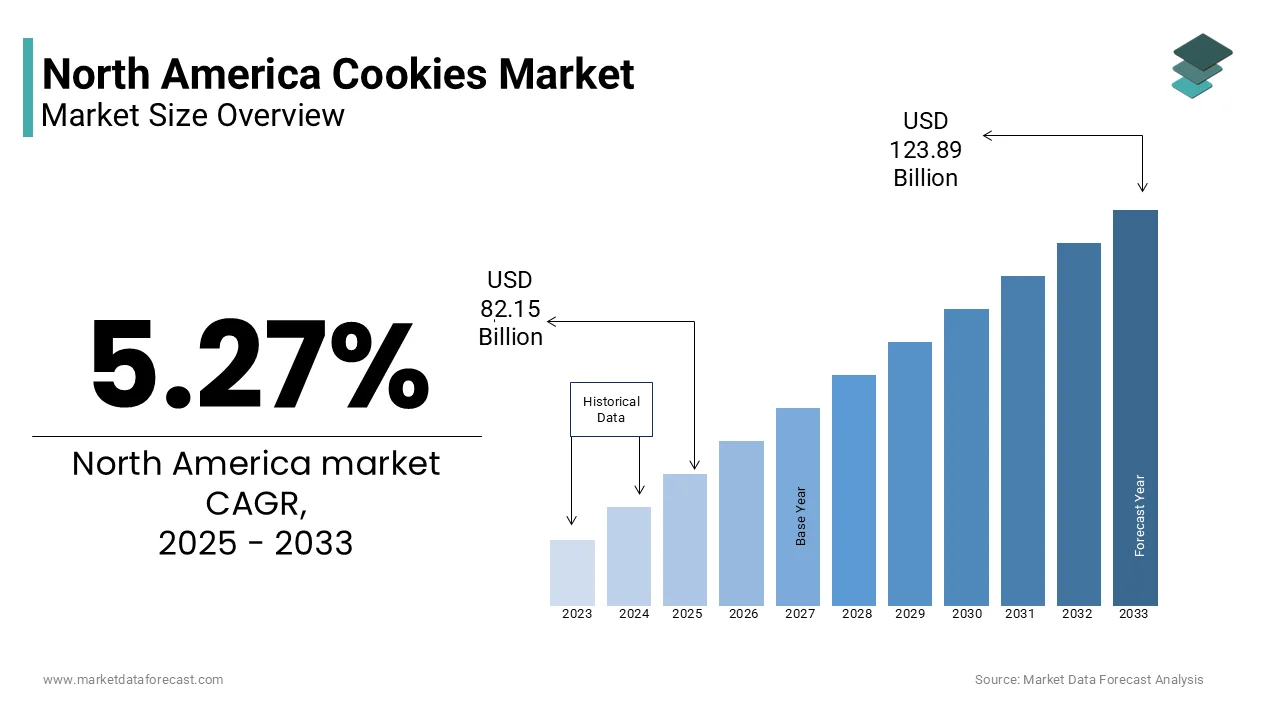
The North American cookies market size was valued at USD 82.16 billion in 2025, reached USD 86.49 billion in 2026, and is projected to scale up to USD 130.44 billion by 2034, registering a compound annual growth rate (CAGR) of 5.27% during the forecast period from 2026 to 2034. Driven by growing consumer preference for premium and artisanal offerings, expansion of e-commerce channels, and continuous innovation in functional and health-oriented formulations, the market continues to expand significantly across the region.
Key Executive Metrics (At-a-Glance)
- 2025 Base Valuation: USD 82.16 Billion
- 2026 Current Valuation: USD 86.49 Billion
- 2034 Forecast Valuation: USD 130.44 Billion
- Compound Annual Growth Rate (CAGR): 5.27% (2025–2034)
- Leading Regional Market: United States (86% share, 2025)
- Fastest-Growing Country Market: United States / Canada
Core Market Drivers
- Premium & Artisanal Shift: Increasing consumer willingness to pay more for high-quality ingredients, natural flavors, and unique textures.
- E-Commerce Expansion: Digital grocery platforms, home delivery convenience, and direct-to-consumer gourmet brands driving broad accessibility.
Primary Market Restraints & Challenges
- Health Consciousness: Rising sugar reduction trends and regulatory restrictions leading to declining sales in conventional high-sugar cookie segments.
- Raw Material Volatility: Persistent fluctuations in key ingredient prices (wheat, sugar, butter, cocoa) and ongoing workforce challenges.
North America Cookies Market Segmentation Highlights
| Segment Category | Largest Segment | Fastest-Growing Segment |
|---|---|---|
| By Ingredient | Chocolate Chip (28% share, 2025) | Oatmeal (6.8% CAGR) |
| By Product Type | Sandwich Cookies (32.2% share, 2025) | No-Bake Cookies (7.4% CAGR) |
| By Country | United States (86% share, 2025) | United States / Canada |
Major Industry Players Profiled
Key food corporations and market leaders shaping the North American cookies sector include Mondelez International, Kellogg Co., Campbell Soup Co., Nestle SA, United Biscuits, PepsiCo, M. Dias Branco, Britannia Industries, Barilla G. e R. Fratelli, and Arcor U.S.A.
North America Cookies Market Size
The cookie market in North America was valued at USD 82.16 billion in 2025, and the North American market size is predicted to grow from USD 130.44 billion by 2034 from USD 86.49 billion in 2026. The market's promising CAGR for the predicted period is 5.27%.
The cookies are range of baked confectionery products made primarily from flour, sugar, fat, and various inclusions such as chocolate, nuts, and dried fruits, consumed across households, foodservice outlets, and retail channels. These products are categorized into formats including soft baked, crunchy, sandwich, filled, and premium artisanal variants, serving both indulgent and functional purposes. Additionally, rising interest in clean-label ingredients has prompted reformulation efforts to reduce artificial additives and incorporate organic, non-GMO, and allergen-friendly options. The presence of institutional buyers such as schools, corporate cafeterias, and hotel chains further stabilizes consumption patterns.
MARKET DRIVERS
Rising Consumer Preference for Premium and Artisanal Cookies
The increasing consumer inclination toward premium and artisanal cookie products is driving the growth of the North America cookies market. Shoppers are increasingly willing to pay more for high quality ingredients natural flavors and unique textures that differentiate these products from mass produced alternatives. According to a 2023 report by the International Dairy Foods Association premium cookie sales in the United States grew by 12% year over year reflecting a broader trend toward indulgence and clean label products. This shift is further supported by the proliferation of small batch bakeries and direct to consumer cookie brands offering gourmet options with functional ingredients like protein oats or reduced sugar. Retailers such as Whole Foods and Trader Joe’s have expanded their premium cookie selections in response to this demand.
Expansion of E Commerce and Direct to Consumer Cookie Brands
The rapid growth of e commerce is additionally to fuel the growth of North American cookies market as digital platforms enable both established and emerging brands to reach consumers directly. Online sales of cookies in the United States surged by 25% in 2022 according to the Food Industry Association reflecting a post pandemic acceleration in digital grocery and specialty food shopping. The convenience of home delivery customization options and access to limited edition flavors have made online channels particularly appealing for cookie purchases. Major retailers including Walmart and Target have also enhanced their online bakery offerings integrating same day delivery and curbside pickup which further fuels accessibility. This digital transformation not only broadens market reach but also provides brands with valuable consumer data to refine product development and marketing strategies.
MARKET RESTRAINTS
Growing Health Consciousness and Sugar Reduction Trends
Heightened consumer awareness about health and wellness is significantly restraining the growth of the cookies market in North America. The U.S. Food and Drug Administration recommends limiting added sugars to less than 10 percent of daily calories yet a single serving of many popular cookies often exceeds 15 grams of added sugar. This shift has led to declining sales in conventional cookie segments with Euromonitor International noting a 3.2 percent year on year decline in volume sales of standard sugar heavy cookies in the U.S. between 2020 and 2022. Major manufacturers are reformulating products to include alternative sweeteners or fiber but face challenges in maintaining taste and texture. Additionally school nutrition policies and workplace wellness programs increasingly restrict high sugar snacks further limiting consumption occasions. These behavioral and regulatory pressures continue to dampen demand for traditional cookie offerings across the region.
Volatility in Raw Material Costs and Supply Chain Disruptions
Persistent fluctuations in the prices of key cookie ingredients such as wheat sugar butter and cocoa are additionally degrading the growth of North American cookies market. In 2022 the U.S. Bureau of Labor Statistics reported that the producer price index for wheat rose by 23 percent compared to the previous year while butter prices surged by nearly 30 percent according to the U.S. Department of Agriculture. These increases directly impact manufacturing costs for both large and small cookie producers. Additionally, labor shortages in food processing and transportation sectors have increased operational expenses with the National Association of Manufacturers citing that 75% of manufacturers faced workforce challenges in 2022. Smaller artisanal brands lacking economies of scale are particularly vulnerable often forced to raise retail prices or reduce product sizes both of which can alienate price sensitive consumers.
MARKET OPPORTUNITIES
Innovation in Functional and Health Oriented Cookie Formulations
The development of functional cookies that deliver added nutritional benefits beyond basic indulgence is gearing up new opportunities for the growth of North America cookies market. Consumers are increasingly seeking snacks that align with specific health goals such as digestive wellness immunity support or sustained energy. Companies such as Simple Mills and Catalina Crunch have capitalized on this trend by launching cookies enriched with pea protein almond flour and prebiotic fiber while maintaining clean label credentials. The U.S. Food and Drug Administration’s qualified health claims for dietary fiber and heart health further support product positioning. Retailers are responding by expanding dedicated better for you bakery sections with Whole Foods listing over 200 functional snack SKUs in 2023.
Expansion into Ethnic and Global Flavor Profiles
The incorporation of ethnic and globally inspired flavors that cater to evolving palates and multicultural demographics is also to escalate the North America cookies market. As per U.S. Census Bureau, the foreign born population in the United States reached 47.8 million in 2022 accounting for 14.3 percent of the total population and driving demand for authentic and fusion snack experiences. Mintel data from 2023 indicates that 42% of American consumers aged 18 to 34 are more likely to try snacks featuring international flavors such as matcha ube black sesame or dulce de leche. Major brands are responding accordingly with Nabisco launching limited edition Matcha Oreo cookies and Pepperidge Farm introducing European inspired shortbread varieties. Additionally, independent bakeries in metropolitan areas like Los Angeles Toronto and Miami are gaining traction by blending traditional cookie formats with ingredients like tahini yuzu or cardamom generating strong social media engagement and repeat purchases.
MARKET CHALLENGES
Intensifying Competition from Private Label and Store Brands
The mounting pressure from the rapid expansion and improving quality of private label and store brand offerings which directly challenge national brands on price and perceived value is to impede the growth of North American cookies market. In the cookie category major retailers such as Walmart Kirkland Signature and Aldi have invested heavily in premium private label lines that mimic the taste texture and packaging of leading national brands often at 20 to 30 percent lower price points. IRI data from 2022 showed that private label cookie sales grew by 8.5 percent year over year while national brand sales grew by only 2.1 percent in the same period. This trend is particularly pronounced among budget conscious households as inflation pushed the U.S. Consumer Price Index for bakery products up by 9.3 percent between 2021 and 2023 according to the U.S. Bureau of Labor Statistics. Additionally retailers control shelf placement and promotional support giving their own brands a strategic advantage in both physical and online stores. For national manufacturers this dynamic compresses margins and forces increased marketing spend to retain shelf space and consumer loyalty.
Stringent Regulatory Scrutiny on Nutritional Labeling and Marketing Claims
The increasing constrained by evolving regulatory requirements related to nutritional transparency ingredient disclosure and health related marketing claims is additionally to hamper the growth of North American cookies market. In the United States the Food and Drug Administration has intensified enforcement of labeling rules particularly around terms like natural healthy or protein rich which many cookie brands have used to appeal to health-conscious consumers. The U.S. Department of Agriculture also revised school nutrition standards in 2022 effectively banning most commercially available cookies from K 12 meal programs due to sugar and fat thresholds.
REPORT COVERAGE
| REPORT METRIC | DETAILS |
| Market Size Available | 2024 to 2034 |
| Base Year | 2024 |
| Forecast Period | 2025 to 2034 |
| CAGR | 5.27% |
| Segments Covered | By Ingredient, Product Type, Distribution Channel, and Region |
| Various Analyses Covered | Global, Regional and Country Level Analysis, Segment-Level Analysis, DROC, PESTLE Analysis, Porter’s Five Forces Analysis, Competitive Landscape, Analyst Overview of Investment Opportunities |
| Countries Covered | The United States, Canada and the Rest of North America |
| Market Leaders Profiled | Mondelez International, Kellogg Co., Campbell Soup Co., Nestle SA, United Biscuits, PepsiCo, M. Dias Branco, Britannia Industries, Barilla G. e R. Fratelli, and Arcor U.S.A., Kraft Foods, Thomas Tunnock Limited, Nutrexpa, Paterson Arran Limited |
SEGMENTAL ANALYSIS
By Ingredient Insights
The chocolate chip segment was the largest and held 28% of the North America cookies market share in 2025 with the decades of consumer familiarity strong brand anchoring and consistent performance across retail foodservice and e commerce channels. One key driver is the enduring popularity of classic American cookie varieties with the Nestlé Toll House recipe—first published in 1939—still influencing over 60 percent of homemade and commercial chocolate chip cookie formulations according to the National Confectioners Association. Additionally chocolate chip cookies benefit from high cross generational appeal. A 2022 survey by the International Dairy Foods Association found that 74 percent of U.S. households purchase chocolate chip cookies at least once per month making it the most frequently bought cookie type. Retailers reinforce this preference through prominent shelf placement and promotional bundling with complementary products like milk. The segment also thrives due to versatility in product innovation including gluten free vegan and protein enriched versions which expanded its addressable market.
The oatmeal segment is likely to grow with an expected CAGR of 6.8% during the forecast period with the shifting consumer preferences toward fiber rich whole grain snacks that align with heart health and digestive wellness goals. Retailers have responded by expanding better for you bakery sections with Kroger reporting a 22 percent year over year increase in oatmeal cookie sales in 2022 driven by private label and organic offerings. Additionally, oatmeal serves as a versatile base for functional enhancements such as added flaxseed chia or plant-based proteins appealing to the growing demographic of flexitarians and fitness oriented consumers.
By Product Insights
The sandwich cookies segment held 32.2% of the North America cookies market share in 2025 with the strong brand recognition consistent consumer demand and the segment’s adaptability across age groups and consumption occasions. These products benefit from decades of marketing investment nostalgic appeal and global flavor innovation with Mondelez International launching more than 50 limited edition Oreo varieties in North America between 2020 and 2023. Retailers further amplify dominance through multipack formats and value bundles which drive household penetration. NielsenIQ reports that sandwich cookies occupy nearly 38 percent of shelf space in the packaged cookie aisle of major U.S. supermarkets reflecting high turnover and retailer confidence.
The no bake cookies segment is attributed in registering a CAGR of 7.4 % in the coming years with the rising consumer interest in convenient at home dessert preparation and clean label ingredients that align with health and sustainability values. Pinterest reported a 65 percent year over year increase in searches for no bake cookie recipes in 2022 with peanut butter oat and energy ball variants leading engagement. Additionally, no bake formulations often feature natural sweeteners nuts seeds and plant based fats appealing to the 54% of U.S. consumers who prioritize snacks with recognizable ingredients as per the International Food Information Council’s 2023 Food and Health Survey. The segment also benefits from its overlap with functional snacking with many no bake cookies marketed as protein rich or gluten free. Whole Foods Market listed no bake energy cookies among its top ten snack trends for 2023 citing strong sales growth in both refrigerated and shelf stable formats. Furthermore, the absence of baking reduces energy consumption and production complexity making the category attractive to small batch and direct to consumer brands.
REGIONAL ANALYSIS
United States Market Analysis
The United States was the top performer in the North America cookies market by accounting for 86% of share in 2025 with the country’s massive consumer base advanced retail infrastructure and deeply ingrained cookie culture that spans generations. Major drivers include the presence of global snack conglomerates such as Mondelez International and Kellogg’s which invest heavily in product innovation seasonal limited editions and digital marketing. In 2022 Mondelez alone generated over 3.1 billion dollars in U.S. cookie sales according to company financial disclosures. Additionally, the rise of direct to consumer gourmet cookie brands like Crumbl and Chip City has revitalized premium segments with Crumbl expanding to more than 650 locations by early 2025 as noted by QSR Magazine.

Canada Market Analysis
Canada cookies market held 13% of share in 2025. Retailers like Loblaw and Metro have expanded private label better for you cookie offerings with organic oat and plant-based variants seeing double digit growth. Additionally, Canada’s proximity to U.S. supply chains enables rapid adoption of flavor trends while bilingual packaging and regional taste preferences such as higher demand for maple and oatmeal raisin create niche opportunities.
COMPETITIVE LANDSCAPE
KEY MARKET PLAYERS
A few of the market players inb the North America cookies market
- Mondelez International
- Kellogg Co.
- Campbell Soup Co.
- Nestle SA
- United Biscuits
- PepsiCo,
- M. Dias Branco,
- Britannia Industries
- Barilla G. e R. Fratelli
- Arcor U.S.A.
- Kraft Foods
- Thomas Tunnock Limited
- Nutrexpa
- Paterson Arran Limited
MARKET SEGMENTATION
This research report on the North American cookies market has been segmented and sub-segmented into the following categories.
By Ingredient
- Chocolate
- Chocolate Chip
- Oatmeal
- Butter
- Cream
- Ginger
- Coconut
- Honey
By Product Type
- Bar
- Drop
- Fried
- Molded
- No-Bake
- Icebox
- Rolled
- Sandwich
By Country
- United States
- Canada
- Rest of North America