- Product Description Description
- Table of Contents TOC
- List of Table & Figure LOT
- Get Free Sample PDF Sample PDF
Market Size, 2025
$0.39 BnMarket Estimate, 2026
$0.42 BnMarket Forecast, 2034
$0.76 BnCAGR, 2026–2034
7.54%Executive Summary: North American Chia Seeds Market
- Market Scope: Comprehensive regional analysis of the North American chia seeds market, covering plant-based nutrition shifts, cardiovascular health trends, import supply chains, and country-level profiles (US and Canada).
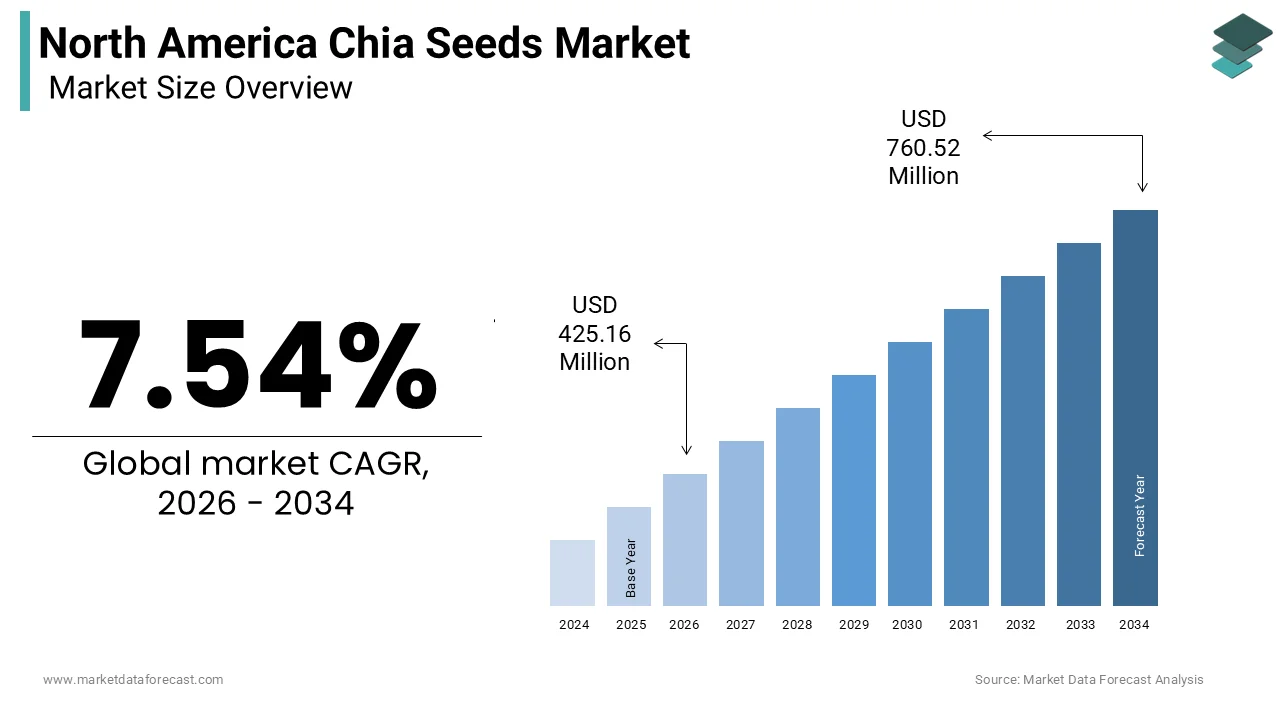
- Market Valuation: Valued at USD 395.35 million in 2025, reaching USD 425.16 million in 2026, and projected to expand to USD 760.52 million by 2034, growing at a robust CAGR of 7.54% from 2026 to 2034.
- Primary Growth Drivers: Accelerating shift toward plant-based proteins and vegan/flexitarian diets, high prevalence of cardiovascular diseases driving omega-3 functional food consumption, and pet humanization trends.
Key Market Segment Metrics
| Category | Leading Segment (Base Position) | Fastest-Growing / High-Growth Segment |
|---|---|---|
| By Product Type | Whole Chia Seeds Segment (accounted for 39.2% of the market in 2025, prized for its culinary versatility, minimal processing, and long shelf-life) | Chia Seed Oil Segment (projected at a 7.2% CAGR, fueled by high-end skincare, cosmetics, and concentrated omega-3 softgel supplements) |
| By Application | Food Industry Segment (largest share at 54.2% in 2025, driven by integration into bakery items, breakfast cereals, and clean-label snacks) | Nutraceuticals Segment (projected at an 8.5% CAGR, accelerated by preventive healthcare, chronic disease management, and dietary supplement consumption) |
| By Color | Black Chia Seeds Segment (dominant share in 2025, favored for higher antioxidant/polyphenol content and traditional association with superior nutrient density) | White Chia Seeds Segment (projected at a 6.8% CAGR, driven by visual aesthetic preferences in light-colored bakery, dairy, and dessert formulations) |
Major Market Players & Industry Landscape
Market Structure: Highly competitive landscape comprising major organic brand leaders and multinational agricultural suppliers competing via sustainable sourcing, clean-label product innovations, and eco-friendly packaging.
Key Companies: Navitas Organics (Navitas Naturals), Spectrum Essentials, Garden of Life, Health Works, Bob's Red Mill, Benexia, Nutiva, Terrasoul Superfoods, Tru Roots, Chiatrition, Naturkost Übelhor, and Glanbia Nutritionals.
 Download Free Sample Report
North American Chia Seeds Market Size
The size of the North American Chia Seeds Market was valued at USD 395.35 million in 2025 and is anticipated to be worth USD 760.52 million by 2034 from USD 425.16 million in 2026, growing at a CAGR of 7.54% during the forecast period.
Chia seeds are the cultivation, importation, and distribution of Salvia hispanica as a functional food ingredient rich in omega-3 fatty acids, fiber, and plant-based protein. As per the United States Department of Agriculture, domestic production of specialty crops, including oilseeds, has seen strategic investment, yet imports remain vital to satisfy volume demands. The relationship between these public health statistics and agricultural trade patterns defines the current landscape where chia seeds serve as a dietary intervention tool. Regulatory frameworks under the Food and Drug Administration further shape this environment by establishing labeling standards that validate health claims.
MARKET DRIVERS
Surge in Plant-Based Protein Consumption
The accelerating shift toward plant-based diets, as consumers seek non-animal protein sources, is propelling the growth of the North America chia seeds market. Chia seeds provide a complete amino acid profile that appeals to flexitarian and vegan demographics who avoid soy or gluten allergens. This substantial revenue stream directly correlates with increased procurement of versatile ingredients like chia that function in dairy alternatives and baked goods. Manufacturers utilize chia seeds not only for protein content but also for their gelling properties, which replace eggs in vegan formulations. The alignment between ethical consumption trends and functional nutrition creates sustained demand. Furthermore, food service operators incorporate chia into menus to cater to diverse dietary restrictions without compromising texture.
Prevalence Of Cardiovascular Health Concerns
The widespread incidence of cardiovascular disease due to the seed's high alpha-linolenic acid content is additionally prompting the growth of the North America chia seeds market. Consumers actively seek functional foods that support heart health as a preventive measure against chronic conditions. According to the American Heart Association, cardiovascular disease accounts for nearly 1 in every 5 deaths in the United States, creating urgent demand for cardioprotective dietary interventions. This mortality statistic drives shoppers toward grocery aisles featuring omega-3 fortified products where chia serves as a primary plant-based source. As per the Public Health Agency of Canada, approximately 2.4 million Canadian adults live with diagnosed heart disease, necessitating accessible nutritional management strategies. Chia seeds offer a convenient, shelf-stable option for increasing daily omega-3 intake without fish oil supplements. Clinical research published in reputable journals supports the lipid-lowering effects of regular chia consumption, reinforcing consumer confidence. Retailers respond by expanding shelf space for heart-healthy snacks and cereals containing chia.
MARKET RESTRAINTS
Gastrointestinal Intolerance Risks
The adverse gastrointestinal reactions unfavorably limit repeat purchases among sensitive consumers, which is limiting the growth of the North America chia seeds market. High fiber content can cause bloating, abdominal pain, and digestive distress when consumed in excess or without adequate hydration. According to the International Foundation for Gastrointestinal Disorders, irritable bowel syndrome affects between 10 and 15% of adults in North America, making high fiber foods problematic for millions. As per the National Institutes of Health, excessive fiber intake above 70 grams per day frequently triggers adverse symptoms in unaccustomed individuals, leading to negative product associations. Manufacturers face challenges in educating consumers on proper serving sizes and preparation methods to mitigate these effects. Negative online reviews detailing digestive issues deter potential new users from experimenting with the product. Formulators must balance inclusion rates to prevent texture defects and physiological discomfort in finished goods. This biological limitation caps per capita consumption levels regardless of marketing efforts.
Price Volatility Due To Import Dependency
Supply chain instability, through unpredictable pricing and availability fluctuations, is declining the growth of the North America chia seeds market. Domestic cultivation remains insufficient to meet demand, forcing reliance on imports from Australia, South America, and Southeast Asia. This variability translates to wholesale price swings that complicate budgeting for food manufacturers and retailers. As per Environment and Climate Change Canada, extreme weather events linked to climate change have reduced crop yields in key exporting regions, exacerbating supply shortages. Higher input costs force brands to either absorb margin compression or pass expenses to price-sensitive consumers. Private label products often reduce chia content or switch to cheaper flax alternatives during price spikes. The lack of diversified domestic sourcing options leaves the market vulnerable to geopolitical disruptions and logistics bottlenecks. Long lead times for ocean freight further delay replenishment during peak demand periods.
MARKET OPPORTUNITIES
Expansion Into Pet Nutrition Sector
The burgeoning pet humanization trend, as owners seek premium functional ingredients for companion animals, is expected to boost the growth of the North America chia seeds market. Pet parents increasingly view pets as family members and invest in nutrition that mirrors human wellness trends. According to the American Pet Products Association, spending on pet food and treats in the United States exceeded 58 billion dollars in 202,3 reflecting deep financial commitment to animal health. This expenditure level opens lucrative channels for chia as a natural source of omega-3s for coat, skin, and joint health. Chia seeds offer a clean label alternative to synthetic supplements in kibble and wet food formulations. Veterinary nutritionists endorse plant-based omega-3s for pets with fish allergies, creating niche demand. Manufacturers can differentiate products through functional claims supported by emerging research. The regulatory pathway for novel pet food ingredients is becoming clearer, facilitating faster market entry.
Innovation In Sustainable Packaging Solutions
The growing environmental consciousness to align product offerings with zero-waste values through biodegradable packaging is also elevating the growth of the North America chia seeds market. Consumers increasingly scrutinize the ecological footprint of superfoods, demanding sustainability beyond the farm gate. This preference drives brands to adopt innovative materials that complement chia's natural image. Circular economy initiatives are gaining traction, with major retailers setting strict packaging reduction targets for suppliers. Chia brands can leverage this momentum by pioneering plastic-free pouches and bulk dispensing systems. Such differentiation commands premium pricing and builds brand loyalty among eco-conscious millennials and Gen Z buyers. Partnerships with packaging technology firms enable scalable solutions that maintain shelf life while reducing plastic use. Government bans on single-use plastics in several Canadian provinces and US states create regulatory tailwinds for early adopters.
MARKET CHALLENGES
Regulatory Hurdles For Novel Food Claims
The evolving regulatory frameworks are creating compliance uncertainty that is a key challenge for the growth of the North America chia seeds market. While chia is generally recognized as safe, specific therapeutic claims require extensive clinical validation. The unauthorized health claims on food labels trigger warning letters and potential recalls, risking brand reputation. This enforcement intensity forces marketers to use vague language that fails to communicate specific benefits effectively. The novel food regulations require premarket safety assessments for certain chia-derived ingredients, delaying product launches. The cost of conducting human trials to substantiate claims exceeds budgets for many small and medium enterprises. Divergent standards between US and Canadian authorities complicate cross-border trade and labeling harmonization. Competitors making unsubstantiated claims gain temporary advantages until regulators intervene, creating uneven playing fields. Consumer confusion arises when scientific evidence exists but cannot be legally communicated on the pack.
Consumer Awareness Regarding Superfood Efficacy
The widespread awareness about superfood marketing by eroding trust and dampening enthusiasm is additionally to decline the growth of the North America chia seeds market. Years of exaggerated health promises have created fatigue among educated consumers who question actual versus perceived benefits. According to the International Food Information Council Foundation survey, data shows that 58% of consumers are confused about what constitutes a healthy diet, leading to decision paralysis. This confusion extends to chia, where conflicting media messages create doubt about its necessity. Negative viral content questioning chia bioavailability or environmental impact spreads faster than corrective information. Brands struggle to cut through noise with credible messaging that resonates with cynical audiences. The commoditization of chia in low-quality products further damages category perception. Rebuilding trust requires transparent communication and third-party verification, which adds cost and complexity.
REPORT COVERAGE
| REPORT METRIC | DETAILS |
| Market Size Available | 2025 to 2034 |
| Base Year | 2025 |
| Forecast Period | 2026 to 2034 |
| CAGR | 7.54% |
| Segments Covered | By Product Type, Application, Color, And Region |
| Various Analyses Covered | Global, Regional & Country Level Analysis; Segment-Level Analysis; DROC, PESTLE Analysis; Porter’s Five Forces Analysis; Competitive Landscape; Analyst Overview of Investment Opportunities |
| Regions Covered | US, Canada, and the rest of North America |
| Market Leaders Profiled | Navitas Naturals Organic Chia Seeds, Spectrum Essentials Chia Seed, Garden of Life Organic Chia Seed, Health Works Chia Seeds, Bob's Red Mill Chia Seeds, Benexia, Nutiva Organic Chia Seed, Terrasoul Superfoods Organic Chia Seeds, Tru Roots Organic Chia Seeds, Chiatrition Chia Seeds, Naturkost Übelh, Glanbia Nutritionals |
SEGMENTAL ANALYSIS
By Product Type Insights
The whole chia seeds segment accounted for 39.2% of the North America Chia Seeds Market share in 2025 due to their versatility and minimal processing requirements, which appeal to health-conscious consumers. Consumer preference for whole foods that retain their natural nutritional profile without industrial alteration. This trend directly supports the volume sales of whole chia seeds, which are used in smoothies, puddings, and baking across households. The ease of storage and long shelf life further encourage bulk purchasing behavior among families. Retailers allocate significant shelf space to whole seeds because they drive foot traffic and cross-category purchases with other superfoods. The culinary flexibility of whole seeds allows them to be incorporated into both sweet and savory dishes without specialized equipment. The widespread acceptance of whole chia seeds as a basic healthy ingredient secures their leading market share.
The chia seed oil segment is projected to register the fastest CAGR of 7.2% from 2026 to 203,4 with the concentratedomega-33 content and cosmetic applications. The rapid growth of the segment is fueled by the increasing demand for plant-based oils in high-end skincare and dietary supplements, where purity is paramount. Chia seed oil offers a lightweight alternative to heavier botanical oils, making it ideal for facial serums and hair care formulations. The advancements in cold-press extraction technology have improved yield efficiency and reduced oxidation risks, making commercial production more viable. This technological progress lowers entry barriers for niche brands launching premium oil-based products. The pharmaceutical industry also utilizes chia oil for softgel capsules targeting cardiovascular health without the fishy aftertaste associated with marine sources. The higher price point of chia oil compared to whole seeds contributes to revenue growth even if volume remains lower. Strategic marketing emphasizing the antioxidant properties of the oil attracts affluent demographics willing to pay for specialized wellness solutions.
By Application Insights
The food industry segment was the largest, accounting for 54.2% of the North America Chia Seeds Market share in 2025, with the integration of chia into mainstream packaged goods. The extensive use of chia in bakery products, breakfast cereals, and snacks, where it serves as a functional ingredient for texture and nutrition. This innovation rate directly translates to increased procurement of chia seeds by major manufacturers aiming to meet clean label demands. As per the Consumer Brands Association, ready-to-eat cereal sales remain stable, with premium variants containing superfoods outperforming traditional sugary options. Chia seeds provide viscosity and binding properties that replace synthetic additives in gluten-free formulations. The versatility of chia allows it to be hidden in children’s snacks while boosting nutritional value unnoticed by picky eaters. Food service operators also incorporate chia into menu items to cater to health-focused diners. The broad acceptance of chia in everyday food items ensures consistent high-volume demand across the supply chain.
The nutraceuticals segment is swiftly emerging at the fastest CAGR of 8.5% from 2026 to 2034 owing to the rising prevalence of chronic diseases and the consumer shift toward preventive healthcare through supplementation. According to the study, over 75% of American adults report using dietary supplements regularly, indicating a mature and expanding market for natural ingredients. Chia seeds are increasingly formulated into capsules, powders, and gummies for their high fiber and omega-3 content. Research into plant-based lipid sources has intensified, leading to greater scientific validation for chia-derived extracts. This evidence base supports premium pricing and medical professional recommendations for chia supplements. Manufacturers are investing in bioavailability enhancement technologies to improve absorption rates of chia nutrients. Regulatory clarity around structure-function claims allows for aggressive marketing of health benefits.
By Color Insights
The black chia seeds segment held a dominant share of the North America Chia Seeds Market in 2025 with the higher antioxidant content and traditional association with superior nutritional value. The leading position is driven by consumer perception that darker seeds contain more polyphenols and offer greater health benefits than lighter varieties. The black chia seeds exhibit significantly higher total phenolic content compared to white seeds, reinforcing their premium status in health circles. This scientific validation influences purchasing decisions among educated consumers who prioritize nutrient density. The visual contrast of black seeds in clear packaging also appeals to buyers seeking authentic and unprocessed appearances. Major brands prefer black seeds for their consistency in color and size, which enhances brand recognition. The robust flavor profile of black seeds complements strong tastes in smoothies and baked goods. Supply chains are optimized for black seeds due to higher global production volumes of this variety.
The white chia seeds segment is likely to grow at the fastest CAGR of 6.8% from 2026 to 203,4 with aesthetic preferences in premium food applications. The demand is driven by visually appealing ingredients in light colored products such as vanilla yogurts, white breads, and delicate pastries, where black specks are undesirable. According to the study, visual appeal is a critical factor in consumer acceptance of new food products, particularly in the dessert and bakery sectors. White chia seeds allow formulators to maintain a clean, uniform appearance while adding nutritional value. The milder taste of white seeds also appeals to consumers sensitive to earthy flavors.
COMPETITION OVERVIEW
The competition in the North America Chia Seeds Market is characterized by a mix of established global suppliers and niche regional brands who compete on quali,ty sustainability and innovation. Large multinational corporations leverage their extensive distribution networks and economies of scale to offer competitive pricing and consistent availability. These players focus on securing long-term contracts with major food manufacturers and retail chains to ensure steady revenue streams. Smaller specialty brands differentiate themselves through organic certifications, fair trade practices, and unique product offerings such as flavored or sprouted chia seeds. The market sees intense rivalry in the retail sector where brand visibility and packaging design play crucial roles in influencing consumer choices. Companies invest heavily in marketing and education to highlight the nutritional benefits of chia and distinguish their products from commoditized alternatives. Supply chain resilience is a key competitive factor as disruptions can significantly impact availability and pricing. New entrants face barriers due to high costs associated with certification and quality control but find opportunities in niche segments.
Key Players in the Market
Major Key Players in the North America Chia Seeds Market are
- Navitas Naturals Organic Chia Seeds
- Spectrum Essentials Chia Seeds
- Garden of Life Organic Chia Seed
- Health Works Chia Seeds
- Bob's Red Mill Chia Seeds
- Benexia
- Nutiva Organic Chia Seed
- Terrasoul Superfoods Organic Chia Seeds
- Tru Roots Organic Chia Seeds
- Chiatrition Chia Seeds
- Naturkost Übelh
- Glanbia Nutritionals
Top Strategies Used By Key Market Participants
Key players in the North America Chia Seeds Market employ several strategic initiatives to maintain competitive advantage and drive growth. Product differentiation remains a primary strategy as companies develop unique formulations such as flavored or infused chia seeds to appeal to specific taste preferences. Strategic partnerships with local farmers and cooperatives ensure stable supply chains and promote sustainable agricultural practices. Investment in advanced processing technologies improves product quality and extends shelf life, reducing waste and enhancing consumer satisfaction. Digital marketing and social media engagement are increasingly used to educate consumers about the health benefits of chia and build brand loyalty. Companies also focus on expanding distribution channels into e-commerce platforms and specialty retail stores to reach broader audiences. Regulatory compliance and obtaining organic certifications further strengthen market positioning by meeting stringent quality standards.
Leading Players in the Market
- Navitas Organics maintains a significant presence in the North America Chia Seeds Market by focusing on high quality organic sourcing and sustainable agricultural practices. The company supplies premium chia seeds to major food manufacturers and retail brands across the United States and Canada. Navitas recently expanded its processing facilities to enhance cleaning and packaging efficiency ensuring consistent product quality for industrial clients. Their commitment to fair trade partnerships with farmers in South America strengthens supply chain reliability and ethical sourcing credentials. This strategic focus on transparency and quality assurance builds trust with health-conscious consumers and brand partners.
- Ancient Harvest contributes to the market by offering innovative chia seed products that cater to gluten free and vegan dietary needs. The company is well known for its chia seed granola and baking mixes which have gained popularity among health focused households. Ancient Harvest recently launched new ready to eat snack bars featuring chia as a primary ingredient to capture the convenience food segment. Their marketing efforts emphasize the historical significance and nutritional benefits of chia to educate consumers. The brand leverages strong distribution networks in natural food stores and mainstream supermarkets to increase visibility.
- Nutiva plays a vital role in the market by providing versatile chia seed solutions for both consumer and industrial applications. The company offers a wide range of products including whole seeds ground chia and chia oil catering to diverse formulation requirements. Nutiva, recently introduced eco friendly packaging options to align with growing consumer demand for sustainability. Their technical support team assists food manufacturers in optimizing chia usage for texture and stability in various products. Nutiva also engages in educational campaigns to highlight the versatility of chia in everyday cooking.
MARKET SEGMENTATION
This research report on the North America chia seeds market has been segmented and sub-segmented based on product type, application, color, and region.
By Product Type
- Chia Seed Oil
- Whole Chia Seeds
- Ground Chia
- Chia Bran
By Application
- Nutraceuticals
- Food
- (Bakery,
- Breakfast
- Cereals
- Soups & Gravies)
- Beverages
By Color
- White
- Brown
- Black
By Region
- US
- Canada
- Rest of North America