- Product Description Description
- Table of Contents TOC
- List of Table & Figure LOT
- Get Free Sample PDF Sample PDF
Market Size, 2025
$52.07 BnMarket Estimate, 2026
$53.54 BnMarket Forecast, 2034
$66.94 BnCAGR, 2026–2034
2.83%North America Emergency Medical Supplies Market Summary
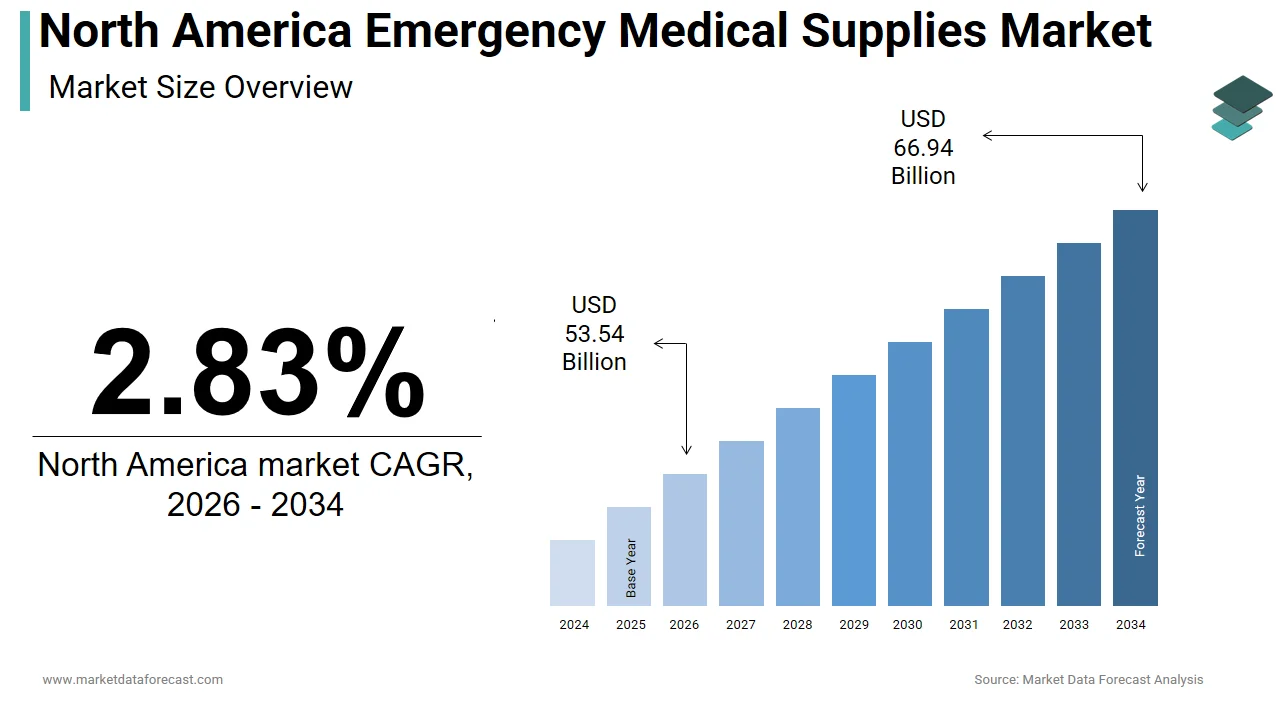
The size of the North America emergency medical supplies market was worth USD 52.07 billion in 2025. The regional market is anticipated to grow at a CAGR of 2.83% from 2026 to 2034 and be worth USD 66.94 billion by 2034 from USD 53.54 billion in 2026. Emergency medical supplies are life-saving equipment, devices, and consumables designed for immediate deployment during medical emergencies, trauma situations, and urgent care scenarios. Key growth factors include an aging population, chronic disease prevalence, and technological advancements in portable diagnostics and telemedicine integration.
Key Market Trends & Insights
- United States led the North America emergency medical supplies market in 2025.
- Canada is expected to showcase steady growth throughout the forecast period.
- Based on type, the diagnostic supplies was the leading segment in 2025.
- Based on application, cardiology was the dominant segment in 2025.
- Based on end-user, the hospitals remained the top segment in 2025.
Market Size & Forecast
- 2025 Market Size: USD 52.07 Billion
- 2026 Market Size: USD 53.54 Billion
- 2034 Projected Market Size: USD 66.94 Billion
- CAGR (2026 to 2034): 2.83%
- United States: Largest market in 2025
- Canada: Steady growth region
 Download Free Sample Report
North America Emergency Medical Supplies Market Size
The North America emergency medical supplies market was valued at USD 52.07 billion in 2025, is estimated to reach USD 53.54 billion in 2026, and is projected to reach USD 66.94 billion by 2034, growing at a CAGR of 2.83% from 2026 to 2034.
Emergency medical supplies are life-saving equipment, devices, and consumables designed for immediate deployment during medical emergencies, trauma situations, and urgent care scenarios. This essential sector includes defibrillators, ventilators, oxygen therapy equipment, emergency medications, trauma kits, diagnostic tools, and sterile surgical supplies that form the backbone of pre-hospital care, emergency departments, and disaster response operations.
The market's evolution has been shaped by technological advancements in portable diagnostics, telemedicine integration, and point-of-care testing capabilities that enhance emergency response effectiveness.
The aging population demographic has increased the prevalence of chronic conditions requiring emergency interventions. The healthcare sector's emphasis on reducing response times and improving patient outcomes has elevated the importance of strategically positioned emergency medical supplies that ensure immediate availability during critical situations. Public health preparedness initiatives and pandemic response protocols have further intensified demand for stockpiled emergency supplies and rapid-deployment medical resources.
MARKET DRIVERS
Aging Population and Chronic Disease Prevalence
The demographic shift toward an aging population and the increasing prevalence of chronic diseases across North America have created substantial demand for emergency medical supplies that address acute episodes and complications associated with long-term health conditions.
The Centers for Disease Control and Prevention reports that 60% of adults in North America live with at least one chronic disease, while a notable share of manage two or more conditions that can lead to emergencies requiring immediate medical attention. Cardiovascular diseases, which affect a significant portion of adults according to the American Heart Association, represent a significant driver for emergency medical supply demand, particularly for defibrillators, cardiac monitoring equipment, and thrombolytic medications. As per the American Diabetes Association, over 37 million North Americans have diabetes, with hypoglycemic emergencies requiring immediate glucose administration and monitoring supplies representing a critical component of emergency preparedness. The Alzheimer's Association indicates that over 6.7 million individuals live with Alzheimer's disease. Respiratory conditions, including asthma and chronic obstructive pulmonary disease, affecting over 25 million individuals according to the American Lung Association, drive demand for portable oxygen therapy equipment and bronchodilator delivery systems. The complexity of managing multiple chronic conditions has increased hospitalization rates and emergency department visits.
Technological Advancements in Emergency Care Equipment
The rapid advancement of medical technology and the development of sophisticated emergency care equipment have significantly driven demand for next-generation emergency medical supplies that enhance diagnostic capabilities, treatment effectiveness, and patient monitoring during critical care situations. The integration of artificial intelligence and machine learning in emergency medical devices has created demand for connected equipment that can transmit real-time patient data to healthcare providers, requiring specialized communication interfaces and data management supplies. Telemedicine integration in emergency care has increased demand for video communication equipment, remote monitoring devices, and specialized sensors that require proprietary connection supplies and maintenance components. The development of wearable emergency monitoring devices and implantable defibrillators has created new supply chain requirements for battery systems, electrode patches, and wireless transmission components. The emphasis on reducing emergency response times and improving patient outcomes has accelerated the adoption of automated external defibrillators, portable blood gas analyzers, and rapid diagnostic test kits that require continuous supply replenishment and technical support services.
MARKET RESTRAINTS
High Procurement Costs and Budget Constraints
The substantial procurement costs associated with advanced emergency medical supplies and the ongoing budget constraints faced by healthcare institutions across North America present significant barriers to market expansion, particularly for smaller hospitals, rural emergency facilities, and community health centers with limited financial resources. The complexity and sophistication of modern emergency medical devices, including portable ultrasound systems, advanced ventilators, and automated laboratory analyzers, have increased average equipment costs over the past five years.
The requirement for redundant equipment and backup systems to ensure operational continuity during emergencies adds to total procurement costs, creating additional financial pressures for healthcare administrators. Maintenance and service contracts for sophisticated emergency equipment often require annual expenditures equivalent to 10-15% of initial purchase prices, according to the Healthcare Financial Management Association, further straining operational budgets. The rapid pace of technological advancement in emergency medical supplies creates concerns about equipment obsolescence and the need for frequent upgrades, making long-term investment planning particularly challenging for resource-constrained organizations. The concentration of premium emergency medical supply manufacturers in specific geographic regions has limited competitive pricing opportunities and created supply chain dependencies that affect procurement flexibility.
Regulatory Compliance and Quality Assurance Requirements
The increasingly stringent regulatory compliance and quality assurance requirements for emergency medical supplies across North America have created significant operational challenges and cost burdens that constrain market growth, particularly for manufacturers serving highly regulated healthcare environments and emergency response organizations. The complexity of validation protocols has increased substantially with the implementation of risk-based approaches and continuous monitoring requirements that necessitate extensive documentation and quality assurance procedures for emergency medical supplies. The need for third-party certification and regulatory approval can extend product development timelines by several months, creating project delays and cash flow pressures for manufacturers operating in competitive markets. Cross-border trade requirements necessitate compliance with multiple regulatory frameworks, including FDA, Health Canada, and provincial health authority standards, creating additional complexity for manufacturers serving diverse North American markets. The qualification and re-qualification of emergency medical supplies for different applications requires extensive testing and documentation. The shortage of qualified regulatory affairs professionals and quality assurance specialists has created bottlenecks in product development and market entry processes, limiting innovation and responsiveness to emerging emergency care requirements.
MARKET OPPORTUNITIES
Integration of Internet of Things and Connected Devices
The integration of Internet of Things technology and connected devices in emergency medical supplies presents significant growth opportunities by enabling real-time monitoring, predictive maintenance, and enhanced coordination capabilities that improve emergency response effectiveness and patient outcomes.
According to a report by the Healthcare Information and Management Systems Society, IoT-enabled emergency medical devices can reduce response times while improving treatment accuracy through real-time data transmission and remote monitoring capabilities. Smart emergency supply management systems equipped with RFID tracking and inventory optimization algorithms can reduce supply wastage and ensure critical equipment availability during emergencies. As per the American Telemedicine Association, connected emergency medical devices incorporating telehealth capabilities enable remote consultation and specialist support during emergency interventions, particularly valuable for rural and underserved communities lacking immediate access to specialized care. The integration of artificial intelligence and machine learning algorithms in emergency supply management systems can predict demand patterns, optimize inventory levels, and automate reorder processes, reducing stockout incidents. Predictive analytics capabilities allow emergency departments to optimize supply chain management based on historical usage patterns, seasonal variations, and anticipated emergency scenarios, maximizing resource utilization while minimizing carrying costs. The development of digital twin technologies for emergency medical equipment enables virtual testing and performance optimization before deployment, reducing commissioning time and operational risks. Cloud-based analytics platforms provide centralized monitoring and performance benchmarking capabilities that enable best practice sharing and continuous improvement across multiple emergency facilities and response organizations.
Disaster Preparedness and Pandemic Response Initiatives
The growing emphasis on disaster preparedness and pandemic response initiatives across North America has created substantial opportunities for emergency medical supply manufacturers to develop specialized equipment and strategic stockpiling solutions that support public health emergency management and community resilience objectives.
The development of mobile emergency response units and field hospitals has created demand for compact, portable emergency medical supplies that can be rapidly deployed and operated in austere environments without traditional infrastructure support. International humanitarian aid organizations and disaster response teams require specialized emergency medical supplies that meet global quality standards and can function effectively in diverse geographic and climatic conditions. Government incentives and grant programs for emergency preparedness have created financial motivation for healthcare facilities and emergency response organizations to invest in advanced emergency medical supply systems that support comprehensive disaster response capabilities. The emphasis on interoperability and standardization in emergency response operations has accelerated adoption of universal emergency medical supplies that can be shared across multiple agencies and jurisdictions during coordinated response efforts.
MARKET CHALLENGES
Supply Chain Disruptions and Component Shortages
The North American emergency medical supplies market faces persistent supply chain disruptions and component shortages that have constrained production capacity and increased equipment costs throughout 2023 and into 2024, creating critical vulnerabilities in emergency preparedness and response capabilities. Critical components such as specialized sensors, electronic controls, sterile packaging materials, and pharmaceutical ingredients have experienced extended lead times and price volatility due to global manufacturing bottlenecks and geopolitical tensions.
The reliance on international suppliers, particularly for specialized electronic components, sterile packaging materials, and pharmaceutical ingredients, has created vulnerabilities in the supply chain that impact emergency preparedness and response operations. The semiconductor shortage has particularly impacted smart emergency medical devices that incorporate digital monitoring and communication capabilities, with lead times extending beyond 24 weeks for certain microprocessor components. Freight and logistics challenges have notably added to transportation costs according to the American Trucking Associations, further pressuring procurement budgets and affecting emergency supply affordability. The concentration of key component manufacturing in specific geographic regions has amplified supply chain risks, making inventory management and supplier diversification critical strategic priorities for emergency response organizations and healthcare facilities.
Skilled Workforce Shortage and Training Requirements
The North American emergency medical supplies market confronts a critical shortage of skilled healthcare professionals and technical specialists capable of properly operating, maintaining, and optimizing advanced emergency medical equipment, creating operational challenges for healthcare facilities and emergency response organizations.
Modern emergency medical equipment incorporates advanced automation, digital controls, and integrated monitoring systems that require specialized training and continuing education programs for proper operation and maintenance. Also, the majority of emergency equipment failures result from improper operation or maintenance practices, with the lack of qualified technical specialists contributing to extended downtime and compromised patient care quality. The complexity of regulatory compliance and quality assurance requirements for emergency medical supplies has increased, requiring certified technicians who understand specific regulatory requirements and documentation procedures. Emergency response organizations report difficulty maintaining their emergency medical equipment fleets due to technician availability, with average repair turnaround times increasing notably over the past two years. The geographic distribution of skilled healthcare professionals is uneven, with rural areas and smaller communities experiencing more severe shortages that affect emergency care quality and response capabilities. Training programs and certification initiatives have struggled to keep pace with technological advancements, creating gaps in workforce competency and service quality standards that compromise emergency preparedness objectives.
REPORT COVERAGE
| REPORT METRIC | DETAILS |
| Market Size Available | 2025 to 2034 |
| Base Year | 2025 |
| Forecast Period | 2026 to 2034 |
| Segments Covered | By Type, Application, End-user, and Region. |
| Various Analyses Covered | Global, Regional and Country-Level Analysis, Segment-Level Analysis, Drivers, Restraints, Opportunities, Challenges; PESTLE Analysis; Porter’s Five Forces Analysis, Competitive Landscape, Analyst Overview of Investment Opportunities |
| Countries Covered | United States, Canada, Mexico, Rest of North America |
| Market Leaders Profiled | Medtronic plc (Ireland), Cardinal Health (US), BD (US), Johnson & Johnson, Inc. (US), and B. Braun Melsungen AG (Germany). |
SEGMENTAL ANALYSIS
By Type Insights
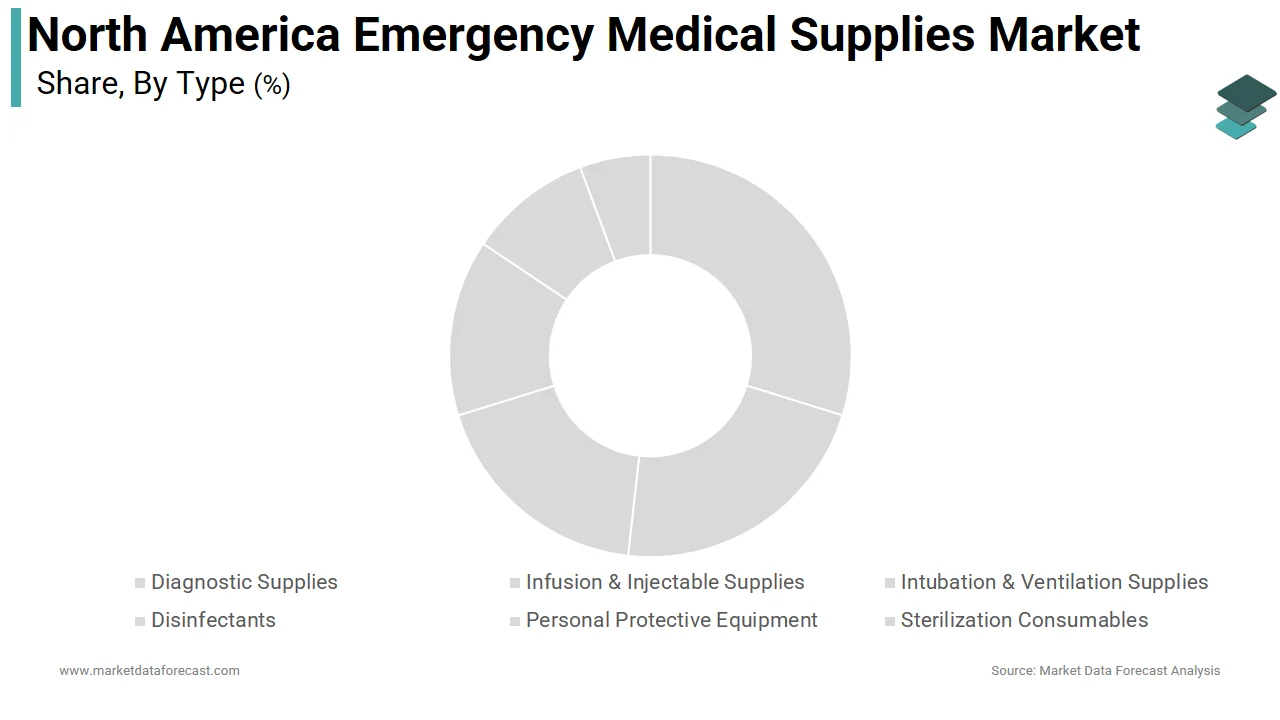
The diagnostic supplies segment remained the leading force in the North American emergency medical supplies market in 2025. It was due to their fundamental role in rapid patient assessment, disease identification, and treatment decision-making during critical care situations. The segment's dominance is credited to the universal requirement for accurate and timely diagnostic information across all emergency medical scenarios, from trauma cases to infectious disease outbreaks. According to the Clinical Laboratory Management Association, roughly 70% of clinical decisions are based on diagnostic test results, highlighting the critical importance of these supplies in emergency care protocols. The versatility of diagnostic supplies allows for application across diverse medical specialties and emergencies, making them indispensable to healthcare facilities and emergency response organizations. Market participants have extensively adopted diagnostic solutions due to their proven impact on patient outcomes, established reimbursement frameworks, and continuous technological advancements that enhance accuracy and reduce testing time. The segment's strength is further supported by regulatory frameworks that mandate specific diagnostic testing for emergency department protocols and public health surveillance requirements.
The extensive expansion of point-of-care testing capabilities and the development of rapid diagnostic technologies have significantly propelled the diagnostic supplies segment's dominance in the North American emergency medical supplies market, as healthcare providers seek to reduce turnaround times and improve patient outcomes through immediate test results. Moreover, the adoption of point-of-care diagnostic devices in emergency departments has increased over the past five years, driven by the need for immediate decision-making capabilities during critical care situations. The complexity of emergency medicine requires rapid identification of conditions such as myocardial infarction, sepsis, and infectious diseases, with diagnostic supplies enabling healthcare providers to initiate appropriate treatments within minutes rather than hours. Also, the majority of emergency departments now utilize point-of-care cardiac markers, blood gas analyzers, and infectious disease screening tests to support rapid triage and treatment protocols. The implementation of telemedicine and remote emergency care services has increased demand for portable diagnostic supplies that can provide accurate results in field conditions and mobile healthcare settings. Emergency response organizations maintain extensive inventories of rapid diagnostic supplies for disaster response and pandemic preparedness operations. The integration of artificial intelligence and machine learning in diagnostic devices has enhanced accuracy and reduced interpretation time, making advanced diagnostic supplies more accessible to emergency care providers.
The critical need for infectious disease surveillance and comprehensive pandemic preparedness capabilities across North America has established diagnostic supplies as the dominant segment in emergency medical supplies, as public health authorities and healthcare facilities invest in advanced testing capabilities to detect and respond to emerging health threats. The experience of recent pandemic responses has highlighted the critical importance of rapid diagnostic capabilities for infectious diseases, with emergency departments requiring immediate testing for influenza, respiratory syncytial virus, and novel pathogens to implement appropriate isolation and treatment protocols. The implementation of syndromic surveillance systems has increased demand for multiplex diagnostic panels that can simultaneously test for multiple pathogens, reducing diagnostic time and improving outbreak detection capabilities. State and local health departments have expanded their diagnostic testing capacities since 2020, with emergency medical diagnostic supplies representing the largest component of public health emergency preparedness investments. The emphasis on antimicrobial stewardship and resistance monitoring has accelerated the adoption of rapid diagnostic supplies that enable targeted antibiotic therapy and reduce inappropriate prescribing practices.
The dialysis consumables segment is the fastest-growing in the North American emergency medical supplies market and is experiencing accelerated adoption. It is propelled by increasing prevalence of chronic kidney disease, acute kidney injury management requirements, and technological advancements in renal replacement therapy. This growth trajectory reflects the critical importance of dialysis support in emergency departments, intensive care units, and disaster response scenarios where patients experience sudden renal failure or require urgent dialysis intervention. Market participants are experiencing increased demand for portable dialysis systems and emergency dialysis supplies that can be rapidly deployed in field hospitals and mobile medical units. The segment's growth is particularly pronounced in regions experiencing aging populations and increasing comorbidity rates that elevate the risk of acute kidney injury during emergency medical events. Government investments in emergency medical infrastructure and disaster preparedness initiatives have created substantial market opportunities for dialysis consumable manufacturers and service providers.
The increasing prevalence of acute kidney injury and the critical need for emergency dialysis support in intensive care environments have accelerated the adoption of dialysis consumables as the fastest-growing segment in the North American emergency medical supplies market. The complexity of modern critical care medicine, including the use of nephrotoxic medications, contrast agents, and invasive procedures, has increased the incidence of acute kidney injury requiring immediate renal replacement therapy support. The implementation of early dialysis initiation protocols has increased demand for dialysis consumables in emergency departments and step-down units where patients may require urgent renal support before transfer to specialized dialysis facilities. Disaster response scenarios and mass casualty events create a sudden demand for portable dialysis systems and emergency consumables that can support multiple patients simultaneously in field conditions. The aging population demographic and increasing prevalence of diabetes and hypertension have elevated the risk of acute kidney injury during emergency medical events, driving sustained demand for dialysis consumables and support equipment.
The development of portable dialysis systems and enhanced emergency deployment capabilities has significantly accelerated the growth of dialysis consumables in the North American emergency medical supplies market, as healthcare providers seek flexible solutions for renal replacement therapy in diverse care environments. Also, portable dialysis systems have experienced annual growth in adoption rates, driven by the need for emergency dialysis support in rural hospitals, mobile medical units, and disaster response operations. The miniaturization of dialysis equipment and the development of simplified operation protocols have enabled emergency department staff to provide life-sustaining dialysis support without specialized nephrology training, expanding access to renal replacement therapy during critical care situations. The implementation of telemedicine and remote monitoring capabilities has enhanced the safety and effectiveness of emergency dialysis procedures, allowing nephrology specialists to provide real-time guidance and support to emergency care providers. Military and humanitarian aid organizations have increased investment in portable dialysis systems and emergency consumables to support deployed medical teams and disaster response operations in austere environments. The emphasis on cost containment and resource optimization has accelerated the adoption of portable dialysis solutions that can reduce patient transfer costs and improve access to emergency dialysis services in underserved geographic regions.
By Application Insights
The cardiology applications segment commanded the North American emergency medical supplies market in 2024. This dominance is because of cardiovascular disease being the leading cause of death in North America, with emergency departments frequently managing acute myocardial infarction, cardiac arrest, arrhythmias, and heart failure exacerbations that require immediate access to specialized diagnostic and therapeutic supplies. The cardiology segment's strength is reinforced by the sophisticated nature of cardiac emergency care, which requires diverse supplies including cardiac monitoring electrodes, defibrillator paddles, thrombolytic medications, cardiac catheterization supplies, and advanced hemodynamic monitoring equipment. The segment's dominance is further supported by established clinical protocols, reimbursement frameworks, and continuous technological advancements that enhance cardiac emergency care effectiveness. Market participants have extensively adopted cardiology emergency supplies due to proven patient outcomes, regulatory requirements for emergency department cardiac care capabilities, and the critical time-sensitive nature of cardiac interventions that demand immediate supply availability.
The overwhelming prevalence of cardiovascular disease and the critical requirements for emergency cardiac interventions across North American healthcare systems have established cardiology applications as the dominant force in the emergency medical supplies market, creating sustained demand for specialized diagnostic, therapeutic, and monitoring supplies. The aging population demographic has elevated the prevalence of coronary artery disease, heart failure, and arrhythmias that frequently present as emergency department visits requiring specialized cardiac supplies. Moreover, cardiovascular disease accounts for a notable share of all deaths in North America, with emergency departments serving as the primary point of care for acute cardiac events that require immediate intervention to preserve patient life and organ function. The implementation of door-to-balloon time requirements for ST-elevation myocardial infarction has increased demand for rapid diagnostic supplies, cardiac catheterization equipment, and emergency medications that enable timely reperfusion therapy. Emergency medical services protocols mandate the carriage of advanced cardiac life support supplies, including automated external defibrillators, cardiac monitoring equipment, and resuscitation medications that represent a significant component of pre-hospital emergency medical supply inventories.
The implementation of advanced cardiac life support protocols and the integration of sophisticated cardiac monitoring and therapeutic technologies have significantly propelled the cardiology application segment's dominance in the North American emergency medical supplies market, as healthcare providers invest in specialized supplies that enhance resuscitation effectiveness and patient outcomes. In the region, emergency departments must maintain comprehensive inventories of cardiac life support supplies, including defibrillator paddles, cardiac monitoring electrodes, advanced airway management equipment, and pharmacological agents that support the cardiac chain of survival. The complexity of modern cardiac emergency care requires continuous electrocardiographic monitoring, invasive hemodynamic assessment, and targeted temperature management protocols that necessitate specialized supplies, including multi-parameter monitoring cables, arterial line catheters, and therapeutic hypothermia equipment. The implementation of telemedicine and remote cardiac monitoring capabilities has increased demand for wireless telemetry supplies, remote defibrillation equipment, and specialized communication interfaces that enable real-time consultation and intervention guidance. Emergency medical services organizations have upgraded their cardiac emergency supply protocols to include advanced monitoring capabilities, mechanical chest compression devices, and specialized resuscitation medications that enhance survival rates for out-of-hospital cardiac arrest victims.
The In-Vitro Diagnostics segment is the fastest-growing application in the North American emergency medical supplies market and is experiencing rapid expansion driven by technological advancements in rapid testing capabilities, point-of-care diagnostics, and the increasing need for immediate diagnostic information to support emergency treatment decisions. The extensive adoption of point-of-care testing and the development of rapid diagnostic capabilities have accelerated the growth of In-Vitro Diagnostics as the fastest-growing application segment in the North American emergency medical supplies market, as healthcare providers seek to reduce diagnostic turnaround times and improve emergency care effectiveness through immediate test results. In the region, the implementation of point-of-care diagnostic devices in emergency departments has increased over the past five years, driven by the need for immediate decision-making capabilities during critical care situations and patient flow optimization requirements. The complexity of emergency medicine requires rapid identification of conditions such as myocardial infarction, sepsis, infectious diseases, and metabolic disorders, with IVD supplies enabling healthcare providers to initiate appropriate treatments within minutes rather than hours. Emergency response organizations maintain extensive inventories of rapid diagnostic IVD supplies for disaster response and pandemic preparedness operations.
The critical need for infectious disease detection and comprehensive public health surveillance capabilities across North American emergency departments has significantly accelerated the growth of In-Vitro Diagnostics as the fastest-growing application segment, as healthcare facilities invest in advanced testing capabilities to detect and respond to emerging health threats and communicable disease outbreaks. The experience of recent pandemic responses has highlighted the critical importance of rapid diagnostic capabilities for infectious diseases, with emergency departments requiring immediate testing for influenza, respiratory syncytial virus, and novel pathogens to implement appropriate isolation and treatment protocols. The implementation of syndromic surveillance systems has increased demand for multiplex IVD panels that can simultaneously test for multiple pathogens, reducing diagnostic time and improving outbreak detection capabilities. State and local health departments have expanded their diagnostic testing capacities by 70% since 2020, with emergency medical IVD supplies representing the largest component of public health emergency preparedness investments.
By End User Insights
The hospitals segment was the prominent end user in the North American emergency medical supplies market in 2024. This growth of segment is due to hospitals serving as the primary destination for emergency medical care, with millions of emergency department visits occurring annually in the United States. The hospital segment's strength is reinforced by the sophisticated nature of emergency care provided in hospital settings, which requires access to advanced diagnostic equipment, specialized therapeutic supplies, and comprehensive inventory systems that can support diverse emergency scenarios from trauma care to infectious disease outbreaks. The segment's dominance is further supported by established reimbursement frameworks, regulatory requirements for emergency care capabilities, and continuous technological advancements that enhance emergency department effectiveness. Market participants have extensively targeted hospital end users due to their purchasing power, standardized procurement processes, and the critical nature of emergency supply requirements that demand reliable supplier relationships and comprehensive product portfolios.
The overwhelming volume of emergency department visits and the sophisticated critical care requirements within hospital settings have established hospitals as the dominant end user segment in the North American emergency medical supplies market, creating sustained demand for diverse and specialized emergency supplies that support immediate patient care and life-saving interventions. The complexity of modern emergency medicine requires hospitals to maintain comprehensive inventories of specialized supplies, including cardiac monitoring equipment, advanced airway management devices, thrombolytic medications, and trauma care supplies that enable immediate intervention for life-threatening conditions. The implementation of emergency department quality metrics and patient outcome measures has increased demand for advanced monitoring supplies, rapid diagnostic tests, and evidence-based therapeutic supplies that support clinical decision-making and treatment effectiveness. Trauma center designations and specialized emergency care capabilities require hospitals to maintain extensive inventories of specialized supplie,s including massive transfusion protocols, surgical airway equipment, and advanced resuscitation medications that represent significant components of emergency medical supply expenditures.
The critical role of hospitals in disaster preparedness and mass casualty response operations has significantly propelled their position as the dominant end user segment in the North American emergency medical supplies market, as healthcare facilities invest extensively in strategic supply stockpiling and emergency response capabilities to support community-wide emergency events. The experience of recent pandemic responses and natural disaster events has highlighted the critical importance of hospital-based emergency supply reserves. The implementation of mutual aid agreements and regional response protocols has increased demand for standardized emergency medical supplies that can be shared across multiple hospital systems during coordinated response efforts. Military and humanitarian aid organizations have established partnerships with hospital systems to support deployed medical teams and disaster response operations, creating additional demand for portable emergency medical supplies and specialized equipment that can function effectively in field conditions.
The clinics and physician offices segment is the fastest-growing end user in the North American emergency medical supplies market. The extensive expansion of urgent care centers and the increasing provision of emergency medical services in outpatient clinic settings have accelerated the growth of clinics and physician offices as the fastest-growing end user segment in the North American emergency medical supplies market, as these facilities seek to provide immediate care for acute conditions without requiring hospital emergency department visits. The complexity of services provided in urgent care settings requires access to diagnostic supplies, therapeutic medications, and procedural equipment that enable immediate patient assessment and treatment without hospital admission, creating demand for compact and cost-effective emergency medical supplies. The implementation of value-based care models and patient satisfaction initiatives has increased demand for convenient emergency care options that reduce emergency department utilization and healthcare costs while maintaining quality care standards. Rural and underserved communities have experienced significant growth in clinic-based emergency services as healthcare facilities seek to improve access to immediate medical care and reduce travel distances for emergency medical treatment.
The expansion of healthcare provider scope of practice regulations and the increasing ability of clinics and physician offices to deliver independent emergency care services have significantly accelerated the growth of this end-user segment in the North American emergency medical supplies market, as these facilities invest in specialized supplies that enable comprehensive emergency care delivery within outpatient settings. The complexity of medical conditions managed in clinic settings requires access to advanced diagnostic equipment, therapeutic medications, and monitoring supplies that enable immediate patient assessment and treatment without hospital referral, necessitating investment in specialized emergency medical supplies. The implementation of telemedicine and remote consultation capabilities has enhanced the safety and effectiveness of emergency care delivery in clinic settings, allowing specialists to provide real-time guidance and support to primary care providers managing emergency medical conditions. Healthcare reform initiatives and insurance coverage expansions have increased patient access to clinic-based emergency services, creating sustained demand for emergency medical supplies that support immediate care delivery in outpatient environments.
COUNTRY-LEVEL ANALYSIS
United States Emergency Medical Supplies Market Insights
The United States represented the dominant force in the North American emergency medical supplies market by commanding 92.3% of the total regional share. This overwhelming market position stems from the country's extensive healthcare infrastructure, diverse emergency care delivery systems, and sophisticated supply chain networks that support immediate access to life-saving medical supplies across diverse geographic and demographic populations. The United States' emergency medical supplies market is characterized by high technological adoption rates, stringent regulatory compliance requirements, and significant investment in disaster preparedness and pandemic response capabilities that reflect broader public health priorities. The market's maturity is evident in its comprehensive distribution networks, established manufacturing facilities, and robust service infrastructure that supports both large-scale hospital systems and smaller outpatient care facilities.
The United States' position as the largest market participant is fundamentally supported by its extensive healthcare infrastructure and comprehensive emergency department networks that require vast quantities of emergency medical supplies to support daily operations and emergency preparedness requirements. The complexity of emergency care delivery in U.S. hospitals requires access to advanced diagnostic supplies, therapeutic medications, and procedural equipment that enable immediate intervention for life-threatening conditions ranging from trauma care to infectious disease outbreaks. The implementation of emergency department quality metrics and patient outcome measures has increased demand for advanced monitoring supplies, rapid diagnostic tests, and evidence-based therapeutic supplies that support clinical decision-making and treatment effectiveness. Trauma center designations and specialized emergency care capabilities require hospitals to maintain extensive inventories of specialized supplies, including massive transfusion protocols, surgical airway equipment, and advanced resuscitation medications that represent significant components of emergency medical supply expenditures.
The comprehensive regulatory framework and stringent quality assurance requirements governing emergency medical supplies in the United States have established the country as the dominant market participant, as manufacturers and healthcare facilities invest extensively in compliance activities and quality management systems that ensure supply safety and effectiveness. The complexity of validation protocols has increased substantially with the implementation of risk-based approaches and continuous monitoring requirements that necessitate extensive documentation and quality assurance procedures for emergency medical supplies used in critical care environments. The need for third-party certification and regulatory approval can extend product development timelines by several months, creating project delays and cash flow pressures for manufacturers operating in competitive markets. Cross-border trade requirements necessitate compliance with multiple regulatory frameworks, including the FDA, state health departments, and local emergency management standards, creating additional complexity for manufacturers serving diverse U.S. markets.
Canada Emergency Medical Supplies Market Insights
Canada holds a significant position in the North American emergency medical supplies market. The Canadian market's distinctive characteristics include rigorous healthcare quality standards, universal healthcare coverage requirements, and unique geographic challenges that shape emergency medical supply specifications and distribution strategies. Canada's emergency medical supplies sector demonstrates strong growth potential driven by expanding healthcare infrastructure, aging population demographics, and increasing emphasis on rural healthcare access and emergency preparedness capabilities. The market benefits from proximity to major U.S. manufacturers while maintaining distinct regulatory requirements and healthcare delivery models that influence product development and distribution approaches. Canadian market participants emphasize sustainability, quality assurance, and regulatory compliance in their emergency medical supply procurement decisions, reflecting the country's commitment to healthcare equity and responsible resource management.
Canada's significant position in the North American emergency medical supplies market is largely attributed to its universal healthcare coverage system and comprehensive emergency access requirements that mandate immediate availability of life-saving medical supplies across diverse geographic regions and population demographics. According to Health Canada, the Canada Health Act requires all provinces and territories to provide universal access to medically necessary hospital and physician services, including emergency care, creating sustained demand for emergency medical supplies that support comprehensive care delivery regardless of patient location or economic status. The geographic diversity of Canadian healthcare delivery, with vast rural and remote regions requiring emergency medical services, has increased demand for portable emergency supplies, telemedicine capabilities, and strategic supply positioning that ensures immediate access to life-saving interventions. The implementation of wait time benchmarks and quality metrics for emergency care has increased demand for rapid diagnostic supplies, evidence-based therapeutic agents, and monitoring equipment that support timely and effective patient management. Provincial healthcare systems maintain strategic emergency supply reserves and mutual aid agreements that require standardized emergency medical supplies capable of supporting mass casualty events and prolonged emergency operations in diverse geographic and climatic conditions.
Canada's robust market position in the emergency medical supplies sector is significantly strengthened by the unique geographic challenges and remote healthcare delivery requirements that necessitate specialized emergency medical supplies and distribution strategies to ensure comprehensive emergency care access across vast geographic distances. The Arctic and northern regions of Canada require specialized emergency medical supplies that can function effectively in extreme cold temperatures and support extended storage periods without refrigeration, necessitating investment in cold-weather compatible equipment and stabilized pharmaceutical formulations. The implementation of telemedicine and remote consultation capabilities has increased demand for portable diagnostic supplies, wireless communication equipment, and specialized monitoring devices that enable real-time consultation and intervention guidance for remote healthcare providers. Provincial healthcare systems have established air ambulance services and mobile emergency response units that require specialized emergency medical supplies capable of supporting prolonged patient care during transport and field operations in challenging environmental conditions.
COMPETITIVE LANDSCAPE
The North American emergency medical supplies market exhibits highly competitive dynamics characterized by the presence of established global corporations alongside specialized regional manufacturers and emerging technology-focused companies. Market leaders leverage their extensive distribution networks, brand recognition, and financial resources to maintain dominant positions while continuously innovating to address evolving healthcare requirements. The competitive landscape is marked by strategic acquisitions, partnerships, and product development initiatives that enable companies to expand their product portfolios and geographic reach. Pricing pressures persist as healthcare facilities increasingly demand value-added features and services while maintaining cost-effectiveness. Differentiation strategies focus on technological innovation, quality assurance, and customized solutions that address specific clinical applications and emergency care scenarios. The market's maturity has led to consolidation trends where larger players acquire smaller competitors to strengthen their market positions and eliminate competition. Innovation cycles are accelerating as participants invest in research and development to incorporate advanced materials, digital technologies, and sustainable practices. Customer relationships are becoming increasingly important as switching costs rise and product complexity increases. Service capabilities, technical support, and supply chain reliability have emerged as critical competitive factors alongside product performance and regulatory compliance.
KEY MARKET PLAYERS
Noteworthy Companies dominating the North America Emergency medical supplies market profiled in the report are
- Medtronic plc
- Cardinal Health
- BD
- Johnson & Johnson, Inc.
- Stryker Corporation
- B. Braun Melsungen AG
TOP LEADING PLAYERS IN THE MARKET
- Medtronic stands as a global leader in medical technology, significantly contributing to the emergency medical supplies market through its comprehensive portfolio of critical care devices and therapeutic solutions. The company's emergency-focused offerings include advanced ventilators, cardiac rhythm management devices, and acute care monitoring systems that are essential in hospital emergency departments and intensive care units worldwide. Their commitment to innovation is evident in developing portable and connected medical devices that enhance emergency response capabilities and patient outcomes. Medtronic's extensive research and development efforts focus on creating intuitive, reliable equipment that meets the demanding requirements of emergency medicine professionals. The company's global reach and established distribution networks ensure rapid deployment of critical supplies during emergencies and disaster response situations. Their emphasis on training and education programs supports healthcare providers in effectively utilizing emergency medical technologies. Medtronic's integration of digital health solutions with emergency care devices positions them at the forefront of transforming emergency medicine through technology.
- Johnson & Johnson maintains a prominent position in the global emergency medical supplies market through its diversified healthcare portfolio encompassing pharmaceuticals, medical devices, and consumer health products essential for emergency care. The company's emergency medical offerings include advanced wound care products, surgical instruments, infection prevention supplies, and critical pharmaceuticals used in emergency departments and trauma centers worldwide. Their commitment to research and development has resulted in innovative emergency care solutions that address evolving clinical needs and improve patient outcomes. Johnson & Johnson's extensive global manufacturing capabilities and supply chain infrastructure enable rapid response to emergencies and public health crises. The company's focus on quality assurance and regulatory compliance ensures its emergency medical supplies meet the highest safety and efficacy standards. Their strategic acquisitions and partnerships have expanded their emergency care product portfolio and strengthened their market presence. Johnson & Johnson's dedication to global health initiatives and emergency preparedness programs demonstrates their commitment to advancing emergency medical care accessibility and effectiveness worldwide.
- Stryker Corporation plays a crucial role in the global emergency medical supplies market, particularly in trauma care and emergency surgical procedures through its specialized medical device offerings. The company's emergency-focused products include advanced imaging systems, surgical instruments, orthopedic trauma implants, and neurovascular devices that are critical in emergency departments and trauma centers worldwide. Their innovation in minimally invasive surgical technologies and portable imaging solutions enhances emergency care delivery and patient outcomes. Stryker's commitment to developing smart, connected medical devices aligns with the growing need for integrated emergency care solutions that improve clinical decision-making and operational efficiency. The company's global service network and technical support capabilities ensure reliable performance of its emergency medical equipment in critical care settings. Their focus on education and training programs helps emergency care professionals effectively utilize advanced medical technologies. Stryker's strategic investments in digital health and artificial intelligence integration position them to lead future advancements in emergency medical device innovation and patient care delivery.
TOP STRATEGIES USED BY KEY MARKET PARTICIPANTS
Technology Integration and Digital Health Solutions Leading manufacturers in the North American emergency medical supplies market are aggressively pursuing technology integration strategies that transform traditional medical devices into intelligent, connected systems. This approach involves incorporating IoT sensors, cloud connectivity, and advanced analytics capabilities that enable real-time monitoring, predictive maintenance, and enhanced clinical decision-making. Companies are developing proprietary software platforms that provide comprehensive device management solutions, allowing healthcare providers to optimize equipment performance and reduce downtime. The integration of artificial intelligence and machine learning algorithms enhances diagnostic accuracy and treatment effectiveness while adapting to evolving clinical requirements. This strategic focus on digital health transformation not only improves patient care outcomes but also creates new value-added service opportunities through data analytics and remote support offerings. Smart connectivity features enable remote diagnostics and troubleshooting, reducing service response times and improving healthcare facility operational efficiency.
Strategic Partnerships and Collaborative Innovation Market participants are implementing comprehensive partnership strategies that involve collaboration with healthcare systems, research institutions, and technology companies to accelerate innovation and expand market reach. This involves forming strategic alliances that leverage complementary capabilities, share development costs, and access new customer segments through established distribution networks. Companies are investing in joint development initiatives that combine clinical expertise with advanced engineering capabilities to create next-generation emergency medical solutions. The focus extends to partnerships with telemedicine providers, emergency response organizations, and government agencies to develop integrated emergency care ecosystems. Strategic collaborations with academic medical centers facilitate clinical validation and real-world evidence generation that supports regulatory approvals and market adoption. These partnership strategies enable participants to address complex emergency care challenges through multidisciplinary approaches while reducing individual investment risks and accelerating time-to-market for innovative solutions.
Supply Chain Resilience and Emergency Preparedness Focus Key players are pursuing comprehensive supply chain resilience strategies that emphasize emergency preparedness, inventory optimization, and rapid response capabilities to ensure the continuous availability of critical emergency medical supplies. This involves developing redundant manufacturing capabilities, diversified supplier networks, and strategic inventory positioning that supports immediate deployment during emergencies. Companies are investing in advanced logistics and distribution systems that enable rapid delivery of emergency supplies to healthcare facilities and disaster response locations. The focus extends to developing flexible manufacturing processes that can quickly adapt to changing demand patterns and emergency requirements. Strategic partnerships with government agencies and emergency response organizations facilitate coordinated supply chain responses during public health emergencies and natural disasters. These supply chain resilience strategies not only ensure business continuity but also support broader public health emergency preparedness objectives while enhancing customer satisfaction and market reputation.
RECENT MARKET DEVELOPMENTS
- In March 2024, Medtronic announced the launch of its new Emergency Care Platform, featuring integrated monitoring systems and AI-powered decision support tools for critical care environments and hospital emergency departments.
- In January 2024, Johnson & Johnson completed the acquisition of Sight Sciences, a medical device company specializing in ophthalmic surgical equipment, expanding their portfolio in emergency eye care and trauma treatment solutions.
- In February 2024, Stryker Corporation partnered with Microsoft Azure to develop cloud-based data analytics capabilities for their emergency imaging and surgical device systems, enhancing real-time clinical decision-making support.
- In May 2024, Medtronic established a new manufacturing facility in Minnesota to serve North American markets while enhancing supply chain resilience and reducing production lead times for critical emergency medical devices.
- In April 2024, Johnson & Johnson launched their Emergency Response Initiative, offering comprehensive training programs and technical support services to healthcare facilities upgrading their emergency medical supplies with connected monitoring and diagnostic equipment.
MARKET SEGMENTATION
This North America Emergency medical supplies market research report is segmented and sub-segmented into the following categories.
By Type
- Diagnostic Supplies
- Blood Collection Consumables
- Other Sample Collection Consumables
- Infusion & Injectable Supplies
- Intubation & Ventilation Supplies
- Disinfectants
- Hand Disinfectants
- Skin Disinfectants
- Surface Disinfectants
- Instrument Disinfectants
- Personal Protective Equipment
- Hand & Arm Protection Equipment
- Eye & Face Protection Equipment
- Protective Clothing
- Foot & Leg Protection Equipment
- Surgical Drapes
- Other Protection Equipment
- Sterilization Consumables
- Wound Care Consumables
- Advanced Wound Dressings
- Surgical Wound Care
- Traditional Wound Care
- Dialysis Consumables
- Hemodialysis Consumables
- Peritoneal Dialysis Consumables
- Radiology Consumables
- Catheters
- Cardiovascular Catheters
- Intravenous Catheters
- Urological Catheters
- Specialty Catheters
- Neurovascular Catheters
- Sleep Apnea Consumables
- Other Medical Supplies
By Application
- Urology
- Wound Care
- Radiology
- Respiratory
- Infection Control
- Cardiology
- IVD
- Other Applications
By End User
- Hospitals
- Clinics/Physician Offices
- Other End Users
By Country
- United States
- Canada
- Mexico
- Rest of North America