- Product Description Description
- Table of Contents TOC
- List of Table & Figure LOT
- Get Free Sample PDF Sample PDF
Market Size, 2025
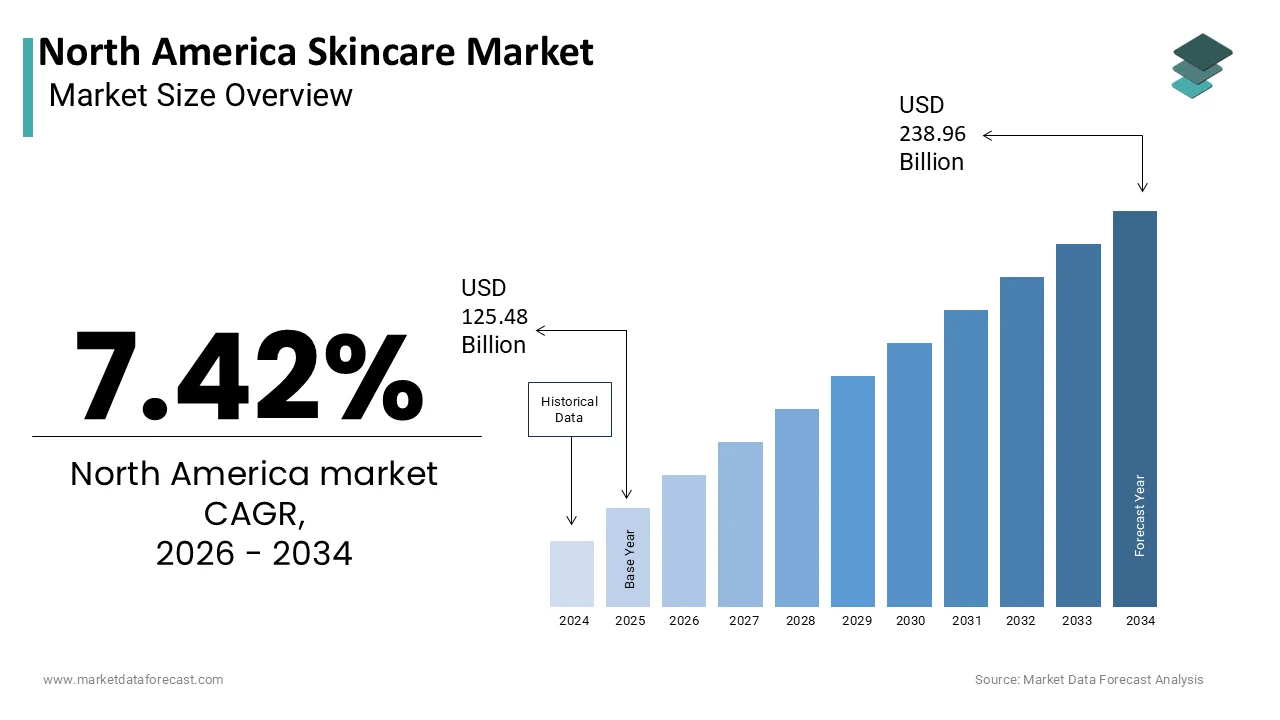
$125.48 BnMarket Estimate, 2026
$134.79 BnMarket Forecast, 2034
$238.96 BnCAGR, 2026–2034
7.42%Executive Summary: North America Skincare Market
- Market Scope: Comprehensive North America skincare market analysis covering product categories, skin types, consumer demographics, ingredient preferences, and regional leadership frameworks.
- Market Valuation: Valued at USD 125.48 billion (2025), estimated at USD 134.79 billion (2026), and projected to reach USD 238.96 billion by 2034, registering a robust CAGR of 7.42% (2026–2034).
- Primary Growth Drivers: High consumer engagement with dermatological care (>72 million Americans consulted a dermatologist in 2023, up 19% from 2018) and a 33% surge in medical skincare sales at major pharmacy channels between 2021 and 2023. Key market trends include digital influencer recommendations (utilized by 68% of U.S. consumers aged 18–34), AI personalization, and sustainable packaging considerations (weighed by 66% of shoppers).
Key Market Segment Metrics (2026–2034)
| Category | Leading Segment (2025 Position) | Fastest-Growing Segment |
|---|---|---|
| By Product | Moisturizers (dominated with a 32.2% market share in 2025) | Serums (projected to expand at a 10.9% CAGR) |
| By Skin Type | Combination skin (led with a 44.3% share) | Sensitive skin (projected to grow at a 12.3% CAGR) |
| By Demographics & Ingredients | Traditional and multi-step routine consumers | Male segment (11.7% CAGR) and Natural ingredients (13.1% CAGR) |
| By Region / Country | United States (dominated geographically with an 86.3% market share in 2025) | Canada and emerging direct-to-consumer e-commerce markets |
Major Market Players & Market Structure
Market Structure: Highly competitive North American skincare landscape featuring multinational beauty giants competing intensely on dermatological credibility, AI personalization (with AI-enabled beauty devices accounting for 18% of personal-care technology sales in 2023), active ingredients, and sustainable formulations.
Key Companies: L’Oréal S.A., Unilever Plc., Procter & Gamble Co., Shiseido Co. Ltd., Coty Inc., Beiersdorf AG, Galderma S.A., Kao Corporation, Laboratoires Pierre Fabre, and Johnson & Johnson Services Inc.
North America Skincare Market Size
The North America Skincare Market is projected to grow from USD 125.48 billion in 2025 to USD 134.79 billion in 2026 and reach USD 238.96 billion by 2034, registering a CAGR of 7.42% from 2026 to 2034.
The skincare is designed to cleanse, protect, treat, and enhance the condition of the skin, including moisturizers, serums, sunscreens, cleansers, and anti-aging formulations. The American Academy of Dermatology recommends daily use of broad-spectrum sunscreen with SPF 30 or higher for all skin types, citing its role in reducing the risk of melanoma, which affects over 106,000 Americans annually, according to the Skin Cancer Foundation. The integration of dermatological guidance into consumer behavior has elevated skincare from a discretionary routine to a medically informed practice. Additionally, the rise of tele-dermatology and over-the-counter access to active ingredients like retinoids and niacinamide has democratized skincare expertise.
MARKET DRIVERS
Rising Dermatological Awareness and Medical-Grade Product Adoption
The growing consumer engagement with dermatological science and the increasing adoption of medical-grade, clinically validated products is driving the growth of the North America skincare market. According to the American Academy of Dermatology, over 72 million Americans consulted a dermatologist at least once in 2023, a 19% increase from 2018, reflecting heightened attention to skin health as a component of overall wellness. Brands like SkinCeuticals, Obagi, and CeraVe have capitalized on this shift by aligning with dermatologists and formulating products backed by clinical trials. Pharmacy channels now dedicate significant shelf space to dermatologist-recommended lines, with CVS and Walgreens reporting a 33% increase in medical skincare sales between 2021 and 2023, as per internal retail analytics. Additionally, the FDA’s 2022 approval of adapalene 0.1% gel for over-the-counter acne treatment marked a pivotal moment in democratizing prescription-strength care.
Influence of Social Media and Digital Beauty Communities
The transformative role of social media platforms and digital beauty communities in shaping consumer behavior, product discovery, and brand loyalty is boosting the growth of the North America skincare market. Platforms such as Instagram, TikTok, and YouTube have become primary sources of skincare education, with over 68% of U.S. consumers aged 18–34 reporting they rely on online influencers for product recommendations, according to the Pew Research Center. The “skincare routine” trend on TikTok has generated over 12 billion views, with viral content centered on ingredient layering, patch testing, and dermatologist-led reviews driving mass experimentation and trial. The rise of “dermTok” and “clean girl aesthetic” movements has normalized multi-step regimens, including double cleansing, toning, and serum layering, previously associated with high-end beauty regimes. According to the Journal of the American Academy of Dermatology, 54% of surveyed dermatologists observed an increase in patient inquiries about social media-recommended products between 2021 and 2023.
MARKET RESTRAINTS
Regulatory Fragmentation and Lack of Standardization in Claims Verification
The absence of harmonized regulatory standards for product claims, which is leading to consumer confusion and diminished trust in labelling is restricting the growth of the North America skincare market. In the United States, the Food and Drug Administration (FDA) regulates skincare products based on their intended use those making therapeutic claims (e.g., “treats acne” or “reduces wrinkles”) are classified as drugs and require pre-market approval, while those marketed for cleansing or moisturizing are considered cosmetics and face minimal oversight. However, the boundary between the two is often blurred, allowing brands to use ambiguous terms like “clinically proven” or “dermatologist-tested” without mandatory substantiation. According to the U.S. Government Accountability Office, only 12% of cosmetic companies submit claim-supporting data to the FDA, creating a gap in accountability. In Canada, Health Canada’s Cosmetic Regulations require notification of ingredients but do not mandate proof of efficacy, enabling similar marketing flexibility. The absence of third-party verification allows misleading claims to proliferate; a 2023 investigation by the Environmental Working Group found that 44% of products labeled “non-comedogenic” had not undergone standardized testing.
Ingredient Sensitivity and Rising Incidence of Contact Dermatitis
The increasing prevalence of skin sensitivity and allergic reactions linked to product formulations is restraining the growth of the North America skincare market. According to the American Contact Dermatitis Society, allergic contact dermatitis affects an estimated 15–20% of the U.S. population, with fragrances, preservatives like methylisothiazolinone, and essential oils identified as leading allergens. The North American Contact Dermatitis Group’s 2022 patch test data revealed that over 18% of patients tested positive for fragrance mix allergens, a figure that has risen steadily over the past decade. This sensitivity is exacerbated by the growing trend of multi-product layering, where consumers use six or more skincare items daily, increasing the risk of ingredient interactions and barrier disruption. The U.S. Food and Drug Administration receives over 3,000 adverse event reports annually related to skincare products, with rashes, swelling, and chemical burns among the most common complaints. Consumers with conditions like eczema, rosacea, or post-procedure skin are particularly vulnerable, with 63% avoiding new products due to fear of reactions, as reported by the National Eczema Association.
MARKET OPPORTUNITIES
Expansion of Men’s Skincare Segment Driven by Shifting Gender Norms
The rapid growth of the men’s skincare segment is fueled by evolving societal attitudes toward male grooming and self-care, which is to create huge new opportunities in the coming years. Traditionally limited to basic shaving and moisturizing products, men’s skincare is now encompassing serums, sunscreens, anti-aging treatments, and targeted acne solutions. According to the NPD Group, sales of men’s skincare products in the U.S. grew by 31% between 2020 and 2023, outpacing the overall beauty category. Athletes like LeBron James and Ryan Reynolds, who have launched or invested in skincare lines, have played a pivotal role in destigmatizing male skincare. Retailers are responding: Sephora reported a 45% increase in male customer visits between 2021 and 2023, while Ulta Beauty expanded its men’s section in 900 stores.
Integration of AI and Personalized Skincare Diagnostics
The integration of artificial intelligence (AI) and digital diagnostics to deliver hyper-personalized skincare solutions is ascribed to bolster the growth of the North America skincare market. Companies are deploying AI-powered skin analysis tools via smartphone apps, in-store kiosks, and tele-dermatology platforms to assess concerns such as texture, pigmentation, hydration, and aging in real time. L’Oréal’s SkinScanner, developed in partnership with dermatologists, uses AI to analyze over 100,000 skin images to recommend tailored regimens, achieving 92% accuracy in clinical validation, as published in the Journal of Investigative Dermatology. Similarly, Neutrogena’s Skin360 app, used by over 2 million consumers, tracks skin changes over time and adjusts product suggestions accordingly. According to the Consumer Technology Association, AI-enabled beauty devices accounted for 18% of all personal care tech sales in 2023, reflecting strong consumer adoption. Subscription models from brands like Atolla and Proven use AI to customize formulations based on skin type, environment, and lifestyle, with 74% of users reporting improved skin condition within eight weeks, as per internal efficacy studies.
MARKET CHALLENGES
Proliferation of Misinformation and Unregulated “Clean Beauty” Claims
The spread of misinformation and the unregulated use of terms like “clean,” “natural,” and “toxin-free,” which lack standardized definitions and often mislead consumers is limiting the growth of the North America skincare market. According to a 2023 study by the Yale School of Public Health, 52% of consumers believe “clean beauty” products are inherently safer, despite no regulatory body in the U.S. or Canada defining or certifying such claims. This ambiguity allows brands to exploit fear-based marketing, demonizing safe, scientifically vetted ingredients like parabens and sulfates while promoting unproven alternatives. Furthermore, social media amplifies pseudoscientific narratives; a content analysis by the Journal of the American Academy of Dermatology found that 41% of top skincare TikTok videos contained clinically inaccurate information. This erosion of scientific literacy undermines dermatologist recommendations and leads to product avoidance based on myths rather than evidence.
Environmental Impact of Skincare Packaging and Ingredient Sourcing
The environmental footprint, particularly concerning single-use plastic packaging and unsustainable ingredient sourcing is also to degrade the growth of the North America skincare market. According to the U.S. Environmental Protection Agency, over 120,000 tons of cosmetic packaging waste are generated annually in the United States, with skincare accounting for nearly 40% of this total. Most containers are made from mixed plastics that are non-recyclable due to residue contamination and multi-material construction. The Ellen MacArthur Foundation reports that only 9% of plastic skincare packaging is effectively recycled, with the remainder ending up in landfills or incinerators. Ingredient sourcing also poses ecological risks; palm oil, a common emollient, is linked to deforestation in Southeast Asia, with the Union of Concerned Scientists estimating that 30% of global palm oil is produced on illegally cleared land. In response, consumers are demanding change: a 2023 NielsenIQ survey found that 66% of North American shoppers consider packaging sustainability when purchasing skincare. However, transitioning to glass, aluminum, or refillable systems increases production costs and logistical complexity.
REPORT COVERAGE
| REPORT METRIC | DETAILS |
| Market Size Available | 2025 to 2034 |
| Base Year | 2025 |
| Forecast Period | 2026 to 2034 |
| Segments Covered | By Product Type, Skin Type, Gender, Ingredients, and Region |
| Various Analyses Covered | Regional & Country Level Analysis, Segment-Level Analysis, DROC, PESTLE Analysis, Porter’s Five Forces Analysis, Competitive Landscape, Analyst Overview on Investment Opportunities |
| Regions Covered | The United States, Canada, Mexico, and Rest of North America |
| Market Leaders Profiled | L’Oréal S.A. (France), Unilever Plc. (U.K.), Procter & Gamble Co. (U.S.), Shiseido Co., Ltd. (Japan), Coty Inc. (U.S.), Beiersdorf AG (Germany), Galderma S.A. (Switzerland), Kao Corporation (Japan), Laboratoires Pierre Fabre (France), Johnson & Johnson Services, Inc. (U.S.), and others |
SEGMENTAL ANALYSIS
By Product Type Insights
The moisturizers segment was accounted in holding 32.2% of the North America skincare market share in 2025 with their universal applicability across age groups, skin types, and seasons, positioning them as a foundational element of daily skincare regimens. According to the American Academy of Dermatology, over 85 million Americans suffer from some form of dry skin, ranging from mild xerosis to chronic conditions like eczema, necessitating consistent hydration. Dermatologists recommend daily moisturizer use for all skin types even oily and acne-prone skin to maintain the skin barrier and prevent transepidermal water loss, which compromises resilience against environmental aggressors. The U.S. National Library of Medicine confirms that ceramide-deficient skin is more susceptible to irritation and inflammation, reinforcing the medical necessity of emollient formulations. Additionally, moisturizers serve as delivery vehicles for active ingredients such as niacinamide, hyaluronic acid, and SPF, enhancing their functional value. Retail data from Ulta Beauty shows that moisturizers are included in 78% of consumer skincare routines, often purchased as part of bundled regimens.
The serums segment is lucratively growing with an expected CAGR of 10.9% from 2025 to 2033 with the rising consumer demand for high-potency, targeted treatments that deliver visible results for specific concerns such as hyperpigmentation, fine lines, and uneven texture. According to a 2023 clinical study published in the Journal of Cosmetic Dermatology, 76% of participants using vitamin C serums experienced measurable improvement in skin brightness within six weeks. The appeal is further amplified by social media, where “glass skin” and “dewy glow” aesthetics have popularized layered skincare, with serums positioned as the performance core of multi-step routines. According to Pew Research Center, 63% of Gen Z and millennial users incorporate at least one serum into their daily regimen, often guided by influencer tutorials and dermatologist endorsements. Retailers are responding: Sephora reported a 37% increase in serum sales between 2021 and 2023, with premium brands like SkinCeuticals and Drunk Elephant leading the surge.
By Skin Type Insights
The combination skin segment held 44.3% of the North America skincare market share in 2025. The prevalence of combination skin is linked to hormonal fluctuations, environmental exposure, and lifestyle factors such as diet and stress, all of which are widespread in urban populations. A 2023 survey by the National Rosacea Society found that 68% of women aged 25–45 identify as having combination skin, often experiencing both shine and flakiness simultaneously. This duality drives demand for multi-functional products, such as lightweight moisturizers with oil-control properties and pH-balanced cleansers that preserve hydration. Retailers like Ulta and Sephora have developed dedicated “combination skin” sections, featuring curated regimens from brands like La Roche-Posay and Paula’s Choice. The challenge of managing dual concerns fosters brand loyalty, as consumers invest time in finding compatible products. Additionally, dermatologists report that combination skin patients are more likely to seek professional advice, which is increasing engagement with medical-grade skincare.
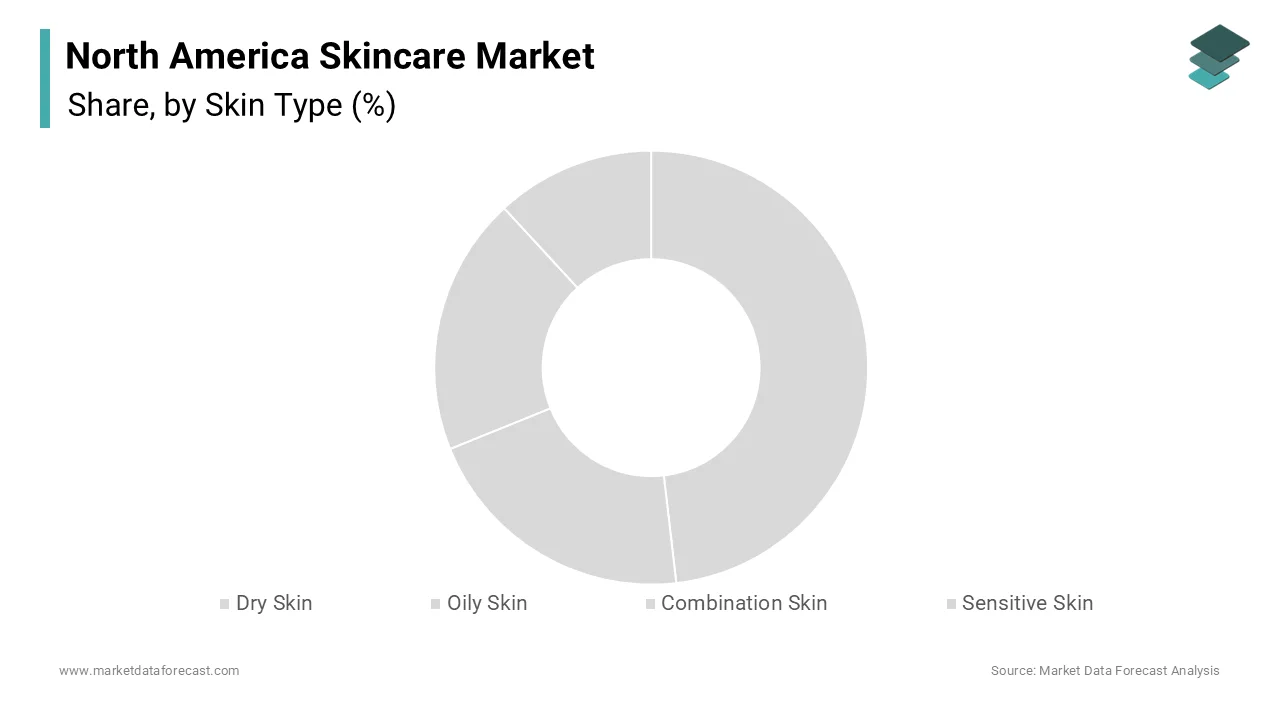
The sensitive skin segment is anticipated to grow by expanding at a CAGR of 12.3% during the forecast period owing to the rising incidence of skin barrier dysfunction, allergic reactions, and inflammatory conditions such as rosacea, eczema, and perioral dermatitis. According to the National Eczema Association, over 16.5 million adults in the U.S. suffer from atopic dermatitis, many of whom experience heightened reactivity to skincare ingredients. Consumer awareness is also rising; a survey by the Skin Health Alliance found that 59% of respondents now self-identify as having sensitive skin, prompting demand for minimalist, fragrance-free, and dermatologist-tested products. Brands like CeraVe, Vanicream, and Aveeno have capitalized on this trend, with sales of sensitive-skin lines growing by 33% annually, as per NielsenIQ. In Canada, Health Canada has strengthened labeling requirements for “fragrance-free” claims, increasing consumer trust.
By Gender Insights
The female segment dominated the North America skincare market share in 2024. Women are more likely to adopt multi-step routines, with 64% of U.S. females aged 18–45 using four or more skincare products daily, according to the Journal of Women’s Health. Dermatological engagement is also gender-skewed; the American Academy of Dermatology reports that women constitute 73% of all skincare-related consultations, reflecting greater investment in preventive care and anti-aging solutions. Additionally, female-centric retail environments such as Sephora, Ulta, and department store beauty counters offer extensive product education, sampling, and loyalty programs that reinforce habitual purchasing. The integration of skincare into broader wellness and beauty ecosystems, including makeup and haircare, further amplifies spending. Social media platforms like Instagram and TikTok predominantly feature female influencers, shaping product discovery and trends.
The male segment is esteemed to grow with an anticipated CAGR of 11.7% during the forecast period owing to the shifting societal attitudes toward masculinity, self-care, and appearance consciousness among younger generations. A 2023 survey by the Pew Research Center found that 61% of men aged 18–34 view skincare as an essential part of their daily routine, a significant departure from previous norms that equated grooming with shaving alone. The U.S. Department of Labor notes that men now account for 19% of cosmetic and skincare jobs, reflecting broader cultural integration. In Canada, the shift is equally evident; a 2022 Dalhousie University study found that men’s skincare spending rose by 26% over three years, with sunscreens and moisturizers as top purchases.
By Ingredients Insights
The active ingredients segment in the North America skincare market was the largest and held a significant share in 2025 with the consumer demand for scientifically proven, results-driven formulations that address specific dermatological concerns such as acne, aging, and pigmentation. Ingredients like retinol, hyaluronic acid, niacinamide, and alpha hydroxy acids (AHAs) are clinically validated for efficacy and are increasingly incorporated into over-the-counter products following FDA and Health Canada approvals. The U.S. National Library of Medicine confirms that tretinoin, a prescription retinoid, improves photoaging in 90% of users after 24 weeks, prompting demand for lower-strength, accessible alternatives. The rise of “medical skincare” has elevated the status of actives, with dermatologists recommending them in 82% of patient consultations, according to the American Academy of Dermatology. Brands like The Ordinary and Paula’s Choice have built entire product lines around single-ingredient potency, appealing to ingredient-savvy consumers. Retail data from Sephora shows that 71% of top-selling serums contain at least one active compound. In Canada, provincial pharmacists are increasingly advising on active-based regimens for acne and rosacea, blurring the line between cosmetic and therapeutic use.
The natural ingredients segment is the anticipated to grow at a CAGR of 13.1% from 2025 to 2033 with the rising consumer skepticism toward synthetic chemicals and a preference for plant-derived, minimally processed components perceived as safer and more sustainable. A 2023 survey by the Natural Marketing Institute found that 64% of North American consumers actively seek products labeled “natural” or “plant-based,” citing concerns about endocrine disruptors and environmental toxins. Ingredients such as aloe vera, chamomile, green tea extract, and jojoba oil are gaining prominence for their soothing, antioxidant, and anti-inflammatory properties. The U.S. Department of Agriculture’s BioPreferred Program has certified over 1,200 skincare products as bio-based, reinforcing regulatory legitimacy. However, the appeal extends beyond safety; sustainability is a key driver. The Union of Concerned Scientists reports that sustainably harvested botanicals like shea butter and squalane support ethical sourcing and fair-trade economies. Retailers like Whole Foods Market and Thrive Market have implemented strict ingredient standards, banning over 100 synthetic compounds, which has accelerated brand reformulations.
REGIONAL ANALYSIS
United States Skincare Market Insights
The United States was the top performer in the North America skincare market with 86.3% of the share in 2025. The average American spends $89 annually on facial skincare products, according to the U.S. Bureau of Labor Statistics, with urban professionals and younger demographics leading adoption of advanced regimens. The country is home to major dermatology associations, clinical research centers, and FDA regulatory frameworks that influence global product standards. The rise of digital health platforms and tele-dermatology has expanded access to expert care, particularly in underserved regions, with 42 million virtual consultations conducted in 2023, as per the American Telemedicine Association. Major brands like CeraVe, Neutrogena, and Drunk Elephant originate or are heavily marketed in the U.S., leveraging celebrity endorsements, social media, and pharmacy distribution. Additionally, the U.S. leads in ingredient innovation, with Silicon Valley-backed AI skincare startups emerging in cities like San Francisco and Los Angeles.
Canada Skincare Market Insights
Canada was positioned second with 14.3% of the North America skincare market in 2025 owing to the country exhibits high per capita skincare spending and a growing emphasis on safety, sustainability, and medical oversight. Canadian consumers are highly responsive to dermatologist recommendations, with 71% consulting healthcare professionals before trying new products, according to Health Canada’s 2023 Skincare Behavior Survey. The cold climate and prolonged winters drive demand for intensive moisturizers and barrier-repair formulations, with 89% of households using hydrating products year-round, as per the Canadian Dermatology Association. Urban centers like Toronto and Vancouver are hubs for clean beauty and indie brands, supported by eco-conscious retail chains like The Body Shop and Well.ca. Additionally, Canada’s multicultural population influences demand for inclusive formulations addressing hyperpigmentation and diverse skin tones.
KEY MARKET PLAYERS AND COMPETITIVE LANDSCAPE
Key players in the North America skincare market are L’Oréal S.A. (France), Unilever Plc. (U.K.), Procter & Gamble Co. (U.S.), Shiseido Co., Ltd. (Japan), Coty Inc. (U.S.), Beiersdorf AG (Germany), Galderma S.A. (Switzerland), Kao Corporation (Japan), Laboratoires Pierre Fabre (France), and Johnson & Johnson Services, Inc. (U.S.).
The competitive landscape of the North America skincare market is defined by a dynamic interplay between global conglomerates, niche indie brands, and digitally native disruptors, each vying for relevance in a category that straddles health, beauty, and identity. Established multinational corporations maintain dominance through brand equity, extensive distribution networks, and R&D capabilities, embedding their products into both retail shelves and dermatological recommendations. However, their position is increasingly challenged by agile, mission-driven startups that prioritize transparency, inclusivity, and ingredient purity, often gaining traction through social media and direct-to-consumer models. These challengers have redefined consumer expectations, shifting focus from branding to formulation integrity and ethical practices. The rise of “clean beauty,” gender-neutral positioning, and hyper-personalization has fragmented the market, compelling incumbents to innovate or risk obsolescence. Retailers act as gatekeepers and amplifiers, curating brand assortments based on consumer sentiment and trend velocity. Competition is no longer confined to product performance but extends to narrative authenticity, scientific validation, and environmental responsibility.
TOP PLAYERS IN THE MARKET
L’Oréal (Active Cosmetics Division)
L’Oréal, through its Active Cosmetics Division, stands as a dominant force in the North America skincare market by leveraging a portfolio of science-backed brands such as La Roche-Posay, CeraVe, and Vichy. The company excels in bridging dermatological expertise with mass-market accessibility, positioning its products as both therapeutic and consumer-friendly. By collaborating with dermatologists, funding clinical research, and aligning formulations with medical recommendations, L’Oréal has redefined skincare as a discipline rooted in dermatological integrity. Its influence extends globally, where North American consumer insights and rapid adoption of trends inform product development for international markets. The success of CeraVe, developed in the U.S. with dermatologists, has been replicated across Europe and Asia, showcasing the company’s ability to scale regionally developed innovations. L’Oréal also leads in digital integration, pioneering AI-powered skin diagnostics and personalized regimens that set industry benchmarks.
Estée Lauder Companies
Estée Lauder Companies commands a prestigious position in the North America skincare market through its portfolio of luxury and clinical skincare brands, including Clinique, Origins, and The Ordinary. The company distinguishes itself by combining high-performance formulations with emotional branding, targeting consumers seeking both visible results and sensory indulgence. Clinique’s dermatologist-developed, allergy-tested philosophy has set a precedent for hypoallergenic luxury skincare, while The Ordinary has disrupted the market with transparent, ingredient-focused pricing and education. This dual strategy allows the company to dominate both premium and accessible clinical segments. The brand’s deep integration with department stores, e-commerce platforms, and dermatology-adjacent retail environments reinforces its authority.
Unilever (Dermatology & Skincare Brands)
Unilever plays a pivotal role in the North America skincare market through its dermatologically aligned brands such as Cetaphil, Paula’s Choice, and Dove DermaSeries. The company has successfully transitioned from mass-market personal care into clinically respected skincare by emphasizing simplicity, skin barrier health, and evidence-based claims. Cetaphil, developed with dermatologists, has become a staple in medical settings, prescribed for sensitive and compromised skin conditions, reinforcing trust across consumer and professional channels. Unilever leverages its global supply chain and R&D infrastructure to scale innovations rapidly, while maintaining localized relevance through region-specific formulations. The acquisition of Paula’s Choice brought advanced actives and digital-first engagement into its portfolio, allowing Unilever to compete in the high-growth clinical skincare space. Its commitment to inclusive marketing, sustainability, and dermatological partnerships has elevated its credibility beyond traditional consumer goods.
TOP STRATEGIES USED BY KEY MARKET PLAYERS
A primary strategy employed by leading skincare companies is dermatological collaboration and medical channel integration. Brands are partnering with dermatologists, funding clinical trials, and securing endorsements from professional associations to establish scientific credibility and differentiate themselves in a crowded market. This alignment with healthcare professionals enhances consumer trust and positions products as part of a health regimen rather than mere cosmetics.
Another key approach is digital personalization and AI-driven diagnostics. Companies are deploying smartphone apps, skin analysis tools, and machine learning algorithms to offer customized regimens based on individual skin conditions, environments, and lifestyles. These technologies enable direct-to-consumer engagement, improve product efficacy, and foster long-term loyalty through data-driven insights.
A third major strategy is sustainability and clean formulation transparency. As consumers demand ethical sourcing, recyclable packaging, and non-toxic ingredients, brands are reformulating products, adopting third-party certifications, and disclosing full ingredient origins. This not only meets regulatory expectations but also builds emotional resonance with environmentally and health-conscious users by reinforcing brand integrity in an era of heightened scrutiny.
RECENT HAPPENINGS IN THE MARKET
- In January 2023, L’Oréal launched a North America-wide AI-powered skin diagnostic tool in partnership with dermatologists by enabling consumers to receive personalized skincare recommendations via a mobile app to enhance engagement and product relevance.
- In March 2023, Estée Lauder Companies acquired a minority stake in a clean beauty tech startup specializing in sustainable ingredient traceability with its commitment to transparency and eco-conscious formulation.
- In August 2023, Unilever expanded the Cetaphil line to include a dermatologist-recommended barrier-repair serum by targeting the growing demand for clinical solutions in sensitive and compromised skin care.
- In February 2024, The Ordinary introduced a new digital education platform offering free dermatology-led webinars and ingredient guides, which is strengthening its position as a science-transparent brand for informed consumers.
- In May 2024, Paula’s Choice partnered with a network of U.S. dermatology clinics to integrate its products into post-procedure skincare regimens by deepening its presence in the medical aesthetics channel.
MARKET SEGMENTATION
This research report on the North America skincare market has been segmented and sub-segmented based on the following categories.
By Product Type
- Moisturizers
- Cleansers
- Serums
- Sunscreens
- Exfoliators
By Skin Type
- Dry Skin
- Oily Skin
- Combination Skin
- Sensitive Skin
By Gender
- Male
- Female
- Unisex
By Ingredients
- Natural Ingredients
- Synthetic Ingredients
- Active Ingredients
By Country
- The United States
- Canada
- Rest of North America