- Product Description Description
- Table of Contents TOC
- List of Table & Figure LOT
- Get Free Sample PDF Sample PDF
Market Size, 2025
$107.04 BnMarket Estimate, 2026
$114.30 BnMarket Forecast, 2034
$193.18 BnCAGR, 2026–2034
6.78%UK Food Service Market Report Summary
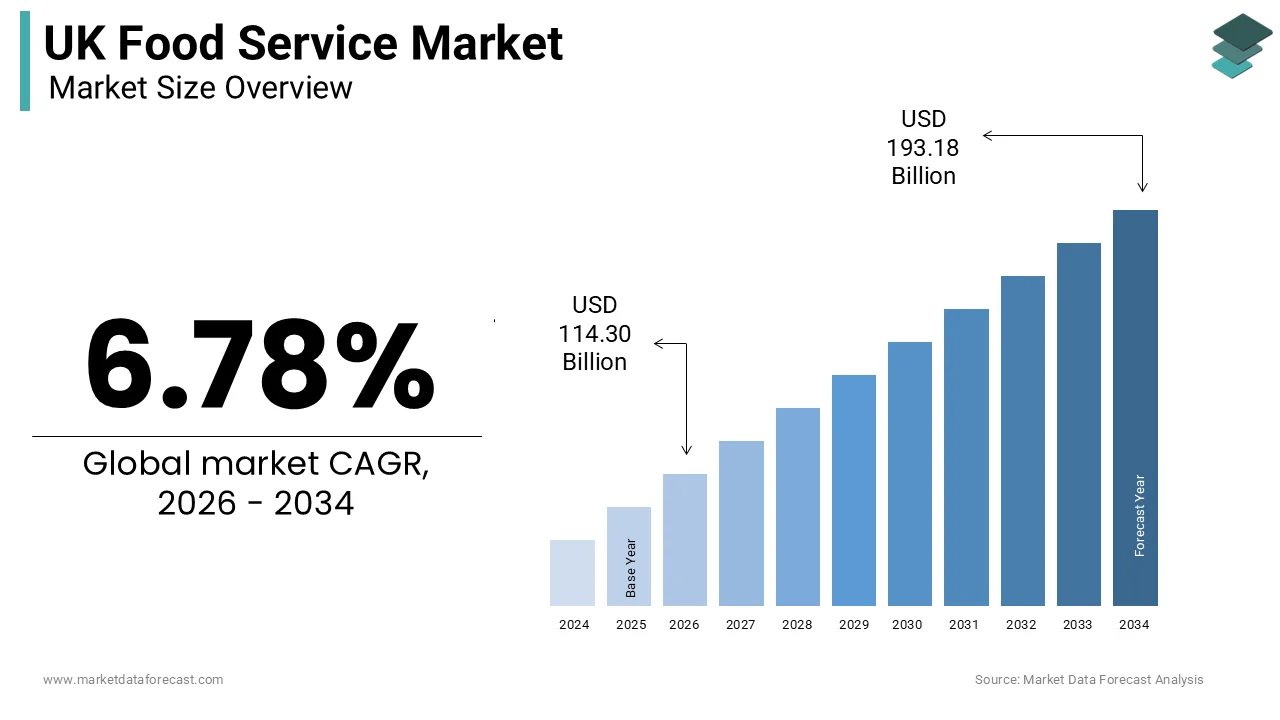
The UK food service market was valued at USD 107.04 billion in 2025 and is projected to reach USD 193.18 billion by 2034, growing from USD 114.30 billion in 2026 at a CAGR of 6.78% during the forecast period. Market growth is driven by increasing consumer spending on dining out, rising demand for convenience foods, expanding online food delivery services, and continuous innovation in restaurant concepts. The growing popularity of digital ordering platforms, cloud kitchens, and premium dining experiences is further supporting market expansion.
Key Market Trends
- Rising demand for quick-service restaurants (QSRs) and fast-casual dining.
- Rapid growth of online food delivery and digital ordering platforms.
- Increasing consumer preference for healthy, plant-based, and sustainable menu options.
- Expansion of cloud kitchens and delivery-only restaurant models.
- Growing adoption of AI, automation, and contactless payment technologies in food service.
Segmental Insights
- Based on Type, the quick service restaurants (QSRs) segment dominated the UK food service market in 2025 by accounting for 41.5% of the market share. The segment's growth is driven by affordability, convenience, fast service, extensive outlet networks, and increasing demand for takeaway and home delivery services.
- Based on Service, the commercial segment held the largest share of the UK food service market in 2025, supported by the strong presence of restaurants, cafés, hotels, pubs, and fast-food chains serving a broad consumer base.
Regional Analysis
The United Kingdom food service market is characterized by a strong culture of dining out, a thriving tourism industry, and continuous innovation in culinary offerings. The market is further supported by rising urbanization, increasing disposable incomes, widespread adoption of food delivery platforms, and evolving consumer preferences for convenience, premium dining experiences, and healthier menu choices.
Competitive Landscape
The UK food service market is highly competitive, with companies focusing on menu innovation, digital transformation, sustainability initiatives, and expansion of delivery and takeaway services. Market participants are investing in mobile ordering applications, loyalty programs, automation technologies, and strategic partnerships to strengthen their competitive positions and enhance customer experience.
Key players operating in the UK food service market include McDonald's Corporation, Domino's Pizza Inc., and Yum! Brands, Greggs Plc, Nando's, Starbucks Corporation, Costa Limited, Restaurant Brands International Inc., Baskin-Robbins, and Supermac's.
UK Food Service Market Size
The UK Food service market size was calculated to be USD 107.04 billion in 2025 and is anticipated to be worth USD 193.18 billion by 2034, from USD 114.30 billion in 2026, growing at a CAGR of 6.78% during the forecast period.
The UK food service market is characterized by a dynamic interplay between traditional dining experiences and modern convenience-driven solutions. According to the Office for National Statistics, the hospitality and food service sector employed approximately 2.53 million people in the United Kingdom in 2024, representing nearly 7% of the total workforce. Furthermore, as per the Department for Environment, Food and Rural Affairs, households in the UK spent an average of 10.5% of their total expenditure on food and non-alcoholic beverages consumed outside the home. This spending pattern highlights the cultural significance of dining out as a social and leisure activity. The market continues to evolve with increasing integration of digital technologies for ordering and delivery, reshaping operational models. Regulatory frameworks regarding food safety, labor standards, and environmental sustainability further define the operational landscape. The sector’s resilience is tested by economic fluctuation,s yet remains a vital indicator of consumer confidence and discretionary spending power across the nation.
MARKET DRIVERS
Resilient Consumer Demand for Social Dining Experiences
The enduring consumer preference for social dining and experiential consumption is a key factor driving the growth of the UK food service market. Despite economic pressures, dining out remains a prioritized leisure activity for many households, valued for its social connectivity and entertainment value. According to UK Hospitality, customer visits to hospitality venues reached 91% of pre-pandemic levels in 2024, indicating a robust recovery and sustained demand. As per the Office for National Statistics, spending on restaurants and hotels increased by 8.2% in real terms during the same period, which demonstrates that consumers are willing to allocate discretionary income to these experiences. The trend is particularly strong among younger demographics such as Millennials and Generation Z, who prioritize experiences over material goods. Social media platforms further amplify this demand by showcasing culinary trends and unique dining environments, encouraging trial and repeat visits. The rise of occasion-based dining, where consumers choose specific venues for celebrations or gatherings, drives higher average spend per head. Additionally, the proliferation of diverse culinary options, from authentic ethnic cuisines to innovative fusion concepts, caters to evolving palates and keeps the market vibrant. This cultural embedding of dining out ensures a steady baseline of demand that supports market growth even during periods of economic uncertainty.
Expansion of Digital Ordering and Delivery Infrastructure
The rapid expansion of digital ordering platforms and delivery infrastructure is further contributing to the UK food service market expansion. The convenience of accessing a wide variety of food options from home or work has become a permanent fixture in consumer behavior. According to Statista, the online food delivery market in the United Kingdom is projected to reach 18 billion pounds in revenue by 2025, reflecting a compound annual growth rate of 12%. Major aggregators such as Just Eat Takeaway and Deliveroo have expanded their restaurant partnerships, enabling smaller independent establishments to access broader customer bases without significant investment in logistics. As per recent industry insights, approximately 60% of adults in the UK used food delivery apps at least once a month in 2024, allowing operators to optimize kitchen efficiency through dedicated delivery menus and streamlined operations. The technology also provides valuable data insights into consumer preferences, enabling targeted marketing and menu optimization. Furthermore, the development of dark kitchens or cloud kitchens has lowered entry barriers for new brands, increasing market diversity. The seamless integration of payment systems and loyalty programs within apps enhances customer retention. This technological evolution continues to drive volume growth and operational innovation across the sector.
MARKET RESTRAINTS
Persistent Labor Shortages and Rising Wage Costs
The persistent labor shortages and escalating wage costs that strain operational profitability are a significant restraint on the UK food service market growth. The sector has struggled to recruit and retain staff since the end of the freedom of movement following Brexit, which is leading to a structural deficit in available workers. According to the Office for National Statistics, there were approximately 107,000 job vacancies in the hospitality sector in 2024, with kitchen and front-of-house roles being the most affected. This scarcity forces operators to increase wages to attract talent, thereby raising overall labor costs. As per the Office for National Statistics, average earnings in the accommodation and food service sector rose by 9.5% year on year in 2024, outpacing inflation in many instances. While beneficial for workers, these increases squeeze margins for businesses already grappling with high energy and ingredient costs. Many establishments have reduced operating hours or limited menu offerings to manage staffing levels, potentially impacting customer satisfaction and revenue. The reliance on temporary and part-time staff also affects service consistency and training quality. Without a sustainable pipeline of skilled workers, the industry faces long-term operational challenges. Government initiatives to upskill domestic workers have had limited immediate impact, leaving businesses to compete fiercely for a shrinking pool of eligible candidates. This labor constraint acts as a brake on expansion and service quality improvement.
High Operational Costs Including Energy and Rent
Escalating operational costs, particularly for energy and commercial rent, are also hindering the UK market expansion. Energy prices remain volatile and significantly higher than pre-crisis levels, impacting businesses with high consumption needs such as restaurants and pubs. According to energy market data, average commercial energy bills for hospitality businesses increased by 150% compared to 2021 levels, forcing many to implement surcharges or reduce usage. As per the British Property Federation, commercial rents in prime urban locations have risen by 12% in 2024, adding further pressure on fixed costs. These increased overheads compel operators to raise menu prices, which can deter price-sensitive customers and reduce footfall. Small and medium-sized enterprises are disproportionately affected as they lack the economies of scale to negotiate better rates or absorb cost increases. Many businesses have delayed refurbishments or expansion plans due to financial uncertainty. The cumulative effect of high energy, rent, and business rates reduces net profit margins, making the sector less attractive for investment. Some operators have been forced to close permanently, reducing market diversity. Until operational costs stabilize or decrease, the financial viability of many food service establishments will remain precarious, limiting overall market growth potential.
MARKET OPPORTUNITIES
Integration of Sustainable and Ethical Practices
The growing consumer demand for sustainability and ethical sourcing presents a significant opportunity for the UK food service market to grow. Customers are increasingly conscious of the environmental impact of their food choices, preferring establishments that prioritize local sourcing, waste reduction, and eco-friendly packaging. According to a consumer study, 65% of UK consumers stated they are more likely to dine at restaurants that demonstrate a clear commitment to sustainability in 2024. This trend encourages operators to adopt circular economy principles such as composting food waste and using renewable energy sources. As per the Waste and Resources Action Programme, businesses implementing comprehensive waste reduction strategies can save up to 20% on disposal costs while enhancing brand reputation. Opportunities exist for partnerships with local farmers and producers to create farm-to-table menus that appeal to environmentally conscious diners. Certification schemes such as the Soil Association Organic label provide credible verification that attracts loyal customers. Additionally, the use of plant-based ingredients offers a lower-carbon-footprint alternative that aligns with global climate goals. By embedding sustainability into core operations, businesses can command premium pricing and build strong emotional connections with patrons. This shift not only meets regulatory expectations but also drives long-term customer loyalty and competitive advantage.
Growth of Health-Conscious and Functional Menu Options
The rising focus on health and wellness among UK consumers creates substantial opportunities for food service providers to innovate with nutritious and functional menu items. There is increasing demand for meals that support specific health goals such as weight management, immune boosting, and mental well-being. According to the Food Standards Agency, 55% of adults in the UK are actively trying to eat healthier, driving demand for transparent nutritional information and balanced meal options. As per retail tracking data, sales of plant-based and low-sugar items in the food service sector grew by 14% in 2024, outpacing traditional categories. Operators can capitalize on this trend by introducing menus rich in whole foods, lean proteins, and vegetables while clearly labeling allergens and calories. Collaborations with nutritionists and dietitians can enhance credibility and attract health-focused demographics. The inclusion of functional ingredients such as probiotics, adaptogens, and superfoods offers unique selling propositions that differentiate brands. Quick service restaurants are increasingly offering salads, grain bowls, and smoothies to cater to this segment. Digital platforms allow for personalized recommendations based on dietary preferences, enhancing customer experience. By positioning themselves as partners in health rather than just food providers, businesses can tap into a growing and loyal customer base. This alignment with wellness trends ensures relevance in a changing consumer landscape.
MARKET CHALLENGES
Regulatory Compliance and Administrative Burdens
Navigating complex regulatory requirements and administrative burdens poses a significant challenge for operators in the UK Food Service Market. Businesses must comply with stringent food safety standards, labor laws, licensing regulations, and environmental mandates, which require considerable time and resources. According to the British Chambers of Commerce, 45% of hospitality businesses cited regulatory compliance as a major operational hurdle in 2024. The introduction of new policies, such as mandatory calorie labeling on menus and restrictions on single-use plastic,s adds layers of complexity to daily operations. As per the Food Standards Agency, inspections and enforcement actions have increased, requiring businesses to maintain rigorous documentation and training records. Failure to comply can result in hefty fines, closure orders, and reputational damage. Small independent operators often lack dedicated legal or compliance teams, making adherence particularly challenging. The frequent changes in legislation, such as adjustments to minimum wage or tipping laws, require constant adaptation and staff retraining. This administrative load diverts attention from core business activities such as customer service and innovation. Additionally, the divergence in regulations between different regions within the UK can complicate operations for multi-site chains. The cumulative effect of these regulatory pressures increases operational costs and reduces agility, which poses a persistent challenge to market participants.
Economic Uncertainty and Reduced Discretionary Spending
Economic uncertainty and the consequent reduction in consumer discretionary spending are further challenging the UK market expansion. Inflationary pressures and cost-of-living crises have led many households to tighten budgets, prioritizing essential expenses over leisure activities such as dining out. According to the Office for Budget Responsibility, real household disposable income fell by 2.3% in 2024, directly impacting spending power. As per consumer panel data, the frequency of eating out declined by 5% among lower and middle-income households during the same period. Consumers are increasingly trading down from full-service restaurants to quick-service options or choosing to cook at home to save money. This shift in behavior reduces average transaction values and overall revenue for hospitality businesses. Promotional discounting becomes necessary to attract customers, further eroding profit margins. The unpredictability of economic conditions makes long-term planning and investment difficult for operators. Supply chain volatility exacerbates the issue by causing fluctuating ingredient costs. Businesses must balance price increases with customer retention, a delicate equilibrium that many struggle to maintain. The lingering effects of economic instability mean that consumer confidence remains fragile, limiting the potential for robust market growth. Operators must remain agile and cost-efficient to survive in this constrained environment.
REPORT COVERAGE
| REPORT METRIC | DETAILS |
| Market Size Available | 2025 to 2034 |
| Base Year | 2025 |
| Forecast Period | 2026 to 2034 |
| CAGR | 6.78% |
| Segments Covered | By Type, Service, And Region |
| Various Analyses Covered | Global, Regional & Country Level Analysis; Segment-Level Analysis; DROC, PESTLE Analysis; Porter’s Five Forces Analysis; Competitive Landscape; Analyst Overview of Investment Opportunities |
| Regions Covered | England, Scotland, Wales, Northern Ireland |
| Market Leaders Profiled | McDonald's Corporation, Domino's Pizza Inc., and Yum! Brands, Greggs Plc, Nando's, Starbucks Corporation, Costa Limited, Restaurant Brands International, Inc., Baskin-Robbins, and Supermacs |
SEGMENTAL ANALYSIS
By Type Insights
The quick service restaurants segment constituted the leading segment in the UK food service market by holding 41.5% of the UK market share in 2025. The dominance of the QSR segment in the UK market is driven by the sector's ability to offer affordable, convenient, and consistent dining options that align with the fast-paced lifestyles of modern consumers. The primary driver for the dominance of Quick Service Restaurants is their alignment with value-conscious consumer behavior amidst ongoing economic pressures. As household budgets tighten due to inflation and rising living costs, consumers increasingly seek meal options that provide satiety and convenience at a lower price point compared to full-service dining. According to the Office for National Statistics, the average spend per head on eating out in QSRs was approximately 8.50 pounds in 2024, significantly lower than the 25 pounds average in full-service restaurants. As per consumer spending data, 60% of UK households visited a quick service outlet at least once a month in 2024, highlighting its role as a regular dietary staple rather than an occasional treat. Major chains have responded by introducing value menus and bundle deals that further enhance affordability. The perception of QSRs as a cost-effective solution for busy weekdays and weekends ensures sustained high-volume traffic. This economic accessibility allows the segment to maintain resilience even during periods of reduced consumer confidence, solidifying its position as the largest component of the food service market.
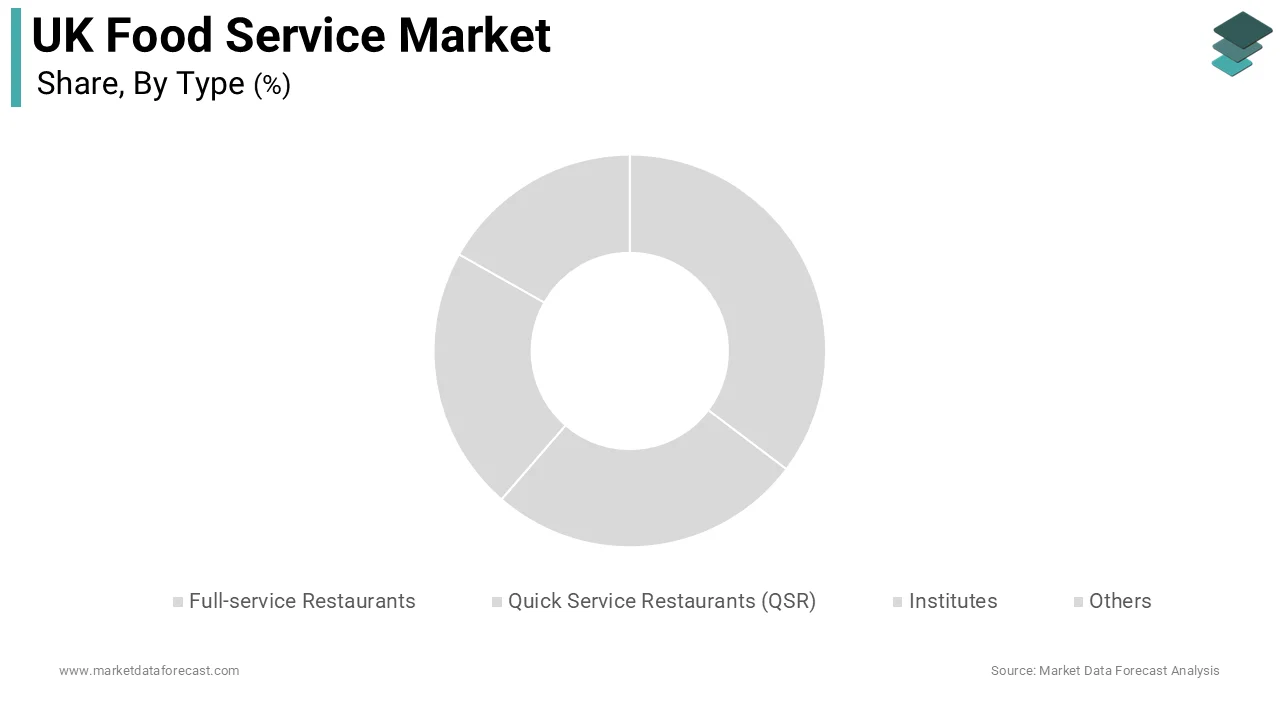
However, the full-service restaurants segment is the fastest-growing segment in the UK food service market and is projected to expand at a CAGR of 7.12% over the forecast period, owing to the post-pandemic resurgence of social dining, the demand for experiential consumption, and the premiumization of casual dining concepts. The strong consumer desire for social interaction and experiential dining following periods of restricted mobility is also boosting the expansion of the full-service restaurants segment in the UK market. According to UK Hospitality, footfall in full-service restaurants increased by 12% in 2024 compared to the previous year, which indicates a robust recovery and pent-up demand. As per the Office for National Statistics, spending on restaurant services grew by 8.2% in real terms, reflecting a willingness to pay for enhanced experiences. The trend towards experiential consumption means that diners are seeking unique culinary journeys, interactive elements, and immersive environments that cannot be replicated at home. Concepts such as open kitchens, chef tables, and themed decor enhance the perceived value of the meal. Additionally, the rise of food tourism within the UK encourages locals and visitors to explore diverse regional cuisines in sit-down settings. This emotional connection to dining drives higher average spends per visit and fosters brand loyalty. As social norms fully normalize, the frequency of group dining occasions is expected to remain high, sustaining the growth trajectory of the full-service segment.
By Service Insights
The commercial segment dominated the market by holding the highest share of the UK food service market in 2025. The substantial volume of consumer discretionary spending allocated to eating out and drinking away from home is primarily driving the dominance of the commercial segment in this market. According to the Office for National Statistics, households in the UK spent an average of 10.5% of their total expenditure on food and non-alcoholic beverages consumed outside the home in 2024. This significant allocation of budget supports a wide variety of commercial establishments, ranging from high-end fine dining to casual eateries. As per UK Hospitality, the commercial sector generated over 80 billion pounds in revenue in 2024, underscoring its economic magnitude. The diversity of options available ensures that there is a suitable venue for every occasion and budget level. Marketing efforts by commercial operators effectively stimulate demand through promotions, loyalty schemes, and seasonal campaigns. The flexibility of the commercial sector to adapt to changing consumer preferences further enhances its appeal. This responsiveness ensures that commercial establishments remain relevant and attractive to a broad demographic, sustaining their dominant position in the market.
On the other hand, the institutional segment is the fastest-growing service type in the UK food service market and is estimated to progress at a CAGR of 6.3% over the forecast period, owing to the increasing trend of outsourcing catering services in public sectors such as healthcare, education, and government facilities. According to recent public sector data, a significant majority of hospitals in the UK outsource their food and beverage operations to private contractors to improve service quality and reduce operational burdens. As per the Business Services Association, the contract catering market in the UK grew by 7% in 2024, driven by new contracts in schools and care homes. Outsourcing allows institutions to leverage the expertise of professional caterers in menu planning, procurement, and staff management. This shift ensures compliance with strict nutritional guidelines and safety standards while freeing up internal resources for core activities. The standardization of services across multiple sites also enhances consistency and reliability. As public sector bodies continue to seek efficiency improvements, the demand for outsourced institutional catering is expected to rise. This structural change in service delivery models supports the sustained growth of the institutional segment.
COUNTRY ANALYSIS
The UK food service market is characterized by a strong cultural affinity for dining out, a robust tourism sector, and a high degree of innovation in culinary concepts. According to the Office for National Statistics, the hospitality sector contributed approximately 4% to the UK GDP in 2024, highlighting its economic significance. As per VisitBritain, international tourists spent approximately 31.1 billion pounds in the UK in 2024, with a significant portion allocated to food and beverage experiences. This inbound tourism drives demand in major cities such as London, Edinburgh, and Manchester. The UK market is also a leader in adopting digital technologies, with high penetration of food delivery apps and contactless payment systems. Regulatory frameworks regarding food safety and labor are stringent, ensuring high standards but also posing compliance challenges. The prevalence of health consciousness among consumers is driving trends towards healthier menu options and transparency. The market is resilient yet sensitive to economic cycles, requiring operators to be agile. The diverse demographic profile supports a wide range of culinary traditions, making the UK a dynamic and competitive environment for food service providers.
COMPETITION OVERVIEW
The UK Food Service Market features a highly competitive landscape characterized by a mix of large multinational chains, independent restaurants, and contract catering providers. Competition is intense as businesses vie for consumer attention through price promotion,s menu innovation, and enhanced customer experiences. The rise of food delivery platforms has lowered barriers to entry, allowing new players to reach customers without physical storefronts. This has increased pressure on traditional operators to adapt their business models and invest in digital capabilities. Large chains leverage economies of scale to offer competitive pricing and consistent quality, while independent establishments differentiate themselves through unique culinary concepts and personalized service. The market is also influenced by changing consumer preferences, such as demand for healthy, sustainable, and ethically sourced food options. Regulatory requirements regarding food safety, labor standards, and environmental impact add complexity to operations. Companies must continuously innovate and optimize their processes to maintain profitability and market share. Strategic partnerships and acquisitions are common as firms seek to expand their reach and diversify their offerings. Overall, the market requires agility and customer-centric approaches to succeed in this dynamic and evolving market.
KEY MARKET PLAYERS
A few major players of the UK food service market include
- McDonald's Corporation
- Domino's Pizza Inc
- and Yum! Brands
- Greggs Plc
- Nando's
- Starbucks Corporation
- Costa Limited
- Restaurant Brands International, Inc
- Baskin-Robbins
- Supermacs
Top Strategies Used by the Key Market Participants
Key players in the UK Food Service Market employ several strategic initiatives to maintain competitiveness and drive growth. Digital transformation is a primary strategy with companies investing in mobile apps, online ordering, and contactless payment systems to enhance customer convenience. Menu innovation is another critical approach as operators introduce plant-based options, healthy choices, and limited-time offers to attract diverse consumer segments. Sustainability initiatives are increasingly important with firms focusing on ethical sourcing, waste reduction, and eco-friendly packaging to meet regulatory requirements and consumer expectations. Expansion of delivery services through partnerships with third-party platforms allows businesses to reach wider audiences and increase sales volume. Loyalty programs and personalized marketing campaigns are used to retain customers and encourage repeat visits. Operational efficiency is improved through automation and staff training to manage labor costs and ensure consistent service quality. These strategies collectively help companies navigate economic challenges and capitalize on emerging opportunities in the dynamic UK food service environment.
Leading Players in the UK Food Service Market
- Whitbread PLC is a leading hospitality company in the United Kingdom, best known for its Premier Inn hotel brand and Costa Coffee chain. The company plays a significant role in the global market by expanding its coffee presence internationally through franchise agreements and joint ventures. In the UK food service sector, Whitbread operates thousands of Costa Coffee outlets that serve a wide range of beverages and food items. Recent actions to strengthen its market position include the rollout of new store formats such as drive-thrus and express kiosks to enhance customer convenience. The company has also invested heavily in digital technology, including mobile ordering and loyalty programs, to improve customer engagement. Whitbread continues to focus on sustainability initiatives such as reducing plastic waste and sourcing ethical ingredients. These efforts help the company maintain its competitive edge and appeal to environmentally conscious consumers while driving growth in both domestic and international markets.
- Compass Group UK and Ireland is a dominant player in the contract food service sector, providing catering and support services to businesses, schools, hospitals, and other institutions. As part of the global Compass Group plc, it contributes significantly to the worldwide market by setting standards for quality and sustainability in institutional catering. In the UK, the company serves millions of meals daily across various sectors, including healthcare, education, and corporate offices. Recent actions to strengthen its market position include the launch of innovative plant-based menus and partnerships with local suppliers to promote sustainable sourcing. The company has also implemented advanced digital solutions for menu planning and nutritional tracking to meet evolving consumer preferences. Compass Group focuses on enhancing employee well-being through healthy eating initiatives and diverse food offerings. These strategies enable the company to retain key contracts and attract new clients by demonstrating commitment to health sustainability and operational excellence in the UK food service landscape.
- McDonald's Restaurants Limited is a major quick-service restaurant operator in the United Kingdom and a key contributor to the global fast food industry. The company is renowned for its standardized menu, efficient service, and extensive network of locations across the country. In the UK, McDonald's employs thousands of people and sources a significant portion of its ingredients from British farmers, supporting the local economy. Recent actions to strengthen its market position include the expansion of its delivery services through partnerships with third-party platforms and the introduction of new menu items such as plant-based burgers. The company has also invested in modernizing its restaurants with self-order kiosks and digital menu boards to enhance customer experience. McDonald's continues to prioritize sustainability by committing to recyclable packaging and reducing carbon emissions. These initiatives help the company maintain its popularity among diverse customer segments and reinforce its leadership in the competitive UK quick service restaurant sector.
MARKET SEGMENTATION
This research report on the UK food service market has been segmented and sub-segmented based on type, service & region.
By Type
- Full-service Restaurants
- Quick Service Restaurants (QSR)
- Institutes
- Others
By Service
- Commercial
- Institutional
By Region
- England
- Scotland
- Wales
- Northern Ireland