- Product Description Description
- Table of Contents TOC
- List of Table & Figure LOT
- Get Free Sample PDF Sample PDF
Market Size, 2025
$4.89 BnMarket Estimate, 2026
$5.28 BnMarket Forecast, 2034
$9.85 BnCAGR, 2026–2034
8.1%UK Car Rental Market Report Summary
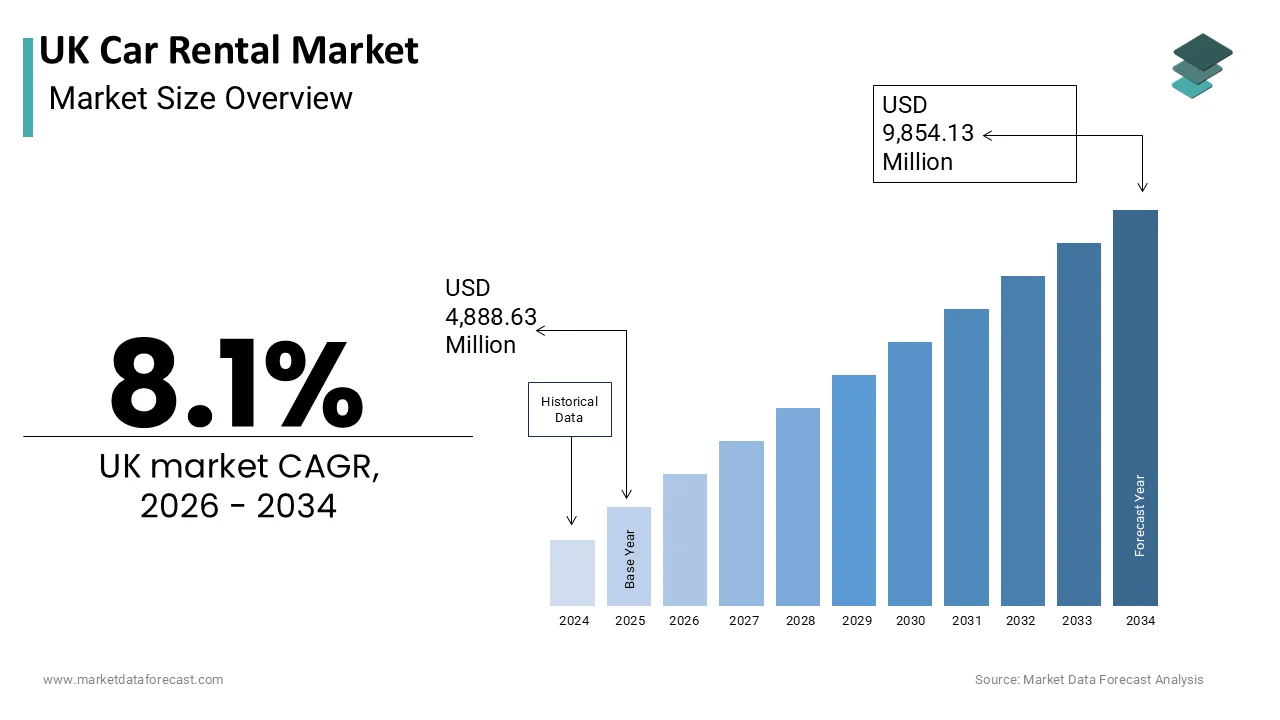
The UK Car Rental Market was valued at USD 4,888.63 million in 2025 and is projected to reach USD 9,854.13 million by 2034, growing from USD 5,284.61 million in 2026 at a CAGR of 8.1% during the forecast period. Growth is driven by rising international tourism inflows, expansion of business travel and corporate mobility needs, and integration of electric vehicles into rental fleets. Emission compliance costs and high insurance premiums are shaping market dynamics.
Key Market Trends
- Rising integration of electric vehicles supported by growing public charging infrastructure
- Growing adoption of digital booking platforms with AI-driven dynamic pricing
- Increasing demand for long-term and subscription-based rental models
- Rising competition from ride-hailing and car-sharing alternative mobility services
- Growing demand for chauffeur-driven services among corporate and luxury travelers
Segmental Insights
- Based on booking type, online booking held the leading share in 2025, driven by high internet and smartphone penetration across UK adults.
- Based on duration, short-term rental dominated the market in 2025, driven by tourism and business trip lengths aligning with leisure travel patterns.
- Based on application, leisure and tourism led the market in 2025, driven by strong domestic and international travel activity.
Regional Insights
- England led the market, supported by its status as the primary economic hub and home to over 84% of the UK population.
- London serves as a major demand center due to concentrated business travel and international visitor arrivals through major airports.
- Long-term rental is the fastest-growing duration segment, driven by changing consumer attitudes toward vehicle ownership and corporate fleet strategies.
- Chauffeur-driven is the fastest-growing end-user segment, driven by demand for luxury convenience among high-net-worth individuals and executives.
Competitive Landscape
The market is highly competitive, with global giants and local operators competing on fleet electrification, digital transformation, and airport network presence. Companies are investing in electric vehicle fleets and contactless digital experiences to differentiate service quality.
Prominent players in the market include Enterprise Holdings Inc., Europcar Mobility Group, The Hertz Corporation, Avis Budget Group Inc., Sixt SE, Green Motion International, Arnold Clark Car & Van Rental, National Car Rental, Alamo Rent A Car, Budget Rent a Car System Inc., Keddy by Europcar, and DRIVALIA UK Ltd.
 Download Free Sample Report
UK Car Rental Market Size
The U.K. Car Rental Market is projected to grow from USD 4,888.63 million in 2025 to USD 5,284.61 million in 2026 and reach USD 9,854.13 million by 2034, registering a CAGR of 8.1% during the forecast period from 2026 to 2034.
The UK car rental market operates as a critical component of the national transportation infrastructure, facilitating mobility for tourists, business travelers, and residents who require temporary vehicle access. This sector encompasses a diverse range of services from short-term hourly rentals to long-term leasing arrangements, catering to varied consumer needs across urban centers and rural destinations. The market dynamics are deeply intertwined with broader travel patterns, economic conditions, and evolving consumer preferences toward flexible mobility solutions. According to the Office for National Statistics, international visitor arrivals to the UK reached 38.0 million in 2023, reflecting a strong recovery in tourism demand that directly fuels rental requirements. As per the Department for Transport, there are approximately 40.8 million licensed vehicles in the UK, yet many households do not own a vehicle, creating a substantial addressable market for rental services. The proliferation of digital booking platforms has transformed customer engagement, allowing seamless reservations and transparent pricing structures. Environmental considerations are increasingly shaping fleet compositions with operators integrating electric vehicles to align with national sustainability goals. The market serves as a vital link between public transport limitations and private ownership costs, offering consumers a pragmatic alternative for specific travel occasions. Regulatory frameworks governing driver licensing, insurance mandates, and emission standards further define operational parameters, ensuring safety and compliance across the industry landscape.
MARKET DRIVERS
Rising Tourism Inflows and International Visitor Arrivals Drive Rental Demand
The resurgence of international tourism is primarily driving the expansion of the UK car rental market. According to VisitBritain, overseas residents made 38.0 million visits to the UK in 2023, generating significant demand for flexible mobility options that public transport networks may not fully satisfy. Tourists often prefer the autonomy of a private vehicle to access rural attractions, coastal areas, and heritage sites that are less accessible via rail or bus services. This preference is particularly pronounced among travelers from North America and Europe who are accustomed to driving holidays and seek the convenience of door-to-door mobility. The spending power of these visitors also supports premium rental segments where customers opt for larger vehicles or luxury models to enhance their travel experience. According to the Department for Transport, UK air passenger demand stands at approximately 297 million passengers, indicating robust air travel volumes that correlate strongly with subsequent car rental bookings. Airport-based rental locations capture a substantial share of this demand, offering immediate vehicle access upon arrival. Additionally, domestic tourism remains resilient with UK residents undertaking millions of staycations annually, further sustaining rental activity during peak summer months and holiday periods. The diversity of traveler profiles ensures consistent demand across various vehicle categories, from compact economy cars to spacious multi-purpose vehicles accommodating families and groups.
Expansion of Business Travel And Corporate Mobility Requirements
Corporate travel recovery and evolving business mobility needs constitute another significant driver propelling the UK car rental market forward as companies prioritize flexible and efficient transportation solutions for their workforce. According to the Global Business Travel Association, business travel spending in the UK is projected to reach 36.5 billion GBP in 2024, reflecting renewed corporate confidence and increased face-to-face meeting requirements. Professionals traveling for conferences, client meetings, and site inspections often require reliable vehicles that offer comfort, fort, professionalism, and the ability to carry equipment or materials. Car rental services provide corporations with scalable mobility options without the capital expenditure associated with maintaining a dedicated fleet. This model allows businesses to manage costs effectively while ensuring employees have access to appropriate vehicles based on trip duration and purpose. The rise of hybrid work models has also influenced travel patterns, with employees commuting to offices less frequently but traveling more strategically for key engagements,s thereby increasing the reliance on short-term rentals. Major rental companies have responded by developing tailored corporate accounts with streamlined billing processes, dedicated customer support, rt and preferred rates. The integration of telematics and fleet management tools enables organizations to monitor usage, optimize expenses,nses and ensure compliance with internal policies. Furthermore, the need for sustainable business practices encourages corporations to select rental providers with eco-friendly fleets, aligning with environmental, social i, al and governance objectives. This strategic alignment enhances the appeal of car rental services as a viable component of modern corporate travel programs.
MARKET RESTRAINTS
Stringent Environmental Regulations and Emission Compliance Costs
The implementation of rigorous environmental regulations is a substantial restraint on the UK car rental market as operators face escalating costs associated with the transition to low-emission and zero-emission vehicle fleets. The UK government has mandated that all new cars and vans must be zero-emission at the tailpipe by 2035, requiring rental companies to accelerate their electrification strategies significantly. According to the Society of Motor Manufacturers and Traders, battery electric vehicles accounted for 16.5% of new car registrations in the UK in 2023, indicating a growing but still limited supply of suitable electric models for rental purposes. The higher upfront purchase price of electric vehicles compared to internal combustion engine alternatives strains capital budgets and affects profitability margins for rental firms. Additionally, the existing charging infrastructure remains unevenly distributed across the country, with rural areas lacking sufficient fast charging points, which limit the operational viability of electric rental cars for long-distance trips. Rental operators must also invest in employee training, maintenance facilities,s and software systems to manage electric fleets effectively. The uncertainty surrounding residual values of electric vehicles adds financial risk, as rapid technological advancements may depreciate current models faster than anticipated. Further, more clean air zones in cities such as London, Birmingham, and Manchester impose daily charges on non-compliant vehicles, forcing companies to retire older diesel and petrol cars prematurely. These regulatory pressures compel continuous capital reinvestment while potentially reducing fleet availability during transition periods, thereby constraining market growth and operational flexibility for rental providers.
High Operational Costs and Insurance Premium Burdens
Elevated operational expenses, including soaring insurance premiums, are further hampering the expansion of the UK car rental market. Insurance costs have risen sharply due to increased claim frequency and higher repair bills, driven by complex vehicle technology and inflationary pressures on parts and labor. According to Ernst and Young, the net combined ratio for the UK car insurance industry reached 112.7% in 2023, reflecting the financial strain on insurers, which is subsequently passed on to rental companies through higher premiums. Rental firms face unique risk exposures, including accident damage,ge theft, and misuse by a rotating customer base, which necessitates comprehensive coverage packages. The rising cost of vehicle repairs, exacerbated by semiconductor shortages and supply chain disruptions, ns further inflates operational expenditures. Additionally, fuel price volatility impacts both operator costs and customer willingness to rent,nt particularly for larger vehicles with lower fuel efficiency. Maintenance expenses have also climbed as modern vehicles require specialized servicing and diagnostic equipment. Labor shortages in the automotive service sector contribute to longer downtimes for vehicles undergoing repairs, rs reducing fleet utilization rates. These cumulative cost pressures force rental companies to increase daily rates,tes which may price-sensitive customers and reduce overall demand. Smaller independent operators struggle disproportionately to absorb these costs, leading to market consolidation as larger players leverage economies of scale. The financial burden limits investment in fleet renewal technology upgrades and customer experience enhancement, thereby constraining competitive positioning and long-term sustainability for many market participants.
MARKET OPPORTUNITIES
Integration of Electric Vehicles and Sustainable Fleet Solutions
The transition toward electric vehicles is a significant opportunity for the UK car rental market as operators can differentiate themselves through sustainable offerings that align with consumer environmental consciousness and regulatory mandates. According to the Department for Transport, there were over 50000 public charging devices in the UK by early 2024, providing a growing infrastructure base that supports electric vehicle adoption. Rental companies that proactively expand their electric fleets can attract environmentally aware corporate clients with sustainability targets and government contracts prioritizing green procurement. Early movers in this space benefit from brand, enhancement cus,tomer loyalty, and potential access to government incentives such as grants for charging infrastructure installation. The total cost of ownership for electric vehicles is becoming increasingly competitive due to lower maintenance requirements and reduced fuel costs compared to conventional cars. Rental firms can leverage data analytics to optimize charter and scheduling, maximize vehicle availability, and minimize downtime. Partnerships with energy providers and charging network operators enable integrated solutions that enhance customer convenience through seamless payment and location services. Furthermore, the novelty of electric vehicles attracts curious consumers who wish to experience advanced automotive technology without the commitment of ownership. This trial effect can stimulate broader electric vehicle adoption while generating additional revenue streams for rental companies. As battery technology improves and charging speeds increase, the practicality of electric rentals for long journeys will expand, opening new market segments. Operators who invest strategically in electric mobility position themselves as leaders in the evolving transportation landscape, capturing value from the global shift toward decarbonization.
Digital Transformation and Enhanced Customer Experience Platforms
The advancement of digital technologies offers a prominent opportunity for the UK car rental market by enabling superior customer experiences,s operational efficiencies, and new business models. Mobile applications c, contactless pickup, and artificial intelligence-driven personalization are reshaping how consumers interact with rental services. According to Ofcom, 98% of adults in the UK used the internet in 2023, with high smartphone penetration facilitating seamless digital transactions. Rental companies that implement intuitive booking platforms, real-time vehicle tracking, and automated check-in systems reduce friction and enhance satisfaction, leading to higher retention rates. Digital tools also enable dynamic pricing strategies that optimize revenue based on demand fluctuations and seasonal trends,nds and local events. The integration of Internet of Things sensors in vehicles allows operators to monitor condition usage patterns and maintenance needs proactively, thereby reducing downtime and extending asset life. Data aanalytics providesinsights into customer preferences, enabling targeted marketing campaigns and customized service offerings. Furthermore, her more digital platforms facilitate partnerships with travel agencies, ride-hailing services, and hospitality providers,r creating ecosystem-based revenue opportunities. The adoption of blockchain technology could streamline identity verification, insurance processing,g and payment settlements, ts enhancing security and transparency. As consumers increasingly expect instant gratification and personalized interactions, rental firms that embrace digital innovation gain a competitive advantage. Investment in cybersecurity ensures trust and protects sensitive customer data, which is paramount in maintaining brand reputation. The digital evolution empowers rental companies to operate more agilely,y respond to market changes swiftly, and deliver value-added services that transcend traditional vehicle provision.
MARKET CHALLENGES
Intense Competition from Alternative Mobility Services
The UK car rental market faces formidable challenges from the rapid growth of alternative mobility services, including ride-hailing, car-sharing,g and micro-mobility options that cater to similar consumer needs. According to Statista, the ride-hailing market in the UK generated approximately 2.5 billion USD in revenue in 2023, demonstrating substantial consumer adoption of on-demand transportation. Services such as Uber Bolt and local car sharing schemes offer convenient, cost-effective alternatives for short trips, urban commuting, es and occasional vehicle use without the responsibilities associated with rentals. These platforms leverage network effects and dense urban coverage to provide immediate access to transportation, reducing the perceived necessity of renting a car. The flexible pay-per-user models appeal to younger demographics and city dwellers who prioritize accessibility over ownership. Additionally, the rise of subscription-based mobility services bundles insurance, maintenance, and vehicle access into a monthly fee, presenting a compelling value proposition for frequent users. Traditional rental companies struggle to match the convenience and pricing agility of these digital native competitors. The fragmentation of consumer attention across multiple mobility options dilutes market share and pressures rental firms to innovate continuously. Price competition intensifies as alternative services engage in promotional campaigns to acquire users. Furthermore, the integration of multimodal journey planning apps enables consumers to combine public transport, sport walking, cycling, and ride-hailing seamlessly, thereby reducing reliance on single-mode solutions like car rentals. This competitive landscape forces rental operators to redefine their value propositions and explore partnerships with mobility providers to remain relevant.
Supply Chain Disruptions and Vehicle Availability Constraints
Persistent supply chain disruptions and vehicle availability constraints pose significant challenges to the UK car rental market, limiting fleet expansion and renewal capabilities. The global semiconductor shortage, which affected automotive production severely, impacted the ability of rental companies to acquire new vehicles in recent years. According to the Society of Motor Manufacturers and Traders, UK car production fell to 908000 units in 2023, remaining below pre-pandemic levels due to ongoing component shortages and logistical bottlenecks. This scarcity forced rental operators to extend the lifecycle of existing vehicles, increasing maintenance costs and reducing the appeal of older models to customers. The delayed delivery of new orders disrupts fleet planning and compromises the ability to meet seasonal demands,s particularly during summer tour peaks. Additionally, geopolitical tensions and trade uncertainties affect the import of vehicles and parts,rts further complicating supply stability. The imbalance between supply and demand has driven up used prices, making it economically challenging to refresh fleets through secondary markets. Rental companies face difficult decisions regarding fleet composition,sition balancing the need for more reliable vehicles against budgetary constraints. The inability to secure sufficient inventory leads to lost revenue opportunities and customer dissatisfaction when preferred vehicle types are unavailable. Furthermore,thermore the transition to electric vehicles introduces new supply chain dependencies on battery materials and specialized components, which are subject to their own availability risks. These structural supply issues require rental firms to develop more resilient procurement strategies, diversify supplier relationships, and invest in predictive analytics to anticipate and mitigate disruption impacts effectively.
REPORT COVERAGE
| REPORT METRIC | DETAILS |
| Market Size Available | 2025 to 2034 |
| Base Year | 2025 |
| Forecast Period | 2026 to 2034 |
| Segments Covered | By Booking Type, Duration, Application, End User, and Region. |
| Various Analyses Covered | Global, Regional and Country-Level Analysis, Segment-Level Analysis, Drivers, Restraints, Opportunities, Challenges; PESTLE Analysis; Porter’s Five Forces Analysis, Competitive Landscape, Analyst Overview of Investment Opportunities |
| Countries Covered | United Kingdom |
| Market Leaders Profiled | Enterprise Holdings, Inc., Europcar Mobility Group, The Hertz Corporation, Avis Budget Group, Inc., Sixt SE, Green Motion International, Arnold Clark Car & Van Rental, National Car Rental, Alamo Rent A Car, Budget Rent a Car System, Inc., Keddy by Europcar, DRIVALIA UK Ltd. |
SEGMENTAL ANALYSIS
By Booking Type Insights
The online booking segment had the leading share of the UK car rental market in 2025 due to the widespread adoption of digital platforms and consumer preference for convenience. According to Ofcom, 98% of adults in the UK used the internet in 2023, creating a vast digital base for transactional activities. This high penetration rate enables rental companies to reach customers directly through websites and mobile applications,s reducing reliance on traditional offline channels. The ability to compare prices across multiple providers instantly empowers consumers to make informed decisions, fostering intense competition that benefits the user. Online platforms also offer personalized recommendations based on past behavior, a furtherenhancing customer engagement and loyalty. The integration of secure payment gateways and instant confirmation emails reduces anxiety and builds trust in digital transactions. Furthermore, the rise of Meta search engines allows travelers to aggregate options from various rental firms s,impl simplifying the booking process. The cost efficiency of online operations allows companies to offer a competitive rate, an effective rate which further drives volume. According to Statista, over 92% of UK adults own a smartphone, meaning the accessibility of rental services has never been higher. This digital shift is irreversible and continues to expand as younger demographics who are digital natives become the primary consumer base. The seamless experience of managing bookings, modifications, and cancellations online reinforces the dominance of this channel in the modern rental landscape.
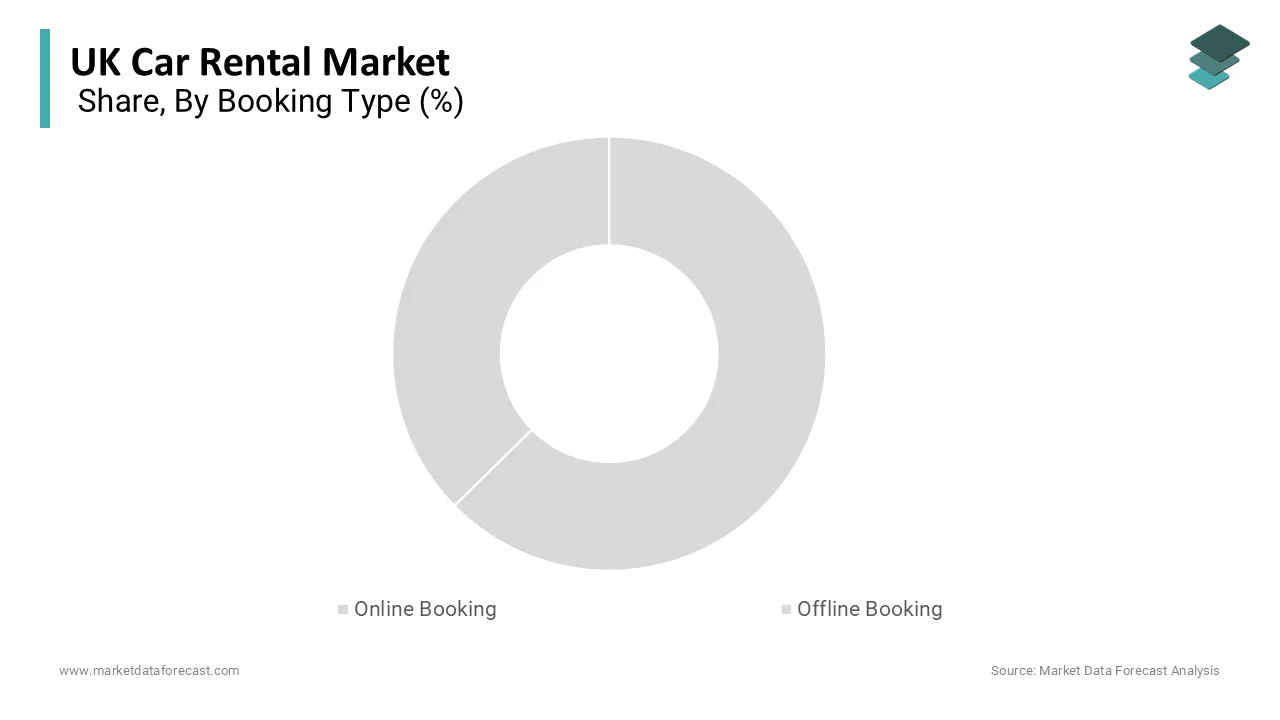
While smaller in share, the offline booking segment retains relevance, particularly among specific demographic groups and complex corporate arrangements. The offline segment is estimated to grow at a moderate CAGR in the UK market during the forecast period, owing to the need for personalized service and immediate assistance in certain scenarios. Older consumers who may be less comfortable with digital interface face-to-face interactions at rental counters, where they can ask questions and receive tailored advice. According to the Office for National Statistics, approximately 11% of adults in the UK had not used the internet in the last three months, indicating a persistent non-digital cohort. Additionally, corporate rate clients with complex travel requirements,s such as multi-city itineraries or specialized vehicle needs, often rely on dedicated travel agents or direct phone consultations to ensure accuracy. The offline channel also serves walk-in customers at airport locations who may have missed pre-booking opportunities or require last-minute solutions due to flight changes. Trust remains a significant factor as some customers prefer verifying vehicle conditions and contract terms in person before committing. Rental companies maintain physical presence to cater to these needs, engendering inclusivity and broad market coverage. The human element provides a level of reassurance and problem-solving capability that automated systems may lack during irregular situations. As such, the offline segment continues to serve a vital niche comp, complementing the digital ecosystem by addressing unique customer preferences and exceptional circumstances that require manual intervention.
By Duration Insights
The short-term rental segment dominated the UK car rental market by capturing the leading share of the UK market in 2025. The dominance of the short-term rental agreement segment in the UK market is primarily fueled by tourism,m business travel, and occasional personal use. According to VisitBritain, overseas residents made 38.0 million visits to the UK in 2023, with many tourists requiring vehicles for durations ranging from a few days to two weeks. This segment aligns perfectly with the typical length of leisure holidays and short business trips, when long-term commitment is unavailable. The flexibility of short-term rentals allows customers to access vehicles only when needed, avoiding the costs associated with ownership,p such as insurance, maintenance, ance and depreciation. Airport locations are major hubs for short-term rentals, capturing arriving travelers who need immediate mobility. The rise of staycations among UK residents further supports this segment as domestic travelers explore different regions without the hassle of driving their own cars over long distances. Short-term rentals also cater to emergency situations such as vehicle breakdowns or repairs where temporary replacement is required. The variety of vehicle options available for short periods enables customers to choose models suited for specific occasions, such as luxury cars for weddings or large vans for moving. The ease of booking and returning vehicles quickly enhances the appeal of this segment. As travel patterns become more fragmented with frequent short breaks rather than long vacations, the demand for short-term rentals continues to strengthen its market leadership.
On the other hand, the long-term segment is experiencing rapid growth and is predicted to register a healthy CAGR during the forecast period, owing to the changing consumer attitudes toward vehicle ownership and corporate fleet management strategies. This segment is expanding at a notable compound annual growth rate as businesses and individuals seek cost-effective,f flexible mobility solutions. According to the Society of Motor Manufacturers and Traders, the trend towardsubscription-basedd andlong-termg models is gaining traction as consumers avoid the high upfront costs of purchasing new vehicles. Companies prefer long-term leases to manage their fleets efficiently trans, transferring risks related to maintenance,e residual values, es and regulatory compliance to rental providers. This approach allows businesses to focus on core operations while ensuring employees have reliable transportation. For individuals, the rising cost of living and uncertainty about future financial stability make long-term rentals an attractive alternative to ownership. These agreements often include maintenance insurance and roadside assistance, providing peace of mind and predictable monthly expenses. The flexibility to upgrade vehicles regularly allows users to access the latest technology and safety features without the burden of selling old cars. As urbanization increases and parking becomes scarcer and more expensive in cities like London, the appeal of not owning a car grows. The long-term segment thus offers a pragmatic solution for those who need consistent access to a vehicle without the responsibilities of ownership, driving its accelerated growth trajectory.
By Application Insights
The leisure and tourism segment led the market with the major share of the UK market in 2025. The growth of the leisure and tourism segment in the UK market can be credited to the robust domestic and international travel activity. According to the Department for Transport, UK air passenger demand stands at approximately 297 million passengers, indicating strong air travel volumes that translate into rental demand. Tourists value the freedom and flexibility that private vehicles provide, allowing them to explore rural areas co, coastal routes, and heritage sites that are poorly served by public transport. The diversity of the UK landscape, from the Scottish Highlands to the Cornish coast, encourages road trips, which are ideally supported by rental services. Domestic tourism also plays a crucial role, with millions of UK residents undertaking staycations annually,y seeking convenient mobility options. Family groups and friends traveling together often find renting a larger vehicle more economical and comfortable than multiple train tickets. The seasonal nature of tourism creates peak demand periods during the summer and holiday season, which rental companies capitalize on through dynamic pricing. The integration of rental services with hotel and attraction packages further boosts this segment. As travel experiences become more personalized and experiential,experientialperiential the ability to drive off-the-beaten-path destinations enhances the appeal of car rentals for leisure travelers. This segment remains resilient due to the enduring human desire for exploration and the practical advantages of private transport for vacationers.
On the other hand, the business travel segment is growing rapidly and is predicted to grow at a prominent CAGR in the UK market during the forecast period as corporations increasingly recognize the efficiency and professionalism offered by rental services. According to the Global Business Travel Association, business travel spending in the UK is projected to reach 36.5 billion GBP in 2024, reflecting renewed corporate activity. Professionals require reliable and comfortable vehicles for client meetings, site visits,s and conferences where punctuality and image are important. Rental companies cater to this need by offering premium vehicles and streamlined corporate accounts with simplified billing and reporting. The shift toward hybrid work models has altered travel patterns, with employees traveling less frequently but for more strategic purposes, thus increasing the value of each trip. Businesses prefer rentals over maintaining owned fleets due to the reduced administrative burden and cost predictability. The ability to select vehicles based on specific trip requirements ensures optimal resource utilization. Additionally, the rise of remote work has led to distributed teams requiring temporary local transportation when visiting headquarters or regional offices. Corporate sustainability goals are also driving demand for eco-friendly rental options,tions allowing companies to meet environmental targets. As business travel evolves to high-value interactions, the demand for professional, efficient, and flexible mobility solutions continues to propel the growth of this segment.
By End User Insights
The self-driven end-usergment commanded the largest share of the UK market in 2025 due to its cost-effectiveness and flexibility. Most renters prefer to drive themselves as it eliminates the additional expense of hiring a chauffeur and provides complete control over the itinerary. According to the Department for Transport, there are approximately 40.8 million licensed vehicles in the UK, representing a large pool of potential self-driving renters. This segment appeals to independent travelers, families, and business professionals who value autonomy and privacy. The widespread availability of automatic transmission vehicles has made driving easier for international visitors who may not be accustomed to manual gears. Self-driven rentals are particularly popular for road trips and exploring rural areas where public transport is limited. The simplicity of picking up a car and driving away without coordinating with a driver enhances the user experience. Insurance products tailored for self-driven rentals provide adequate coverage, giving customers confidence. The lower price point compared to chauffeur-driven services makes this option accessible to a broader demographic inclu, including budget-conscious travelers. As navigation systems and GPS technology improve, the ease of self-driving in unfamiliar locations has increased, further supporting this segment. The cultural preference for independence and the practical benefits of cost savings ensure that self-driven rentals remain the dominant choice for the majority of customers.
However, the chauffeur-driven segment is witnessing significant growth and is estimated to showcase a promising CAGR in the UK market during the forecast period, owing to the demand for luxury convenience and productivity among high-net-worth individuals and corporate executives. This segment is expanding at a higher compound annual growth rate as customers seek premium experiences that combine transportation with service. According to industry observations, the luxury travel market is recovering strongly with affluent travelers willing to pay for comfort and time efficiency. Chauffeur services allow passengers to work,k restt opreparere for meetings during trans t, maximizing the value of travel time. This is particularly appealing for business travelers who need to arrive refreshed and ready for engagements. The prestige associated with being driven in a high-end vehicle also serves status-conscious consumers attending special events or important business functions. Rental companies are expanding their chauffeur offerings by partnering with professional driver agencies to ensure high service standards. The complexity of navigating congested urban centers like London makes having a professional driver advantageous,s reducing stress and improving safety. As the gig economy facilitates access to professional drivers, the availability and affordability of chauffeur services have improved. This segment caters to a niche but lucrative market where service quality and exclusivity are paramount, driving its rapid expansion despite higher costs.
COUNTRY LEVEL ANALYSIS
England Car Rental Market Analysis
England is likely to maintain its significant growth and market lead for the next few years due to its role as the primary economic hub. As the most populous nation within the U,, England generates substantial demand from both domestic and international travelers. According to the Office for National Statistics, England is home to approximately 56.5 million people, representing over 84% of the total UK population. This large consumer base drives consistent rental activity across major cities such as London M, a Mancheser and Birmingham. London alone attracts millions of international visitors annually who require transportation for business and leisure purposes. The extensive network of AIii, airports including Heathrow, Gatwick, and Stansted, serve as major entry points for renters. The diverse geography of England, from urban centers to rural countryside, encourages varied rental needs. Business travel is concentrated in London and the South East, where corporaheadquarters areare locate fuellingling demand for premium vehicles. The well-developed road infrastructure, including motorways, facilitates easy travel between regions. Tourism hotspots such as the Lake District, Cotswolds,s and Cornwall attract visitors who prefer the flexibility of cars to explore these areas. The strong economic output of Englandensures as higher disposable income, enabling residents to afford rental services for occasional use. These factors collectively sustain England's leadership in the national car rental market.
COMPETITIVE LANDSCAPE
The competition in the UK car rental market is intense and characterized by the presence of established global giants alongside agile local operators and emerging mobility providers. Major international brands leverage their extensive networks, brand recognition,n and economies of scale to dominate key airports and urban centers. These players continuously invest in technology and fleet modernization to differentiate themselves and enhance customer satisfaction. Local companies compete by offering personalized services, niche markets, and competitive pricing structures that appeal to specific consumer segments. The entry of ride-hailing platforms and car-sharing services has further fragmented the market, forcing traditional rental firms to innovate and adapt their business models. Price competition remains fierce,e particularly during peak tourism seasons when demand surges, and capacity constraints occur. Companies also compete on sustainability credentials, with many promoting their electric vehicle offerings to attract environmentally conscious travelers. Regulatory compliance regarding emissions and licensing adds another layer of complexity, influencing competitive dynamics. The market sees continuous consolidation as larger entities acquire smaller rivals to expand their footprint. This dynamic environment requires constant strategic adjustment and investment to maintain relevance and profitability amidst shifting consumer preferences and technological advancements.
KEY MARKET PLAYERS
Some of the companies that are playing adominantg role in the U.K. Car Rental Market include
- Enterprise Holdings, Inc.
- Europcar Mobility Group
- The Hertz Corporation
- Avis Budget Group, Inc.
- Sixt SE
- Green Motion International
- Arnold Clark Car & Van Rental
- National Car Rental
- Alamo Rent A Car
- Budget Rent a Car System, Inc.
- Keddy by Europcar
- DRIVALIA UK Ltd.
TOP LEADING PLAYERS IN THE MARKET
- Enterprise Holdings operates extensively across the UK through its well-known brands, including Enterprise Rent-A-Car and National Car Rental. The company focuses heavily on customer service excellence and local community engagement to build strong brand loyalty among residents and travelers. It has recently invested significantly in expanding its electric vehicle fleet to align with national sustainability goals and meet growing consumer demand for eco-friendly transportation options. Enterprise has also enhanced its digital platforms to offer seamless booking experiences and contactless services, which appeal to modern consumers seeking convenience and safety. Its widespread network of neighborhood locations provides unmatched accessibility for customers requiring short-term or long-term vehicle solutions. By prioritizing employee training and operational efficiency, the company maintains high service standards that differentiate it from competitors. These strategic initiatives reinforce its position as a trusted provider in the UK mobility landscape while adapting to evolving market dynamics and regulatory requirements.
- Europcar Mobility Group maintains a robust presence in the UK by offering diverse mobility solutions tailored to both leisure and business travelers. The company has actively pursued digital transformation initiatives to streamline operations and enhance user experience through its mobile application and online booking systems. It recently strengthened its commitment to sustainability by introducing a substantial number of hybrid and electric vehicles into its fleet,t catering to environmentally conscious customers. Europcar has also formed strategic partnerships with airlines and travel agencies to expand its reach and capture a larger share of international tourist arrivals. The group focuses on optimizing its fleet utilization through advanced data analytics, cs ensuring availability during peak demand periods. By emphasizing flexibility and innovative service offerings such as a subscription model, Europcar adapts to changing consumer preferences. These efforts demonstrate its dedication to maintaining competitiveness and delivering value to customers in a rapidly evolving transportation sector.
- Hertz Global Holdings is a prominent player in the UK car rental market known for its premium brand recognition and extensive airport presence. The company has undertaken significant restructuring efforts to improve financial stability and operational efficiency following recent global challenges. Hertz has accelerated its electrification strategy by partnering with major automotive manufacturers to secure a steady supply of electric vehicles for its UK fleet. This move positions the company as a leader in sustainable mobility while attracting corporate clients with strict environmental targets. Hertz has also upgraded its technology infrastructure to support fast check-in in processes and personalized customer interactions. The brand leverages its global network to offer seamless cross-border rental options for international travelers. By focusing on premium service quality and modernizing its fleet composition, Hertz continues to attract high-value customers. These strategic actions reflect its commitment to innovation and long-term growth in the competitive UK market environment.
TOP STRATEGIES USED BY KEY MARKET PARTICIPANTS
Key players in the UK car rental market employ several critical strategies to maintain competitiveness and drive growth. Fleet electrification stands out as a primary strategy where companies invest heavily in electric and hybrid vehicles to comply with stringent environmental regulations and meet consumer demand for sustainable options. Digital transformation is another vital approach involving the development of intuitive mobile applications and automated booking systems that enhance customer convenience and operational efficiency. Strategic partnerships with airlines, hotels,s and travel aggregators enable rental firms to expand their customer base and integrate seamlessly into broader travel ecosystems. Dynamic pricing models powered by artificial intelligence allow companies to optimize revenue by adjusting rates based on real-time demand fluctuations and seasonal trends. Additionally, many firms focus on enhancing customer experience through contactless services, offering flexible cancellation policies, i incentivesand loyalty programs that promote long-term retention. These combined strategies help operators navigate market challenges while capitalizing on emerging opportunities in the evolving mobility landscape.
MARKET SEGMENTATION
This research report on the UK car rental market is segmented and sub-segmented into the following categories.
By Booking Type
- Online Booking
- Offline Booking
By Duration
- Short-Term Rental
- Long-Term Rental
By Application
- Leisure & Tourism
- Business Travel
By End User
- Self-Driven
- Chauffeur-Driven
By Country
- United Kingdom