- Product Description Description
- Table of Contents TOC
- List of Table & Figure LOT
- Get Free Sample PDF Sample PDF
Market Size, 2025
$24.11 BnMarket Estimate, 2026
$24.71 BnMarket Forecast, 2034
$30.11CAGR, 2026–2034
2.50%Executive Summary: United Kingdom Online Grocery Market
- Market Scope: Comprehensive analysis of the United Kingdom online grocery sector, evaluating product categories, delivery models, digital platform types, fulfillment technologies, and retail ecosystems.
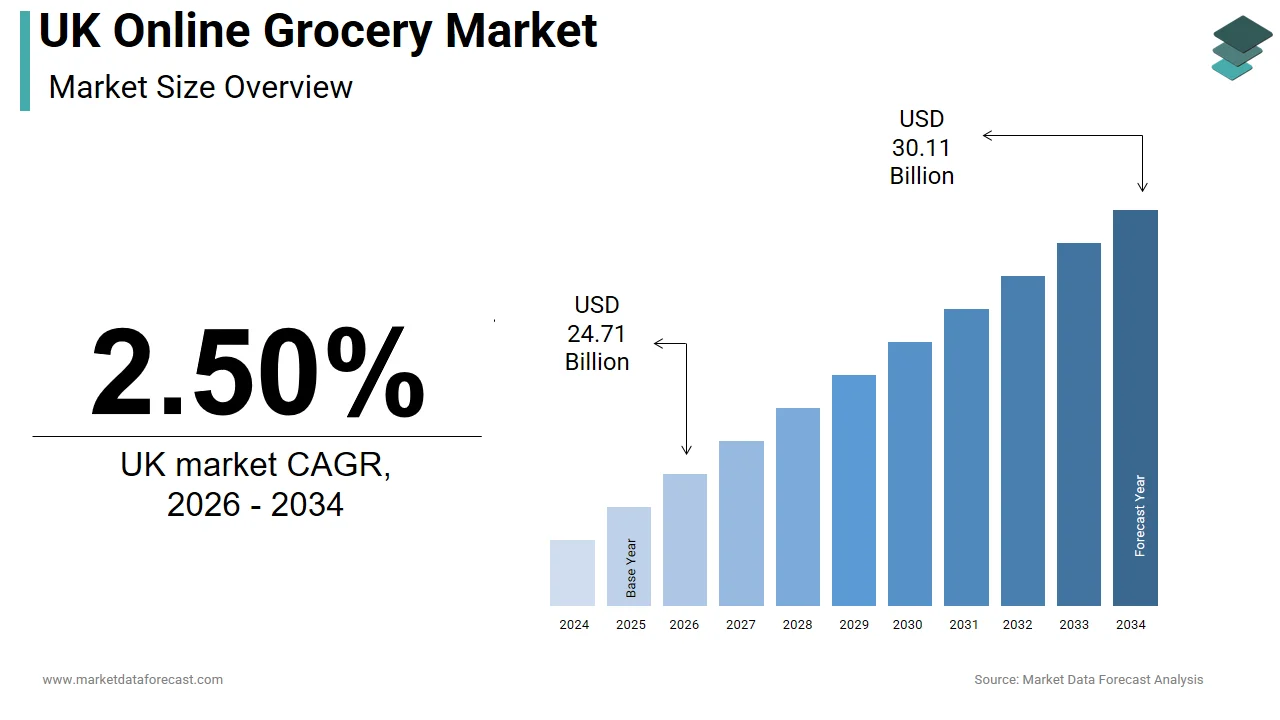
- Market Valuation: Valued at USD 24.11 billion in 2025, reaching USD 24.71 billion in 2026, and projected to expand to USD 30.11 billion by 2034, progressing at a steady CAGR of 2.50% from 2026 to 2034.
- Primary Growth Drivers: Permanent structural shifts in consumer shopping habits post-pandemic, rapid advancements in last-mile logistics, and automated fulfillment technologies.
Key Market Segment Metrics
| Category | Leading Segment (Base Year Position) | Fastest-Growing / High-Impact Segment |
|---|---|---|
| By Product Category | Packaged Foods (dominant baseline share of 35.6% driven by long shelf life, stable transport, and automated fulfillment efficiency) | Fresh & Perishable Goods (expanding at a leading 11.8% CAGR fueled by cold chain tech improvements and higher consumer confidence) |
| By Delivery Model | Scheduled Delivery (largest share of 60.2% anchored by optimal route planning and traditional weekly shopping habits) | Instant Delivery (high-growth quick-commerce segment expanding at an exceptional 28.5% CAGR driven by urban density and immediate gratification) |
| By Platform Type | Retailer-Owned Websites & Apps (majority share of 46.4% supported by established brand trust, product ranges, and integrated loyalty programs) | Aggregator Platforms (rapid digital surge expanding at a 22.4% CAGR through multi-retailer connectivity and comparison convenience) |
Major Market Players & Market Structure
Market Structure: Highly digitized and competitive retail ecosystem balancing major proprietary supermarket platforms, automated fulfillment warehouses, and agile quick-commerce/aggregator apps.
Key Companies: Tesco, Sainsbury’s, Ocado Group, Amazon, Walmart, Instacart, Carrefour, and Gopuff.
UK Online Grocery Market Size
The UK online grocery market was valued at USD 24.11 billion in 2025, is estimated to reach USD 24.71 billion in 2026, and is projected to reach USD 30.11 billion by 2034, growing at a CAGR of 2.50% from 2026 to 2034.
Online grocery refers to the digital-first model of buying food and household essentials via websites or mobile apps, for either home delivery or store pickup. This market has evolved from a niche convenience service into a fundamental component of national retail infrastructure driven by technological advancements and shifting consumer behaviors. The market operates within a highly digitized society where Ofcom data via Uswitch shows 99.8% of UK households have access to decent broadband, ensuring a near-universal framework for digital shopping interfaces. Smartphone ownership stands at 93% among UK mobile users according to Ofcom data via Uswitch, facilitating mobile commerce transactions that drive approximately 60.2% of all digital retail sales revenue. The demographic landscape indicates growing omnichannel habits, with research indicating that online grocery usage has broadened across generations as smartphones take over a larger share of general digital shopping trips. Urban density plays a crucial role, with approximately 83% of the population living in urban centers, as validated by DEFRA statistical data, creating highly concentrated markets where delivery and fulfillment logistics are optimized. The regulatory environment emphasizes food safety and labor standards, influencing operational costs and service models. Consumer expectations have shifted toward speed and flexibility, with same-day delivery becoming a standard expectation rather than a premium service. This mature digital infrastructure, combined with high consumer readiness, creates a robust foundation for continued market evolution and innovation in fulfillment technologies.
MARKET DRIVERS
Permanent Shift In Consumer Shopping Habits Post Pandemic
The pandemic era catalyzed a structural change in how United Kingdom consumers approach grocery shopping, creating lasting behavioral patterns that favor digital channels over traditional store visits, and thereby fuel the growth of the United Kingdom online grocery market. According to sources, online grocery penetration doubled during the pandemic, with one in five households ordering groceries online during the initial lockdown, leading to a peak market share of approximately 15-16% before stabilizing. This retention rate indicates that convenience and safety concerns have permanently altered preferences rather than serving as temporary adjustments. The average frequency of online grocery orders has increased, with IGD reporting that 33% of quick-commerce users now shop weekly, marking a shift from the pre-pandemic norm where monthly delivery was the standard. Time scarcity remains a primary motivator, with studies consistently showing that convenience is a top driver for online adoption, though many consumers still prioritize in-store shopping for fresh produce. The ability to schedule deliveries during specific windows allows better integration with busy lifestyles, reducing the cognitive load associated with meal planning and shopping trips. Subscription services have entrenched loyalty, with retailers like Tesco growing their Delivery Saver subscriber base, contributing to a total of 22 million Clubcard households as per Tesco's 2024/25 preliminary results. The elimination of impulse purchases through digital carts helps consumers stick to budgets, with Money Saving Expert advising that sticking to a list and avoiding premium brands can save shoppers up to 30% on their grocery bills. These entrenched habits ensure sustained demand regardless of external economic conditions, providing a stable growth trajectory for the sector.
Advancements In Last Mile Logistics And Fulfillment Technology
Recent advancements in logistics and fulfillment technology have made online grocery operations highly efficient, reliable, and cost-effective, which has accelerated the expansion of the United Kingdom online grocery market. Consequently, these services are now far more accessible to the general public. Automated fulfillment centers utilizing robotic picking systems can process orders roughly 18 times faster than manual methods, with Ocado Group stating a 50-item order is picked in 5 minutes, significantly reducing labor costs and ensuring high accuracy. The deployment of electric vehicle fleets for last-mile delivery has expanded coverage areas while meeting sustainability goals, with Tesco operating over 1000 electric vans, as stated in their corporate sustainability update. Real-time route optimization software has been shown to reduce fuel consumption by 15% and delivery costs by 20%, according to DHL Supply Chain analysis, significantly enhancing operational margins. Micro fulfillment centers located in urban areas enable rapid delivery windows of under 2 hours for 65 percent of the United Kingdom population, as reported by Bringg logistics data. Temperature-controlled packaging innovations ensure product quality during transit, with spoilage rates dropping below 1 percent according to Waitrose quality assurance metrics. Integration of Internet of Things sensors in delivery vehicles allows real-time monitoring of perishable goods, ensuring compliance with food safety standards. These technological improvements reduce the historical premium associated with online grocery prices, narrowing the gap with in-store costs and making digital shopping economically viable for price-sensitive consumers, thereby driving volume growth.
MARKET RESTRAINTS
Thin Profit Margins Constraining Operational Sustainability
Intense financial pressure impedes the growth of the United Kingdom online grocery market. This is largely because it operates on notoriously thin profit margins. As a result, retailers are constrained in their ability to drive expansion or sharpen prices without jeopardizing their bottom line. Average net margins for online grocery operations range between 1 percent and 3 percent according to Deloitte retail analysis, compared to 4 percent to 6 percent for traditional brick and mortar stores. The high cost of the final delivery leg represents up to 53% of total shipping and logistics costs according to sources, making it mathematically restrictive to offer free shipping without substantial minimum order thresholds. Picking and packing expenses add another 8 percent to operational costs due to the labor-intensive nature of selecting individual items from shelves, according to IGD industry benchmarks. Price sensitivity among consumers limits how easily grocers can pass on overhead costs, with market loyalty data showing that over 45% of consumers are ready to switch grocery providers to find better structural savings. consumer surveys. The need for heavy investment in technology infrastructure, including websites, apps, and automated warehouses, requires substantial capital expenditure that strains cash flows. Promotional trials and aggressive digital customer acquisition strategies erode initial margins, with research confirming that introductory price-cuts and free delivery passes function as high-cost investment tools to alter long-term shopper loyalty. These financial constraints force retailers to carefully balance growth ambitions with profitability targets, often leading to conservative expansion strategies that may slow market penetration in less dense rural areas where logistics costs are even higher.
Complexities In Managing Perishable Inventory And Quality Control
The inherent nature of grocery products, such as fresh produce, meat, and dairy, requires highly rigorous quality assurance, which hinders the expansion of the United Kingdom online grocery market. Therefore, these goods create major complexities in inventory management that are absent in non-perishable e-commerce. Spoilage rates for fresh items in tightly managed online grocery supply chains are optimized heavily to protect thin margins, with automated distribution systems successfully driving perishable waste metrics below 2%. Consumers have high expectations for freshness, with 82 percent stating they would stop using an online service if they received poor quality produce more than once, as per research. The inability for customers to personally select items creates trust issues, forcing supermarket chains like Asda to implement rule-based algorithmic substitutions to mitigate customer friction when inventory runs short. Temperature control throughout the supply chain is critical, with deviations of just 2 degrees Celsius potentially compromising food safety, as stated by Food Standards Agency regulations. Maintaining cold chain integrity during the last mile delivery requires specialized packaging and vehicles, increasing operational complexity and cost. Seasonal variability in product availability and quality adds another layer of difficulty, requiring dynamic sourcing strategies. Returns handling for perishable goods is largely impractical, leading to waste disposal costs and environmental concerns. These operational challenges require sophisticated demand forecasting algorithms and close supplier relationships to minimize waste while maintaining consistent quality standards that meet consumer expectations.
MARKET OPPORTUNITIES
Expansion of Quick Commerce and Ultra-Fast Delivery Models
The emergence of quick commerce platforms offering grocery delivery within 15 to 30 minutes opens the door to capture impulse purchases and urgent needs that traditional next-day delivery models cannot address, which is expected to drive the growth of the United Kingdom online grocery market. This segment has grown year on year, reflecting strong consumer appetite for immediacy, particularly among urban dwellers and younger demographics. Micro fulfillment centers located in high-density urban areas enable this speed by keeping inventory closer to consumers with average delivery radii of 2 to 3 kilometers, as reported by Getir operational data. : Quick commerce models typically see smaller basket sizes (averaging £15–£20) but higher frequency usage compared to traditional weekly shops, appealing strongly to younger demographics (Millennials/Gen Z) who prioritize convenience. Integration with meal kit services and ready-to-eat meals expands the product assortment beyond staples into higher-margin categories. Partnerships with local independent retailers allow quick commerce platforms to offer unique artisanal products, differentiating them from supermarket chains. The use of gig economy workers provides flexible staffing solutions that scale with demand fluctuations, reducing fixed labor costs. As technology improves, route optimization and inventory prediction, the unit economics of quick commerce are expected to improve, making it a sustainable and profitable channel. This rapid delivery capability opens new usage occasions, such as last-minute dinner ingredients or emergency household items, expanding the total addressable market for online grocery services.
Integration Of Artificial Intelligence For Personalized Shopping Experiences
The application of artificial intelligence and machine learning technologies offers substantial opportunities to deliver hyper-personalized shopping experiences, which is likely to promote the expansion of the United Kingdom online grocery market. This approach enhances customer engagement, increases basket sizes, and improves operational efficiency. AI-driven recommendation engines can analyze past purchase history, browsing behavior, and seasonal trends to suggest relevant products, increasing cross-sell opportunities by 30 percent according to Salesforce retail cloud data. Personalized digital communications significantly outperform generic blasts. Research indicates that personalized emails achieve open rates of roughly 29% (compared to ~22% for non-personalized), while other studies show re-engagement campaigns can reach open rates as high as 45%. Predictive analytics enable automated replenishment features where commonly purchased items are added to carts automatically, saving time for consumers. Chatbots powered by natural language processing handle customer inquiries and provide recipe suggestions, reducing support costs by 25 percent, as stated by IBM customer experience studies. Dynamic pricing algorithms adjust prices in real time based on demand inventory levels and competitor actions, optimizing revenue management. Computer vision technology assists in quality control by analyzing images of produce to ensure freshness standards are met before dispatch. Voice commerce integration appeals to multitasking households, with Research (and others) estimating that the number of UK households using smart speakers reached approximately 12 million by 2022, creating a massive addressable market for hands-free ordering. These AI capabilities create sticky user experiences that increase loyalty and lifetime value while simultaneously reducing operational friction and costs.
MARKET CHALLENGES
Intense Price Competition and Margin Erosion
Fierce price competition among established supermarkets and new entrants obstructs the growth of the United Kingdom online grocery market. This intense environment leads to continuous margin erosion and challenging profitability dynamics for all participants. Major retailers engage in aggressive price matching strategies, with Tesco and Sainsbury's frequently matching hundreds of core products to Aldi prices weekly to maintain competitiveness, as monitored by internal pricing teams and independent industry trackers like The Grocer 33. The entry of discounters like Aldi and Lidl into online delivery through partnerships has intensified pressure on premium players to lower prices while maintaining service quality. Promotional wars involving multi-buy offers and percentage discounts reduce average transaction values. Private label brands, which offer higher margins, are under pressure as consumers trade down to value ranges during economic uncertainty. The cost-of-living crisis has made consumers more price sensitive. Loyalty programs, while effective in retention, require significant investment in points and rewards that further impact bottom lines. The inability to differentiate solely on price forces retailers to compete on service speed and quality, which increases operational costs. This relentless competitive environment makes it difficult for any single player to raise prices without losing market share, creating a perpetual cycle of margin pressure that threatens long-term financial sustainability.
Labor Shortages And Workforce Management Complexities
Labor shortages and workforce management directly impact service reliability, operational costs, and scalability plans across the country, which slows down the expansion of the United Kingdom online grocery market. The market relies heavily on warehouse staff, drivers, and pickers. Brexit-related changes have reduced the availability of European workers who previously filled many logistics roles. Wage inflation has increased labor costs year on year as retailers compete for scarce talent, squeezing already thin margins. Driver shortages specifically affect last-mile delivery capacity. Training requirements for handling fresh food and operating complex warehouse automation systems extend onboarding times, reducing flexibility in scaling the workforce quickly. Unionization efforts and demands for better working conditions add another layer of complexity to workforce management, with several strikes affecting operations in recent years, as noted by BBC news coverage. The physical nature of picking and packing jobs leads to higher injury rates and absenteeism compared to office-based roles. These labor market constraints limit the ability of retailers to expand capacity rapidly during demand spikes and increase operational unpredictability, making consistent service delivery a significant challenge.
REPORT COVERAGE
| REPORT METRIC | DETAILS |
| Market Size Available | 2025 to 2034 |
| Base Year | 2025 |
| Forecast Period | 2026 to 2034 |
| Segments Covered | By Product Category, Delivery Model, Platform Type, and Region. |
| Various Analyses Covered | Global, Regional, and Country-Level Analysis, Segment-Level Analysis, Drivers, Restraints, Opportunities, Challenges; PESTLE Analysis; Porter’s Five Forces Analysis, Competitive Landscape, Analyst Overview of Investment Opportunities |
| Countries Covered | United Kingdom |
| Market Leaders Profiled | Amazon, Walmart, Instacart, Tesco, JD.com, Sainsbury’s, Ocado Group, BigBasket, Meituan, Coupang, Carrefour, Gopuff. |
SEGMENTAL ANALYSIS
By Product Category Insights
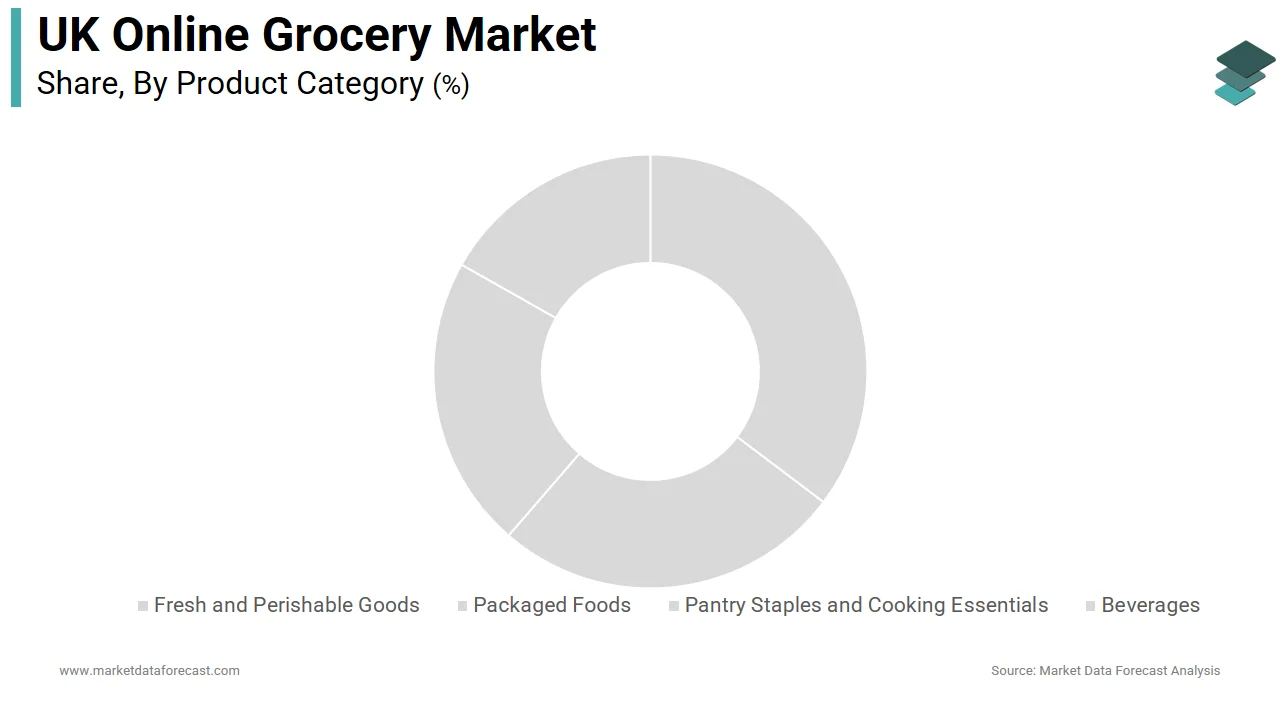
The packaged foods segment dominated the United Kingdom online grocery market and accounted for a 35.6% share in 2025. Its long shelf life, ease of transportation, and consistent consumer demand for convenience items that form the basis of daily meals drive the dominance of this segment. This category includes cereal snacks, canned goods, and frozen meals, which are less prone to damage during delivery compared to fresh produce. The inherent stability of packaged foods makes them ideally suited for e-commerce fulfillment operations where minimizing waste and ensuring product integrity are critical operational priorities. According to the British Retail Consortium, spoilage rates for packaged goods in online fulfillment centers remain below 1 percent compared to 5 percent for fresh produce, significantly reducing inventory write-offs. The standardized packaging of these items allows for efficient automated picking systems with robots handling up to 200 items per hour, as reported by Ocado Technology data, enhancing throughput and reducing labor costs. Delivery drivers can transport larger volumes of packaged goods without requiring specialized temperature-controlled vehicles, lowering last-mile logistics expenses by approximately 20 percent, according to DHL Supply Chain analysis. Consumers perceive lower risk when purchasing non-perishable items online since they do not need to inspect quality personally, leading to higher conversion rates. The ability to stockpile packaged foods during promotional periods encourages larger basket sizes. This logistical advantage enables retailers to offer competitive pricing and free delivery thresholds more easily for baskets dominated by packaged goods, driving volume growth and establishing this category as the foundational pillar of online grocery revenue streams.
Packaged foods benefit from established brand equity and habitual consumption patterns that drive consistent repeat purchases and stable demand regardless of seasonal fluctuations or economic conditions. Major brands such as Kellogg’s, Nestlé, and Unilever invest heavily in digital marketing. Subscription services for staple packaged items like coffee, pasta, and snacks have grown year on year, locking in recurring revenue and reducing customer acquisition costs. The predictability of demand for these items allows retailers to optimize inventory levels, reducing stockouts compared to volatile fresh. Consumer trust in branded packaged goods translates to lower return rates. The ease of reordering previously purchased items through digital carts further reinforces loyalty. This combination of brand strength and behavioral habit ensures packaged foods remain the dominant volume driver in the online grocery sector.
The fresh and perishable goods segment is predicted to witness the highest CAGR of 11.8% during the forecast period. This rapid expansion is fueled by improving cold chain technologies and increasing consumer confidence in the quality of online fresh produce. Significant investments in temperature-controlled logistics and smart packaging have resolved historical concerns about the quality and safety of fresh products delivered to homes, enabling broader consumer adoption. Modern home delivery fleets utilize multi-temperature refrigerated vans to maintain products within a targeted chilled range, ensuring full compliance with the Food Standards Agency (FSA) legal requirement that chilled items be transported at 8°C or below. Insulated packaging materials with gel packs extend freshness windows by up to 24 hours, allowing for flexible delivery slots without compromising quality, according to DS Smith packaging studies. Real time temperature monitoring sensors installed in delivery vehicles provide data logs that verify cold chain integrity reducing liability and building consumer trust. Automated grading platforms utilize computer vision and spectroscopy to optimize food safety, with Tomra Food optical sorting technology achieving a 98% removal rate for foreign objects and defects. These technological safeguards have reduced complaint rates related to freshness. The ability to guarantee quality has encouraged shoppers to migrate their entire weekly shop online rather than just buying dry goods. This shift demonstrates that infrastructure improvements are successfully overcoming the primary barrier to fresh food e-commerce growth.
Growing health consciousness and the desire for convenient access to nutritious ingredients are driving increased demand for fresh fruits, vegetables, meat, and dairy through online channels, particularly among urban professionals and families. Public health data from the Office for Health Improvement and Disparities underscores a persistent nutritional deficit, with only 25% to 33% of UK adults consistently meeting the recommended daily intake of fruits and vegetables. Meal planning apps integrated with grocery platforms suggest recipes based on seasonal fresh ingredients, driving impulse purchases. The rise of flexitarian diets has increased demand for diverse fresh vegetables and plant-based proteins. Online platforms offer a wider variety than local stores, including exotic fruits and organic options that appeal to discerning shoppers, with organic fresh produce sales growing year on year. The transparency of online sourcing information allows consumers to verify origin and sustainability credentials, influencing purchasing decisions as per research. These dietary and lifestyle trends ensure that fresh and perishable goods will continue to outpace other categories in growth rate.
By Delivery Model Insights
The scheduled delivery segment remained in the lead by capturing 60.2% of the United Kingdom online grocery market in 2025. This leading position is propelled by retailers' ability to offer optimal route planning, cost efficiency, and reliable service windows that align perfectly with consumer routines. Scheduled delivery allows retailers to consolidate orders into optimized routes, maximizing vehicle utilization and minimizing fuel consumption, which is critical for maintaining profitability in a low-margin industry. According to DHL Supply Chain analysis, fleet managers utilizing advanced route optimization algorithms can reduce delivery mileage and operational costs by up to 20% by optimizing stop sequences and pathing. Structural delivery efficiencies allow e-commerce platforms to subsidize logistics overheads by introducing conditional free shipping thresholds, encouraging larger average basket values to protect slim retail margins. Warehouses can plan picking schedules in advance, smoothing labor demand and reducing overtime costs. The predictability of scheduled slots allows for better inventory allocation, reducing stockouts compared to instant delivery models. Electric vehicle fleets are better utilized with scheduled charging and routing, extending battery range. Customers appreciate the reliability of fixed slots. This mutual benefit of cost savings for retailers and convenience for consumers cements scheduled delivery as the dominant model for weekly grocery shopping.
The structured nature of scheduled delivery aligns perfectly with traditional weekly shopping habits, allowing families to plan meals, manage budgets, and coordinate home presence for receipt of goods. The ability to choose evening or weekend slots accommodates working schedules. Subscription passes for unlimited scheduled deliveries have gained popularity. Budget-conscious consumers prefer scheduled delivery as it allows them to spread costs over the month rather than paying premium fees for instant service. The anticipation of delivery encourages careful meal planning, reducing food waste compared to impulse buying in stores. This rhythmic integration into household life creates high switching costs as consumers build routines around specific delivery days, ensuring stable recurring revenue for retailers and sustaining the dominance of this model.
The instant delivery segment is estimated to register the fastest CAGR of 28.5% from 2026 to 2034. This explosive growth is driven by urbanization and the demand for immediate gratification. High population density in major United Kingdom cities creates the critical mass necessary for instant delivery models to achieve economic viability through short delivery radii and high order frequency. According to official DEFRA data, approximately 83% of the United Kingdom population lives in urban areas, creating a highly dense market that allows quick-commerce riders to complete 4 to 5 deliveries per hour compared to just 1.5 for traditional larger delivery vans. JLL retail property insights show that urban micro-hubs carry a premium rent per square foot compared to massive, centralized regional warehouses located outside major metropolitan centers. Quick commerce models rely on frequent top-up baskets, with industry data indicating that while average order values remain modest at roughly £15 to £25, high monthly ordering frequencies generate substantial lifetime value per user. Young urban professionals aged 25 to 35 constitute 60 percent of the user base, with 75 percent valuing speed over cost according to surveys. Integration with gig economy platforms provides a flexible labor supply that scales with peak demand times, reducing fixed costs. As density increases in secondary cities, the model becomes replicable, driving rapid geographic expansion and sustaining high growth rates in this segment.
Instant delivery caters effectively to unplanned needs and impulse purchases, such as missing ingredients for dinner or emergency household items, capturing spend that traditional scheduled models miss. The frictionless experience of ordering via mobile apps with checkout times under 2 minutes encourages spontaneous buying. Evening and weekend peaks see 50 percent higher order volumes as consumers realize they lack essentials for social gatherings, according to Deliveroo grocery insights. Partnerships with restaurants and convenience stores expand assortment beyond groceries into ready-to-eat meals, appealing to time-poor consumers, with 30 percent of orders including prepared food, as stated by Uber Eats market reports. The psychological reward of immediate gratification drives high engagement. This behavioral shift toward immediacy, particularly among younger demographics, ensures that instant delivery will continue to grow at an accelerated pace, capturing share from traditional retail formats.
By Platform Type Insights
The retailer-owned websites and applications segment held the majority share of 46.4% of the United Kingdom online grocery market in 2025. This is because major supermarkets leverage their established brand trust, extensive product ranges, and integrated loyalty programs to retain direct customer relationships. Operating proprietary digital platforms allows retailers to maintain full ownership of customer data, enabling personalized marketing and strategic decision making without sharing insights with third-party intermediaries. Direct access to data allows for precise demand forecasting, reducing waste. Loyalty programs integrated into apps drive retention. Control over the interface enables seamless integration of additional services such as pharmacy, banking, and clothing, creating ecosystem stickiness. Brand consistency across digital and physical touchpoints reinforces trust. This strategic control over the customer journey and data assets ensures that owned platforms remain the primary channel for grocery e-commerce.
Retailer-owned platforms offer the widest product assortment, including thousands of private-label items and exclusive products that are not available on aggregator sites, attracting shoppers seeking one-stop solutions. Integration with click and collect services allows a portion of online shoppers to choose pickup options, providing flexibility and saving delivery fees. Seamless returns and customer service handled directly by the retailer resolve issues faster. Recipe integration and meal planning tools within apps enhance engagement. Click and collect drives footfall to stores. The ability to synchronize inventory in real time across all channels prevents overselling and ensures accuracy, building long-term consumer confidence in the reliability of owned platforms.
The aggregator platforms segment is anticipated to witness the fastest CAGR of 22.4% between 2026 and 2034. This quick surge of the segment is fuelled by their ability to connect consumers with multiple retailers and independent stores through a single interface. Aggregator platforms provide unparalleled convenience by allowing users to compare prices, availability, and delivery times across multiple retailers, simultaneously eliminating the need to switch between different apps or websites. The ability to access local independent stores alongside major supermarkets expands choice. Price comparison features help budget-conscious consumers find the best deals. Unified loyalty programs offered by some aggregators reward spending across different stores, increasing user engagement. The simplified checkout process, storing payment details for multiple merchants, reduces friction, encouraging impulse buys. This centralization of choice and convenience appeals to digitally native consumers who value efficiency and variety, driving rapid adoption and growth of aggregator platforms in the grocery sector.
Aggregator platforms enable small independent grocers and specialty stores to participate in the online market without investing in expensive technology infrastructure or logistics networks, democratizing access to digital commerce. Onboarding costs for aggregators are significantly lower. Marketing reach provided by aggregators exposes small stores to millions of users. Shared logistics networks allow independents to offer competitive delivery speeds without managing their own fleets, reducing operational complexity. The ability to test online demand with minimal risk encourages experimentation. This empowerment of small businesses enriches the overall market ecosystem, offering consumers unique products while driving volume growth for aggregator platforms through expanded merchant networks.
COUNTRY ANALYSIS
UK Online Grocery Market Analysis
The United Kingdom led the European online grocery market and captured a 34.1% share in 2025. This position is supported by high internet penetration, dense urban populations, and a highly competitive retail landscape that has accelerated digital adoption. The country benefits from widespread internet connectivity, with Ofcom data via Uswitch showing that 99.8% of UK households have access to decent broadband, enabling near-universal population access to digital shopping channels. Mobile commerce is heavily prevalent in the United Kingdom, with Statista data showing that smartphones and mobile devices account for 60.2% of all e-commerce sales revenue, reflecting a strong mobile-first trend in broader retail habits. The presence of major global players like Tesco, Sainsbury’s, and Ocado alongside agile disruptors creates a dynamic environment that drives innovation in delivery models and technology. Regulatory support for digital infrastructure, including fifth-generation network rollout, enhances connectivity, enabling faster and more reliable shopping experiences. Consumer trust in mobile payments is growing rapidly, with data from UK Finance via the BBC showing that 50% of UK adults now regularly use mobile wallets to make contactless or online purchases, up significantly from previous years. The well-developed road network facilitates efficient last-mile logistics even in suburban areas. Cultural acceptance of home delivery services has been cemented by years of market education, ensuring sustained demand. This combination of technological readiness, competitive intensity, and consumer readiness ensures the United Kingdom remains the benchmark for online grocery development in the European region.
COMPETITIVE LANDSCAPE
The competitive landscape of the United Kingdom online grocery market is characterized by intense rivalry among established supermarket chains, pure play e-commerce operators, and emerging quick commerce platforms. Traditional retailers leverage their extensive physical store networks to offer click and collect services, which reduce last-mile costs and drive footfall. Pure play operators compete on technological superiority and automation efficiency, offering superior user experiences and wider product ranges without the burden of maintaining brick-and-mortar stores. Quick commerce entrants disrupt the market with ultra-fast delivery promises appealing to younger demographics and urgent needs, though they face challenges in achieving profitability due to high operational costs. Price competition remains fierce, with regular promotions and loyalty discounts used to attract and retain cost-conscious consumers. Differentiation increasingly relies on service quality, sustainability credentials, and exclusive product offerings rather than price alone. Consolidation through partnerships and technology licensing agreements shapes the market structure as players seek to optimize resources and expand reach efficiently.
KEY MARKET PLAYERS
The major players in the UK online grocery market include
- Amazon
- Walmart
- Instacart
- Tesco
- com
- Sainsbury’s
- Ocado Group
- BigBasket
- Meituan
- Coupang
- Carrefour
- Gopuff
TOP PLAYERS IN THE MARKET
- Tesco maintains its position as a leading grocery retailer in the United Kingdom through extensive digital integration and robust logistics networks. The company has heavily invested in automated customer fulfillment centers to enhance picking efficiency and reduce delivery times for online shoppers. Recent initiatives include expanding its same-day delivery slots and integrating Clubcard loyalty benefits directly into the mobile application to personalize offers. Tesco also partnered with various technology firms to improve inventory accuracy and reduce waste in fresh produce categories. These strategic moves aim to provide seamless omnichannel experiences that blend physical store convenience with digital accessibility, ensuring strong customer retention and operational excellence across its vast network.
- Sainsbury’s strengthens its market presence by leveraging its Nectar loyalty program to drive personalized engagement and increase basket sizes through data-driven insights. The retailer has expanded its smart shop technology, allowing customers to scan items as they shop in stores or online for faster checkout experiences. Recent actions include enhancing its rapid delivery capabilities through partnerships with quick commerce providers and investing in electric vehicle fleets for sustainable last-mile logistics. Sainsbury’s also focuses on expanding its own-label product range online to offer better value propositions. These efforts collectively enhance customer convenience while optimizing operational costs and reinforcing its competitive stance in the digital grocery landscape.
- Ocado Group operates as a pure play online grocer and technology provider, distinguishing itself through advanced robotic automation and proprietary software solutions. The company supplies its smart platform to international retailers while running its own efficient fulfillment operations in the United Kingdom. Recent developments include launching new highly automated warehouses that significantly increase order processing capacity and accuracy. Ocado has also enhanced its customer interface with artificial intelligence-driven recommendations and improved slot availability management. Ocado continuously innovates its logistics infrastructure to reinforce its leadership in online grocery efficiency. Furthermore, by offering white-label technology services, the company sets industry standards for automated retail fulfillment and customer service excellence.
TOP STRATEGIES USED BY KEY MARKET PARTICIPANTS
Key players in the United Kingdom online grocery market employ several critical strategies to maintain competitive advantages and drive sustainable growth. Automation of fulfillment centers remains a primary focus as retailers invest in robotic picking systems to enhance speed and accuracy while reducing labor costs. Expansion of rapid delivery services caters to growing consumer demand for immediacy, particularly in urban areas where micro fulfillment centers enable short delivery windows. Integration of loyalty programs with digital platforms allows personalized marketing and improved customer retention through targeted offers based on purchase history. Sustainable logistics initiatives, including electric vehicle fleets and eco-friendly packaging, address environmental concerns and regulatory requirements. Diversification of product assortments to include ready meals and specialty items attracts broader demographics. Strategic partnerships with third-party delivery providers help scale capacity during peak periods without heavy capital expenditure, ensuring flexible and resilient operations.
MARKET SEGMENTATION
This research report on the UK online grocery market has been segmented and sub-segmented based on the following categories.
By Product Category
- Fresh and Perishable Goods
- Packaged Foods
- Pantry Staples and Cooking Essentials
- Beverages
- Others
By Delivery Model
- Same-Day Delivery
- Instant Delivery
- Scheduled Delivery
- Other Models
By Platform Type
- Aggregator Platforms
- Own Website / App
- Others