- Product Description Description
- Table of Contents TOC
- List of Table & Figure LOT
- Get Free Sample PDF Sample PDF
Market Size, 2025
$1,005 MnMarket Estimate, 2026
$1,071.33 MnMarket Forecast, 2034
$1,786 MnCAGR, 2026–2034
6.60%UK Wealth Management Market Report Summary
The UK wealth management market was valued at USD 1,005 million in 2025 and is projected to grow from USD 1,071.33 million in 2026 to USD 1,786 million by 2034, registering a CAGR of 6.60% from 2026 to 2034. Market growth is driven by the increasing number of high-net-worth individuals (HNWIs), rising demand for personalized financial advisory services, and growing adoption of digital wealth management platforms. Expanding investment portfolios, favorable regulatory developments, and the integration of artificial intelligence and data analytics into portfolio management are further supporting market growth.
Key Market Trends
- Rising demand for personalized wealth and investment management services.
- Increasing adoption of digital wealth management and robo-advisory platforms.
- Growing focus on sustainable investing and environmental, social, and governance (ESG) portfolios.
- Expansion of alternative investments, private equity, and diversified asset management strategies.
- Increasing use of artificial intelligence, advanced analytics, and digital client engagement tools.
Segmental Insights
- Based on end user, the private banks segment dominated the UK wealth management market by accounting for 53.5% of the market share in 2025, driven by comprehensive financial advisory services, strong brand reputation, global investment capabilities, and long-standing client relationships.
- Based on client type, the high-net-worth individuals (HNWIs) segment held the leading market share with 58.5% in 2025, supported by rising personal wealth, increasing investment diversification, and growing demand for customized portfolio management and estate planning services.
- Based on service type, the investment management segment accounted for 51.3% of the market share in 2025, driven by increasing demand for professional portfolio management, risk optimization, retirement planning, and long-term wealth preservation strategies.
Regional Insights
- The United Kingdom remains one of the world's leading wealth management hubs, supported by its mature financial services industry, globally recognized banking institutions, sophisticated capital markets, and strong regulatory framework. London continues to serve as a major international financial center, attracting domestic and international investors while driving innovation in digital wealth management, private banking, and investment advisory services.
Competitive Landscape
The UK wealth management market is highly competitive, with global asset managers, private banks, investment firms, and financial institutions focusing on personalized advisory services, digital transformation, portfolio diversification, and sustainable investment solutions. Market participants are investing in artificial intelligence, data analytics, client experience platforms, and strategic acquisitions to strengthen their competitive position. Continuous innovation in digital wealth management, ESG investing, and alternative asset management continues to shape the competitive landscape.
Prominent companies operating in the UK wealth management market include BlackRock, Vanguard, Charles Schwab, Fidelity Investments, Barclays Wealth, J.P. Morgan, Morgan Stanley, Goldman Sachs, UBS, Rathbones Group, HSBC UK, and BNP Paribas.
UK Wealth Management Market Size
The UK wealth management market was valued at USD 1,005 million in 2025 and is estimated to reach USD 1,071.33 million in 2026, and is projected to reach USD 1,786 million by 2034, growing at a CAGR of 6.60% from 2026 to 2034.
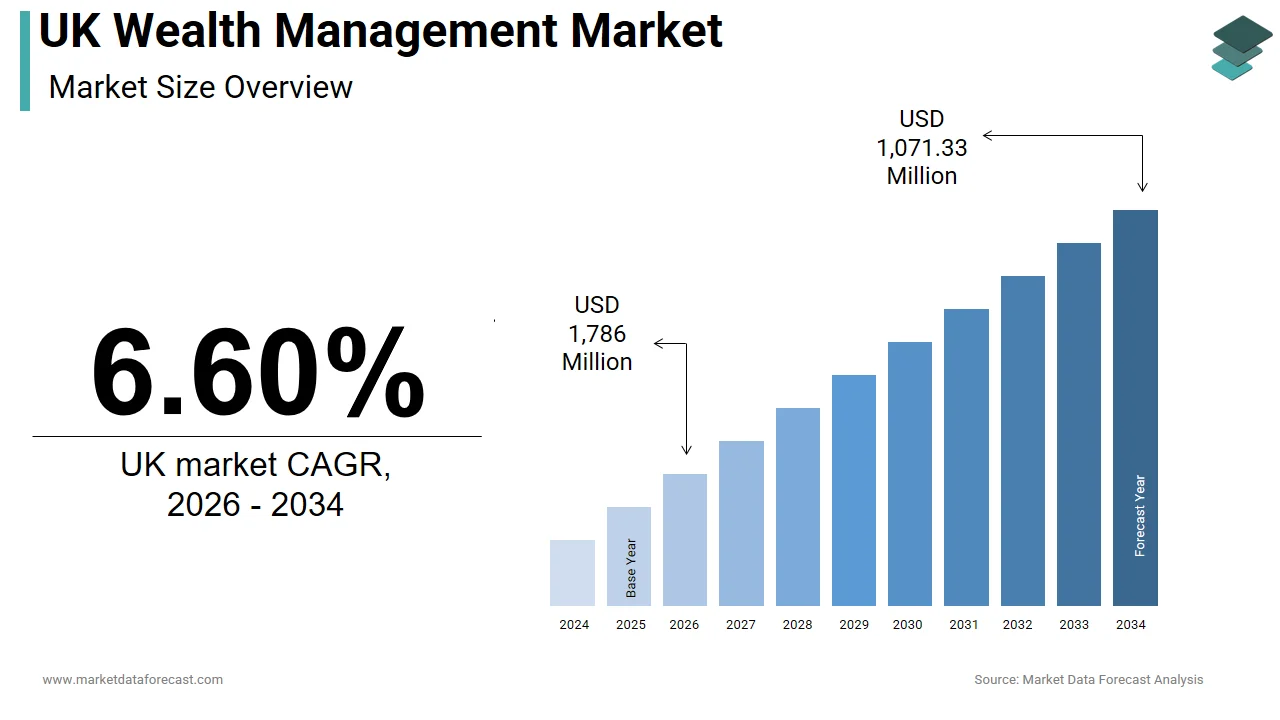
Wealth management is a comprehensive, tailored financial advisory service that helps individuals and families grow, protect, and pass on their wealth. This market operates within a sophisticated regulatory environment overseen by the Financial Conduct Authority, ensuring fiduciary standards and consumer protection remain paramount. The demographic landscape significantly influences demand. In addition, the Office for National Statistics (ONS) confirms that the UK's aging population has accelerated, with the number of individuals aged 65 and over exceeding 12.5 million, representing approximately 19% of the total population. This aging cohort holds substantial accumulated wealth requiring strategic preservation and intergenerational transfer solutions. London serves as a global financial hub attracting international capital due to its robust legal framework and deep liquidity pools. The proliferation of digital platforms has democratized access to investment tools, yet personalized advisory services remain critical for complex estate planning and tax optimization. HM Revenue and Customs shows that annual UK inheritance tax receipts achieved a record high of £8.5 billion in the latest fiscal year, underscoring a heightened demand for robust estate and succession planning. The shift towards sustainable investing reflects changing client values, with environmental, social, and governance criteria becoming integral to portfolio construction. Economic volatility necessitates active risk management strategies, while low-interest-rate environments historically drove the search for yield, although recent rate hikes have altered income-generation dynamics. Wealth creation is rapidly accelerating among entrepreneurs and technology professionals. To accommodate this, the market is adapting by delivering bespoke solutions that integrate holistic financial wellness and legacy-building objectives across generations.
MARKET DRIVERS
Accumulation of Wealth Among Aging Demographics And Baby Boomers
The accumulation of wealth among aging demographics, particularly baby boomers, is significantly boosting the United Kingdom's wealth management market. This growth is driven by the cohort's desire to preserve their capital and manage retirement income streams efficiently. The Office for National Statistics data confirms that households headed by individuals aged 55 to 64 hold the highest median total wealth, reaching £575,000 per household, primarily driven by accrued private pension value and net property wealth. This significant concentration of assets creates sustained demand for comprehensive financial planning services, including pension drawdown strategies, tax-efficient withdrawal methods, and long-term care funding solutions. As life expectancy increases, retirees require portfolios that generate sustainable income over potentially three decades, necessitating sophisticated asset allocation and risk management approaches. Wealth managers provide essential guidance on navigating complex pension regulations and maximizing state benefit entitlements while minimizing tax liabilities. The desire to leave a legacy for younger generations drives interest in trust structures and estate planning services, ensuring wealth transfer aligns with familial values and minimizes inheritance tax exposure. Professional advisors help clients balance immediate lifestyle needs with long-term preservation goals, addressing concerns about market volatility and inflation erosion. The complexity of managing diversified portfolios comprising real estate, equities, bonds, and alternative investments requires expert oversight to optimize returns and mitigate risks. This demographic increasingly relies on professional wealth management expertise as they transition from wealth accumulation to decumulation. Securing this professional guidance ensures financial stability and peace of mind throughout their retirement.
Rise of Entrepreneurial Wealth And Technology Sector Growth
The rise of entrepreneurial wealth and robust growth in the technology sector are further propelling the United Kingdom wealth management market forward. This creates a new class of affluent clients with complex financial needs. London remains a leading global tech hub with the technology sector contributing over 100 billion pounds annually to the UK economy, according to sources. Successful exits from initial public offerings and equity compensation packages generate substantial liquid wealth for founders, employees, and investors, requiring specialized management services. These newly affluent individuals often possess concentrated stock positions necessitating diversification strategies to mitigate single asset risk while optimizing tax efficiency through instruments like enterprise management incentives. Wealth managers provide tailored advice on structuring personal finances alongside business interests, ensuring alignment between corporate performance and personal wealth goals. The dynamic nature of tech wealth demands agile investment approaches incorporating alternative assets, venture capital opportunities, and global market exposure. Younger entrepreneurs prioritize digital integration, expecting seamless online platforms combined with high-touch advisory services for strategic decision making. Philanthropic ambitions among this group drive demand for impact investing and charitable giving structures integrating social values with financial objectives. The rapid pace of wealth creation in this sector requires proactive planning for liquidity events, estate structuring, and intergenerational transfer. The UK continues to foster innovation and startup ecosystems, and this inflow of new wealth sustains growth in the wealth management sector. Consequently, this drives innovation in service delivery and product offerings to meet evolving client expectations.
MARKET RESTRAINTS
Regulatory Burdens and Compliance Costs
Stringent regulatory burdens and escalating compliance costs are significant restraints to the United Kingdom wealth management market. This imposes operational complexities and financial pressures on firms. The Financial Conduct Authority enforces rigorous standards regarding consumer duty transparency and suitability assessments, requiring extensive documentation and monitoring processes. Compliance with anti-money laundering directives and know your customer regulations necessitates sophisticated screening systems and dedicated staff, increasing overhead expenses for providers. Small and medium-sized advisory firms struggle to absorb these fixed costs, potentially leading to market consolidation as larger entities achieve economies of scale. The introduction of the Consumer Duty regime mandates higher standards of care and outcome testing, requiring firms to redesign processes and invest in training and technology. Regulatory changes often occur with limited transition periods, forcing rapid adaptation and diverting resources from client service and business development. Cross-border servicing complications arise post Brexit as firms navigate divergent regulatory frameworks between the UK and the European Union, restricting access to certain client segments. The threat of substantial fines for noncompliance creates a risk-averse culture, potentially stifling innovation and limiting product diversity. Clients face increased administrative hurdles during onboarding and transaction processing, impacting user experience and satisfaction. The cumulative effect of these regulatory demands reduces profit margins and barriers to entry for new participants, constraining market dynamism and potentially limiting choice for consumers seeking specialized or niche wealth management services.
Fee Compression and Margin Pressure
Fee compression and margin pressure impede the expansion of the United Kingdom wealth management market. They intensify competition while clients become increasingly price-sensitive regarding advisory charges. The shift from commission-based models to fee-only structures following regulatory reforms has exposed the true cost of advice, leading clients to scrutinize value propositions more critically. Digital robo-advisors and passive investment platforms offer lower-cost alternatives, attracting mass affluent clients who previously relied on traditional advisors, eroding the client base for full-service firms. Industry data suggests average management fees have declined by approximately 15 percent over the past decade, forcing firms to operate with tighter margins. High operational costs, including technology infrastructure, talent acquisition, and regulatory compliance, further squeeze profitability, making it challenging to sustain viable business models for smaller practices. Clients demand greater transparency and justification for fees, requiring advisors to demonstrate tangible value through superior performance, personalized service, and holistic planning capabilities. The prevalence of price comparison tools empowers consumers to shop around, increasing churn rates and reducing client loyalty. Firms must continuously invest in efficiency-enhancing technologies to reduce cost to serve while maintaining high-quality interactions. The pressure to lower fees without compromising service quality creates a delicate balancing act, threatening the sustainability of traditional advisory models. This environment drives consolidation as larger firms leverage scale to absorb costs while smaller independents face existential challenges in remaining competitive and profitable in an increasingly commoditized landscape.
MARKET OPPORTUNITIES
Integration of Artificial Intelligence And Personalization
The integration of artificial intelligence and advanced personalization technologies is a key growth area for the United Kingdom wealth management market. This helps to enhance client engagement and operational efficiency. AI-driven algorithms analyze vast datasets to provide hyper-personalized investment recommendations, risk assessments, and financial planning scenarios tailored to individual client circumstances. Machine learning models predict client life events and behavioral patterns, enabling proactive advice and timely interventions that strengthen relationships and retention. Natural language processing powers chatbots and virtual assistants, handling routine inquiries and administrative tasks, freeing human advisors to focus on high-value strategic consultations. According to research, firms adopting AI technologies report up to 30 percent improvement in operational efficiency and significant reductions in manual errors. Personalized digital dashboards offer clients real-time visibility into their portfolio's performance metrics and goal progress, fostering transparency and trust. Robo advisory hybrid models combine automated portfolio management with human oversight, appealing to digitally native clients seeking cost-effective yet guided solutions. Data analytics enable segmentation and targeted marketing campaigns, improving acquisition costs and conversion rates. The ability to process complex tax and estate planning scenarios rapidly allows advisors to serve more clients effectively without compromising quality. As technology matures, AI will facilitate deeper insights into alternative investments and sustainable finance options, expanding service offerings. Embracing these innovations positions firms to meet evolving client expectations for seamless digital experiences while maintaining the human touch essential for complex wealth management decisions.
Expansion Into Sustainable and Impact Investing
The expansion into sustainable and impact investing offers significant opportunities for the United Kingdom wealth management market. This growth is driven by clients increasingly aligning their portfolios with environmental, social, and governance values. Demand for ESG-focused products has surged, with surveys indicating that over 60 percent of UK investors consider sustainability factors important in their investment decisions. Wealth managers develop specialized portfolios incorporating green bonds, renewable energy projects, and companies with strong labor practices, catering to this growing preference. Regulatory support through disclosure requirements enhances transparency, allowing advisors to substantiate sustainability claims and avoid greenwashing accusations. Impact investing enables clients to generate measurable social or environmental benefits alongside financial returns, appealing to philanthropically minded high-net-worth individuals. Thematic funds focusing on climate change, healthcare innovation, and social equality provide diversified exposure to long-term megatrends driving growth. Advisors utilize ESG scoring tools to assess portfolio alignment and identify areas for improvement, enhancing client confidence and engagement. Collaborations with fintech firms provide access to innovative, sustainable investment platforms and data analytics, improving product selection and monitoring. The transition to a low-carbon economy creates new asset classes and investment opportunities requiring specialized expertise that wealth managers can provide. By championing sustainable finance, firms differentiate themselves in a crowded market, attracting younger generations and institutional capital, and prioritizing responsible stewardship. This strategic pivot not only meets client demand but also contributes to broader societal goals, reinforcing the role of wealth management in driving positive change.
MARKET CHALLENGES
Talent Shortage and Succession Planning Issues
The shortage of skilled talent and complex succession planning issues are slowing the growth of the United Kingdom wealth management market. This threatens service continuity and growth potential. The industry faces an aging advisor workforce with a substantial proportion nearing retirement age, creating a knowledge gap and client relationship vacuum. Recruiting younger professionals proves difficult as competing sectors such as technology and finance offer attractive alternatives with different work cultures and compensation structures. The rigorous qualification requirements and regulatory responsibilities deter entry-level candidates, limiting the pipeline of new talent. Firms struggle to retain experienced advisors who may launch independent practices or join competitors offering better terms. Succession planning for boutique firms remains problematic as founders lack clear exit strategies or internal successors, leading to client attrition upon departure. The loss of institutional knowledge impacts service quality and client trust, particularly for complex estate and tax planning cases. Training and development programs require significant investment, yet do not guarantee retention in a competitive labor market. Remote working trends have expanded the talent pool geographically but introduced management and cultural integration challenges. The inability to secure qualified successors forces many small firms to sell to larger consolidators, reducing market diversity and potentially impacting personalized service levels. Addressing this structural challenge requires innovative recruitment strategies, mentorship programs, and flexible career pathways to attract and nurture the next generation of wealth management professionals.
Cybersecurity Threats and Data Privacy Risks
Cybersecurity threats and data privacy risks are major hurdles for the United Kingdom wealth management market. This is because firms handle sensitive financial and personal information that is attractive to cybercriminals. The increasing sophistication of phishing, ransomware, and social engineering attacks targets both institutions and individual advisors, compromising client data and financial assets. High-profile breaches damage reputations, erode client trust, and result in substantial regulatory fines under General Data Protection Regulation guidelines. Wealth managers must invest heavily in advanced encryption multi-factor authentication, and continuous monitoring systems to protect digital infrastructure. The shift to cloud-based platforms and remote working expands the attack surface, requiring robust endpoint security and employee training programs. Third-party vendor risks add complexity as firms rely on external technology providers who may have weaker security protocols. Regulatory expectations for incident reporting and response capabilities impose additional operational burdens and liability concerns. Clients demand assurance regarding data protection, influencing their choice of provider and requiring transparent communication about security measures. The cost of cybersecurity insurance has risen sharply, reflecting the heightened risk landscape impacting operational budgets. Balancing ease of access for clients with stringent security controls remains a delicate operational challenge. Failure to adequately address these vulnerabilities can lead to catastrophic financial losses and legal consequences, threatening the viability of firms. Maintaining resilience against evolving cyber threats requires constant vigilance, investment, and adaptation to safeguard client interests and maintain market integrity.
REPORT COVERAGE
| REPORT METRIC | DETAILS |
| Market Size Available | 2025 to 2034 |
| Base Year | 2025 |
| Forecast Period | 2026 to 2034 |
| Segments Covered | By End User, Client Type, Service Type, Deployment Model, and Region. |
| Various Analyses Covered | Global, Regional, and Country-Level Analysis, Segment-Level Analysis, Drivers, Restraints, Opportunities, Challenges; PESTLE Analysis; Porter’s Five Forces Analysis, Competitive Landscape, Analyst Overview of Investment Opportunities |
| Countries Covered | United Kingdom |
| Market Leaders Profiled | BlackRock, Vanguard, Charles Schwab, Fidelity Investments, Barclays Wealth, J.P. Morgan, Morgan Stanley, Goldman Sachs, UBS, Rathbones Group, HSBC UK, BNP Paribas. |
SEGMENTAL ANALYSIS
By End User Insights
In 2025, the private banks segment held the majority share of 53.5% of the United Kingdom wealth management market because of its comprehensive service offerings, strong brand reputation, and extensive global networks. These institutions provide integrated solutions combining banking, lending, investment management, and advisory services under one roof, catering to the holistic needs of high-net-worth clients. Major players such as HSBC, Barclays, and Coutts leverage their balance sheet strength to offer competitive lending rates for mortgages, yachts, and business acquisitions, enhancing client stickiness. The trust associated with established banking brands attracts conservative investors seeking stability and security for their assets. Private Banks invest heavily in technology platforms providing seamless digital experiences alongside personalized human interaction through dedicated relationship managers. Their global presence facilitates cross-border services for internationally mobile clients managing multi-currency portfolios and overseas properties. Regulatory compliance capabilities within large banks ensure adherence to stringent anti-money laundering and know your customer requirements, reducing operational risks for clients. The ability to offer exclusive access to initial public offerings, private placements, and structured products differentiates private banks from independent advisors. Consolidation trends see larger banks acquiring boutique firms to expand their wealth management capabilities and client base. Despite fee pressure, private banks maintain profitability through cross-selling other financial products and leveraging economies of scale. Their entrenched position in the market ensures they remain the primary choice for many affluent individuals seeking a one-stop shop for their financial needs.
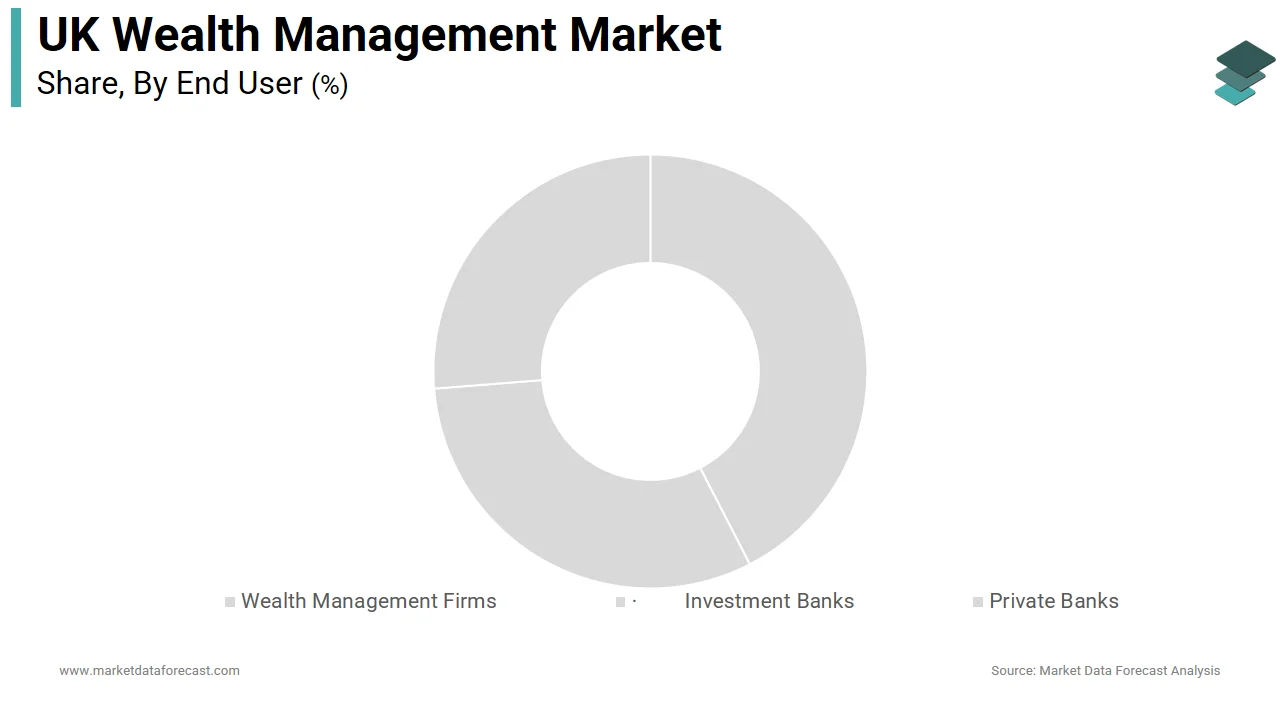
The independent wealth management firms segment is estimated to register the fastest CAGR of 6.1% between 2026 and 2034. This growth is fueled by client preference for unbiased advice and fiduciary standards that prioritize client interests over product sales. Unlike banks, these firms do not have proprietary products to push, allowing them to select best-in-class investments from across the market, enhancing portfolio performance and diversification. The rise of fee-transparent models appeals to cost-conscious clients who value clarity in charging structures and demonstrable value. Boutique firms offer highly personalized service with lower client-to-advisor ratios, fostering deeper relationships and tailored solutions for complex family dynamics. Agility allows these firms to adopt new technologies and niche strategies faster than larger institutional competitors, appealing to younger wealth holders. Consolidation activity sees larger independent groups acquiring smaller practices to achieve scale while maintaining local presence and service quality. Regulatory changes such as the Retail Distribution Review have leveled the playing field, enabling independent advisors to compete effectively on advice quality rather than product commissions. The focus on holistic financial planning, including lifestyle coaching and philanthropy, differentiates these firms from traditional banking services. Clients are increasingly demanding greater control and transparency in their portfolios. In response, independent wealth management firms continue to expand their market share by providing highly tailored, conflict-free advice.
By Client Type Insights
The high net worth individuals segment led the United Kingdom wealth management market and captured a 58.5% share in 2025. Its substantial investable assets and complex financial planning needs have contributed to the leading position of this segment. High Net Worth Individuals (HNWIs) are conventionally defined by global wealth benchmarks as holding between $1 million and $30 million in investable assets, excluding primary property, requiring sophisticated portfolio management and structural tax optimization. The Office for National Statistics (ONS) indicates that the top 10% of British households hold approximately 43% of total national wealth, while the top 20% control over 58%, highlighting a substantial addressable market for wealth advisory services. These clients seek personalized attention from dedicated relationship managers who can navigate intricate regulatory landscapes and provide access to exclusive investment opportunities such as private equity and hedge funds. The desire for intergenerational wealth transfer drives demand for trust structures and succession planning, ensuring legacy preservation while minimizing inheritance tax liabilities, which reached record levels recently, according to HM Revenue and Customs data. High net worth individuals often have diverse income streams, including business ownership, rental properties, and international investments, necessitating holistic advice that integrates all aspects of their financial lives. Their sensitivity to market volatility requires active risk management strategies and regular portfolio rebalancing to protect capital during economic uncertainty. The concentration of wealth in London and the South East further amplifies demand as these regions host a significant proportion of affluent residents seeking premium financial services. As this segment continues to grow through asset appreciation and entrepreneurial success, wealth managers prioritize tailored solutions that address their unique lifestyle and philanthropic goals, maintaining their dominance in the market.
The ultra-high net worth individuals segment is expected to exhibit a noteworthy CAGR of 7.6% from 2026 to 2034 due to the increasing number of billionaires and multi-millionaires in the UK, driven by successful technology exits, global business expansion, and robust property markets. Ultra High Net worth Individuals (UHNWIs) possess $30 million or more in investable assets, dictating highly bespoke solutions including family office structures, cross-border tax planning, luxury asset financing, and specialized art collection management. The complexity of their financial affairs necessitates coordination across multiple jurisdictions, tax regimes, and legal systems, driving demand for global wealth management expertise. London remains a preferred hub for ultra-high net worth families due to its stable political environment, world-class legal framework, and access to international talent. The rise of next-generation wealth holders who are more digitally savvy and value-driven prompts firms to innovate their service offerings with sustainable investing options and digital engagement tools. Philanthropy plays a significant role with many ultra-high net worth clients establishing charitable foundations requiring specialized advisory support for impact measurement and governance. The competitive landscape for this segment is intense as private banks and independent firms vie for relationships by offering exclusive access to alternative investments and networking opportunities. The UK continues to successfully attract and retain ultra-high-net-worth individuals, driven by accelerating global wealth creation. As a result, this segment remains the primary engine for revenue growth and innovation in the wealth management market.
By Service Type Insights
The investment management segment dominated the United Kingdom wealth management market and accounted for a 51.3% share in 2025. It forms the core function of preserving and growing client capital. This service encompasses portfolio construction, asset allocation, and active trading across equities, bonds, alternatives, and cash equivalents tailored to individual risk profiles and return objectives. The Financial Conduct Authority regulates investment activities, ensuring transparency and suitability, which builds client trust in professional management capabilities. Market volatility and inflationary pressures drive clients to seek expert guidance in navigating complex financial landscapes, optimizing returns while mitigating downside risks. The shift towards passive investing has been counterbalanced by demand for active management in alternative asset classes such as private credit, real estate, and infrastructure, where skilled managers can generate alpha. Institutional quality investment strategies previously accessible only to large funds are now available to high-net-worth individuals through pooled vehicles and segregated mandates. Performance fees and management charges constitute a significant portion of revenue for wealth management firms, making investment management the financial backbone of the industry. Technological advancements in algorithmic trading and risk analytics enhance decision-making processes, allowing managers to respond swiftly to market changes. Clients increasingly demand transparency in fee structures and performance attribution, prompting firms to adopt advanced reporting tools. The need for diversified international exposure grows as global markets become more interconnected. Consequently, professional investment management remains crucial for wealthy families and individuals to achieve their long-term financial goals.
The tax advisory segment is predicted to witness the highest CAGR of 9.8% during the forecast period, owing to increasing complexity in tax legislation, including changes to inheritance tax, capital gains tax, and dividend allowances, which require specialized knowledge to navigate effectively. High net worth individuals face heightened scrutiny from HM Revenue and Customs regarding offshore assets and beneficial ownership, necessitating rigorous compliance and reporting standards. The introduction of new digital reporting requirements and anti-avoidance measures compels clients to seek proactive advice to structure their affairs efficiently and legally. Cross-border taxation issues arise frequently for clients with international residences, businesses, or investments requiring expertise in double taxation treaties and foreign account reporting. Estate planning strategies increasingly integrate tax considerations to minimize liabilities during wealth transfer, ensuring maximum preservation for beneficiaries. The rise of entrepreneurial wealth creates complex scenarios involving share disposals, enterprise management incentives, and corporate restructuring requiring tailored tax solutions. Wealth management firms expand their tax advisory teams to capture this growing demand, offering integrated services that combine investment planning with tax efficiency. Regulatory changes such as the non-dom regime reforms create uncertainty, prompting clients to review their status and plan accordingly. As tax authorities leverage data analytics to identify discrepancies, the value of professional tax advisory in ensuring compliance and optimizing outcomes becomes indispensable for affluent clients.
COUNTRY ANALYSIS
UK Wealth Management Market Analysis
The United Kingdom was the top performer in the United Kingdom wealth management market share in 2025. This supremacy of the country’s market is driven by London’s status as a leading international financial hub with deep liquidity pools, robust legal frameworks, and a concentrated cluster of professional services expertise. The market status reflects maturity and resilience, characterized by sophisticated regulatory oversight from the Financial Conduct Authority and a culture of innovation in financial products. According to data from the Office for National Statistics (ONS) Wealth and Assets Survey, total household wealth in Great Britain reached an estimated £17 trillion during the 2020–2022 period, representing an asset base equivalent to roughly 7.5 times the national GDP. High concentrations of ultra-high net worth individuals attracted by favorable tax regimes for non-domiciliaries, although undergoing reform, and world-class educational institutions sustain demand for premium services. The UK's common law system offers certainty in contract enforcement and trust structures, making it attractive for international estate planning. Brexit has introduced some friction in serving EU clients, but firms have adapted by establishing continental subsidiaries while retaining core operations in London. Government initiatives promoting fintech and green finance drive innovation in digital wealth platforms and sustainable investing products. The presence of major global banks, independent boutiques, and family offices creates a competitive yet collaborative ecosystem. Strong talent pipelines from top universities ensure a steady supply of qualified professionals. As global wealth shifts eastwards, the UK leverages its time zone connectivity and language advantages to serve Asian and Middle Eastern clients. Consequently, it maintains its leadership through continuous adaptation and strategic excellence in high-value financial services.
COMPETITIVE LANDSCAPE
The competitive landscape in the United Kingdom wealth management market features intense rivalry among large private banks, independent wealth managers, and emerging digital platforms. Established institutions leverage brand reputation, global networks, and balance sheet strength to attract high-net-worth clients seeking stability and comprehensive services. Independent firms compete on unbiased advice, personalized attention, and fiduciary standards, appealing to clients, prioritizing transparency and conflict-free recommendations. Digital robo-advisors disrupt the mass affluent segment with low-cost automated solutions, forcing traditional players to innovate their service delivery models. Differentiation occurs through specialized expertise in areas such as sustainable investing, alternative assets, and cross-border planning. Fee pressure remains significant as clients demand greater value and transparency, prompting firms to justify charges through superior performance and holistic advice. Regulatory compliance acts as a barrier to entry, favoring larger entities with resources to manage complex requirements. Consolidation trends continue as firms seek scale to absorb technology costs and attract top talent. The market demands continuous adaptation to changing client expectations, technological advancements, and regulatory shifts, driving innovation and strategic partnerships across the sector.
KEY MARKET PLAYERS
The major players in the UK wealth management market include
- BlackRock
- Vanguard
- Charles Schwab
- Fidelity Investments
- Barclays Wealth
- P. Morgan
- Morgan Stanley
- Goldman Sachs
- UBS
- Rathbones Group
- HSBC UK
- BNP Paribas
TOP PLAYERS IN THE MARKET
- HSBC UK maintains a prominent position in the wealth management sector by leveraging its extensive global network to serve high-net-worth individuals and international clients. The bank offers comprehensive services, including investment management, estate planning, and private banking solutions tailored to complex financial needs. Recent strategic initiatives focus on digital transformation with the launch of enhanced mobile platforms that provide seamless access to portfolio insights and advisory services. HSBC has expanded its sustainable investing offerings, aligning with client demand for environmental, social, and governance-aligned portfolios. The institution also strengthens its presence through targeted recruitment of specialized advisors in key urban centers. By integrating advanced data analytics into client relationship management, HSBC improves personalization and service efficiency. These actions reinforce its reputation as a trusted partner for global wealth preservation and growth, ensuring competitive advantage in the sophisticated UK market.
- Barclays Wealth contributes significantly to the UK market by providing integrated financial solutions that combine banking, lending, and investment advice for affluent clients. The division focuses on delivering personalized strategies for entrepreneurs, families, and business owners requiring holistic financial planning. Recent actions include the expansion of its digital advisory capabilities, allowing clients to monitor investments and interact with advisors through secure online channels. Barclays has strengthened its alternative investment platform, offering access to private equity and real estate opportunities previously reserved for institutional investors. The bank also invests in talent development, ensuring advisors possess deep expertise in tax efficiency and succession planning. Partnerships with fintech firms enhance operational efficiency and client experience through automated reporting tools. These efforts solidify Barclays' position as a leading provider of bespoke wealth management services that address the evolving needs of modern affluent households across the region.
- Rathbones Group operates as a leading independent wealth manager in the United Kingdom, known for its discretionary investment management and financial planning services. The firm serves private clients, charities, and professional partners with a focus on long-term capital preservation and income generation. Recent strategic moves include the acquisition of smaller boutique firms to expand its geographic reach and advisor base in underserved regions. Rathbones has invested heavily in technology infrastructure to support hybrid advisory models combining human expertise with digital convenience. The group also enhances its sustainable investment framework by integrating rigorous environmental, social, and governance criteria into all portfolio constructions. Training programs for staff emphasize technical proficiency and client communication skills, ensuring high service standards. These initiatives strengthen Rathbones' market position by delivering consistent performance and personalized care that builds lasting trust and loyalty among its diverse client base.
TOP STRATEGIES USED BY KEY MARKET PARTICIPANTS
Key players in the United Kingdom wealth management market employ digital transformation strategies to enhance client engagement and operational efficiency through advanced platforms. They invest in artificial intelligence and data analytics to provide personalized investment recommendations and proactive financial planning insights. Firms focus on expanding sustainable and impact investing offerings to meet growing client demand for environmentally responsible portfolios. Strategic acquisitions of boutique advisors allow larger institutions to broaden their geographic footprint and specialized expertise. Enhancing cybersecurity measures ensures the protection of sensitive client data and maintains trust in digital interactions. Talent retention programs prioritize continuous professional development and competitive compensation to address industry-wide staffing challenges. Integration of holistic financial planning tools enables advisors to address complex estate tax and legacy needs comprehensively. These multifaceted approaches enable participants to differentiate their services and maintain competitiveness in a rapidly evolving regulatory and technological landscape.
MARKET SEGMENTATION
This research report on the UK wealth management market has been segmented and sub-segmented based on the following categories.
By End User
- Wealth Management Firms
- Investment Banks
- Private Banks
By Client Type
- High Net Worth Individuals
- Ultra High Net Worth Individuals
- Institutional Investors
- Retail Investors
By Service Type
- Investment Management
- Financial Planning
- Tax Advisory
- Estate Planning
By Deployment Model
- On-Premise
- Cloud-Based
- Hybrid