- Product Description Description
- Table of Contents TOC
- List of Table & Figure LOT
- Get Free Sample PDF Sample PDF
Market Size, 2025
$1,371.54 BnMarket Estimate, 2026
$1,609.20 BnMarket Forecast, 2034
$5,767.60 BnCAGR, 2026–2034
17.30%U.S. Online Shopping Market Report Summary
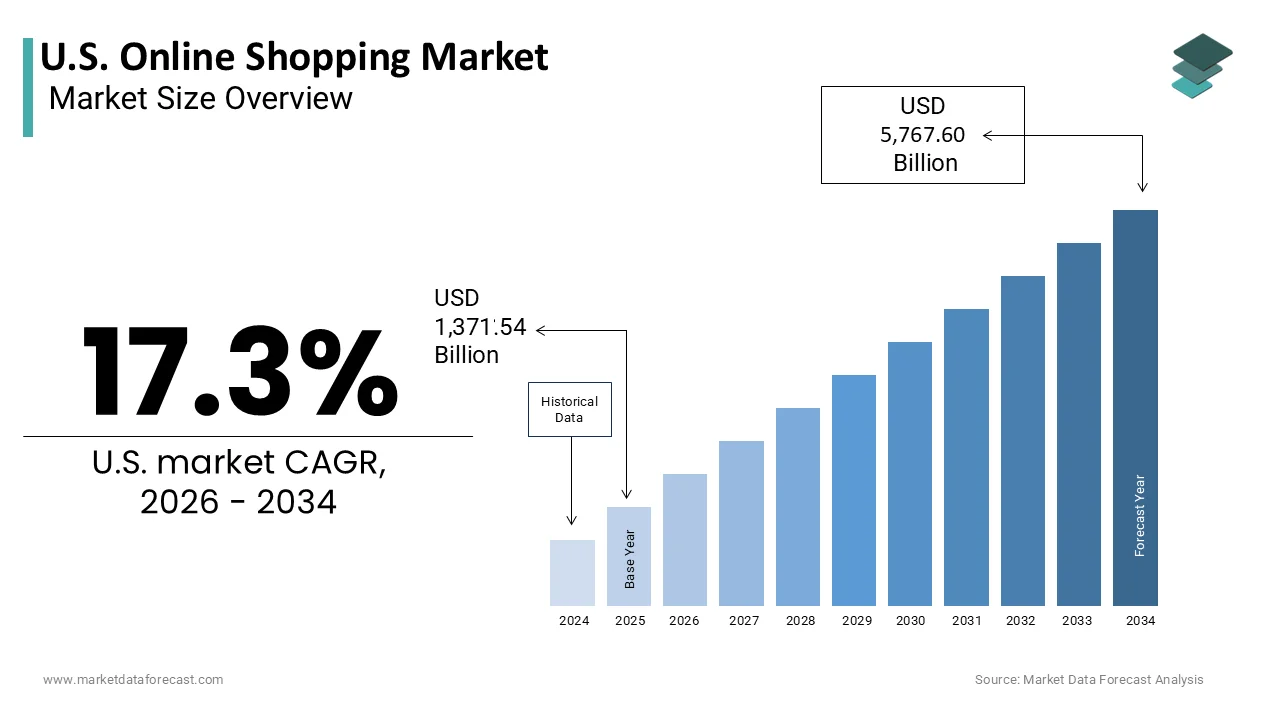
The U.S. Online Shopping Market was valued at USD 1,371.54 billion in 2025 and is projected to reach USD 5,767.60 billion by 2034, growing from USD 1,609.20 billion in 2026 at a CAGR of 17.30% during the forecast period. Growth is driven by increasing smartphone adoption, rapid expansion of digital payment solutions, advancements in logistics and fulfillment infrastructure, and rising consumer preference for convenient online purchasing. Cybersecurity concerns, high product return rates, and supply chain complexities are shaping market dynamics.
Key Market Trends
- Rising adoption of mobile commerce through smartphones and retail applications.
- Growing integration of augmented reality (AR) to improve product visualization and customer engagement.
- Increasing investment in automated fulfillment centers and same-day delivery services.
- Expansion of digital wallets and contactless payment solutions for faster, secure transactions.
- Rising penetration of online shopping into rural and underserved regions through improved broadband connectivity.
Segmental Insights
- Based on product category, electronics held the majority share in 2025, driven by strong consumer demand for smartphones, laptops, home electronics, and the convenience of online product comparison.
- Based on device type, smartphones held the largest share in 2025, supported by widespread smartphone adoption, mobile-optimized shopping platforms, and seamless digital payment integration.
- Digital wallets are the fastest-growing payment method segment, projected to register a CAGR of 20.6%, driven by increasing consumer preference for secure, contactless, and one-click payment experiences.
Regional Insights
- California led the market in 2025, supported by its strong technology ecosystem, high internet penetration, and concentration of leading e-commerce companies.
- Texas holds a significant share, driven by its large consumer base, expanding logistics infrastructure, and growing online retail adoption.
- New York is a prominent market, supported by high consumer spending, advanced digital infrastructure, and widespread omnichannel retail adoption.
- Florida contributes notably due to its expanding population, increasing e-commerce penetration, and strong retail sector.
- Groceries is the fastest-growing product category segment, projected to register a CAGR of 19.4%, driven by increasing consumer preference for online grocery delivery, improved cold-chain logistics, and expanding same-day delivery services.
Competitive Landscape
The market is highly competitive, with global e-commerce leaders, omnichannel retailers, and digital-native brands competing on pricing, product assortment, delivery speed, and customer experience. Companies are investing heavily in artificial intelligence, logistics automation, omnichannel capabilities, augmented reality technologies, and personalized shopping experiences to strengthen customer loyalty and maintain competitive advantage in the rapidly evolving digital commerce landscape.Prominent players in the market include Amazon.com, Inc., Walmart Inc., eBay Inc., Apple Inc., Target Corporation, The Home Depot, Inc., Costco Wholesale Corporation, Best Buy Co., Inc., Etsy, Inc., Shopify Inc., Temu, and Shein Group Ltd.
U.S. Online Shopping Market Size
The U.S. Online Shopping Market was valued at USD 1,371.54 billion in 2025, is estimated to reach USD 1,609.20 billion in 2026, and is projected to reach USD 5,767.60 billion by 2034, growing at a CAGR of 17.30% from 2026 to 2034.
Online shopping represents a robust digital commerce ecosystem where consumers purchase goods and services through internet-connected devices. This sector has evolved from a supplementary retail channel into a primary mode of consumption, driven by technological advancements and shifting consumer behaviors. The infrastructure supporting this market includes sophisticated logistics networks, secure payment gateways, and user-friendly interfaces that facilitate seamless transactions. According to the U.S. Census Bureau, e-commerce sales accounted for 15.6% of total retail sales in the fourth quarter of 2023, indicating a significant integration of digital platforms into daily economic activity. Furthermore, the Pew Research Center states that 90% of American adults use the internet, with high broadband penetration enabling consistent access to online stores. The proliferation of smartphones has further accelerated this trend, as mobile devices become the preferred medium for browsing and purchasing. As per the Federal Reserve Bank of St. Louis, the convenience of home delivery and the ability to compare prices instantly have fundamentally altered consumer expectations regarding speed and value. Retailers respond by optimizing supply chains and leveraging data analytics to personalize shopping experiences. The market is characterized by intense competition among established retailers and direct-to-consumer brands that utilize social media and digital marketing to reach audiences. Regulatory frameworks concerning data privacy and consumer protection also shape operational strategies. This dynamic environment fosters continuous innovation in fulfillment technologies, such as automated warehouses and drone delivery systems. The convergence of digital convenience and physical retail capabilities defines the current state of online shopping in the U.S.
MARKET DRIVERS
Ubiquitous Smartphone Adoption Facilitates Seamless Mobile Commerce Experiences
The widespread ownership of smartphones is fuelling the growth of the U.S. online shopping market. Mobile devices have transformed from communication tools into powerful commerce platforms that offer intuitive interfaces and secure payment options. According to the Pew Research Center, 85% of Americans own a smartphone, and this provides the necessary hardware infrastructure for mobile commerce growth. This high penetration rate ensures that the vast majority of the population has immediate access to online retailers without the need for desktop computers. Data from Statista indicates that mobile commerce accounts for over 40% of total e-commerce sales in the U.S., reflecting the shift in consumer preference toward handheld devices. The convenience of browsing products during commutes or leisure time encourages impulse purchases and frequent engagement with retail apps. Furthermore, advancements in mobile technology, such as faster processors and high-resolution screens, enhance the visual appeal of product listings, making online shopping more attractive. As per the National Retail Federation, retailers who optimize their websites for mobile devices see higher conversion rates and customer satisfaction scores. The integration of digital wallets and biometric authentication simplifies the checkout process, reducing friction and cart abandonment. Additionally, push notifications and personalized alerts keep users engaged with brands, driving repeat visits. The seamless integration of social media platforms with shopping features further amplifies this effect, allowing users to purchase directly from ads. These factors collectively establish smartphones as the primary gateway to online shopping, sustaining market expansion.
Enhanced Logistics Infrastructure Enables Rapid and Reliable Delivery Services
The development of advanced logistics and fulfillment infrastructure significantly drives the U.S. online shopping market by meeting consumer expectations for speed and reliability. Modern shoppers prioritize fast delivery times, often expecting orders to arrive within one or two days, which necessitates efficient supply chain operations. According to the Council of Supply Chain Management Professionals, logistics costs in the U.S. represent approximately 8% of GDP, highlighting the substantial investment in transportation and warehousing. Major retailers have established extensive distribution networks with fulfillment centers located near urban populations to minimize transit times. Data from the U.S. Postal Service shows that package volume has increased by 15% annually, driven largely by e-commerce demand. This growth prompts continuous innovation in last-mile delivery solutions, including autonomous vehicles and drone technology. As per McKinsey, companies that offer same-day or next-day delivery experience higher customer retention rates and increased average order values. The ability to track packages in real time also enhances transparency and trust between consumers and retailers. Furthermore, the expansion of third-party logistics providers allows smaller businesses to compete with larger entities by accessing sophisticated delivery networks. The reliability of these services reduces the hesitation associated with online purchases, particularly for time-sensitive items. Consequently, the robust logistics framework supports the scalability of online shopping by ensuring that products reach customers efficiently and consistently.
MARKET RESTRAINTS
Cybersecurity Threats and Data Privacy Concerns Erode Consumer Trust
Persistent cybersecurity threats and growing concerns about data privacy are significant restraints on the U.S. online shopping market by undermining consumer confidence. Online transactions require the sharing of sensitive personal and financial information, which makes shoppers vulnerable to identity theft and fraud. According to the Federal Trade Commission, reports of identity theft reached 1.1 million cases in 2022, with many incidents linked to online shopping scams. These security breaches create hesitation among potential buyers who fear the misuse of their data. Data from the Ponemon Institute indicates that the average cost of a data breach in the retail sector exceeds 3 million dollars, reflecting the severity of these incidents. High-profile attacks on major retailers further amplify public anxiety, leading to decreased willingness to share information. As per the Pew Research Center, 60% of Americans believe that their personal data is less secure now than it was five years ago. This perception discourages some consumers from adopting new digital payment methods or shopping with lesser-known brands. Additionally, complex privacy policies and unclear data usage practices confuse users, making it difficult for them to make informed decisions. The lack of uniform federal data protection laws adds to the uncertainty, as regulations vary by state. Consequently, retailers must invest heavily in security measures and transparent communication to rebuild trust. Until consumers feel fully protected against digital threats, these concerns will continue to limit the full potential of online shopping adoption.
High Return Rates and Logistical Complexities Increase Operational Costs
The high frequency of product returns and the associated logistical complexities pose a major restraint on the U.S. online shopping market by increasing operational costs for retailers. Unlike physical stores where customers can inspect items before purchase, online shopping relies on images and descriptions, which may not accurately represent the product. According to the National Retail Federation, the average return rate for online purchases is approximately 20%, compared to less than 10% for brick-and-mortar stores. This disparity creates a significant burden on reverse logistics systems, requiring efficient processing of returned goods. Data from Appriss Retail shows that the cost of processing returns can exceed 60% of the original shipping expense due to inspection, restocking, and potential disposal. Many returned items cannot be resold as new, leading to inventory losses and environmental waste. As per the Environmental Protection Agency, millions of tons of returned merchandise end up in landfills annually, highlighting the sustainability challenge. Furthermore, generous return policies, while attractive to consumers, can be exploited by fraudulent actors, resulting in additional financial losses. The complexity of managing returns across multiple channels also strains customer service resources, leading to potential dissatisfaction. Retailers often hesitate to expand their online offerings due to these profitability pressures. Consequently, the inefficiency of the return process acts as a brake on market growth, forcing companies to balance customer convenience with operational viability.
MARKET OPPORTUNITIES
Integration of Augmented Reality Technologies Enhances Product Visualization
The integration of augmented reality (AR) technologies presents a significant opportunity for the U.S. online shopping market by addressing the limitation of physical inspection. AR allows consumers to visualize products in their own environment or on themselves before making a purchase decision. According to Shopify, merchants who enable augmented reality features see a 94% higher conversion rate compared to those who do not. This technology reduces uncertainty and increases consumer confidence, particularly for categories such as furniture, cosmetics, and apparel. Data from Retail Perceptions indicates that 61% of shoppers prefer to buy from retailers that offer augmented reality experiences. By enabling virtual try-ons and room placements, AR minimizes the likelihood of returns due to mismatched expectations. As per the International Data Corporation, spending on AR solutions in retail is projected to grow by 30% annually as brands seek competitive advantages. The immersive nature of these experiences also increases engagement time and brand loyalty. Furthermore, the widespread availability of AR-capable smartphones ensures broad accessibility for consumers. Retailers can leverage this technology to differentiate themselves in a crowded market by offering interactive and personalized shopping journeys. The ability to reduce return rates through better visualization also improves profitability. Consequently, augmented reality represents a transformative opportunity that enhances the online shopping experience and drives sales growth.
Expansion of Online Shopping Into Rural And Underserved Markets
The expansion of online shopping into rural and underserved markets offers a substantial opportunity for growth in the U.S., driven by improved internet connectivity and logistics reach. Historically, rural areas had limited access to diverse retail options, but digital platforms bridge this gap by providing equal access to goods. According to the Federal Communications Commission, broadband access in rural America has increased significantly, with over 80% of rural households now having access to high-speed internet. This connectivity enables residents to participate in the digital economy and shop online with ease. Data from the U.S. Department of Agriculture shows that rural households spend a higher%age of their income on online purchases compared to urban counterparts due to limited local retail variety. As per the National Rural Electric Cooperative Association, investments in rural broadband infrastructure continue to expand, reaching previously disconnected communities. Retailers can tap into this underserved demographic by optimizing their delivery networks and offering tailored marketing campaigns. The lack of physical store presence in these areas reduces competition for online retailers, allowing them to capture loyal customer bases. Furthermore, government initiatives aimed at closing the digital divide support sustained growth in these regions. By focusing on inclusive access, online shopping platforms can expand their total addressable market and drive revenue from new customer segments. This expansion not only boosts sales but also promotes economic equity by providing rural consumers with greater choice and convenience.
MARKET CHALLENGES
Intense Price Competition Compresses Profit Margins For Retailers
Intense price competition among online retailers presents a major challenge to the U.S. online shopping market by compressing profit margins and forcing continuous discounting. The transparency of online pricing allows consumers to compare costs across multiple platforms instantly, leading to a "race to the bottom." According to the Bureau of Labor Statistics, the consumer price index for goods sold online often shows lower inflation rates than physical stores due to aggressive pricing strategies. Data from Jungle Scout indicates that over 50% of Amazon sellers engage in price wars to maintain visibility and sales volume. This environment makes it difficult for smaller retailers to compete with giants who can absorb lower margins through economies of scale. As per the Harvard Business Review, constant discounting devalues brands and conditions consumers to wait for sales rather than paying full price. The pressure to offer free shipping and easy returns further exacerbates cost pressures, reducing overall profitability. Retailers must invest heavily in marketing and technology to differentiate themselves beyond price, which increases operational expenses. Furthermore, the rise of private-label brands by major platforms intensifies competition for third-party sellers. Consequently, maintaining sustainable profit levels becomes increasingly challenging, requiring retailers to innovate in supply chain efficiency and customer experience. This dynamic creates a volatile market environment where financial stability is constantly tested by competitive pressures.
Supply Chain Disruptions and Inventory Management Inconsistencies
Supply chain disruptions and inventory management inconsistencies pose a significant challenge to the U.S. online shopping market by affecting product availability and delivery reliability. Global events, such as pandemics, geopolitical tensions, and natural disasters, can interrupt the flow of goods, leading to stockouts and delays. According to the Institute for Supply Management, the manufacturing PMI index frequently fluctuates, indicating volatility in production and supply levels. Data from the Council of Supply Chain Management Professionals shows that logistics performance indices have declined in recent years due to port congestion and labor shortages. These disruptions force online retailers to hold higher safety stocks, which increases carrying costs and ties up capital. As per the Wall Street Journal, many retailers faced billions of dollars in excess inventory following supply chain rebounds, leading to heavy markdowns. The inability to predict demand accurately results in either lost sales from stockouts or financial losses from overstocking. Furthermore, the complexity of managing multi-channel inventory systems increases the risk of errors and fulfillment delays. Customers expect real-time accuracy in stock availability, and any discrepancy leads to dissatisfaction and lost trust. Retailers must invest in advanced forecasting tools and diversified supplier networks to mitigate these risks. However, the inherent unpredictability of global supply chains remains a persistent challenge that impacts operational efficiency and customer satisfaction in the online shopping sector.
REPORT COVERAGE
| REPORT METRIC | DETAILS |
| Market Size Available | 2025 to 2034 |
| Base Year | 2025 |
| Forecast Period | 2026 to 2034 |
| Segments Covered | By Product Category, Device Type, Payment Method, and Region. |
| Various Analyses Covered | Global, Regional and Country-Level Analysis, Segment-Level Analysis, Drivers, Restraints, Opportunities, Challenges; PESTLE Analysis; Porter’s Five Forces Analysis, Competitive Landscape, Analyst Overview of Investment Opportunities |
| Countries Covered | California, Washington, Oregon, New York, United States |
| Market Leaders Profiled | Amazon.com, Inc., Walmart Inc., eBay Inc., Apple Inc., Target Corporation, The Home Depot, Inc., Costco Wholesale Corporation, Best Buy Co., Inc., Etsy, Inc., Shopify Inc., Temu, Shein Group Ltd. |
SEGMENTAL ANALYSIS
By Product Category Insights
The electronics segment held the dominant position in the U.S. online shopping market by capturing the highest share of the U.S. online shopping market in 2025. The growth of the electronics segment in the U.S. market is mainly driven by high consumer demand for technological devices, the convenience of comparing specifications online, and the rapid pace of technological innovation, which encourages frequent upgrades of smartphones, laptops, and home entertainment systems. According to the Consumer Technology Association, consumer technology sales in the U.S. reached 500 billion dollars in 2023, with a significant portion purchased through digital channels. This high value per transaction makes electronics a major contributor to overall e-commerce revenue. Data from Statista indicates that electronics and media account for approximately 20% of total online retail sales, reflecting the strong preference for purchasing these items digitally. Consumers benefit from detailed product reviews and comparison tools that are readily available on e-commerce platforms, helping them make informed decisions about complex technical products. As per the National Retail Federation, major shopping events, such as Black Friday and Cyber Monday, see electronics leading in sales volume due to aggressive discounts and promotions. Furthermore, the availability of extended warranties and flexible financing options online enhances the appeal of purchasing high-ticket items remotely. The widespread adoption of smart home devices also contributes to this segment's growth as consumers seek to automate their living spaces. These factors collectively ensure that electronics remain the largest product category by revenue in the online shopping landscape.
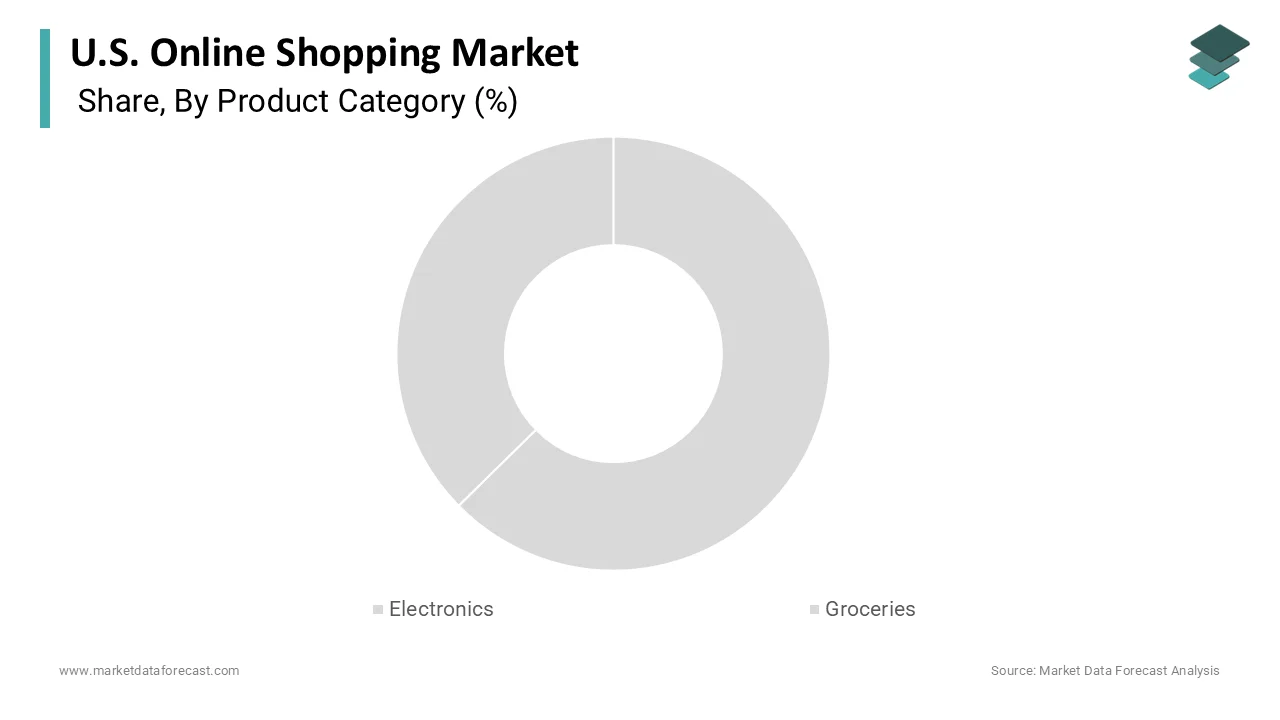
However, the groceries segment is a promising segment and is estimated to expand at a CAGR of 19.4% during the forecast period owing to the shifting consumer behavior toward convenience and the improved reliability of cold-chain logistics. The pandemic accelerated the adoption of online grocery shopping, and this habit has persisted as retailers enhance their delivery infrastructure. According to the Food Marketing Institute, online grocery sales have stabilized at levels significantly higher than pre-pandemic figures, indicating a permanent shift in purchasing habits. Data from the U.S. Department of Agriculture shows that household spending on food away from home has decreased, while spending on food at home has increased, with a growing share of the latter occurring online. The integration of same-day delivery services by major retailers and third-party platforms has removed previous barriers related to freshness and timing. As per McKinsey, consumers value the time savings associated with online grocery shopping, particularly for routine purchases and bulk items. Furthermore, the expansion of subscription models for essential goods encourages repeat purchases and customer loyalty. The ability to easily compare prices and access a wider variety of products, including organic and specialty items, also drives adoption. These operational improvements and changing lifestyle preferences position groceries as the most dynamic and rapidly expanding segment in the online retail sector.
By Device Type Insights
The smartphones segment accounted for the highest share of the U.S. online shopping market in 2025. The growth of the smartphone segment in the U.S. market is attributed to their ubiquity and the seamless user experience they offer for browsing and purchasing. The primary driver of this dominance is the high penetration of mobile devices and the increasing sophistication of mobile commerce applications. According to the Pew Research Center, 85% of Americans own a smartphone, providing a vast base of potential mobile shoppers. This accessibility allows consumers to shop during commutes, breaks, or leisure time, integrating commerce into daily routines. Data from Statista indicates that mobile devices account for over 60% of all e-commerce traffic in the U.S., highlighting the shift away from desktop computers. The development of responsive web design and dedicated apps ensures that users enjoy intuitive navigation and fast loading times, which are critical for conversion. As per the National Retail Federation, retailers who optimize for mobile see significantly higher engagement rates and lower bounce rates. The integration of digital wallets and biometric authentication simplifies the checkout process, reducing friction and cart abandonment. Furthermore, social media platforms are increasingly shoppable directly from mobile feeds, driving impulse purchases. The convenience of receiving push notifications for deals and order updates also enhances user retention. These technological and behavioral factors establish smartphones as the primary device for online shopping, driving the majority of transaction volume and frequency.
On the other hand, the tablets segment is predicted to showcase a prominent CAGR in the U.S. online shopping market during the forecast period owing to their unique balance of portability and screen real estate. This segment is gaining traction as consumers seek a more immersive shopping experience than smartphones offer, without the bulk of laptops. The primary factor fueling this growth is the increasing use of tablets for media consumption and leisure browsing, which naturally transitions into shopping activities. According to the International Data Corporation, tablet shipments in the U.S. have stabilized, with a focus on higher-end models that support advanced e-commerce features. Data from Adobe Analytics shows that tablet users have higher average order values compared to smartphone users, likely due to the larger screen size allowing for better product visualization. As per the Consumer Electronics Association, tablets are increasingly used for research and comparison shopping, particularly for high-consideration items such as furniture and apparel. The enhanced display quality and processing power enable richer content, such as video demonstrations and augmented reality features, which enhance decision-making. Furthermore, the adoption of tablets among older demographics who prefer larger text and easier navigation contributes to this growth. Retailers are optimizing their platforms for tablet interfaces to capture this engaged audience. The combination of comfort and functionality positions tablets as a rapidly growing channel for online retail transactions.
By Payment Method Insights
The credit and debit cards segment accounted for the largest share of the U.S. online shopping market in 2025 due to the entrenched financial infrastructure that supports card-based transactions across virtually all e-commerce platforms. According to the Federal Reserve Bank of Boston, credit and debit cards account for approximately 70% of all noncash payments in the U.S., reflecting their central role in consumer finance. Data from the Nilson Report indicates that card fraud rates have decreased due to improved security measures, such as EMV chips and tokenization, enhancing consumer confidence in online usage. The ability to earn reward points, cash back, and travel miles incentivizes consumers to use credit cards for online purchases. As per J.D. Power, customers appreciate the purchase protection and dispute resolution services offered by card issuers, which mitigate the risks associated with online shopping. Furthermore, the seamless integration of card details into browser autofill features and digital wallets simplifies the checkout process. The universal acceptance of cards ensures that consumers can shop at any online retailer without needing alternative payment accounts. These factors collectively sustain the leadership of credit and debit cards as the preferred funding source for online transactions, driving consistent volume and reliability.
However, the digital wallets segment is growing exponentially and is likely to witness a CAGR of 20.6% during the forecast period owing to the rising demand for speed and security. This segment includes services such as Apple Pay, Google Pay, and PayPal, which store payment credentials securely and facilitate one-click checkout. The primary factor fueling this growth is the reduction of friction at the point of sale, which significantly lowers cart abandonment rates. According to Juniper Research, the number of digital wallet users in the U.S. is expected to exceed 100 million by 2025 as consumers prioritize convenience. Data from Visa shows that transactions using digital wallets are processed faster and have lower fraud rates compared to traditional card-entry methods. The integration of biometric authentication, such as fingerprint and facial recognition, adds an extra layer of security that appeals to cautious shoppers. As per the National Retail Federation, retailers who offer digital wallet options see higher conversion rates, particularly on mobile devices where typing card details is cumbersome. Furthermore, the ability to store multiple payment methods and loyalty cards in one place enhances the user experience. The rise of "buy now, pay later" features within digital wallets also attracts younger demographics seeking flexible payment options. These advantages position digital wallets as the most dynamic and rapidly adopted payment solution in the e-commerce ecosystem.
COUNTRY LEVEL ANALYSIS
U.S.
The U.S. holds the largest share of the global online shopping market, and this dominant position is mainly driven by a highly developed digital infrastructure, high disposable income, and a strong culture of consumerism. The market status in the region is characterized by intense competition among major retailers and innovative direct-to-consumer brands that continuously enhance the customer experience. A primary driving factor for this leadership is the widespread adoption of high-speed internet and smartphones, which enables seamless access to online stores. According to the Federal Communications Commission, broadband internet access is available to 95% of the population, facilitating consistent and reliable online shopping experiences. Furthermore, the robust logistics network supported by major carriers ensures fast and efficient delivery of goods to consumers across the country. Data from the U.S. Census Bureau shows that e-commerce sales continue to grow steadily, reflecting the deep integration of digital commerce into daily life. The presence of leading technology companies fosters innovation in payment security, artificial intelligence, and personalized marketing. As per the Department of Commerce, investment in digital retail technologies remains high, driving continuous improvement in platform capabilities. Additionally, the diverse demographic landscape creates opportunities for niche markets and specialized products. These structural and behavioral factors solidify the U.S. as the central hub for online shopping innovation and market activity globally.
COMPETITIVE LANDSCAPE
The competition in the U.S. online shopping market is intense and characterized by the presence of established retail giants, specialized e-commerce platforms, and emerging direct-to-consumer brands. Major players compete based on price, product variety, delivery speed,d and customer service quality. Amazon leads with its extensive logistics network and Prime membership benefits,s while Walmart leverages its physical stores for omnichannel convenience. Niche retailers differentiate themselves through curated selections and personalized experiences. Price transparency allows consumers to compare options easily, forcing retailers to maintain competitive pricing and frequent promotions. Innovation in technology, such as augmented reality for virtual try-ons and AI-driven chatbots, enhances user engagement. Strategic acquisitions and partnerships are common as companies seek to expand their capabilities and market reach. The rise of social commerce integrates shopping directly into social media platforms, creating new channels for discovery and sales. Regulatory scrutiny regarding data privacy and antitrust practices also influences competitive dynamics. Ultimately, success depends on the ability to deliver seamless, convenient, and value-driven shopping experiences that meet the evolving expectations of digital native consumers.
KEY MARKET PLAYERS
Some of the companies that are playing a dominating role in the U.S. Online Shopping Market include
- Amazon com, Inc.
- Walmart Inc.
- eBay Inc.
- Apple Inc.
- Target Corporation
- The Home Depot, Inc.
- Costco Wholesale Corporation
- Best Buy Co., Inc.
- Etsy, Inc.
- Shopify Inc.
- Temu
- Shein Group Ltd.
TOP LEADING PLAYERS IN THE MARKET
- Amazon.com Inc dominates the U.S. online shopping market through its extensive product selection and advanced logistics network. The company offers millions of items across diverse categories, ensuring rapid delivery through its Prime membership program. Recent actions to strengthen its market position include expanding same-day delivery services to more metropolitan areas and integrating artificial intelligence into its recommendation engine. Amazon has also invested heavily in robotic automation within fulfillment centers to enhance operational efficiency and reduce processing times. The introduction of generative AI tools for shoppers helps users find products more easily by summarizing reviews and comparing features. These initiatives improve customer satisfaction and loyalty while maintaining the company's competitive edge in speed and convenience. By continuously innovating its supply chain and digital interface, Amazon solidifies its role as the primary destination for online retail in the country.
- Walmart Inc leverages its vast physical store network to support a robust online shopping presence. The company integrates its brick-and-mortar locations with digital platforms to offer seamless omnichannel experiences such as curbside pickup and home delivery. Recent actions to strengthen its market position include expanding its Walmart+ membership program, which provides free delivery and fuel discounts to subscribers. Walmart has also enhanced its marketplace by onboarding more third-party sellers to broaden product assortment beyond its own inventory. The retailer invests in automated fulfillment technologies to speed up order processing and reduce labor costs. Additionally, Walmart utilizes data analytics to personalize shopping experiences and optimize inventory management across channels. These strategies enable the company to compete effectively with pure-play e-commerce giants by offering unique convenience and value to consumers who prefer hybrid shopping models.
- eBay Inc maintains a significant position in the U.S. online shopping market by facilitating consumer to consumer and business to consumer transactions through its auction and fixed price platforms. The company specializes in unique, hard-to-find, and refurbished items appealing to bargain hunters and collectors. Recent actions to strengthen its market position include enhancing its authentication services for high-value categories such as sneakers, luxury handbags, and trading cards. eBay has also improved its search algorithms and user interface to provide a more intuitive shopping experience. The platform focuses on sustainable commerce by promoting the resale of used goods, which aligns with growing environmental consciousness among consumers. Additionally, eBay offers managed payment systems that simplify transactions for buyers and sellers. These efforts help the company retain its niche appeal while expanding into broader retail segments through trust and specialized services.
TOP STRATEGIES USED BY KEY MARKET PARTICIPANTS
Key players in the U.S. online shopping market primarily employ omnichannel integration and personalized customer experiences to maintain competitive advantages. Companies invest heavily in logistics infrastructure to ensure fast and reliable delivery, which is crucial for customer retention. Strategic partnerships with third-party sellers expand product assortments without increasing inventory risks. Retailers leverage data analytics and artificial intelligence to offer personalized recommendations and targeted marketing campaigns. This approach enhances engagement and drives higher conversion rates. Additionally, firms focus on mobile optimization to capture the growing segment of smartphone shoppers. Loyalty programs and subscription services are used to encourage repeat purchases and build long-term customer relationships. Sustainable practices such as eco-friendly packaging and resale options are increasingly adopted to appeal to environmentally conscious consumers. These multifaceted strategies enable participants to differentiate their offerings and sustain growth in a highly saturated and dynamic digital retail environment.
MARKET SEGMENTATION
This research report on the u.s. online shopping market is segmented and sub-segmented into the following categories.
By Product Category
- Electronics
- Groceries
By Device Type
- Smartphones
- Tablets
By Payment Method
- Credit and Debit Cards
- Digital Wallets
By Country
- California
- Texas
- New York
- Florida
- Rest of the United States