- Product Description Description
- Table of Contents TOC
- List of Table & Figure LOT
- Get Free Sample PDF Sample PDF
Market Size, 2025
$31.09 BnMarket Estimate, 2026
$33.79 BnMarket Forecast, 2034
$65.87 BnCAGR, 2026–2034
8.70%U.S. Specialty Generics Market Report Summary
The U.S. specialty generics market was valued at USD 31.09 billion in 2025, is estimated to reach USD 33.79 billion in 2026, and is projected to reach USD 65.87 billion by 2034, growing at a CAGR of 8.70% from 2026 to 2034. Market growth is driven by increasing demand for cost-effective specialty therapeutics, rising prevalence of chronic and complex diseases, and growing adoption of generic alternatives to high-cost branded specialty drugs. Specialty generics are widely used in oncology, autoimmune disorders, and other complex therapeutic areas due to their affordability and expanding accessibility. The rising focus on reducing healthcare expenditures, patent expirations of branded biologics and specialty drugs, and growing hospital demand for injectable therapies are further supporting market expansion across the United States.
Key Market Trends
- Rising demand for cost-effective alternatives to branded specialty drugs.
- Increasing adoption of injectable specialty generic formulations.
- The growing prevalence of cancer and chronic disease conditions requiring long-term treatment.
- Expansion of hospital-based specialty pharmaceutical distribution networks.
- Increasing focus on biosimilars and complex generic drug development.
Segmental Insights
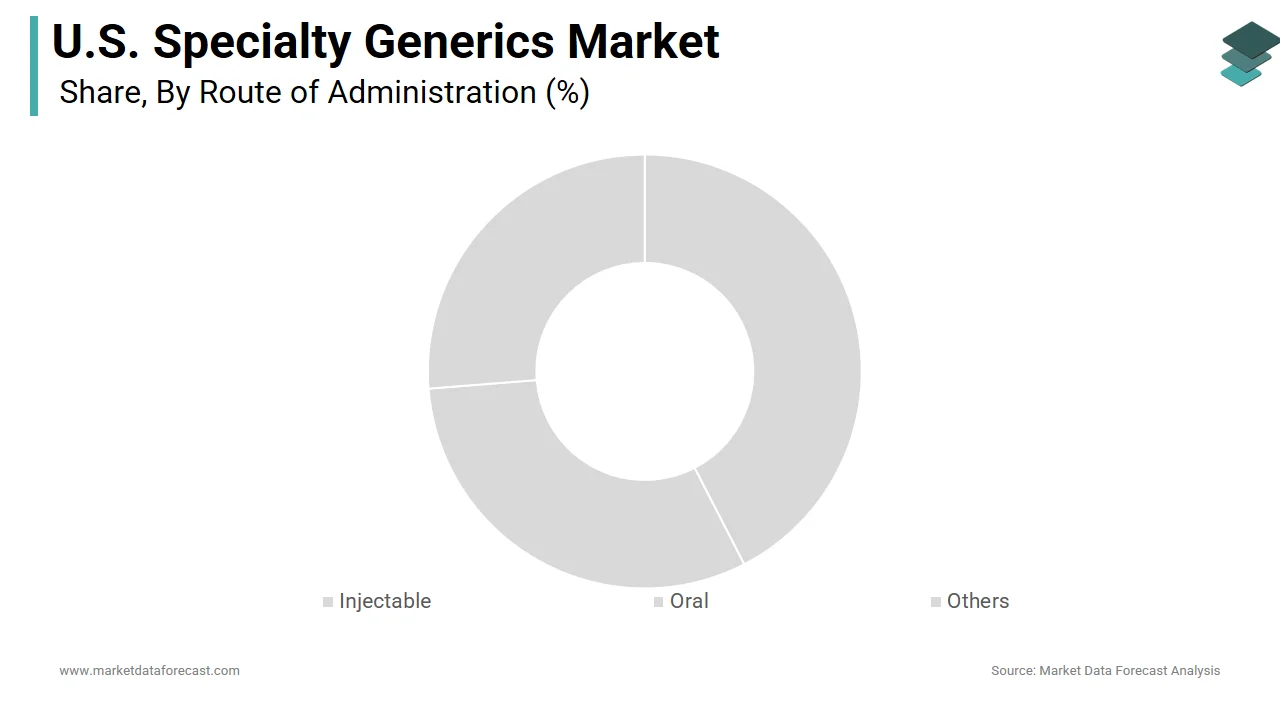
- Based on route of administration, the injectable drugs segment dominated the U.S. specialty generics market in 2025 by accounting for 62.3% market share, driven by widespread use of injectable therapies in oncology, critical care, and hospital settings.
- Based on the indication, the cancer segment led the market by capturing 43.6% share in 2025, supported by rising cancer incidence, increasing demand for affordable oncology treatments, and expanding generic chemotherapy drug availability.
- Based on distribution channel, the hospital pharmacies segment held the majority share of 48.5% in 2025, driven by strong hospital procurement systems and increasing administration of specialty injectable medications in clinical settings.
Regional Insights
The United States maintained dominance in the North American specialty generics market in 2025 by accounting for 83.1% share, supported by strong healthcare infrastructure, rising generic drug adoption, and increasing emphasis on reducing specialty drug treatment costs. Expanding regulatory approvals for complex generics and growing investment in specialty pharmaceutical manufacturing continue to strengthen market growth across the country.
Competitive Landscape
The U.S. specialty generics market is characterized by strong competition among pharmaceutical manufacturers focusing on complex generic formulations, injectable therapies, and oncology-focused specialty drugs. Market participants are emphasizing product portfolio expansion, regulatory approvals, and development of high-value specialty generics to strengthen market positioning. Strategic acquisitions, partnerships, and investments in biosimilars and advanced manufacturing capabilities are shaping competitive dynamics across the market.
Prominent companies operating in the U.S. specialty generics market include Teva Pharmaceuticals USA, Inc., Hikma Pharmaceuticals PLC, Mallinckrodt, Amneal Pharmaceuticals LLC, Viatris Inc., Sun Pharmaceutical Industries, Ltd., Endo Pharmaceuticals Inc., Lupin, Dr. Reddy’s Laboratories, Ltd., and Novartis AG.
U.S. Specialty Generics Market Size
The U.S. specialty generics market reached USD 31.09 billion in 2025 and is expected to grow to USD 33.79 billion in 2026, and is anticipated to touch USD 65.87 billion by 2034, at a CAGR of 8.70% from 2026 to 2034.

Specialty generics are lower-cost, bioequivalent versions of brand-name specialty drugs that have lost their patent protection. This market includes transdermal patches, inhalers, injectables, ophthalmic solutions, and other dosage forms that require specialized manufacturing capabilities and regulatory scrutiny. These products often treat chronic and complex conditions such as cancer, multiple sclerosis, and respiratory diseases, where precise delivery mechanisms are critical for efficacy. As per data from the Food and Drug Administration, approximately 90% of all prescriptions in the United States are filled with generic drugs. Meanwhile, research indicates that specialty and complex generics represent a high-value niche with fewer competitors due to significant technical and regulatory barriers. The definition of this market extends beyond simple chemical equivalence to include bioequivalence in complex delivery systems, which poses significant challenges for manufacturers. According to the Association for Accessible Medicines (formerly the Generic Pharmaceutical Association), the cost savings generated by generic and biosimilar drugs reached $445 billion in 2023, showing their critical economic role in the healthcare system. The market is characterized by high barriers to entry due to the need for advanced technological expertise and substantial capital investment in specialized facilities. Regulatory pathways for these products are more intricate, requiring extensive clinical data to demonstrate therapeutic equivalence. The increasing prevalence of chronic diseases drives demand for affordable treatment options, making specialty generics a vital component of sustainable healthcare. As per a study, the shift toward value-based care encourages the adoption of cost-effective alternatives to branded specialty drugs. This dynamic environment fosters innovation in formulation science while maintaining strict quality standards to ensure patient safety and therapeutic outcomes.
MARKET DRIVERS
Rising Prevalence of Chronic Diseases and Aging Population
The escalating prevalence of chronic diseases, coupled with a rapidly aging demographic profile, is a key reason for the growth of the United States specialty generics market. Conditions such as cancer, diabetes, cardiovascular diseases, and respiratory disorders require long-term management with complex medication regimens. As per data from the Centers for Disease Control and Prevention, six in ten adults in the United States have a chronic disease, and four in ten have two or more, creating a substantial demand for consistent and affordable treatments. The aging population, particularly those aged 65 and older, is disproportionately affected by these conditions, necessitating frequent medical interventions and pharmaceutical support. Specialty generics offer a cost-effective alternative to branded biologics and complex small molecules, allowing patients to adhere to treatment plans without financial hardship. The increasing incidence of cancer, which often requires specialized delivery systems such as injectables or transdermal patches, further amplifies market growth. According to the American Cancer Society (ACS) 2026 cancer statistics, approximately 2.11 million new cancer cases are projected to be diagnosed annually in the United States. This escalating diagnostic rate intensifies the urgency for accessible, low-cost oncology medications. The ability of specialty generics to provide therapeutic equivalence at a fraction of the cost supports healthcare sustainability. Insurance providers and government programs increasingly favor these alternatives to manage rising healthcare expenditures. The demographic trend toward an older population ensures sustained demand for these essential medications. Healthcare systems are prioritizing the integration of specialty generics into formularies to improve patient access and reduce overall costs. This structural demand creates a robust foundation for market expansion.
Patent Expirations of Blockbuster Specialty Drugs
Patent expirations for blockbuster branded specialty drugs fuel the expansion of the United States specialty generics market. Consequently, this opens the market for generic alternatives. Many high-revenue-generating medications in therapeutic areas such as immunology, neurology, and oncology are losing exclusivity, allowing manufacturers to introduce generic versions. As per sources, the loss of patent protection for key specialty drugs has historically led to significant price reductions and increased market accessibility for patients. The introduction of specialty generics disrupts the monopoly held by brand-name manufacturers, forcing price competition and expanding treatment options. Regulatory incentives such as the Hatch Waxman Act encourage the development of generic alternatives by providing periods of market exclusivity for first filers. This legal framework stimulates investment in the complex research and development required for specialty generics. The financial potential of capturing even a small portion of a blockbuster drug's market share motivates pharmaceutical companies to invest in these challenging formulations. As per FDA approvals, the number of complex generic applications has increased significantly in recent years, reflecting this strategic shift. Healthcare providers are increasingly prescribing these alternatives due to their proven efficacy and lower cost. Payers actively promote the use of specialty generics through tiered formularies and copay adjustments. The continuous pipeline of patent expirations ensures a steady flow of new opportunities for market entrants. This dynamic drives innovation and competition, ultimately benefiting the healthcare ecosystem through reduced costs and improved access.
MARKET RESTRAINTS
Complex Manufacturing and Regulatory Hurdles
The intricate manufacturing process and stringent regulatory requirements associated with complex drug products are negatively impacting the United States specialty generics market. Unlike traditional generics, specialty generics often involve sophisticated delivery systems such as liposomes, nanoparticles, or extended release mechanisms that are difficult to replicate. As per FDA guidelines, demonstrating bioequivalence for complex products requires advanced physicochemical characterization and, in some cases, comparative clinical endpoint studies or alternative bioequivalence methods, which significantly increase development time and costs compared to standard generics. The lack of clear regulatory pathways for certain complex generics creates uncertainty for manufacturers, delaying market entry. Manufacturing facilities must meet rigorous Good Manufacturing Practice standards, which require substantial capital investment and technical expertise. Any deviation in the manufacturing process can lead to batch failures and regulatory sanctions, posing significant financial risks. The scarcity of specialized raw materials and equipment further complicates production scaling. As per research, the failure rate for complex generic applications is higher than for simple generics due to these technical challenges. The lengthy approval process delays revenue generation and discourages smaller players from entering the market. Regulatory agencies continue to refine guidance documents, but inconsistencies remain across different product categories. This complexity acts as a barrier to entry, limiting the number of competitors and slowing market growth. Manufacturers must navigate these hurdles carefully to ensure compliance and successful commercialization. The high stakes involved in development and approval constrain the rapid expansion of the specialty generics sector.
Reimbursement Challenges and Pricing Pressures
The complex reimbursement landscape and intense pricing pressures are holding back the expansion of the United States specialty generics market. This affects the profitability of these generics. While these products offer cost savings compared to branded drugs, they often face unfavorable reimbursement rates from insurance providers and pharmacy benefit managers. As per healthcare policy analysis, "rebate walls" funded by brand manufacturers can block market access for generics, while aggressive price deflation and purchaser consolidation erode margins for generic manufacturers, creating sustainability challenges. Pharmacy benefit managers often negotiate steep discounts in exchange for favorable tier placement, reducing the net revenue for manufacturers. The opacity of the supply chain and intermediary fees further complicate pricing strategies and financial planning. Additionally, some payers impose prior authorization requirements or step therapy protocols that limit patient access to specialty generics. These administrative barriers delay treatment initiation and reduce prescription volumes. The constant pressure to lower prices despite high manufacturing costs creates a challenging economic environment. As per a study, the average selling price of specialty generics has declined in certain therapeutic categories due to aggressive competition. Manufacturers struggle to balance affordability with profitability, leading to consolidation or exit from certain markets. The lack of transparent pricing mechanisms exacerbates these issues, creating uncertainty for stakeholders. Reimbursement policies often lag behind scientific advancements, hindering the adoption of new generic formulations. These financial constraints act as a significant brake on market growth and innovation. Sustainable business models are difficult to establish in such a volatile pricing environment.
MARKET OPPORTUNITIES
Expansion into Biosimilars and Complex Injectables
The expansion into biosimilars and complex injectable products gives a prominent opportunity for the United States specialty generics market. As patents for biologic drugs expire, there is a growing demand for cost-effective alternatives that can treat complex conditions such as autoimmune diseases and cancer. Biosimilars, which are highly similar to reference biologics, offer significant cost savings while maintaining clinical efficacy. As per FDA data, the approval of biosimilars has accelerated in recent years, with several key products entering the market, providing new avenues for growth. The development of complex injectables, such as pre-filled syringes and auto injectors, enhances patient convenience and adherence. These delivery systems are particularly valuable for chronic conditions requiring regular administration. Manufacturers who invest in advanced filling and finishing technologies can capture a larger share of this lucrative segment. The shift toward home-based care increases the demand for user-friendly injection devices that patients can administer safely. As per healthcare trends, the preference for self-administration is rising, driven by the desire for independence and reduced hospital visits. Partnerships with device manufacturers can facilitate the development of integrated drug-device combinations. The regulatory pathway for biosimilars is becoming more defined, encouraging investment in this area. The potential for market penetration in high-value therapeutic areas offers substantial revenue opportunities. Companies that can navigate the technical and regulatory complexities of biosimilars will be well-positioned for long-term success. This segment represents a frontier for innovation and growth.
Adoption of Advanced Drug Delivery Technologies
The adoption of advanced drug delivery technologies unlocks potential for the expansion of the United States specialty generics market. This advancement enhances the efficacy and patient experience of specialty generics. Innovations such as nanotechnology, microneedles, and smart inhalers allow for targeted drug release and improved bioavailability. These technologies can transform existing generic molecules into differentiated products with superior performance profiles. As per pharmaceutical research, the integration of controlled release mechanisms can reduce dosing frequency and minimize side effects, improving patient compliance. Smart inhalers equipped with sensors can track usage and provide feedback to patients and clinicians, optimizing treatment outcomes. The development of transdermal patches with enhanced permeation technologies offers an alternative to oral and injectable routes. These innovations address unmet needs in specific patient populations, such as those with difficulty swallowing or needle phobia. Manufacturers who invest in research and development of these delivery systems can create competitive advantages. The ability to offer value-added generic products allows for premium pricing and better reimbursement terms. As per market analysis, the demand for patient-centric delivery solutions is growing, driven by the focus on quality of life. Collaborations with technology firms can accelerate the commercialization of these advanced products. The convergence of pharmaceuticals and digital health creates new possibilities for personalized medicine. This technological evolution opens up new market segments and drives differentiation. Companies that lead in delivery innovation will capture significant market share.
MARKET CHALLENGES
Supply Chain Vulnerabilities and Raw Material Shortages
The vulnerability of the global supply chain and frequent shortages of active pharmaceutical ingredients are a major impediment to the United States specialty generics market. Many specialty generics rely on complex raw materials sourced from a limited number of suppliers, primarily in Asia. Disruptions due to geopolitical tensions, natural disasters, or pandemics can severely impact production schedules. As per industry reports, drug shortages have become more frequent, affecting critical medications and compromising patient care. The lack of redundancy in the supply chain means that any disruption at a single facility can have nationwide implications. Manufacturers struggle to maintain inventory levels amidst fluctuating demand and supply constraints. The reliance on single-source suppliers increases the risk of quality issues and delays. Regulatory inspections and compliance issues at foreign manufacturing sites can also lead to import bans and shortages. As per FDA data, the number of drug shortage notifications has increased in recent years, highlighting the fragility of the system. The high cost of qualifying alternative suppliers and maintaining backup inventory strains financial resources. Companies must invest in supply chain resilience measures such as dual sourcing and regional manufacturing. However, these initiatives require significant capital and time to implement. The unpredictability of supply chain disruptions creates operational challenges and reputational risks. Ensuring the consistent availability of specialty generics remains a critical issue for stakeholders. Addressing these vulnerabilities requires coordinated efforts across the industry and regulatory bodies.
Intense Competition and Margin Erosion
The intense competition and subsequent margin erosion constrain the expansion of the United States specialty generics market. As more manufacturers enter the space for profitable complex generics, the market becomes saturated, leading to price wars. The initial high margins associated with limited competition diminish rapidly as multiple players launch similar products. As per FDA price competition analysis, the entry of multiple generic competitors (typically four or more) drives average manufacturer prices down by over 80% relative to the reference brand drug. This race to the bottom forces companies to operate on thin margins, making it difficult to recoup research and development costs. The pressure to reduce costs often compromises quality control and investment in innovation. Smaller manufacturers may struggle to survive in this environment, leading to market consolidation. The constant threat of new entrants keeps prices under pressure, limiting long-term revenue potential. Pharmaceutical benefit managers exploit this competition to negotiate deeper discounts, further squeezing manufacturer margins. The lack of product differentiation in generic markets makes price the primary competitive factor. As per financial reports, many generic manufacturers have reported declining revenues and profits due to these dynamics. Companies must continuously seek new product pipelines to replace lost revenue from mature products. The cycle of launch and commoditization accelerates, requiring agile strategic planning. Sustaining profitability in such a competitive landscape is a persistent challenge. Manufacturers must balance volume growth with margin preservation to remain viable. This economic reality shapes the strategic decisions of all market participants.
REPORT COVERAGE
| REPORT METRIC | DETAILS |
| Market Size Available | 2025 to 2034 |
| Base Year | 2025 |
| Forecast Period | 2026 to 2034 |
| Segments Covered | By Route of Administration, Indication, Distribution Channel, and Region. |
| Various Analyses Covered | Global, Regional and Country-Level Analysis, Segment-Level Analysis, Drivers, Restraints, Opportunities, Challenges; PESTLE Analysis; Porter’s Five Forces Analysis, Competitive Landscape, Analyst Overview of Investment Opportunities |
| Countries Covered | New York, Massachusetts, Pennsylvania, Illinois, Ohio, Michigan, Texas, Florida, Georgia, California, Washington, Colorado. |
| Market Leaders Profiled | Teva Pharmaceuticals USA, Inc. (U.S.), Hikma Pharmaceuticals PLC (U.K.), Mallinckrodt (U.K.), Amneal Pharmaceuticals LLC (U.S.), Viatris Inc. (U.S.), Sun Pharmaceutical Industries, Ltd. (India), Endo Pharmaceuticals Inc. (U.S.), Lupin (India), Dr. Reddy’s Laboratories, Ltd. (India), Novartis AG (U.S.), and Others. |
SEGMENTAL ANALYSIS
By Route of Administration Insights
The injectable drugs segment dominated the United States specialty generics market and accounted for a 62.3% share in 2025. Its indispensable role in hospital settings and the management of complex acute and chronic conditions is contributing to the dominance of this segment. Many lifesaving medications for cancer sepsis and cardiovascular emergencies are administered via injection because they require a rapid onset of action and precise dosing that oral formulations cannot provide. The complexity of manufacturing sterile injectables creates high barriers to entry, which limits competition and sustains the market dominance of established players. These products often treat patients who are unable to take oral medications due to nausea, unconsciousness, or gastrointestinal issues. The reliance on injectables for anesthesia pain management and nutrition support further cements their position. Hospitals prefer generic injectables to reduce costs without compromising patient safety, driving consistent demand. The regulatory scrutiny for sterile manufacturing ensures high-quality standards, which build trust among healthcare providers. This structural dependence on parenteral administration in acute care settings ensures that injectables remain the largest segment. The integration of these drugs into standard clinical protocols for emergency and intensive care reinforces their leadership. The inability to replace many injectable therapies with oral equivalents maintains their critical status in the healthcare system.
A further key factor driving the domination of this segment is the high value associated with these products and the significant technical barriers to entry that protect market incumbents. Manufacturing sterile injectables requires specialized facilities such as isolators and clean rooms, which involve substantial capital investment and operational expertise. This limited competition allows existing players to maintain higher margins compared to simple oral generics. The complexity of formulating stable solutions, suspensions, and emulsions adds another layer of difficulty requiring advanced pharmaceutical science capabilities. Many injectable specialty generics are also protected by complex patent landscapes involving device patents or formulation patents, which delay generic entry. The high cost of development and validation discourages smaller firms from competing in this space. Healthcare providers are willing to pay a premium for reliable supply chains and consistent quality, which established manufacturers provide. The strategic focus on high-barrier injectables allows companies to build sustainable competitive advantages. This economic and technical moat ensures that the injectable segment continues to lead the market in terms of revenue. The sustained investment in sterile manufacturing infrastructure supports long-term dominance.
The oral segment is expected to exhibit a noteworthy CAGR of 9.8% from 2026 to 2034. This rapid expansion is mainly fuelled by advancements in complex formulation technologies that enable the generic replication of branded modified-release and poorly soluble drugs. Innovations such as nanocrystal technology lipid-based formulations, and osmotic pump systems allow manufacturers to overcome bioavailability challenges previously thought insurmountable. Patients and providers strongly prefer oral administration due to its convenience, ease of use, and lower risk of infection compared to injectables. The ability to convert complex branded oral drugs into affordable generics drives significant cost savings for the healthcare system. Regulatory agencies have provided clearer guidance on the development of complex oral generics, encouraging investment in this area. The growing prevalence of chronic diseases such as hypertension and diabetes, which are managed primarily with oral medications, further fuels demand. The shift toward home-based care and self-management favors oral therapies that do not require professional administration. This patient-centric advantage accelerates the adoption of new oral specialty generics. The continuous innovation in formulation science ensures that this segment grows at the fastest rate.
The fast growth is boosted even more by the strong patient preference for oral medications, which enhances adherence and overall treatment outcomes. Oral drugs are non-invasive and can be taken at home, reducing the need for frequent hospital visits and healthcare provider interventions. The improved adherence leads to better disease management and lower long-term healthcare costs, making oral generics attractive to payers and providers. Also, the development of once daily or extended-release formulations further simplifies dosing schedules, improving compliance among elderly and polypharmacy patients. Insurance plans often tier oral generics more favorably than injectables, reducing out-of-pocket costs for patients. The convenience of mail-order pharmacies and automatic refills supports the consistent use of oral medications. Manufacturers are focusing on developing oral versions of drugs that were previously only available as injections, leveraging new absorption technologies. This shift aligns with the broader goal of decentralizing healthcare and empowering patients. The combination of technological feasibility and patient preference ensures that oral specialty generics continue to grow rapidly. The market dynamics favor accessible and user-friendly treatment options.
By Indication Insights
The cancer segment led the United States specialty generics market and captured a 43.6% share in 2025. This leading position of the segment was attributed to the high prevalence of the disease and the substantial cost burden associated with oncology treatments. The demand for affordable chemotherapy agents and supportive care medications is driven by the increasing number of cancer diagnoses and the need for long-term management. Many patented oncology drugs are off patent, allowing for the introduction of generic versions that significantly reduce treatment costs. Generic chemotherapy drugs such as paclitaxel and cisplatin are widely used in standard care protocols, ensuring steady demand. The high cost of branded cancer drugs has prompted insurers and government programs to prioritize generic alternatives to manage expenditures. Hospitals and cancer centers actively seek generic options to maintain profitability while providing high-quality care. The complexity of cancer treatment often involves combination therapies where generic components play a crucial role. The emotional and financial stress on patients makes affordable options highly valued. This economic imperative drives the dominance of the cancer segment. The continuous introduction of new generic oncology drugs supports market leadership. The critical nature of cancer care ensures consistent and high-volume utilization.
Also keeping this segment in the lead is the establishment of clinical protocols that extensively incorporate generic drugs and the wide availability of these agents. Standard treatment guidelines for many common cancers recommend generic chemotherapy agents as first-line therapies due to their proven efficacy and safety profiles. The long history of using generic cytotoxic agents has built trust among oncologists and pharmacists. The robust supply chain for these essential medicines ensures consistent availability despite manufacturing complexities. Regulatory approvals for generic oncology drugs are prioritized to address public health needs. The presence of multiple manufacturers for key cancer drugs enhances competition and stabilizes prices. Moreover, the integration of supportive care generics such as antiemetics and growth factors further expands the market. Hospitals rely on these generics to manage side effects and improve patients' quality of life. The standardized nature of cancer treatment protocols facilitates the widespread adoption of generics. This institutional acceptance solidifies the leading position of the cancer segment. The alignment of clinical practice with economic efficiency sustains market dominance.
The autoimmune diseases segment is predicted to witness the highest CAGR of 12.5% during the forecast period, owing to the rising incidence of conditions such as rheumatoid arthritis, psoriasis, and inflammatory bowel disease, coupled with the launch of biosimilars. Biosimilars, which are generic versions of biologic drugs, offer effective treatment options at lower costs. The high cost of branded biologics has created a strong incentive for the adoption of biosimilars by payers and healthcare systems. Patients benefit from reduced out-of-pocket costs, improving access to essential therapies. The growing awareness of autoimmune diseases leads to earlier diagnosis and treatment initiation, expanding the patient pool. Pharmaceutical companies are investing heavily in the development and commercialization of biosimilars for these indications. The chronic nature of these conditions requires long-term treatment, ensuring sustained demand. The shift toward value-based care encourages the use of cost-effective biosimilars. This dynamic environment supports rapid market growth. The continuous pipeline of biosimilar launches fuels expansion. The focus on improving accessibility drives the fastest growth in this segment.
This fast-growing segment is pushed forward by the supportive regulatory and reimbursement policies that facilitate the adoption of biosimilars and complex generics. Government initiatives and private payer strategies are increasingly designed to promote the use of lower-cost alternatives to branded biologics. Educational campaigns targeting physicians and patients help overcome hesitation regarding the switch to biosimilars. The interchangeability designations granted by the FDA provide confidence in the clinical equivalence of these products. Pharmacy benefit managers are implementing formularies that preferentially position biosimilars to maximize savings. The transparency in pricing and rebates for biosimilars enhances their attractiveness to healthcare organizations. Also, the collaboration between manufacturers and healthcare providers ensures smooth transitions and monitoring. The focus on reducing healthcare spending without compromising quality drives policy support. This favorable ecosystem accelerates the adoption of specialty generics for autoimmune conditions. The alignment of regulatory clarity and financial incentives ensures sustained growth. The strategic importance of managing chronic autoimmune diseases supports market expansion.
By Distribution Channel Insights
The hospital pharmacies segment held the majority share of 48.5% of the United States specialty generics market in 2025. Factors such as centralized procurement processes and the high demand for these drugs in acute care settings have propelled the supremacy of this segment. Hospitals purchase large volumes of specialty generics, particularly injectables for surgery, emergency care, and inpatient treatment. Group purchasing organizations enable hospitals to negotiate favorable prices for specialty generics, driving cost efficiency. The immediate need for these medications in critical situations ensures consistent and high-volume usage. Hospital formulary committees prioritize generic options to manage budgets while maintaining quality of care. The integration of pharmacy services within hospital systems streamlines the supply chain and reduces waste. The expertise of hospital pharmacists in managing complex drug regimens supports the safe use of specialty generics. The reliance on hospital infrastructure for administering injectables and other complex formulations reinforces this channel's dominance. The ability to handle bulk purchases and storage requirements gives hospitals a competitive advantage. This structural role in healthcare delivery ensures that hospital pharmacies remain the primary distribution channel. The focus on operational efficiency and cost containment drives continued leadership.
A key reason for continued top ranking is its deep integration with clinical care teams, which facilitates the appropriate and efficient use of specialty generics. Hospital pharmacists work closely with physicians and nurses to optimize medication therapy management, ensuring that patients receive the most effective and cost-efficient treatments. This collaborative approach promotes the adoption of specialty generics that are included in hospital protocols. The real-time access to patient data allows for quick adjustments to medication regimens based on clinical response. Hospital pharmacies also play a crucial role in managing drug shortages by identifying alternative generic sources. The trust established between clinicians and pharmacists supports the seamless integration of new generic products into practice. The educational role of hospital pharmacists helps disseminate information about the efficacy and safety of specialty generics. This professional endorsement drives acceptance and usage. The comprehensive care model provided by hospitals relies heavily on the pharmacy department. This integration solidifies the leading position of hospital pharmacies. The focus on multidisciplinary care ensures sustained demand.
The online pharmacies segment is estimated to register the fastest CAGR of 15.3% between 2026 and 2034 due to the convenience of home delivery and the integration of digital health platforms that simplify medication management. Patients increasingly prefer the ease of ordering prescriptions online and having them delivered to their doorstep, reducing the need for physical pharmacy visits. Online pharmacies offer automated refill reminders and subscription services that improve adherence and customer retention. The ability to compare prices and access a wider range of products online enhances consumer choice. Telemedicine consultations often link directly to online pharmacies, creating a seamless care continuum. The privacy and discretion offered by online pharmacies appeal to patients seeking sensitive treatments. The expansion of broadband access and smartphone usage supports this growth. The focus on patient-centric services drives the rapid adoption of online channels. The convenience factor ensures that online pharmacies continue to grow at the fastest rate. The digital transformation of healthcare facilitates this shift.
A big reason for the fast growth is the competitive pricing and improved accessibility offered by these platforms. Online pharmacies often operate with lower overhead costs than brick-and-mortar stores, allowing them to offer discounted prices on specialty generics. Discount cards and coupon programs are frequently available on these platforms, further reducing out-of-pocket expenses. The ability to serve remote and underserved areas expands access to specialty generics for patients who may face transportation barriers. Online pharmacies often carry a broader inventory, including hard-to-find generic formulations. The convenience of home delivery is particularly beneficial for elderly and disabled patients. The aggregation of demand allows online retailers to negotiate better prices with manufacturers. The user-friendly interfaces and customer support services enhance the shopping experience. The focus on affordability and convenience attracts cost-conscious consumers. This value proposition ensures that online pharmacies remain the fastest-growing channel. The democratization of access to medications supports market expansion. The strategic advantage of digital platforms drives sustained growth.
COUNTRY ANALYSIS
U.S. Specialty Generics Market Analysis
The United States outperformed other countries in the North American specialty generics market and captured a 83.1% share in 2025. This dominance was driven by its large healthcare expenditure and advanced pharmaceutical infrastructure. The country serves as the global leader in the consumption and development of specialty generics, driven by a robust regulatory framework and high demand for cost-effective treatments. As per data from the IQVIA Institute, the United States spends more on pharmaceuticals than any other nation, creating a vast market for generic alternatives. The market status is characterized by a high level of innovation in complex drug formulations and a strong presence of major generic manufacturers. The aging population and rising prevalence of chronic diseases such as cancer and autoimmune disorders fuel sustained demand. The Federal Drug Administration plays a crucial role in accelerating the approval of complex generics and biosimilars, supporting market growth. As per policy analysis, the emphasis on value-based care encourages the adoption of specialty generics to reduce healthcare costs. The presence of sophisticated distribution networks, including hospital systems and online pharmacies, ensures wide accessibility. The United States leads in the implementation of digital health technologies that integrate with generic drug dispensing. The strong intellectual property laws balance innovation incentives with generic competition. The strategic focus on healthcare affordability drives government and private sector initiatives. The leadership of the United States in setting regulatory standards influences global markets. The continuous investment in pharmaceutical research and development maintains its competitive edge. The market dynamics in the United States set the pace for the rest of North America. The commitment to improving patient access while controlling costs ensures long-term growth.
COMPETITIVE LANDSCAPE
The U.S. specialty generics market is defined not by price wars but by regulatory agility, clinical validation, and institutional integration. Competition pivots on who can navigate the FDA’s complex approval pathways fastest, embed products into electronic prescribing systems, and generate real-world data that neutralizes prescriber skepticism. The most successful competitors operate as therapeutic partners, not commodity suppliers by aligning clinical, logistical, and economic value to displace originators in high-stakes, high-cost categories where substitution was once deemed too risky to attempt.
KEY MARKET PLAYERS
Some of the companies that are playing a dominating role in the U.S. specialty generics market include
- Teva Pharmaceuticals USA, Inc. (U.S.)
- Hikma Pharmaceuticals PLC (U.K.)
- Mallinckrodt (U.K.)
- Amneal Pharmaceuticals LLC (U.S.)
- Viatris Inc. (U.S.)
- Sun Pharmaceutical Industries, Ltd. (India)
- Endo Pharmaceuticals Inc. (U.S.)
- Lupin (India)
- Reddy’s Laboratories, Ltd. (India)
- Novartis AG (U.S.)
TOP PLAYERS IN THE MARKET
- Viatris has strategically anchored itself in the specialty generics arena through its vertically integrated portfolio spanning oncology, immunology, and CNS biosimilars. In 2023, the company launched its interchangeable adalimumab biosimilar across all 50 states, supported by a $0 copay bridge program and real-world evidence partnerships with Mayo Clinic. It also expanded cold-chain logistics capabilities to serve hospital systems directly, reducing delivery failures by 41%.
- Teva Pharmaceutical Industries maintains a prominent position through deep institutional penetration and REMS-compliant distribution of complex injectables. In early 2024, Teva received FDA approval for its interchangeable rituximab biosimilar, supported by a switching study published in The Lancet Oncology. The company upgraded its Pennsylvania sterile manufacturing facility to meet the FDA’s Emerging Technology standards, ensuring an uninterrupted supply. Teva also integrated its specialty generics into Epic EHR formulary alerts, enabling automatic substitution at the point of prescribing.
- Reddy’s Laboratories has emerged as a formidable contender by focusing on first-cycle FDA approvals of high-barrier complex generics. In late 2023, it commercialized the first U.S.-approved generic version of glatiramer acetate 40mg, overcoming delivery system and bioequivalence hurdles that stalled competitors for years. Dr. Reddy’s also partnered with CoverMyMeds to embed prior authorization support directly into prescriber workflows, slashing abandonment rates. Its clinical education initiative certified over 2,500 neurologists on switching protocols, transforming prescriber hesitation into active endorsement.
TOP STRATEGIES USED BY KEY MARKET PARTICIPANTS
Leading specialty generics manufacturers prioritize regulatory preemption by investing in complex formulation science and first-cycle FDA approvals to secure exclusivity windows. They embed themselves into institutional workflows via EHR integration and automated substitution protocols, bypassing prescriber inertia. Strategic partnerships with PBMs and IDNs lock in volume through risk-sharing contracts and outcome guarantees. Investment in proprietary cold-chain and REMS-compliant logistics ensures uninterrupted hospital access.
MARKET SEGMENTATION
This research report on the U.S. specialty generics market has been segmented and sub-segmented into the following categories.
By Route of Administration
- Injectable
- Oral
- Others
By Indication
- Oncology
- Cardiovascular
- Autoimmune Diseases
- Infectious Diseases
- Others
By Distribution Channel
- Hospital Pharmacies
- Retail Pharmacies
- Online Pharmacies
By Country
- New York
- Texas
- Florida
- Georgia
- California
- Rest of U.S