- Product Description Description
- Table of Contents TOC
- List of Table & Figure LOT
- Get Free Sample PDF Sample PDF
Market Size, 2025
$1098 MnMarket Estimate, 2026
$1170 MnMarket Forecast, 2034
$1952 MnCAGR, 2026–2034
6.6%Executive Summary: Global Veterinary Surgical Devices Market
- Market Scope: Comprehensive global animal healthcare assessment covering product categories (sutures, electrosurgery, handheld tools, staplers), animal types (canines, felines, livestock), surgical applications (soft tissue, orthopedic), and regional geographies.
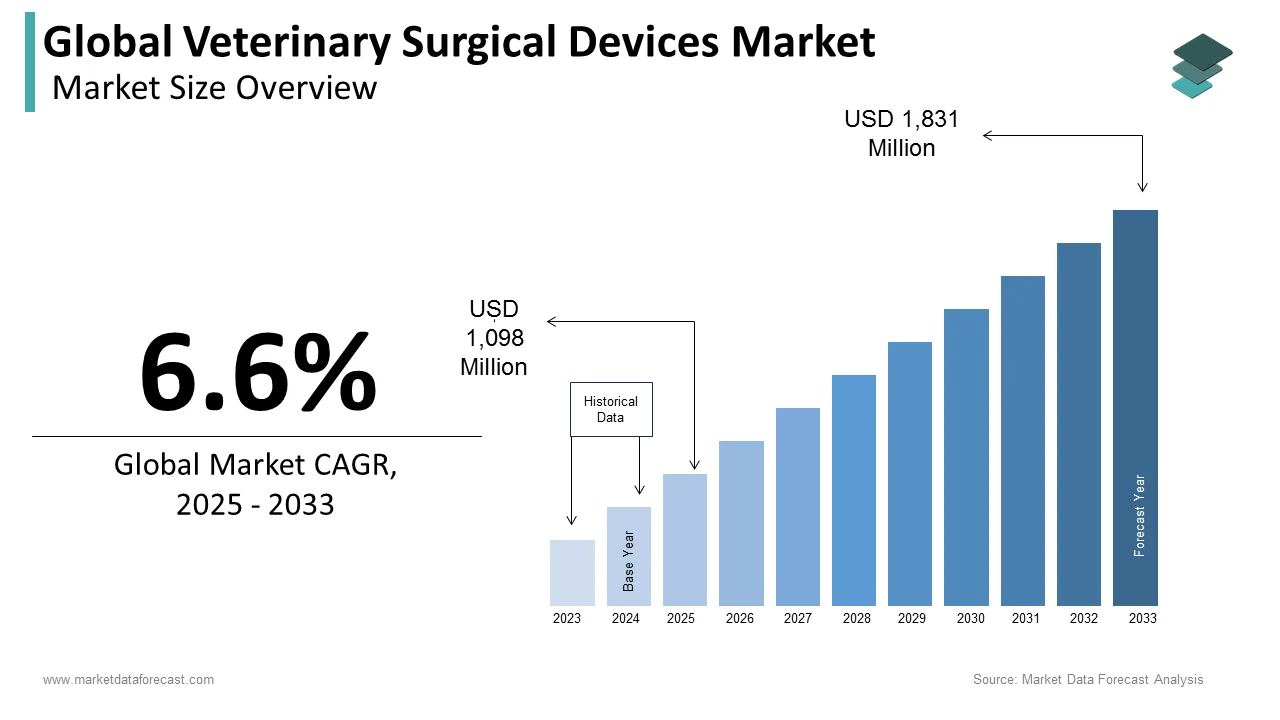
- Market Valuation: Valued at USD 1,098 million (2025), estimated at USD 1,170.47 million (2026), and projected to reach USD 1,952 million by 2034, registering a solid CAGR of 6.6% (2026–2034).
- Primary Growth Drivers: Exponential rise in pet ownership and humanization trends, increasing prevalence of chronic conditions and age-related ailments in animals, and expanding adoption of minimally invasive and advanced electrosurgical techniques.
Key Market Segment Metrics (2026–2034)
| Category | Leading Segment (2025 Position) | Fastest-Growing Segment |
|---|---|---|
| By Product | Sutures and wound closure devices (dominating due to universal necessity in routine and complex surgeries) | Electrosurgery instruments (projected at an 8.5% CAGR driven by minimally invasive adoption) |
| By Animal Type | Canines (holding 44.3% market share backed by high global pet ownership and human-level care standards) | Felines (projected at a 12.3% CAGR due to rising awareness and increased healthcare spending on cats) |
| By Application | Soft tissue surgery (capturing 32.2% share through high-volume procedures like spaying, neutering, and mass removals) | Orthopedic surgery (projected at a 9.2% CAGR driven by joint disorders and fractures in aging pets) |
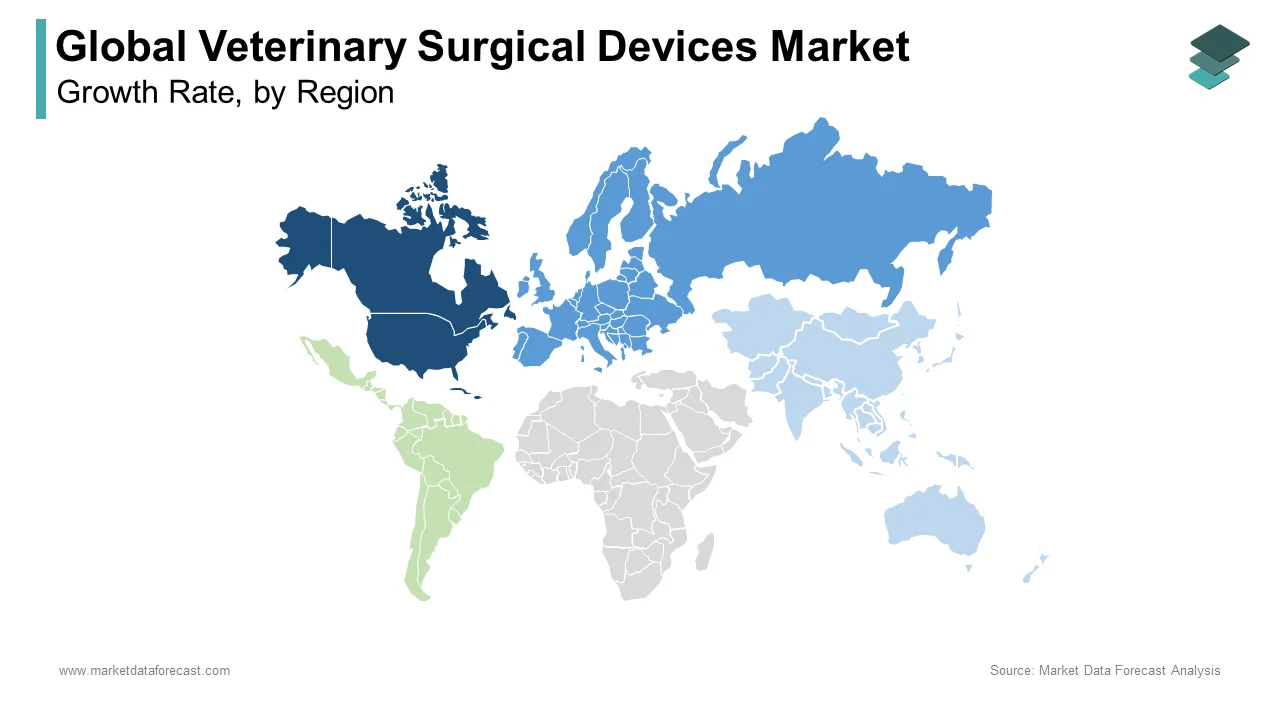
| By Region | North America (leading with 43.2% share owing to advanced veterinary infrastructure and high pet care spending) | Asia-Pacific (growing rapidly due to rising disposable incomes, urbanization, and expanding pet adoption) |
Major Market Players & Market Structure
Market Structure: Moderately consolidated global veterinary device market featuring established multinational medical device corporations and specialized manufacturers competing on product precision, durability, and multi-species adaptability.
Key Companies: B. Braun Vet Care GmbH, Medtronic Plc., Ethicon Inc., Jorgen Kruッセ A/S, Jorgensen Laboratories, Smiths Group Plc., Neogen Corporation, Integra LifeSciences Holding Corporation, STERIS Corporation, DRE Veterinary, GerMedUSA Inc., Surgical Holdings, Karl Storz, Sklar Surgical Instruments, World Precision Instruments Inc., Surgical Direct, and others.
Global Veterinary Surgical Devices Market Size
The size of the global veterinary surgical devices market was worth USD 1,098 million in 2025. The global market is anticipated to grow at a CAGR of 6.6% from 2026 to 2034 and be worth USD 1,952 million by 2034 from USD 1,170.47 million in 2025.
Veterinary surgical devices are designed to facilitate surgical interventions for animals ranging from companion pets to livestock. These devices include scalpels, forceps, retractors, sutures, staplers, and advanced energy-based systems that enable precise tissue manipulation and hemostasis during operative procedures. The growing integration of minimally invasive techniques has transformed the landscape by introducing laparoscopic and endoscopic tools that reduce recovery times and improve patient outcomes. This widespread ownership creates a substantial base for surgical interventions, as pets increasingly receive healthcare comparable to human standards. Furthermore, the rising prevalence of chronic conditions, such as orthopedic disorders and oncological issues in aging pet populations, necessitates sophisticated surgical approaches. Technological advancements have enabled the development of specialized instruments tailored for diverse species, ensuring optimal functionality across varying anatomical structures. The emphasis on animal welfare and ethical treatment standards has further propelled the adoption of high-precision surgical tools that minimize trauma and enhance procedural success rates.
MARKET DRIVERS
Rising Pet Ownership and Humanization Trends Drive Demand for Advanced Surgical Solutions
The exponential growth in pet ownership coupled with the humanization of animals is propelling the growth of the veterinary surgical devices market. Pets are increasingly regarded as family members, leading owners to invest heavily in their health and well-being. This demographic shift has resulted in higher expenditure on veterinary services, including complex surgical procedures. Minimally invasive surgeries have gained prominence due to their ability to shorten hospital stays and alleviate postoperative pain, aligning with owner expectations for quality care. The aging pet population further amplifies this trend as older animals require more frequent surgical interventions for conditions such as tumor removals and joint replacements. Manufacturers respond by developing ergonomic and species-specific instruments that cater to diverse anatomical needs. The cultural shift toward treating pets with human-level healthcare standards ensures sustained demand for innovative surgical technologies.
Increasing Prevalence of Chronic Diseases in Animals Necessitates Specialized Surgical Interventions
The escalating incidence of chronic diseases among animals significantly propels the demand for specialized veterinary surgical devices. The increasing prevalence of chronic diseases in animals is additionally leveraging the growth of the veterinary surgical devices market. Conditions such as cancer, cardiovascular disorders, and orthopedic ailments require intricate surgical procedures that rely on advanced instrumentation. As per the Veterinary Cancer Society, approximately 1 in 4 dogs will develop cancer during their lifetime, necessitating surgical removal of tumors and affected tissues. The rising obesity rates in pets exacerbate joint problems, leading to increased requirements for reconstructive surgeries and implant placements. Livestock sectors also face challenges with chronic conditions affecting productivity, prompting farmers to adopt surgical solutions for herd health management. The World Organisation for Animal Health notes that infectious diseases and metabolic disorders in livestock often require surgical interventions to prevent economic losses. These health trends underscore the necessity for durable and versatile surgical tools capable of addressing complex pathologies. Manufacturers focus on developing devices with enhanced visibility and maneuverability to tackle intricate procedures effectively.
MARKET RESTRAINTS
High Costs Associated with Advanced Surgical Devices Limit Accessibility in Emerging Markets
The prohibitive costs of advanced veterinary surgical devices in emerging countries are restricting the growth of the veterinary surgical devices market. Sophisticated equipment, such as laparoscopic systems and robotic-assisted platforms, requires substantial initial investments that many veterinary clinics cannot afford. The average annual income per capita in low-income countries remains below 1000 USD, making it challenging for practitioners to allocate funds for high-end surgical tools, as per the research. This financial barrier restricts access to modern surgical technologies, resulting in reliance on basic instruments that may compromise procedural outcomes. The cost of maintenance and training further exacerbates the issue as specialized devices demand regular servicing and skilled personnel. The disparity in healthcare infrastructure between developed and developing nations widens the gap in surgical capabilities. Additionally, import tariffs and regulatory hurdles increase the final price of imported devices, deterring widespread adoption. Veterinary professionals in resource-limited settings often resort to outdated techniques due to affordability issues hindering the delivery of optimal care. This economic constraint stifles market penetration in regions with growing pet populations but limited financial resources.
Shortage of Skilled Veterinary Surgeons Hinders Effective Utilization of Complex Devices
The scarcity of trained veterinary surgeons capable of operating advanced surgical devices is declining the growth of the veterinary surgical devices market. Complex instruments, such as robotic systems and minimally invasive tools, require specialized expertise that is not universally available among practitioners. This shortage is more pronounced in rural areas and developing countries, where access to specialized training programs is minimal. Without adequate training, veterinary clinics hesitate to invest in sophisticated devices, fearing underutilization or improper handling. The learning curve associated with new technologies demands time and resources that many practices cannot spare. Furthermore, the rapid evolution of surgical techniques outpaces the availability of continuing education programs, leaving practitioners ill-equipped to leverage advanced tools. This skills gap results in suboptimal device usage, reducing the perceived value of high-end equipment. Educational institutions struggle to keep pace with technological advancements, leading to a mismatch between available tools and practitioner competencies.
MARKET OPPORTUNITIES
Expansion of Telemedicine and Remote Surgical Consultations Opens New Avenues for Device Integration
The proliferation of telemedicine in veterinary care with the integration of smart surgical devices in remote consultation platforms is creating new opportunities for the growth of the veterinary surgical devices market. As per the research, over 40% of veterinary practices now offer telehealth services, enabling real-time guidance during surgical procedures. This trend facilitates collaboration between general practitioners and specialist surgeons, who can provide expert advice via digital channels. Smart devices equipped with sensors and connectivity features allow remote monitoring of surgical parameters, enhancing decision-making accuracy. Veterinary telemedicine grew by 25% annually, driven by demand for accessible specialist input. This integration enables clinics in underserved areas to perform complex surgeries with remote support, expanding the reach of advanced care. Manufacturers can capitalize on this trend by developing devices compatible with telemedicine platforms, offering seamless data transmission and visualization. The ability to record and share surgical footage fosters knowledge exchange and continuous improvement among practitioners. Additionally, remote consultations reduce the need for patient transfers, lowering stress on animals and costs for owners. This synergy between technology and connectivity transforms traditional surgical workflows, creating new revenue streams for device manufacturers.
Growing Focus on Minimally Invasive Techniques Creates Demand for Specialized Instruments
The increasing adoption of minimally invasive surgical techniques is also expanding new opportunities for the growth of the veterinary surgical devices market. Procedures, such as laparoscopy and arthroscopy, offer reduced trauma, faster recovery, and improved cosmetic outcomes, driving their popularity among pet owners. This trend necessitates the development of compact and precise instruments tailored for small incisions and confined spaces. Manufacturers respond by innovating tools with enhanced articulation and visualization capabilities, meeting the unique demands of these techniques. The minimally invasive approaches reduce postoperative complications by 40% by reinforcing their clinical advantages. Livestock sectors also benefit from these techniques, as they minimize stress and improve herd productivity. The demand for disposable and single-use instruments rises alongside this trend, ensuring sterility and convenience. Educational programs focusing on minimally invasive skills further accelerate adoption, creating a skilled workforce capable of utilizing advanced devices. This shift toward less invasive options aligns with broader healthcare goals of improving patient welfare and operational efficiency.
MARKET CHALLENGES
Regulatory Heterogeneity Across Regions Complicates Product Approval and Market Entry
The fragmented regulations for manufacturers seeking to launch veterinary surgical devices globally are a major challenge for the growth of the veterinary surgical devices market. Each region imposes distinct approval requirements, creating complexity and delaying entry. In contrast, the United States Food and Drug Administration mandates separate pathways for Class I, II, and III devices, each with varying documentation and testing protocols. This inconsistency forces manufacturers to tailor submissions for each jurisdiction, increasing administrative burdens and costs. The regulatory disparities in emerging countries further complicate compliance due to evolving standards and limited oversight mechanisms. Delays in approval hinder the timely introduction of innovative products, reducing competitive advantage. Additionally, changing regulations require continuous monitoring and adaptation, straining resources, particularly for smaller companies. The lack of harmonization impedes global standardization, limiting economies of scale and increasing production costs. Manufacturers must invest heavily in regulatory affairs teams to navigate these complexities, diverting funds from research and development.
Limited Reimbursement Coverage for Veterinary Surgical Procedures Constrains Market Growth
The absence of comprehensive reimbursement policies for veterinary surgical procedures is also slowing down the growth of the veterinary surgical devices market. Unlike human healthcare, where insurance covers a substantial portion of surgical costs, veterinary owners typically bear full financial responsibility. Only a few pets in the United States and Canada have insurance coverage, leaving the majority of owners to pay out of pocket. This financial burden discourages owners from opting for expensive surgical interventions involving advanced devices. High deductibles and exclusions for pre-existing conditions further reduce the attractiveness of pet insurance plans. The penetration rates remain below 5% in most countries, reflecting limited adoption. Without reimbursement support, veterinary clinics face pressure to keep procedure costs low, restricting their ability to invest in premium surgical tools. This dynamic creates a cycle where limited device adoption hinders clinical outcomes, reducing owner willingness to pursue surgical options. Manufacturers struggle to justify high pricing for advanced devices when end users lack financial assistance. The lack of standardized reimbursement frameworks across regions exacerbates the issue, creating uncertainty for both providers and patients. Addressing this challenge requires industry advocacy for expanded insurance coverage and innovative payment models that alleviate financial barriers.
REPORT COVERAGE
| REPORT METRIC | DETAILS |
| Market Size Available | 2025 to 2034 |
| Base Year | 2025 |
| Forecast Period | 2026 to 2034 |
| Segments Covered | By Product, Animals, Application, and Region. |
| Various Analyses Covered | Global, Regional and Country-Level Analysis, Segment-Level Analysis, Drivers, Restraints, Opportunities, Challenges; PESTLE Analysis; Porter’s Five Forces Analysis, Competitive Landscape, Analyst Overview of Investment Opportunities |
| Regions Covered | North America, Europe, APAC, Latin America, Middle East & Africa |
| Market Leaders Profiled | B. Braun Vet Care GmbH, Medtronic Plc., Ethicon Inc., JORGEN KRUSSE A/S, Jorgensen Laboratories, Smiths Group Plc., Neogen Corporation, Integra LifeSciences Holding Corporation, STERIS Corporation, DRE Veterinary, GerMedUSA Inc., Surgical Holdings, Sklar Surgical Instruments, World Precision Instruments Inc. and Surgical Direct. |
SEGMENTAL ANALYSIS
By Product Insights
The sutures segment accounted for a dominant share of the veterinary surgical devices market in 2025 due to their indispensable role in virtually every surgical procedure. The universal requirement for wound closure across all types of surgeries from minor lacerations to complex abdominal operations ensures consistent and high-volume demand. The versatility of sutures, which come in various materials, such as absorbable and non-absorbable options, allows them to be used in diverse clinical scenarios ranging from soft tissue repair to orthopedic interventions. Additionally, the rising prevalence of trauma cases in pets due to increased outdoor activities and accidents necessitates immediate and effective wound management, where sutures are the primary tool. The cost-effectiveness of sutures compared to other closure methods like staples makes them the preferred choice for many veterinary clinics, especially in price-sensitive areas. Manufacturers continue to innovate by developing biocompatible and antimicrobial-coated sutures that reduce infection risks and improve healing outcomes.

The electrosurgery instruments segment is expected to register the fastest CAGR of 8.5% from 2026 to 2034 with the increasing adoption of minimally invasive surgical techniques. These devices offer superior precision in cutting and coagulating tissues, which significantly reduces blood loss and shortens operative times. The growing preference for laparoscopic and endoscopic procedures, which rely heavily on electrosurgical tools for tissue manipulation, further accelerates this growth. The minimally invasive surgeries result in 40% faster recovery times, making them highly attractive to pet owners, who prioritize quick rehabilitation. Furthermore, the integration of smart technologies in electrosurgical devices, allowing for real-time feedback and automated power adjustment, enhances safety and efficacy. This technological advancement appeals to veterinarians seeking to improve procedural outcomes and reduce complications. The rising incidence of oncological surgeries in pets also contributes to the demand, as electrosurgery provides precise tumor removal with minimal damage to surrounding healthy tissue. As veterinary practices upgrade their facilities to offer state-of-the-art care, the adoption of electrosurgical instruments continues to surge, positioning it as the fastest-growing segment in the market.
By Animals Insights
The canines segment was the largest by occupying 44.3% of the veterinary surgical devices market share in 2025 owing to their status as the most popular companion animal globally. The deep emotional bond between humans and dogs drives substantial investment in their healthcare, including advanced surgical interventions. This large population base generates a high volume of surgical cases ranging from routine spaying and neutering to complex orthopedic and oncological procedures. The increasing lifespan of dogs due to better nutrition and healthcare has led to a rise in age-related conditions, such as arthritis and cancer, which often require surgical management. Additionally, the trend of treating dogs with human-level care has spurred demand for specialized surgical devices tailored to canine anatomy. Manufacturers focus on developing species-specific instruments that enhance precision and safety during procedures. The widespread ownership of dogs across diverse socioeconomic groups ensures a stable and growing demand for surgical solutions.
The felines segment is anticipated to grow at the fastest CAGR of 12.3% from 2026 to 2034, with the changing perceptions and increased healthcare spending on cats. Historically underserved in terms of surgical care, cats are now receiving more attention due to rising awareness of their unique medical needs. This growth is accompanied by a significant increase in veterinary visits for felines with surgical procedures, such as dental extractions and urinary tract surgeries becoming more common. The development of feline-specific surgical instruments that accommodate their smaller anatomy and delicate tissue structures has facilitated safer and more effective procedures. Pet owners are increasingly willing to invest in advanced care for their cats, driven by the recognition of cats as integral family members. The rise in indoor cat ownership has also led to different health profiles requiring specialized surgical approaches. As veterinary practices expand their feline services, the demand for tailored surgical devices continues to accelerate, making felines the fastest-growing segment in the market.
By Application Insights
The soft tissue surgery segment was the largest by holding 32.2% of the veterinary surgical devices market share in 2025 due to its broad applicability across various medical conditions. Procedures involving the skin, muscles, and internal organs are among the most frequently performed surgeries in veterinary practice. As per the research, soft tissue surgeries constitute approximately 60% of all surgical cases in companion animals, reflecting their prevalence. Common procedures include spaying, neutering, mass removals, and gastrointestinal repairs, which require a wide array of surgical devices such as scalpels, forceps, and sutures. The high incidence of trauma cases in pets, particularly dogs, often results in soft tissue injuries that necessitate immediate surgical intervention. The versatility of devices used in soft tissue surgery allows them to be employed in both routine and complex procedures, ensuring consistent usage. Additionally, the rise in obesity among pets has led to an increase in conditions, such as hernias and lipomas, which require surgical correction. Manufacturers continue to innovate by developing ergonomic and precision instruments that enhance surgeon efficiency and patient outcomes.
The orthopedic surgery segment is estimated to grow at the fastest CAGR of 9.2% during the forecast period with the rising prevalence of joint disorders and fractures in pets. The aging pet population and increasing rates of obesity have contributed to a surge in conditions, such as cranial cruciate ligament tears and hip dysplasia. Advanced surgical devices, such as plates, screws, and joint implants, are essential for repairing bone fractures and stabilizing joints, enabling pets to regain mobility. Early intervention in orthopedic cases significantly improves long-term outcomes, encouraging owners to pursue surgical options. Technological advancements in imaging and surgical planning have enhanced the precision of orthopedic procedures by making them more accessible and effective. The development of minimally invasive orthopedic techniques has further reduced recovery times and postoperative pain, appealing to pet owners. Additionally, the availability of specialized training programs for veterinarians in orthopedic surgery has expanded the pool of qualified practitioners capable of performing these complex procedures.
REGIONAL ANALYSIS
North America Veterinary Surgical Devices Market Analysis
North America was the top performer in the global veterinary surgical devices market by accounting for 43.2% of the share in 2025, with the advanced healthcare infrastructure and high pet ownership rates. The United States veterinary surgical devices market growth is driven by widespread acceptance of premium veterinary care. The presence of major market players and robust research and development activities further strengthens the regional dominance. High prevalence of chronic diseases in pets, such as cancer and orthopedic disorders, necessitates advanced surgical interventions, fueling device demand. Additionally, the availability of specialized veterinary surgeons and state-of-the-art facilities ensures high adoption rates for innovative surgical technologies. Regulatory frameworks, such as those enforced by the Food and Drug Administration, provide clear guidelines for device approval, fostering a stable environment. The trend of pet humanization continues to drive investment in advanced surgical solutions, ensuring sustained market growth.
Europe Veterinary Surgical Devices Market Analysis
Europe veterinary surgical devices market was positioned second by holding 22.2% of the share in 2025, with stringent regulatory standards and a strong emphasis on animal welfare. Countries such as Germany, France, and the United Kingdom are key contributors, driven by high pet ownership and advanced veterinary practices. The region benefits from well-established healthcare systems and a high density of veterinary clinics equipped with modern surgical tools. Government initiatives promoting responsible pet ownership and mandatory microchipping have also contributed to higher veterinary engagement. The presence of leading manufacturers and distributors facilitates easy access to advanced surgical devices across the region. Additionally, the growing trend of minimally invasive surgeries in Europe has spurred demand for specialized instruments, such as laparoscopic tools. Reimbursement policies, though limited, are gradually evolving to support veterinary care, enhancing affordability for pet owners.
Asia Pacific Veterinary Surgical Devices Market Analysis
Asia Pacific veterinary surgical devices market growth is likely to grow with the rising disposable incomes and increasing pet adoption. Countries such as China, Japan, and India are witnessing a surge in pet ownership, as urbanization and changing lifestyles drive demand for companion animals. The expanding middle class is increasingly willing to spend on premium veterinary care, including advanced surgical procedures. Government initiatives promoting animal health and welfare in countries like Japan have further boosted the growth of the market. The presence of local manufacturers offering cost-effective surgical devices has improved accessibility in rural and semi-urban areas. Additionally, the rising prevalence of zoonotic diseases has heightened awareness of animal health, leading to increased veterinary visits. The adoption of Western veterinary practices and technologies is accelerating in the region, driven by collaborations with international firms. Educational programs focusing on veterinary surgery are producing a skilled workforce capable of utilizing advanced devices. As infrastructure improves and awareness spreads, the Asia Pacific region is poised for substantial growth in the coming years.
Latin America Veterinary Surgical Devices Market Analysis
Latin America veterinary surgical devices market growth is driven by increasing urbanization and rising awareness of animal health. Brazil and Mexico are the primary contributors owing to their large pet populations and expanding veterinary infrastructure. Economic improvements have enabled more pet owners to afford surgical interventions, leading to increased demand for basic and advanced surgical devices. The presence of international veterinary chains has introduced standardized care practices and modern equipment to the region. Local governments are implementing regulations to improve animal welfare, which indirectly supports the adoption of surgical solutions. However, challenges such as limited reimbursement coverage and uneven distribution of veterinary services persist. Manufacturers are focusing on affordable and durable devices to cater to the price-sensitive nature of the market. Training programs for veterinarians are expanding, improving the skill set required for complex surgeries.
Middle East And Africa Veterinary Surgical Devices Market Analysis
The Middle East and Africa veterinary surgical devices market growth is propelled with the driven by gradual improvements in veterinary infrastructure. Countries such as South Africa and the United Arab Emirates are leading the way with advanced veterinary facilities and high pet ownership among expatriate communities. The growing awareness of animal welfare and the establishment of veterinary colleges have contributed to better healthcare standards. However, the limited availability of specialized surgical devices and a shortage of trained veterinary surgeons are a few challenges for the growth of the market. Government initiatives in some countries are promoting animal health and controlling zoonotic diseases, which supports market development. The influx of international veterinary service providers has introduced modern surgical techniques and equipment to the region. Economic diversification efforts in Gulf countries are also leading to increased investment in healthcare sectors, including veterinary services.
COMPETITIVE LANDSCAPE
The veterinary surgical devices market features a moderately consolidated landscape characterized by the presence of established multinational corporations and numerous regional manufacturers. Leading companies compete through continuous innovation, product differentiation, and strategic expansions to capture greater influence. The competition is driven by the need to provide high-precision, durable, and cost-effective instruments that cater to diverse animal species and surgical procedures. Major players leverage their strong brand reputation and extensive distribution networks to maintain dominance, while smaller firms focus on niche segments, such as exotic animal care or specialized minimally invasive tools. Price competitiveness remains an important factor, particularly in emerging countries, where budget constraints influence purchasing decisions. Companies increasingly invest in research and development to introduce smart and connected devices that integrate with digital health platforms. Strategic acquisitions and partnerships are common tactics used to expand product portfolios and enter new geographic regions. The emphasis on quality compliance and regulatory adherence further shapes competitive dynamics as manufacturers strive to meet stringent safety standards.
KEY MARKET PLAYERS
A few of the notable companies operating in the global veterinary surgical devices market profiled in this report are
- B. Braun Vet Care GmbH
- Medtronic Plc.
- Ethicon Inc.
- JORGEN KRUSSE A/S
- Jorgensen Laboratories
- Smiths Group Plc.
- Neogen Corporation
- Integra LifeSciences Holding Corporation
- STERIS Corporation
- DRE Veterinary
- GerMedUSA Inc.
- Surgical Holdings
- Karl Storz
- Sklar Surgical Instruments
- World Precision Instruments Inc.
- Surgical Direct
TOP PLAYERS IN THE MARKET
- Jorgensen Laboratories stands as a prominent manufacturer of high-quality veterinary surgical instruments serving clinics worldwide. The company focuses on producing durable stainless steel tools, including forceps, scissors, and retractors that meet rigorous clinical standards. Recent initiatives involve expanding their product line to include specialized minimally invasive instruments catering to the growing demand for laparoscopic procedures. They have strengthened their market position by enhancing distribution networks in emerging economies, ensuring broader accessibility. The firm invests heavily in research and development to introduce ergonomic designs that reduce surgeon fatigue during prolonged operations. Their commitment to quality control and customer support has solidified relationships with veterinary professionals globally.
- Medtronic leverages its extensive expertise in medical technology to offer advanced veterinary surgical solutions, including energy-based devices and stapling systems. The company integrates cutting-edge innovations from human healthcare into veterinary applications, ensuring superior precision and safety. Recent actions include launching specialized electrosurgical units designed specifically for small animal practices, enhancing procedural efficiency. Medtronic has strengthened its presence through strategic partnerships with veterinary distributors and educational institutions, promoting best practices in surgical techniques. Their focus on digital health integration allows for better data tracking and outcome analysis, supporting evidence-based care. The company continues to drive market growth by providing reliable high-performance devices that improve patient outcomes and support veterinarians in delivering state-of-the-art care across diverse animal species.
- Karl Storz is a leading provider of endoscopic and minimally invasive surgical equipment for veterinary applications. The company specializes in high-definition imaging systems and precision instruments that facilitate complex laparoscopic and arthroscopic procedures. Recent developments include the introduction of compact endoscopes tailored for exotic pets and small companion animals, expanding their clinical utility. Karl Storz has reinforced its market position by offering comprehensive training programs for veterinarians, enhancing skill sets in minimally invasive techniques. Their investment in digital visualization technologies enables clearer intraoperative views, improving surgical accuracy and safety. The firm collaborates with veterinary specialists to refine product designs, ensuring they meet specific anatomical requirements.
TOP STRATEGIES USED BY KEY MARKET PARTICIPANTS
Key players in the veterinary surgical devices market primarily employ product innovation and strategic partnerships to maintain competitive advantage. Companies focus on developing specialized instruments for minimally invasive surgeries, such as laparoscopy and arthroscopy, to meet rising clinical demand. Investing in research and development allows firms to introduce ergonomic and smart devices that enhance surgical precision and reduce recovery times. Strategic collaborations with veterinary associations and educational institutions help promote best practices and increase adoption of advanced technologies. Expanding distribution networks in emerging markets enables broader access to high-quality surgical tools. Additionally, manufacturers prioritize regulatory compliance to ensure smooth market entry across different regions. Offering comprehensive training programs for veterinarians strengthens customer loyalty and ensures effective device utilization.
MARKET SEGMENTATION
This research report on the global veterinary surgical devices market has been segmented and sub-segmented into the following categories.
By Product
- Sutures
- Forceps
- Scissors
- Electrosurgery Instruments
- Cannulas
- Staplers and accessories
- Others
By Animals
- Canines
- Felines
- Large Animals
By Application
- Soft Tissue
- Sterilization
- Gynecology
- Orthopedic Surgery
- Other Applications
By Region
- North America
- Europe
- Asia Pacific
- Latin America
- The Middle East and Africa