- Product Description Description
- Table of Contents TOC
- List of Table & Figure LOT
- Get Free Sample PDF Sample PDF
Market Size, 2025
$62.10 BnMarket Estimate, 2026
$70.01 BnMarket Forecast, 2034
$182.72 BnCAGR, 2026–2034
12.74%Executive Summary: Preventive Vaccines Market
- Market Scope: Global preventive vaccines market analysis covering vaccine types, application disease segments, regional leadership frameworks, and public health impact metrics.
- Market Valuation: Valued at USD 55.08 billion (2024), estimated at USD 62.10 billion (2025), and projected to reach USD 162.07 billion by 2033, growing at a robust CAGR of 12.74% (2025–2033).
- Primary Growth Drivers: Rising burden of vaccine-preventable infectious diseases, expanding national immunization programs, increased government funding, technological advancements, and active pipeline development. Key public health metrics include >1,400 registered clinical trials evaluating preventive vaccines, nearly 120 new vaccines in multinational development pipelines, and ~3 million annual deaths preventable through effective immunization, offset by ongoing challenges such as >1.5 million deaths of children under five annually from vaccine-preventable diseases.
Key Market Segment Metrics (2025–2033)
| Category | Leading Segment (2024 Position) | Fastest-Growing Segment |
|---|---|---|
| By Vaccine Type | Live attenuated vaccines (accounted for >20% of the global market in 2024 as the leading segment) | Recombinant vector and conjugate vaccines (supported by cutting-edge platform technologies) |
| By Application | Pneumococcal vaccines (held the dominant share in 2024, addressing pneumonia which accounted for ~15% of under-five deaths in 2019) | Influenza and specialized target application segments (driven by high annual burdens affecting ~1 billion people worldwide) |
| By Service & Support | Contract manufacturing and fill/finish operations (supported by ~70 global contract service providers) | Regulatory support and clinical outsourcing infrastructure |
| By Region | North America (held the largest global market share in 2024, followed by a substantial contribution from Europe) | Asia-Pacific (forecast to record significant growth driven by expanding healthcare access and immunization initiatives) |
Major Market Players & Market Structure
Market Structure: Highly competitive global preventive vaccines ecosystem featuring major pharmaceutical corporations, specialized biotech developers, and ~70 worldwide contract development and manufacturing organizations (CDMOs) competing on vaccine efficacy, platform technologies, fill/finish capabilities, and regulatory compliance.
Key Companies: GlaxoSmithKline PLC, Merck and Company, Bavarian Nordic, CSL Limited, Emergent BioSolutions Inc., Novartis AG, Johnson & Johnson, MedImmune LLC, Pfizer Inc., and Sanofi Pasteur.
Global Preventive Vaccines Market Size
The Global Preventive Vaccines Market is projected to grow from USD 7.70 billion in 2025 to USD 8.36 billion in 2026 and reach USD 16.18 billion by 2034, registering a CAGR of 8.6% from 2026 to 2034.
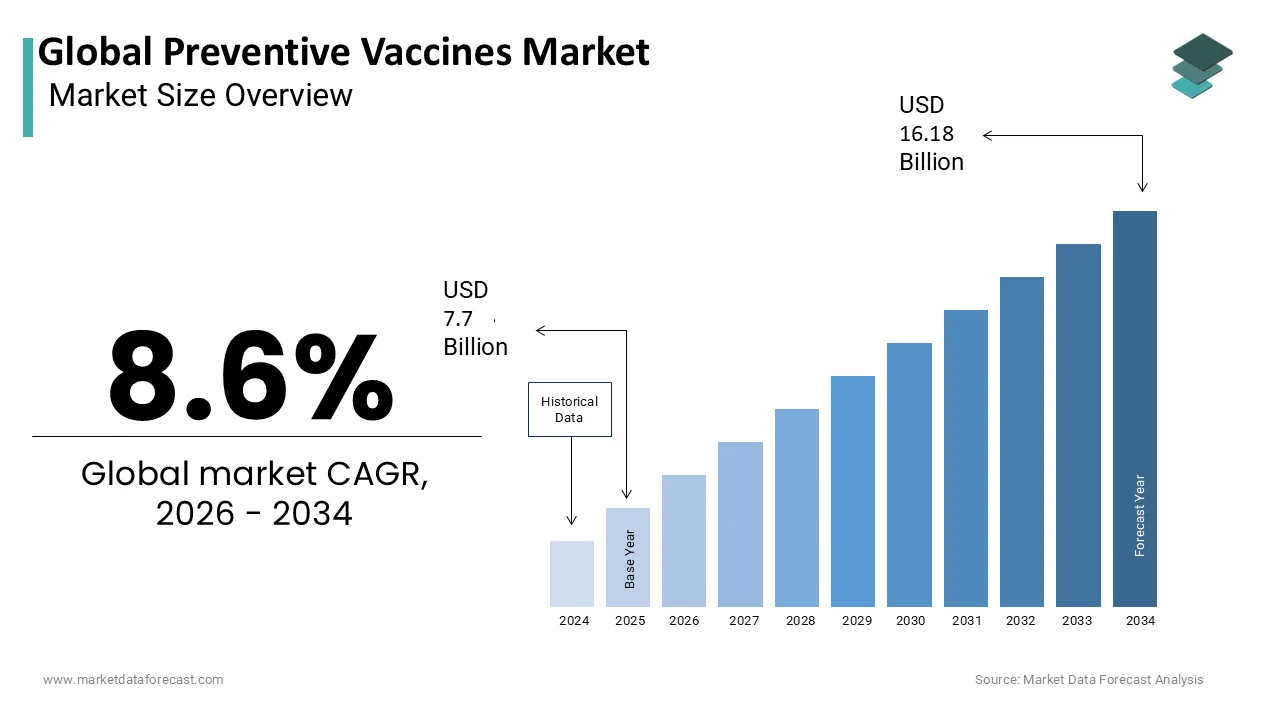
Preventive vaccines represent a vital segment of public health infrastructure dedicated to the research, development, and commercial distribution of biological preparations designed to stimulate active immunity against infectious pathogens. According to the World Health Organization immunization coverage data, approximately 85% of infants worldwide received the recommended 3 doses of diphtheria, tetanus, and pertussis vaccine formulations, illustrating the massive institutional scale underpinning global prophylaxis programs. According to the United Nations Children Fund global immunization reports, more than 116 million infants received at least one routine protective dose during their primary year of life, establishing a strong baseline of clinical demand for the Preventive Vaccines Market. This dynamic industrial ecosystem encompasses state-sponsored immunization schedules, cold chain distribution networks, and advanced biotechnology manufacturing facilities that supply prophylactic formulations to health systems worldwide.
MARKET DRIVERS
Institutional Mandates Driving Immunization Scale
Rising government immunization mandates primarily drive the global preventive vaccines market by institutionalizing routine preventive care across diverse populations. According to the World Health Organization policy tracking databases, national immunization schedules across 195 member states incorporated an average of 12 distinct antigen formulations, directly expanding public procurement volumes within the Preventive Vaccines Market. According to the Pan American Health Organization health statistics, public sector vaccine procurement budgets increased by 14% over the past 3 consecutive years, heavily supporting the commercial expansion of the Preventive Vaccines Market. Governments increasingly recognize that mandated pediatric and adult vaccination programs reduce long term national healthcare expenditures associated with treating infectious outbreaks. This policy backing guarantees consistent, high-volume purchasing agreements for leading pharmaceutical manufacturers, ensuring stable revenue streams and continuous production scaling. Consequently, government-backed immunization frameworks act as an essential economic catalyst that drives widespread adoption and long-term stability across the Preventive Vaccines Market.
Genetic Platforms Accelerating Production Velocity
Technological innovations in recombinant vector platforms further contribute to the global preventive vaccines market expansion by enabling rapid antigen design and shorter production cycles. According to the International Federation of Pharmaceutical Manufacturers and Associations research briefings, biopharmaceutical investments in genetic platform technologies grew by 28%, accelerating the pipeline velocity within the Preventive Vaccines Market. According to the European Centre for Disease Prevention and Control scientific bulletins, advanced vector and mRNA expression platforms reduced candidate antigen development timeframes from years to mere months, strongly supporting the growth metrics of the Preventive Vaccines Market. Modern molecular biology techniques allow developers to synthesize precise pathogen sequences without handling live infectious agents, drastically minimizing biological containment risks and manufacturing downtime. These advanced platforms improve batch consistency and allow manufacturers to respond swiftly to emerging viral mutations or regional epidemic threats. As a result, cutting-edge technological innovations provide the necessary scientific agility and production efficiency required to sustain robust commercial growth across the Preventive Vaccines Market.
MARKET RESTRAINTS
Thermal Excursions Impeding Vaccine Distribution
Complex cold chain logistics and distribution failures impede the global preventive vaccines market growth by threatening product stability and limiting rural healthcare delivery. According to the World Health Organization supply chain assessment reports, temperature excursions during transport account for nearly 20% of vaccine wastage in developing regional supply networks, creating a severe operational barrier that impedes the growth of the global preventive vaccines market. According to the Gavi Vaccine Alliance program evaluations, logistical disruptions in remote or conflict-affected areas leave millions of doses vulnerable to thermal degradation, directly hindering the market penetration of the global preventive vaccines market. Maintaining strict temperature ranges from minus 80 degrees Celsius to positive 8 degrees Celsius requires specialized ultra-cold storage units, continuous data logging, and reliable refrigerated transport fleets that are often absent in resource-limited settings. Any failure in this unbroken chain renders sensitive biological formulations ineffective, resulting in financial losses and diminished clinical confidence. This persistent logistical bottleneck restricts addressable geographic markets and increases operational expenditure for distribution companies operating within the Preventive Vaccines Market.
Digital Misinformation Suppressing Immunization Uptake
Heightened public vaccine hesitancy and misinformation campaigns further hinder the global preventive vaccines market growth by suppressing uptake rates among target demographic cohorts. According to the United Nations Children's Fund global immunization tracking surveys, public skepticism and misinformation contributed to stalled coverage rates in over 50 countries, actively impeding the demand resilience of the Preventive Vaccines Market. According to the World Health Organization strategic advisory group reports, psychological hesitancy factors caused a measurable stagnation in routine adult booster uptake, creating severe demand plateaus that restrict the scaling potential of the Preventive Vaccines Market. The rapid spread of unverified claims across digital media platforms has eroded public trust in institutional health guidelines, leading to increased rates of vaccine refusals and delayed immunizations. Healthcare providers must expend considerable resources on community engagement and educational outreach to counteract these behavioral barriers, pulling financial capital away from research and development initiatives. Consequently, persistent vaccine hesitancy creates unpredictable demand fluctuations and acts as a major psychological restraint on the growth of the global preventive vaccines market.
MARKET OPPORTUNITIES
Demographic Shifts Unlocking Adult Prophylaxis
Expansion into adult and adolescent immunization programs is a major opportunity that expands the global preventive vaccines market beyond traditional pediatric vaccination frameworks. According to the International Federation of Pharmaceutical Manufacturers and Associations' global health reports, adult vaccination coverage initiatives targeting human papillomavirus and respiratory syncytial virus grew by 35%, creating substantial commercial opportunities within the Preventive Vaccines Market. According to the European Medicines Agency regulatory updates, expanded clinical indications for adult formulations drove a 40% surge in supplemental biologics license applications, directly driving new growth opportunities for the Preventive Vaccines Market. Historically focused on infant immunization schedules, the pharmaceutical industry is capitalizing on the massive demographic shift toward aging populations worldwide who require regular boosters against shingles, pneumonia, and influenza. This strategic pivot captures a lucrative consumer segment with higher disposable income and greater health consciousness, opening up recurring revenue streams for manufacturers. Therefore, diversifying portfolios toward adult and adolescent prophylaxis unlocks powerful new commercial avenues across the global preventive vaccines market.
Emerging Economies Fostering Regional Expansion
Untapped emerging markets in developing regions create an exceptional opportunity that fosters long term expansion within the global preventive vaccines market. According to the Gavi Vaccine Alliance operational statistics, localized immunization campaigns in lower-income countries successfully protected over 351 million children over 5 years, offering vast untapped clinical cohorts for the Preventive Vaccines Market. According to the United Nations Children's Fund epidemiological databases, localized manufacturing partnerships in developing nations expanded by 45%, and this provides a massive foundation of new opportunities for the Preventive Vaccines Market. As regional governments increase healthcare expenditure and international health organizations subsidize bulk purchases, millions of previously unreached individuals gain access to essential preventative immunizations. Localizing production through technology transfer agreements allows domestic manufacturers to supply affordable vaccines tailored to regional disease burdens. Consequently, expanding commercial outreach into high-growth developing economies serves as a primary driver for future market scaling within the Preventive Vaccines Market.
MARKET CHALLENGES
Protracted Timelines Straining Financial Resources
Lengthy and capital-intensive research and development cycles challenge the global preventive vaccines market by demanding massive upfront financial commitments with uncertain commercial returns. According to the International Federation of Pharmaceutical Manufacturers and Associations' clinical trial analyses, the average timeline from initial laboratory discovery to commercial licensure for a novel vaccine exceeds 10 years, presenting a dangerous financial challenge that tests the corporate stability supporting the Preventive Vaccines Market. According to the World Health Organization vaccine research benchmarks, attrition rates during Phase II and Phase III clinical trials remain above 70% for complex prophylactic candidates, severely challenging the risk management parameters of the Preventive Vaccines Market. Developing safe biological products requires extensive preclinical safety evaluations, large-scale multi-center human trials, and rigorous regulatory audits to verify efficacy across diverse genetic populations. Many smaller biotechnology firms struggle to sustain operations through these protracted development phases without external funding or venture capital backing. This high financial hurdle discourages exploratory research into neglected tropical diseases and creates a formidable challenge for the evolution of the Preventive Vaccines Market.
Complex Licensing Inhibiting Generic Production
Complex intellectual property and biomanufacturing patent barriers actively challenge the global preventive vaccines market expansion by restricting generic competition and localized production capacity. According to the World Intellectual Property Organization life sciences patent reviews, proprietary cell line technologies and adjuvant formulations are protected by overlapping international patents, directly challenging the operational velocity of the Preventive Vaccines Market. According to the International Federation of Pharmaceutical Manufacturers & Associations' legal compliance updates, technology transfer disputes and licensing negotiations delayed generic facility operational startups by an average of 24 months, compounding the structural hurdles within the Preventive Vaccines Market. Specialized proprietary manufacturing techniques, such as unique mammalian cell culture systems and complex purification steps, cannot be easily replicated without infringing on existing intellectual property rights. This strict legal protectionism prevents regional manufacturers from quickly ramping up production during localized health emergencies, concentrating manufacturing power among a handful of global corporations. Consequently, navigating these intricate patent landscapes remains a continuous operational challenge for participants in the global preventive vaccines market.
REPORT COVERAGE
| REPORT METRIC | DETAILS |
| Market Size Available | 2025 to 2034 |
| Base Year | 2025 |
| Forecast Period | 2026 to 2034 |
| Segments Covered | By Product Type, Application, and Region |
| Various Analyses Covered | Global, Regional & Country-Level Analysis, Segment-Level Analysis, Drivers, Restraints, Opportunities, Challenges; PESTLE Analysis; Porter's Five Forces Analysis, Competitive Landscape, Analyst Overview of Investment Opportunities |
| Regions Covered | North America, Europe, APAC, Latin America, Middle East & Africa |
| Market Leaders Profiled | GlaxoSmithKline PLC, Merck and Company, Bavarian Nordic, CSL Limited, Emergent BioSolutions Inc., Novartis AG, Johnson and Johnson, Medimmune LLC, Pfizer |
SEGMENTAL ANALYSIS
By Vaccine Type Insights
The conjugate vaccines segment led the market by holding 40.5% of the global market share in 2025. The dominance of this conjugate vaccines segment in the global market is primarily driven by their exceptional efficacy in protecting vulnerable infant populations against encapsulated bacterial pathogens. According to the World Health Organization immunization data summaries, conjugate formulations targeting pneumococcal disease and Haemophilus influenzae type b achieved over 85% global coverage rates, solidifying the market leadership of this specific segment within the Preventive Vaccines Market. According to the International Society for Infectious Diseases clinical registries, conjugate technologies account for more than 45% of total global revenue generated within the global preventive vaccines market. The unique chemical binding of poor polysaccharide antigens to carrier proteins stimulates T-cell-dependent immune responses, providing long-lasting immunological memory that traditional polysaccharide vaccines fail to achieve. Public health agencies universally recommend these formulations for inclusion in national immunization schedules, guaranteeing consistent, high-volume institutional procurement. This established clinical trust, combined with broad regulatory backing, ensures that the conjugate vaccine category maintains its preeminent market share position within the Preventive Vaccines Market.
On the other side, the DNA and recombinant vector vaccines segment is estimated to showcase a promising CAGR of 20.2% over the forecast period. According to the European Medicines Agency biotechnology tracking reports, clinical trial applications utilizing genetic vector designs increased by 42%, fueling the rapid expansion of advanced nucleic acid therapies within the Preventive Vaccines Market. According to the International Federation of Pharmaceutical Manufacturers and Associations research updates, private venture capital funding directed toward genetic vaccine startups surpassed 5,000,000,000 dollars, establishing this segment as the primary growth engine of the global preventive vaccines market. As genomic sequencing technologies become more accessible, researchers can rapidly identify pathogen epitopes and insert them into plasmid vectors or viral delivery systems for immediate clinical testing. These platforms offer unmatched manufacturing scalability and elicit both humoral and cellular immune responses, making them ideal for addressing rapidly mutating viral strains. This convergence of rapid development cycles, superior immunological breadth, and heavy financial investment underpins the exceptional growth velocity characterizing this segment within the Preventive Vaccines Market.
By End-User Insights
The pediatric vaccine segment held the dominating share of 55.9% of the global market in 2025. The growth of the pediatric vaccine segment in the global market can be credited to the established universal birth dose schedules and mandatory school entry immunization requirements. According to the United Nations Children's Fund global immunization databases, pediatric vaccination programs account for over 65% of total vaccine doses administered worldwide, anchoring the dominant market share of this segment within the Preventive Vaccines Market. According to the World Health Organization routine health service reports, over 110 million infants completed primary series vaccinations against diphtheria, tetanus, and pertussis, ensuring continuous baseline revenue for the Preventive Vaccines Market. National governments prioritize pediatric prophylaxis as the most cost-effective intervention to reduce childhood mortality and prevent debilitating infectious diseases early in life. Public health ministries maintain centralized procurement contracts that guarantee steady, predictable demand for standard childhood vaccines regardless of economic cycles. This institutionalized integration into primary healthcare infrastructure guarantees a continuous stream of commercial distribution, reinforcing the commanding market position of the pediatric segment within the Preventive Vaccines Market.
However, the adult vaccine segment is predicted to register a CAGR of 17.4% over the forecast period in the global market. According to the World Health Organization's aging population health statistics, adult immunization rates for influenza, zoster, and pneumococcal disease rose by 24%, accelerating the adoption velocity of this end-user segment within the Preventive Vaccines Market. According to the International Longevity Centre policy briefs, commercial workplace vaccination programs and adult immunization awareness campaigns expanded by 38%, firmly driving the rapid developmental pace of this segment in the Preventive Vaccines Market. With global life expectancies increasing and healthcare providers emphasizing preventative geriatric medicine, nations are shifting focus toward protecting aging cohorts from vaccine-preventable comorbidities. The introduction of highly effective adult-specific formulations, such as adjuvanted shingles and high-dose influenza vaccines, has significantly improved clinical outcomes and stimulated consumer demand. This surging demographic need and expanding insurance reimbursement scope explain why adult end-users register the fastest growth momentum across the Preventive Vaccines Market.
COUNTRY LEVEL ANALYSIS
North America Preventive Vaccines Market Analysis
North America dominated the market by accounting for the major share of the global market in 2025. According to the Centers for Disease Control and Prevention immunization safety records, regional healthcare expenditures on preventative biologicals exceeded 35,000,000,000 dollars, establishing a robust regional standing within the Preventive Vaccines Market. According to the United States Department of Health and Human Services policy disclosures, federal vaccine stockpiles and research grants increased by 15%, directly supporting the exponential growth metrics of the Preventive Vaccines Market. Backed by advanced biotechnology research institutions, rigorous regulatory oversight by the Food and Drug Administration, and extensive private health insurance coverage, North American markets maintain cutting-edge commercialization pipelines. Domestic biopharmaceutical leaders successfully leverage advanced manufacturing technologies and strong intellectual property portfolios to supply high-value adult and pediatric vaccines, positioning North America as the undeniable revenue leader and technological benchmark of the Preventive Vaccines Market.
Europe Preventive Vaccines Market Analysis
Europe occupies a highly advanced position characterized by coordinated public health frameworks and stringent regulatory standards within the global preventive vaccines market. According to the European Centre for Disease Prevention and Control epidemiological reports, joint European Union vaccine procurement agreements secured over 200,000,000 doses of prophylactic formulations, reinforcing its elite market position in the Preventive Vaccines Market. According to the European Medicines Agency annual regulatory reviews, centralized marketing authorizations for innovative recombinant vaccines increased by 22%, driving steady clinical progress within the Preventive Vaccines Market. European member states maintain universal healthcare systems that ensure high baseline immunization coverage across diverse populations, supported by proactive government recommendations for adult booster programs. This collaborative regulatory environment, paired with world-class biopharmaceutical manufacturing plants located in countries like Germany, France, and Belgium, ensures that European citizens enjoy prompt access to advanced immunizations within the Preventive Vaccines Market.
Asia-Pacific Preventive Vaccines Market Analysis
Asia-Pacific maintains a technologically and logistically dynamic position fueled by massive population volumes and rapidly modernizing healthcare infrastructure within the Preventive Vaccines Market. According to the World Health Organization regional office statistics, national immunization funding across Asian economies grew by 18%, securing a competitive regional posture within the Preventive Vaccines Market. According to the Asian Coalition for Health Research clinical tracking data, regional clinical trials for novel viral vector vaccines expanded by 30%, continuously bolstering the geographic footprint of the Preventive Vaccines Market. Rapid economic development, expanding middle-class demographics, and government-led public health initiatives in countries like China, Japan, and Indonesia are driving unprecedented demand for both pediatric and adult prophylactic products. Domestic manufacturers are scaling up local production capacity to supply low-cost, high-quality vaccines, successfully transforming the Asia-Pacific region into the fastest-growing operational hub within the Preventive Vaccines Market.
Latin America Preventive Vaccines Market Analysis
Latin America represents an increasingly vital regional healthcare market supported by robust public immunization programs and cooperative procurement models within the Preventive Vaccines Market. According to the Pan American Health Organization health fund reports, regional bulk vaccine purchases channeled through the Revolving Fund exceeded 1,000,000,000 dollars, establishing a vital economic stronghold for the Preventive Vaccines Market. According to the Economic Commission for Latin America and the Caribbean development indexes, regional biomanufacturing investments rose by 14%, significantly contributing to the technological elevation of the Preventive Vaccines Market. Latin American nations utilize centralized public health purchasing mechanisms to negotiate favorable pricing for essential pediatric and seasonal vaccines, ensuring high immunization equity across urban and rural populations. By actively upgrading domestic fill-finish facilities and reducing reliance on imported formulations, Latin America continues to strengthen its self-sufficiency and market resilience within the Preventive Vaccines Market.
Middle East and Africa Preventive Vaccines Market Analysis
Middle East and Africa functions as a critical emerging frontier characterized by intensive public health campaigns and international alliance support within the Preventive Vaccines Market. According to the World Health Organization regional health advisories, emergency catch-up immunization programs successfully delivered over 50,000,000 preventative doses across vulnerable zones, creating a disruptive positive impact within the Preventive Vaccines Market. According to the Gavi Vaccine Alliance regional performance reviews, new vaccine introductions in low-income African states grew by 25%, heavily expanding the inclusive reach of the Preventive Vaccines Market. Governments across the region are partnering with global humanitarian organizations and vaccine manufacturers to build local cold chain infrastructure and overcome logistical barriers. By integrating advanced rotavirus, pneumococcal, and malaria vaccines into national health schedules, the Middle East and Africa region is rapidly increasing its baseline consumption, establishing a vital long-term growth frontier within the Preventive Vaccines Market.
COMPETITIVE LANDSCAPE
Competition in the Preventive Vaccines Market is defined by intense rivalry among a small group of multinational biopharmaceutical giants controlling the vast majority of global supply volume. Market dynamics are heavily influenced by high barriers to entry, including stringent regulatory approval standards, massive capital requirements for specialized biomanufacturing infrastructure, and complex intellectual property portfolios. While established market leaders dominate pediatric and high-volume adult vaccine sectors through economies of scale, emerging regional manufacturers are increasingly disrupting traditional pricing models by supplying affordable local alternatives. Technological disruption remains a core competitive battleground, with firms racing to transition from traditional egg-based production methods toward advanced genetic, mRNA, and recombinant vector platforms. Strategic mergers, intellectual property litigation, and bidding wars for lucrative government tenders continuously reshape the competitive hierarchy, resulting in a highly consolidated yet fiercely contested global market environment.
KEY MARKET PLAYERS
Some of the companies that are playing a dominating role in the Global Preventive Vaccines Market include:
- GlaxoSmithKline plc
- Merck & Co., Inc.
- Bavarian Nordic A/S
- CSL Limited
- Emergent BioSolutions Inc.
- Novartis AG
- Johnson & Johnson
- MedImmune, LLC
- Pfizer Inc.
- Sanofi Pasteur
TOP LEADING PLAYERS IN THE MARKET
- Pfizer Inc. contributes extensively to the market through the large-scale global commercialization of blockbuster pneumococcal conjugate and viral preventative vaccines. The company actively participates in the market by expanding its high-capacity manufacturing facilities and partnering with international health agencies to supply doses to developing nations. Recent actions to strengthen its market position include completing advanced clinical trials for next-generation multi-valent respiratory formulations and securing expanded regulatory approvals for pediatric indications.
- Merck and Co. Inc. maintains a vital contribution to the market by producing essential pediatric and adult viral vaccines that protect against human papillomavirus and varicella. The company actively participates in the market by investing heavily in automated bioprocessing technologies and optimizing global supply chain distribution networks. Recent actions to strengthen its market position include increasing production capacity at its main vaccine manufacturing plants and initiating strategic distribution alliances across emerging regional healthcare economies.
- GlaxoSmithKline plc contributes significantly to the market through pioneering research in specialized adjuvanted formulations designed for shingles and respiratory syncytial virus protection. The company actively participates in the market by collaborating with regional research institutions to evaluate novel antigen combinations and enhance cold chain integrity. Recent actions to strengthen its market position include launching comprehensive global public health awareness campaigns and receiving priority regulatory designations for innovative adult vaccine candidates.
TOP STRATEGIES USED BY KEY MARKET PARTICIPANTS
Key market participants in the Preventive Vaccines Market deploy sophisticated strategic initiatives to maintain competitive advantages and navigate complex global regulatory landscapes. Companies frequently establish strategic public-private partnerships and long-term supply contracts with international organizations like UNICEF and Gavi to secure guaranteed, high-volume procurement orders. Organizations heavily invest in digital supply chain monitoring systems and advanced thermal packaging technologies to mitigate cold chain distribution risks in remote developing regions. Industry leaders prioritize diversified manufacturing footprints by building regional production hubs to bypass local trade barriers and reduce dependency on single-site facilities. Furthermore, key players actively pursue portfolio expansion through strategic mergers, targeted licensing agreements, and aggressive research and development spending on mRNA and recombinant vector platforms to stay ahead of emerging infectious threats.
GLOBAL PREVENTIVE VACCINES MARKET NEWS
In April 2024, Pfizer Inc. expanded its automated vaccine manufacturing facility in Michigan, acquiring advanced modular filling lines. This strategic action is anticipated to allow Pfizer to scale up global antigen production and strengthen the Preventive Vaccines Market.
In July 2024, Merck and Co. Inc. formed a strategic distribution alliance with a major international logistics provider. This partnership is expected to allow Merck to streamline cold chain transport and strengthen the Preventive Vaccines Market.
In October 2024, GlaxoSmithKline plc initiated a multi-center clinical trial protocol across several global research hospitals. This clinical milestone is projected to allow GlaxoSmithKline to evaluate novel adult formulations and strengthen the Preventive Vaccines Market.
In January 2025, Sanofi SA secured expanded regulatory review status for advanced respiratory preventative therapies through international health authorities. This regulatory milestone is designed to allow Sanofi to accelerate commercial patient access and strengthen the Preventive Vaccines Market.
In March 2025, CSL Seqirus completed the acquisition of a regional biotechnology manufacturing hub to localize adjuvant production. This operational expansion is predicted to allow CSL Seqirus to reduce supply chain bottlenecks and strengthen the Preventive Vaccines Market.
MARKET SEGMENTATION
This research report on the global preventive vaccines market has been segmented and sub-segmented based on the vaccine type, application, and region.
By Vaccine Type
- Live, Attenuated Vaccines
- Inactivated Vaccines
- Toxoid Vaccines
- Subunit Vaccines
- Conjugate Vaccines
- DNA Vaccines
- Recombinant Vector Vaccines
By End-User
- Pediatric Vaccine
- Pneumococcal
- MMR
- Varicella
- Hepatitis
- Poliovirus
- HIB
- Others
- Adult Vaccines
- Influenza
- Cervical Cancer
- Hepatitis
- Zoster
- Others
By Region
- North America
- Europe
- Asia-Pacific
- Latin America
- Middle East and Africa