- Product Description Description
- Table of Contents TOC
- List of Table & Figure LOT
- Get Free Sample PDF Sample PDF
Market Size, 2025
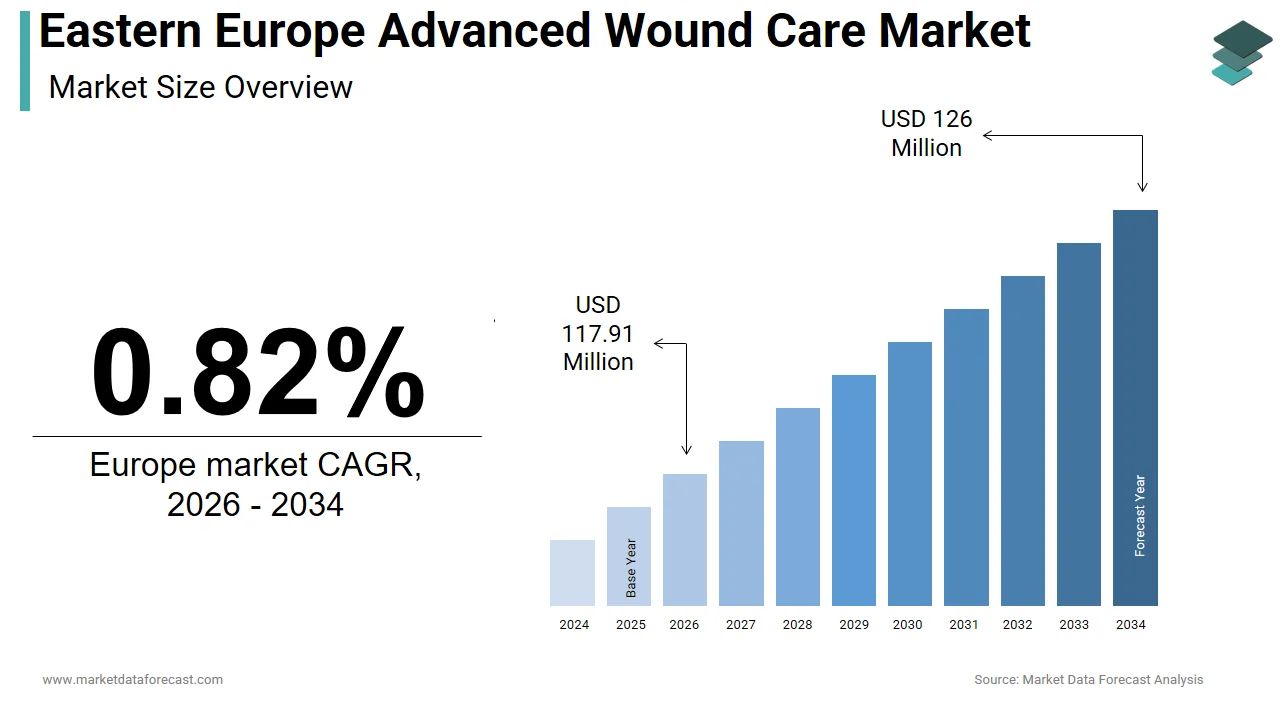
$116.95 MnMarket Estimate, 2026
$117.91 MnMarket Forecast, 2034
$126 MnCAGR, 2026–2034
0.82%Eastern Europe Advanced Wound Care Market Report Summary
The Eastern Europe advanced wound care market was valued at USD 116.95 million in 2025, is anticipated to reach USD 117.91 million in 2026, and is projected to reach USD 126 million by 2034, growing at a CAGR of 0.82% from 2026 to 2034. Market growth is driven by the rising prevalence of chronic wounds, increasing incidence of diabetes, and expanding elderly population across Eastern Europe. Healthcare providers are adopting advanced wound care products to improve healing outcomes, reduce infection risks, and shorten hospital stays. Growing awareness of modern wound management practices, along with gradual improvements in healthcare infrastructure, is supporting steady market development in the region.
Key Market Trends
- Rising demand for advanced wound dressings for chronic and hard-to-heal wounds.
- Increasing focus on diabetic foot ulcer management and prevention.
- Gradual adoption of evidence-based wound care protocols in hospitals.
- Expansion of private healthcare facilities supporting premium wound care products.
- Growing emphasis on cost-effective and reimbursement-supported therapies.
Segmental Insights
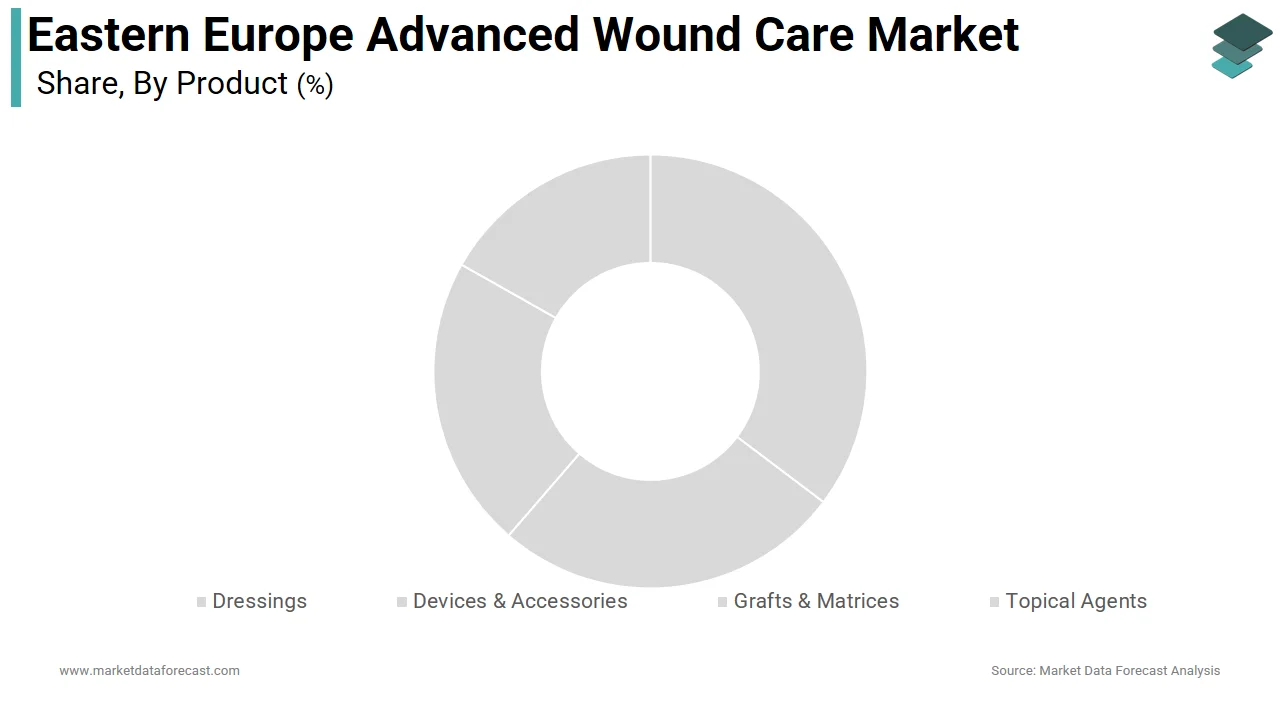
- Based on product, the dressings segment dominated the market in 2025 by accounting for a substantial share. The segment’s leadership is attributed to wide clinical usage, availability of diverse formulations, and suitability for multiple wound types.
- Based on wound type, the diabetic foot ulcers segment led the market by capturing 38.6% share in 2025, driven by the growing burden of diabetes and related complications across Eastern Europe.
- Based on end user, the hospitals segment dominated the market in 2025, supported by high patient inflow, availability of specialized wound care units, and preference for advanced clinical treatments.
Regional Insights
The Eastern Europe advanced wound care market is witnessing steady development across major economies, supported by improving healthcare access, rising chronic disease prevalence, and alignment with European clinical standards.
- Poland led the market in 2025 with 24.3% share, driven by strong hospital infrastructure and expanding reimbursement coverage for advanced therapies.
- Russia followed with 19.7% share in 2025, supported by large patient volumes and increasing investments in hospital modernization.
- Turkey holds a significant position due to its hybrid healthcare system combining public hospitals and a vibrant private sector that encourages early adoption of premium wound care products.
- The Czech Republic is growing steadily, supported by high healthcare standards, EU alignment, and early adoption of clinical guidelines.
Competitive Landscape
The Eastern Europe advanced wound care market is characterized by the presence of leading global medical device manufacturers and specialized wound care providers with strong product portfolios. Market players are focusing on expanding distribution networks, introducing cost-effective solutions, and strengthening clinical education programs. Strategic partnerships with hospitals, training initiatives, and investments in regional manufacturing are shaping competitive dynamics across the market.
Prominent companies operating in the Eastern Europe advanced wound care market include Acelity L.P., Inc., Smith & Nephew, Mölnlycke Health Care, ConvaTec, Inc., Coloplast Corp., 3M Healthcare, Medtronic, Integra LifeSciences, and Organogenesis Inc..
 Download Free Sample Report
Eastern Europe Advanced Wound Care Market Size
The size of the Eastern Europe advanced wound care market was valued at USD 116.95 million in 2025. This market is expected to grow at a CAGR of 0.82% from 2026 to 2034 and be worth USD 126 million by 2034 from USD 117.91 million in 2026.
Advanced Wound Care (AWC) is a specialized field of medicine that uses modern technology and evidence-based practices to treat complex or chronic wounds that have failed to heal through standard first-aid methods. These products go beyond traditional gauze by maintaining a moist healing environment, managing exudate, reducing infection risk, and supporting tissue regeneration. The sector operates within healthcare systems undergoing modernization, where the rising prevalence of diabetes, vascular diseases, and aging populations increasingly strains wound management capacity. The World Health Organization reports that the increasing burden of diabetes, particularly in Eastern European nations, is expected to continue rising over the next decade, which will directly accelerate demand for specialized diabetic foot ulcer treatment solutions. According to Eurostat, the substantial, rapid growth of the elderly population in countries such as Romania, Bulgaria, and Poland is driving higher demand for geriatric care, thereby intensifying the risks of pressure ulcers and surgical site complications. Furthermore, national health strategies in the region are progressively aligning with EU clinical guidelines that recommend advanced dressings for complex wounds, signaling a shift from cost-driven to outcome-driven procurement. This convergence of epidemiological pressure, demographic transition, and policy evolution defines the strategic contours of the Eastern Europe advanced wound care landscape.
MARKET DRIVERS
Rising Prevalence of Diabetes and Diabetic Foot Ulcers
The escalating burden of diabetes across the Eastern region is a primary driver of the Eastern Europe advanced wound care market. This is particularly true for diabetic foot ulcers, which account for a significant proportion of chronic wound cases. The International Diabetes Federation emphasizes a substantial and growing burden of diabetes across the European region, with Serbia and Romania exhibiting high population-based prevalence rates. Data from the European Wound Management Association highlights that a significant percentage of patients with diabetes will face the risk of developing foot ulcers. Furthermore, Polish national data indicate a rising trend in diabetes-related complications, driven by limited access to specialized care, particularly in rural areas. Advanced dressings such as hydrocolloids and silver-impregnated foams are increasingly prescribed to prevent infection and promote granulation in these high-risk wounds. The demand for evidence-based wound technologies is growing in public and private care as national health ministries prioritize limb salvage to decrease long-term disability costs.
Healthcare System Modernization and EU Alignment Initiatives
Eastern European countries are actively upgrading their wound care standards through policy reforms and infrastructure investments aligned with European Union clinical guidelines. This further contributes to the expansion of the Eastern Europe advanced wound care market. Central European nations are prioritizing the modernization of hospital infrastructure and expanding outpatient care capabilities, with a particular focus on enhancing specialized, chronic, and complex wound treatment facilities. A key catalyst is the EU’s Structural Reform Support Programme, which provides technical assistance to align national treatment protocols with the EWMA’s recommendations, favoring advanced dressings for chronic wounds. The Bulgarian Ministry of Health is actively strengthening hospital infection control and antimicrobial stewardship, which is driving increased adoption of advanced antimicrobial and moisture-balancing wound care dressings in acute care settings. Additionally, as part of broader European regulatory alignment efforts, Serbia is improving the efficiency of its medical device registration processes, resulting in accelerated access to recognized international quality standards for medical products. Regional initiatives, supported by European educational frameworks, are enhancing the competencies of nursing professionals in specialized wound care management, increasing the number of trained practitioners in advanced wound care across Europe. This systemic shift from reactive to proactive wound management is transforming advanced dressings from luxury items into essential components of standardized care pathways.
MARKET RESTRAINTS
Limited Reimbursement and Budget Constraints in Public Health Systems
Inconsistent reimbursement policies and tight healthcare budgets severely restrict access to these products, despite clinical need, which hampers the growth of the Eastern Europe advanced wound care market. Reimbursement for advanced wound dressings remains highly fragmented across Europe, with only a limited number of countries offering comprehensive coverage for these products. In several nations, advanced dressings are largely classified as patient-paid items. In Romania, the high cost of advanced dressings, such as silver alginates, against low average pension income forces many patients to rely on basic, outdated wound care materials. A 2024 survey indicates that a majority of public hospitals in Hungary limit the use of advanced dressings to only the most severe cases due to strict budgetary caps. Even in countries with better funding, such as Poland, public tender processes often prioritize the lowest price, frequently resulting in the procurement of generic products with insufficient clinical validation. This economic barrier creates a two-tier system where urban private clinics offer modern solutions while rural public facilities rely on outdated methods, perpetuating disparities in healing outcomes and increasing long-term treatment costs through complications and hospital readmissions.
Shortage of Trained Wound Care Specialists and Standardized Protocols
The lack of specialized wound care education and unified clinical guidelines impedes optimal utilization of advanced dressings across the region, which hinders the expansion of the Eastern Europe advanced wound care market. Evidence suggests a substantial gap in the formal education of nurses in Bulgaria, Romania, and Ukraine regarding modern wound assessment and management, with training often relying on informal, experiential knowledge. Medical curricula in these regions frequently prioritize surgical interventions over the pathophysiology of chronic wounds, reflecting a need for updated, evidence-based training standards. Consequently, even when advanced products are available, they are frequently misapplied, for example, using absorptive foams on dry necrotic wounds or occlusive films on highly exuding ulcers. A recent audit of Serbian public hospitals highlights that improper selection of advanced wound dressings remains a significant issue, resulting in suboptimal care and extended healing durations. Moreover, the lack of national, government-endorsed wound care guidelines across many Eastern European nations has resulted in inconsistent clinical practices and fragmented care. The full clinical and economic benefits of advanced wound care technologies will not be achieved without a coordinated investment in continuing education, certification, and digital decision support, even as the disease burden increases.
MARKET OPPORTUNITIES
Expansion of Outpatient and Home-Based Wound Care Services
The shift toward decentralized wound management offers a significant opportunity to increase access and reduce hospital burden through community-based and home care models, which is anticipated to fuel the growth of the Eastern Europe advanced wound care market. A majority of chronic wounds can be effectively managed outside of hospitals with proper support, yet significant portions of the Eastern European population still lack access to home-based care. The Polish National Health Fund is implementing pilot programs that utilize advanced dressings and specialized nursing visits for home-bound patients suffering from diabetic ulcers. Moreover, the Czech Ministry of Health is deploying community nursing initiatives that incorporate remote telehealth monitoring, resulting in reduced hospital admissions for chronic wound patients. Advanced dressings are ideal for this model; they require fewer changes, reduce caregiver burden, and enable remote progress tracking via smartphone photos. Companies like Mölnlycke and ConvaTec are partnering with local providers to bundle dressings with training and digital tools. Integrating advanced technology into home-based wound care provides a sustainable, economical alternative that aligns with international best practices for chronic wound management.
Adoption of Telemedicine and Digital Wound Assessment Tools
Digital health innovations are opening new pathways for wound monitoring and specialist consultation in underserved regions, and thereby are likely to boost the expansion of the Eastern Europe advanced wound care market. Mobile health applications and Artificial Intelligence-powered image analysis are significantly accelerating the adoption of remote wound care management across Poland, Romania, and Serbia, as noted by organizations promoting digital health. Platforms like WoundVision and SwiftSkin allow community nurses to capture standardized wound images and receive automated measurements of size, exudate, and tissue type, enabling timely interventions without specialist travel. A pilot project investigating digital wound care in rural Bulgaria demonstrated that implementing remote triage tools and standardized wound assessment protocols can drastically reduce the time needed to initiate appropriate wound management and reduce unnecessary referrals. These tools also generate data for quality improvement. The digitization of healthcare in Poland has enabled the integration of digital records across specialized clinics, allowing for improved tracking of patient outcomes and product effectiveness in chronic wound care. Crucially, many digital platforms are low-cost or open-source, making them accessible even in resource-constrained settings. High levels of smartphone usage across the region are enabling digital wound care platforms to connect patients in rural areas with expert care, thereby improving access and outcomes while providing necessary data for reimbursement decisions.
MARKET CHALLENGES
Supply Chain Fragmentation and Import Dependency
The region’s heavy reliance on imported advanced wound care products creates vulnerability to logistical disruptions and pricing volatility. This, in turn, challenges the growth of the Eastern Europe advanced wound care market. Advanced wound dressings in the European market are heavily supplied by major producers in Western Europe and the United States, leading to limited production capacity within other parts of the region. The redirection of shipping traffic to avoid the Red Sea has significantly delayed the delivery of critical medical devices to Europe, requiring healthcare providers to manage limited supplies and seek alternatives. Depreciation of the Romanian national currency against the Euro has increased the cost of imported medical materials, including advanced dressings and gels, placing pressure on purchasing budgets. Unlike Western Europe, Eastern nations lack strategic medical stockpiles for chronic care consumables, leaving clinics exposed to sudden shortages. Consistent access to life-improving wound technology will remain at risk unless we prioritize regional logistics, local assembly, and domestic manufacturing incentives.
Lack of Health Economic Data to Support Reimbursement Decisions
The absence of localized cost effectiveness studies hinders policy makers from justifying public funding for advanced wound care despite long term savings potential, which limits the expansion of the Eastern Europe advanced wound care market. The European Health Economics Association indicates a significant disparity in advanced dressing assessments, with Eastern Europe conducting far fewer peer-reviewed health technology evaluations compared to Germany and the United Kingdom. Payers therefore default to upfront price comparisons, overlooking evidence that silver alginates or NPWT can reduce amputations, hospital stays, and nursing visits, saving thousands per patient. Modeling studies suggest that public reimbursement of advanced dressings for diabetic foot ulcers in Poland produces a positive economic return through reduced complication costs, although this evidence has not yet been implemented in national budget planning. Language barriers and limited research capacity further isolate the region from global evidence synthesis. Advanced wound care will remain an afterthought in Eastern European procurement until state-funded research and patient registries can prove their real-world value, ending the reliance on inefficient treatments.
REPORT COVERAGE
| REPORT METRIC | DETAILS |
| Market Size Available | 2025 to 2034 |
| Base Year | 2025 |
| Forecast Period | 2026 to 2034 |
| Segments Covered | By Product, Wound Type, End User, and Country. |
| Various Analyses Covered | Global, Regional, and Country-Level Analysis, Segment-Level Analysis, Drivers, Restraints, Opportunities, Challenges; PESTLE Analysis; Porter’s Five Forces Analysis, Competitive Landscape, Analyst Overview of Investment Opportunities |
| Countries Covered | UK, France, Spain, Germany, Italy, Russia, Sweden, Denmark, Switzerland, Netherlands, Turkey, Czech Republic, and the Rest of Europe. |
| Market Leaders Profiled | Acelity L.P., Inc., Smith & Nephew Plc., Mölnlycke Health Care, ConvaTec, Inc., Coloplast Corp., 3M Healthcare, Medtronic, Integra LifeSciences Corporation, Organogenesis Inc., and Others. |
SEGMENTAL ANALYSIS
By Product Insights
In 2025, the dressings segment was the largest segment in the Eastern Europe advanced wound care market by accounting for a substantial share. The dominance of the dressings segment is driven by its foundational role in managing exudate, preventing infection, and maintaining a moist healing environment across a wide spectrum of chronic and acute wounds. Driven by the high prevalence of diabetic foot complications and pressure injuries, healthcare providers are increasingly using advanced foam and alginate dressings, favored for their high moisture absorption capabilities. Evidence indicates that these dressings reduce the frequency of dressing changes compared to traditional gauze, thereby easing the nursing workload in resource-constrained, public healthcare settings. Additionally, hydrocolloids remain widely used for low-exuding venous leg ulcers due to their occlusive properties and cost-effectiveness, critical in budget-constrained settings. National health protocols in Czechia and Romania now explicitly recommend advanced dressings over traditional gauze for stage two and above pressure ulcers. In regions with restricted access to specialized, high-tech interventions, specialized dressings provide a widely accessible and scalable approach to advanced wound care in Eastern Europe.
The negative pressure wound therapy (NPWT) segment is predicted to witness the highest CAGR of 12.4% between 2026 and 2034 due to increasing adoption in both hospital and home care settings for complex surgical wounds, traumatic injuries, and non-healing diabetic ulcers. A further key enabler is the introduction of portable single-use NPWT systems such as Smith & Nephew’s PICO and Mölnlycke’s V.A.C. ULTA, which eliminate the need for bulky pumps and reduce infection risk, making them ideal for resource-limited environments. Following advancements in national treatment recommendations and enhanced reimbursement frameworks by the National Health Fund, Polish tertiary hospitals increased their utilization of advanced wound management techniques for post-surgical care. Pilot initiatives for home-based negative pressure wound therapy in Romania demonstrated potential in reducing hospital readmission rates and overall treatment costs for patients with diabetic foot ulcers. The regional transition of NPWT from a luxury item to a standard of care for high-risk wounds is being driven by increased training and accessible leasing options.
By Wound Type Insights
The diabetic foot ulcers segment led the Eastern Europe advanced wound care market by capturing a share of 38.6% in 2025. The leading position of the diabetic foot ulcers segment is attributed to the region’s escalating diabetes epidemic. Countries like Romania, Hungary, and Serbia report adult prevalence rates exceeding 10 percent, with limited access to preventive podiatry in rural areas. A significant portion of individuals with diabetes face the risk of developing foot ulcers, which, if not properly managed, frequently result in limb loss. To improve outcomes, countries are focusing on limb salvage, with initiatives that establish multidisciplinary care teams and boost the utilization of advanced antimicrobial dressings. Recent research indicates that specialized, structured wound management accelerates the healing process for neuropathic foot ulcers compared to conventional treatment methods. Furthermore, EU structural funds are financing specialized diabetic foot clinics in Poland and the Czech Republic, creating dedicated channels for advanced product uptake. Hence, this segment remains the clinical and economic epicenter of advanced wound care demand in Eastern Europe.
The pressure ulcers segment is estimated to register the fastest CAGR of 10.8% during the forecast period, owing to rapid population aging and prolonged hospital stays. Eurostat confirms that Romania, Bulgaria, and Poland are experiencing a significant, rapid increase in the proportion of older citizens within their total populations, marking a pronounced demographic shift toward an elderly society. A growing number of elderly citizens in these regions face mobility limitations caused by, or associated with, long-term conditions like strokes and neurodegenerative diseases. Documentation from health system observers emphasizes that public hospitals in these regions struggle with low nurse-to-patient staffing levels, which severely hinders the ability of staff to perform regular patient repositioning, thus elevating the risk of pressure ulcers. Consequently, demand for prophylactic and therapeutic advanced dressings like silicone soft foams and hydrofiber has spiked. Additionally, long-term care facilities are adopting pressure-mapping mattresses and heel protectors, creating synergistic demand for compatible dressings. Rising pressure ulcer rates, fueled by staffing shortages and an aging population, are making prevention a key quality indicator and fueling market growth.
By End User Insights
The hospitals segment dominated the Eastern Europe advanced wound care market by occupying a significant share in 2025. The supremacy of the hospitals segment is credited to its role as the primary site for managing complex acute wounds, surgical complications, and severe chronic ulcers requiring multidisciplinary care. An additional driver is the concentration of specialized resources. Only large hospitals in capital cities like Warsaw, Bucharest, and Prague have access to vascular surgeons, endocrinologists, and certified wound nurses capable of utilizing advanced products effectively. Advanced wound care materials, such as silver dressings and collagen matrices, are predominantly utilized in tertiary, specialized medical centers due to cost limitations and the need for specialized expertise in secondary settings. High volumes of inpatient surgical procedures managed by the National Health Fund are driving demand for advanced, post-operative wound care, creating a strong market for specialized dressings. Centralized tender processes enable hospitals to overcome budget constraints by buying foam and hydrocolloid dressings in bulk at reduced prices. Hospitals will remain the primary hub for advanced wound care in Eastern Europe until outpatient and home care infrastructure matures.
The home care settings segment is anticipated to witness the fastest CAGR of 13.1% between 2026 and 2034. The rapid expansion of the home care settings segment is propelled by policy shifts toward dehospitalization and cost containment, particularly for chronic wounds like diabetic foot ulcers and venous leg ulcers. The National Health Fund has implemented a pilot program for home-based care that provides specialized nursing support and modern wound treatment, effectively freeing up hospital resources for more critical cases. Through a community-focused initiative, healthcare providers are training local nurses in advanced wound care and remote monitoring to minimize the need for elderly citizens to travel for treatment. The rise of portable NPWT and easy-to-apply foam dressings further enables this transition. Advancing tech-enabled home wound care provides a scalable, patient-focused solution that addresses both strained hospital resources and the needs of an aging population while remaining fiscally responsible.
COUNTRY LEVEL ANALYSIS
Poland Advanced Wound Care Market Analysis
Poland was the top performer in the Eastern Europe advanced wound care market by accounting for a 24.3% share in 2025. The dominance of the Polish market is driven by leadership that stems from a combination of high disease burden, proactive health policy, and EU funding alignment. The increasing prevalence of diabetes, combined with an aging population, has created a heightened demand for specialized wound management services in Poland. Furthermore, the Polish health system is enhancing its response to chronic wounds through updated, structured care guidelines and improved public reimbursement coverage for modern treatment materials. European Union funding is supporting the establishment of specialized care centers, with a focus on training nursing staff in certified, modern wound care practices. Additionally, Poland’s relatively robust public procurement system enables bulk purchasing of foam and hydrocolloid dressings at competitive prices. Poland functions as the hub for innovation and volume in Eastern European advanced wound care, driven by a robust private home care sector and clinical trials conducted by esteemed institutions like the Medical University of Warsaw.
Russia Advanced Wound Care Market Analysis
Russia was the next prominent country in the Eastern Europe advanced wound care market by capturing a 19.7% share in 2025. Despite geopolitical isolation, the country maintains substantial demand driven by high rates of diabetes, cardiovascular disease, and trauma. The Russian Endocrinology Association and experts indicate that the total number of individuals living with diabetes is rising, with a significant portion of the population remaining undiagnosed, leading to high risks of complications in remote areas. In addition, the Russian Ministry of Health has prioritized the modernization of regional hospital infrastructure through the "National Project Healthcare," with substantial funding aimed at improving specialized wound care and upgrading medical equipment. Domestic production remains minimal, so reliance on imports from China and India keeps prices volatile, yet volumes are high due to sheer population size. Urban centers like Moscow and St Petersburg lead adoption while rural areas lag significantly. Nevertheless, Russia’s scale and centralized health planning ensure it remains a critical, if complex, market for advanced wound solutions.
Turkey Advanced Wound Care Market Analysis
Turkey is another key player in the Eastern Europe advanced wound care landscape due to its hybrid healthcare system, combining public hospitals and a vibrant private sector that drives early adoption of premium products. Due to a significant prevalence of diabetes and a rapidly aging demographic, Turkey is experiencing an increased incidence of chronic wounds, such as pressure ulcers, and a heavier burden on surgical care. The Social Security Institution in Turkey has incorporated specialized, advanced wound care products into its reimbursement coverage, allowing for wider adoption of these products in public hospitals. Meanwhile, private hospitals in Istanbul and Ankara routinely use collagen matrices and NPWT for complex cases, catering to medical tourists from neighboring regions. Local distributors have formed partnerships with European manufacturers to offer training and after-sales support, enhancing product utilization. Turkey's strong logistics infrastructure, combined with its strategic position, positions it as both a major consumption market and a conduit for advanced wound care solutions to the Middle East.
Czech Republic Advanced Wound Care Market Analysis
The Czech Republic is growing steadily in the Eastern Europe advanced wound care market, owing to high healthcare standards, EU alignment, and early adoption of clinical guidelines. The Czech Ministry of Health continues to strengthen national protocols for pressure injury surveillance, encouraging the adoption of standardized, evidence-based assessment tools and advanced dressing materials in acute and long-term care settings to improve wound healing outcomes. Moreover, the consumption of advanced wound management materials, such as hydrocellular foams and hydrofibers, is increasing in Czech healthcare facilities due to their effectiveness in managing exudate and promoting faster healing. In addition, the Czech healthcare system emphasizes integrated care, with public insurance providing comprehensive coverage for community nurse visits to manage chronic wounds, allowing for effective treatment in home settings. Academic collaboration is strong with Masaryk University running EWMA-accredited training programs for nurses. The Czech Republic is a model for evidence-based advanced wound care implementation in the region, driven by low corruption, high digitalization, and full EU structural fund access.
Romania Advanced Wound Care Market Analysis
Romania is anticipated to expand in the Eastern Europe advanced wound care market over the forecast period due to high unmet need and gradual modernization. Driven by significant gaps in rural specialized care and rising diabetes prevalence, Romania faces high rates of diabetes-related lower extremity amputations, particularly affecting elderly patients and those with peripheral arterial disease, requiring improved access to specialized wound care. To combat high amputation numbers, Romania has adopted new national strategies focusing on strengthening the healthcare workforce, specialized training, and improving care pathways for chronic wound management. EU funds are supporting telemedicine pilots that connect rural GPs with Bucharest specialists for dressing recommendations. Due to restricted public reimbursement for modern wound dressings, there is a growing trend of self-funded, out-of-pocket purchases of advanced dressing products in urban private pharmacies. Romania’s potential lies in its scale and recent policy commitment, making it a high-growth frontier despite current infrastructure gaps.
COMPETITIVE LANDSCAPE
Competition in the Eastern Europe Advanced Wound Care Market is characterized by a mix of global medtech leaders and regional distributors competing on clinical evidence, affordability, and service reliability rather than price alone. The market features moderate entry barriers due to CE certification pathways but high differentiation thresholds driven by the need for local regulatory navigation, training support, and supply chain agility. Leading players focus on building long-term relationships with ministries of health, hospital procurement committees, and nursing associations to embed their products into standardized protocols. While Western European markets prioritize innovation and premium features, Eastern Europe demands pragmatic solutions that deliver proven outcomes within tight budget constraints. Private hospitals in urban centers adopt advanced technologies like NPWT and silver dressings, while rural public facilities rely on cost-effective hydrocolloids and foams. Competition is intensifying as companies tailor packaging, offer leasing models for devices, and invest in digital tools for remote monitoring. However, inconsistent reimbursement, fragmented procurement, and workforce shortages create uneven adoption patterns. Success hinges on balancing global quality with local responsiveness in a region undergoing rapid but uneven healthcare modernization.
KEY MARKET PLAYERS
The leading companies operating in the Europe application lifecycle management market include:
- Acelity L.P., Inc.
- Smith and Nephew Plc.
- Mölnlycke Health Care
- ConvaTec, Inc.
- Coloplast Corp.
- 3M Healthcare
- Medtronic
- Integra LifeSciences Corporation
- Organogenesis Inc.
TOP PLAYERS IN THE MARKET
- Mölnlycke is a global leader in advanced wound care with a strong and expanding presence across Eastern Europe through its portfolio of silicone-based dressings, hydrofiber technologies, and negative pressure wound therapy systems. The company supplies public hospitals and private clinics in Poland, Czechia, Romania, and Turkey with evidence-based solutions aligned with European Wound Management Association guidelines. It also introduced cost-optimized packaging for foam and hydrofiber dressings tailored to public tender requirements in budget-constrained settings. These initiatives reinforce its role as a clinical education partner and reliable supplier not only in Eastern Europe but globally, where its Mepilex and Biatain brands set standards for exudate management and pressure ulcer prevention.
- ConvaTec plays a pivotal role in the Eastern Europe advanced wound care market through its AQUACEL hydrofiber dressings, antimicrobial silver technologies, and NPWT solutions widely adopted in diabetic foot and surgical wound protocols. The company focuses on accessibility by offering tiered product portfolios that balance clinical performance with affordability for public healthcare systems. It also collaborated with diabetes associations in Romania and Bulgaria to develop educational materials on early ulcer detection and appropriate dressing use. ConvaTec is securing a stronger foothold in emerging European markets, leveraging evidence-based solutions and tailored access strategies to lead in both high-acuity and community wound management.
- Smith & Nephew contributes significantly to the Eastern Europe advanced wound care landscape through its PICO single-use negative pressure wound therapy system, ALLEVYN foam dressings, and advanced antimicrobial solutions. Headquartered in the UK, the company leverages its global R&D capabilities to address regional needs such as portable NPWT for home care and infection control in resource-limited settings. It also enhanced local language support for digital wound assessment tools used by community nurses in Czechia and Hungary. Smith & Nephew drives sustained relevance in emerging regions, including Eastern Europe, by innovating portable, easy-to-use solutions tailored for both hospital and decentralized care models.
TOP STRATEGIES USED BY THE KEY MARKET PARTICIPANTS
Key players in the Eastern Europe Advanced Wound Care Market develop tiered product portfolios balancing clinical efficacy with affordability for public procurement systems. They invest in localized clinical education and nurse training programs to improve proper dressing utilization and build trust with healthcare institutions. Companies expand regional distribution networks through partnerships with local medical suppliers to ensure supply chain resilience. Strategic collaborations with diabetes and wound care associations enhance disease awareness and early intervention. Additionally, they adapt packaging and pricing models to align with national tender requirements and out-of-pocket payment realities in diverse healthcare environments.
MARKET SEGMENTATION
This Eastern Europe advanced wound care market research report is segmented and sub-segmented into the following categories.
By Product
- Dressings
- Foam Dressings
- Silicone Dressings
- Non-silicone Dressings
- Hydrocolloid Dressings
- Film Dressings
- Alginate Dressings
- Hydrogel Dressings
- Collagen Dressings
- Hydrofiber Dressings
- Wound Contact Layers
- Superabsorbent Dressings
- Other Advanced Dressings
- Devices & Accessories
- NPWT Devices & Accessories
- Debridement Devices & Accessories
- Wound Assessment & Monitoring Devices
- Other Devices & Accessories
- Grafts & Matrices
- Topical Agents
By Wound Type
- Surgical & Traumatic Wounds
- Diabetic Foot Ulcers
- Pressure Ulcers
- Venous Leg Ulcers
- Burns & Other Wounds
By End User
- Hospitals, ASCs, and Wound Care Centers
- Home Care Settings
- Other End Users
By Country:
- Ukraine
- Poland
- Czech Republic
- Romania
- Hungary
- Rest of Eastern Europe