- Product Description Description
- Table of Contents TOC
- List of Table & Figure LOT
- Get Free Sample PDF Sample PDF
Market Size, 2025
$103.02 BnMarket Estimate, 2026
$104.46 BnMarket Forecast, 2034
$116.75 BnCAGR, 2026–2034
1.4%Europe Compound Feed Market Size, Growth, Trends & Forecast (2026–2034)
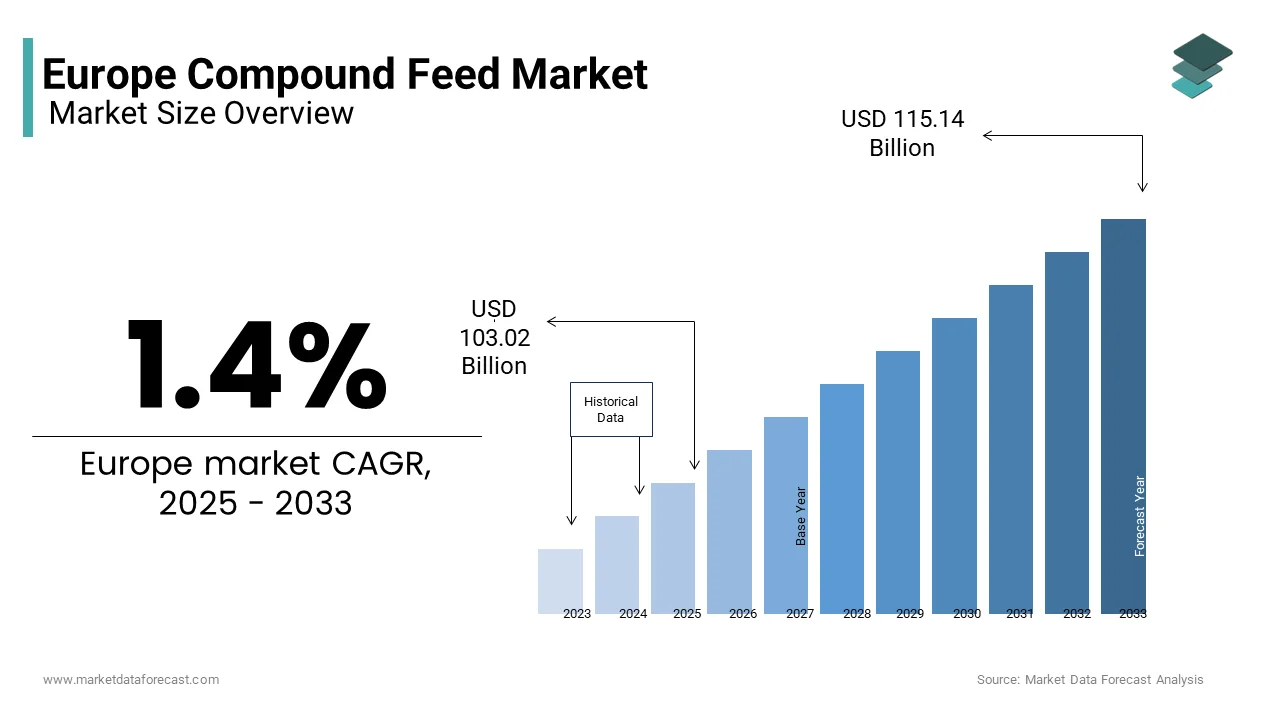
The European compound feed market size was valued at USD 103.02 billion in 2025, is anticipated to reach USD 104.46 billion in 2026, and is projected to scale up to USD 116.75 billion by 2034, registering a compound annual growth rate (CAGR) of 1.4% during the forecast period from 2026 to 2034. Fueled by stringent food safety mandates, precision nutrition, sustainability goals, and robust animal husbandry sectors across Germany, France, Spain, and Italy, the market continues to evolve steadily.
Key Executive Metrics (At-a-Glance)
- 2025 Base Valuation: USD 103.02 Billion
- 2026 Current Valuation: USD 104.46 Billion
- 2034 Forecast Valuation: USD 116.75 Billion
- Compound Annual Growth Rate (CAGR): 1.4% (2026–2034)
- Dominant Ingredient Segment: Cereals (holding over 45.4% share in 2024 anchored by wheat, barley, and corn carbohydrate energy)
- Fastest-Growing Ingredient Segment: Oilseed Meal (projected at a 5.8% CAGR driven by high protein content and rapeseed meal consumption)
- Dominant Supplement Segment: Vitamins (capturing 40.7% share in 2024 via A, D, and E fortifications for livestock immunity)
- Fastest-Growing Supplement Segment: Amino Acids (projected at a swift 6.2% CAGR fueled by protein synthesis, lysine/methionine, and lower nitrogen excretion)
- Dominant Animal Segment: Poultry (constituting 38.5% share in 2024 driven by high meat/egg production and rapid growth cycles)
- Fastest-Growing Animal Segment: Aquaculture (projected at a 5.5% CAGR driven by European farmed fish and seafood demand)
- Dominant Country Markets: Germany (18.4% share in 2024) and France (16.8% share in 2024)
Core Market Drivers
- Surge in Animal Protein Demand: High consumer consumption of poultry, pork, and dairy driving the need for controlled nutrient delivery and optimized feed conversion efficiency.
- Technological Feed Formulation: Widespread integration of precision nutrition, automated blending systems, enzymes, and functional additives to meet strict EU standards.
Primary Market Restraints & Challenges
- Raw Material Price Volatility: Market fluctuations in key ingredients like soybean meal, corn, and barley impacting manufacturer margins.
- Strict Regulatory & Environmental Pressures: Rigorous food safety guidelines, traceability rules, and EU Green Deal mandates requiring heavy compliance and reformulation costs.
Europe Compound Feed Market Segmentation Breakdown
| Segment Category | Largest (Dominant) Sub-Segment | Fastest-Growing Sub-Segment |
|---|---|---|
| By Ingredients | Cereals (45.4% share in 2024 via wheat, barley, corn availability, and affordability) | Oilseed Meal (5.8% CAGR driven by high protein content and rising rapeseed meal consumption) |
| By Supplements | Vitamins (40.7% share via Vitamins A, D, and E for immunity and reproduction) | Amino Acids (6.2% CAGR fueled by lysine, methionine, and precision nutrition adoption) |
| By Animal | Poultry (38.5% share via short growth cycles and strong production in France, Spain, and Germany) | Aquaculture (5.5% CAGR driven by European farmed fish demand and sustainable marine diets) |
| By Country | Germany (18.4% share) & France (16.8% share via large swine, cattle, and poultry sectors) | Russia, Spain, & Turkey (growing via agricultural modernization and feed self-sufficiency goals) |
Major Industry Players Profiled
Key enterprises shaping the competitive European compound feed market include Cargill Inc., Archer Daniels Midland Company (ADM), Land o’ Lakes, Inc., Nutreco, Alltech, Inc., Charoen Pokphand Foods, New Hope Group Co., Ltd., ForFarmers B.V., De Heus B.V., and EWOS Group.
Europe Compound Feed Market Size
The size of the European compound feed market was valued at USD 103.02 billion in 2025 and is anticipated to reach USD 104.46 billion in 2026 from USD 116.75 billion by 2034, growing at a CAGR of 1.4% during the forecast period from 2026 to 2034.
MARKET OVERVIEW
The Compound Feed is the production and distribution of nutritionally balanced feed mixtures formulated for livestock, poultry, aquaculture, and companion animals. Compound feed integrates various raw materials such as cereals, oilseeds, protein meals, and premixes to meet species-specific dietary requirements. The market is heavily influenced by trends in animal husbandry, food safety regulations, and sustainability initiatives. According to the Food and Agriculture Organization (FAO), Europe houses over 132 million pigs, 72 million cattle, and 13.3 million poultry birds, which is escalating a substantial demand for compound feed solutions. The European Union emphasizes that sustainable livestock production encourages optimized feed formulations to reduce environmental impact. This growing focus on precision nutrition and efficiency in animal production continues to shape market dynamics.
MARKET DRIVERS
Rising Demand for Animal-Derived Protein
The surge in consumer demand for meat, dairy, and eggs is a significant driver of the European compound Feed Market growth. According to Eurostat, European per capita consumption of poultry reached 27.6 kg in 2023, while pork consumption stood at 39.9 kg. To meet these nutritional and production targets, livestock require balanced feed formulations to enhance growth rates, feed conversion efficiency, and product quality. Compound feed enables controlled nutrient delivery, improving animal health and reducing production losses. As per FAO, the increasing aquaculture production, with Europe producing over 1.2 million tons of farmed fish annually, further boosts the need for specialized feeds that optimize growth and sustainability.
Technological Advancements in Feed Formulation
The adoption of precision nutrition and feed additive technologies is majorly accelerating the European Compound Feed Market growth. Advanced feed formulations incorporating enzymes, probiotics, amino acids, and vitamins improve digestibility and immune support for livestock. As per the European Feed Manufacturers’ Federation, more than half of compound feed now includes functional additives to enhance productivity and sustainability. Automated feed blending systems, computerized diet formulation, and quality control technologies reduce waste and optimize nutrient utilization. These innovations are increasingly adopted by commercial feed manufacturers to meet stringent EU regulatory standards and rising consumer expectations for high-quality animal-derived products, driving robust demand for compound feed.
MARKET RESTRAINTS
Volatility in Raw Material Prices
The fluctuating prices of key feed ingredients, including corn, soybean meal, and barley, are significantly restraining the European Compound Feed Market. According to the International Grains Council, European soybean meal prices rose between 2022 and 2023 due to global supply disruptions. Such volatility increases production costs for feed manufacturers by impacting margins and potentially limiting output expansion. Farmers may respond by reducing compound feed use or substituting with a lower-cost alternative, which is affecting overall market growth. Regulatory compliance costs related to quality standards further amplify the financial burden on feed producers, which is impeding large-scale adoption of premium compound feed products.
Stringent Regulatory Requirements
Europe’s regulatory framework for animal feed, which emphasizes food safety, traceability, and sustainability, is hindering the growth of the European Compound Feed Market. As per the European Feed Hygiene Regulation and EU Directive 2002/32, strict limits are set on contaminants, additives, and labeling practices. Compliance with these regulations demands extensive testing, documentation, and certification, which increases operational costs. Smaller feed manufacturers may struggle to meet these standards, which limits their participation in the market. As per EFSA data, regulatory non-compliance accounts for nearly 12% of feed production interruptions annually in Europe, illustrating a significant barrier that can hinder growth and innovation in the compound feed sector.
MARKET OPPORTUNITIES
Growth in the Organic and Specialty Feed Segment
The demand for organic, non-GMO, and specialty feed represents a lucrative opportunity for the growth of the European Compound Feed Market. According to the Research Institute of Organic Agriculture, the European organic livestock sector grew by 9.2% annually between 2021 and 2023. Consumers increasingly prefer animal products sourced from organically fed livestock, prompting feed manufacturers to develop customized organic compound feeds. This trend allows for premium pricing and strengthens brand differentiation, encouraging further investments in research and production of high-value feed products.
Expansion of Aquaculture Feed
The rising aquaculture sector across the region is creating opportunities for the European Compound Feed Market growth. According to Eurostat, aquaculture farming in the EU yielded almost 1.1 million tonnes of aquatic organisms in 2023. Compound feed specifically designed for fish and shrimp, enriched with omega-3 fatty acids and micronutrients, enhances growth, survival rates, and product quality. This presents an opportunity for feed manufacturers to develop innovative formulations, collaborate with aquaculture farms, and expand into untapped marine feed markets across Southern and Eastern Europe.
MARKET CHALLENGES
Environmental Sustainability Pressures
The EU Green Deal and Farm-to-Fork strategy, which pushes for reduced environmental impact of livestock production, is posing challenges in the expansion of the European Compound Feed Market. Feed manufacturers must optimize formulations to reduce nitrogen and phosphorus excretion, methane emissions, and energy use, which fuels the market growth. Transitioning to eco-friendly feed solutions requires investment in research and reformulation, which increases production costs. In 2022, the European Environmental Bureau, referencing EEA data, stated that agriculture accounted for approximately 12% of total EU greenhouse gas emissions.
Fragmented Feed Manufacturing Landscape
The European compound feed industry is highly fragmented, with numerous small and medium-sized enterprises competing alongside global players. This fragmentation limits economies of scale, reduces bargaining power with raw material suppliers, and complicates the implementation of advanced technologies. According to the European Feed Manufacturers’ Federation, most of the feed producers in Europe operate at a regional level, making standardization, quality control, and distribution efficiency a challenge. Consolidation and technological investments are needed to overcome these structural barriers.
REPORT COVERAGE
| REPORT METRIC | DETAILS |
| Market Size Available | 2025 to 2034 |
| Base Year | 2025 |
| Forecast Period | 2026 to 2034 |
| CAGR | 1.4% |
| Segments Covered | By Ingredients, Supplements, Animal, and Country Analysis |
| Various Analyses Covered | Global, Regand and Country-Level Analysis; Segment-Level Analysis; DROC, PESTLE Analysis; Porter’s Five Forces Analysis, Competitive Landscape; Analyst Overview of Investment Opportunities |
| Regions Covered | UK, France, Spain, Germany, Italy, Russia, Sweden, Denmark, Switzerland, Netherlands, Turkey, the Czech Republic, and the Rest of Europe |
| Market Leaders Profiled | Cargill Inc., Archer Daniels Midland Company, Land o’ Lakes, Inc., Nutreco, ALLTECH, INC., Charoen Pokphand Foods, New Hope Group Co. Ltd., Wen’s Group, ForFarmers B.V., Kyodo Shiryo Company, Sodrugestvo Group S.A., DeKalb Feeds, Inc., De Heus B.V., Agribusiness Holding Miratorg, Ballance Agri-Nutrients Ltd., Kent Feeds, Weston Milling Animal Nutrition, J.D. Heiskell & C, O, and EWOS GROUP |
SEGMENT ANALYSIS
By Ingredients Insights
Largest Segment: Cereals
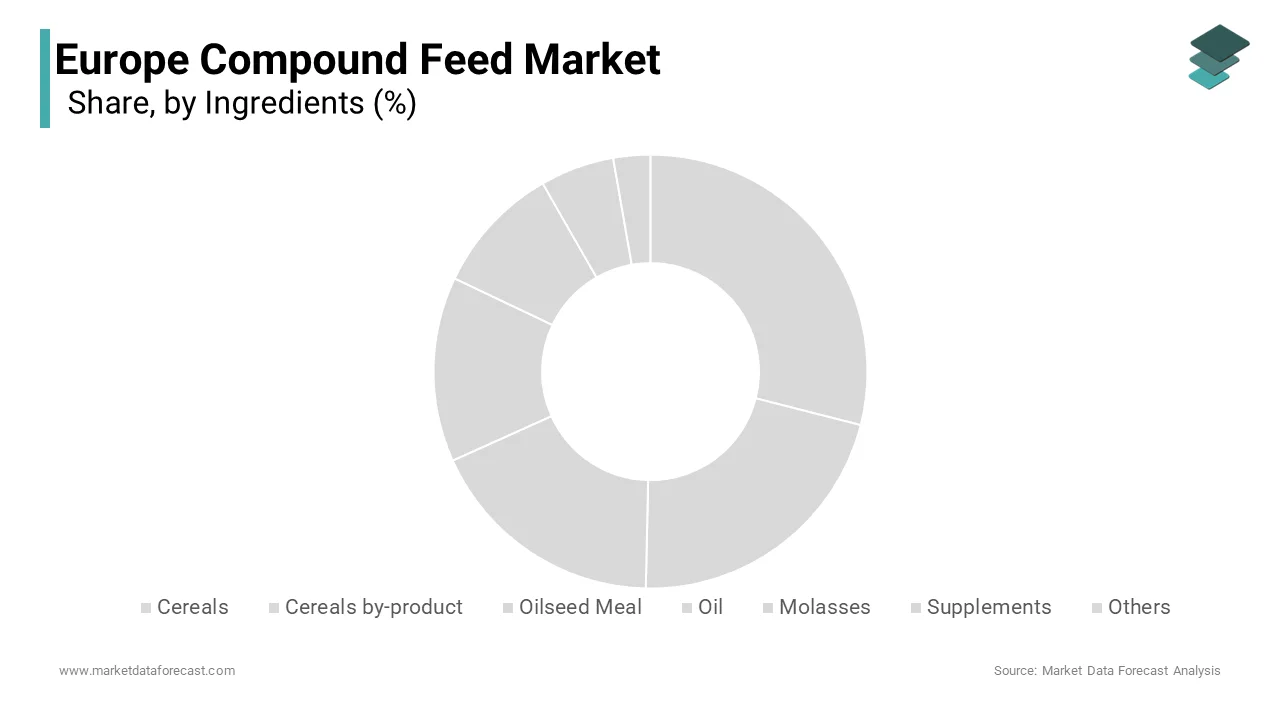
The Cereals segment dominated the European Compound Feed Market by accounting for over 45.4% of the market share in 2024. According to Eurostat, approximately 60 million tons of cereals are utilized annually in animal feed across Europe. Cereals such as wheat, barley, and corn provide essential carbohydrates and energy to support growth and productivity in livestock. The large-scale cultivation of cereals in countries like France, Germany, and Ukraine ensures a steady supply and affordability. The cereals’ versatility across ruminants, swine, and poultry contributes to their widespread usage. The growing technological advancements in milling and processing further enhance the digestibility, maintaining cereals’ position as the primary feed ingredient.
Fastest-Growing Segment: Oilseed Meal (CAGR 5.8%)
The Oilseed meal segment is growing rapidly at a CAGR of 5.8% share in the Europe Compound Feed Market between 2025 and 2033. The growth is due to its high protein content and essential amino acids for animal growth. According to the European Feed Manufacturers’ Federation, consumption of rapeseed meal in the EU increased by 16% in 2023 compared to 2022, reaching a record level of 14.4 million tons. The rising demand for protein-rich diets, especially for poultry and swine, drives this growth. The sustainability initiatives promote oilseed-based feed as an eco-friendly alternative to fishmeal, which is reducing reliance on marine resources. The segment’s adoption is further supported by the increasing penetration of precision feed formulations tailored to optimize nutrient intake and improve feed efficiency.
By Supplements Insights
Largest Segment: Vitamins
The Vitamins segment dominated the European Compound Feed Market by capturing 40.7% of the market share in 2024. The Vitamins A, D, and E are significant for immunity, growth, and reproduction in livestock. According to EFSA, deficiencies in these vitamins can reduce productivity by up to 15%. European regulatory emphasis on animal welfare and nutritional adequacy encourages fortification of compound feeds with vitamins. Moreover, advanced premix formulations ensure precise dosing and uniform distribution in feed. This trend is reinforced by consumer demand for high-quality animal-derived products, which is pushing feed manufacturers to incorporate essential vitamins consistently across ruminant, swine, and poultry feeds.
Fastest-Growing Segment: Amino Acids (CAGR 6.2%)
The Amino acids segment is estimated to register the fastest CAGR of 6.2% during the forecast period in the Europe Compound Feed Market. The lysine, methionine, and threonine are witnessing the fastest growth due to their role in protein synthesis and growth optimization. According to the European Feed Manufacturers’ Federation, the inclusion of synthetic amino acids in feed has increased by 10% annually over the past three years. Livestock producers aim to improve feed conversion ratios and reduce nitrogen excretion, supporting amino acid adoption. The amino acids allow partial replacement of protein-rich raw materials like soybean meal, optimizing costs while maintaining growth performance. Precision nutrition strategies further accelerate the adoption of amino acids in compound feed formulations.
By Animal Insights
Largest Segment: Poultry
The poultry segment led the Europe Compound Feed Market by constituting 38.5% of the market share in 2024. For Instance, in 2023, the European Union produced an estimated 13.3 million tonnes of poultry meat. Projections for 2025 forecast an increase to over 14 million tonnes. Poultry growth cycles are short, making feed efficiency critical for profitability. Compound feed tailored for poultry enhances weight gain, egg production, and health outcomes. Innovations such as prebiotics, probiotics, and optimized nutrient blends further drive adoption. Countries with significant poultry production, including France, Spain, and Germany, continue to rely on compound feed to maintain consistent performance and meet rising consumer demand for poultry meat and eggs.
Fastest-Growing Segment: Aquaculture (CAGR 5.5%)
The aquaculture feed segment is predicted to witness a CAGR of 5.5% between 2025 and 2033 in the European Compound Feed Market. The growth is due to the increasing popularity of farmed fish and seafood. According to the FAO, European aquaculture production reached over 1.2 million tons in 2023 and is growing at 4.5% annually. Aquafeed requires specialized formulations with optimal protein, omega-3 fatty acids, and micronutrients to enhance survival and growth rates. The segment’s growth is driven by rising fish consumption, health-conscious dietary trends, and sustainability initiatives reducing overfishing. Manufacturers are investing in innovative feed solutions and functional ingredients to improve digestibility, feed conversion ratios, and environmental compliance in aquaculture operations.
REGIONAL ANALYSIS
Germany Compound Feed Market Analysis
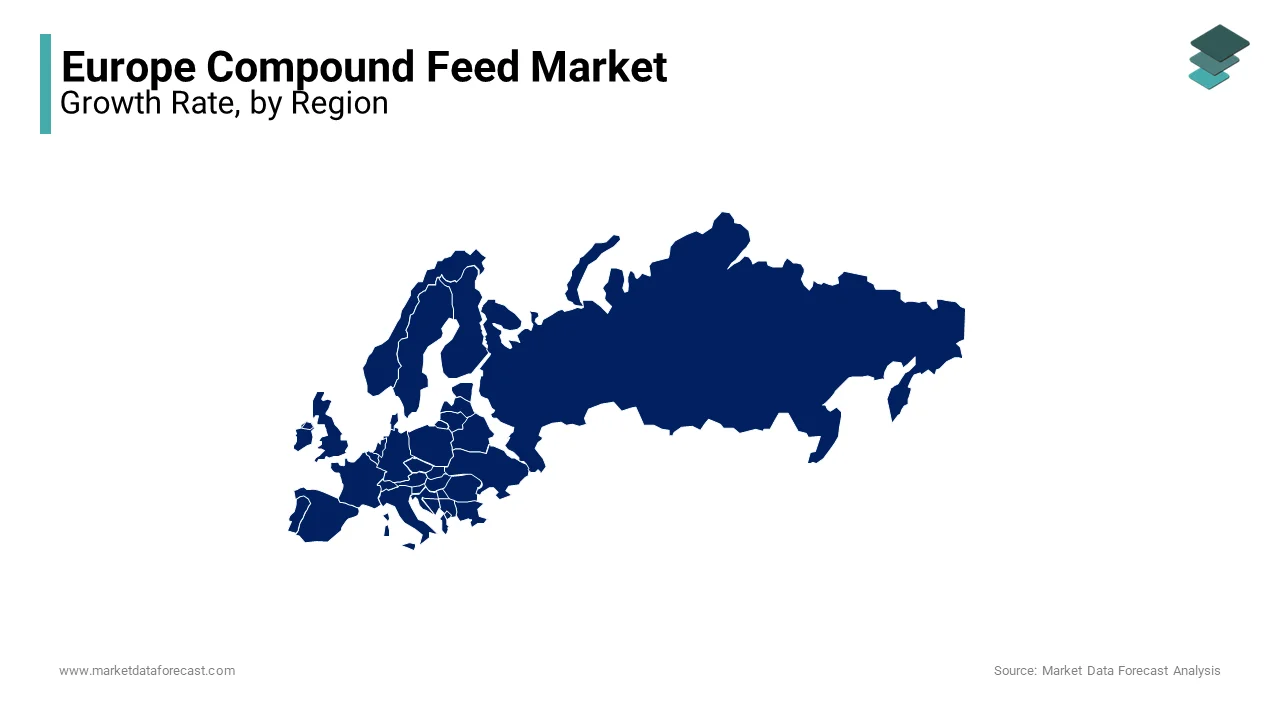
Germany was the top performer in the European Compound Feed Market by accounting for 18.4% of the market share in 2024. The country’s robust livestock sector, including around 122 million pigs and 3 million cattle, drives the feed demand. The advanced feed formulation technologies and stringent quality regulations ensure high adoption of nutritionally balanced feed, which is propelling the nation’s market growth. The growing government initiatives supporting sustainable livestock production and precision feeding encourage continuous growth across the region. According to the German Agricultural Society, over 80% of feed in commercial operations is compound-based, which is enhancing Germany’s central role in the European feed industry.
France Compound Feed Market Analysis
France holds a significant position with 16.8% of the regional share in the European Compound Feed Market in 2024. The growth is driven by extensive poultry, swine, and dairy farming. Around 19 million pigs and 18 million poultry birds are farmed nationwide, necessitating high-quality compound feed. As per the French government’s focus on sustainable and organic farming practices, the adoption of specialized feed blends is accelerated. According to FranceAgriMer, feed efficiency improvements and the inclusion of functional supplements enhance livestock productivity, reinforcing the dominance of compound feed in the French market.
Spain Compound Feed Market Analysis
The Spanish compound feed market is enlarging and accounts for 14.5% of the market share in 2024. The nation’s growth is driven by a strong pork industry and growing poultry production. According to the Eurostat report, over 30 million pigs in the country necessitate high-protein, energy-dense feed formulations. Spain’s favorable climate for cereal cultivation ensures raw material availability by reducing costs. Increasing focus on animal health and performance optimization encourages the adoption of fortified feeds containing vitamins, amino acids, and probiotics. Spanish feed manufacturers are investing in innovation and sustainability to meet EU standards and rising consumer demand for quality animal products.
Italy Compound Feed Market Analysis
Italian Compound Feed Market is expanding substantially, and the country has a diverse livestock base, including dairy, swine, and poultry, and emphasizes high-quality animal products such as Parmigiano-Reggiano cheese and Prosciutto. According to ISMEA, dairy cattle require specialized feeds to optimize milk yield and nutrient content. Adoption of fortified and precision feeds is increasing, which is driven by government incentives for sustainable production and increasing awareness among farmers of the benefits of balanced nutrition.
Russia Compound Feed Market Analysis
Russian Compound Feed Market is expanding due to the rapid modernization of livestock farms, and increased poultry and swine production contribute to feed demand. As per FAO data, a 7% annual increase in poultry production in Russia is boosting the need for high-performance compound feed. The enhanced government initiatives to enhance self-sufficiency in meat production and reduce reliance on imports support investment in local feed manufacturing and advanced nutrition solutions.
COMPETITIVE LANDSCAPE
The European compound Feed Market is highly competitive, characterized by established global players and regional feed producers striving to capture market share through innovation and differentiation. Companies compete based on product quality, nutritional efficacy, sustainability, and cost efficiency. Investment in advanced feed formulations, including amino acids, enzymes, and vitamins, is driving differentiation. The growing focus on precision livestock nutrition and digital feed management enhances competitive dynamics. The regional expansion in high-demand markets and partnerships with local feed producers intensify rivalry. European regulatory standards and sustainability mandates further influence competition by compelling companies to adopt environmentally friendly practices while maintaining productivity and profitability in livestock and aquaculture operations.
KEY MARKET PLAYERS
These are some of the noteworthy companies in the Europe compound feed market.
- Cargill Inc.
- Archer Daniels Midland Company
- Land o’ Lakes, Inc.
- Nutreco
- ALLTECH, INC.
- Charoen Pokphand Foods
- New Hope Group Co., Ltd.
- Wen’s Group
- ForFarmers B.V.
- Kyodo Shiryo Company
- Sodrugestvo Group S.A.
- DeKalb Feeds, Inc.
- De Heus B.V.
- Agribusiness Holding Miratorg,
- Ballance Agri-Nutrients Ltd.
- Kent Feeds,
- Weston Milling Animal Nutrition
- J.D. Heiskell & Co.
- EWOS GROUP
Top Players in the Market
- Cargill has established a strong presence in the European compound Feed Market by offering a diverse portfolio of feed solutions for poultry, swine, ruminants, and aquaculture. The company leverages advanced feed formulation technology and research-driven nutrition to enhance livestock productivity. In the Asia-Pacific region, Cargill has expanded operations in countries such as China, India, and Vietnam, and is providing tailored compound feeds to support growing livestock and aquaculture sectors. Recent initiatives include investment in sustainable feed ingredients and digital feed management solutions, which are strengthening its market position by addressing efficiency, cost-effectiveness, and environmental sustainability for producers globally.
- Nutreco specializes in aquaculture, poultry, and livestock nutrition and has a significant footprint in Europe. The company integrates research and innovation into feed formulations to improve animal health and performance. In the Asia-Pacific market, Nutreco has enhanced its presence through joint ventures and localized feed production facilities in China, Thailand, and Vietnam, by meeting regional demand for high-quality, sustainable feed. Nutreco’s recent actions include launching precision nutrition programs and investing in alternative protein sources to optimize feed efficiency and reduce environmental impact, which is escalating its position as a leading compound feed provider across Europe and Asia-Pacific markets.
- DSM is a leading global provider of nutritional solutions for animal feed, emphasizing vitamins, amino acids, and feed additives. In Europe, DSM supports compound feed manufacturers by enhancing nutritional profiles, improving animal performance, and promoting sustainable production. Its Asia-Pacific operations include collaborations with regional feed producers in India, China, and Southeast Asia, and it is providing customized nutrition solutions tailored to local livestock requirements. Recent actions include introducing novel feed enzymes and high-value additives, which are coupled with digital monitoring tools by enabling improved feed efficiency, animal health, and sustainable practices, thereby strengthening DSM’s market position in Europe and the Asia-Pacific region.
Top Strategies Used By Key Market Participants
Key players in the European compound feed market implement strategies including product innovation, sustainability integration, and digital feed management. Companies are investing in research and development to enhance feed formulations, improve nutritional efficiency, and reduce environmental impact. Expansion into emerging Asia-Pacific markets through partnerships, acquisitions, and joint ventures allows companies to leverage local supply chains. Precision feeding solutions and alternative protein sources are gaining importance as producers focus on cost optimization and regulatory compliance. Marketing strategies emphasize health, productivity, and sustainability benefits to differentiate offerings. The companies strengthen logistics and distribution networks to ensure timely delivery and broaden regional reach.
RECENT MARKET NEWS
- In January 2024, Cargill Europe Compound Feed Market expanded its operations in Vietnam, establishing a state-of-the-art feed production facility. This move is expected to enhance regional supply capacity and strengthen its market position in the Asia-Pacific.
- In April 2024, Nutreco announced that its facilities in Spain were among those already using 100% green electricity, a move to reduce the company's environmental footprint.
- In February 2024, DSM-Firmenich announced its intention to sell its Animal Nutrition & Health business unit, which included its feed enzyme operations.
- In September 2024, Cargill Philippines held its annual Poultry Business Conference in Clark, Pampanga. The conference focused on "synergistic collaboration" and partnerships to address the poultry industry's evolving needs in Southeast Asia. This shows Cargill's broader strategy of strengthening customer engagement in the Asia-Pacific region.
- In August 2024, Nutreco opened its first food-grade pilot facility for cell-feed production, an alternative to traditional livestock feed. This investment was noted in a Q4 2024 publication.
MARKET SEGMENTATION
This research report on the European compound feed market is segmented and sub-segmented into the following categories.
By Ingredients
- Cereals
- Cereals by-product
- Oilseed Meal
- Oil
- Molasses
- Supplements
- Others
By Supplements
- Vitamins
- Antibiotics
- Antioxidants
- Amino acids
- Feed Enzymes
- Feed Acidifiers
- Others
By Animal
- Ruminant
- Swine
- Poultry
- Aquaculture
- Others
By Country
- UK
- France
- Spain
- Germany
- Italy
- Russia
- Sweden
- Denmark
- Switzerland
- Netherlands
- Turkey
- Czech Republic
- Rest of Europe