- Product Description Description
- Table of Contents TOC
- List of Table & Figure LOT
- Get Free Sample PDF Sample PDF
Market Size, 2025
$34.54 MnMarket Estimate, 2026
$35.52 MnMarket Forecast, 2034
$44 MnCAGR, 2026–2034
2.85%Europe Hydrogen Gas Market Report Summary
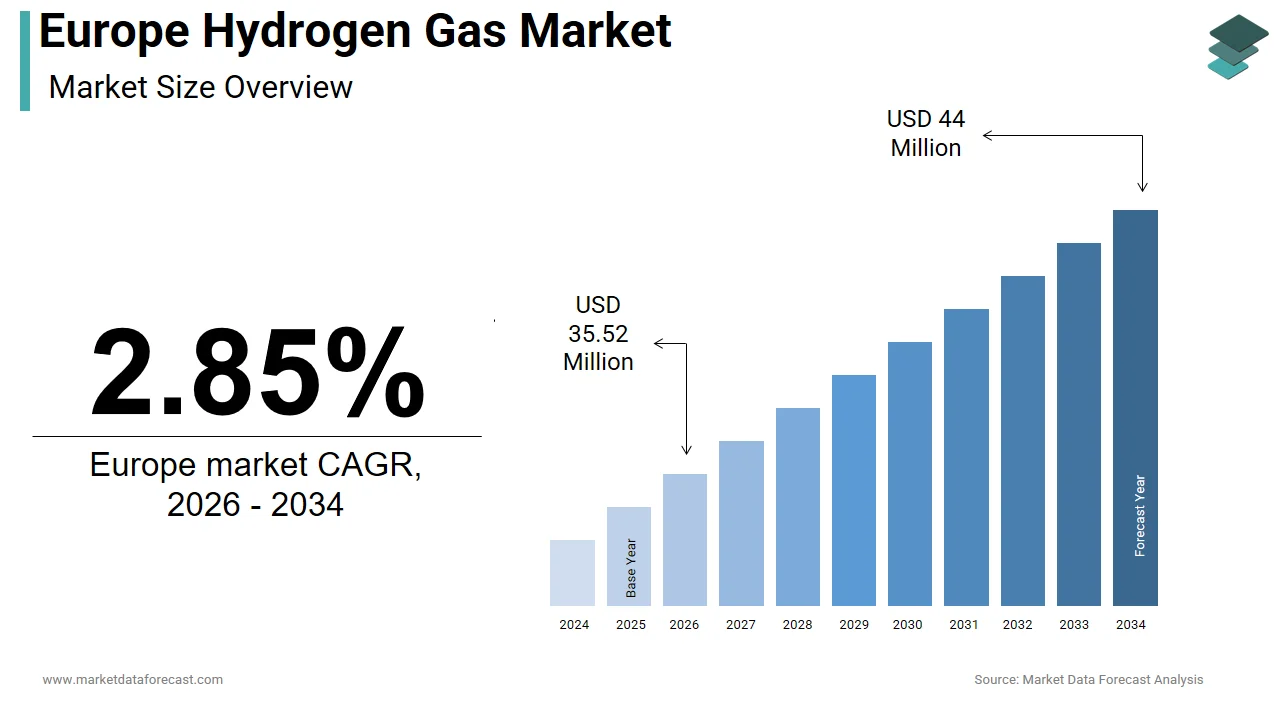
The Europe hydrogen gas market was valued at USD 34.54 million in 2025, is estimated to reach USD 35.52 million in 2026, and is projected to reach USD 44 million by 2034, growing at a CAGR of 2.85% from 2026 to 2034. Market growth is driven by increasing demand for clean energy solutions, rising focus on decarbonization, and growing adoption of hydrogen in industrial applications. Hydrogen plays a critical role in energy transition strategies, particularly in reducing carbon emissions across sectors such as refining, chemicals, and transportation. Government initiatives supporting green hydrogen production, investments in hydrogen infrastructure, and advancements in production technologies are further supporting market growth across Europe.
Key Market Trends
- Increasing focus on green hydrogen and decarbonization initiatives.
- Rising adoption of hydrogen in industrial and energy applications.
- Growing investments in hydrogen production and infrastructure.
- Expansion of hydrogen use in transportation and fuel cells.
- Strong government support through policies and funding programs.
Segmental Insights
- Based on distribution, the pipeline segment dominated the Europe hydrogen gas market by capturing 61.6% share in 2025, driven by established infrastructure and efficient large-scale transport.
- Based on application, the refining segment led the market with 46.1% share in 2025, supported by strong demand for hydrogen in petroleum refining processes.
Regional Insights
The Europe hydrogen gas market is witnessing steady growth across key countries due to increasing investments in clean energy and industrial demand.
- Germany led the regional market in 2025 with 26.9% share, supported by strong industrial base and hydrogen strategy initiatives.
- The Netherlands followed as a key market, driven by its strategic position as a European energy hub and strong infrastructure.
- France is expected to witness a notable CAGR during the forecast period due to government support for green hydrogen and energy transition projects.
Competitive Landscape
The Europe hydrogen gas market is moderately competitive, with the presence of major industrial gas companies focusing on expanding hydrogen production and distribution capabilities. Market players are investing in green hydrogen projects, forming strategic partnerships, and enhancing technological capabilities to strengthen their market position.
Prominent companies operating in the Europe hydrogen gas market include Air Liquide, Linde plc, Air Products and Chemicals, Inc., ITM Power PLC, Messer SE & Co. KGaA, and TAIYO NIPPON SANSO CORPORATION.
 Download Free Sample Report
Europe Hydrogen Gas Market Size
The Europe hydrogen gas market was valued at USD 34.54 million in 2025, is estimated to reach USD 35.52 million in 2026, and is projected to reach USD 44 million by 2034, growing at a CAGR of 2.85% from 2026 to 2034.
Hydrogen gas represents a pivotal component of the continent’s strategic transition toward climate neutrality, functioning as both an energy carrier and a critical industrial feedstock. Currently, the market is dominated by grey hydrogen produced from natural gas, yet the focus is rapidly shifting toward low-carbon and renewable variants such as green and blue hydrogen. This transition is underpinned by the European Union’s Hydrogen Strategy, which aims to install at least 40 gigawatts of renewable hydrogen electrolysers by 2030. As per Eurostat, the energy sector is identified as the largest contributor to greenhouse gas emissions in the EU, which indicates the urgency of decarbonization efforts. Hydrogen is essential for hard-to-abate sectors, including steel manufacturing, chemical production, and heavy-duty transport, where direct electrification is technically or economically unfeasible. According to the International Energy Agency, Europe is recognized as a leading region for large-scale hydrogen projects currently in development. The infrastructure landscape is evolving with initiatives like the European Hydrogen Backbone, aiming to convert existing natural gas pipelines for hydrogen transport. As per the European Commission, hydrogen is expected to play a significant role in the EU’s future energy mix to achieve climate goals. This structural shift necessitates substantial investments in production facilities, storage solutions, and distribution networks. The market dynamics are thus defined by regulatory mandates, technological innovation, and cross-border collaborations, aimed at establishing a robust and sustainable hydrogen economy across the region.
MARKET DRIVERS
Stringent Regulatory Frameworks and Decarbonization Mandates
The implementation of rigorous environmental regulations and decarbonization mandates is one of the major factors propelling the growth of the Europe hydrogen gas market. According to the European Commission, these policies create a compelling business case for adopting low-carbon hydrogen in industrial processes. The Carbon Border Adjustment Mechanism further incentivizes domestic producers to switch to cleaner energy sources, to remain competitive against imports from regions with laxer environmental standards. As per the European Environment Agency, industrial activities are identified as major contributors to carbon emissions, necessitating immediate intervention through alternative fuels. Hydrogen offers a viable solution for sectors such as cement and steel, which cannot easily rely on electricity alone. The Renewable Energy Directive III sets specific sub-targets for the use of renewable fuels of non-biological origin in industry and transport. This regulatory clarity provides long-term visibility for investors and developers. National governments are aligning their strategies with EU objectives, offering subsidies and tax incentives for hydrogen projects. The strict enforcement of emission limits forces companies to innovate and adopt hydrogen technologies. This regulatory pressure accelerates the phase-out of fossil fuel-based hydrogen and promotes the uptake of green alternatives. The legal framework thus acts as a powerful catalyst for market expansion and technological adoption.
Strategic Investments in Heavy Industry and Mobility Sectors
Strategic investments in heavy industry and mobility sectors are driving significant demand for hydrogen gas in Europe, which is another significant market driver. Major industrial players are committing billions of euros to develop hydrogen-based production methods to reduce their carbon footprints. According to the European Clean Hydrogen Partnership, public and private investments in hydrogen technologies are reported to be at unprecedented levels, supporting research, demonstration, and deployment projects. The steel industry, for instance, is piloting hydrogen direct reduction technologies to replace coal in iron ore processing. As per reports from major steel manufacturers, several commercial-scale plants are expected to operate by 2030, creating substantial demand for green hydrogen. In the mobility sector, heavy-duty transport, including trucks, buses, and trains, is increasingly adopting fuel cell electric vehicles. The European Automobile Manufacturers Association highlights that hydrogen fuel cells offer longer ranges and faster refueling times compared to battery electric vehicles for long-haul logistics. Public transport authorities in cities like Paris and Cologne are expanding their hydrogen bus fleets. These sectoral shifts are supported by government procurement programs and infrastructure development initiatives. The establishment of hydrogen refueling stations along major transport corridors facilitates wider adoption. Industrial clusters are forming to share infrastructure and reduce costs. This concerted effort across multiple high-consumption sectors creates a robust demand base for hydrogen. The scalability of these applications ensures sustained market growth and attracts further investment into the value chain.
MARKET RESTRAINTS
High Production Costs and Economic Viability Concerns
The high production costs associated with green hydrogen are a major restraint to the widespread adoption of the Europe hydrogen gas market. According to the International Energy Agency, green hydrogen produced via electrolysis using renewable electricity is significantly more expensive than grey hydrogen derived from natural gas. As per the European Chemical Industry Council, energy-intensive industries operate on thin margins and cannot absorb the higher costs of low-carbon feedstocks without losing competitiveness. The volatility of renewable energy prices further complicates cost projections and financial planning for producers. Although economies of scale and technological advancements are expected to reduce costs over time, the current economic barrier remains significant. Investors require long-term off-take agreements and price guarantees to mitigate financial risks. The lack of a uniform carbon pricing mechanism across all sectors also diminishes the economic incentive to switch. Until green hydrogen reaches price parity with fossil fuel-based alternatives, its market penetration will remain limited to subsidized projects and niche applications. This economic challenge slows down the pace of transition and restricts market growth.
Insufficient Infrastructure and Distribution Networks
The lack of adequate infrastructure for production, storage, and distribution poses a significant restraint on the Europe hydrogen gas market. Unlike natural gas, which benefits from a mature and extensive pipeline network, hydrogen requires specialized infrastructure due to its low volumetric energy density and embrittlement effects on metals. According to the European Network of Transmission System Operators for Gas, building a dedicated hydrogen backbone will require substantial capital investment and regulatory harmonization across member states. As per the European Commission, only a limited number of hydrogen pipelines are currently operational, primarily serving industrial clusters in countries like Germany and the Netherlands. The absence of a comprehensive distribution network limits the ability to transport hydrogen from production sites in resource-rich regions to demand centers in industrial hubs. Storage facilities for large volumes of hydrogen are also scarce, requiring the development of underground salt caverns and other solutions. The logistical challenges of transporting hydrogen via road or rail add to the complexity and cost. Permitting processes for new infrastructure projects are often lengthy and bureaucratic, delaying implementation. The fragmented nature of national energy systems hinders the creation of a unified European hydrogen market. Without a robust and interconnected infrastructure, the reliability and accessibility of hydrogen supply remain compromised. This infrastructural deficit acts as a bottleneck for market expansion and integration.
MARKET OPPORTUNITIES
The development of cross border Development of Cross Border Hydrogen Corridors
Hydrogen corridors offer a significant opportunity for the Europe hydrogen gas market by facilitating efficient trade and supply security. These corridors aim to connect regions with abundant renewable energy resources, such as Southern Europe and North Africa, with high-demand centers in Northern and Central Europe. According to the European Hydrogen Backbone initiative, a network of dedicated hydrogen pipelines is envisioned to transport hydrogen across regions by 2050. This infrastructure would enable the integration of diverse supply sources and enhance market liquidity. As per the European Commission, international partnerships are being established to import green hydrogen from neighboring regions, ensuring a stable and affordable supply. Countries like Spain and Portugal are positioning themselves as key exporters, leveraging their solar and wind potential. The creation of these corridors encourages standardization of technical specifications and regulatory frameworks across borders. It also fosters collaboration between transmission system operators and governments to streamline permitting and investment processes. The availability of imported hydrogen can help balance seasonal variations in renewable energy production. This interconnected approach reduces dependency on single sources and enhances resilience. The opportunity lies in leveraging geographic advantages to create a competitive and integrated European hydrogen market. Early movers in corridor development will secure strategic positions in the future energy landscape.
Innovation in Electrolyzer Technology and Efficiency
Advancements in electrolyzer technology offer a promising opportunity for the Europe hydrogen gas market by improving efficiency and reducing production costs. Innovations in proton exchange membrane and solid oxide electrolyzers are enhancing performance, durability, and flexibility. According to the Joint Research Centre of the European Commission, recent breakthroughs in material science have led to improved energy conversion efficiencies and reduced capital expenditures for electrolysis systems. As per industry analysis from leading technology providers, next-generation electrolyzers can operate more effectively with intermittent renewable energy sources, making them ideal for coupling with wind and solar farms. The scaling up of manufacturing capacity for electrolyzers in Europe is driving down costs through economies of scale. Governments are supporting research and development initiatives to accelerate the commercialization of advanced technologies. The integration of digital tools and artificial intelligence optimizes operation and maintenance, further improving reliability. These technological improvements make green hydrogen more competitive with fossil fuel-based alternatives. The opportunity exists for European manufacturers to become global leaders in electrolyzer production and export. Intellectual property development and patent protection strengthen competitive advantages. Collaboration between academia and industry fosters rapid innovation cycles. The continuous improvement of electrolyzer performance is crucial for achieving cost parity and widespread adoption. This technological leadership positions Europe at the forefront of the global hydrogen economy.
MARKET CHALLENGES
Complexity of Regulatory Harmonization across Member States
The complexity of regulatory harmonization across European member states is majorly challenging the growth of the Europe hydrogen gas market. While the EU provides overarching guidelines, individual countries have developed distinct national hydrogen strategies with varying definitions, standards, and support mechanisms. According to the European Parliament, inconsistent regulations regarding certification of origin and sustainability criteria create barriers to cross-border trade. As per the European Hydrogen Association, the lack of a unified framework complicates the recognition of green hydrogen certificates across different jurisdictions. This fragmentation increases administrative burdens and transaction costs for market participants. Differences in subsidy schemes and tax incentives distort competition and hinder the formation of a level playing field. Permitting procedures for hydrogen projects vary significantly in duration and requirements, leading to delays and uncertainty. The absence of clear rules for blending hydrogen into natural gas grids creates technical and legal ambiguities. Coordinating infrastructure planning and investment priorities among multiple stakeholders is challenging. The slow pace of legislative alignment impedes the development of a seamless internal market. Companies must navigate a complex web of regulations, which discourages investment and innovation. Achieving regulatory coherence requires sustained political will and cooperation among member states. Until harmonization is achieved, the market will remain fragmented and inefficient. This regulatory labyrinth poses a persistent obstacle to market integration and growth.
Safety Concerns and Public Acceptance Issues
Safety concerns and public acceptance issues pose a significant challenge to the Europe hydrogen gas market, despite its clean energy potential. Hydrogen is highly flammable and has a wide flammability range, raising safety risks during production, storage, and transportation. According to the European Agency for Safety and Health at Work, strict safety protocols are required to handle hydrogen safely, which increases operational complexity and costs. As per surveys conducted by social research institutes, public awareness and understanding of hydrogen technology remain limited, leading to skepticism and resistance. Incidents involving hydrogen in other contexts have sometimes heightened fears, although evidence shows it can be managed safely with proper measures. The siting of hydrogen production facilities and refueling stations often faces local opposition due to perceived risks. Educating the public and stakeholders about the safety record and benefits of hydrogen is crucial, but challenging. The lack of standardized safety regulations across all applications adds to the uncertainty. Insurance premiums for hydrogen-related assets can be higher due to perceived risks. Addressing these concerns requires transparent communication and rigorous safety demonstrations. The industry must proactively engage with communities to build trust. Failure to address safety and acceptance issues can lead to project delays and cancellations. Overcoming these social and psychological barriers is essential for widespread adoption.
REPORT COVERAGE
| REPORT METRIC | DETAILS |
| Market Size Available | 2025 to 2034 |
| Base Year | 2025 |
| Forecast Period | 2026 to 2034 |
| Segments Covered | By Distribution, Application, and Country. |
| Various Analyses Covered | Global, Regional, and Country-Level Analysis, Segment-Level Analysis, Drivers, Restraints, Opportunities, Challenges; PESTLE Analysis; Porter’s Five Forces Analysis, Competitive Landscape, Analyst Overview of Investment Opportunities |
| Countries Covered | UK, France, Spain, Germany, Italy, Russia, Sweden, Denmark, Switzerland, Netherlands, Turkey, Czech Republic, and the Rest of Europe. |
| Market Leaders Profiled | Air Liquide, Linde plc, Air Products and Chemicals, Inc., TM Power PLC, Messer SE & Co. KGaA, and TAIYO NIPPON SANSO CORPORATION. |
SEGMENTAL ANALYSIS
By Distribution Insights
The pipeline segment dominated the market by holding the highest share of 61.6% of the regional market in 2025. The dominance of the pipeline segment in the European market is driven by the cost-effectiveness and efficiency of pipelines for transporting large volumes of hydrogen over long distances, particularly within established industrial clusters. According to the European Network of Transmission System Operators for Gas, the existing natural gas infrastructure provides a foundational network that can be repurposed for hydrogen transport, which reduces initial capital expenditure. As per the European Hydrogen Backbone initiative, converting existing pipelines is reported to be significantly cheaper than building new dedicated hydrogen infrastructure. The concentration of heavy industry in regions such as the Ruhr area in Germany and the Port of Rotterdam in the Netherlands creates high-density demand zones that are best served by continuous pipeline supply. Pipelines offer a steady and reliable flow of hydrogen, which is critical for industrial processes that operate continuously. The scalability of pipeline networks allows for the integration of multiple production sources and demand centers, enhancing supply security. Regulatory support for cross-border hydrogen trade further incentivizes pipeline development. The technical maturity of pipeline technology ensures safe and efficient transport, minimizing losses. This established infrastructure advantage cements the pipeline segment's leadership in the current market landscape.
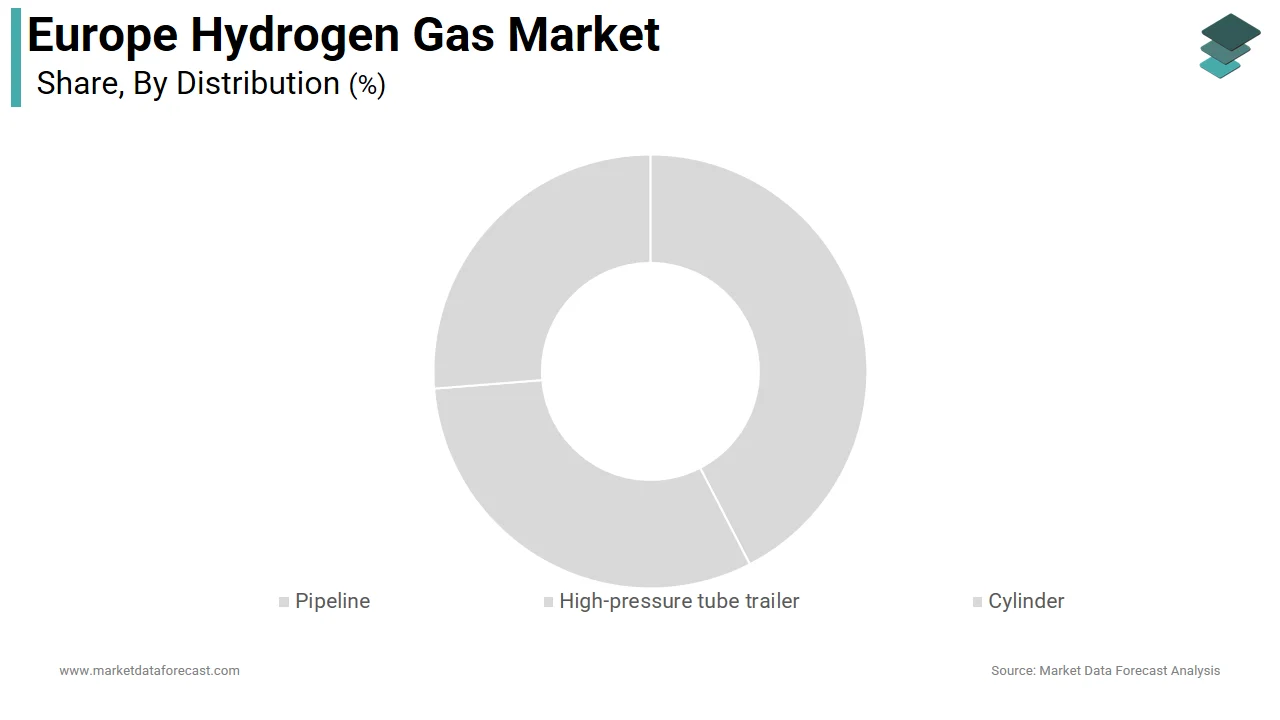
However, the high-pressure tube trailer segment is anticipated to register a promising CAGR of 18.8% over the forecast period, owing to the rising need for flexible and immediate hydrogen delivery to locations not yet connected to pipeline infrastructure. According to the International Energy Agency, the early stages of the hydrogen economy rely heavily on road transport to bridge the gap between production sites and emerging demand centers such as refueling stations and remote industrial facilities. As per industry analysis from logistics providers, high-pressure tube trailers are recognized as a viable solution for distributing small to medium volumes of hydrogen with lower upfront investment compared to pipelines or liquefaction plants. The expansion of the fuel cell electric vehicle market necessitates a widespread network of refueling stations, many of which are initially supplied via truck. The flexibility of road transport allows suppliers to respond quickly to changing demand patterns and serve diverse customer segments. Technological advancements in composite materials have increased the storage capacity and safety of tube trailers, making them more efficient. Government subsidies for hydrogen mobility infrastructure further drive the deployment of refueling stations reliant on trailer deliveries. This segment benefits from the decentralized nature of early market adoption, where pipeline connectivity is limited. The ability to scale operations incrementally makes tube trailers an attractive option for market entrants.
By Application Insights
The refining segment led the market by commanding for 46.1% of the regional market share in 2025. The growth of the refining segment in the European market is attributed to the critical role hydrogen plays in hydrocracking and hydrotreating processes used to remove impurities such as sulfur from crude oil derivatives. According to the European Petroleum Refiners Association, refineries are identified as the largest current consumers of hydrogen in Europe, requiring substantial volumes to meet stringent fuel quality standards. As per the International Energy Agency, hydrogen is mandated in the production of ultra-low sulfur diesel and gasoline to ensure compliance with environmental regulations. The existing infrastructure for hydrogen production and consumption within refineries is well established, creating a stable and consistent demand base. Although the transition to renewable energy is underway, the continued reliance on liquid fuels for transport and industry ensures that refining remains a primary application. Refineries are also exploring the substitution of grey hydrogen with blue or green hydrogen to reduce their carbon footprint, maintaining their status as key market participants. The scale of hydrogen usage in refining far exceeds other applications due to the volume of crude oil processed. The integration of carbon capture and storage technologies in refineries further supports the continued use of hydrogen in these processes. This structural dependence on hydrogen for fuel purification sustains the segment's market leadership.
However, the direct reduced iron segment is anticipated to register a CAGR of 26.3% over the forecast period, owing to the steel industry’s urgent need to decarbonize production processes by replacing coal with green hydrogen. According to the World Steel Association, the steel sector is recognized as a major contributor to global carbon dioxide emissions, prompting a strategic shift towards hydrogen-based direct reduction technologies. As per reports from major European steel producers such as SSAB and ArcelorMittal, several pilot and commercial-scale projects are underway to produce fossil-free steel using hydrogen. The European Union’s Carbon Border Adjustment Mechanism provides a strong economic incentive for steelmakers to adopt low-carbon production methods and to remain competitive. Hydrogen DRI offers a pathway to significantly reduce emissions compared to traditional blast furnace methods. The availability of renewable energy in countries like Sweden and Spain supports the production of green hydrogen for steelmaking. Government funding and partnerships between energy providers and steel manufacturers accelerate project development. The potential for producing high-quality iron ore pellets using hydrogen enhances the appeal of this technology. As regulatory pressure intensifies and technology matures, the adoption of hydrogen DRI is expected to scale rapidly. This transformation represents a fundamental shift in one of Europe’s most carbon-intensive industries.
COUNTRY-LEVEL ANALYSIS
Germany Hydrogen Gas Market Analysis
Germany captured the leading position in the Europe hydrogen gas market and accounted for 26.9% of the European market share in 205. The country’s robust industrial base, particularly in chemicals and steel are driving substantial demand for hydrogen in Germany and primarily contributing to the dominance of Germany in the European market. According to the German Federal Ministry for Economic Affairs and Climate Action, the National Hydrogen Strategy outlines ambitious targets for electrolysis capacity by 2030. Germany is home to numerous flagship projects, including the H2Giga initiative, which aims to scale up electrolyzer manufacturing. As per the German Energy Agency, the country is investing heavily in hydrogen infrastructure, including the development of a national hydrogen core network. The presence of major chemical companies such as BASF and Bayer ensures steady demand for hydrogen as a feedstock. The automotive sector’s interest in fuel cell technology also contributes to market growth. Germany’s central location in Europe facilitates cross-border hydrogen trade and collaboration. The government’s commitment to becoming a global leader in hydrogen technology attracts significant private and public investment. The integration of renewable energy sources into hydrogen production aligns with national climate goals. These factors collectively sustain Germany’s dominance in the regional market. The focus on innovation and infrastructure development ensures long-term competitiveness.
Netherlands Hydrogen Gas Market Analysis
The Netherlands held a promising share of the Europe hydrogen gas market in 2025 and ranked as the second largest regional segment in the European market. The country’s strategic location and extensive port infrastructure make it a key hub for hydrogen import and distribution. According to the Port of Rotterdam Authority, the port is developing a comprehensive hydrogen ecosystem, including production, storage, and import terminals. The Netherlands aims to become a gateway for green hydrogen imports from Southern Europe and North Africa. As per the Dutch Ministry of Economic Affairs and Climate Policy, the national hydrogen program supports the development of offshore wind-powered electrolysis projects. The presence of major industrial clusters in the Rotterdam The Hague port complex drives local demand for hydrogen in refining and chemical production. The country is actively participating in cross-border initiatives such as the North Sea Wind Power Hub. The well-developed gas infrastructure provides a foundation for hydrogen pipeline development. The government’s supportive regulatory framework encourages investment in hydrogen technologies. The focus on international trade and logistics enhances the Netherlands’ market position. Collaboration with neighboring countries strengthens supply chain resilience. These strategic advantages ensure the Netherlands remains a pivotal player in the European hydrogen landscape.
France Hydrogen Gas Market Analysis
France is estimated to witness a prominent CAGR in the Europe hydrogen gas market during the forecast period. The country’s strong nuclear and renewable energy sectors provide a unique advantage for low-carbon hydrogen production, which is majorly propelling the French market expansion. According to the French Ministry of Ecological Transition, the national hydrogen strategy sets ambitious electrolyzer deployment targets by 2030. France is focusing on developing a complete hydrogen value chain, from production to end use in industry and mobility. As per the French Alternative Energies and Atomic Energy Commission, research and development efforts are advancing electrolyzer technology and fuel cell applications. The presence of major industrial players such as Air Liquide supports the growth of the hydrogen market. The transportation sector is increasingly adopting hydrogen buses and trucks, supported by government incentives. The country’s commitment to energy independence drives investment in domestic hydrogen production. The integration of hydrogen into the energy mix supports grid stability and renewable energy utilization. France’s participation in European hydrogen corridors enhances its connectivity and trade potential. The strong industrial base and policy support sustain market growth. The emphasis on innovation and sustainability positions France as a key contributor to the European hydrogen economy.
Spain Hydrogen Gas Market Analysis
Spain is estimated to account for a notable share of the Europe hydrogen gas market over the forecast period. The country’s abundant solar and wind resources make it an ideal location for cost-effective green hydrogen production. According to the Spanish Ministry for Ecological Transition and the Demographic Challenge, the Roadmap for Renewable Gases sets ambitious electrolysis capacity targets by 2030. Spain aims to become a major exporter of green hydrogen to Northern Europe, leveraging its renewable energy potential. As per the Spanish Association of Hydrogen Promoters, numerous large-scale projects are in development, particularly in regions with high renewable energy capacity. The industrial sector in Spain is beginning to adopt hydrogen for decarbonization purposes. The government’s supportive policies and funding mechanisms encourage private investment in hydrogen infrastructure. The strategic location of Spain facilitates the maritime transport of hydrogen derivatives such as ammonia. The country’s focus on creating hydrogen valleys promotes local integration of production and consumption. The availability of skilled labor and technological expertise supports project implementation. Spain’s role as a renewable energy powerhouse strengthens its position in the European hydrogen market. The potential for export-driven growth offers significant opportunities.
Italy Hydrogen Gas Market Analysis
Italy is projected to grow at a healthy CAGR in the Europe hydrogen gas market during the forecast period. The country’s industrial sectors, including steel and chemicals, are driving demand for low-carbon hydrogen. According to the Italian Ministry of Ecological Transition, the National Hydrogen Strategy focuses on developing hydrogen hubs in industrial areas to facilitate decarbonization. Italy is investing in retrofitting existing natural gas infrastructure for hydrogen blending and transport. As per the Italian Association of Oil and Gas Professionals, the country is exploring opportunities for hydrogen production from renewable sources, particularly in the south. The presence of major energy companies such as Eni supports the development of hydrogen projects. The transportation sector is gradually adopting hydrogen solutions for public transit and logistics. The government’s recovery plan includes significant funding for hydrogen technologies and infrastructure. Italy’s participation in European hydrogen initiatives enhances its integration into the broader market. The focus on industrial decarbonization and energy security drives market activity. The development of local supply chains supports sustainable growth. Italy’s strategic efforts position it as an important participant in the evolving European hydrogen landscape.
COMPETITIVE LANDSCAPE
The Europe hydrogen gas market exhibits a dynamic competitive landscape characterized by the presence of established industrial gas giants, emerging technology providers, and energy utilities. Competition is primarily driven by technological innovation, cost efficiency, and the ability to secure long-term off-take agreements. Major players leverage their existing infrastructure and customer relationships to maintain market leadership, while new entrants focus on niche technologies and specialized applications. The market sees intense rivalry in developing green hydrogen production capabilities, with companies investing significantly in electrolyzer manufacturing and renewable energy integration. Strategic alliances and joint ventures are common tactics to share risks and accelerate project deployment. The race to achieve cost parity with fossil fuel-based hydrogen drives continuous improvement in operational efficiency. Regulatory compliance and sustainability credentials increasingly differentiate competitors in procurement processes. The fragmentation of national markets poses challenges but also opportunities for cross-border collaboration. Companies that can demonstrate scalable and reliable solutions gain a competitive edge. This environment fosters rapid technological advancement and market consolidation as stakeholders strive to define the future structure of the European hydrogen economy.
KEY MARKET PLAYERS
The leading companies operating in the Europe hydrogen gas market include:
- Air Liquide
- Linde plc
- Air Products and Chemicals, Inc.
- ITM Power PLC
- Messer SE & Co. KGaA
- TAIYO NIPPON SANSO CORPORATION
TOP PLAYERS IN THE MARKET
- Air Liquide SA is a global leader in industrial gases with a dominant presence in the Europe hydrogen gas market. The company operates extensive hydrogen production facilities and distribution networks across the continent. Air Liquide recently announced significant investments to expand its low-carbon hydrogen production capacity using electrolysis technology. The company is developing large-scale projects in France and Germany to supply clean hydrogen to industrial customers. These initiatives strengthen its position as a key enabler of the energy transition. Air Liquide collaborates with partners to build hydrogen refueling stations for mobility applications. Its expertise in cryogenic technologies and pipeline infrastructure ensures a reliable supply. The company continues to innovate in carbon capture and storage solutions. These efforts align with European sustainability goals and enhance its competitive advantage. Air Liquide remains committed to decarbonizing the industry through advanced hydrogen solutions.
- Linde plc is a leading industrial gas company with substantial operations in the Europe hydrogen gas market. The company provides hydrogen solutions for various industries, including refining, chemicals, and electronics. Linde recently focused on expanding its green hydrogen portfolio through strategic partnerships and joint ventures. The company is involved in major projects such as the HyBalance initiative in Denmark to demonstrate power-to-gas technology. These actions reinforce its leadership in sustainable gas solutions. Linde invests heavily in research and development to improve electrolyzer efficiency and reduce costs. The company leverages its global network to share best practices and technologies. Its strong engineering capabilities support the design and construction of large-scale hydrogen plants. Linde continues to engage with policymakers to shape favorable regulatory frameworks. These strategies ensure its long term growth and relevance in the evolving market.
- ITM Power PLC is a specialized manufacturer of proton exchange membrane electrolyzers based in the United Kingdom. The company plays a crucial role in the Europe hydrogen gas market by providing technology for green hydrogen production. ITM Power recently expanded its manufacturing capacity in Sheffield to meet growing demand for electrolyzers. The company secured several contracts for hydrogen projects across Europe, including collaborations with energy utilities and industrial firms. These developments strengthen its position as a key technology provider. ITM Power focuses on integrating renewable energy sources with hydrogen production systems. Its modular electrolyzer designs offer flexibility and scalability for diverse applications. The company actively participates in European research programs to advance hydrogen technologies. ITM Power continues to drive innovation in efficient and cost-effective hydrogen generation. Its contributions support the broader adoption of green hydrogen in the region.
TOP STRATEGIES USED BY THE KEY MARKET PARTICIPANTS
Key players in the Europe hydrogen gas market predominantly focus on vertical integration to control production and distribution channels. Companies invest heavily in research and development to enhance electrolyzer efficiency and reduce green hydrogen costs. Strategic partnerships with renewable energy providers ensure stable and affordable electricity supplies for production. Participants also prioritize building cross-border collaborations to establish hydrogen corridors and trade routes. Expansion into end-use applications such as mobility and steel manufacturing creates new demand streams. Manufacturers leverage government subsidies and incentives to de-risk large-scale investments. Continuous engagement with regulators helps shape supportive policy frameworks. These strategies collectively strengthen market positions by improving competitiveness, ensuring supply security, and meeting evolving customer needs in a rapidly developing industry landscape.
MARKET SEGMENTATION
This research report on the Europe hydrogen gas market has been segmented and sub-segmented into the following categories.
By Distribution
- Pipeline
- High-pressure tube trailer
- Cylinder
By Application
- Ammonia
- Methanol
- Refining
- Direct Reduced Iron (DRI)
- Fuel-cell Vehicles (FCVs)
- Other Applications
By Country
- United Kingdom
- France
- Spain
- Germany
- Italy
- Russia
- Sweden
- Denmark
- Switzerland
- Netherlands
- Rest of Europe