Europe Orange Juice Market Size, Share, Trends, and Growth Analysis Report, Segmented by Product Type, Distribution Channel, and Country – Industry Forecast From 2026 to 2034
Market Size, 2025
$5.85 BnMarket Estimate, 2026
$6.04 BnMarket Forecast, 2034
$7.77 BnCAGR, 2026–2034
3.20%Europe Orange Juice Market Report Summary
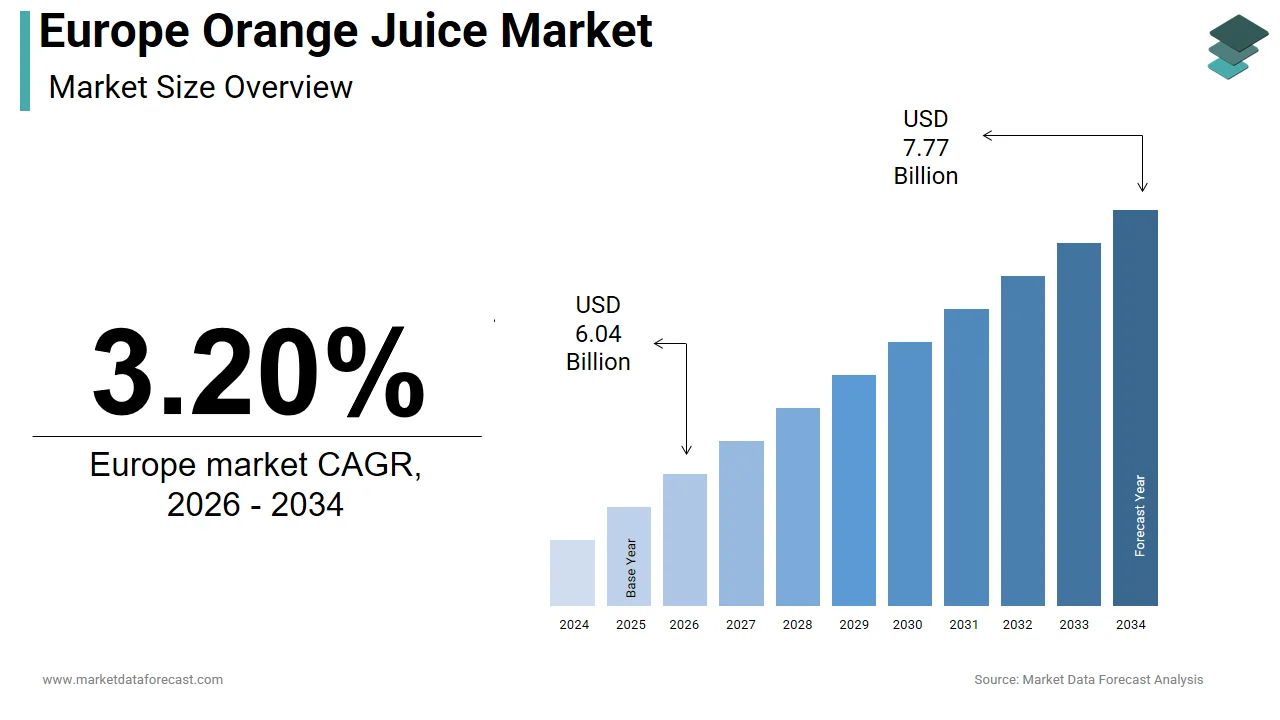
The Europe orange juice market was valued at USD 5.85 billion in 2025, is estimated to reach USD 6.04 billion in 2026, and is projected to reach USD 7.77 billion by 2034, growing at a CAGR of 3.20% from 2026 to 2034. Market growth is driven by increasing consumer demand for healthy beverages, rising awareness of nutritional benefits, and growing preference for natural and functional drinks. Orange juice remains a staple in European households due to its vitamin-rich profile and convenience. The market is also witnessing a shift toward premium and organic products, with consumers increasingly favoring cold-pressed and minimally processed juices. Additionally, evolving consumer lifestyles and demand for on-the-go beverages are supporting steady market expansion.
Key Market Trends
- Increasing demand for natural, organic, and functional beverages.
- Rising popularity of cold-pressed and minimally processed juices.
- Growing consumer preference for health-focused and nutrient-rich drinks.
- Expansion of premium juice products and clean-label offerings.
- Increasing demand for convenient, ready-to-drink beverage formats.
Segmental Insights
- Based on product type, the cold-pressed juices segment is expected to register the fastest CAGR of 13.3% during the forecast period, driven by its positioning as a premium, nutrient-dense beverage option.
- Based on distribution channel, the supermarkets and hypermarkets segment dominated the Europe orange juice market by capturing 55.6% share in 2025, supported by wide product availability and strong retail networks.
Regional Insights
The Europe orange juice market is witnessing stable growth across major countries due to strong consumption patterns, import dynamics, and evolving consumer preferences.
- Spain led the regional market in 2025 with 26.8% share, supported by strong domestic production and export capabilities.
- Germany holds a significant position as the largest importer and consumer of orange juice in Europe despite limited domestic production.
- The United Kingdom is a key market driven by its role as a trendsetter in premium, functional, and cold-pressed juice innovations.
Competitive Landscape
The Europe orange juice market is characterized by the presence of global beverage companies and niche organic juice brands. Market players are focusing on product innovation, premiumization, and expanding organic and clean-label offerings to attract health-conscious consumers. Strategic partnerships, brand positioning, and distribution expansion are shaping competitive dynamics across the region.
Prominent companies operating in the Europe orange juice market include PepsiCo, Coca-Cola, Hain Celestial, Suja Juice, Evolution Fresh, Earthbound Farm Organic, GoodBelly, The Greenhouse Juice Co., Highbrow Organic Juices, Eckes-Granini Group, Spindrift, and BluePrint.
Europe Orange Juice Market Size
The Europe orange juice market was valued at USD 5.85 billion in 2025, is estimated to reach USD 6.04 billion in 2026, and is projected to reach USD 7.77 billion by 2034, growing at a CAGR of 3.20% from 2026 to 2034.
Orange juice (OJ) is a liquid extracted from the fruit of the orange tree (Citrus sinensis). The region functions as the world's largest import hub for citrus products, relying heavily on supply chains originating from Brazil, the United States, and increasingly South Africa to satisfy year-round demand. According to recent market data, the European Union imports approximately 1.5 million tonnes of orange juice (single strength) annually, with Belgium and the Netherlands serving as the primary logistical gateways for reprocessing and distribution. The market is characterized by a distinct consumer preference for high-quality NFC variants over reconstituted options, driven by a cultural emphasis on natural ingredients and minimal processing. As per recent industry statistics, per capita consumption of fruit juices and nectars in the EU averages around 14.9 liters (2024), with orange juice maintaining its position as the leading flavor despite shifting dietary trends. The definition of this market extends beyond retail bottles to include significant volume in the food service sector and as an ingredient in functional beverages. Regulatory frameworks within the European Union strictly govern labeling and sugar content, forcing manufacturers to innovate while adhering to rigorous food safety standards. This dynamic landscape balances the necessity of global trade with local expectations for sustainability and nutritional transparency.
MARKET DRIVERS
Persistent Consumer Perception of Immune System Support
The enduring and deeply ingrained consumer belief in the beverage's capacity to bolster immune function through its high vitamin C content is driving the growth of the Europe orange juice market. This perception acts as a powerful psychological driver, particularly during seasonal transitions and periods of heightened health awareness, prompting households to stockpile orange juice as a preventive health measure. Surveys commissioned by industry bodies such as the Fruit Juice Science Centre (not EUFIC) reveal that a majority of British consumers associate fruit juice with immune support, though this belief is held by a significantly smaller portion of consumers in mainland Europe, such as those in France and Germany. Conversely, the European Food Information Council (EUFIC) advises that while citrus contains Vitamin C, relying on it to prevent common colds is a myth. The biological reality that a single glass provides more than 100% of the recommended daily allowance of vitamin C reinforces this behavior, creating a demand floor that remains resilient even amidst economic fluctuations. Research indicates that orange juice consumption across Europe faces pressure from rising prices and health concerns regarding sugar content, leading to a general stagnation or decline in volume rather than predictable seasonal surges. This seasonal cyclicality ensures consistent revenue streams for manufacturers who align their marketing campaigns with health consciousness narratives. Furthermore, the post-pandemic landscape has intensified this focus, with individuals actively seeking natural sources of micronutrients to enhance personal well-being. The trusted status of orange juice as a functional food item allows it to compete effectively against synthetic supplements, securing its place as a non-discretionary purchase for millions of Europeans prioritizing long-term health outcomes.
Integration into Premium Breakfast and Hospitality Rituals
Its entrenched role as an indispensable component of the premium breakfast experience further propels the expansion of the Europe orange juice market. It is also crucial to the hospitality sector across the continent. In many European cultures, particularly in Southern and Western regions, a complete breakfast is considered incomplete without a glass of fresh citrus juice, a tradition that sustains high household penetration rates. In the hospitality sector, represented by organizations such as HOTREC, orange juice remains a staple offering in hotel breakfast buffets and catering services. The rise of the "brunch" culture in urban centers has further amplified this demand, positioning orange juice as a key element of social dining and leisure consumption. Hotels and restaurants increasingly prioritize Not From Concentrate (NFC) varieties to meet the expectations of discerning guests who equate quality with freshness, thereby driving value growth in the premium segment. This ritualistic consumption creates a stable baseline demand that is less susceptible to short-term price volatility compared to snack beverages. Additionally, the expansion of the coffee shop chain model across Eastern Europe has introduced orange juice to new demographics, normalizing its consumption outside the home. The synergy between cultural habits and the commercial food service industry ensures that orange juice remains a ubiquitous presence in the European dietary landscape.
MARKET RESTRAINTS
Intensifying Scrutiny Regarding Sugar Content and Dental Health
Public health scrutiny regarding natural sugar content in fruit juice is a major restraint for the European orange juice market. Specifically, concerns are rising over its association with obesity, type 2 diabetes, and dental erosion. Despite the sugars being naturally occurring, health authorities and nutritionists increasingly classify fruit juice alongside sugary soft drinks, leading to a shift in consumer perception and regulatory pressure. According to guidelines issued by the World Health Organization and adopted by various European national health agencies, fruit juice intake should be limited to small quantities due to its classification as a free sugar and its potential impact on weight gain and dental health. This narrative has resulted in a measurable decline in consumption among health-conscious demographics, particularly millennials and parents who are opting for water, unsweetened teas, or whole fruits instead. Data from the European Childhood Obesity Surveillance Initiative indicates that while many children still consume sugary beverages regularly, public health efforts are focusing on reducing intake to combat the high prevalence of childhood overweight and obesity across the region. The implementation of sugar taxes in several European jurisdictions, although often exempting pure juice, has created a confusing regulatory environment that discourages consumption. Furthermore, dental associations frequently warn about the acidic nature of orange juice and its ability to erode tooth enamel, adding another layer of caution for consumers. These health concerns force manufacturers to navigate a complex landscape where the nutritional benefits of vitamins are weighed against the detriments of caloric density, limiting market expansion.
Volatility in Global Supply Chains and Climate Dependence
The extreme vulnerability of its supply chain to climatic anomalies and geopolitical disruptions impedes the growth of the Europe orange juice market. This vulnerability is due to the region's heavy reliance on imports. Since Europe produces only a fraction of the oranges required for its juice consumption, it is entirely dependent on harvests in Brazil, Florida, and other distant regions, making the market highly susceptible to weather events such as droughts, frosts, and hurricanes. According to reports from the United States Department of Agriculture, recent severe citrus greening disease outbreaks and adverse weather conditions in major producing areas have caused global orange production to fall to historic lows, triggering sharp price increases in the market. This supply scarcity forces European blenders and retailers to absorb higher costs or pass them on to consumers, which can dampen demand in price-sensitive segments. The logistical complexity of transporting frozen concentrate or chilled bulk juice across oceans also exposes the market to freight rate fluctuations and port congestion issues. Furthermore, the long lead times between planting trees and achieving full productivity mean that supply cannot quickly respond to sudden demand surges or production shocks. This structural dependency on external factors creates a volatile pricing environment that undermines market stability and complicates long-term strategic planning for industry participants who struggle to guarantee consistent availability and affordability.
MARKET OPPORTUNITIES
Innovation in Functional Fortification and Hybrid Blends
The strategic development of functional fortified products and hybrid blends opens up major possibilities for the Europe orange juice market. These products are designed to address specific modern health concerns beyond basic hydration. Manufacturers can leverage the natural nutrient profile of orange juice as a carrier for added bioactive compounds such as probiotics, fiber, vitamin D, and plant-based proteins to create value-added beverages that appeal to the wellness-oriented consumer. By blending orange juice with vegetables like carrots or beets, or with exotic superfruits like acerola and camu camu, brands can reduce the overall sugar concentration per serving while enhancing the nutritional density and flavor complexity. This approach allows companies to reposition orange juice from a simple breakfast staple to a sophisticated functional drink suitable for post-workout recovery or midday energy boosts. Startups in the Netherlands and Germany are already pioneering such formulations, reporting double-digit growth rates compared to traditional pure juice lines. The ability to tailor formulations to specific demographic needs, such as immunity shots for seniors or calcium-fortified versions for children, enables producers to command premium pricing and foster deeper brand loyalty. This evolution transforms the category into a dynamic platform for nutritional innovation.
Expansion of Sustainable Packaging and Circular Economy Initiatives
The transition toward sustainable packaging solutions and the adoption of circular economy principles pave the way for the Europe orange juice market expansion. This shift allows the market to align with the stringent environmental goals of the European Green Deal. Consumers are increasingly demanding eco-friendly packaging, and brands that innovate in this area can significantly enhance their appeal and market share. Utilizing recycled polyethylene terephthalate (rPET), bio-based plastics derived from sugarcane, or aseptic cartons made from responsibly sourced paper, offers a tangible way to reduce the carbon footprint of orange juice distribution. Furthermore, opportunities exist in upcycling orange peels and pulp, which are often discarded as waste, into valuable by-products such as essential oils, natural flavorings, or biodegradable packaging materials. Companies that implement closed-loop systems where packaging is collected and reused can differentiate themselves as leaders in sustainability. Retailers in Scandinavia and the United Kingdom are increasingly prioritizing suppliers who demonstrate verifiable commitments to reducing plastic waste and optimizing logistics for lower emissions. Orange juice producers can mitigate regulatory risks and build strong emotional connections by embracing green initiatives. This approach resonates with a generation of consumers who view their purchasing decisions as a vote for planetary health.
MARKET CHALLENGES
Aggressive Competition from Alternative Plant-Based Beverages
The explosive growth of alternative plant-based beverages, including almond, oat, soy, and coconut drinks, is limiting the expansion of Europe orange juice market. These alternatives are aggressively capturing shelf space and consumer mindshare. These alternatives often position themselves as lower-sugar, lactose-free, and versatile options suitable for both drinking and culinary applications, directly encroaching on the traditional breakfast territory dominated by orange juice. The marketing narratives surrounding these alternatives often emphasize sustainability and ethical sourcing, resonating strongly with younger demographics who are critical of the water usage and land requirements associated with large-scale citrus farming. Additionally, the versatility of plant milks in coffee culture, particularly in the thriving café scene, has cemented their status as daily staples, whereas orange juice is increasingly viewed as an occasional treat. The proliferation of flavored waters and sparkling fruit infusions further fragments the market, offering hydration with a hint of flavor but without the caloric load of pure juice. To remain relevant, orange juice producers must contend with a diverse array of substitutes that offer perceived health and environmental advantages. This challenge requires significant investment in rebranding and product innovation to prevent further erosion of their customer base.
Complex Regulatory Landscape and Labeling Ambiguities
The increasingly complex and fragmented regulatory landscape governing food labeling, health claims, and origin transparency within the European Union hinders the growth of the Europe orange juice market. Navigating the strict provisions of the EU Regulation on nutrition and health claims makes it difficult for manufacturers to communicate the benefits of orange juice without risking non-compliance, as many traditional assertions about immunity or vitality require extensive scientific substantiation that is costly and time-consuming to obtain. Furthermore, the push for mandatory front-of-pack nutrition labeling, such as the Nutri-Score system, poses a significant risk as pure orange juice often receives a lower score due to its natural sugar content, potentially misleading consumers into viewing it as an unhealthy option compared to artificially sweetened diet drinks. The requirement for detailed origin labeling also adds logistical burdens, especially for blends containing juice from multiple countries. This regulatory uncertainty creates a cautious business environment where innovation is stifled by fear of litigation or reputational damage. The inability to clearly and effectively market the inherent nutritional value of orange juice due to these bureaucratic hurdles hampers the industry's ability to combat declining consumption trends and educate the public on the differences between natural sugars and added sweeteners.
REPORT COVERAGE
| REPORT METRIC | DETAILS |
| Market Size Available | 2025 to 2034 |
| Base Year | 2025 |
| Forecast Period | 2026 to 2034 |
| Segments Covered | By Product Type, Distribution Channel, and Country. |
| Various Analyses Covered | Global, Regional, and Country-Level Analysis, Segment-Level Analysis, Drivers, Restraints, Opportunities, Challenges; PESTLE Analysis; Porter’s Five Forces Analysis, Competitive Landscape, Analyst Overview of Investment Opportunities |
| Countries Covered | UK, France, Spain, Germany, Italy, Russia, Sweden, Denmark, Switzerland, Netherlands, Turkey, Czech Republic, and the Rest of Europe. |
| Market Leaders Profiled | PepsiCo, Coca-Cola, Hain Celestial, Suja Juice, Evolution Fresh, Earthbound Farm Organic, Goodbelly, The Greenhouse Juice Co., Highbrow Organic Juices, Eckes-Granini Group, Spindrift, BluePrint. |
SEGMENTAL ANALYSIS
By Product Type Insights
The Cold-Pressed Juices segment is likely to experience the fastest CAGR of 13.3% during the forecast period, owing to its positioning as ultra-premium, nutrient-dense functional beverages. This growth is also fueled by the "clean label" movement and the rising influence of wellness culture, which views high-pressure processing (HPP) as superior to traditional heat pasteurization for retaining enzymes and vitamins. The leading reason for segment growth is the widespread consumer belief that High Pressure Processing (HPP) technology preserves significantly higher levels of heat-sensitive nutrients, enzymes, and antioxidants compared to traditional thermal pasteurization. Marketing narratives and wellness influencers consistently highlight that cold-pressing avoids the degradation of vitamin C and flavonoids caused by heat, positioning these juices as potent health elixirs rather than simple refreshments. Research in food science indicates that cold-press technologies better preserve the original antioxidant capacity of juices, whereas traditional heat-based processing can lead to a more noticeable reduction in these nutritional components. This scientific backing resonates strongly with bio-hackers, fitness enthusiasts, and health-conscious urbanites in cities like London, Berlin, and Stockholm who are willing to pay substantial premiums for perceived maximum nutritional benefit. The association of cold-pressed juice with detox regimes and immune-boosting protocols has created a dedicated customer base that consumes these products daily as part of a structured wellness routine. Brands leverage this perception by highlighting "raw" and "living" attributes on packaging, differentiating themselves from standard supermarket juices. As awareness of the specific benefits of enzyme preservation spreads through digital channels and corporate wellness programs, the demand for cold-pressed orange juice continues to surge, driving double-digit growth rates that outpace all other juice categories. Following that, this segment is pushed by the strategic expansion of distribution through premium retail channels and the adoption of direct-to-consumer subscription models. Unlike mass-market juices found in every grocery aisle, cold-pressed orange juice is often sold in high-end health food stores, boutique gyms, yoga studios, and upscale coffee shops where the target demographic congregates. Furthermore, numerous startups have launched subscription services delivering weekly boxes of fresh cold-pressed juices directly to homes and offices, ensuring regular consumption and building strong brand loyalty. These subscription models often include personalized plans based on health goals, adding a layer of service that traditional retail cannot match. The exclusivity and convenience of these channels create a barrier to entry for lower-quality competitors and allow brands to maintain high price points. The visibility of cold-pressed juice in lifestyle-oriented environments reinforces its status as a luxury wellness product, attracting new customers who aspire to this healthy lifestyle. As these premium channels continue to proliferate across secondary cities in Europe, the accessibility of cold-pressed juice increases, fueling its rapid market penetration.
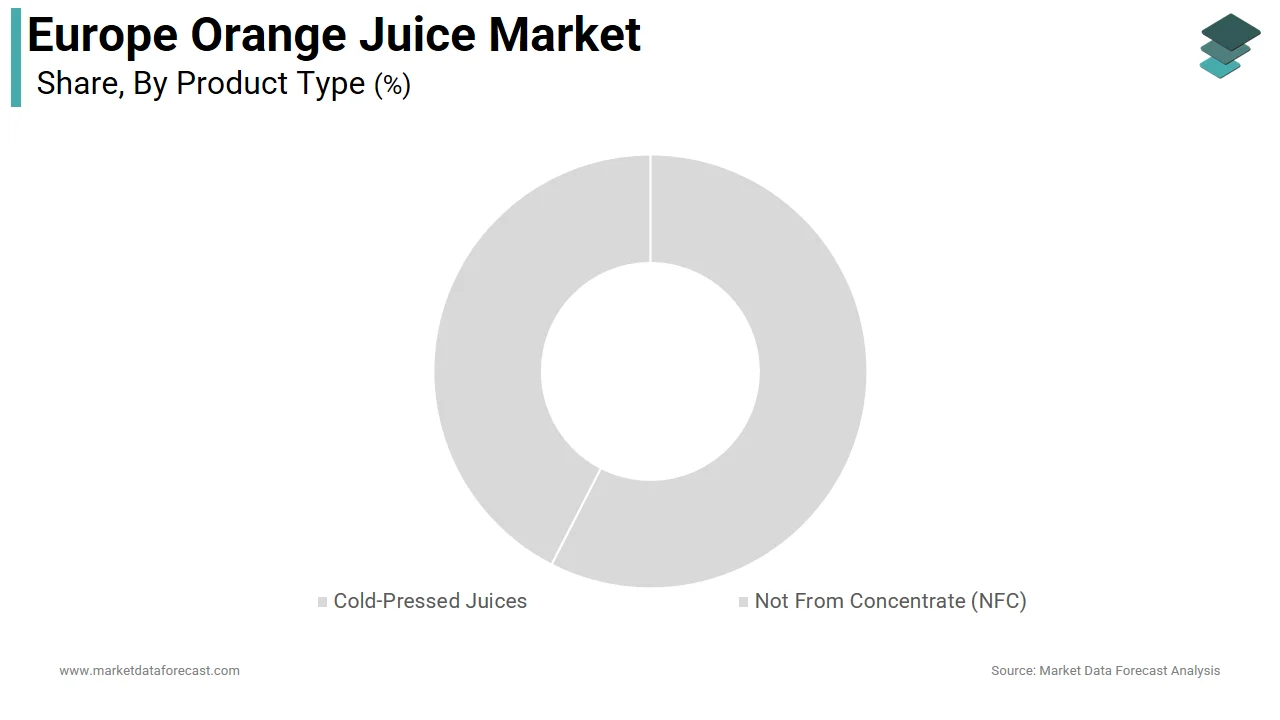
The Not From Concentrate (NFC) segment dominated the Europe orange juice market, accounting for 65.5% of the market in 2025. This dominance of the segment is driven by the European consumer's strong preference for minimal processing and authentic taste profiles that closely mimic freshly squeezed fruit. Unlike reconstituted juices made from frozen concentrate, NFC juice undergoes only pasteurization and deaeration, preserving the natural flavor compounds and nutritional integrity that discerning European shoppers demand. The segment benefits from the robust infrastructure of major juice blenders in Spain and Italy, which have optimized supply chains to deliver fresh bulk juice year-round. The most important driver of the NFC segment is the intense consumer aversion to processed foods and the specific desire for a taste profile that mirrors fresh oranges without the "cooked" notes often associated with concentration and reconstitution. European consumers are increasingly educated about food production methods and actively seek products labeled as "pure" or "not from concentrate. According to data from the European Fruit Juice Association, a significant portion of orange juice purchases in Western Europe now consists of premium variants, reflecting a clear consumer shift toward less processed options and away from traditional concentrated products. Sensory studies conducted by independent food research institutes indicate that while the processing of juice can impact its aromatic profile and acidity, many consumers find the taste of high-quality options to be comparable when tested in blind settings. This preference is particularly strong in countries like Germany and France, where food quality standards are rigorous. The perception that NFC juice retains more natural vitamins and enzymes, even if the difference is marginal after pasteurization, drives purchasing decisions among health-conscious families. Retailers respond to this demand by allocating prime shelf space to NFC brands and reducing listings for concentrate-based products. The willingness of consumers to pay a premium for NFC juice ensures that manufacturers prioritize this format, solidifying its market leadership through a cycle of high demand and extensive availability. Beyond that, the segment is influenced by the highly developed cold chain logistics network across Europe that enables the efficient transport and storage of perishable bulk juice without degradation. Since NFC juice cannot be stored at ambient temperatures for long periods like frozen concentrate, it requires specialized refrigerated tanks and trucks throughout the distribution journey from ports to blending facilities and finally to retail shelves. The logistical capability allows retailers to offer NFC juice with extended shelf lives of up to 90 days while maintaining fresh quality, making it a viable option for nationwide distribution rather than just local markets. Major juice companies have established strategic partnerships with shipping lines to ensure rapid transit times, minimizing the time fruit spends in transit and maximizing freshness upon arrival. The ability to maintain a consistent cold chain reduces spoilage rates to less than 2%, ensuring economic viability for distributors. This operational excellence removes the historical barrier of perishability that once limited NFC juice to seasonal or local consumption, allowing it to become the standard year-round offering in supermarkets across the continent.
By Distribution Channel Insights
The Supermarkets and Hypermarkets channel segment held the majority share of 55.6% of the Europe orange juice market in 2025. Moreover, the habitual shopping behaviors of European consumers who prefer to purchase staple beverages like orange juice during their weekly grocery runs in large format stores are attributed to the supremacy of this segment. The extensive shelf space dedicated to chilled and ambient juices, combined with the ability of these retailers to offer competitive pricing through private label brands and bulk promotions, makes them the primary touchpoint for mass market consumption. The visibility of orange juice in prominent breakfast aisles and end-cap displays encourages impulse buys and reinforces brand recognition among diverse demographic groups. Apart from these, a key factor sustaining the dominance of supermarkets and hypermarkets is the unparalleled convenience they offer for one-stop shopping, which aligns perfectly with the busy lifestyles of modern European families. Consumers appreciate the ability to purchase orange juice alongside fresh produce, dairy, bakery items, and household essentials in a single trip, saving significant time and transportation costs. Orange juice, being a breakfast staple with high household penetration rates in many Western European nations, fits naturally into the routine weekly shop. The presence of extensive private label ranges in supermarkets allows retailers to offer high-quality NFC and concentrate blends at significantly lower prices than national brands, appealing to price-sensitive shoppers, especially during periods of inflation. The trust associated with major supermarket chains also reassures consumers about product safety, freshness, and adherence to quality standards. As long as the weekly grocery run remains the primary method of food provisioning for the majority of Europeans, supermarkets will retain their position in the distribution of orange juice, leveraging their scale to dominate volume sales. An additional driver for the supermarket segment is the aggressive use of promotional strategies and the rapid growth of retailer-owned private label brands, which drive volume and loyalty. Supermarkets frequently feature orange juice in weekly flyers, multi-buy offers, and loyalty card discounts, stimulating trial and repeat purchases among cost-conscious consumers. These private labels often source directly from the same blenders as major brands but sell at a discount, capturing significant market share. The ability of supermarkets to control shelf placement allows them to give prominence to their own brands or high-margin partners, influencing consumer choice at the point of sale. Furthermore, the integration of orange juice into meal deal promotions and breakfast bundles increases basket size and frequency of purchase. The financial power of large retail chains enables them to negotiate favorable terms with suppliers, ensuring consistent stock levels even during global supply shortages. This combination of pricing power, promotional agility, and shelf control ensures that supermarkets remain the undisputed leader in orange juice distribution.
The Health Food Stores channel segment is on the rise and is expected to be the fastest-growing segment in the market by witnessing a CAGR of 9.5% from 2025 to 2034 due to the rising consumer demand for organic, biodynamic, and ethically sourced beverage options that are often unavailable in conventional supermarkets. The specialization of these stores in catering to wellness-oriented demographics creates a unique environment where premium orange juice products thrive. The segment's position is supported by its specialized focus on organic, biodynamic, and fair trade certified orange juice products, which appeal to the values of environmentally and socially conscious consumers. Shoppers in this channel prioritize transparency regarding farming practices, pesticide use, and labor conditions, criteria that health food stores rigorously vet before stocking items. These stores often carry niche brands that utilize regenerative agriculture or support smallholder farmer cooperatives, narratives that resonate deeply with their customer base. The assurance of strict organic certification provides a level of trust that general supermarkets struggle to match for specific premium SKUs. Consumers visiting health food stores are typically less price sensitive and more willing to pay a premium for products that align with their ethical stance on sustainability and animal welfare. The curation of products in these stores acts as a filter for quality, reducing the decision fatigue for shoppers seeking the cleanest possible options. As the demand for organic and ethically produced food continues to rise across Europe, health food stores serve as the primary gateway for these specialized orange juice variants, driving their disproportionate growth. A further reason for this growth is the value added by knowledgeable staff and strong community engagement, which fosters brand loyalty and education. Unlike the self-service environment of supermarkets, health food stores often employ staff trained in nutrition and wellness who can educate customers about the benefits of specific orange juice varieties, such as blood orange for antioxidants or Valencia for sweetness. These stores frequently host tasting events, wellness workshops, and talks by nutritionists that create a sense of community and deepen the connection between the brand and the consumer. This educational approach demystifies premium pricing and highlights the unique selling propositions of artisanal or cold-pressed juices that might be overlooked in a crowded supermarket aisle. The personal interaction builds trust and encourages repeat visits, transforming the act of buying juice into a holistic wellness experience. Furthermore, health food stores often collaborate with local fitness centers and yoga studios to cross-promote products, expanding their reach within the health-conscious ecosystem. This high-touch, community-centered model creates a loyal customer base that drives sustained growth for premium orange juice segments.
COUNTRY LEVEL ANALYSIS
Spain Orange Juice Market Analysis
Spain led the European orange juice market and captured a 26.8% share in 2025. The leading position of the Spanish market is supported by its dual role as a massive exporter of bulk juice and a domestic market with deep cultural roots in citrus consumption. A key driving factor is the vast agricultural infrastructure in regions like Valencia and Andalusia, which produce millions of tonnes of oranges annually, ensuring a steady supply of fresh NFC juice for local blenders. The proximity of production to consumption reduces logistics costs and carbon footprint, allowing Spanish brands to offer competitively priced fresh juice that dominates supermarket shelves. The cultural habit of drinking fresh-squeezed juice at breakfast and in bars sustains high per capita consumption levels. Furthermore, the presence of global juice giants with major processing facilities in Spain creates a cluster of innovation and efficiency. The government's support for the citrus sector through subsidies and research into disease resistance further strengthens the industry. This combination of agricultural abundance, processing capacity, and cultural affinity ensures Spain remains the anchor of the European orange juice industry.
Germany Orange Juice Market Analysis
Germany follows closely behind in the Europe orange juice market due to being the largest importer and consumer of orange juice on the continent, despite having no domestic commercial production. The country's market status is characterized by high per capita consumption and a sophisticated consumer base that prioritizes quality, sustainability, and organic certification. The driving force behind Germany's prominence is the strong demand for Not From Concentrate (NFC) and organic orange juices, which command premium prices and drive value growth. German retailers are leaders in promoting private-label organic juices, pushing suppliers to adhere to strict environmental and social standards. The "Bio" (organic) label carries significant weight, with organic orange juice sales growing faster than conventional varieties. Consumer awareness campaigns regarding vitamin C and immune health further sustain demand, particularly during the winter months. The highly consolidated retail sector, dominated by a few large chains, exerts significant influence over pricing and product specifications, forcing suppliers to innovate continuously. This focus on high quality and ethical sourcing makes Germany the most lucrative market for premium orange juice brands in Europe.
United Kingdom Orange Juice Market Analysis
The United Kingdom is another key player in the Europe orange juice market because of its role as a trendsetter in the adoption of functional, cold-pressed, and premium juice innovations. The market status in the UK is defined by a mature but evolving landscape where consumers are increasingly shifting from standard concentrate juices to high-value NFC and blended functional beverages. A primary driver of this position is the vibrant health and wellness culture in cities like London and Manchester, which drives demand for cold-pressed juices and shots fortified with additional vitamins or superfoods. The UK market is highly responsive to marketing narratives around immunity, detox, and natural energy, prompting brands to launch innovative SKUs frequently. The presence of numerous agile startups and the willingness of major retailers to list niche brands foster a dynamic, competitive environment. Additionally, the post-Brexit trade dynamics have led to diversification of supply sources, with increased imports from South Africa and Egypt alongside traditional Brazilian supplies. The UK's focus on convenience formats, such as single-serve bottles and smoothie blends containing orange juice, appeals to busy urban professionals. This emphasis on innovation and premiumization ensures the UK remains a key growth engine for high-margin orange juice products.
France Orange Juice Market Analysis
France is moving ahead steadfastly in the European orange juice market by emerging as a dynamic player fueled by a discerning consumer base that values origin, taste authenticity, and gastronomic quality. The market status in France is transitioning from a reliance on cheap concentrate to a preference for high-quality NFC juices, driven by a cultural appreciation for fine food and beverages. The driving force behind this expansion is the "Made in Europe" sentiment and the preference for juices sourced from Mediterranean neighbors like Spain and Italy, perceived as fresher and superior to transatlantic imports. French consumers are highly skeptical of added sugars and artificial additives, demanding pure and simple ingredient lists. The strong presence of hypermarkets allows for mass distribution, but there is also a thriving network of specialized organic stores (Biocoop) that cater to the premium segment. The integration of orange juice into the traditional breakfast ritual remains strong, though there is a growing trend of consuming it as a gourmet pairing or in cocktails. The regulatory push for clearer labeling and the Nutri-Score system has also influenced formulation, with brands striving for better nutritional profiles. This blend of culinary tradition and demand for authenticity propels the French market toward higher quality segments.
Italy Orange Juice Market Analysis
Italy is predicted to grow notably in the Europe orange juice market over the forecast period, owing to its growing domestic production capabilities and a unique preference for orange juice blends and nectars. The market status in Italy is characterized by a strong agricultural base in Sicily and Calabria, which produces renowned blood oranges and standard varieties used increasingly for local juice production. A key driving factor is the national pride in Italian agricultural products, leading to a surge in "100% Italian" labeled juices that appeal to patriotic and quality-conscious consumers. The Italian market is also seeing a rise in the popularity of ready-to-drink formats in the hospitality sector, where orange juice is a staple for tourists and locals alike. The climate allows for a longer harvest season compared to northern Europe, facilitating the supply of fresh fruit for juicing. Furthermore, the Italian diet's emphasis on fresh fruits and vegetables supports the perception of orange juice as a healthy daily habit. The government's support for agritourism and local food chains helps promote direct sales of artisanal juices. This combination of local sourcing, cultural preference for blends, and tourism-driven demand ensures Italy's continued importance in the European landscape.
COMPETITIVE LANDSCAPE
The competition in the Europe orange juice market is characterized by intense rivalry between global beverage giants, specialized regional producers, and an increasing number of agile niche players focusing on premium and organic segments. Multinational corporations leverage their extensive distribution networks and massive marketing budgets to dominate shelf space in supermarkets and hypermarkets across the continent. Conversely, smaller artisanal brands differentiate themselves through unique value propositions such as cold-pressed technology, single-origin sourcing, and transparent supply chains that appeal to discerning consumers. Competitive dynamics are heavily influenced by the shift toward health and wellness, forcing all participants to innovate constantly with low-sugar formulations and functional additives. Price volatility due to fluctuating global orange harvests creates a challenging environment where cost management and supply chain efficiency become critical differentiators. Private label brands from major retail chains also exert significant pressure by offering high-quality alternatives at lower price points, squeezing margins for branded players. The battle for sustainability credentials further intensifies competition as companies vie to demonstrate superior environmental stewardship to eco-conscious buyers. This multifaceted competitive landscape drives continuous improvement in product quality, operational efficiency, and corporate responsibility standards throughout the industry.
KEY MARKET PLAYERS
The leading companies operating in the Europe orange juice market include:
- PepsiCo
- Coca-Cola
- Hain Celestial
- Suja Juice
- Evolution Fresh
- Earthbound Farm Organic
- GoodBelly
- The Greenhouse Juice Co.
- Highbrow Organic Juices
- Eckes-Granini Group
- Spindrift
- BluePrint
TOP PLAYERS IN THE MARKET
- The Coca-Cola Company operates as a global beverage leader with a significant footprint in the Europe orange juice market through its iconic Minute Maid and Simply brand portfolios. The corporation contributes to the global market by leveraging its unparalleled distribution network to ensure widespread availability of both not-from-concentrate and reconstituted orange juice varieties. Recent actions to strengthen its position include the reformulation of products to reduce sugar content naturally and the introduction of premium cold-pressed lines to cater to health-conscious European consumers. The company actively invests in sustainable sourcing initiatives, partnering directly with citrus growers in Spain and Brazil to secure high-quality raw materials while promoting regenerative agriculture practices. By utilizing advanced blending technologies and focusing on eco-friendly packaging solutions like plant-based bottles, Coca-Cola aims to enhance brand loyalty and meet stringent environmental regulations. This strategic focus on innovation, sustainability, and portfolio diversification enables the company to maintain its leadership status and adapt to evolving consumer preferences across the diverse European landscape.
- PepsiCo Inc. functions as a major multinational food and beverage corporation that holds a strong presence in the Europe orange juice sector primarily through its Tropicana and Dole brand licenses. The company contributes to the global market by driving innovation in juice blends and functional beverages that combine orange juice with other fruits, vegetables, and added nutrients. Recent actions to strengthen its market position involve expanding its portfolio of organic and non-GMO certified orange juice products to align with the growing demand for clean-label items in Western Europe. PepsiCo actively pursues strategic partnerships with local European distributors to enhance supply chain efficiency and reduce carbon emissions associated with logistics. The firm also focuses on marketing campaigns that highlight the immune-boosting benefits of vitamin C to resonate with post-pandemic health trends. By investing in state-of-the-art processing facilities and adopting circular economy principles for packaging, PepsiCo ensures product quality and environmental responsibility. These efforts allow the company to compete effectively in the premium segment and capture share from emerging niche players.
- Eckes-Granini Group stands as a leading European family-owned fruit juice specialist with a dominant market position driven by its flagship Granini brand. The company contributes to the global market by setting high standards for juice quality and sustainability, particularly in the not-from-concentrate category, which is highly valued in Europe. Recent actions to strengthen its position include the acquisition of regional juice brands to expand its geographic reach and the launch of innovative bag-in-box formats for household convenience. Eckes-Granini actively invests in direct relationships with citrus farmers to ensure traceability and fair trade practices throughout its supply chain. The group prioritizes research and development to create unique flavor profiles and functional juice blends that appeal to younger demographics. By committing to carbon neutrality goals and reducing plastic usage in its packaging, the company reinforces its reputation as a responsible industry leader. This dedication to quality, sustainability, and local market adaptation enables Eckes-Granini to maintain strong customer loyalty and drive growth in a competitive environment.
TOP STRATEGIES USED BY THE KEY MARKET PARTICIPANTS
Key players in the Europe orange juice market primarily employ strategies focused on product premiumization by shifting portfolios toward not-from-concentrate and organic varieties to meet evolving consumer demands. Companies invest heavily in sustainable sourcing programs and direct partnerships with growers to ensure supply chain resilience and ethical compliance. Another major strategy involves innovation in functional beverages where manufacturers fortify juices with additional vitamins, probiotics, or blend them with vegetables to enhance health benefits. Market participants actively pursue packaging sustainability by adopting recycled materials and bio-based plastics to align with European Green Deal regulations. Firms also leverage digital marketing and data analytics to target specific demographic segments with personalized health messages. Additionally, companies engage in strategic acquisitions of niche local brands to expand their regional footprint and diversify product offerings. These combined approaches enable key players to navigate price volatility, address health concerns, and maintain competitiveness in a mature and discerning market.
MARKET SEGMENTATION
This research report on the Europe orange juice market has been segmented and sub-segmented into the following categories.
By Product Type
- Cold-Pressed Juices
- Not From Concentrate (NFC)
By Distribution Channel
- Retail Stores
- Supermarkets
- Health Food Stores
By Country
- United Kingdom
- France
- Spain
- Germany
- Italy
- Russia
- Sweden
- Denmark
- Switzerland
- Netherlands
- Rest of Europe
Frequently Asked Questions
What is the Europe orange juice market?
The Europe orange juice market imports concentrate and NFC primarily from Brazil for domestic blending and packaging. Netherlands leads logistics while Germany consumes largest volumes.
How does the Europe orange juice market function?
The Europe orange juice market functions through import terminals reconstituting concentrate for bottling. Private label production serves major retailers across multiple countries.
What drives demand in the Europe orange juice market?
Breakfast consumption drives the Europe orange juice market alongside health claims from vitamin C content. Premium NFC segments grow through chilled distribution networks.
Which countries lead the Europe orange juice market?
Germany dominates consumption in the Europe orange juice market while Netherlands excels as re-export hub. France represents key premium segment demand.
What product types define the Europe orange juice market?
NFC chilled juice leads premium segments in the Europe orange juice market alongside reconstituted from concentrate. Blends with other citrus gain popularity.
What supply sources shape the Europe orange juice market?
Brazil supplies concentrate to the Europe orange juice market dominating import volumes. USA provides NFC premium while domestic oranges serve fresh juice niches.
How does regulation influence the Europe orange juice market?
EU juice directives govern the Europe orange juice market mandating sugar declarations. Fruit content labeling differentiates authentic from blended products.
What trends affect the Europe orange juice market?
Functional fortification shapes the Europe orange juice market adding vitamins and probiotics. Sustainable sourcing certifications appeal to conscious consumers.
What challenges face the Europe orange juice market?
Supply shortages challenge the Europe orange juice market through Brazilian crop failures. Sugar reduction mandates impact traditional formulations.
How has premiumization impacted the Europe orange juice market?
NFC chilled segments expanded the Europe orange juice market capturing health-conscious consumers. Smooth texture differentiates from reconstituted alternatives.
Related Reports
Access the study in MULTIPLE FORMATS
Purchase options starting from
$ 2000
Didn’t find what you’re looking for?
TALK TO OUR ANALYST TEAM
Need something within your budget?
NO WORRIES! WE GOT YOU COVERED!
Call us on: +1 888 702 9696 (U.S Toll Free)
Write to us: sales@marketdataforecast.com